The tasks and habits we avoid are rarely as hard as they feel. What's hard is the beginning: the moment between knowing you should do something and actually doing it. Make that beginning small enough, and the whole thing stops looking like a mountain.
That's the quiet power of the two-minute rule. It comes in two forms, one for tiny tasks and one for new habits, and both work for the same reason: they make starting so easy that resistance doesn't have time to argue. In this guide you'll find what the rule means, why it works, a two-minute ladder table that turns big goals into first steps, 15 two-minute starters for home, health, work and money, and the limits that keep the rule helpful instead of overwhelming.
No hustle, no pressure, no perfect streaks required. Just a gentler way to get going.
What Is the Two-Minute Rule?
"The two-minute rule" is a name for two related ideas. They come from two different books, and they solve two different problems, so it helps to keep them separate.
Version One: If It Takes Less Than Two Minutes, Do It Now
This version comes from David Allen's productivity method in Getting Things Done, where any task that takes less than two minutes is done immediately rather than written down and tracked. The logic is simple: writing it on a list, remembering it and coming back to it takes longer than just doing it.
Think of replying "Yes, Thursday works" to a message, putting a dish in the dishwasher, filing a receipt, or hanging up the coat you just dropped on a chair. Each one is tiny. But left undone, twenty tiny things become a background hum of "I should really…" that follows you around all day.
Version Two: Start Every New Habit in Two Minutes or Less
The second version is from James Clear's Atomic Habits, which suggests scaling any new habit down to a version that takes two minutes or less to start. "Read every night" becomes "read one page." "Go running" becomes "put on my running shoes." "Journal daily" becomes "write one line."
The point isn't that one page or one line is enough forever. The point is that you are practicing being someone who shows up. You are building the doorway before you build the house. (It took me a while to accept that a tiny habit counts. I once believed that if I couldn't do the "real" version, there was no point, which mostly meant I did nothing at all.)
Why the Two-Minute Rule Works
Both versions lean on the same truth about how our brains handle effort. When a task feels big, vague or uncomfortable, the brain treats it as a small threat and looks for an exit: checking a phone, tidying something unrelated, deciding to wait until we "feel ready." A two-minute version removes most of that threat.
Starting Is the Hardest Part
Most resistance lives at the very beginning. Once you've opened the document, put on the shoes or filled the sink, continuing usually feels far easier than starting did. A two-minute rule targets exactly that moment. It asks your brain for something so small that saying no feels a bit silly.
This is also why the rule is kind to anxious minds. I'm prone to anxiety, and big, undefined tasks are where my worry likes to grow. "Sort out my finances" makes my chest tight. "Open my banking app and look at this week" is doable, even on a low day.
Momentum Does the Heavy Lifting
Action creates motivation more often than motivation creates action. Two minutes of doing often turns into ten without any extra effort, because you are already in motion. And even when it doesn't, you still kept a small promise to yourself, which builds trust. That trust is the real foundation of consistency, something I write about more in how to be more consistent, even when motivation fades.
There's a second kind of momentum too. Every tiny task you finish clears a little mental space. Fewer open loops means less background noise and more energy for what actually matters.
The Two-Minute Ladder: From Tiny Start to Real Habit
This table is the heart of the method. Pick something you've been avoiding, find its two-minute version, decide when you'll do it, and know what the next small step up looks like once the starter feels easy. Screenshot it, or copy the columns into your own notebook.
| Big task or habit | Two-minute version | When to do it | Next step up |
|---|---|---|---|
| Read more books | Read one page | Right after your evening tea | Read for ten minutes |
| Start running | Put on your running shoes and step outside | Straight after your morning coffee | Walk briskly for ten minutes |
| Journal regularly | Write one line about your day | Before you turn off the bedside lamp | Write three lines or one full page |
| Keep the kitchen tidy | Rinse your mug and put it away | Every time you finish a drink | Wipe the counter once a day |
| Declutter your home | Put away five things | While the kettle boils | Clear one drawer on Saturday |
| Get on top of email | Answer one email that needs a short reply | Before you open anything else at work | Clear all quick replies in one batch |
| Write a big report | Open the file and write the first sentence | At the start of your focus block | Write for twenty-five minutes |
| Save money | Move a small amount into savings | On payday, before anything else | Set up an automatic transfer |
| Stretch more | Do one long forward fold | When you get out of bed | A five-minute stretch routine |
| Drink more water | Fill a glass and drink it | Before your first coffee | Keep a filled bottle on your desk |
The "next step up" column matters. It reminds you that the starter is a doorway, not the destination.
To track your two-minute starters, a simple undated habit tracker notebook works beautifully. Undated pages mean a missed week doesn't leave a row of empty, guilt-inducing boxes.
15 Two-Minute Starters for Everyday Life
Here are 15 two-minute starters, grouped by area. Some are "do it now" tasks, others are tiny versions of bigger habits. Choose one or two that make you think "oh, I could do that," and leave the rest for later.
Two-Minute Starters at Home
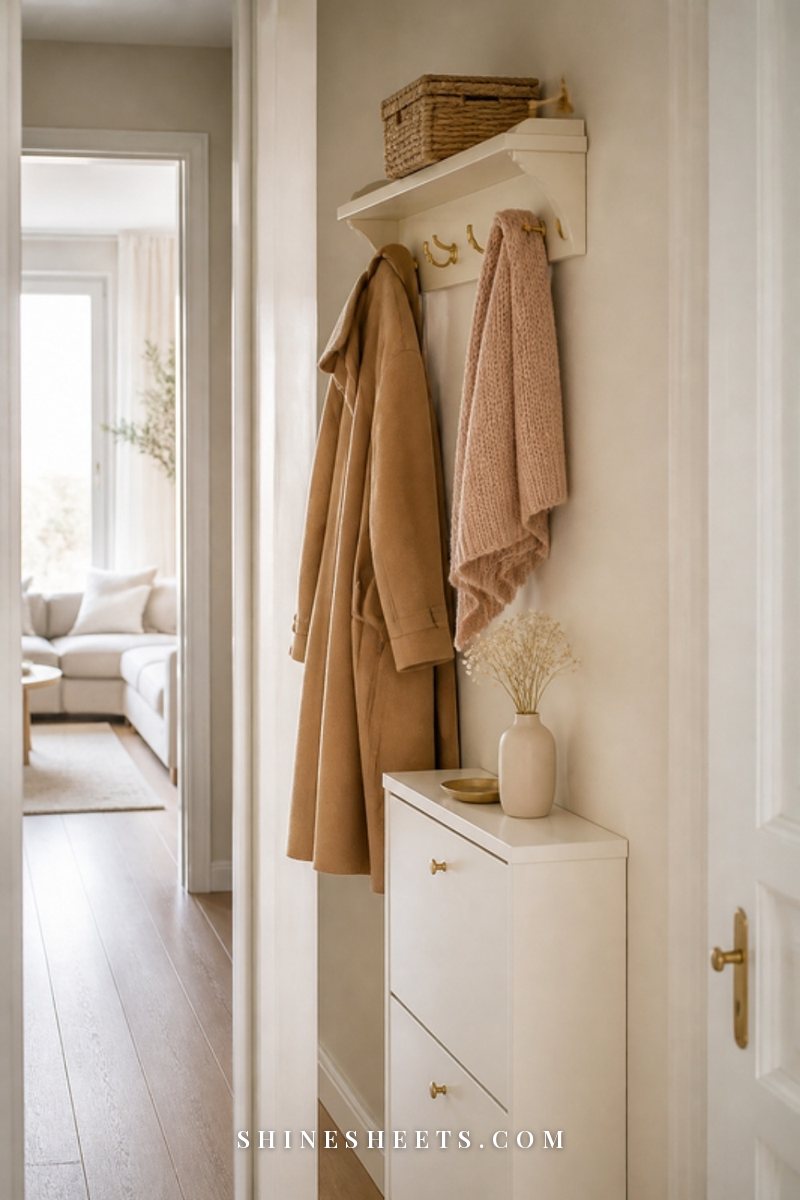
- Hang up your coat the moment you walk in. Coat on the hook, bag in its spot, keys in the bowl. Fifteen seconds now saves a cluttered chair by Friday.
- Rinse your mug as soon as it's empty. Rinse, dry, put away. A sink that never piles up is mostly made of moments like this.
- Put away five things while the kettle boils. Count them out loud if it helps. Five is small enough to always be possible.
- Make your bed before you leave the bedroom. Pull up the duvet, straighten the pillows, done. It doesn't need to look like a hotel.
For more tiny tidying habits, my list of micro habits for a neat and clean home is full of two-minute ideas like these.
Two-Minute Starters for Your Health

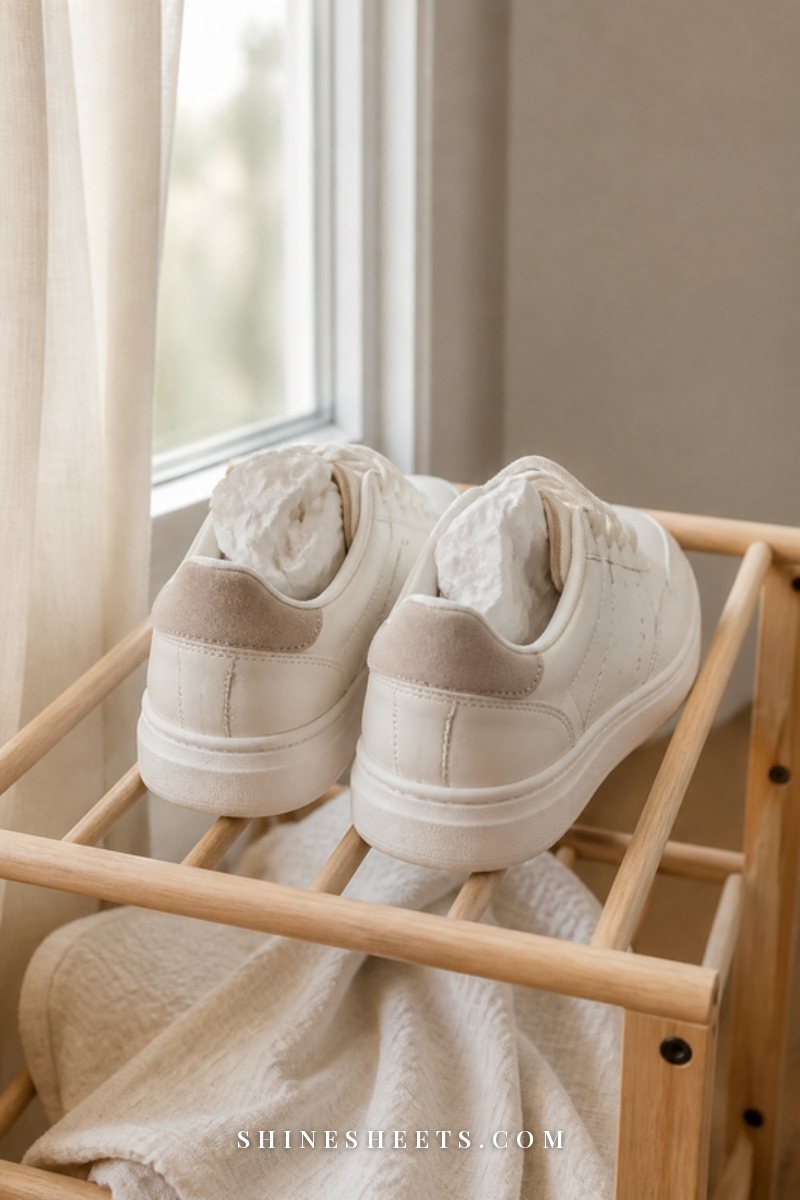
- Put on your running shoes. That's the whole habit at first. If you step outside and walk around the block, wonderful. If not, you still practiced the start.
- Drink one full glass of water before coffee. Keep a glass by the kettle so it's the first thing you see.
- Do one stretch when you get out of bed. One slow forward fold or a reach toward the ceiling, with three deep breaths.
- Lay out tomorrow's vitamins or medication next to your toothbrush. A tiny setup step that removes tomorrow's decision. (Please follow your doctor's guidance on what you take and when.)
Two-Minute Starters for Work
- Write the first sentence. For any report, email or project you're dreading, open it and write one sentence. Messy is perfect.
- Reply to one quick message. If it needs a "yes," a "no" or a date, answer it now instead of marking it unread.
- Write tomorrow's top three tasks before you finish for the day. A cream daily planner kept open on your desk makes this a two-minute ritual instead of a chore.
- Clear your desk surface. Mugs to the kitchen, papers in one pile, pens back in their cup. A clear desk is a softer place to start tomorrow.
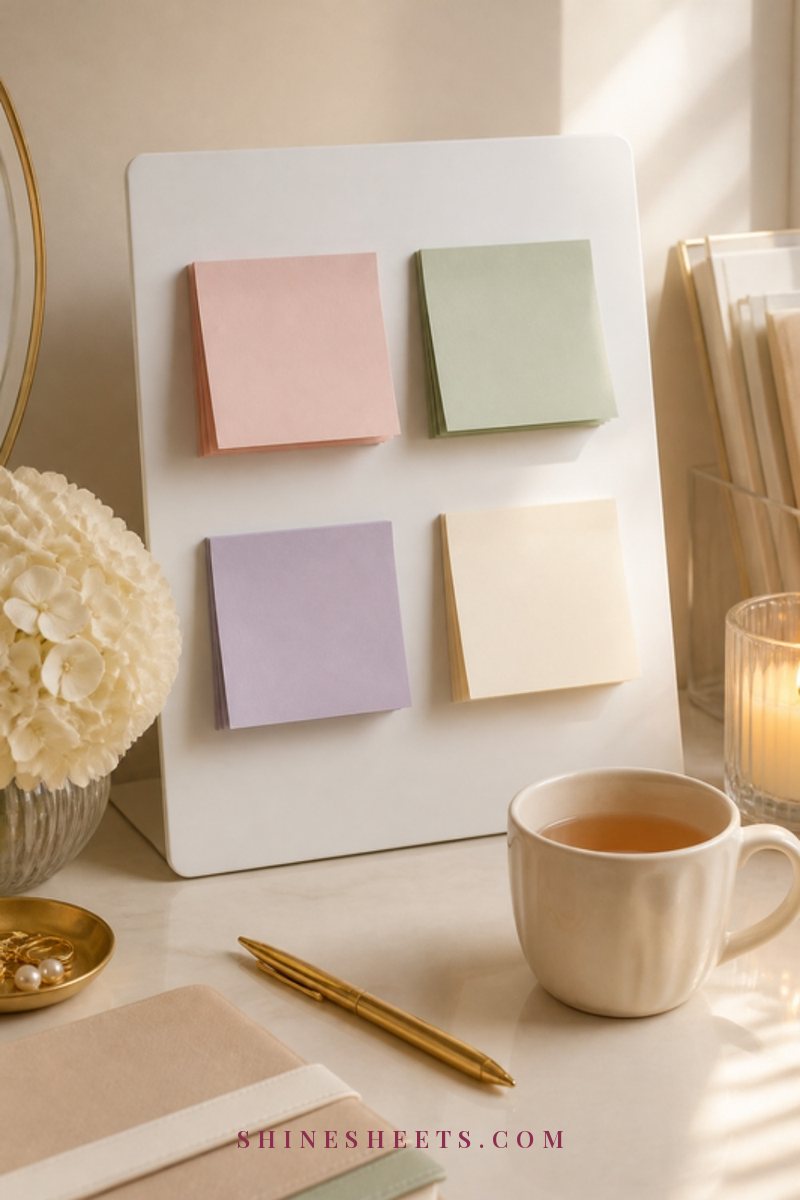
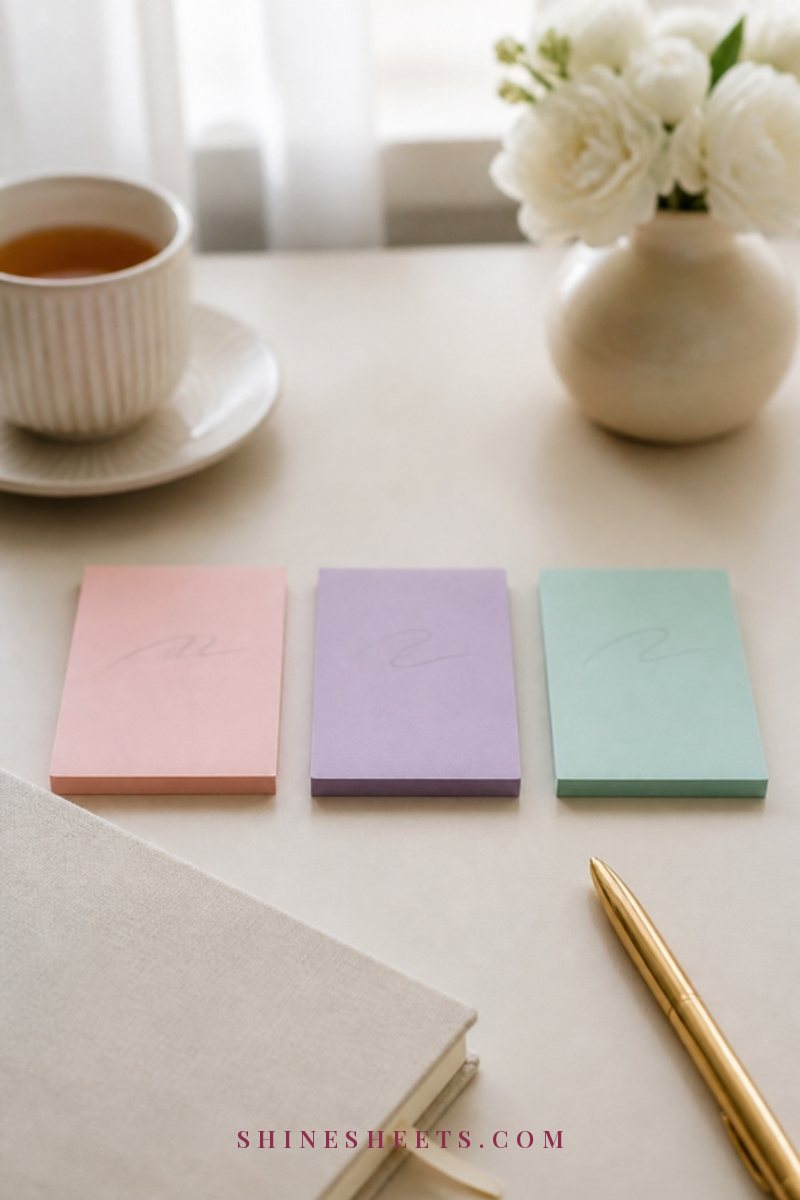
Small, physical reminders help work starters stick. A set of cream sticky notes on your laptop lid with just the first two-minute step written on it ("open the draft") is surprisingly effective, because it tells you exactly where to begin.
Two-Minute Starters for Your Money

- Look at your bank balance once a day. No judging, no fixing, just looking. Familiarity takes the fear out of money.
- Log one purchase. Write down what you spent today in your notes or a small notebook. Awareness comes before budgeting.
- Cancel or pause one subscription you don't use. Most take under two minutes online, and the saving repeats every month.
That's 15 starters in total. Some of them you'll do once and forget about; others will quietly grow into habits that change how your days feel. If you'd like to anchor them to things you already do (rinsing your mug after your morning coffee, for example), habit stacking pairs perfectly with the two-minute rule.
How To Use the Rule Without Letting It Run Your Day

The two-minute rule is a wonderful tool, but like every tool, it has limits. Used without a little care, it can scatter your attention or keep you stuck at the starting line forever.
Batch the Tiny Tasks
The "do it now" version works best when you aren't in the middle of something important. If every small task gets done the second it appears, your day turns into a string of interruptions. Instead, try this:
- Do two-minute tasks immediately when you're already in "admin mode" or moving around the house.
- When you're focusing, jot small tasks on a sticky note and handle them in one batch later.
- Give quick tasks a set window, such as fifteen minutes before lunch and fifteen minutes before you finish work.
Protect Your Focus Time
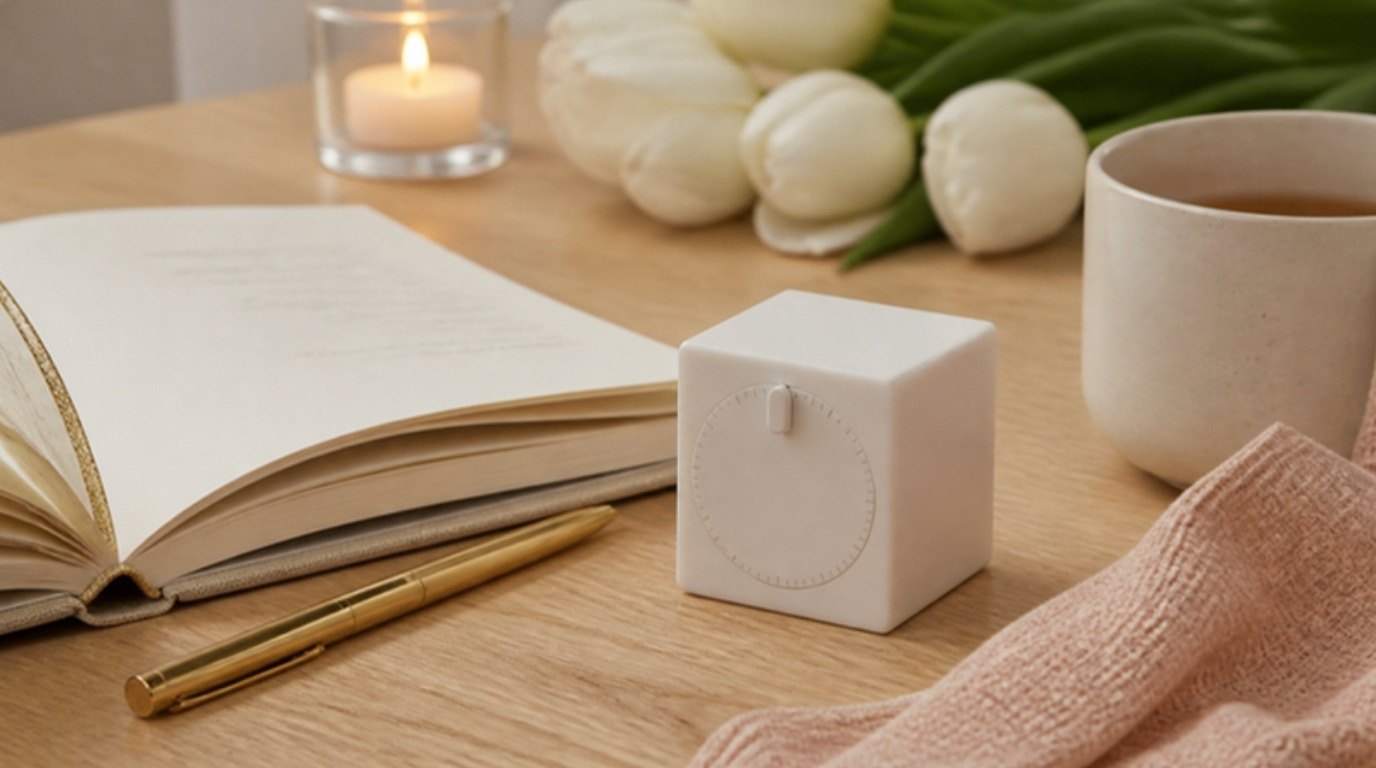
Quick tasks feel productive because they are finished fast, which makes them very tempting during hard work. Replying to five emails can feel like progress while the big project waits. Keep a protected block for the work that needs your full mind, and let the tiny tasks wait for their batch. A minimalist desk timer set for a focus block (and a separate short block for quick tasks) keeps the two from blending together. If you'd like to go further, my sister guide to deep work for beginners shows how to plan those focused stretches.
Make Sure the Starter Leads Somewhere
A two-minute habit is meant to be a beginning, not a ceiling. Putting on running shoes is a great start for a few weeks. After that, if you're still only putting on shoes, the habit may need a gentle next step. Ask yourself once a week: "Does this starter feel easy now?" If yes, it's ready to grow a little.
How To Step Up From Two Minutes
Once a starter has become automatic (usually after a few weeks of doing it most days), you can let it grow. Go slowly. The goal is to keep the habit feeling light while it gets a bit bigger.
- Add time in small steps. Two minutes becomes five, then ten. Stay at each level until it feels easy.
- Keep the same cue. If you read after your evening tea, keep reading after your evening tea. The cue is what makes it automatic.
- Allow a "two-minute day." On busy or low days, go back to the starter version without guilt. It keeps the chain unbroken and the habit alive.
- Track lightly. A small tick in a notebook with a few pastel pens is enough. You don't need percentages or charts.
- Notice how it feels. Write one line about what's changed, even if it's only "I like my kitchen more in the mornings."
For more on building the bigger version of a habit, my guide on how to create new habits that stick covers the next stages in detail.
A Gentle First Week With the Two-Minute Rule
If you like a little structure, here is an easy seven-day plan for trying both versions of the rule. Each day takes only a few minutes, and none of it needs to be perfect.
- Day 1: Choose one habit. Pick a single habit you've been meaning to start and write its two-minute version on a sticky note. Put the note where the habit happens.
- Day 2: Pick your cue. Decide exactly when the starter happens, attached to something you already do, like "after I pour my morning coffee" or "when I sit down after dinner."
- Day 3: Try "do it now" for one hour. For one hour at home, do every task under two minutes the moment you notice it. Notice how much lighter the space feels afterward.
- Day 4: Do the starter and stop. Do your two-minute habit and deliberately stop at two minutes, even if you want to keep going. This teaches your brain that starting is safe and small.
- Day 5: Set up a batch window. Choose one fifteen-minute slot for quick tasks at work or at home, so they stop interrupting your focus the rest of the day.
- Day 6: Make tomorrow easier. Spend two minutes preparing for your habit: shoes by the door, book on the pillow, notebook open on the desk.
- Day 7: Look back kindly. Write one line about what felt easy and one about what felt hard. Keep what worked, shrink what didn't, and carry on into week two.
By the end of the week you won't have a brand-new life, and you don't need one. You'll have one tiny habit with a clear cue, a calmer way to handle small tasks, and proof that you can start without waiting to feel ready. That is a lovely place to begin.
When the Two-Minute Rule Isn't Working
Sometimes even two minutes feels like too much, and that's okay. It usually means something else needs attention first. A few gentle checks:
- Is the starter still too big? "Clean the bathroom" isn't two minutes. "Spray the sink and wipe it" is. Shrink it again.
- Is the first step unclear? If you don't know what to do first, write the very first physical action on a note.
- Are you choosing too many starters at once? Pick one. Add another only when the first feels automatic.
- Is the task tied to a heavy feeling? Some avoidance is about fear, not effort. My guide on how to stop procrastinating when you feel stuck looks at those deeper reasons with kindness.
- Are you simply tired? Rest is not failure. A habit that skips a day for rest is still a habit.
If avoidance feels constant and heavy, and it's affecting your work, sleep or mood for weeks, it can help to talk it through with a doctor or therapist. Sometimes "I can't get started" is your mind asking for support, not more discipline.
Final Thoughts
The two-minute rule isn't about squeezing more into your day. It's about making the beginning so small and so kind that you stop waiting to feel ready. A rinsed mug, one page, one line in a journal, a pair of shoes by the door: these are the quiet places where real change starts.
Choose one starter today, keep it tiny, and let it grow at its own pace. You are allowed to start small, and small starts count.