
New habits rarely fail because you don't want them enough. They fail because they don't have a home in your day. "I'll drink more water" or "I'll stretch more" floats around with no clear moment attached, so it keeps getting pushed to later, and later never quite arrives.
Habit stacking fixes that by giving every new habit an address: right after something you already do without thinking. Your morning coffee, brushing your teeth, closing your laptop. Those old habits are already rock solid, and you can borrow their strength.
This guide covers habit stacking from the ground up: what it is, why it works, the simple formula, how to choose a strong anchor, how tiny the new habit should be, 30 habit stack examples grouped by time of day and area of life, common mistakes, simple tracking and what to do when you miss a day. It's a gentle method, and I think you'll like how little willpower it asks for.
What Is Habit Stacking?

Habit stacking means attaching a new habit to an existing one, so the old habit becomes the reminder for the new one. The idea was popularized by habit writers like BJ Fogg and James Clear, and the structure is beautifully simple:
After I [current habit], I will [new habit].
For example: "After I pour my morning coffee, I will drink a glass of water." Or: "After I brush my teeth at night, I will write one line in my journal." The current habit is called the anchor. The new habit is what you stack on top.
Once a stack feels automatic, you can even add a third habit after the second, building a little chain. But that's a later step. In the beginning, one anchor and one small habit is plenty.
Why Anchors Work So Well
Most of what we do every day runs on autopilot. You don't decide to brush your teeth; you just find yourself doing it at the same point every evening. Those automatic routines are tied to cues: a time, a place, an action that comes right before.
Habit stacking works because it uses those existing cues instead of trying to create brand-new ones from nothing.
- No need to remember: the anchor reminds you. You don't have to set ten phone alarms.
- A clear moment: "sometime in the evening" becomes "right after I put my plate in the dishwasher."
- Less decision fatigue: you've already decided when, so you only have to do it.
- Momentum: finishing one routine naturally leads into the next, like one domino nudging another.
It's the same reason a slow morning routine feels so easy once it's set up: each step leads to the next, and nothing needs to be figured out from scratch.
The Habit Stack Formula Card
This is the whole method on one small card. Screenshot it or copy it into the front of your planner.
| Part | What to write | Example |
|---|---|---|
| Anchor | Something you already do every day, at the same point, without fail | After I switch on the kettle |
| New habit | One tiny, specific action (2 minutes or less to start) | I will do 10 slow shoulder rolls |
| Where | The exact place it happens | Standing at the kitchen counter |
| Small win | A tiny way to mark it done | Tick the box in my tracker |
| Full sentence | "After I [anchor], I will [new habit] at [place]." | After I switch on the kettle, I will do 10 slow shoulder rolls at the counter. |
Writing the full sentence matters more than you'd think. Something about seeing it written down turns a vague hope into a plan.
How To Choose a Solid Anchor
The anchor is the foundation of the whole stack. A wobbly anchor means a wobbly habit. Here's what a strong one looks like:
- It happens every single day (or every day you want the new habit). "When I go to the gym" doesn't work if you go twice a week.
- It happens at roughly the same time and in the same place.
- It's specific. "After breakfast" is vague; "after I put my breakfast bowl in the sink" is clear.
- It has a clear end. Stack after an action finishes, not during something that drifts ("while I check my phone" never ends).
- It matches the new habit's energy. Stack calming habits on evening anchors and energizing ones on morning anchors.
To find your anchors, spend one day noticing what you already do without fail. Write a quick list: wake up, turn off the alarm, open the curtains, make coffee, shower, get dressed, lock the door, sit at the desk, eat lunch, come home, take off shoes, make tea, brush teeth, plug in the phone, turn off the lamp. Every one of those is a possible anchor.
Keep the New Habit Tiny
This is where most people (me included, for years) get it wrong. We pick a solid anchor and then stack something huge on top: "After I make coffee, I'll do a 30-minute workout." That's not a habit stack. That's a mountain.
Start with a version of the habit that takes two minutes or less. It should feel almost too easy:
- Not "read for an hour," but "read one page."
- Not "meditate for 20 minutes," but "take three slow breaths."
- Not "clean the kitchen," but "wipe the counter."
- Not "journal every night," but "write one sentence."
- Not "drink two liters of water," but "drink one glass."
Tiny habits build the connection between anchor and action. Once that link is automatic (often after a few weeks), you can grow the habit naturally. Reading one page often turns into five without any effort at all. If you'd like the bigger picture on how new habits form, my guide on how to create new habits goes deeper into the science.
30 Habit Stack Examples
Here are 30 habit stacks, grouped by time of day and area of life. Pick one or two that fit your days, not ten. Change the anchor to something you actually do, and keep the new habit small.
Morning Habit Stacks

- 1. After I turn off my alarm, I will sit up and take three slow breaths before reaching for my phone.
- 2. After I open the curtains, I will stand in the daylight for one minute.
- 3. After I pour my coffee, I will drink a full glass of water.
- 4. After I brush my teeth in the morning, I will apply sunscreen.
- 5. After I sit down with my coffee, I will write my one priority for the day.
Work Habit Stacks
- 6. After I sit down at my desk, I will look at my priority list before opening email.
- 7. After I finish a meeting, I will write down the next step in one sentence.
- 8. After I refill my water glass, I will stand up and roll my shoulders ten times.
- 9. After I eat lunch, I will take a five-minute walk, even if it's just around the building.
- 10. After I close my laptop for the day, I will write tomorrow's top three tasks on a sticky note.
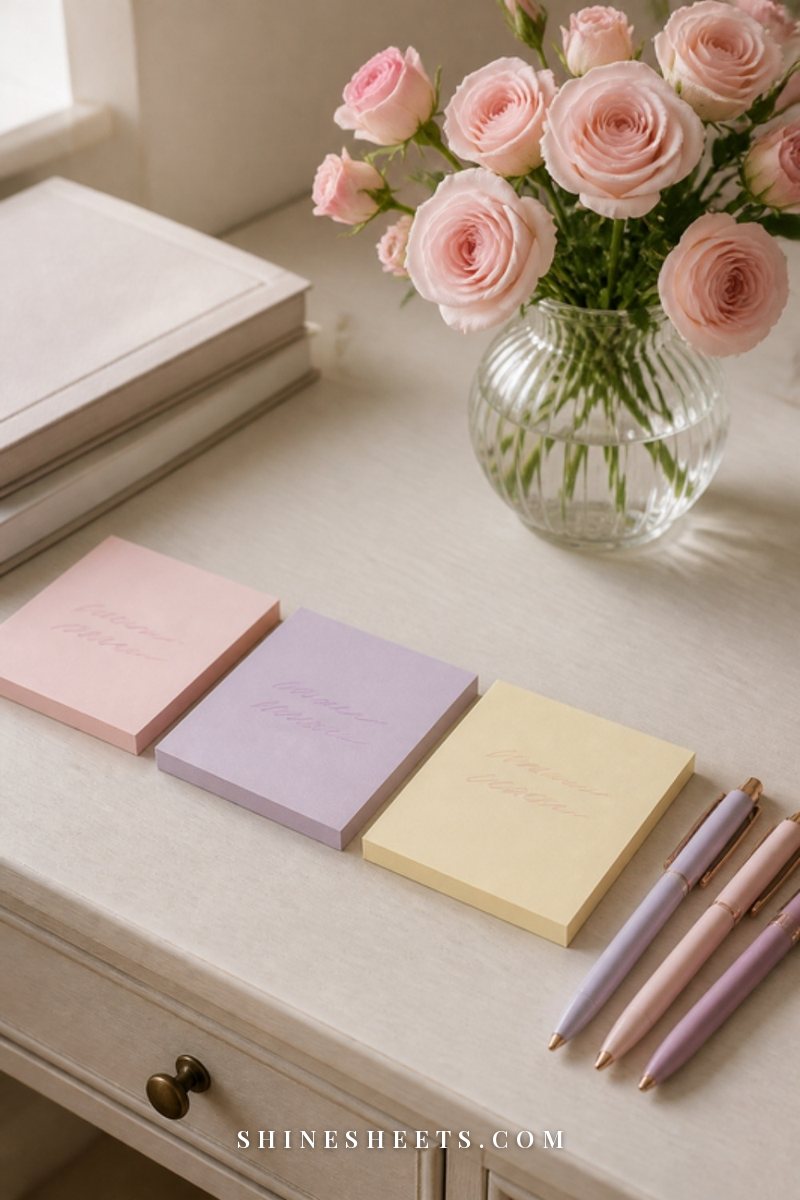
Keeping a pad of pastel sticky notes on your desk makes habit 10 almost effortless. Stick tomorrow's three tasks right on the closed laptop and you'll see them first thing.
Evening Habit Stacks

- 11. After I take off my shoes, I will put my keys and bag in their spot.
- 12. After I make my evening tea, I will put my phone on the charger in another room.
- 13. After I brush my teeth at night, I will write one line about my day.
- 14. After I get into bed, I will read one page of a book.
- 15. After I turn off the lamp, I will name three things that went okay today.
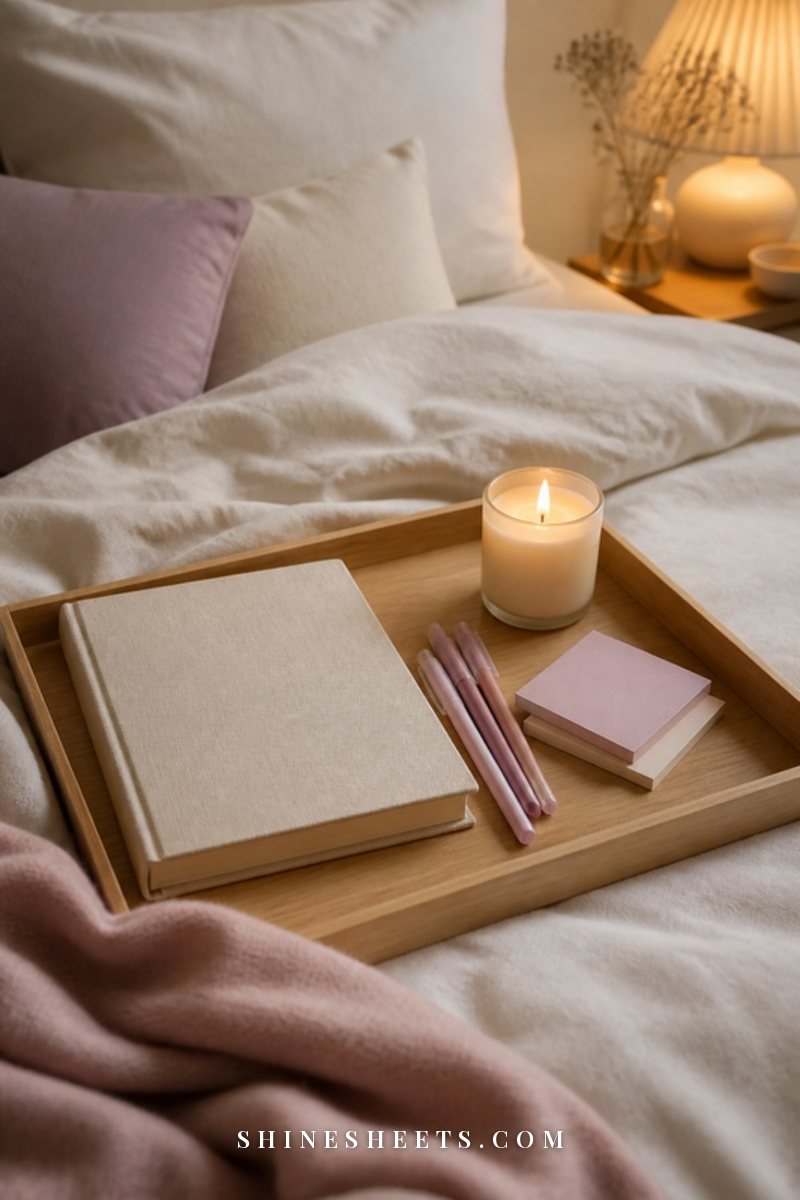
Habit 12 and 13 are my own favorite pairing: tea, phone away, then a line in my journal. Lighting a glass jar candle while the tea steeps makes the whole thing feel like a small evening ritual rather than a task (blow it out before bed, always).
Home Habit Stacks
- 16. After I start the dishwasher, I will wipe down the kitchen counters.
- 17. After I get out of bed, I will make it, even just pulling up the duvet.
- 18. After I finish my shower, I will wipe the shower glass with a squeegee.
- 19. After I take off my clothes in the evening, I will put them straight in the hamper or back on the hanger.
- 20. After I switch on the kettle, I will put away five things in the kitchen.
Self-Care Habit Stacks

- 21. After I wash my face at night, I will massage my hands with hand cream.
- 22. After I step out of the shower, I will apply body lotion while my skin is still slightly damp.
- 23. After I sit down on the sofa in the evening, I will stretch my neck slowly for one minute.
- 24. After I finish a stressful call, I will take five slow breaths before the next thing.
- 25. After I fill my water bottle in the morning, I will take my daily walk shoes to the door.
Relationship Habit Stacks
- 26. After I pour my morning coffee, I will send one kind message to a friend or family member.
- 27. After someone I love walks through the door, I will put my phone down and greet them properly.
- 28. After dinner, I will ask one question about the other person's day and really listen.
- 29. After I write my weekly plan on Sunday, I will schedule one call or visit with someone I miss.
- 30. After I get into bed, I will say one thing I appreciated about my partner, friend or roommate today.
Habit Stacking Examples at a Glance
If you'd like to build a full daily chain, here's how a few stacks can link together without feeling like a lot. Each one takes two minutes or less.
| Anchor | New habit | Time | Area |
|---|---|---|---|
| Turn off the alarm | Three slow breaths | 30 seconds | Calm |
| Pour coffee | Drink a glass of water | 1 minute | Health |
| Brush teeth (morning) | Apply sunscreen | 1 minute | Skin |
| Sit at desk | Read priority list | 1 minute | Focus |
| Eat lunch | Five-minute walk | 5 minutes | Movement |
| Close laptop | Write tomorrow's top three | 2 minutes | Planning |
| Start dishwasher | Wipe counters | 2 minutes | Home |
| Make evening tea | Phone on charger in another room | 30 seconds | Sleep |
| Brush teeth (night) | One line in journal | 1 minute | Reflection |
| Get into bed | Read one page | 2 minutes | Rest |
Don't start all ten at once. Choose one, live with it for two weeks, then add the next.
When you're ready to chain two habits together, the new habit from your first stack becomes the anchor for the next one. "After I pour my coffee, I will drink a glass of water. After I drink the water, I will write my one priority." Keep chains short, three links at most, because if one link breaks the rest tend to follow. If a chain keeps falling apart at the same spot, split it into two separate stacks with different anchors instead.
It also helps to notice your natural energy. If you're sleepy and slow in the mornings, put calm, easy stacks there and save the more active ones for after lunch. Habit stacking works best when it fits the day you really have, not the day you wish you had.
Common Habit Stacking Mistakes

Habit stacking is simple, but a few common slip-ups can make it feel like it doesn't work.
- Stacking too many at once. Five new habits in one week is a recipe for dropping all five. Start with one stack; add another only when the first feels automatic.
- Vague anchors. "In the morning" isn't an anchor. "After I put my coffee mug down" is.
- Anchors that don't happen daily. If the anchor only happens sometimes, so will the habit.
- Making the new habit too big. If you're dreading it, it's too big. Shrink it until it feels easy.
- A mismatched place. Planning to journal after brushing your teeth when the journal lives in the living room won't work. Put the tool right where the anchor happens.
- Stacking a habit you don't actually want. Habits you choose because you "should" rarely last. Pick something that makes your life feel better.
And if part of the goal is to stop something, not only to start, my guide on how to break bad habits pairs nicely with habit stacking. Sometimes the easiest way to drop an old habit is to stack a better one on the same anchor.
How To Track Your Habit Stacks Simply
Tracking isn't required, but a little visual proof that you're showing up is surprisingly motivating. Keep it light, so tracking doesn't become a habit you have to keep up too.
- A simple tick: a small cream habit tracker journal with a row for each stack and a box for each day. One tick, done.
- Keep it where the habit happens: a tracker on the nightstand for evening stacks, one on the desk for work stacks.
- Use a pen you like: it sounds tiny, but a smooth gold pen makes the tick feel like a small celebration.
- Review weekly: on Sunday, look at the week. Which stacks feel automatic? Which ones keep slipping, and why?
- Plan the next stack: a cream weekly planner is a good place to write the one new stack you'll add next, with its full "After I…, I will…" sentence.
After about four to eight weeks, many stacks feel so natural that you don't need to track them anymore. That's the goal. You can retire the tracker for that habit and start fresh with a new one.
What To Do When You Miss a Day

You will miss days. Everyone does. Travel, illness, a long evening out or just a tired week can break the chain for a while. Missing a day doesn't undo what you've built.
- Never miss twice, if you can help it. One missed day is a blip. Try to come back the very next day, even in the tiniest version.
- Shrink it on hard days. If "read one page" feels like too much, read one sentence. The point is to keep the link between anchor and action alive.
- Check the anchor. If you keep missing a stack, the anchor might not happen as reliably as you thought. Move the habit to a stronger one.
- Skip the guilt. Guilt makes it harder to restart. A kind "okay, back to it today" works far better than a long internal lecture.
- Use travel anchors. When routines change, pick new temporary anchors: "after I open the hotel room door" or "after I unpack my toiletries."
Showing up imperfectly is what consistency really looks like. My guides on how to be more consistent and how to be more disciplined both expand on this kinder, more realistic approach.
Final Thoughts
Habit stacking works because it doesn't ask you to become a different person overnight. It asks you to notice what you already do every day and to let one small, good thing ride along. Pick one anchor, one tiny habit and write the sentence down.
A glass of water after your coffee, one line in your journal after brushing your teeth: small stacks, repeated gently, quietly turn into the kind of days you've been wanting.