Every year, somewhere between the first holiday party and the last leftover cookie tin, my routines quietly pack their bags and leave. The morning walk turns into "I'll go tomorrow." Bedtime drifts past midnight. My journal sits on the nightstand under a pile of gift receipts. And by early January, I'm standing in my kitchen feeling like I have to start my whole life over.
For a long time, I thought the answer was more discipline. Stricter plans, longer lists, a big "back on track" push in the new year. What actually worked was the opposite: shrinking my habits down to a size that fits inside a busy, messy, wonderful holiday season.
So this is how to keep healthy habits during the holidays without guilt – and without a single food rule. No calorie talk, no "earning" dessert, no making up for anything. Just three minimum habits that keep you feeling like yourself, a "minimum vs. full" version of each for different kinds of days, scripts for when plans get in the way, and a simple holiday habit tracker you can copy into your planner.
A gentle note: this is general wellbeing advice, not medical guidance. If you have a health condition or a plan from your doctor, that always comes first.

Why Healthy Habits Fall Apart in December
It's not because you're lazy or "bad at habits." The holidays break almost every condition that habits rely on:
- Your schedule disappears. Habits love the same time and place every day. December gives you late nights, travel, parties on a Tuesday and a different bed every few days.
- Your cues vanish. The walk you take after work doesn't happen when work stops. The journal on your nightstand doesn't come with you to your parents' house.
- Your energy is spent elsewhere. Shopping, wrapping, hosting, socializing, traveling – it all takes energy you'd normally spend on yourself.
- All-or-nothing thinking kicks in. You miss one workout, decide the week is "ruined" and wait for January to start again.
That last one is the real habit-killer. And it's exactly what the minimum-habit approach is designed to fix.
The Minimum-Habit Rule
Here's the idea in one sentence: during the holidays, your goal isn't to progress, it's to keep the thread.
A habit you do for two minutes every day stays alive. A habit you do for an hour "when things calm down" quietly dies. So for each habit below, you'll pick a minimum version – so small it feels almost silly – and a full version for calm days. The minimum is the only thing that counts as "done." Anything more is a bonus.
I also follow one more little rule: never miss twice. Missing one day is life. Missing two in a row is the beginning of a new (unwanted) habit. So if yesterday got away from you, today's job is simply the minimum. No catching up, no doubling up, no guilt.
If you want the science-y background on how habits actually form, my post on how to make new habits stick goes deeper. For now, let's keep it to three.
The 3 Minimum Habits To Keep Through the Holidays
I chose these three because they hold everything else up. When I move a little, sleep at roughly the same time and take a few quiet minutes for my mind, I'm calmer, kinder and more present with the people I love. None of them involve food, and none of them require a gym, an app or a perfect day.
1. Move Your Body for 10 Minutes
Not a workout. Not "burning" anything. Just movement because it makes you feel more like yourself – clearer head, looser shoulders, better mood.
- Minimum version (2–10 minutes): a walk around the block, five minutes of stretching on the floor, dancing to two songs while you wrap gifts.
- Full version (20–45 minutes): a long walk, a yoga class, your usual workout.
- Travel-day version: walk the airport or station instead of sitting at the gate, stretch your calves and shoulders at rest stops, take the stairs.
- Family-day version: invite someone on a "walk to see the lights" after dinner. It's one of my favorite holiday traditions, and it's usually where the best conversations happen.
Keeping movement easy to start is the whole game. A soft blush yoga mat left unrolled in the corner of the bedroom is a quiet invitation – look for one that's at least 6mm thick so floor stretches feel comfortable, and light enough to carry to the living room. And if you're traveling, a set of pastel resistance loop bands takes up almost no space in a suitcase and turns any guest room floor into a mini stretching spot.
Cold weather making it hard to get out the door? A warm cream knit beanie and gloves set by the door genuinely makes the "it's too cold" excuse a lot quieter. My ways to stay active in winter have more ideas for dark, chilly days.
Mini script for yourself: "I don't have to work out. I just have to put my shoes on and walk to the corner." Most days, you'll keep going.
2. Keep a Sleep Anchor
You will have late nights in December. That's part of the joy. The habit here isn't "go to bed at 10 every night" – it's keeping one anchor so your body clock doesn't drift into chaos.
- Minimum version: wake up within about an hour of your usual time, even after a late night, and get some daylight in the morning. Rest with a short early-afternoon nap if you need it, rather than sleeping until noon.
- Full version: a consistent bedtime too, with a 20–30 minute wind-down: phone away, warm caffeine-free drink, a few pages of a book.
- Party-night version: decide your leave-by time before you arrive, and have a two-step wind-down ready for when you get home (wash your face, phone on the charger across the room).
- Travel version: pack a little "sleep kit" – a sleep mask, earplugs and the pajamas that feel like home.
Coffee is a sneaky one for me here. Sometimes it perks me up, sometimes it just makes me jittery and anxious, and after a short night I'm more likely to reach for a third cup in the afternoon. Keeping caffeine to the earlier part of the day makes the next night easier.
If your evenings could use a gentler shape, my night routine ideas are an easy place to start.
Mini script for a late night: "I'll stay up and enjoy this. Tomorrow I still get up at my normal time and go outside first thing."
3. Take a 5-Minute Pause
The holidays are loud – literally and emotionally. Family dynamics, crowded stores, a calendar with no white space. A few minutes of quiet each day keeps your nervous system from running on fumes. I'm prone to anxiety (mostly managed these days), and this is the habit that keeps the busiest weeks from tipping into overwhelm.
- Minimum version (1–5 minutes): sit somewhere quiet and take ten slow breaths, with a longer exhale than inhale. Or write one line in a journal.
- Full version (15–20 minutes): tea, then journaling. Three prompts: what happened today, what I'm feeling, what I need tomorrow.
- At a family gathering: step outside "for some air" or volunteer to take out the trash. Five minutes alone counts.
- On a travel day: headphones in, eyes closed, one calming playlist, before you get off the plane or train.
Evening tea followed by journaling is my non-negotiable version of this. A small pastel guided journal with short daily prompts is a nice pick if a blank page feels intimidating – look for one undated, so a skipped day doesn't leave an empty page staring back at you.
Mini script when you need to step away: "I'm going to grab some fresh air for a few minutes – back soon!" That's all the explanation anyone needs.
Minimum vs. Full: Your Habit Menu at a Glance
Pick your version based on the kind of day you're having, not the kind of day you wish you were having.
| Habit | Minimum (counts as done) | Full (calm days) | Busiest-day backup |
|---|---|---|---|
| Move | 2–10 minutes of walking, stretching or dancing | 20–45 minute walk, class or workout | Take the stairs + one song of stretching |
| Sleep anchor | Wake within about an hour of your usual time + morning daylight | Steady bedtime + 20–30 minute wind-down | Phone across the room, face washed, lights out |
| 5-minute pause | Ten slow breaths or one journal line | Tea + 15 minutes of journaling | Three breaths in the car or bathroom |
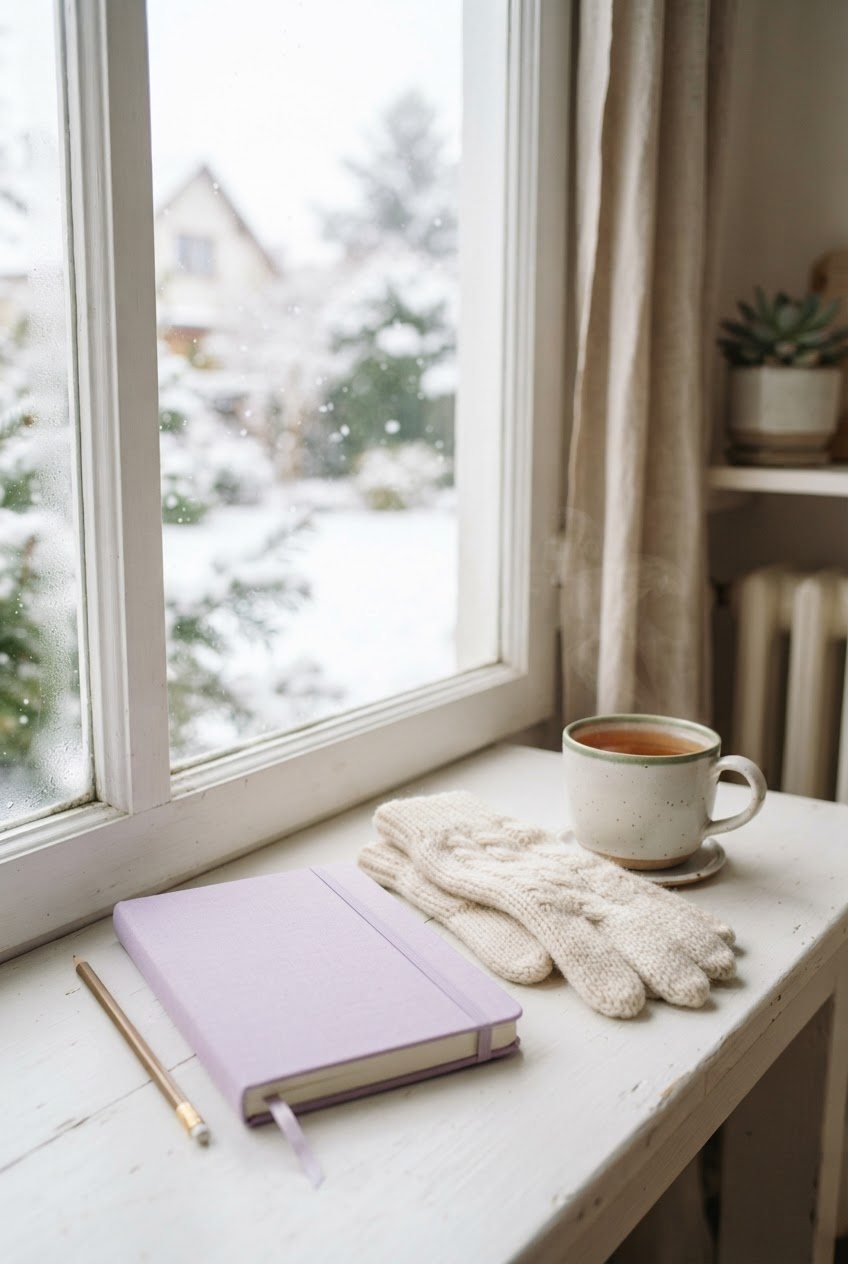
Your Simple Holiday Habit Tracker
This is the part to copy into your planner (or print and stick on the fridge). It covers two weeks, which is about how long the busiest stretch of the season lasts. Check a box only for the minimum – anything more is a bonus, not a requirement. The last column is for one small good thing from the day, because the holidays are supposed to feel good, not just get survived.
| Day | Move (10 min) | Sleep anchor | 5-min pause | One good thing today |
|---|---|---|---|---|
| Day 1 | ☐ | ☐ | ☐ | |
| Day 2 | ☐ | ☐ | ☐ | |
| Day 3 | ☐ | ☐ | ☐ | |
| Day 4 | ☐ | ☐ | ☐ | |
| Day 5 | ☐ | ☐ | ☐ | |
| Day 6 | ☐ | ☐ | ☐ | |
| Day 7 | ☐ | ☐ | ☐ | |
| Day 8 | ☐ | ☐ | ☐ | |
| Day 9 | ☐ | ☐ | ☐ | |
| Day 10 | ☐ | ☐ | ☐ | |
| Day 11 | ☐ | ☐ | ☐ | |
| Day 12 | ☐ | ☐ | ☐ | |
| Day 13 | ☐ | ☐ | ☐ | |
| Day 14 | ☐ | ☐ | ☐ |
How to use it without guilt:
- Two out of three is a great day. One out of three is still a day you kept the thread.
- Empty boxes are information, not failure. If "move" is always empty on party days, plan a walk earlier that day next time.
- Never miss twice. If a column is empty yesterday, today it gets the minimum.
- Don't add columns. The minute you add "drink X" and "eat Y," it stops being a gentle tracker and becomes a scorecard. Three habits. That's the point.
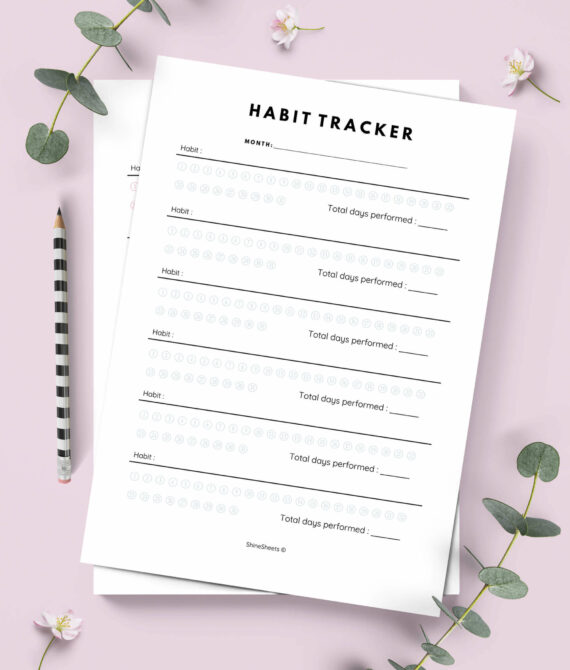
If you'd rather print a pretty version, a pastel habit tracker notepad works well – look for one with tear-off weekly pages so you start fresh every Monday. Or grab my free habit tracker printable and write just these three habits at the top.
Why There Are No Food Rules Here
You might have noticed there's nothing in this guide about what to eat, what to skip or how to "balance it out." That's on purpose.
So many of us carry a heavy layer of guilt into the holidays around food, and that guilt tends to make the whole season feel worse, not healthier. Holiday meals are about family recipes, traditions and people around a table. You're allowed to simply enjoy them.
If you do have specific nutrition needs or a medical eating plan, a doctor or registered dietitian is the right person to help you navigate the season. Everyone else: you have my full permission to take food off your habit list for a few weeks and focus on how you move, rest and breathe.
Gentle Scripts for When Plans Get in the Way
Sometimes the hardest part isn't the habit, it's explaining it. These short lines help you protect your minimums without making it a big deal:
- Leaving a party at your planned time: "This was so lovely – I'm heading out so I'm not a zombie tomorrow. Thank you for having me!"
- Inviting someone on your walk: "I'm going for a quick walk to see the lights. Want to come?"
- Taking your five minutes: "I'm going to step outside for a bit of fresh air – back in five."
- Saying no to one more event: "I'd love to, but I've got too much on this week. Can we do something in January?"
- When someone asks about your routine: "It just helps me feel like myself during a busy month." Smile, change the subject.
Holiday stress has a way of sneaking in sideways. If it's already building, my guide on how to manage holiday stress has five ways to actually enjoy the season.
Set Up Your Cues Before the Busy Weeks Start
Habits don't run on willpower, they run on cues – the little reminders that make the next step obvious. The holidays wipe out your usual cues, so it helps to build a few new ones on purpose, ideally on a calm Sunday before things get hectic.
- Attach each habit to something that still happens. Coffee still happens. Brushing your teeth still happens. So: "After my first coffee, I put on my shoes and walk to the corner." "After I brush my teeth, I write one line in my journal." The anchor stays, even when the rest of the day changes.
- Pack a tiny habit kit. A small pouch with your journal, a pen, a sleep mask and your walking socks. If you're traveling, it goes in your bag first. If you're home, it lives on your nightstand.
- Put it on the calendar like a party. If December is full of invitations, give your walk a time slot too. "Lights walk, 4 PM" deserves a spot next to "office party, 7 PM."
- Lower the bar before you need to. Decide your minimums now, while you're calm. On a chaotic day, you won't have to think – you'll just do the small version you already chose.
- Tell one person. A friend, a sister, a partner. Not for accountability pressure, just so someone can say "Want to walk?" on the day you forget.
If you love a little seasonal structure, pair your minimums with a few joyful items from my Christmas bucket list – a lights walk, a slow morning with tea, a quiet evening with a book. Healthy habits and holiday magic get along much better than we think.
What To Do When You "Fall Off" Completely
Let's say you had a whirlwind week – travel, family, late nights – and the tracker is blank. Here's your gentle restart, no new-year reset required:
- Skip the post-mortem. You don't need to analyze why. The season was full. That's allowed.
- Pick one habit for tomorrow. Just one minimum. My suggestion: the sleep anchor, because it makes the other two easier.
- Make it ridiculously easy. Shoes by the door. Journal on the pillow. Alarm already set.
- Celebrate the restart, not the streak. Coming back after a break is the real habit. It's the one that lasts a lifetime.
Be Kind to Your Body (A Quick Safety Note)
Movement during the holidays should feel good. If you're new to exercise, recovering from an illness or injury, pregnant, or managing a health condition, check with your doctor before adding anything more intense than gentle walking and stretching. On icy days, choose indoor movement over a slippery sidewalk. And if your mood feels low for more than a couple of weeks, or the season is bringing up grief or heavy feelings, please reach out to a doctor, a counselor or someone you trust. You don't have to carry it alone.
Final Thoughts
Healthy habits during the holidays aren't about doing everything. They're about keeping a few small threads – a short walk, a steady wake-up time, five quiet minutes – so you arrive in the new year feeling like yourself instead of feeling like you have to start over.
Copy the tracker, choose your minimums and let the rest of the season be what it is: imperfect, busy and full of people you love. The thread is enough.