When you don't know what you want, a big goal can feel like a test you haven't studied for. A tiny experiment asks a much kinder question: "What happens if I try this, just for a little while?" There's no finish line to fail, only something to notice.
That small change takes a lot of pressure off. Instead of deciding who you're going to be this year, you get to collect real information about what actually makes your days feel better – one small, low-cost trial at a time.
This guide explains what tiny experiments are, why they often work better than big goals when you feel stuck, and how to design one in five simple steps. You'll also find an example log table, 15 tiny experiment ideas across mornings, creativity, social life, home and learning, how to track what you notice and what to do when an experiment "fails" (spoiler: it doesn't).
All you need is a little curiosity and a notebook.
What Is a Tiny Experiment?

A tiny experiment is a small, time-limited trial you run out of curiosity, without deciding in advance what the result should be. It has three parts:
- A question. Something you're genuinely curious about, like "Do I feel calmer if I don't check my phone for the first 30 minutes of the day?"
- A tiny action. Small enough that you could do it on a tired day.
- A short window. Usually 7 or 14 days, with a clear start and end.
The key difference from a goal is the attitude. A goal says, "I will do this, and if I don't, I've failed." An experiment says, "I'll try this and see what I learn." Both are valid, but when you feel stuck, unsure or a bit burned out, the experiment is usually the one you'll actually start.
It's a lot like being a scientist of your own life – just a very gentle one, with tea.
Why Tiny Experiments Beat Big Goals When You Feel Stuck
Big goals are wonderful when you know exactly where you're going. But in seasons when you don't, they can quietly backfire. Here's why small trials often work better:
- No fixed outcome means no failure. If you're not chasing a result, you can't miss it. Every outcome is useful information.
- They're short. Seven days is easy to commit to. "Forever" isn't.
- They're cheap. Most experiments cost nothing, so you can try many things over a year without spending much.
- They build self-trust. Finishing a small trial, even a "boring" one, proves to yourself that you follow through.
- They lead you to what you want. When you don't know what you want, trying small things is how you find out. Clarity tends to come from action, not from thinking harder.
I'm prone to anxiety, and big, shiny goals used to make it louder for me. Small experiments feel more like play, which is exactly why they stick. If you're still figuring out direction, my guide on setting goals when you don't know what you want pairs beautifully with this approach.
How To Design a Tiny Experiment in 5 Steps
This is the simple structure I'd use for any experiment. It takes about ten minutes to plan.
1. Pick a Question
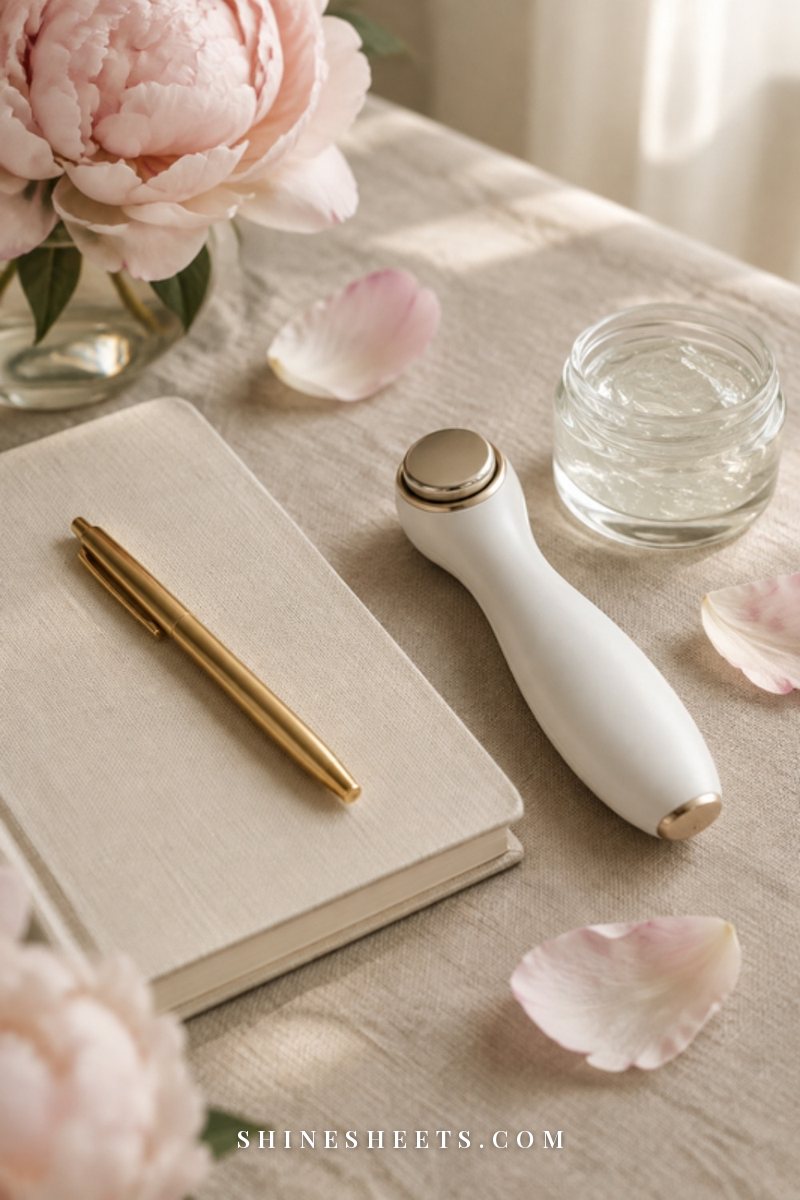
Start with curiosity, not with "should". Good questions often begin with "What happens if…", "Do I enjoy…" or "Does it help when…". A few examples:
- What happens to my evenings if I put my phone in another room at 9 p.m.?
- Do I actually enjoy drawing, or do I just like the idea of it?
- Does a ten-minute walk after lunch change my afternoon energy?
Write your question at the top of a fresh page. A sage dotted linen notebook kept just for experiments makes the whole thing feel a little special.
2. Choose a Small Action
Now make the action so small it almost feels silly. Not "learn Spanish", but "do one five-minute language lesson after breakfast". Not "become a morning person", but "open the curtains and drink a glass of water before checking my phone".
A good test: could you do it on your worst day of the week? If not, shrink it.
3. Set a Short Window
Choose 7 or 14 days. Seven days is perfect for daily habits and quick curiosity. Fourteen days works better for anything that needs a little time to feel natural, like a new sleep routine.
Mark the start and end dates somewhere you'll see them – a small cream desk calendar on your desk works well. Knowing there's an end date makes it much easier to begin.
4. Decide How You'll Notice Results
Before you start, decide what you'll pay attention to. Keep it simple: one or two things, noted in a sentence each day. For example:
- Mood in the evening, from 1 to 5.
- Did I enjoy it? Yes, a bit or no.
- One word for how the day felt.
Color-coding with a pastel highlighter set can make patterns jump out at the end – pink for good days, yellow for "meh", blue for hard ones.
5. Review: Keep, Tweak or Drop
On the last day, read back through your notes with a cup of tea and ask three questions: What did I notice? What surprised me? Do I want more of this?
Then choose one of three options:
- Keep – it felt good, so it becomes part of your life (no pressure to be perfect).
- Tweak – something was interesting, but the action needs changing. Run a new version.
- Drop – it wasn't for you. That's a perfectly good result.
Tiny Experiment Log: Example Table
Here's what a simple log can look like. Copy the four columns into your notebook, or screenshot it as a starting point.
| Question | Tiny action | Time window | What I noticed |
|---|---|---|---|
| Do I feel calmer without my phone in the morning? | Phone stays in another room for the first 30 minutes | 7 days | Mornings felt slower in a good way; day 3 was hard, day 6 felt natural |
| Do I enjoy drawing? | 10 minutes of sketching after dinner | 14 days | Loved it on weekends, felt rushed on weekdays – tweak to 3 times a week |
| Does an evening walk help me sleep? | 15-minute walk after dinner | 14 days | Fell asleep faster on most walk days; skipped rainy days without guilt |
| Would I like to talk to friends more often? | Send one voice message to a friend each day | 7 days | Two long, lovely conversations came out of it – keep, but 3 times a week |
| Does a tidy entry make evenings feel calmer? | 5-minute reset of the entryway before bed | 7 days | Mornings felt easier, evenings not much different – keep the morning benefit |
Notice how none of these say "success" or "failure". Every row is just information.
15 Tiny Experiment Ideas To Try
Here are fifteen low-cost ideas, grouped by area. Pick one that makes you a little curious and start with a seven-day window.
Morning Experiments
1. No phone for the first 30 minutes. Leave it charging in another room. Notice how your mood and focus change by mid-morning.
2. Daylight first. Open the curtains or step outside for five minutes within an hour of waking. Notice your energy in the early afternoon.
3. Swap the first coffee for tea. Coffee sometimes perks me up and sometimes makes me anxious, so this one is personal for me. Try tea in a favorite blush ceramic mug for a week and note how jittery or calm you feel.
Creativity Experiments
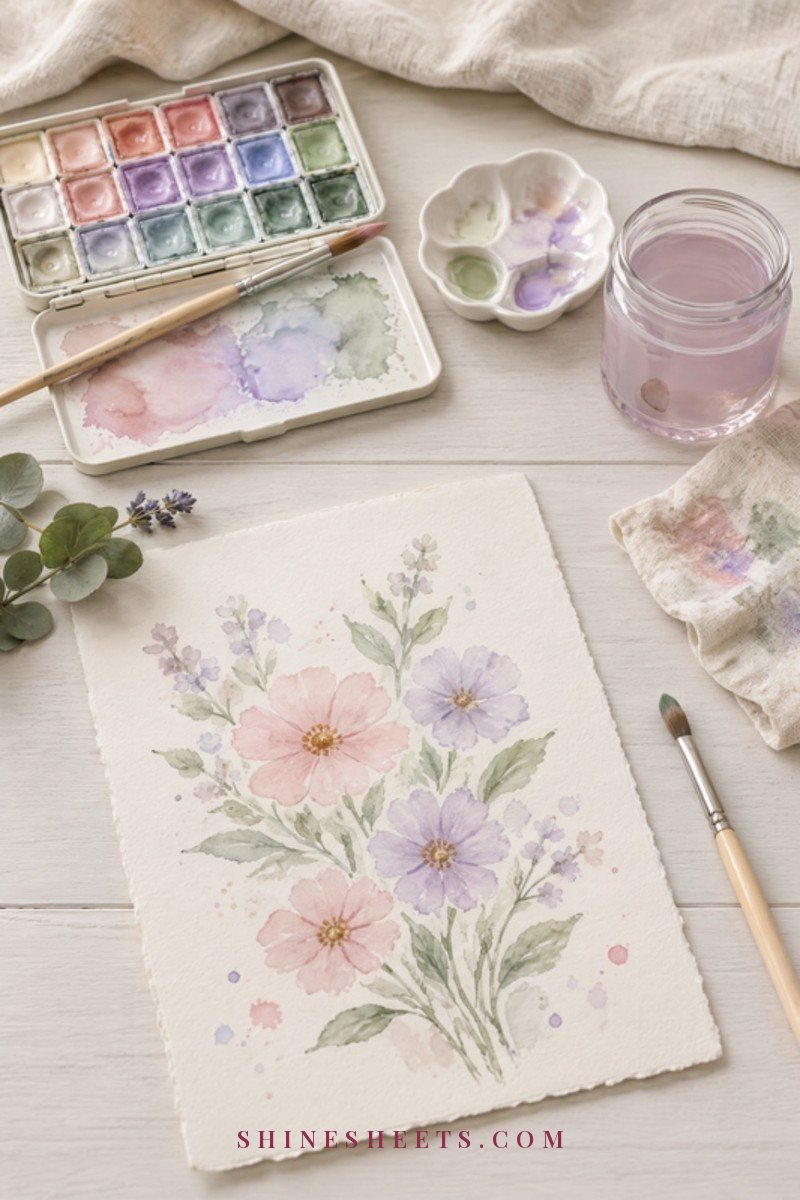
4. Ten minutes of sketching. Draw whatever is in front of you – a mug, a plant, your hand. No skill needed, just attention.
5. One photo a day. Take one thoughtful photo of something beautiful each day. Notice whether you start seeing more beauty around you.
6. Morning pages lite. Write one page by hand before you start your day, with pastel gel pens if that makes it more inviting. Notice whether your thoughts feel clearer afterward.
Looking for more creative directions? My list of cheap hobbies that don't feel cheap is full of ideas that work as experiments.
Social Life Experiments
7. One message a day. Send a short, kind message to someone you've been thinking about. Notice how many conversations follow.
8. Say yes to one small invitation. For two weeks, say yes to one low-key plan you'd normally skip (a walk, a coffee, a class). Notice how you feel before and after.
9. Ask one deeper question. In one conversation a day, ask a question that goes a little beyond "How are you?" – like "What's been the best part of your week?" Notice how people respond.
Home Experiments
10. A five-minute evening reset. Set a timer and tidy one area before bed. Notice how your mornings feel.
11. Candlelight after 8 p.m. Turn off the main light and use lamps or a glass candle in the evening. Notice whether you wind down more easily (and always blow candles out before bed).
12. One room, one change. Move one piece of furniture or decor for a week. Notice whether you use the space differently.
Learning Experiments
13. One short lesson a day. Try five minutes of a language, an instrument or a skill using a library app or a short video. Notice whether you look forward to it.
14. Read before social media. Read ten pages of a book before opening any app in the evening. Notice how your sleep and mood change.
15. Learn one new thing about your area. Visit a new street, park or library each week for two weeks. Notice whether your town starts to feel bigger and more interesting.
If curiosity itself feels rusty, my guide on how to be more curious has gentle habits that make ideas like these come more naturally.
What a Two-Week Experiment Can Look Like
It helps to see the whole thing from start to finish. Here's an example of how one gentle experiment might unfold over fourteen days.
The question: "Do I feel less tired in the afternoon if I take a short walk after lunch?"
The tiny action: a 10-minute walk outside within half an hour of finishing lunch. Rain or a busy day? A 3-minute walk around the block still counts.
The window: 14 days, start and end dates written on the first page.
What to notice: energy at 3 p.m. on a scale of 1 to 5, plus one word about the walk itself.
Days 1–4: it often feels a little awkward. You forget once, you remember late once. That's normal – just write it down without judgment.
Days 5–10: a rhythm usually appears. You might notice that the walk itself is pleasant even on days when the energy score doesn't change much, or that sunny days make a bigger difference than you expected.
Days 11–14: you know the routine and can start to see a pattern in your notes. Maybe the 3 p.m. slump is softer on walking days. Maybe it isn't, but you sleep better. Both are interesting.
The review: read your two weeks of notes and decide. Keep it as it is, tweak it (for example, walk before lunch instead of after) or drop it and try a different question about afternoon energy, like drinking water at 2 p.m. or stepping away from your desk for five minutes.
That's it. No streaks to protect, no perfect record needed – just two weeks of curiosity and a clearer picture of what helps you.
How To Log Your Results
Logging doesn't need to be elaborate. In fact, the simpler it is, the more likely you'll keep doing it. A few ways that work:
- One line a day. Date, did I do it (yes/no) and one sentence about how it felt.
- A 1–5 score. Rate one thing – energy, mood, enjoyment – at the same time every day.
- Color dots. One colored dot per day on a small grid. Patterns become visible at a glance.
- The weekly reflection. At the end, write three sentences: what I noticed, what surprised me, what I'll do next.
I like logging in the evening, after tea, when I'm journaling anyway. It takes two minutes and turns the day into a little piece of data instead of a verdict.
When an Experiment "Fails"
Here's the beautiful part: a tiny experiment can't really fail. If you tried something and didn't like it, you learned something true about yourself. If you didn't manage to do it most days, you learned that the action was too big, the timing was wrong or you weren't curious enough about it – all useful.
When an experiment doesn't go as hoped, try asking:
- Was the action too big? Shrink it by half and try again.
- Was the timing wrong? Move it to a different part of the day.
- Was I actually curious, or was this a hidden "should"? If it's a should, let it go.
- What did I learn, even if it's just "not this"?
"Not this" is one of the most freeing answers there is. It clears space for something that fits you better. Sometimes the real experiment is simply leaving your comfort zone in a small way, and my post about getting out of your comfort zone with one simple rule explores exactly that.
Don't Run Too Many at Once
When tiny experiments start feeling fun, it's tempting to run five at once. Please don't. Too many experiments make it hard to tell what's causing what, and they turn a playful practice into another to-do list.
- One at a time is ideal, especially at the start.
- Two at most, and only if they're in different areas (for example, one morning experiment and one social one).
- Leave gaps. A few days between experiments gives you time to reflect and decide what's next.
Over a year, one experiment every two weeks still adds up to about 26 small discoveries. That's a lot of self-knowledge without any pressure.
Turning Experiments Into Gentle Systems
Some experiments will feel so good that you'll want to keep them. That's when an experiment quietly becomes a habit or a system – a small, repeatable way of living rather than a goal to hit.
Keep the same tiny size that worked during the experiment. If ten minutes of sketching felt lovely, don't suddenly jump to an hour. Let it grow only when it asks to. If you want to understand why small systems often matter more than big targets, my comparison of goals vs systems explains it in plain words.
And it's fine to keep something for a season and then let it go. You're allowed to change, and so are your experiments.
Final Thoughts
You don't need a perfect plan or a big goal to start changing your life. You need one small question, one tiny action and a week of paying gentle attention.
Try something, notice what happens, keep what feels good and let go of the rest. Little by little, those small trials add up to a life that feels more like yours.