
Finding your passion rarely looks like a lightning bolt. Most of the time it looks like a small, slightly awkward experiment you almost didn't bother with, then a second try, then a quiet moment where you realize you lost track of time. Passion tends to follow curiosity and practice, not the other way around.
That's good news if nothing excites you right now. It means you don't have to wait for a spark before you begin. You can start with mild interest (or even a shrugging "fine, I'll try it") and let the feeling catch up later. And if the flatness feels heavier than boredom, that matters too, so we'll look at it gently first.
This guide walks you through how to find your passion when nothing feels exciting: why the usual advice backfires, eight gentle steps from resting to protecting your time, a 30-day curiosity experiment tracker you can copy into a linen-covered journal, the signs you've found something worth keeping, and what to do if nothing clicks right away.
No pressure to have it figured out by the end. Think of this as permission to be curious again.
Why Nothing Excites You Right Now
Before you go looking for a passion, it helps to ask why the excitement went quiet in the first place. There are usually a few common reasons, and almost none of them mean you're boring or "just not a passionate person."
- You're tired. When your energy goes to work, people and endless to-do lists, there's nothing left over for wanting things. Desire needs a little spare capacity to show up.
- You're comparing. Watching people who seem to have their whole life figured out can make your own small interests feel too ordinary to count.
- You're waiting for certainty. If you need to know something will be "the one" before you try it, you'll end up trying nothing.
- You've outgrown old interests. What lit you up a few years ago may not fit anymore. That can feel like loss, even when it's actually growth.
- Your mood is low. Sometimes "nothing excites me" is a sign of burnout or depression rather than a missing hobby.
That last one deserves a gentle pause. Losing interest or pleasure in things you used to enjoy is one of the common signs of depression described by the National Institute of Mental Health. If the flatness has lasted more than a couple of weeks, or it comes with trouble sleeping, hopelessness or a heaviness that won't lift, please talk to your doctor or a mental health professional. It isn't a failure of willpower, and a new hobby isn't meant to fix it. You deserve real support, and the curiosity steps below will still be here when you have a bit more energy.
If what you're feeling is closer to exhaustion, my guide to gentle burnout recovery is a kinder place to start than any passion project.
Passion Usually Comes After Curiosity, Not Before
Most "find your passion" advice assumes the passion is already inside you, fully formed, waiting to be discovered. Write down what you love, follow it, done. When you can't think of anything, it's easy to decide something must be wrong with you.
A more useful way to see it: passion is usually built. It grows out of three ingredients that stack up over time:
- Curiosity. A small pull of "huh, I wonder..." It's quiet, not dramatic, and easy to miss if you're expecting fireworks.
- Practice. You do the thing a few times, get slightly better, and it starts to feel less clumsy and more like yours.
- Meaning. The activity connects to something you already care about: beauty, calm, people, making things with your hands, being useful, understanding how things work.
Hardly anyone falls in love with watercolor on day one, when the paint turns muddy and the paper buckles. The love tends to show up somewhere around the fifth or tenth try, once your hands know what they're doing and you can see your own progress. So instead of hunting for a feeling, you're going to collect a handful of small experiences and watch which ones grow.
A small honest admission: I spent a long time believing I needed one big, defining passion, and that pressure made it harder to enjoy anything at all. What helped was lowering the bar from "my passion" to "something I'd like to do again." That's a bar almost anyone can clear, even on a flat week.
How To Find Your Passion in 8 Gentle Steps
These steps go roughly in order, but feel free to be flexible. If you're already well rested, start at step two. If you already have two or three things you're curious about, skip ahead to the experiments.
1. Rest Before You Search

It sounds backward, but the first step is doing less. When you're running on empty, everything looks gray, including things you'd probably love. Trying to find your passion from that place usually turns into one more project to feel behind on.
Give yourself one to two weeks of deliberate rest before you start experimenting. That doesn't need to be a vacation. It can look like this:
- Going to bed 30 minutes earlier on weeknights.
- One evening a week with zero plans: tea, a bath, a book, an early night.
- A 20-minute walk without a podcast, so your mind has room to wander.
- Saying no to one optional commitment you've been dreading.
Rest is where curiosity quietly comes back. Once you're less depleted, you may notice yourself wondering about things again without forcing it: a class you walked past, a book you'd like to read, a craft you saw in a shop window. Write those down. They're your first clues.
2. Do a Curiosity Audit

Your interests usually leave traces in everyday life long before you consciously notice them. A curiosity audit simply gathers those traces in one place. Grab a pen and a few pastel sticky notes and give yourself 20 minutes with these prompts, writing one idea per note:
- What do you read or watch when nobody's telling you to? Check your saved posts, bookmarks and the videos you click without thinking.
- What would you happily do for free, even if nobody ever saw it?
- What do friends ask your help with? Planning trips, picking paint colors, rewording a tricky message?
- What do you lose track of time doing?
- What do you quietly envy in other people's lives? Envy is often curiosity in disguise.
- What topic could you talk about for 20 minutes without notes?
Then stick the notes on a wall or a big page and group the ones that seem related. You might spot three notes about plants, two about arranging rooms and one about old movies. Those clusters are your starting points. You're not choosing a passion yet, just making a shortlist of things to poke at.
If this kind of reflection suits you, my journaling ideas have plenty more prompts to keep the audit going over a few evenings.
3. Look for Childhood Clues
Children do things purely because they're interesting, before anyone tells them what's practical or impressive. That makes your childhood a surprisingly good map.
Think back to the years before you were a teenager and ask yourself:
- What did you do on a free Saturday afternoon?
- What did you collect, sort or keep in a special box?
- What did you get told off for doing too much of? Reading under the covers, rearranging your bedroom, talking, drawing on everything?
- What did you want to be, and which part of that job actually appealed to you?
- What did you stop doing because someone called it silly or "not useful"?
Look past the surface activity to the feeling underneath. Maybe you didn't want to be a vet so much as you loved caring for something small. Maybe all that bedroom rearranging was really about creating a space that felt like you. The underlying thread (caring, creating, organizing, performing, exploring, explaining) can point you toward grown-up versions you've never considered.
4. Try 10 Small Experiments in 30 Days
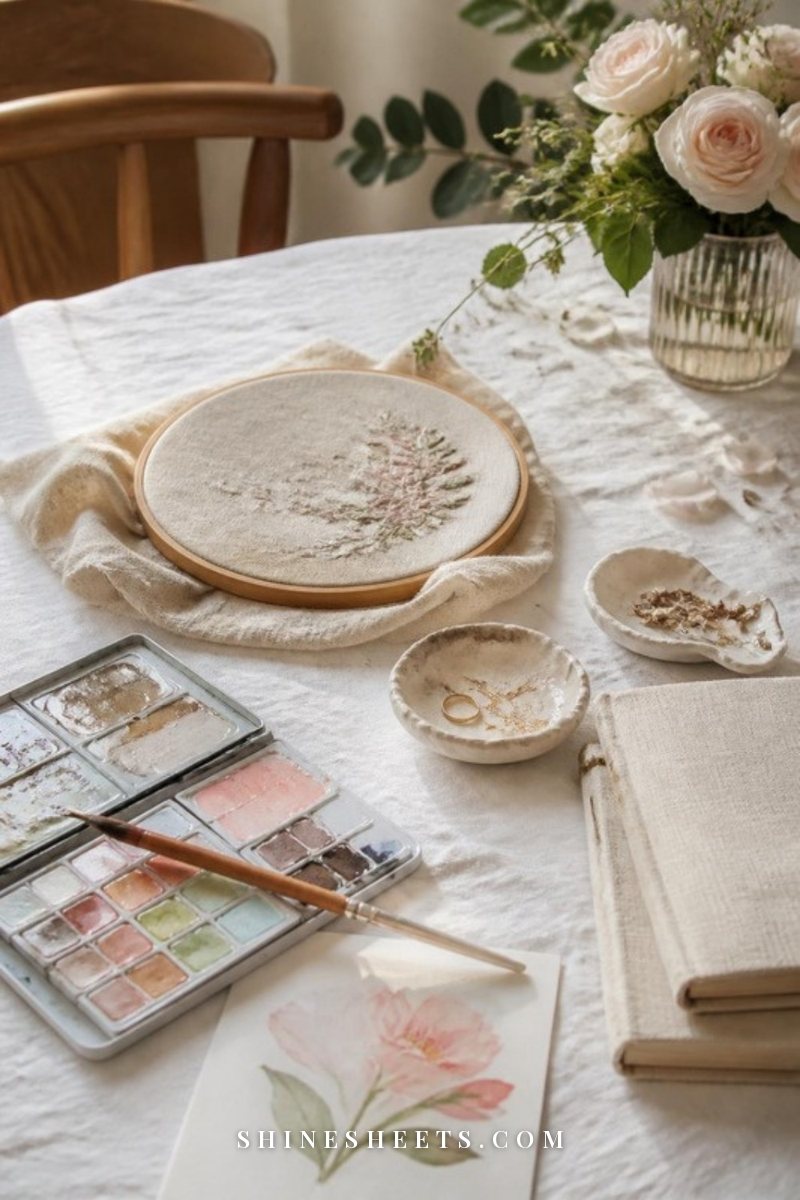
This is the heart of the whole process. Take your shortlist from the audit and your childhood clues, and turn them into 10 small, low-stakes experiments to try over the next 30 days. Small is the key word: each one should take an hour or two, cost little or nothing, and need no special skill.
Some ideas to mix and match:
- Paint one simple flower from a beginner tutorial with a beginner watercolor paint set.
- Stitch a tiny motif using a floral embroidery kit for beginners.
- Shape a little trinket dish from air-dry clay and let it dry overnight.
- Take a free online class on a topic you keep reading about.
- Volunteer for one shift somewhere that interests you.
- Write one page of a short story, a poem or a letter.
- Restyle one corner of your home using only things you already own.
- Go to a local talk, workshop or library event on your own.
- Learn three chords on a borrowed guitar or ukulele.
- Photograph one small thing every day for a week.
Spread them out to two or three a week, so each one gets your full attention and you have a day or two in between to notice how you feel. You'll find a ready-made tracker for this further down. If you'd like a steady drip of new ideas rather than one big push, the gentle habit of learning something new every day fits beautifully alongside this.
For more low-pressure options, my list of calm hobbies for introverts has 30 ideas you can try at home, no group class required.
5. Notice Your Energy, Not Your Talent
Here's where most people accidentally sabotage themselves: they judge each experiment by how good they were at it. Of course your first watercolor looked like a puddle. That tells you nothing about whether you'll love painting.
Instead, pay attention to your energy. Within an hour of finishing, rate two things from 1 to 5:
- Energy: Do you feel more awake, lighter or quietly buzzing? Or drained and relieved it's over?
- Pull: Do you want to do it again, even a little?
Also watch for small, honest signs: you thought about it the next day, you looked up "how to" videos afterward without anyone asking you to, time went faster than expected, you felt absorbed rather than anxious. As someone who's prone to anxiety, I find "absorbed" is often the clearest signal of all. If my mind stopped chattering for an hour, that activity goes straight onto the keep list.
6. Give Everything Three Tries
First tries are mostly about figuring out the materials, the instructions and where to put your elbows. They're clumsy for everyone. A fair rule: anything that scored at least a 3 for pull gets three tries before you decide.
- Try one: learn the basics and get the awkwardness out of the way.
- Try two: repeat it with a little more confidence and notice what you'd like to do differently.
- Try three: make one small choice of your own (a different color, a new stitch, your own subject) and see whether that ownership changes the feeling.
If you still feel flat after three honest tries, you have full permission to let it go. That isn't quitting, it's information. Cross it off, thank it for teaching you something, and move on.
7. Combine Interests Instead of Choosing One
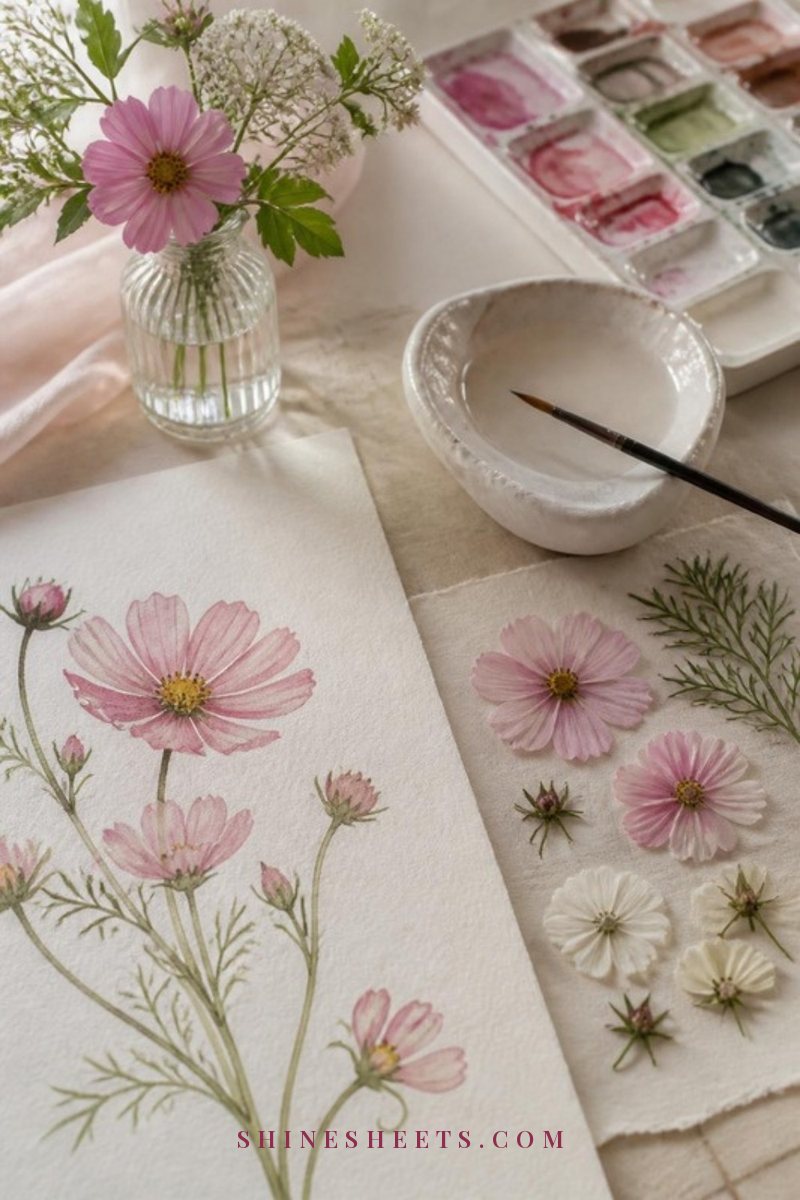
Many people stay stuck because they have several mild interests and assume they must pick just one. You don't. Some of the most satisfying passions live right where two interests overlap.
Write your top three experiments in a row and ask, "What would happen if I put two of these together?" A few examples to get you thinking:
- Plants + painting: botanical watercolors, or pressing flowers from your walks and painting them.
- Old movies + fashion: studying Old Hollywood costume and recreating the looks with your own wardrobe.
- Writing + caring for people: a small newsletter for friends, or regular letters to an older relative.
- Organizing + home: helping friends style their small spaces.
- Walking + photography: a weekly photo walk around your neighborhood, one theme at a time.
Combining also makes an interest feel more personal, which tends to make it stickier. Bonus: it gives you wonderful things to talk about, which is one of the quieter ways of becoming more interesting without trying to impress anyone.
8. Protect the Time Like an Appointment
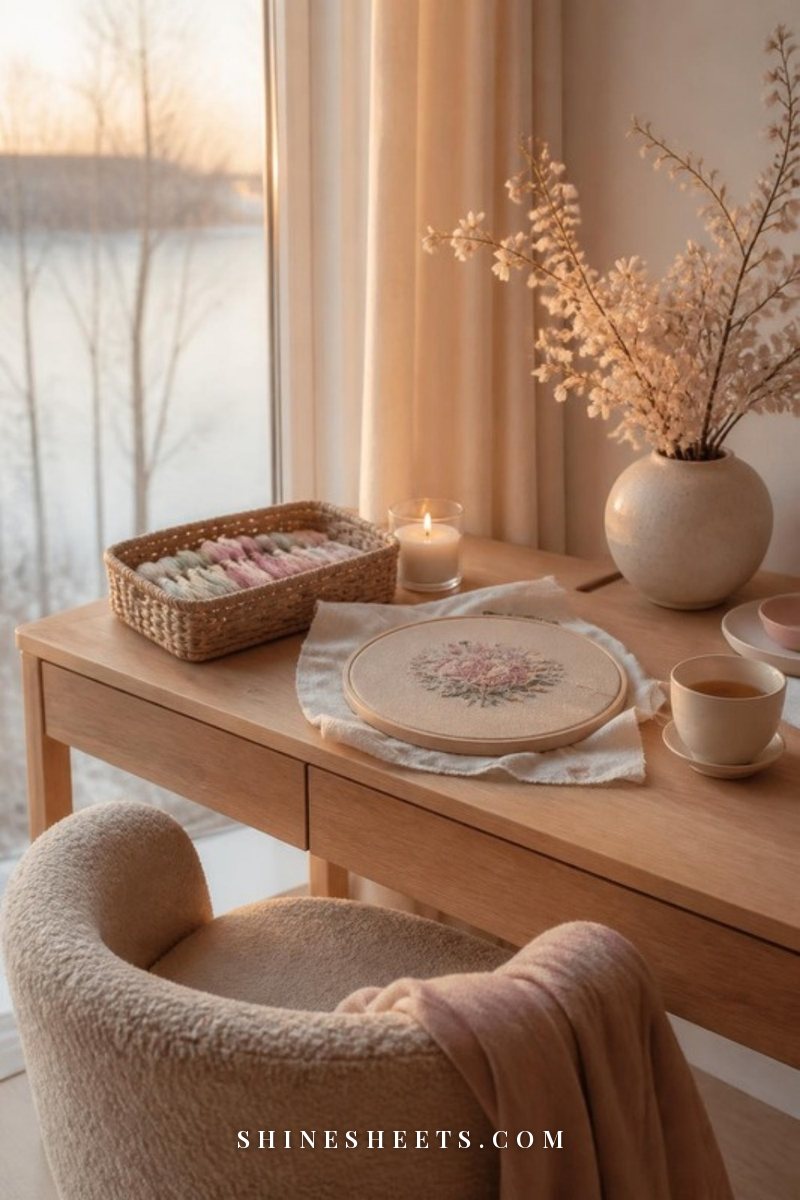
A new interest is fragile. It's the first thing to disappear when the week gets busy, because nobody is waiting on you to do it. If you want it to grow, give it a real place in your week.
- Pick one fixed slot a week, for example Thursday evening from 7 to 8:30.
- Keep your supplies together in one basket or tray, so starting takes 30 seconds instead of 15 minutes of searching.
- Begin with a tiny ritual: make a cup of tea, light a candle, put your phone in another room.
- Keep it private at first. You don't need to post it, share it or turn it into anything.
- Protect it from guilt. This isn't "unproductive" time. It's how you get to know yourself.
The goal isn't hours and hours. It's consistency. Ninety minutes a week, every week, for two months will teach you far more about whether you love something than one enthusiastic weekend followed by nothing.
The 30-Day Curiosity Experiment Tracker
Here's the tracker I'd use for the 10 experiments. Copy it into your journal (or screenshot it) and fill in your own activities. The suggestions are only there to show the rhythm, so swap them freely for whatever came up in your curiosity audit.
| Days | Experiment | Time needed | Energy after (1–5) | Pull to repeat (1–5) | Try again? |
|---|---|---|---|---|---|
| 1–3 | Watercolor: one simple flower | 45 min | __ | __ | Yes / Maybe / No |
| 4–6 | Embroidery: one small motif | 1 hour | __ | __ | Yes / Maybe / No |
| 7–9 | Free online class on a topic from your audit | 1 hour | __ | __ | Yes / Maybe / No |
| 10–12 | Air-dry clay trinket dish | 1.5 hours | __ | __ | Yes / Maybe / No |
| 13–15 | Library talk or community event, solo | 2 hours | __ | __ | Yes / Maybe / No |
| 16–18 | Write one page: story, poem or letter | 30 min | __ | __ | Yes / Maybe / No |
| 19–21 | Restyle one corner of your home | 1 hour | __ | __ | Yes / Maybe / No |
| 22–24 | Volunteer shift or helping a neighbor | 2 hours | __ | __ | Yes / Maybe / No |
| 25–27 | Photo walk: one theme, 20 photos | 45 min | __ | __ | Yes / Maybe / No |
| 28–30 | A childhood favorite, revisited | 1 hour | __ | __ | Yes / Maybe / No |
How to use it:
- Fill in the Energy and Pull scores within an hour of finishing, while the feeling is still fresh.
- Add one sentence in the margin about the best moment. That sentence is often more revealing than the numbers.
- On day 30, circle every experiment with a pull of 4 or 5. Those get their three tries next month.
- Anything that scored a 3 goes on a "maybe later" list. Anything lower gets crossed off with zero guilt.
A few gold gel pens make the end-of-month review feel like a small celebration instead of a report card, which honestly makes it much more likely you'll actually sit down and do it.
Signs You've Found Something Worth Keeping
Real passion rarely announces itself. It shows up in small, almost ordinary ways. You may be onto something if:
- You choose it over your phone at least some of the time.
- You're curious about the next level: a better brush, a harder pattern, a proper class.
- Mistakes annoy you a little, but they don't make you want to quit.
- You start noticing it everywhere, like colors in a shop window, stitches on a cushion or the way light falls on a wall.
- Time moves strangely fast while you're doing it.
- You'd keep going even if nobody ever saw the result.
You don't need all of these. Two or three, showing up for a few weeks in a row, is a lovely sign that something is taking root.
5 Mistakes That Keep You Stuck
- Waiting to feel excited first. Excitement is usually a result of doing, not a requirement for starting. Begin with "mildly curious" and let that be enough.
- Turning it into a side hustle too soon. The moment a new interest has to earn money or followers, it picks up pressure it isn't ready for. Give it at least a few months of being just yours.
- Buying all the gear upfront. A full studio setup for something you've tried once creates guilt, not passion. Start with a beginner kit or borrowed supplies and upgrade only after the three tries.
- Judging by talent on day one. Early skill is a terrible predictor of long-term love. Energy and pull are much better guides.
- Expecting one passion forever. Interests can shift with seasons and life stages. Loving something deeply for two years and then moving on still counts.
What If Nothing Clicks After 30 Days?
Then you've still learned a lot, even if it doesn't feel that way yet. A month of experiments that all landed at "meh" is useful information. Here's what to do next:
- Reread your margin notes, not just your scores. Look for repeated words. "Quiet," "outside," "with people" or "made something" can point to a category even if no single activity stood out.
- Run a second round in a different category. If you mostly tried creative things, try movement, learning, nature or helping others this time.
- Check your energy again. If everything felt flat, go back to step one, and revisit the gentle note about low mood near the top of this guide.
- Borrow someone else's passion. Tag along when a friend does the thing she loves. Enthusiasm can be contagious, and you'll see what it looks like from the inside.
- Pick the smallest item on your bucket list. Browse these bucket list ideas and choose the one you could do this weekend.
And sometimes the answer is that you don't need one big passion at all. A life with several gentle interests, a few good people and enough rest is a full, rich life. "Quietly curious" is a perfectly good way to be.
Final Thoughts
Finding your passion is less of a discovery and more of a slow, friendly getting-to-know-you process. Rest first, follow the small pulls of curiosity, give things a fair chance, and pay attention to how you feel rather than how well you did.
Somewhere in those small experiments is something that makes an ordinary weeknight feel like yours again. You don't have to find it this week. You only have to keep trying things gently, and let yourself enjoy them long before they're perfect.