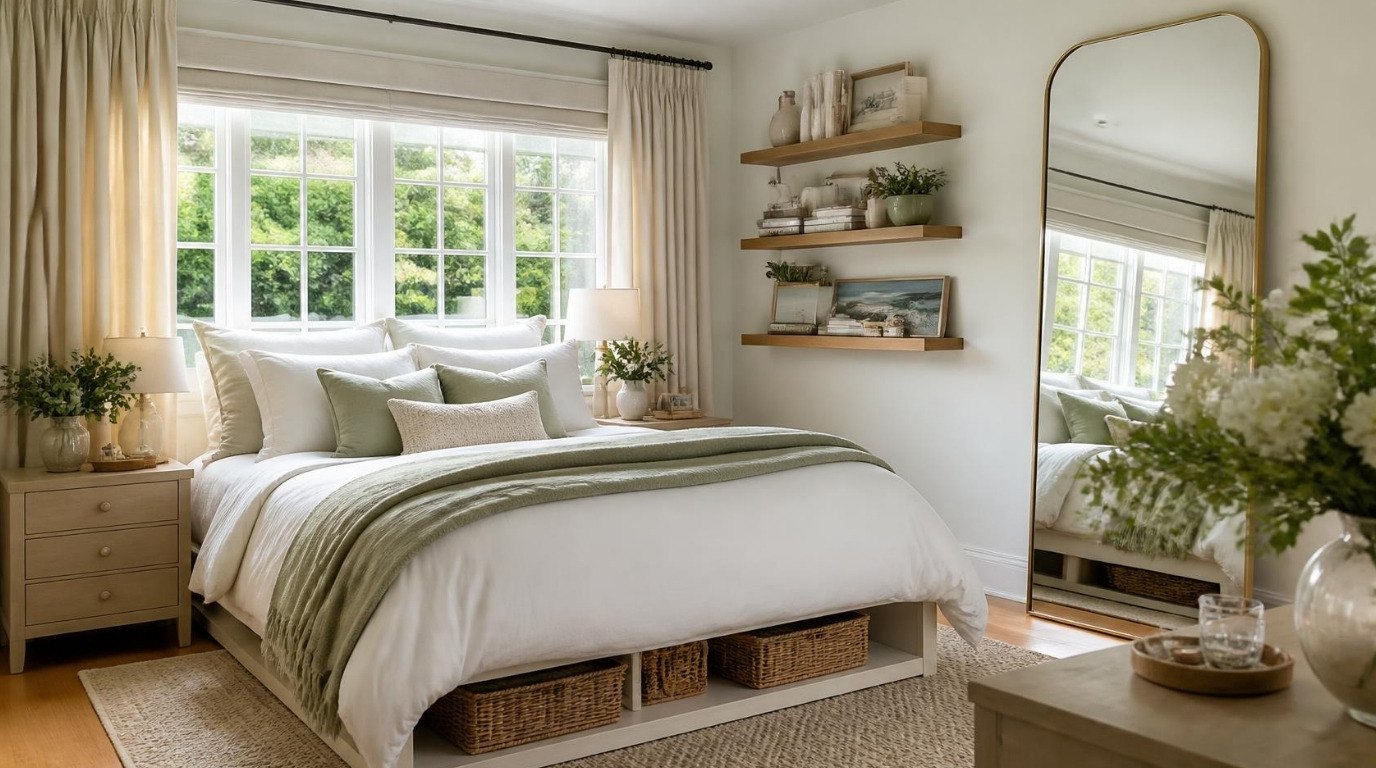
A dresser top looks pulled together when every object has a job: one thing anchors the wall, one adds height and light, one corrals the daily bits, and a few small pieces bring in life and personality. Once you know those jobs, styling stops being guesswork and starts feeling like a simple recipe you can repeat in any room.
Most dressers go wrong in one of two ways. Either they become a landing strip for receipts, hair ties and half-used lotions, or they get "decorated" with a long row of small things all the same height. Both feel busy, and neither feels like you.
In this guide on how to style a dresser top, I'll share a six-part formula with real measurements, the styling rules that make it look intentional, a table with three complete looks (minimal, cozy and glam), how to adjust it for a bedroom or an entryway, a gentle autumn swap and the mistakes that quietly make a dresser look cluttered.
Clear the whole surface first, wipe it down and start from nothing. It's so much easier than editing around what's already there.
Function First: Decide What Your Dresser Has To Hold
Before you think about pretty, think about daily life. A dresser top that ignores how you actually live will be cluttered again within a week. Take two minutes and list what really needs to live there:
- Jewelry you wear most days – rings, studs, a watch, one or two necklaces.
- Perfume and a body mist you reach for every morning.
- A skincare step or two if you get ready in your bedroom (hand cream, lip balm, a facial mist).
- Keys, wallet and sunglasses if the dresser sits near the door.
- A charging spot if your nightstand is too small.
Everything else that's currently up there (spare buttons, receipts, the third hand cream) moves into a drawer. I like giving the top drawer a few small dividers so those things have a real home. If your dresser doubles as a getting-ready spot, my vanity organization ideas will help you keep makeup and skincare tidy without taking over the surface.
The 6-Part Dresser Top Formula
This is the backbone of every dresser I'd style. You don't need all six on every dresser, but most pulled-together ones use at least five:
- An anchor above
- A lamp or tall element
- A tray for daily things
- Stacked books
- Something living
- One personal object
Here's how to choose and place each one.
1. An Anchor Above the Dresser
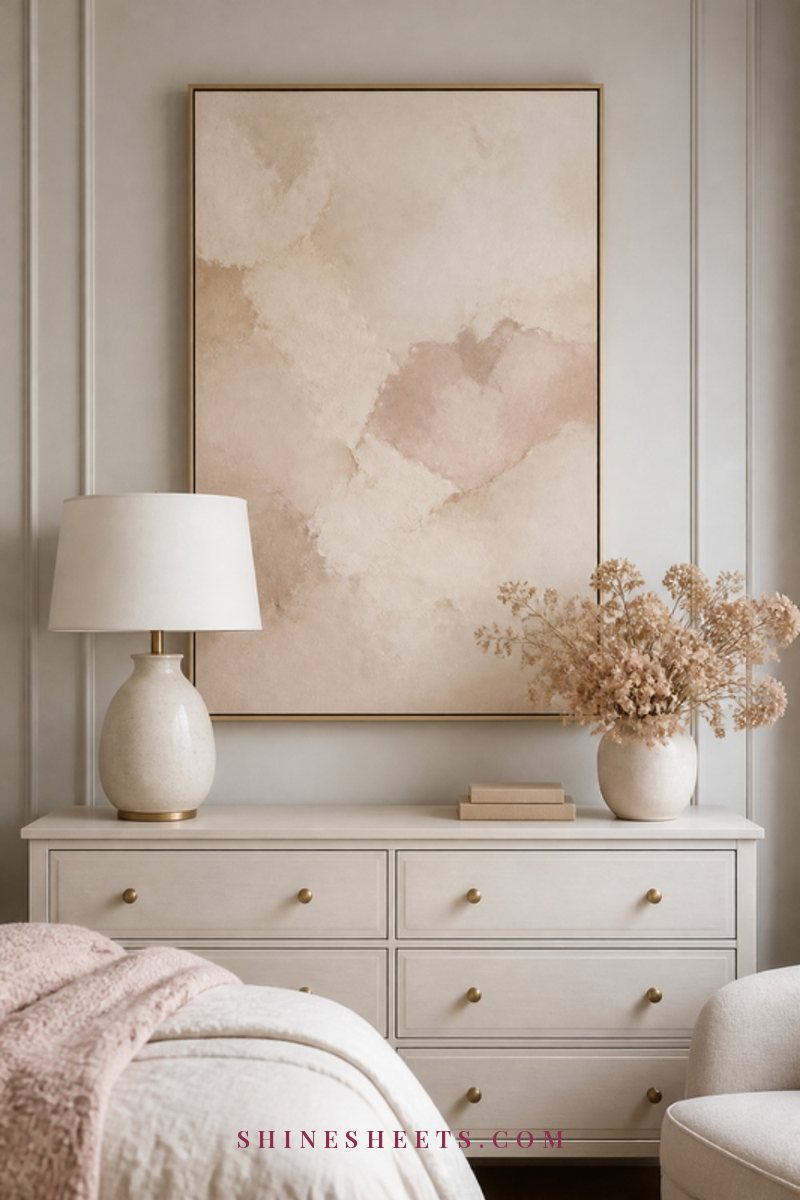
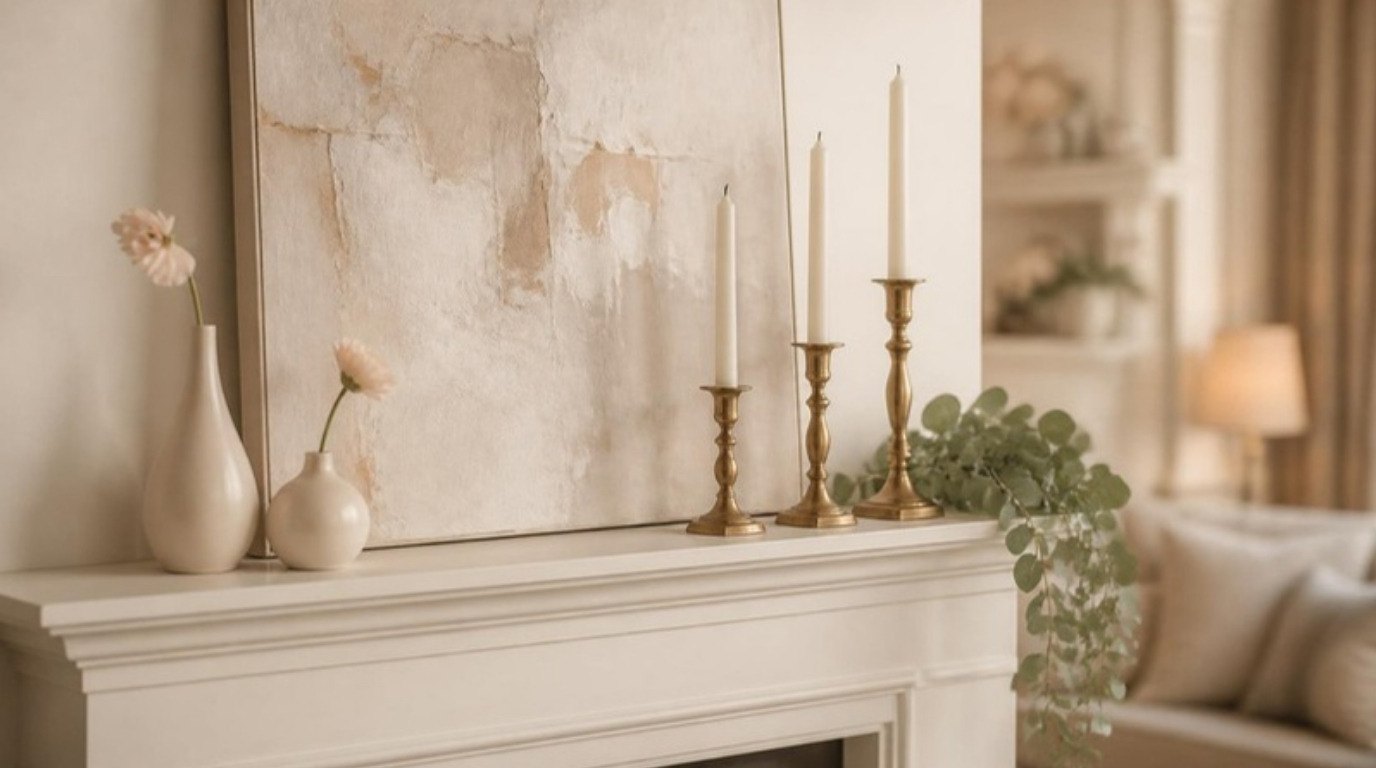
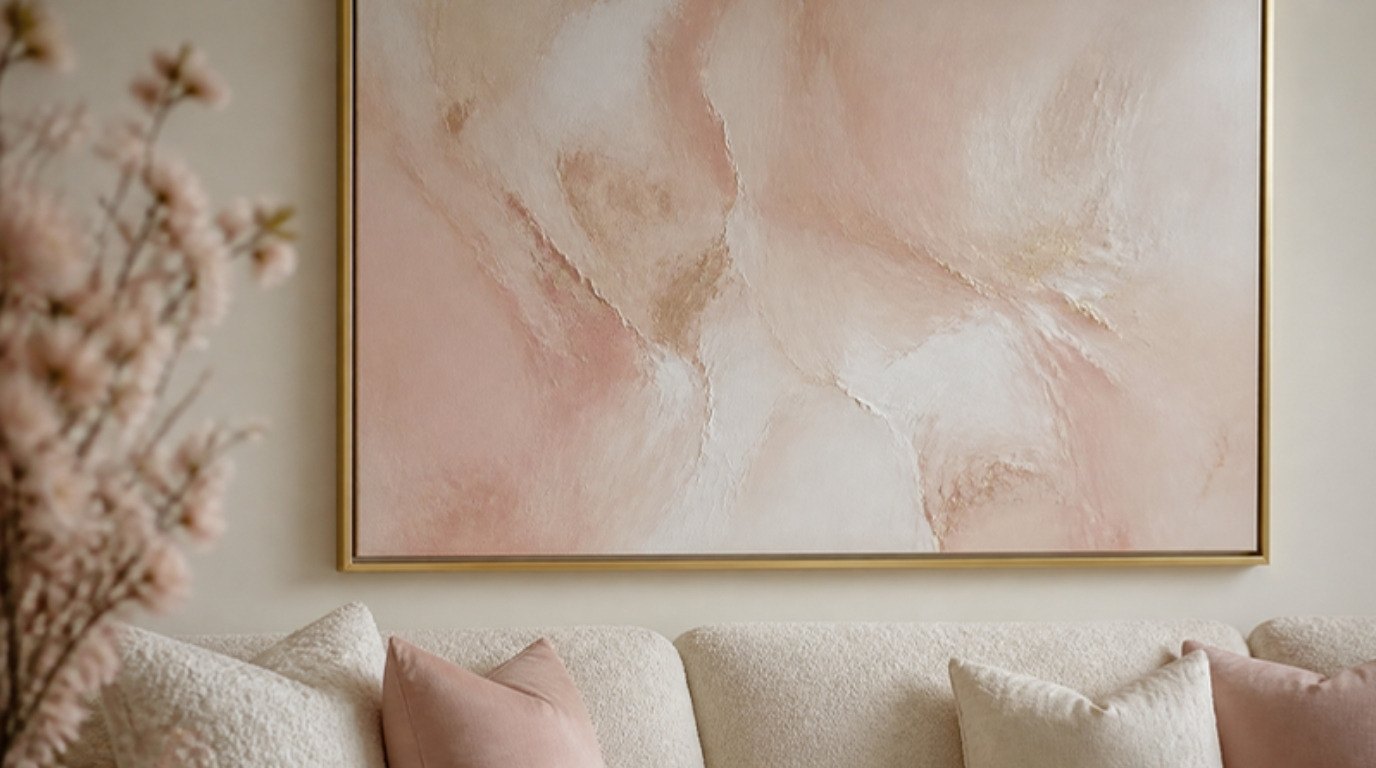
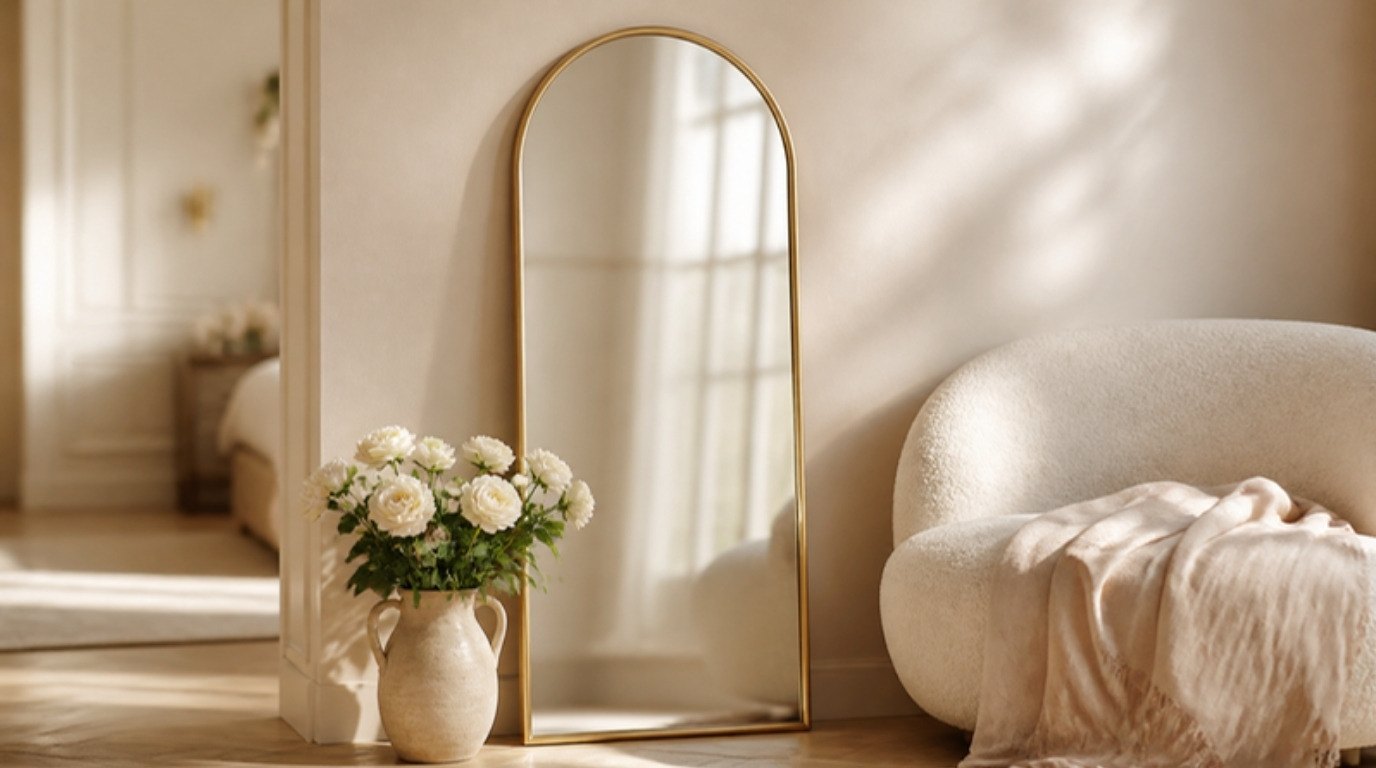
The anchor is the large piece on the wall that ties the dresser to the room: framed art, a mirror, a textile or a pair of matching frames. Without it, even a beautifully styled top can look like it's floating.
- Width: aim for about two-thirds of the dresser's width. On a 60-inch dresser, that's art roughly 36 to 42 inches wide.
- Height: hang the bottom edge 6 to 10 inches above the dresser top so the two read as one unit.
- Placement: centered for a calm, symmetrical look, or slightly off-center if you're balancing it with a tall lamp on the other side.
- Renter-friendly: lean a large frame against the wall instead of hanging it. Layer a smaller frame in front for a relaxed, collected look.
If you do want to hang it, my guide on how to hang art so it looks right walks through the exact spacing.
2. A Lamp or Tall Element
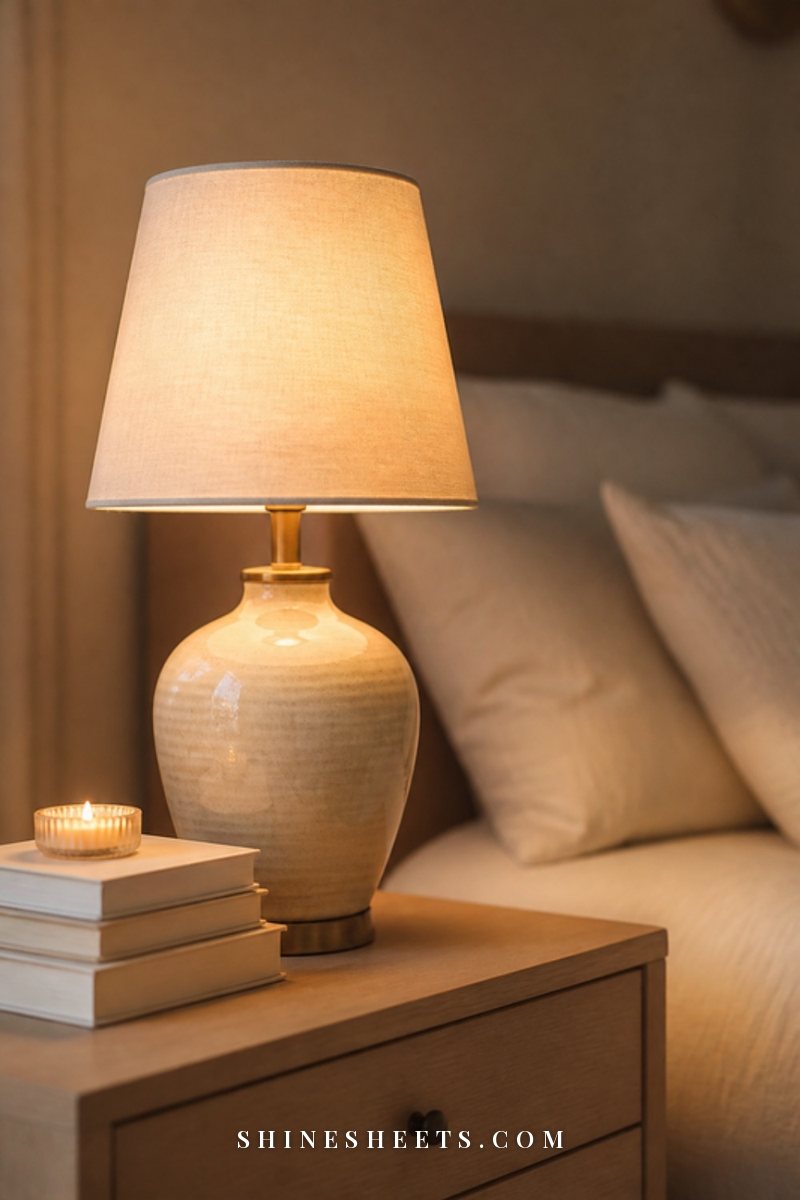
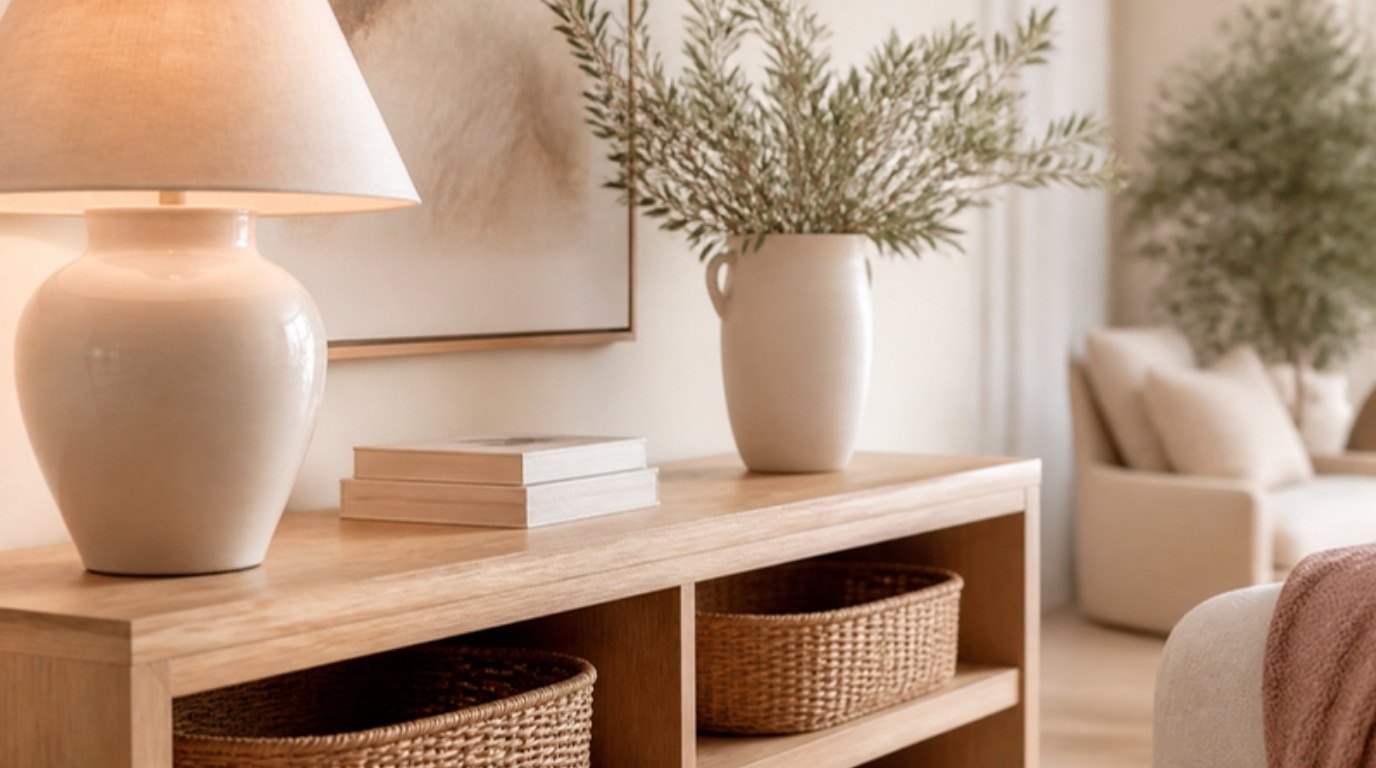
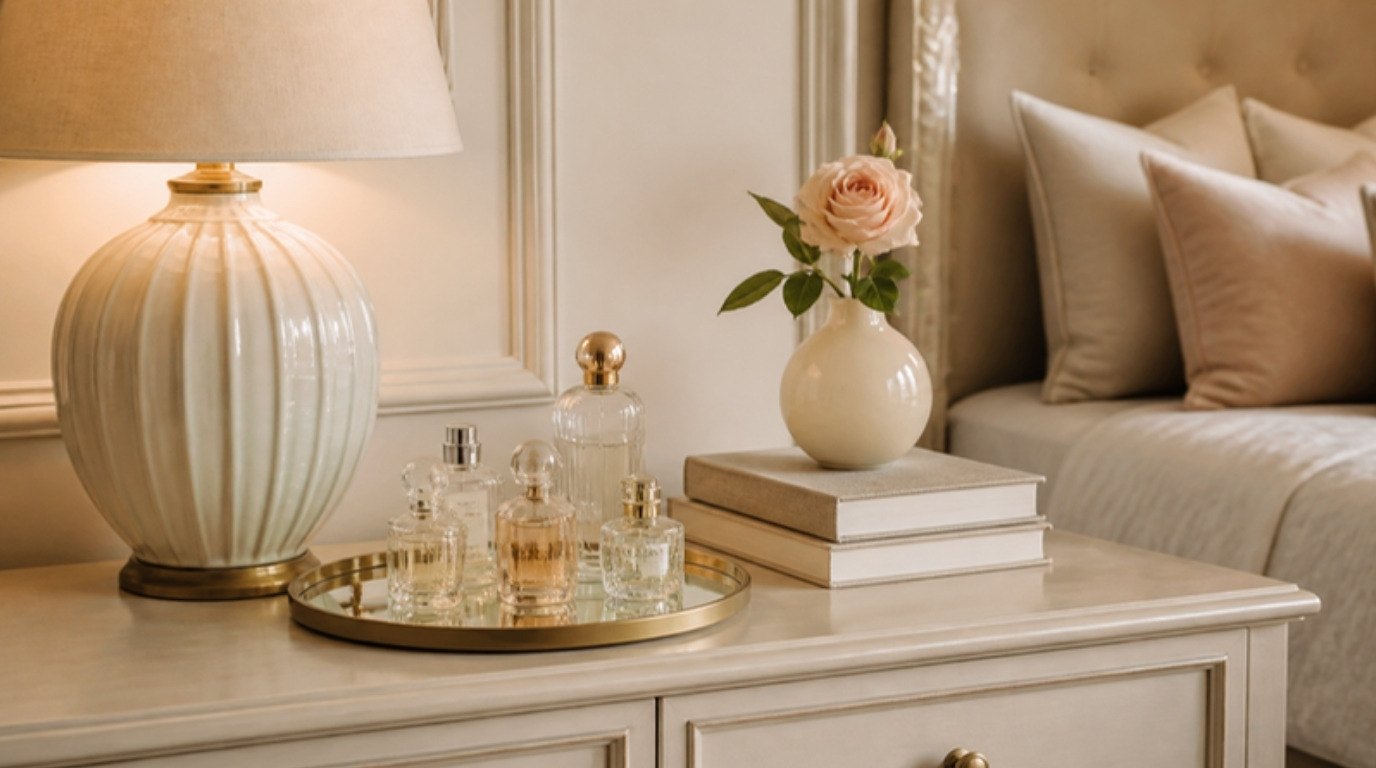
Height is what turns a row of objects into a composition. A lamp is my first choice because it adds warm evening light too. A ceramic table lamp with a linen shade in cream or soft white works with almost any style.
- For a standard dresser (about 30 to 34 inches high), look for a lamp around 24 to 30 inches tall.
- Place it toward one end, about 3 to 6 inches in from the edge.
- No outlet nearby? A tall vase with branches, a pair of candlesticks or a large leaning frame does the same visual job.
3. A Tray for Daily Things
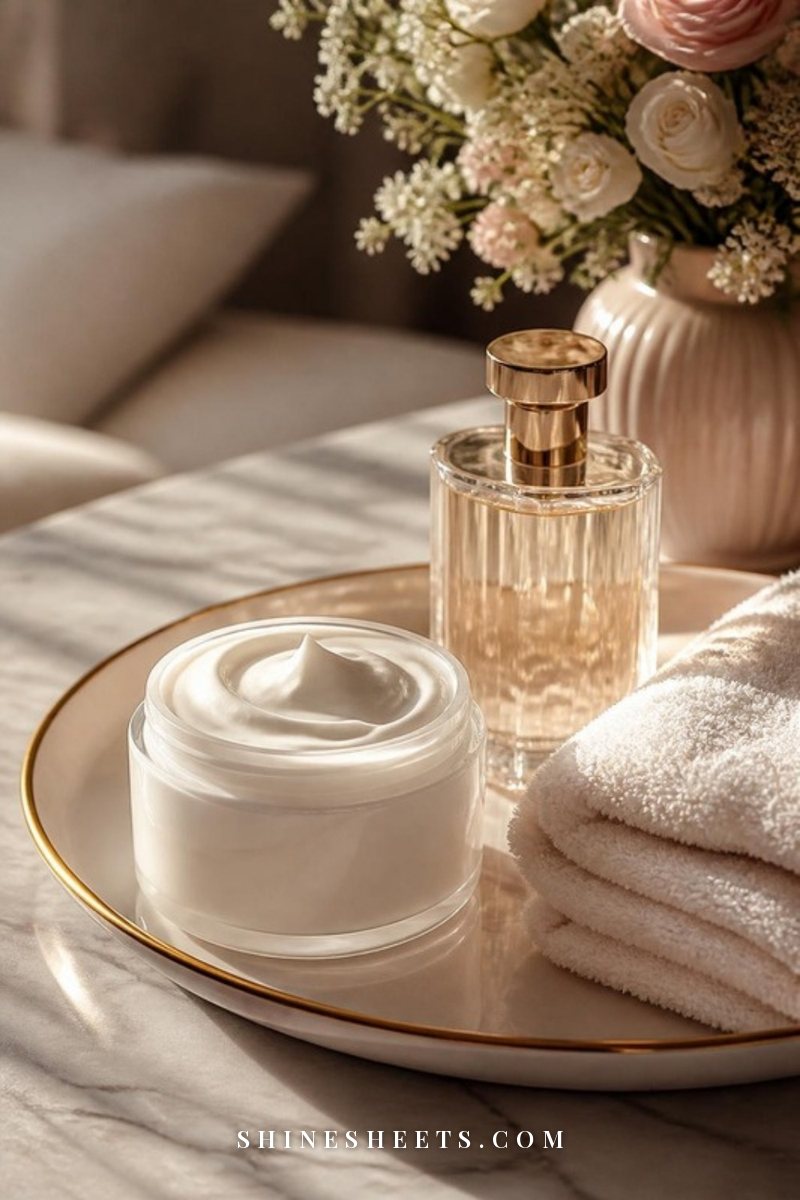
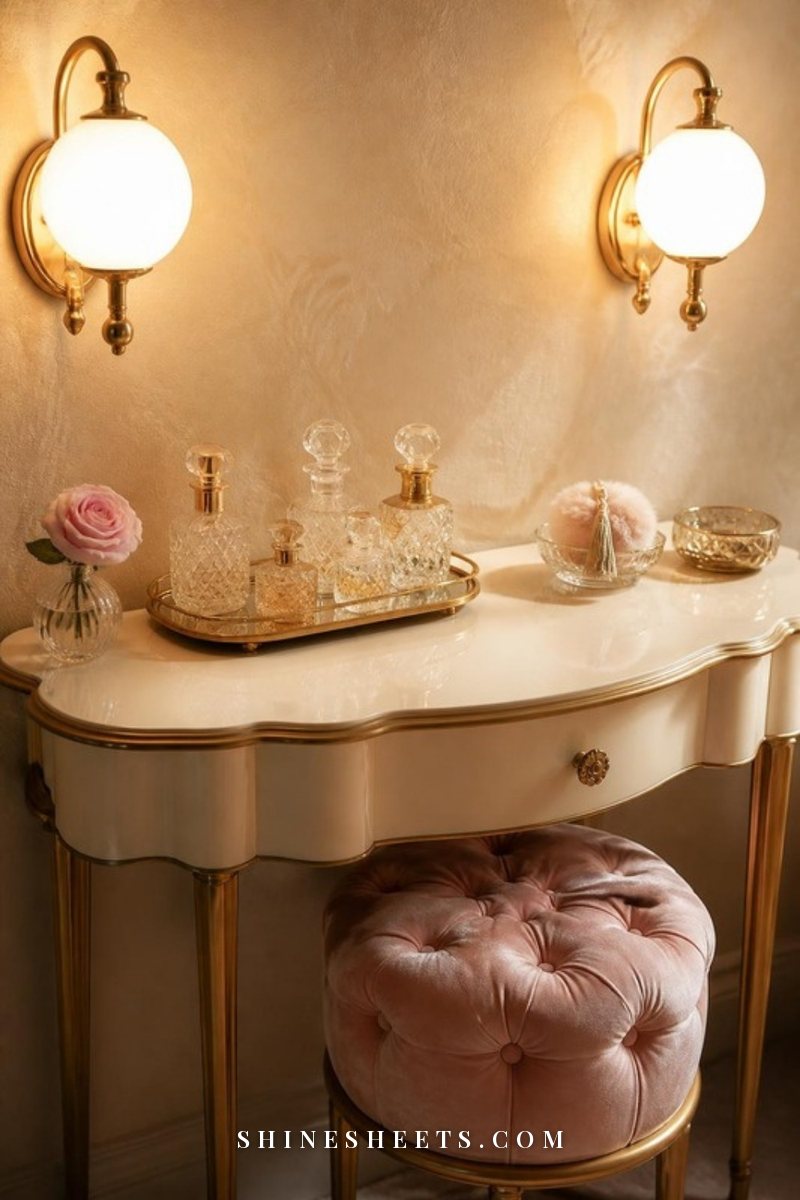
A tray is the secret to making everyday clutter look styled. Anything on a tray reads as one group instead of eight separate things. A gold-rimmed vanity tray about 12 to 16 inches long is perfect for perfume, a body mist and a small dish.
Inside the tray, add a little ceramic jewelry dish for the rings and studs you take off at night. Keep it to three to five items on the tray, tallest at the back.
For jewelry you don't wear every day, a light wood jewelry box keeps pieces tangle-free and looks lovely stacked on a couple of books.
4. Stacked Books
Books are the easiest way to add mid-height and texture. Stack two to four horizontally with the spines facing out, then place something small on top (a candle, a dish, a tiny plant). The stack becomes a little pedestal.
Use books you actually love, or if your favorites are bright and busy, a set of neutral decorative books in cream and beige keeps the palette calm. I'd still mix in at least one real book you'd pick up and read.
5. Something Living
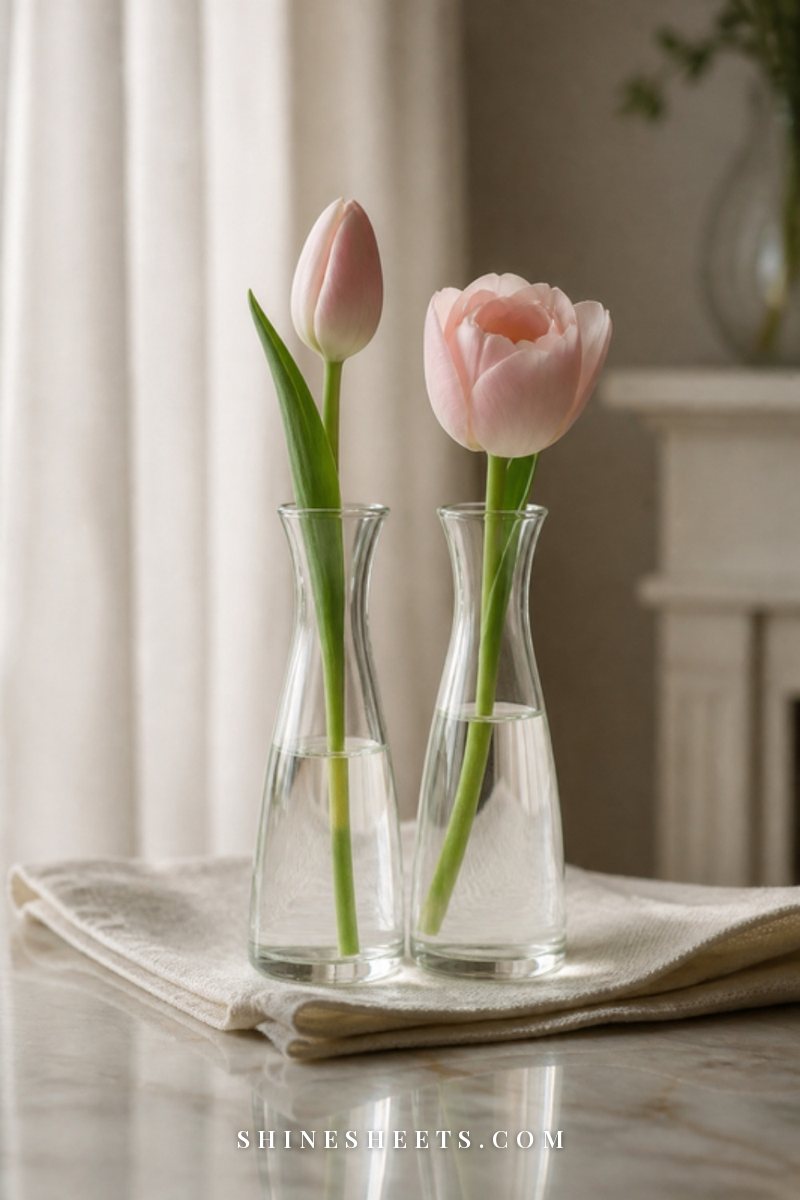
A plant or a few stems make everything around them look more alive. You don't need a big arrangement.
- A set of small ceramic bud vases with one stem each (garden clippings count).
- A pothos or snake plant if the room gets some light.
- Dried eucalyptus or pampas in a tall vase if you'd rather not water anything.
Refresh fresh stems every four or five days and dust dried ones every couple of weeks.
6. One Personal Object
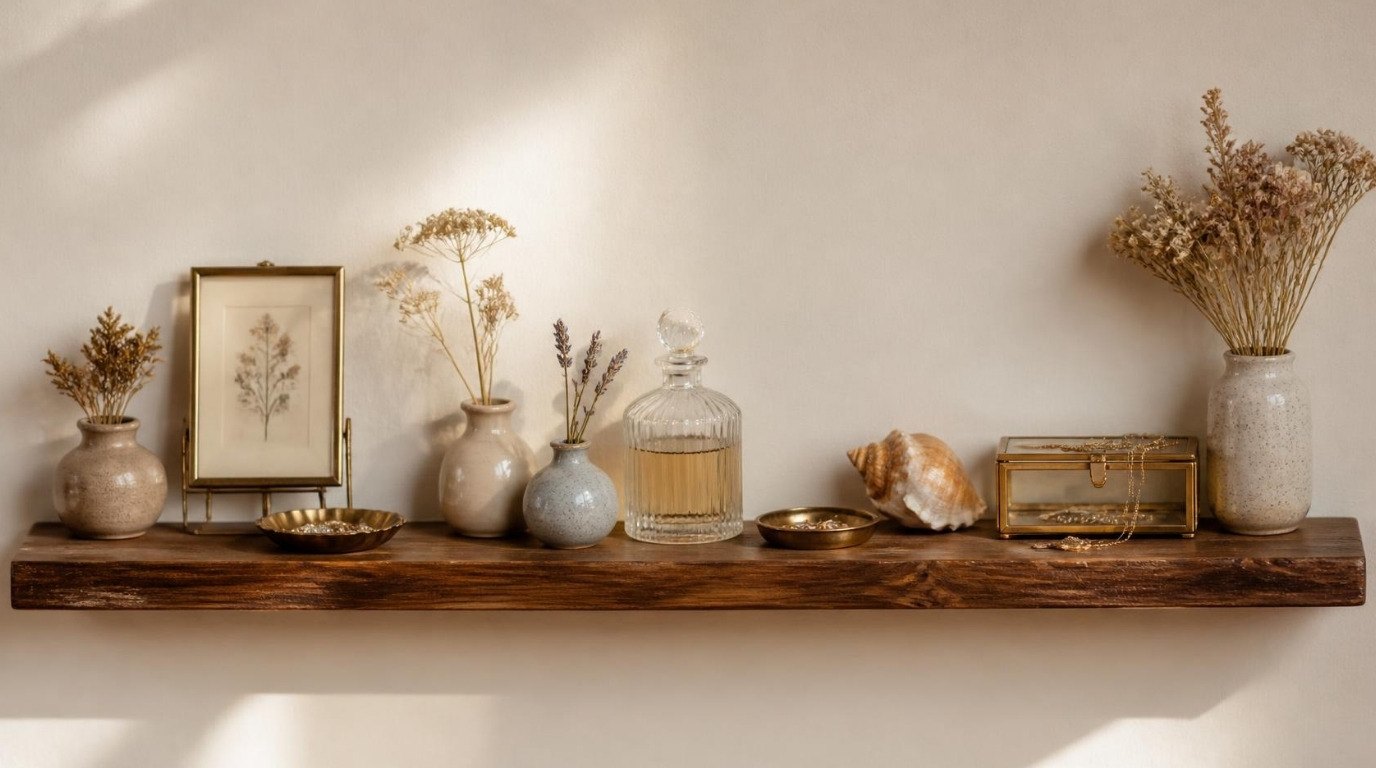
This is what makes a dresser feel like yours instead of a store display. One framed photo, a shell from a trip, a little vintage dish, a ceramic someone made for you. Just one or two. Personal objects lose their meaning when there are twelve of them competing for attention.
If you have a collection you love (vintage perfume bottles, little ceramic birds, shells), don't scatter it across the whole dresser. Gather three or five pieces onto the tray or on top of the book stack so they read as one deliberate grouping, and rotate the rest in every few months. Rotating keeps the dresser feeling fresh, and you'll actually notice your favorite things again instead of looking past them.
The Styling Rules That Make It Look Pulled Together
The formula tells you what to put out. These four rules tell you how to arrange it.
Group in Odd Numbers
Groups of three or five look relaxed and natural; pairs and fours tend to look stiff. A lamp, a book stack and a vase is a group of three. A tray holding perfume, a dish and a mist is another.
Leave a Third Empty
This is the rule I'd tape inside a drawer. About one-third of the dresser surface should stay completely clear. Empty space is what lets your eye rest and makes each object look chosen. It also gives you somewhere to put things down without wrecking the arrangement.
Vary the Heights
Think tall, medium, low. The lamp or tall vase is tall, the book stack with a candle is medium, the tray and dish are low. A simple way to check: take a photo of the dresser. If the tops of everything line up in one straight line, swap something.
Stick to a Short Palette
Pick two or three colors plus one metal. Cream, blush and gold is soft and romantic. Cream, sage and natural wood is calm and fresh. Repeating a color three times across the dresser (a blush flower, a blush book, a blush candle) instantly makes it look planned.
How To Adjust the Formula for Your Dresser Size
Dressers come in very different shapes, and the same six pieces need a little tweaking depending on what you're working with.
A Small Dresser (Under 40 Inches Wide)
Small dressers are where clutter shows up fastest, so edit hard. Choose three groups at most: a lamp or tall vase on one side, a small tray in the middle or opposite end, and one book stack with a tiny object on top. Skip the separate personal object and let a framed photo lean against the wall as your anchor instead. A slim lamp with a base no wider than 6 inches saves precious surface space, and a wall sconce (plug-in versions are renter-friendly) frees the top completely.
A Long, Low Dresser (60 Inches or Wider)
Long dressers can handle a little symmetry. Try a matching pair of lamps at each end with one wide piece of art centered between them, then a tray and a book stack in the middle with space on either side. If symmetry feels too formal, use one lamp on the left, art slightly to the left of center, and balance the right side with a tall vase of branches. The empty third can be split into two small breathing spaces rather than one big gap.
A Tall Chest of Drawers
A tall chest sits closer to eye level, so everything on top is seen from the side more than from above. Keep it simple: one medium lamp or a tall vase, a short stack of books, and a small dish. Hang art a little lower than you think, about 4 to 6 inches above the top, or lean a medium frame. Skip trays full of perfume here if you have to reach up to use them; daily things belong where they're easy to grab.
A Vintage or Painted Dresser
If the dresser itself is the star (carved details, a soft painted finish, beautiful old hardware), let it shine. Use fewer objects, keep them in one or two colors pulled from the dresser, and choose simple shapes so they don't compete with the piece. A thrifted find with character often needs nothing more than a lamp, a bud vase and one lovely book.
3 Dresser Top Looks: Minimal, Cozy and Glam
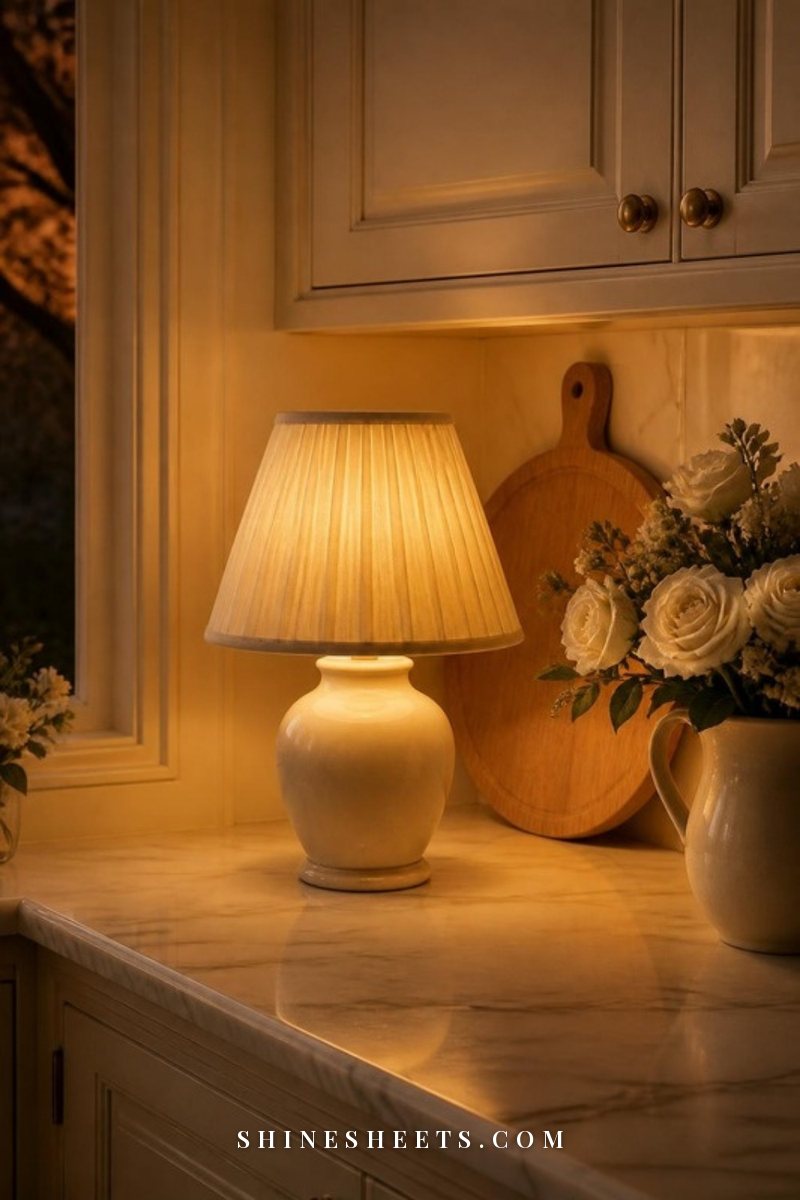
Here's the formula turned into three complete looks. Pick the column that feels most like you and copy it item by item, or mix and match.
| Part | Minimal | Cozy | Glam |
|---|---|---|---|
| Anchor above | One large leaning frame with a simple line drawing | A soft landscape print in a wood frame | An oversized gold-framed mirror or abstract art in blush and gold |
| Tall element | Slim white ceramic lamp | Ceramic lamp with a pleated linen shade | Lamp with a fluted glass or brass base and a cream shade |
| Tray | Plain wood or stone tray with one perfume | Woven or wood tray with a candle and hand cream | Gold-rimmed tray with perfume bottles and a jewelry dish |
| Books | Two cream books, nothing on top | Three mixed books with a small candle on top | Three books in blush and cream with a gold trinket on top |
| Something living | A single branch in a tall clear vase | A trailing pothos in a terracotta pot | Blush roses or peonies in a small cream vase |
| Personal object | One small sculptural object | A framed photo and a handmade ceramic | A vintage perfume bottle or a velvet ring box |
| Palette | White, cream, natural wood | Cream, sage, warm wood | Cream, blush, gold |
| Empty space | About half | About a third | About a third |
Screenshot the table and take it with you when you shop your own home first. You probably already own half of one column.
Bedroom Dresser vs Entryway Dresser
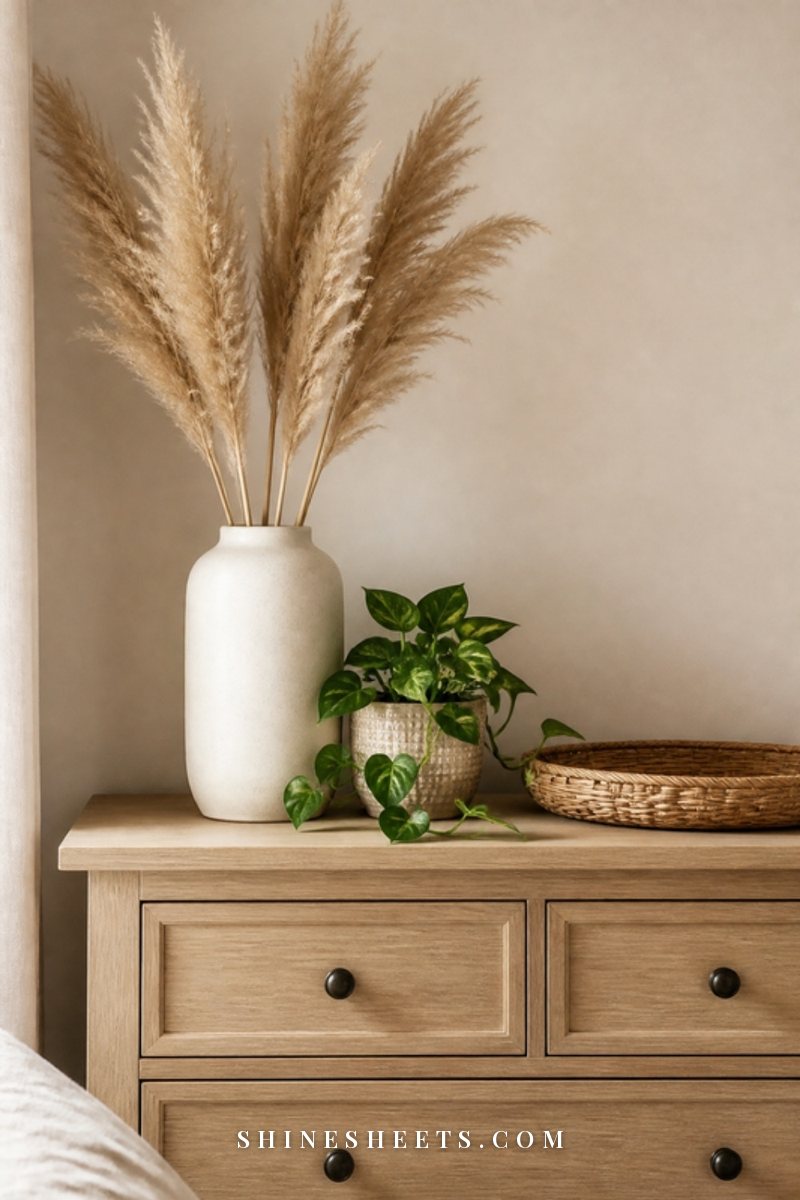
The formula stays the same, but the jobs shift a little depending on where the dresser lives.
In the bedroom, the dresser leans soft and personal. Keep the tray for perfume and jewelry, use warm bulbs (2700K) in the lamp for evening, and add a candle you'll actually light while you get ready. A lower dresser often sits across from the bed, so make sure what you see from your pillow is calm. For more ideas for the whole room, my cozy bedroom ideas are full of renter-friendly touches.
In an entryway, the dresser works harder. The tray becomes a catch-all for keys and sunglasses, and a small lidded box or basket can hide mail until you sort it. Drawers are perfect for scarves, gloves and dog leashes. The lamp matters even more here because it's often the first light you switch on when you come home. A console works almost the same way, so if you have one of those instead, my guide to console table styling goes deeper.
If it's next to the bed and doing double duty as a nightstand, borrow from nightstand styling: water, a book and a soft light on the side closest to you, and the decorative pieces on the far end.
A Gentle Autumn Swap
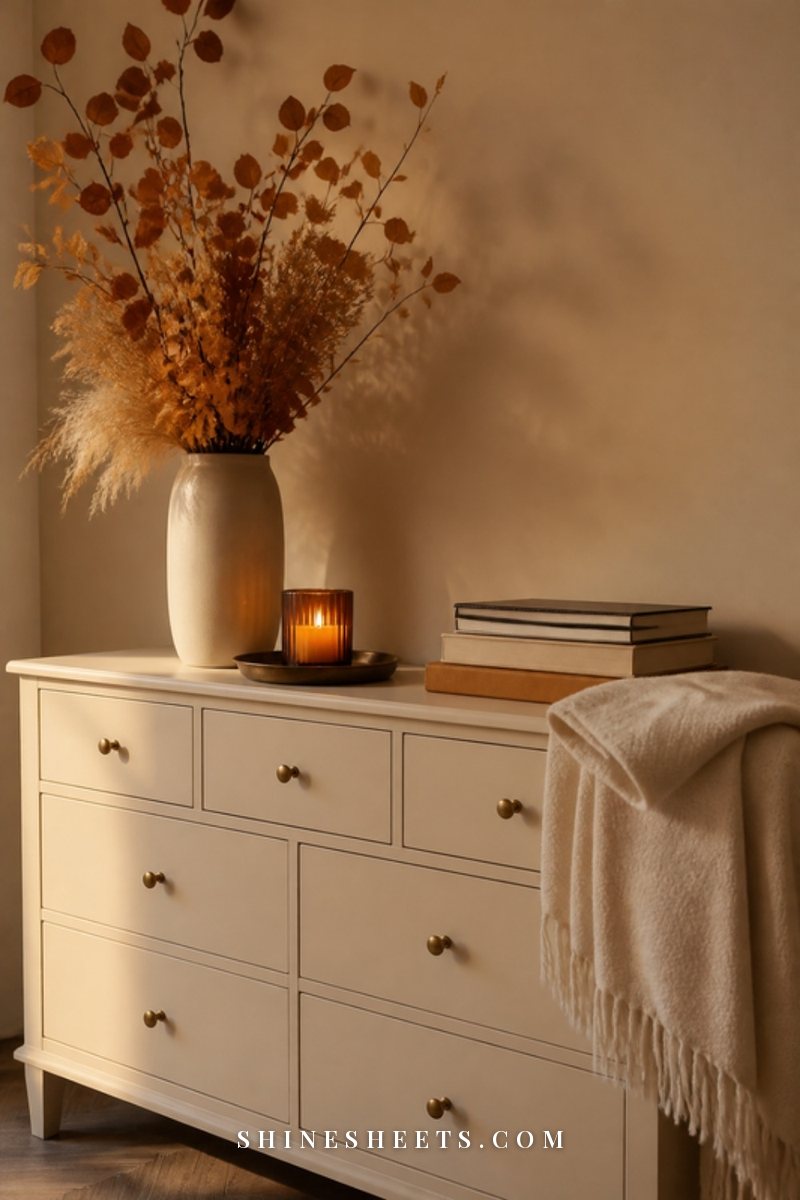
You don't need to restyle the whole dresser when the season changes. Swap two or three pieces and leave the structure alone. For autumn:
- Trade fresh stems for dried branches, wheat or eucalyptus.
- Add one candle in a warm amber or cream glass jar (always on a heat-safe tray, never under shelves or near curtains).
- Switch one book on the stack for something with a warmer cover.
- Fold a small wool or knit throw on the end of the dresser or drape it over a nearby chair.
In spring, reverse it: lighter stems, fewer candles, one pale color added in. The anchor, lamp and tray stay exactly where they are.
7 Dresser Top Mistakes To Avoid
- Too many small items. Ten little things read as clutter. Three to five groups, each with a clear purpose, read as styled.
- Everything the same height. A row of same-size objects looks like a shelf in a shop. Add one tall piece and one low piece.
- Art that's too small or too high. A tiny frame floating a foot above the dresser makes both look lost. Go bigger and lower.
- No empty space. If you can't set your phone down without moving something, the dresser is too full.
- Daily things with no home. Loose hair ties and receipts will keep showing up until they have a tray, a dish or a drawer.
- Ignoring the cords. A visible lamp cable can undo a lovely arrangement. Run it behind the dresser and tidy it with a small cord clip.
- Too many colors. If every object is a different color, nothing stands out. Edit down to your two or three and one metal.
A Quick 10-Minute Reset
Once your dresser is styled, keeping it that way takes very little. Once a week (Sunday works well), give it ten minutes:
- Clear anything that isn't part of the arrangement back into its drawer or room.
- Dust the surface and the lamp base with a dry microfiber cloth.
- Refresh or remove tired flowers.
- Wipe perfume rings off the tray.
- Step back and check that one-third is still empty.
That's it. Small, regular resets are much easier than a big Saturday rescue.
Final Thoughts
A pulled-together dresser isn't about buying more. It's about giving each piece a job, letting the tall, medium and low pieces talk to each other, and leaving enough empty space for the whole thing to breathe.
Start with what you already own, follow the formula, and swap only what bothers you. Before long, that once-messy surface will become one of the quiet little corners that makes your home feel like yours.