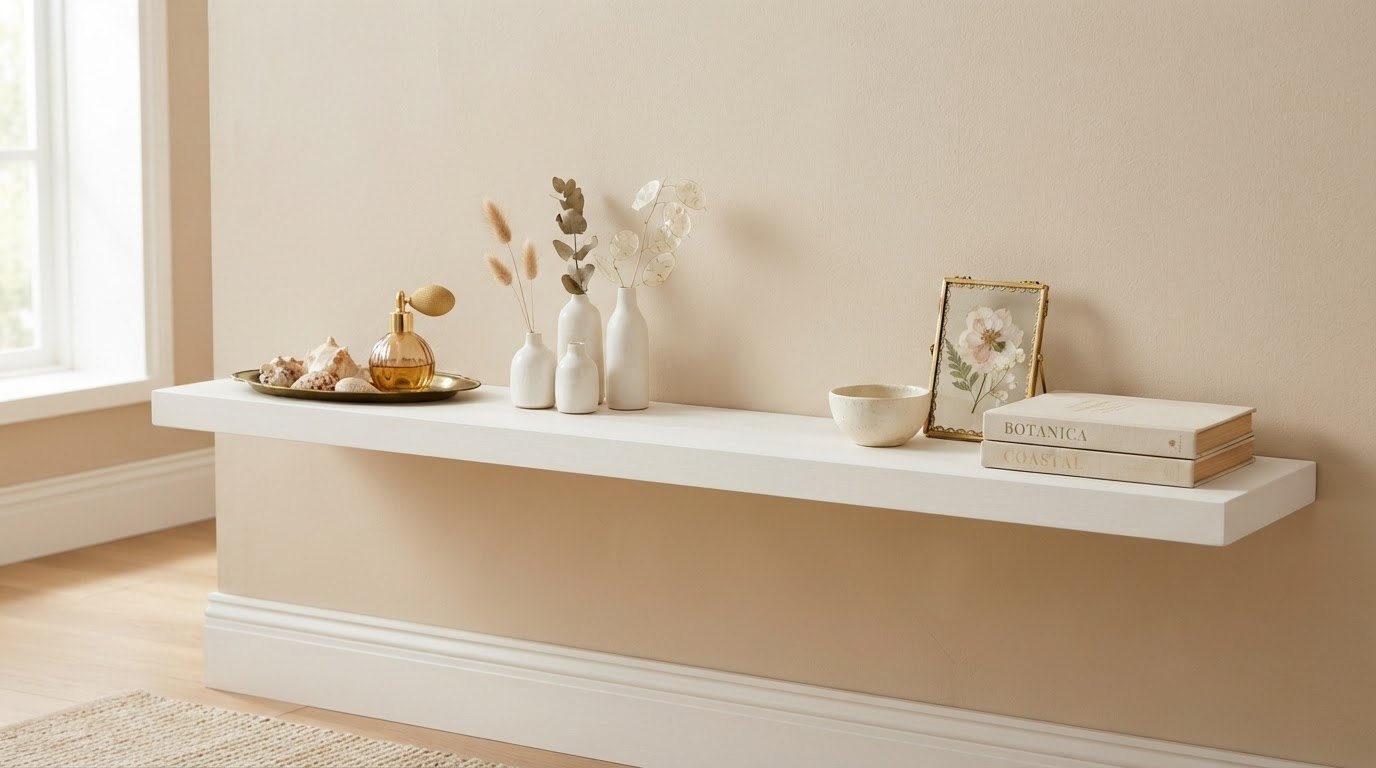
A trinket shelf looks charming when the little things on it have room to breathe. Most shelves that feel cluttered don't actually hold too many objects. They hold objects without a plan: no anchor, no rhythm, no color thread tying the tiny ceramic bird to the seashell to the vintage perfume bottle.
The good news is that a plan is easy to borrow. Once you know a few styling rules, the same pieces you already own can look collected and intentional instead of "where do I put this?" It took me a while to understand that styling small things is mostly about what you leave out, not what you add.
This guide gathers my favorite trinket shelf ideas: 15 ways to display little things without clutter, a styling rules card you can screenshot, a shelf recipe table for every type of shelf in your home, and a simple way to edit your collection when it starts to spill over.
Gather your treasures on the bed or the table first, so you can see everything at once. Then let's make them look like they belong together.
What Makes a Trinket Shelf Look Curated (Not Cluttered)
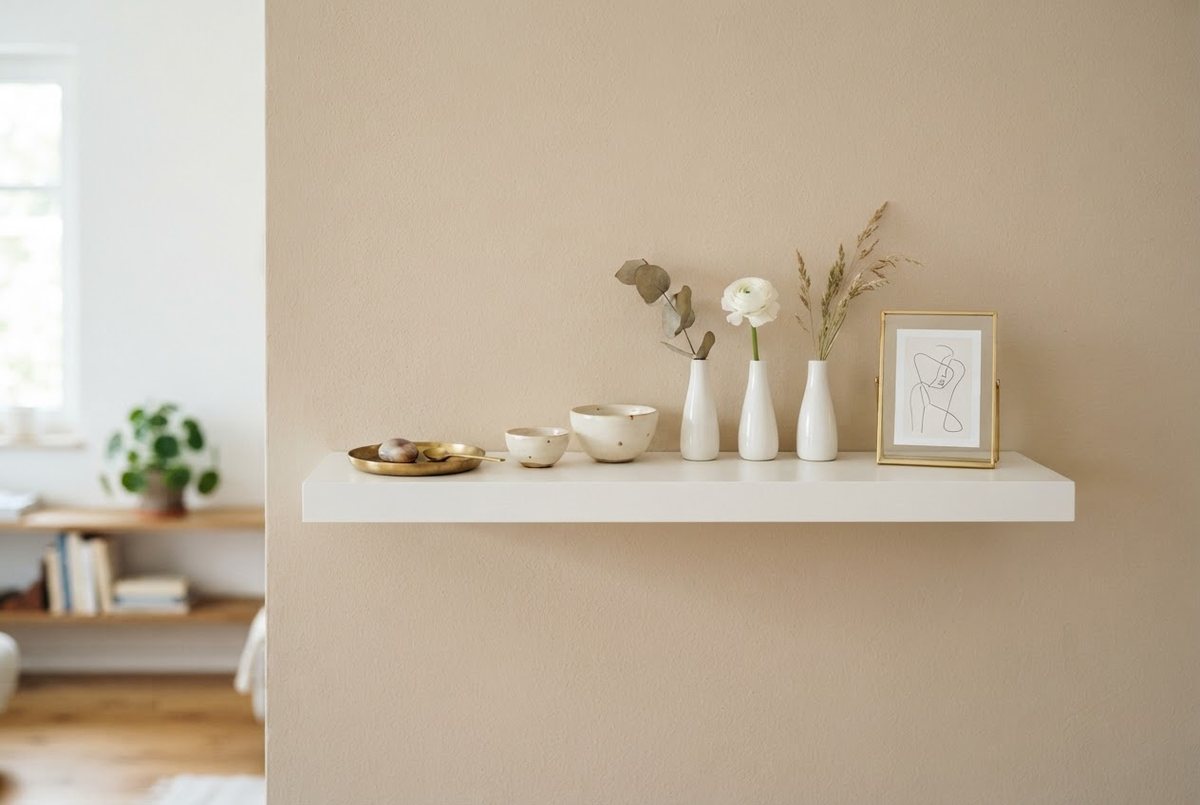
A curated shelf and a cluttered shelf can hold exactly the same objects. The difference is how your eye moves across them. On a cluttered shelf, everything shouts at the same volume, so your eye bounces around and never lands. On a curated shelf, there's a clear starting point (the biggest or boldest piece), a few supporting pieces, and little pauses of empty space in between.
Three things usually cause the chaos:
- Everything is the same height. A row of small objects lined up like soldiers reads as storage, not decor.
- Too many colors compete. Ten pieces in ten different colors look busy even if each one is lovely on its own.
- Nothing is grouped. Single tiny objects scattered across a long shelf look lost. The same objects gathered on a tray look like a little collection.
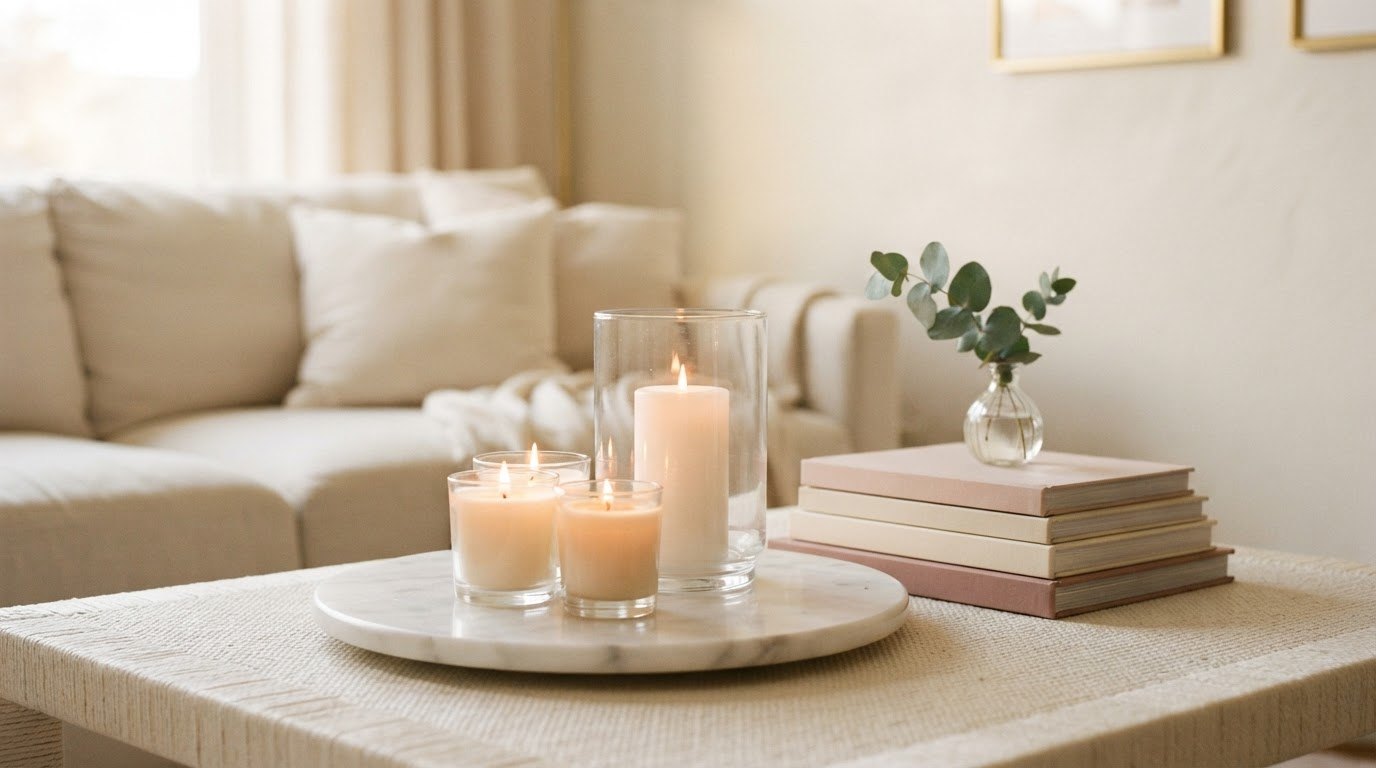
Fix those three, and you're most of the way there. The rules card below turns them into simple steps.
The Trinket Shelf Styling Rules Card
Screenshot this and keep it handy whenever you restyle a shelf. These five rules work for a floating shelf, a bookcase, a windowsill or a bathroom ledge.
- Odd numbers. Group small things in threes or fives. An odd group feels relaxed and natural, while pairs feel formal and a group of four tends to look like a row. If you have four similar pieces, split them into a three and a one.
- Three heights. Every grouping needs something tall, something medium and something low. If all your pieces are short, create height with a stack of two or three books, a small riser or a bud vase with a single tall stem.
- A color story. Choose two or three colors for the whole shelf (for example cream, blush and gold, or white, sage and natural wood) and let most pieces follow it. One surprise color is fine. Five surprise colors is clutter.
- Breathing room. Leave about a third of the shelf empty. It sounds like a lot, but empty space is what makes the objects look special. A good test: you should be able to see a stretch of bare shelf between each grouping.
- One anchor. Each shelf needs one piece that is a little bigger or bolder than the rest: a framed print, a larger vase, a pretty box or a stack of books. The anchor gives the eye a place to land, and the small trinkets gather around it.
If a shelf still feels off after styling, run through the card in order. Nine times out of ten, the fix is either "remove two things" or "add one taller thing."
Shelf Recipe Table: What Goes Where
Different shelves need slightly different formulas. Use this table as a starting recipe, then swap in your own treasures. Each row follows the same structure: one anchor, one or two mid-height pieces, a few small trinkets and a soft filler to connect them.
| Shelf type | Anchor | Mid-height | Small pieces | Filler |
|---|---|---|---|---|
| Floating wall shelf | Small framed print leaned against the wall | Bud vase with one stem | Three trinkets on a tray | A tiny trailing plant or dried flowers |
| Bookcase shelf | Stack of 3 books lying flat | Ceramic vase or candle on the stack | A bowl of shells or rings | Upright books to one side |
| Windowsill | Glass bottle or larger bud vase | Two smaller bottles | Sea glass, crystals or tiny figurines | Light itself (keep it sparse) |
| Bathroom shelf | Pretty jar or apothecary canister | Perfume bottle or body mist | A ceramic dish for hair ties | A rolled hand towel |
| Entryway console | Framed art or a small lamp | A vase with branches | Key dish and one keepsake | A small stack of coffee-table books |
| Bedside shelf | A glass candle | A small photo frame | A jewelry dish | Your current book |
| Picture ledge | The largest frame, slightly off-center | Two smaller overlapping frames | One or two objects in front | Postcards tucked between frames |
| Open kitchen shelf | A stack of pretty plates | A pitcher or teapot | Egg cups or tiny bowls | A wooden board leaned behind |
Notice that the "small pieces" column always lives inside a group, never alone. That's the real secret of a calm trinket shelf.
15 Trinket Shelf Ideas To Display Little Things Beautifully
Pick one or two ideas per shelf rather than trying them all at once. Each one works on its own, and most cost little or nothing.
1. Start With a Tray
A tray is the quickest way to turn scattered bits into a collection. Anything placed on it instantly reads as "grouped on purpose," and you can lift the whole thing off to dust in one move. A small brass trinket tray in an oval or rectangle shape works on almost any shelf. Look for one roughly 6 to 9 inches long, so it holds three to five pieces without crowding. Place the tray slightly off-center and let one taller piece sit just behind it.
2. Give the Tiniest Things a Bowl
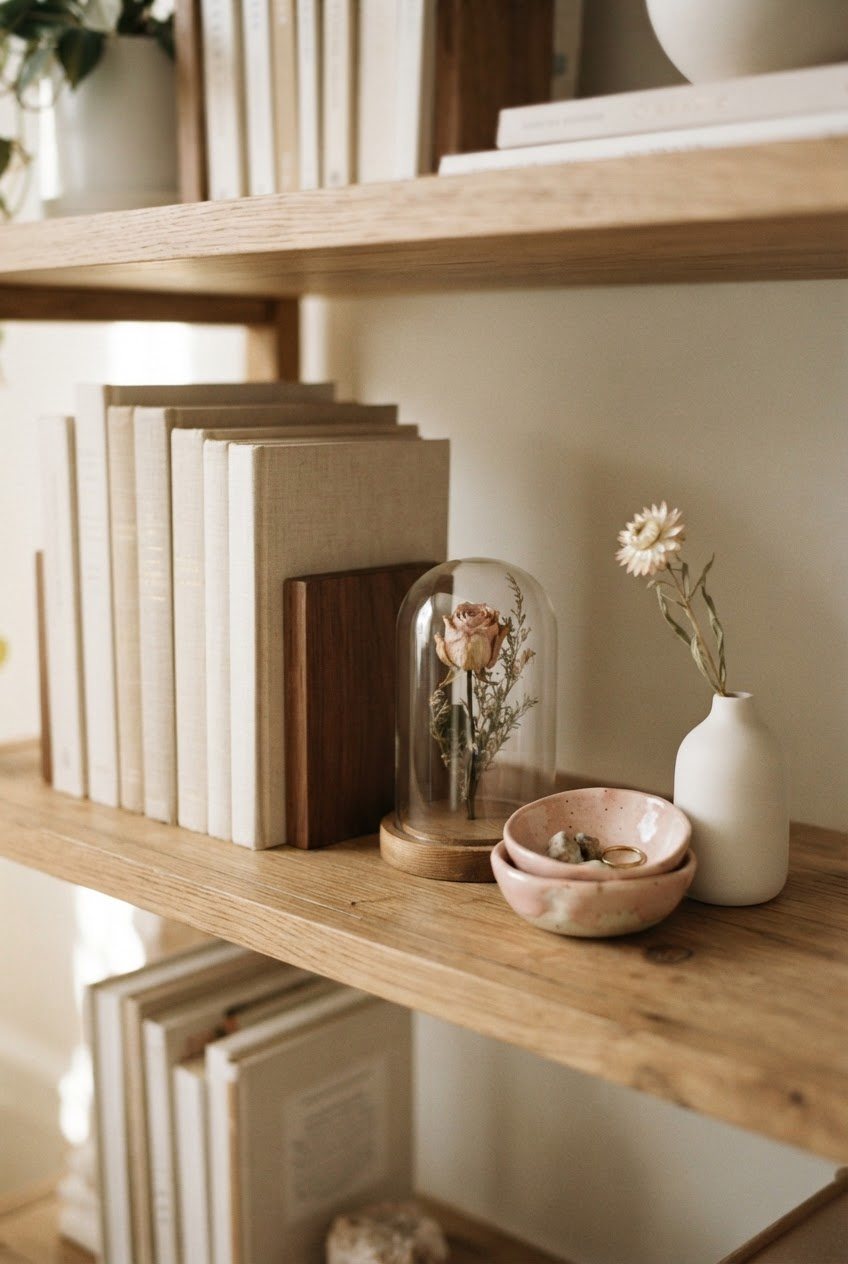
Rings, shells, sea glass, old buttons, little charms: very small objects disappear on a shelf and become dust collectors. Put them together in a shallow dish instead. A set of cream ceramic trinket bowls in two or three sizes looks soft and lets you sort by type, for example one bowl for shells and one for rings. Fill each bowl only halfway. A heaped bowl looks like a junk drawer, while a half-full one looks like a treasure dish.
3. Build a Bud Vase Trio
Three small vases in slightly different heights are the easiest way to add the "tall, medium, low" rhythm from the rules card. Put one single stem in each: a sprig of eucalyptus, a dried lavender bundle, a single grocery-store carnation. I'd choose a set of white ceramic bud vases with different shapes but the same color, so they feel connected. Stand them close together, almost touching, rather than spread across the shelf.
4. Frame Small Memories
Mini frames turn ticket stubs, pressed flowers, a handwritten note or a tiny photo into proper decor. Lean one against the wall as your anchor, or tuck a smaller one in front of a stack of books. A set of mini gold picture frames in 2x3 or 3x4 size is perfect for trinket shelves, because they match the scale of small objects. Keep framed items to two or three per shelf so they stay special.
5. Use Books as Risers
Books are free height. Lay two or three books flat, spines facing out, and set a trinket or candle on top. Choose books with soft-colored spines that match your color story, or turn them around so only the cream page edges show if the covers are too loud. A stack of three books plus one object on top is one of the most reliable shelf groupings there is.
6. Protect Delicate Pieces Under Glass
A fragile vintage figurine, a dried flower crown, a tiny bird's nest you found on a walk: delicate things look precious under a small glass dome, and the glass keeps dust away. A small glass cloche with a wooden base works as a mid-height piece and draws the eye without adding visual weight. Place only one object inside, so it feels like a little museum display.
7. Create a Color-Story Shelf
Pull every trinket you own in one color family onto one shelf: all the blush pieces, all the white ceramics, all the gold. Even objects that have nothing in common (a pink shell, a blush ring dish, a rose-colored perfume bottle) suddenly look like they belong together. This is the easiest way to display a mixed collection, and it photographs beautifully. Sort the rest of your collection by color for other shelves.
8. Make a Travel Memory Shelf
Small souvenirs often end up in drawers because they don't match anything. Give them their own shelf with one rule: one object per trip. A tiny ceramic tile, a shell from a beach day, a matchbox from a hotel, a postcard in a mini frame. Add a small handwritten label on the back of each piece (where and when) so the memory stays with it, even if it's not visible.
9. Style an Heirloom Shelf
Inherited pieces deserve a place where they can be seen and not knocked over. Choose an upper shelf, away from busy hands and bags, and give each heirloom more space than usual. A grandmother's teacup on its saucer, a pair of old glasses, a brooch on a small dish. Two or three pieces with lots of breathing room feel respectful. Ten pieces squeezed together feel like storage.
10. Add a Candle Corner
Candles bring a soft glow to a trinket shelf in the evening, and I love glass candles for this, because the jar reflects light onto everything around it. Keep the flame well away from dried flowers, paper and the shelf above, and only light it when you're in the room. If you want candles without the worry, use a battery candle on the shelf and save real ones for an open table. My guide on how to style candles around your home has more ideas for grouping them with small objects.
11. Use a Small Riser for Layers
When a shelf is deep, items at the back hide behind items at the front. A small riser fixes this by lifting the back row a few inches. A clear acrylic display riser almost disappears visually, so the objects seem to float in layers. Put taller pieces at the back on the riser and lower pieces in front, like a tiny theater audience.
12. Rotate With the Seasons
Keep a small box of "resting" trinkets and swap a few pieces every season. Winter might bring a mini brass bell, a pine cone and a white candle; spring brings dried flowers and pastel pieces; summer gets shells and sea glass. Rotating means your shelf never gets crowded, and you see your favorite things with fresh eyes each time they come back out.
13. Install Floating Shelves for Your Collection
If your trinkets currently live on every flat surface, a dedicated wall spot can calm the whole room. Two or three white floating shelves hung in a stagger or a straight column create a little gallery just for small things. Choose shelves at least 5 inches deep so objects don't sit on the edge, and hang them about 10 to 12 inches apart so each shelf has room for a tall piece. If you rent, ask about wall anchors first, or use a freestanding bookcase instead. My post on apartment decor on a budget has more renter-friendly display ideas.
14. Mix in Something Living (or Once Living)
Objects can feel a little stiff on their own. A tiny potted plant, a trailing pothos cutting in a glass bottle or a small bundle of dried grasses softens the edges and adds movement. Place the plant at one end of the shelf so it frames the trinkets instead of competing with them. Choose low-light plants for shelves far from a window.
15. Leave One Spot Empty on Purpose
This is the idea that changes everything. Choose one stretch of shelf, about a hand's width, and keep it completely bare. It gives the eye a rest and makes every object next to it look more deliberate. When you're tempted to fill it with a new find, treat it as a signal: something else needs to go back into the resting box first.
Where To Put a Trinket Shelf at Home
Almost any room can hold a small display, but some spots work especially well:
- Above a desk or reading chair. A shelf at eye level when you sit gives you something pretty to rest your eyes on. A reading corner is a natural fit; you'll find more ideas in my reading nook ideas.
- In the bedroom. A bedside shelf with a candle, a frame and a jewelry dish feels calm and personal. Keep it sparse, since bedrooms feel more restful with less on show. For the bigger picture, see these bedroom ideas.
- Next to your coffee or tea station. A small shelf with your prettiest mugs and a tiny vase makes the morning routine feel special. My coffee corner ideas show how to group mugs and small objects.
- In the bathroom. Perfume bottles, a ceramic dish and a small plant look lovely, as long as the shelf stays away from steam and splashes.
- The entryway. A narrow ledge with a key dish and one meaningful object greets you every time you come home.
How To Edit Your Trinket Collection
If you own more trinkets than shelf space, you're in good company. Small things collect quietly. Here's a gentle three-box edit that takes about 30 minutes:
- Display. Pieces you love, that fit your color story and that you'd be sad not to see. Aim for roughly half of your collection here at most.
- Rest. Pieces you love but that don't fit right now. They go in a lidded box for the next seasonal swap.
- Release. Pieces you kept out of guilt, duplicates and things that no longer feel like you. Pass them to a friend, a charity shop or a little free swap shelf.
A small permission here: you don't have to keep a gift on display forever to honor the person who gave it. Enjoying it for a season and then resting it is perfectly kind.
Once a month, take a quick look and ask one question of each piece: "Would I put this here again today?" If the answer is no, move it to the rest box. This tiny habit keeps the shelf from slowly filling back up.
Keeping a Trinket Shelf Dust-Free
Small objects mean small surfaces for dust, and that's the main reason people give up on trinket displays. A few habits make it easy:
- Use trays and bowls. Lift the whole group off, wipe the shelf, put it back. Two minutes instead of ten.
- Dust weekly with a soft brush. A clean, soft makeup brush or a paintbrush reaches into tiny grooves on figurines and shells.
- Wash glass and ceramics every few months. Warm water with a drop of mild soap, then dry fully before returning them.
- Keep delicate pieces under glass. A cloche or a glass-front cabinet protects the most fragile items from dust and bumps.
If cleaning your shelf feels like a chore, that's a quiet sign there are a few too many pieces on it. Fewer objects, less dust, more joy.
Final Thoughts
A trinket shelf is one of the most personal corners of a home. It holds the shell from a perfect afternoon, the teacup from someone you love, the tiny thing you bought just because it made you smile. Those stories deserve to be seen, not lost in a crowd.
Start with one shelf, one anchor and one tray. Leave a little space empty, keep the colors gentle, and let your favorite things take turns in the spotlight. Your little treasures will look like a collection, and your home will feel a lot more like you.