Period self-care isn't about pushing through and pretending nothing is happening. It's about noticing that your body is doing real work for a few days each month and giving it a little more warmth, rest and patience than usual. Small things add up fast: heat in the right spot, a gentler to-do list, the right product for your flow, and a plan you made on a good day so you don't have to think on a hard one.
This guide covers period self-care from start to finish: how to track your cycle without it becoming a chore, comfort for cramps, what helps with bloating and that heavy tiredness, how to look after your mood, an honest overview of period products, skin care around your period, a comfort kit you can put together once and reuse every month, and how to tell the people around you what you need. You'll also find a cycle comfort plan table you can screenshot and keep.
One kind note before we begin: everything here is about feeling more comfortable, not about treating a medical condition. If your periods are very painful, very heavy or suddenly different, that deserves a doctor's attention (there's a section on exactly when near the end).
Start by Tracking Your Cycle (Gently)
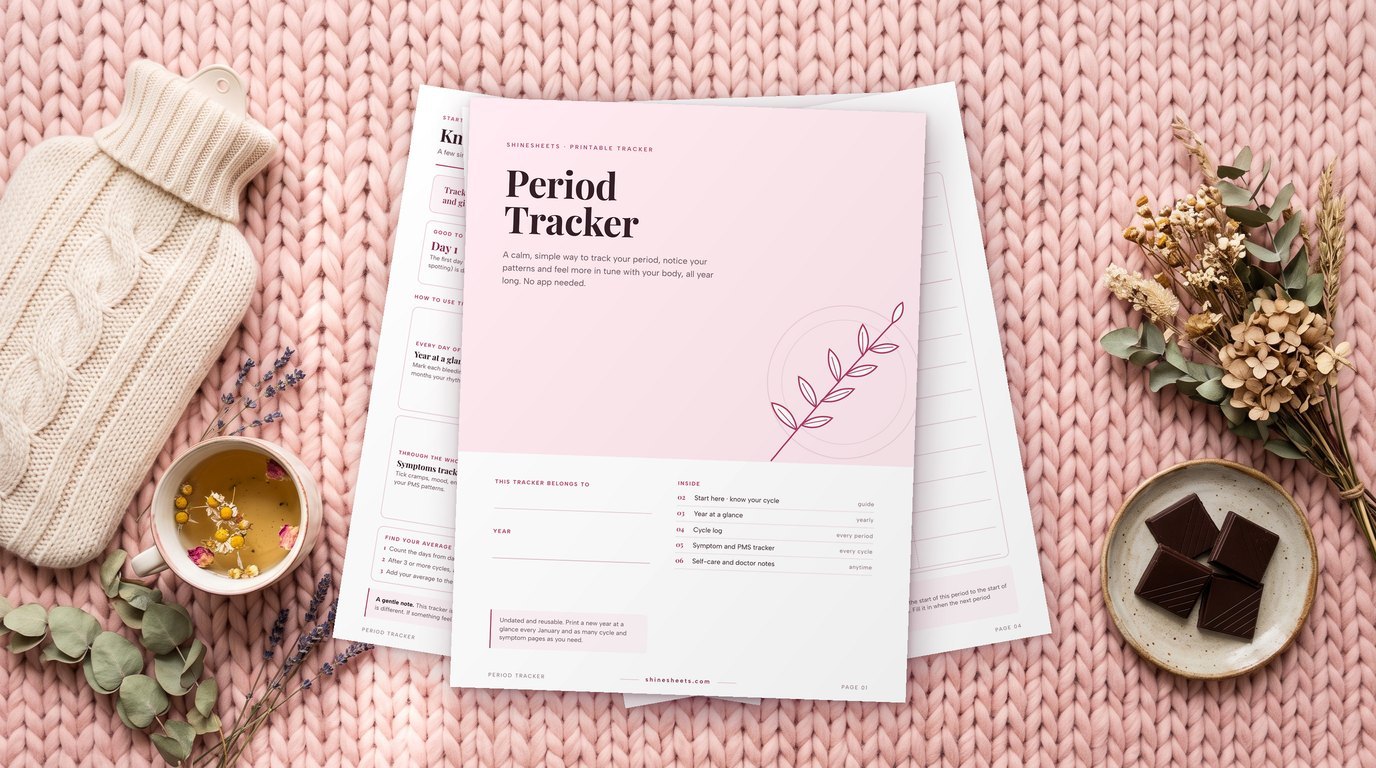
Tracking sounds clinical, but it's really just a way of being kind to your future self. When you know roughly when your period is coming, you can plan a lighter week, pack supplies in your bag and stop being surprised by a mood dip that's actually right on schedule.
You don't need anything fancy. A period app, the calendar on your phone or a page in your journal all work. Note three things each cycle:
- The first day of bleeding. This is day 1 of your cycle and the most useful number you can track.
- How many days you bleed and how heavy it feels. Light, medium or heavy is enough detail.
- Two or three symptoms. Cramps, headaches, bloating, low mood, tender breasts, breakouts, trouble sleeping. Just a word or two.
After three or four months you'll start to see your own pattern. Maybe your cramps are worst on day 2, or you always feel teary the evening before your period starts. That pattern is gold, because it turns "why do I feel like this?" into "ah, it's that day again, I know what helps." It's also exactly the information a doctor will ask for if you ever need one.
A typical cycle is anywhere from about 21 to 35 days, and it's normal for it to shift by a few days here and there. Stress, travel, illness and sleep changes can all nudge it.
Comfort for Cramps
Period cramps happen because the uterus contracts to shed its lining. For many people they're a dull ache low in the belly that sometimes spreads to the lower back or thighs. Here are the comfort basics that help most people feel a bit better.
1. Use Heat, and Use It Early
Heat relaxes tight muscles and is one of the simplest, most reliable comforts there is. The trick is to start early, as soon as you feel the first twinge, rather than waiting until the cramps are in full swing.
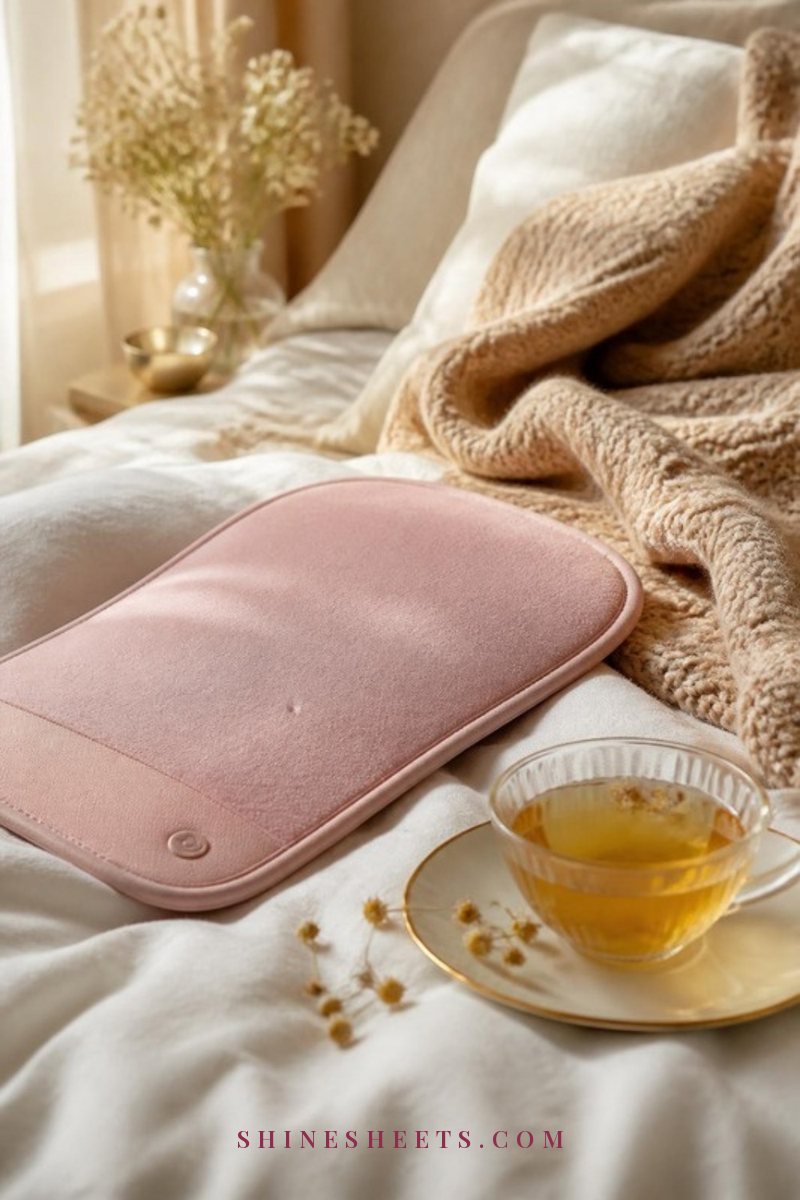
A rechargeable heating pad you can wear under your clothes is lovely for days when you still have to move around, because there's no cord keeping you on the couch. Look for one with a few heat settings and an automatic shut-off. Ten to twenty minutes at a time on your lower belly or lower back is a good rhythm.
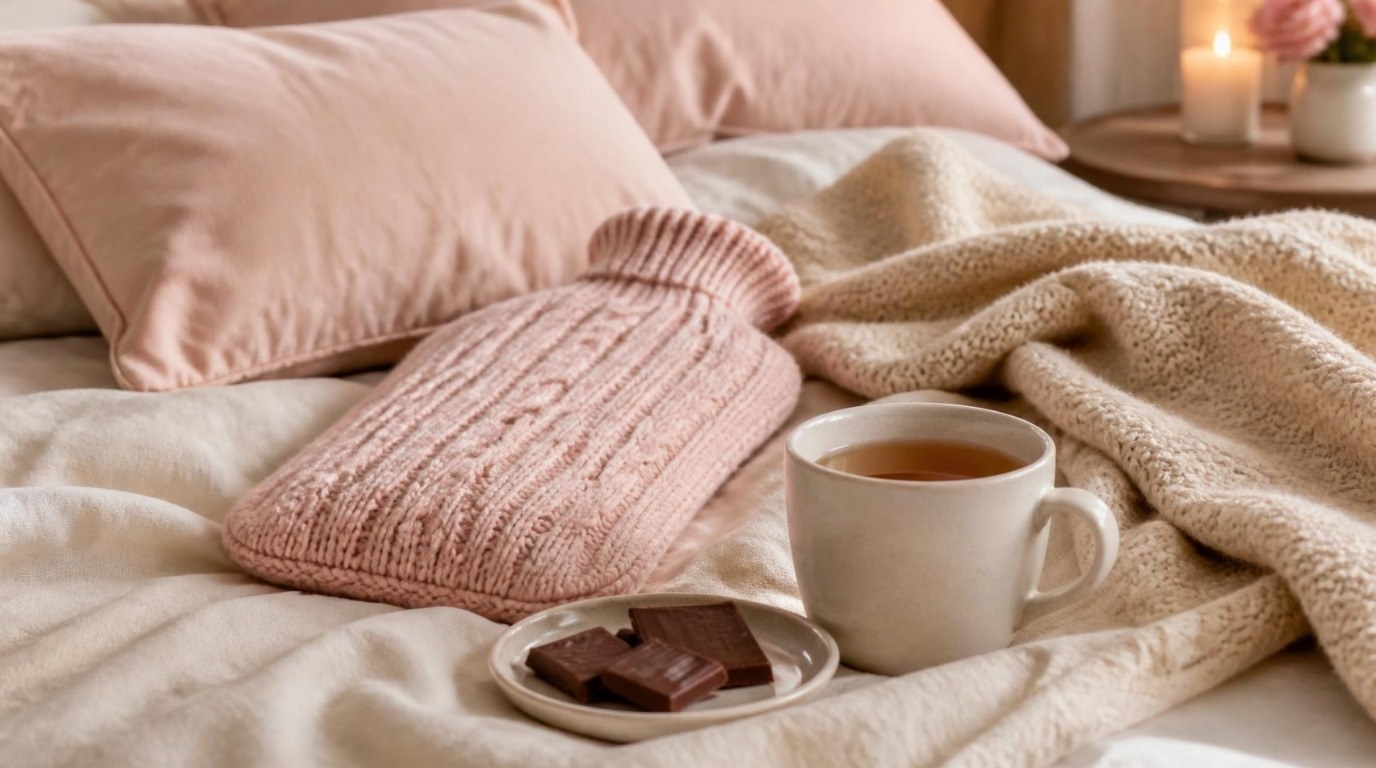
For evenings, nothing beats a hot water bottle with a soft knit cover. Fill it with hot (not boiling) tap water, squeeze out the air before closing it and always keep a layer of fabric between it and your skin.
Safety note: keep heat on low or medium, never sleep with a heating pad switched on and check your skin every so often. Red, blotchy skin means it's too hot or on too long.
2. Sip Something Warm
A warm drink won't make cramps disappear, but holding a mug and sipping slowly does something calming for your whole body. Peppermint, ginger, chamomile and rooibos are popular period-day choices, and a herbal tea sampler box lets you find the ones you actually like before you need them. If you'd like more ideas for the evening, my guide to caffeine-free bedtime drinks has plenty.
A small honest admission: coffee sometimes perks me up and sometimes makes me jittery and anxious, and on period days it leans toward jittery. If you notice the same, try half a cup or switch to tea for a couple of days.
3. Give Your Belly a Gentle Massage
Warm a little body lotion or oil between your palms and massage your lower belly in slow clockwise circles for three to five minutes. Use light, steady pressure, nothing deep. It's soothing, it warms the area and it gives your hands something kind to do while you breathe.
4. Breathe Into the Tight Spot
Cramps make most of us tense up and hold our breath, which tends to make everything feel worse. Try this: lie on your back with your knees bent, one hand on your belly. Breathe in through your nose for four counts so your belly rises under your hand, then breathe out slowly for six counts. Repeat for two minutes. The longer exhale tells your body it's safe to soften.
5. Let Yourself Rest
Rest is not giving up. If your body is asking you to lie down for twenty minutes, lying down for twenty minutes is good self-care. If you work or study, even a short break with your eyes closed and your heat pack on can make the afternoon feel more manageable.
If you usually take over-the-counter pain relief for cramps, ask a pharmacist or doctor what's right for you and how to time it. Many people find it works better taken early rather than once the pain has built up, but that's a conversation worth having with a professional.
Gentle Movement and Stretches for Period Days
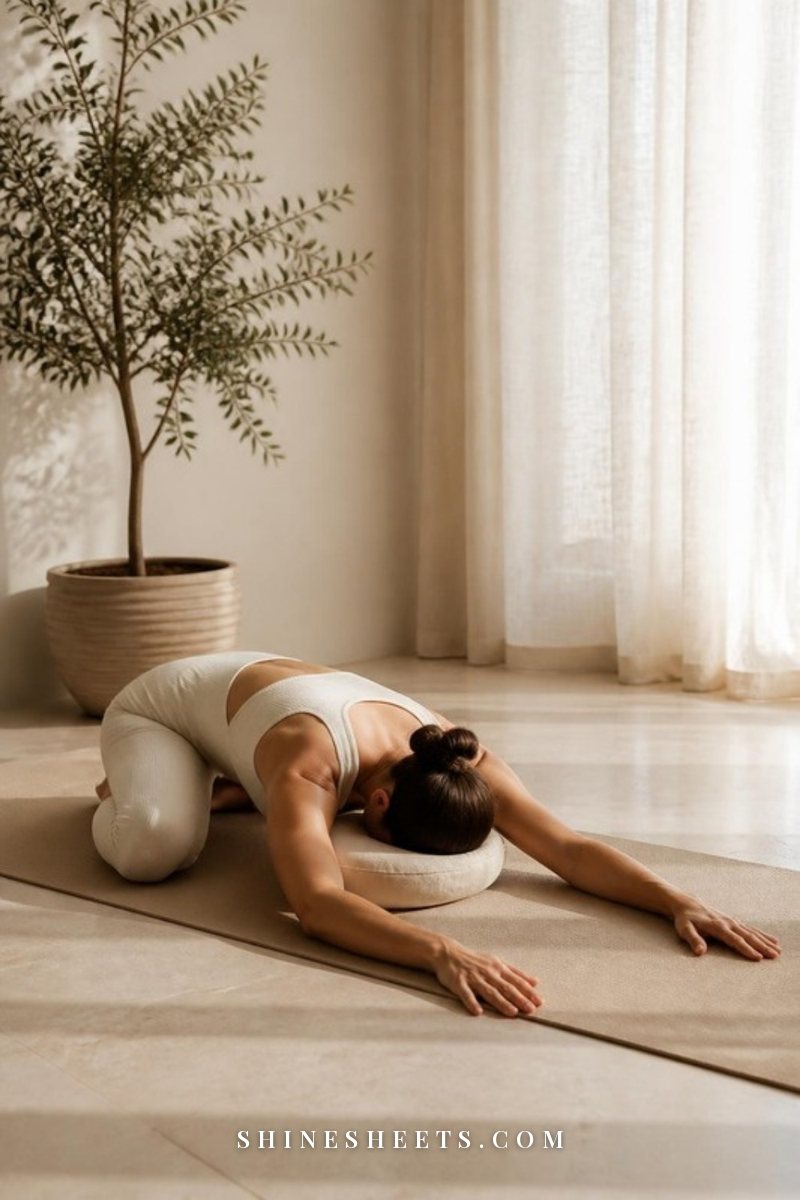
Exercise is probably the last thing you feel like doing, and on your heaviest, crampiest day that's completely fine. But on many period days, a little slow movement can ease tension and lift your mood. Think "loosen up," not "work out." Here are five gentle stretches that take about ten minutes together:
- Child's pose (1–2 minutes). Kneel, bring your big toes together and knees wide, then fold forward and rest your forehead on the mat or a cushion. Let your belly sink between your thighs and breathe into your lower back.
- Cat-cow (10 slow rounds). On hands and knees, round your back up as you breathe out, then let your belly drop and lift your chest as you breathe in. Move slowly with your breath.
- Knees-to-chest (1 minute). Lie on your back and hug both knees in, rocking gently side to side to massage your lower back.
- Supine twist (1 minute each side). From your back, drop both bent knees to one side and turn your head the other way. Keep your shoulders heavy.
- Legs up the wall (3–5 minutes). Sit sideways next to a wall, swing your legs up and lie back. Rest your hands on your belly. This one feels wonderful in the evening.
Other gentle ideas: a slow 15-minute walk outside, a short stretching video, or a soft flow like the one in my gentle yoga for beginners guide. Skip anything that makes your pain sharper, and stop if you feel dizzy.
Easing Bloating and Fatigue
Bloating and tiredness are two of the most common period complaints, and they often show up a few days before bleeding starts. A few small habits can take the edge off:
- Keep drinking water. It sounds backwards when you feel puffy, but staying hydrated helps your body hold on to less extra water. Keep a glass or bottle within reach and sip through the day.
- Choose lighter, simpler meals. Many people feel better with smaller, regular meals and a bit less very salty or heavily processed food around their period. No strict rules, just notice what sits well.
- Wear soft, roomy clothes. A soft cotton lounge set with a stretchy waistband is a small mercy on bloated days. Save the fitted jeans for next week.
- Move a little. A short walk after eating can help things feel less tight and heavy.
- Protect your sleep. Go to bed 30 minutes earlier than usual for the first few days. Period fatigue is real, and extra sleep is the most direct fix.
- Plan for an energy dip. Put your most demanding tasks on days when you usually feel stronger, if you have that flexibility.
For more ideas, my guides on how to reduce bloating and how to reduce PMS symptoms naturally go deeper into the days before your period.
A quick note on tiredness: if you feel exhausted, breathless or dizzy most of the time and your periods are heavy, mention it to your doctor. Heavy bleeding can lower your iron levels, and that's easy to check with a simple blood test.
Caring for Your Mood
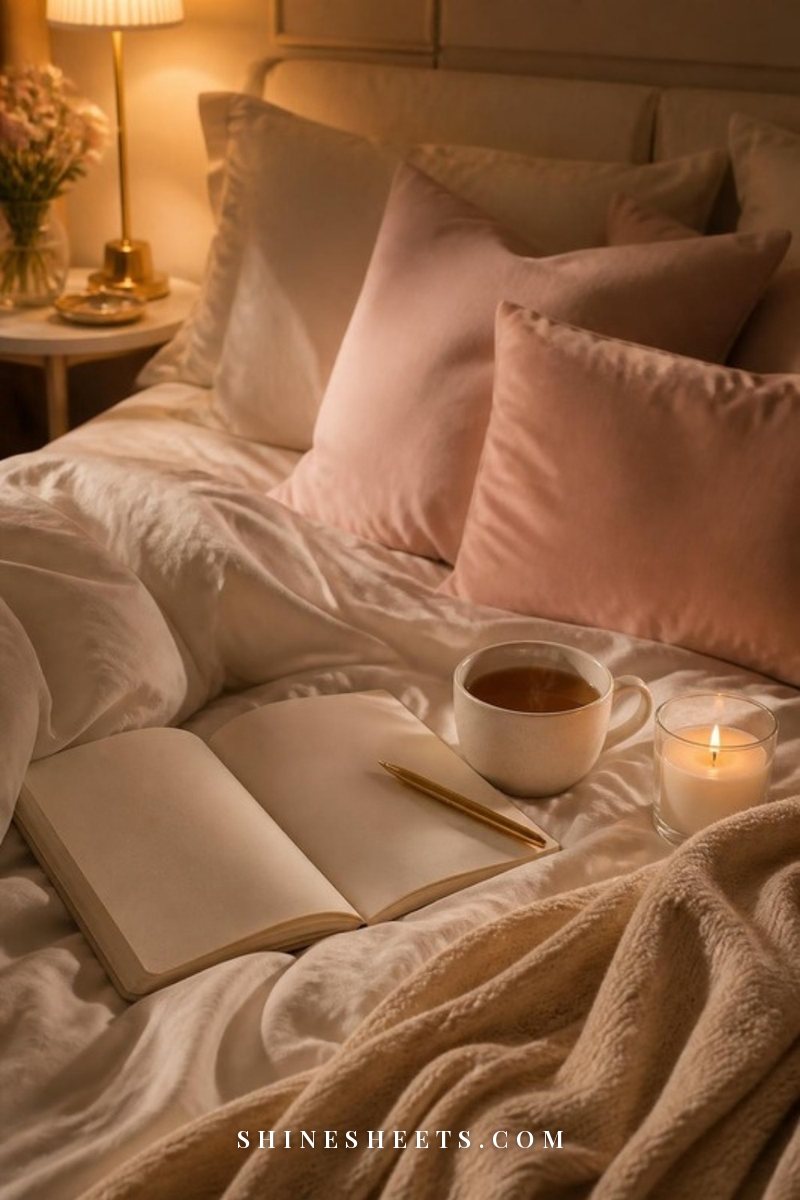
Hormone shifts before and during your period can make you more sensitive, teary, irritable or anxious. I'm prone to anxiety anyway, and I've learned to expect it to feel a little louder in those days. Knowing that doesn't make it vanish, but it does make it less scary. Here's what helps:
Lower the Bar on Purpose
Decide in advance what "enough" looks like on your period days. Maybe it's: work done, dinner eaten, shower taken, in bed by ten. Everything else is a bonus. Lowering the bar isn't lazy, it's realistic, and it saves you from the extra layer of guilt on top of feeling rough.
Plan Gentler Days
Look at your tracker and peek at the dates when your period is likely to arrive. If you can, avoid stacking big social plans, deadlines or hard conversations on those days. When you can't avoid them, add a buffer: a quiet hour before, an easy evening after.
Keep a Comfort List
Write a short list, on a good day, of things that reliably make you feel a bit better. When you're low, you won't have the energy to think of them, but you'll be able to read a list. Mine includes evening tea, a glass candle, journaling for ten minutes after my tea and an old Hollywood film I've seen a dozen times. Yours might be a phone call with your sister, a playlist or a long shower. My list of self-care ideas for bad days can give you a starting point.
Name the Feeling
When a wave of irritation or sadness hits, try saying (in your head or in your journal): "I'm feeling really sensitive right now, and part of that is my cycle." It doesn't dismiss the feeling, it just gives it context. Then ask yourself one question: "What would make the next hour a little easier?"
If your low mood before your period is severe, lasts most of the second half of your cycle or makes daily life feel impossible, please talk to a doctor. There's real help for that, and you don't have to just get through it.
Your Cycle Comfort Plan
This is the heart of the guide: a simple plan that tells you what tends to help in each part of your cycle. Screenshot it, then adjust it to your own pattern after a few months of tracking.
| When | What you might feel | What helps | Plan ahead |
|---|---|---|---|
| The few days before | Bloating, tender breasts, mood swings, cravings, poor sleep | Water within reach, roomy clothes, earlier bedtime, a short daily walk, journaling | Pack supplies in your bag, charge your heating pad, lighten your calendar |
| Days 1–2 | Strongest cramps, heaviest flow, low energy, feeling emotional | Heat early and often, warm drinks, child's pose and knees-to-chest, rest breaks, comfort list | Lowest bar of the month: only the essentials, easy dinners, cancel what you can |
| Days 3–5 | Lighter flow, cramps fading, energy slowly returning | Gentle walks or yoga, regular meals, fresh air, a soothing evening routine | Ease back into normal tasks, switch to lighter products as flow slows |
| The week after | Often more energy, clearer head, better mood | Harder workouts, social plans, big tasks and decisions | Restock your comfort kit, note this cycle's symptoms, book any check-ups |
The "plan ahead" column is the secret. Most period stress comes from being caught off guard, so doing the small prep on a good day takes a lot of pressure off the hard ones.
Period Products: An Honest Overview
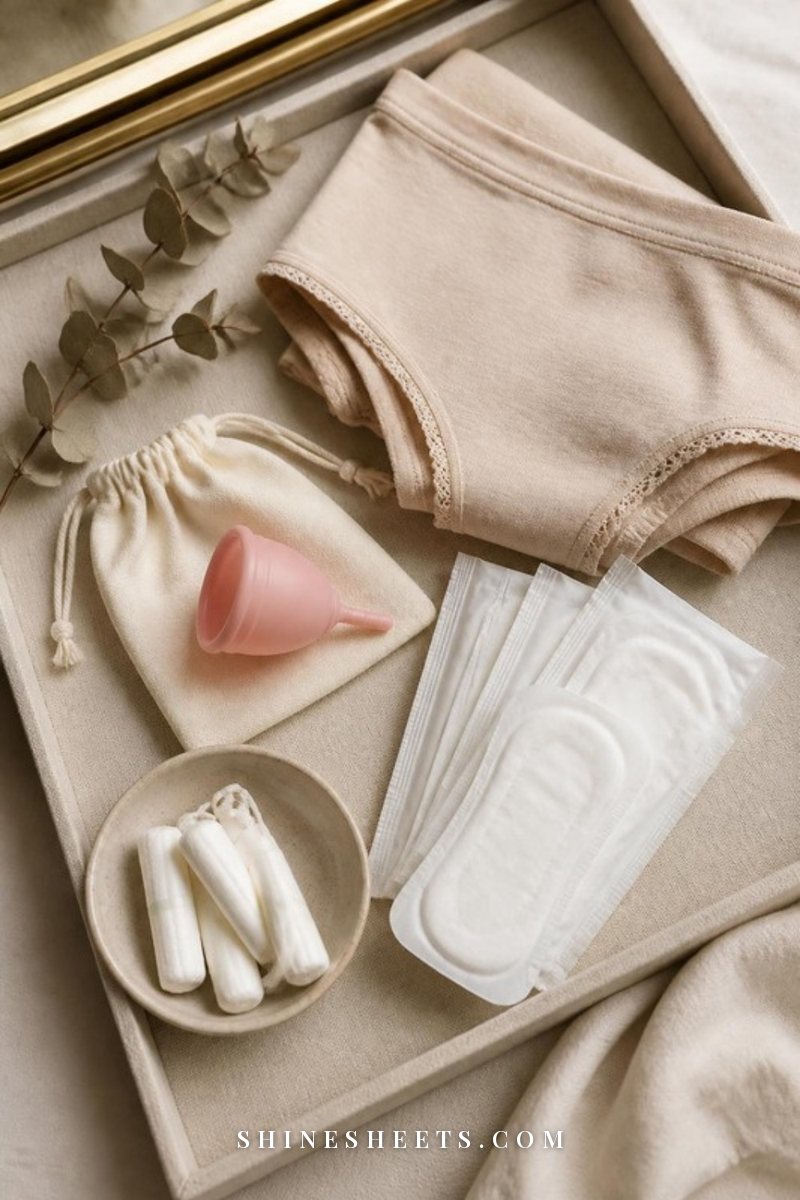
There's no single best period product. The right one depends on your flow, your comfort, your budget and your day. Many people mix and match, for example a cup during the day and period underwear at night. Here's a quick overview.
Pads
Pros: easy to use, nothing inserted, lots of sizes and absorbencies, good for overnight and for beginners. Cons: can feel bulky, may rub or irritate sensitive skin, single-use pads create waste. Changing: every 4–8 hours, or sooner if it feels full or damp. Choose breathable, unscented pads if your skin is sensitive.
Tampons
Pros: discreet, comfortable once inserted correctly, good for swimming and sport. Cons: can feel dry on light days, take a little practice and carry a small risk of toxic shock syndrome (TSS). Changing: every 4–8 hours, never longer than 8. Use the lowest absorbency that works for your flow and switch to a pad or underwear overnight if you sleep longer than 8 hours.
Menstrual Cups
Pros: reusable for years, hold more than most tampons, less waste and cost over time. Cons: there's a learning curve with folding and removing, emptying in public bathrooms can feel awkward and finding the right size may take a try or two. Changing: most brands say empty it every 8–12 hours, more often on heavy days. If you're curious, a soft silicone menstrual cup in a smaller size is a gentle place to start. Wash your hands before and after, and boil or sterilize it between periods as the instructions say.
Period Underwear
Pros: feels like normal underwear, very comfortable, great for nights, light days, backup with a cup or tampon and for anyone who doesn't want to insert anything. Cons: higher upfront cost, needs rinsing and washing, and on heavy days you may need to change during the day. Changing: depends on your flow and the absorbency, often up to around 12 hours on light days. A few pairs of soft period underwear are worth having even if you mainly use something else. Rinse in cold water first, wash gently and skip fabric softener.
Whatever you choose, change it whenever it feels full, and never feel you have to stick with one product just because it's what you started with.
Skin Care Around Your Period
If you notice a few spots along your jaw or chin right before your period, you're in good company. Hormone shifts can make skin oilier and more breakout-prone in the days before bleeding, then drier or duller during it. My combination, sensitive skin gets a shinier T-zone the week before, so I've learned not to overreact. A few gentle principles:
- Keep your routine simple. A gentle cleanser, a lightweight moisturizer and sunscreen in the morning. This is not the week to try three new actives.
- Don't scrub harder. Harsh scrubs and over-washing make irritation worse. Cleanse twice a day, no more.
- Spot-treat, don't strip. A pimple patch or a dab of a gentle spot treatment is enough. Leave the rest of your face alone.
- Hands off. Picking spots during this time often leaves marks that last longer than the spot itself.
- Hydrate on dry days. If your skin feels tight during your period, add a richer moisturizer at night.
If breakouts around your period are a regular pattern for you, my hormonal acne skincare routine walks through a calm, step-by-step plan.
Build a Period Comfort Kit
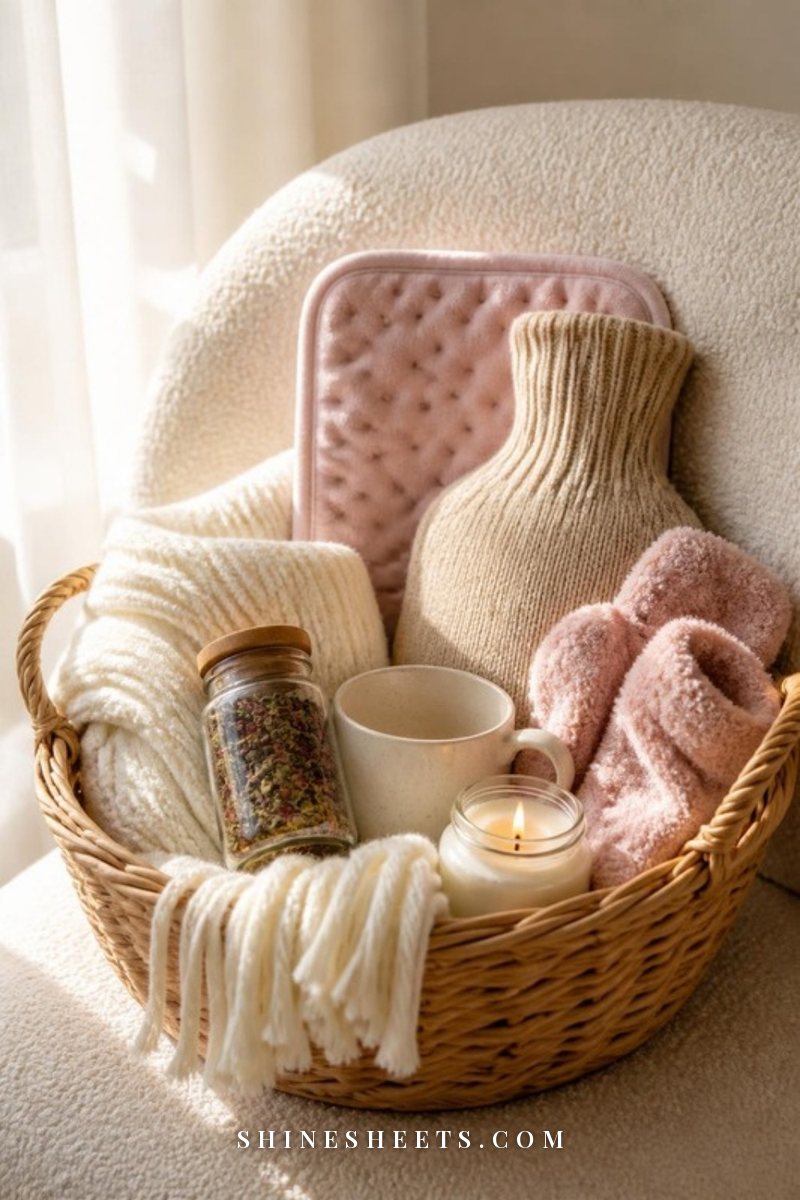
A comfort kit is a small box or basket you put together once and reach for every month. When you're crampy and tired, you won't have to hunt for anything. Here are 10 things to include:
- Your period products for a few days: your usual pick plus a backup.
- A heating pad or hot water bottle, charged or ready to fill.
- Two or three herbal teas you actually enjoy.
- A favorite mug, because it makes the tea feel like a ritual.
- Cozy socks and a soft lounge set or your comfiest pajamas.
- A small blanket for the couch.
- Pain relief you've discussed with a pharmacist or doctor, if you use it.
- Pimple patches and a rich lip balm.
- A candle or a calming body lotion for an evening wind-down.
- Your comfort list, written on a card, plus a book or a journal.
Keep a mini version in your bag, too: two products, a small pack of tissues, a spare pair of underwear in a pouch and a stick-on heat patch. Restock both kits the week after your period, while it's fresh in your mind.
Communicating What You Need
Periods are normal, but a lot of us still feel awkward asking for what we need. You don't have to share every detail, and you also don't have to suffer quietly. A few simple scripts:
- With a partner or roommate: "I'm on my period and pretty wiped out. Could we keep tonight low-key? A quiet movie would be perfect."
- With friends: "I'm not feeling great today, can we move our plans to next week? I really want to see you when I can enjoy it."
- At work: "I'm not feeling well this afternoon. I'll have the report finished by tomorrow at noon." You don't owe anyone medical details.
- With family: "I need a couple of hours to rest. I'll come down and help later."
It also helps to tell the people you live with what actually helps, on a good day: "When I'm crampy, the kindest thing is a refilled hot water bottle and no big questions." People usually want to help, they just don't know how.
When To See a Doctor
Some discomfort is common, but period pain and bleeding shouldn't take over your life. Please book an appointment with a doctor or gynecologist if you notice any of these:
- Pain so strong that it stops you from going to work or school, or isn't helped by heat, rest and over-the-counter pain relief.
- Very heavy bleeding, such as soaking through a pad or tampon every hour for several hours in a row, or passing large clots.
- Periods that last longer than 7 days.
- Bleeding between periods or after sex.
- Big changes in your usual pattern: periods stopping, becoming much more painful or much heavier, or cycles that are very irregular.
- Feeling very tired, dizzy or short of breath along with heavy periods.
- Sudden high fever, a rash, vomiting or feeling faint while using a tampon or cup. Remove it and seek urgent care right away.
Bring your tracking notes with you. Saying "for the last four cycles, days 1 and 2 have been this painful" helps a doctor understand much faster. You deserve to be taken seriously, and asking is never overreacting.
Final Thoughts
Your period doesn't have to be something you grit your teeth through every month. With a little tracking, a comfort plan, the right products and a kit waiting for you, those days can feel softer and much more manageable.
Start small: write down your next day 1, charge that heating pad and give yourself permission to do less when your body asks for it. Taking care of yourself through every part of your cycle is one of the kindest habits you can build.