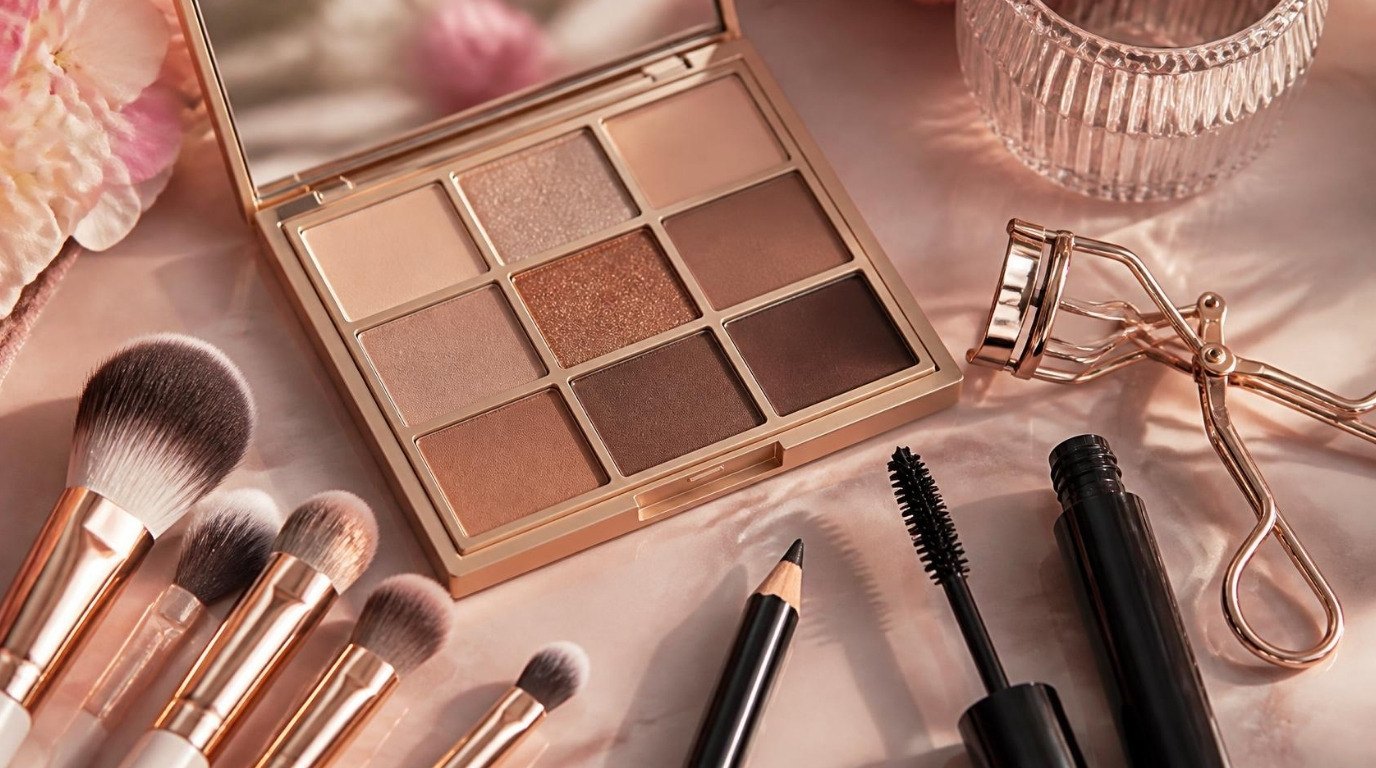
Sensitive eyes don't mean giving up eye makeup. They mean choosing formulas that stay put, keeping products away from the parts of the eye that react most, and being a little stricter about hygiene than most people bother to be. Get those three things right, and the stinging, watering and itchy lids usually calm down a lot.
Most eye irritation from makeup has a fairly ordinary cause: tiny flecks of mascara or powder landing in the eye, a fragrance or preservative your skin doesn't love, or a product that's simply too old. If you wear contact lenses, all of that matters even more, because anything that lands on the lens can sit against your eye for hours.
This guide to makeup for sensitive eyes covers why makeup can irritate your eyes, contact lens hygiene in the right order, seven gentle tips for comfortable everyday eye makeup, a handy product table, how to take it all off without rubbing, how to patch test new products and when it's time to see an eye doctor.
My skin is on the sensitive side too, so I understand how deflating it is when a new mascara turns into a red, watery afternoon. The good news is that gentle, comfortable eye makeup is very doable.
Why Makeup Irritates Sensitive Eyes

The skin on your eyelids is among the thinnest on your body, and your eyes themselves are designed to react quickly to anything foreign. That's a protective reflex, but it means eye makeup has very little room for error. The most common triggers:
- Loose powder and fallout: powder shadows, especially shimmery ones, shed tiny particles that drift into the eye during the day.
- Glitter: chunky or sharp-edged glitter can scratch and irritate, and it's notoriously hard to remove completely.
- Flaky mascara: regular mascara can dry out and flake onto the eye as the day goes on, especially by the evening.
- Fragrance and certain preservatives: scent adds nothing to eye makeup and is a frequent cause of irritation for sensitive skin.
- Old products: mascara and liquid liners are moist and touched by lashes daily, so bacteria can build up over time.
- Waterline application: liner on the inner rim sits right next to the oil glands and the tear film, so it migrates into the eye easily.
- Rubbing and harsh removal: scrubbing at your eyes at night can irritate them as much as the makeup itself.
Sometimes the cause is your skin rather than your eyes. If your lids get dry, flaky or itchy around the edges, it's worth looking at your whole sensitive skin routine, because harsh cleansers and active ingredients drifting up from the face can play a part too.
Contact Lens Hygiene and Makeup
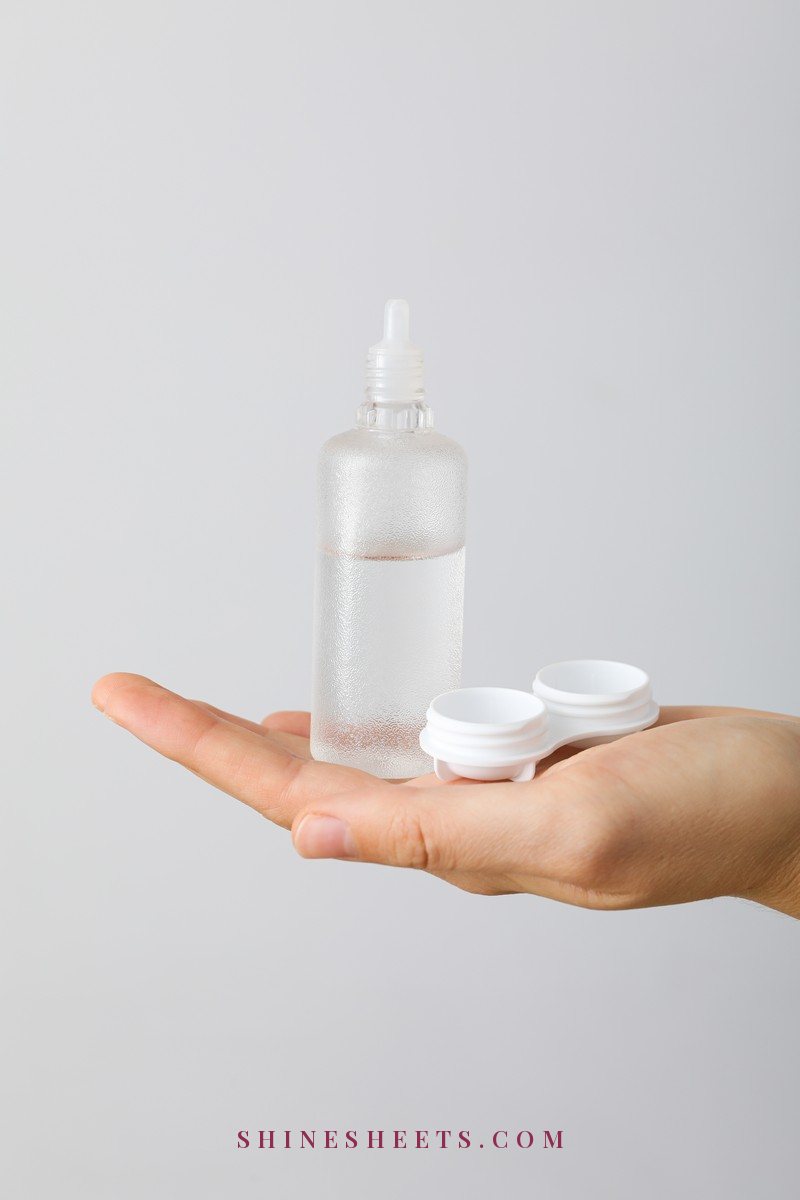
Contact lenses and makeup get along well when you follow a few non-negotiable habits. These matter for comfort, and they matter for your eye health:
- Wash and dry your hands first. Use soap and water, then dry your hands with a clean, lint-free towel before touching your lenses. Lotion or oil on your fingers can smear the lens.
- Lenses in before makeup. Put your lenses in first, so you're not transferring powder, cream or mascara residue onto them.
- Lenses out before removing makeup. At night, take your lenses out before you start with remover, so oils and pigment don't get trapped on them.
- Keep lenses out of water. Never rinse lenses or a lens case with tap water, and don't wear lenses in the shower or while swimming unless your eye care professional has said it's okay.
- Clean and replace your case. Empty, rinse with fresh solution and air-dry your case daily, and replace it regularly. A lavender travel lens case in your bag makes it easy to take lenses out comfortably if your eyes get irritated during the day.
- Use sprays with your eyes closed. Hairspray, setting spray and spray sunscreen should go on before you put your lenses in, or with your eyes firmly closed, and give it a minute to settle.
- Never share eye products. Not with your best friend, not at a store tester. Mascara and liners can pass bacteria from one person to another.
- Don't overuse a product. Wearing heavy eye makeup all day every day with lenses gives particles more chances to land on them. Lighter makeup on lens days is often more comfortable.
- Follow your lens schedule. Wear and replace lenses exactly as your eye care professional recommends, and never sleep in them unless they're specifically approved for that.
7 Gentle Makeup Tips for Sensitive Eyes
These are the swaps and habits that make the biggest difference. You don't need all seven at once. Start with the first three and add the rest as you replace products.
1. Choose Unscented, Ophthalmologist-Tested Formulas
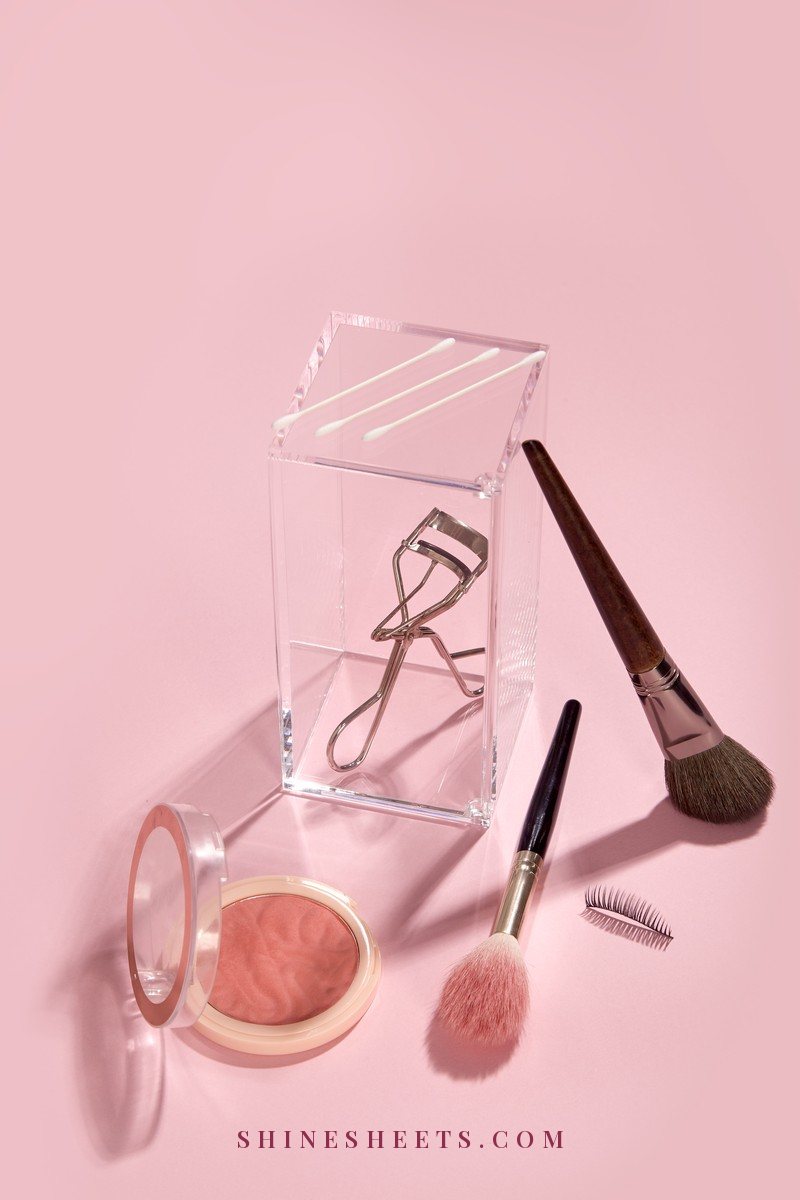
When you shop, look for "fragrance-free" or "unscented," plus "ophthalmologist-tested" or "suitable for sensitive eyes" and "suitable for contact lens wearers." None of these labels is a guarantee, but they mean the formula was designed and tested with eyes in mind.
Shorter ingredient lists tend to be easier to troubleshoot. If you know a certain ingredient bothers your skin elsewhere, check eye products for it too.
2. Swap Regular Mascara for Tube Mascara
Tube mascaras (sometimes called tubing mascaras) wrap each lash in tiny water-resistant polymer tubes instead of painting on a layer of waxy pigment. They don't flake or smudge the way regular mascara often does, and they slide off with warm water and gentle pressure at night instead of needing to be rubbed away. A tube mascara for sensitive eyes is one of the kindest swaps you can make.
Apply one coat from root to tip, wiggling gently at the base, and avoid pumping the wand in and out of the tube, which pushes air in and dries the formula faster.
3. Use Cream Shadows Instead of Loose Powder
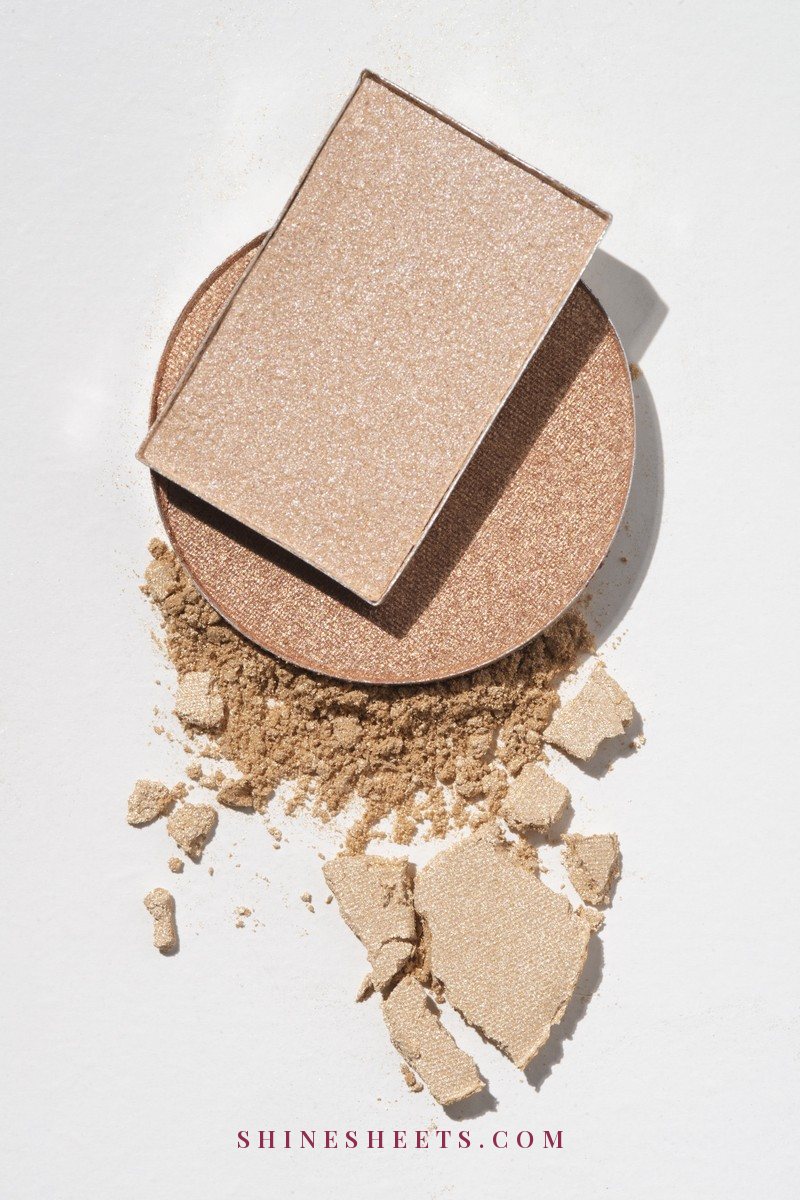
Cream shadows stay where you put them, which means no fallout drifting into your eyes over the day. A beige cream eyeshadow stick is the easiest option: swipe it across the lid, blend with your fingertip in a few seconds and let it set for a minute before you open your eyes fully. Matte or satin finishes are gentler than chunky shimmer.
If you love powder shadows, choose pressed, finely milled ones over loose pigments, tap the brush before applying and do your eye makeup before your foundation so you can wipe away any fallout from your cheeks.
4. Skip the Waterline
Lining the waterline (the inner rim of your eyelid) looks dramatic, but it puts pigment right next to the tear film and the tiny oil glands that keep your eyes comfortable. For sensitive eyes and lens wearers, it's one of the most common sources of irritation. Skip it, or save it for the occasional special evening and remove it carefully.
5. Keep Eyeliner on the Lash Line Only
Instead, place your eyeliner on the skin just outside the lashes. A soft pencil gently pressed into the roots of the upper lashes gives definition without getting into the eye. Keep it on the outer two-thirds of the lower lash line, if you line it at all, so it stays away from the tear duct in the inner corner.
Sharpen pencils before each use, which gives a fresh, clean surface. If you're still learning placement, my guide to eye makeup for beginners walks through simple looks step by step.
6. Replace Mascara About Every Three Months
Mascara is the eye product that goes off fastest, because the wand travels from your lashes back into a dark, moist tube every day. Replace it about every three months, even if there's plenty left, and sooner if it smells odd, feels clumpy or dries out. Write the opening date on a small piece of tape on the tube so you don't have to guess.
Liquid liners follow the same rule. Cream shadows and pencils last a little longer. My guide on how often to replace your makeup has the full list, and if you've had an eye infection, throw away anything you used during it.
7. Remove Everything Gently With a Soft Remover
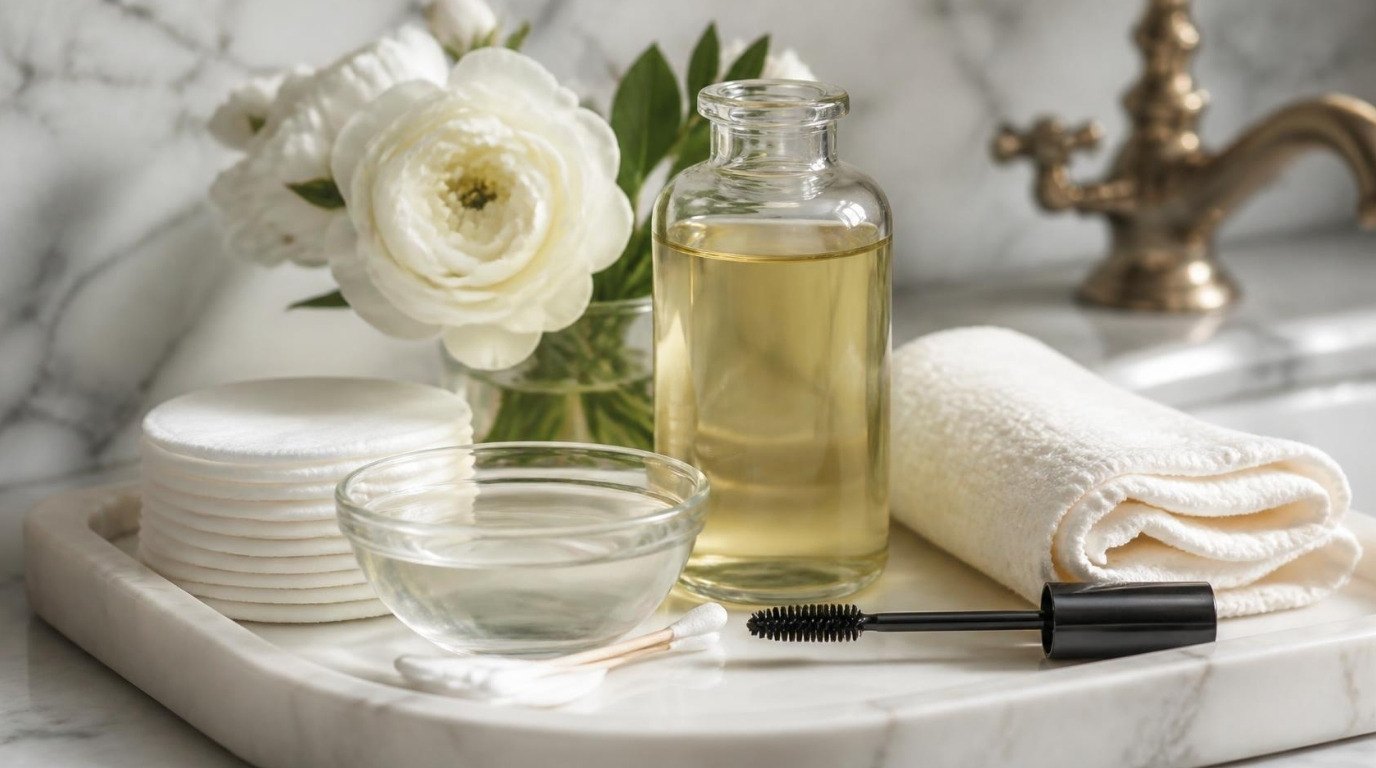
A gentle removal routine is just as important as what you put on. Choose an unscented micellar water for sensitive eyes or a mild eye makeup remover, and pair it with soft blush cotton pads that don't shed fibers. The full method is below.
Your Sensitive-Eye Makeup Table
Here's the whole approach in one table. Screenshot it before your next shopping trip:
| Product | Sensitive-eye version | What to avoid | Replace every |
|---|---|---|---|
| Mascara | Tube mascara, unscented, ophthalmologist-tested | Fibers, heavy waterproof formulas, pumping the wand | About 3 months |
| Eyeshadow | Cream stick or finely milled pressed matte | Loose pigments, chunky glitter, heavy shimmer | Cream about 6 to 12 months, powder about 1 to 2 years |
| Eyeliner | Soft pencil, sharpened before use | Waterline application, old liquid liners | Pencil about 1 to 2 years, liquid about 3 to 6 months |
| Eye primer | Simple, unscented formula | Fragrance, sticky textures that crease into the eye | About 1 year |
| Brow product | Pencil or tinted gel | Loose brow powders that drift down | About 1 to 2 years |
| Makeup remover | Unscented micellar water or mild eye remover | Scented wipes, harsh rubbing | Follow the opened-jar symbol on the pack |
| Brushes and sponges | Soft brushes, washed weekly | Sharing, dirty brushes | Wash weekly, replace when frayed |
The timelines are general guides. Always check the small open-jar symbol on the pack (it shows how many months a product lasts once opened), and throw anything away that changes in smell, color or texture.
A Simple Five-Minute Look for Sensitive Eyes
If you want a starting point, this everyday look is soft, polished and about as gentle as eye makeup gets. It takes around five minutes once you've done it a couple of times.
- Start with clean hands and lenses in. Wash your hands, put your lenses in and wait a minute so your eyes feel settled.
- Prep the lids lightly. If your lids get oily, a thin layer of unscented eye primer helps cream shadow last. If they're dry, a tiny amount of a gentle eye cream, well absorbed, is enough. Keep both away from the lash line.
- Swipe on cream shadow. Draw one stripe of a soft beige or taupe stick across the lid, close to the lashes, and blend upward with your ring finger in light taps. Let it set for 30 seconds with your eyes open, looking down into a hand mirror.
- Define the lash line. Press a soft brown pencil into the roots of the upper lashes in short dashes, then smudge gently with a clean cotton bud. Skip the lower lash line, or add a little on the outer third only.
- Curl, then mascara. If you use a curler, do it before mascara and keep it clean. Apply one coat of tube mascara to the top lashes only. Lower lashes are closer to the tear film and tend to smudge first.
- Do a final check. Blink a few times and look up, down and to the sides. If anything feels gritty, it's usually a stray particle: blink it out or rinse with lens-friendly drops, rather than rubbing.
For special evenings, you can build on this with a slightly deeper cream shade on the outer corner or a second coat of mascara. Just remove it all a little earlier than usual, and give your eyes a lighter makeup day afterwards.
Little Habits That Keep Eyes Comfortable
- Wash brushes weekly with a mild soap and let them dry completely before using them again.
- Keep products closed and cool, away from a steamy shower shelf or a hot car, where formulas break down faster.
- Never apply makeup in a moving car or bus. One bump with a mascara wand can scratch the eye.
- Take a makeup break when your eyes feel tired, dry or irritated. A bare-eyed day now and then is a gift to them.
- Avoid lash glue and extensions if your eyes react easily, or ask a professional about sensitive options and patch testing first.
How To Remove Eye Makeup Without Rubbing
Rubbing irritates the eyes, tugs at delicate skin and can loosen lashes. This gentle method takes about two minutes:
- Take your lenses out first and put them in fresh solution.
- Soak a cotton pad with your remover until it's wet but not dripping.
- Hold it on your closed eye for 15 to 20 seconds. This lets the remover dissolve mascara and shadow so you don't have to work at it.
- Wipe gently downward and outward, once, in the direction of the lashes. Use a fresh side of the pad for the next wipe.
- Use a cotton bud dipped in remover along the upper lash line for any liner left behind.
- For tube mascara, press a warm, damp pad on your lashes for 20 seconds, then gently slide the tubes off between your fingertips or with the pad.
- Cleanse your face with a mild cleanser, keeping it away from your eyes, and pat dry with a clean towel.
Waterproof formulas are trickier. If you still wear them on special occasions, my guide to removing waterproof mascara has three gentle ways to take it off without scrubbing.
How To Patch Test New Eye Products
New eye products deserve a little caution, especially if your eyes are reactive. A simple patch test before your first full application can save you a sore, puffy day:
- Apply a small amount of the product to the inside of your forearm or just behind your ear once a day for a few days.
- If there's no redness, itching or swelling, try a tiny amount on the outer corner of one eyelid, away from the lash line, for a day.
- If that's fine too, wear it normally, but introduce only one new eye product at a time so you know what's responsible if something flares.
- Write the product and start date in your notes, so you can track what works.
Patch tests aren't perfect, because eyes are more sensitive than arm skin, but they catch a lot of obvious reactions. My full guide on how to patch test skincare explains the method in more detail.
When To See an Eye Doctor
Mild watering after trying a new product that stops when you stop using it is common. But please don't push through ongoing symptoms. Stop wearing eye makeup and take out your lenses, then see an eye doctor promptly if you notice:
- Redness that doesn't settle within a day or two.
- Eye pain, a gritty feeling that won't go away or strong sensitivity to light.
- Discharge, crusting or eyelids sticking together in the morning.
- Blurry vision or any change in how you see.
- Swelling of the eyelids, or a bump that's painful or growing.
If you wear contact lenses and your eye becomes painful and red, take the lenses out and get checked the same day if you can, because lens-related infections need fast treatment. Bring the products you've been using, so your doctor can help figure out what's going on. This article is general information and can't replace advice from an eye care professional who has seen your eyes.
Final Thoughts
Makeup for sensitive eyes is really about kindness: fewer particles near the eye, simpler formulas, fresher products and a gentler hand at night. None of it means a less pretty result. A soft cream shadow, a clean lash-line liner and a tube mascara can look polished and feel like nothing at all.
Start with one swap this week, keep your lens habits tidy and listen to your eyes when they tell you something isn't right. Comfortable eyes and lovely eye makeup can absolutely go together.