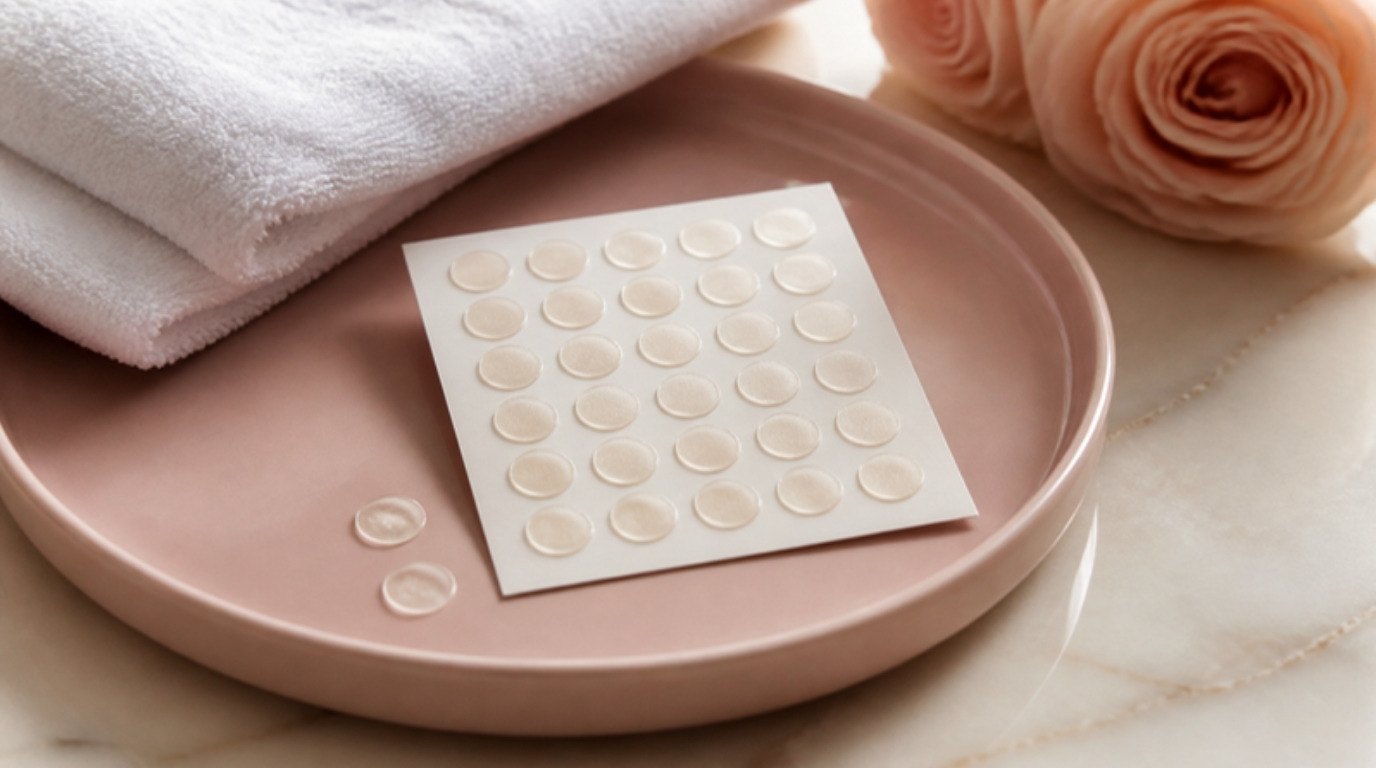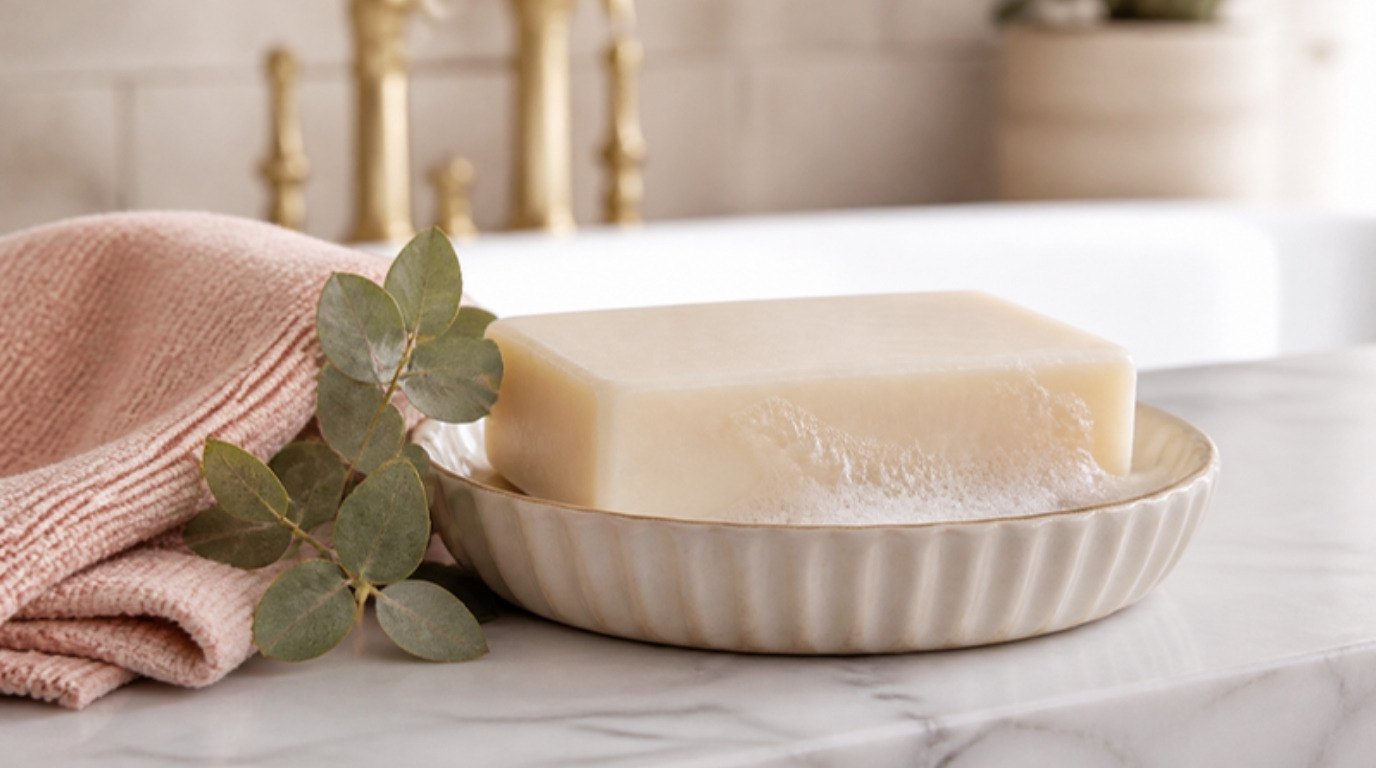
Kojic acid soap works best when you treat it like a gentle, slow helper rather than a quick fix. It's a short-contact product: it touches your skin for a minute and then rinses away. That makes it milder than leave-on serums, but it also means results are subtle and build over weeks, and the way you use it matters more than how often.
The biggest mistakes people make are scrubbing with it daily from day one, using it straight on the face and skipping sunscreen. All three can lead to dry, irritated skin – and irritation can actually leave more dark marks behind, which is the opposite of what you want.
This guide explains kojic acid soap in plain, honest terms: what kojic acid is, what a soap can and can't do, who should skip it, how to patch test, the step-by-step method, a 4-week safe start table, the signs of irritation to watch for, how it fits with sunscreen and moisturizer, and realistic timelines for a more even skin tone.
What Is Kojic Acid?
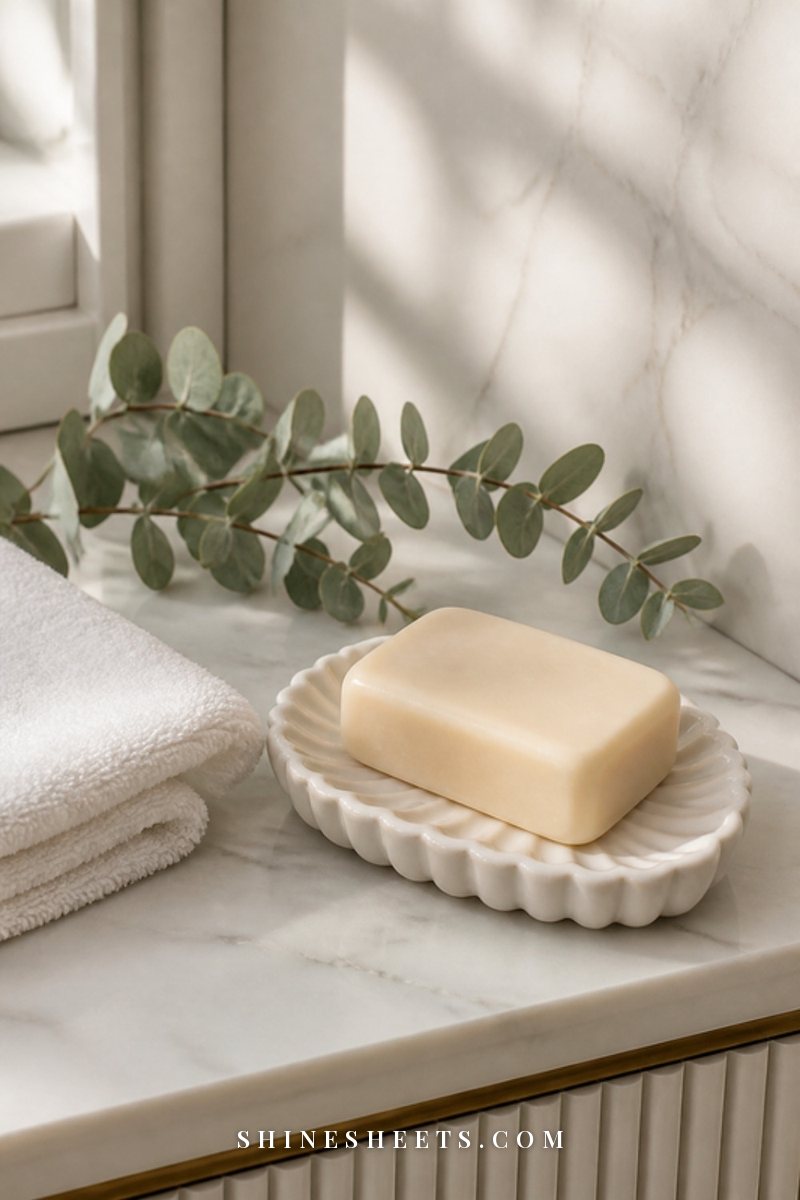
Kojic acid is an ingredient produced by certain fungi during fermentation – the same kind of process used in making sake and soy sauce in Japan, which is where it was first identified. In skincare, it's valued because it can slow down tyrosinase, an enzyme your skin uses to make melanin (pigment).
In simple terms: when there's less pigment being produced in an area, dark spots and uneven patches can gradually fade and blend in with the skin around them. It doesn't change your natural skin tone, and it shouldn't. Its job is to help uneven areas – like marks left by old breakouts, ingrown hairs or friction – look more even with the rest of your skin.
Kojic acid shows up in serums, creams and soaps. It's often paired with other tone-evening ingredients, such as niacinamide or vitamin C, and in some soaps with glycerin or oils to soften the cleansing effect.
What Kojic Acid Soap Can (and Can't) Do

Setting honest expectations is the kindest thing I can do here, because a lot of the claims online are wildly overblown.
Kojic acid soap can:
- Help mild dark spots and uneven areas on the body look softer over time, especially with consistent sunscreen.
- Be a gentle starting point if you've never used a pigment-fading ingredient before.
- Work well on areas like the back, chest, elbows, knees and inner thighs, where marks from friction and breakouts often appear.
Kojic acid soap can't:
- Change your natural skin tone (and that's a good thing – your skin tone is beautiful as it is).
- Give fast results. Because it's rinsed off within a minute, it has limited time to work.
- Replace sunscreen. Without daily sun protection, new pigment keeps forming.
- Treat medical skin conditions like melasma on its own. Those need a dermatologist's plan.
If dark spots on the body are your main concern, my guide on dark spots on the body covers the full picture, from causes to the most effective leave-on options.
Who Should Skip It or Go Extra Slowly
Kojic acid is a common cause of contact irritation, and soaps tend to be more drying than gentle cleansers. Please skip kojic acid soap, or ask a dermatologist first, if:
- You have very sensitive or reactive skin.
- You have eczema, psoriasis or rosacea, or your skin barrier currently feels damaged (stinging, tightness, flaking).
- You've reacted to kojic acid or fragranced soaps before.
- You have broken skin, sunburn, a fresh wound or a recent shave or wax in the area.
- You're pregnant or breastfeeding – check with your doctor before adding new active ingredients.
- You're already using strong actives like retinoids or exfoliating acids on the same area. Combining them can overwhelm the skin.
I have combination, sensitive skin myself, and with any pigment-fading ingredient I'd always start on the body and go very slowly. There's no prize for speed here.
How To Patch Test Kojic Acid Soap
A patch test takes a few days and can save you a week of irritated skin. Here's a simple way to do it:
- Choose a small area of skin that's usually not reactive, like the inner forearm.
- Wet the area, lather a small amount of the soap and leave it on for 30 seconds.
- Rinse thoroughly with lukewarm water and pat dry.
- Repeat once a day for 3–5 days in the same spot.
- Watch for redness, itching, burning, bumps or peeling. Some mild tightness right after rinsing can be normal; anything that lingers or worsens is a sign to stop.
If your skin stays calm, you're ready to start slowly. If it doesn't, kojic acid soap probably isn't the right product for you, and that's fine – there are gentler options. My guide on how to patch test skincare goes through the process in more detail.
How To Use Kojic Acid Soap Step by Step
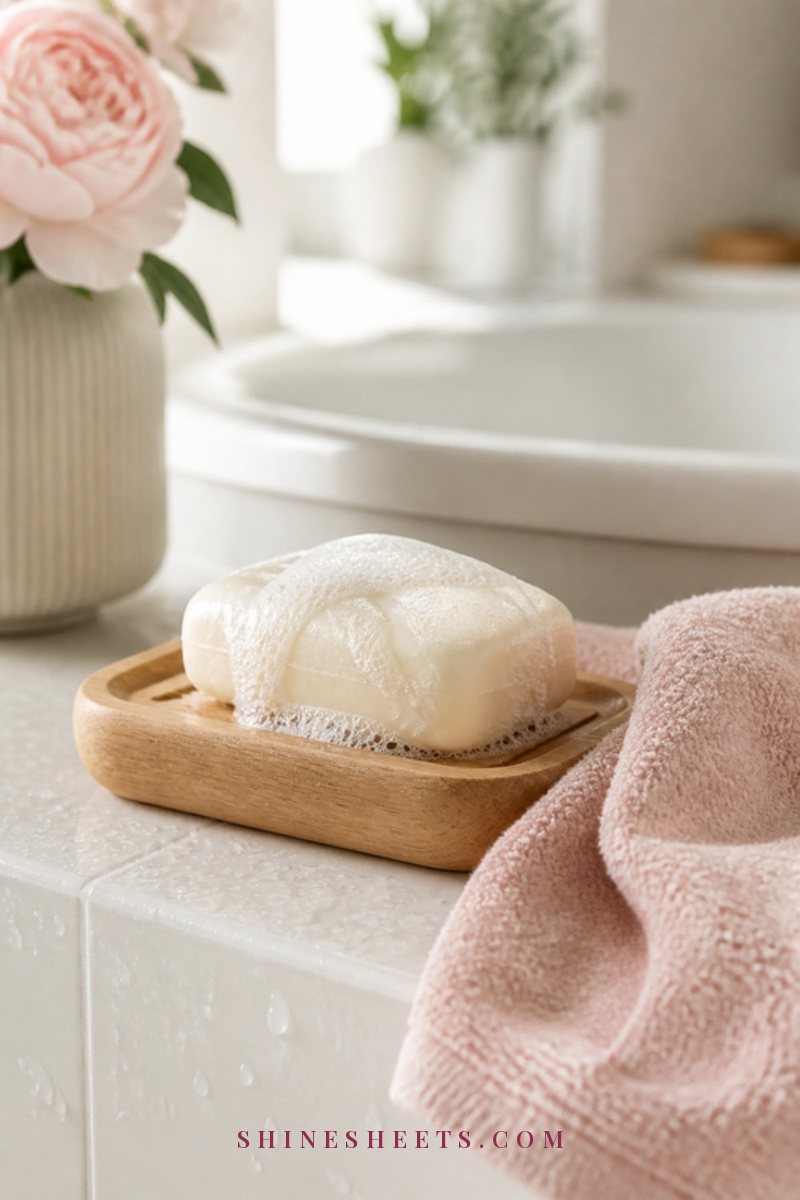
Once your patch test is clear, this is the method that keeps things gentle and effective. Look for a well-reviewed kojic acid soap bar from an established skincare brand, ideally one that includes glycerin or a moisturizing base.
- Wet the skin with lukewarm water. Hot water dries out the skin and makes irritation more likely.
- Lather in your hands or on a soft cloth. Don't rub the bar directly on the skin; it deposits too much product. A soft cotton washcloth works nicely if you prefer, used with gentle pressure.
- Apply the lather only to the areas you're targeting. You don't need it all over the body.
- Leave it on for 30–60 seconds. Start with 30 seconds for the first two weeks. Never leave it on for several minutes, even if a tutorial suggests it.
- Rinse thoroughly. Make sure no residue stays behind, especially in skin folds.
- Pat dry and moisturize within a few minutes. A gentle, fragrance-free body moisturizer helps replace the moisture soap can take away.
Use it in the evening at first. That way, any slight sensitivity has the whole night to settle, and you aren't heading straight out into the sun.
Your 4-Week Safe Start Plan
This table is my gentle way to introduce kojic acid soap. Screenshot it and adjust to your skin: if anything feels irritated, go back to the previous week's pace or pause completely.
| Week | How often | Contact time | Where | Aftercare |
|---|---|---|---|---|
| Week 1 | 2 times (e.g. Monday and Thursday) | 30 seconds | One small body area | Moisturizer right after; daily sunscreen on exposed areas |
| Week 2 | 2–3 times, never two days in a row | 30 seconds | Target body areas only | Moisturizer; check for tightness or redness the next morning |
| Week 3 | 3 times if skin is calm | 45 seconds | Target body areas | Moisturizer; extra-rich cream on dry areas |
| Week 4 | 3 times, or up to every other day if very comfortable | Up to 60 seconds | Target body areas; face only after a separate patch test | Moisturizer, sunscreen every morning, no other actives on the same night |
Three times a week is plenty for most people long-term. More isn't better with a product like this – consistency and calm skin are what bring results.
Kojic Acid Soap vs Leave-On Kojic Acid
It helps to know where soap sits among the other ways to use this ingredient:
| Kojic acid soap | Leave-on serum or cream | |
|---|---|---|
| Contact time | 30–60 seconds, then rinsed | Hours, stays on the skin |
| Strength of effect | Mild and gradual | Stronger and more targeted |
| Irritation risk | Mainly dryness from the soap base | Higher, especially with other actives |
| Best for | Larger body areas, beginners, mild unevenness | Specific stubborn spots, often under guidance |
Neither is "better." Soap is simply a softer entry point, and for many people that's exactly the right place to start.
Body Before Face
Facial skin is thinner and more reactive than body skin, and soap bars tend to be harsher than facial cleansers. I'd always start on the body, give it at least four weeks, and only then decide whether you want to try it on the face.
If you do, patch test along the jawline first, use it no more than two or three times a week, keep the contact time to 30 seconds, avoid the eye area and lips completely, and follow with a soothing moisturizer. Honestly, for the face, a gentle leave-on serum with a tone-evening ingredient is often a kinder choice. My guide to tranexamic acid covers one of the gentlest options for uneven tone and dark marks.
Signs of Irritation (and What To Do)
Your skin will tell you when it's had too much. Watch for:
- Redness that lasts longer than an hour after rinsing.
- Burning, stinging or itching.
- Dry, flaky or peeling patches.
- Small bumps or a rash.
- Darker patches appearing in the treated area (irritation can cause new pigment).
If you notice any of these: stop using the soap, switch to a gentle cleanser, and apply a barrier-supporting ceramide cream morning and evening until the skin feels calm again (usually a few days to two weeks). Don't add any other active ingredients while it recovers. If the reaction is strong, spreading, blistering or doesn't improve, please see a doctor or dermatologist.
Sunscreen Is Non-Negotiable
This is the step that makes or breaks your results. UV exposure triggers new pigment, so without sun protection, any fading from kojic acid gets undone almost immediately. Pigment-fading ingredients can also leave skin a little more sun-sensitive.
- Apply a broad-spectrum SPF 30 or higher to any treated areas that see the sun, every morning.
- Use a generous amount – a lightweight body sunscreen lotion makes this easier on larger areas like arms, legs and the chest.
- Reapply every two hours outdoors, and after swimming or sweating.
- Remember the sneaky spots: the back of the neck, shoulders and the tops of the hands.
Even in cloudy weather and in winter, UV reaches your skin. Making sunscreen a daily habit will do as much for even skin as any soap.
Pairing It With the Rest of Your Routine

Kojic acid soap is most effective as one small part of a calm, consistent body routine. A few guidelines:
- On kojic acid nights: skip body scrubs, exfoliating acids and retinoids on the same area.
- On other nights: a gentle body wash, a good moisturizer and, if your skin tolerates it, one other mild active (but not more).
- Daily: moisturizer and sunscreen. Those two are your foundation.
- For friction areas: loose, breathable clothing helps prevent new marks from forming in the first place.
My guide on building a simple body care routine shows how all these steps fit together in a weekly rhythm, so nothing gets overdone.
Tips for Common Body Areas
Different areas of the body have different needs, so a one-size approach rarely works:
- Underarms: The skin here is thin and often irritated by shaving and deodorant. Never use kojic acid soap right after shaving – wait at least 24 hours – and keep contact time to 30 seconds. My guide to dark underarms covers gentler habits that often make the biggest difference.
- Elbows and knees: These areas are thicker and usually tolerate more. Dryness tends to make them look darker, so a rich moisturizer after every shower matters as much as the soap.
- Back and chest: Great for marks left by old breakouts. Rinse very thoroughly, because residue on the back is easy to miss.
- Inner thighs: Friction is usually the cause here. Breathable fabrics and an anti-chafe balm help prevent new marks while you work on the existing ones. Go gently, as this skin is sensitive.
How To Store Your Soap
Kojic acid is not very stable. Exposure to light, air and constant moisture can cause it to break down, and many bars slowly turn a darker, brownish shade over time. To keep yours working well:
- Keep the bar on a draining soap dish so it dries between uses.
- Store it away from the direct stream of the shower.
- Keep spare bars in their wrapping in a cool, dark cupboard.
- Cut a large bar in half and use one piece at a time, so it doesn't sit wet for months.
Realistic Timelines
This is where patience comes in. Here's roughly what to expect with consistent, gentle use plus daily sunscreen:
- Weeks 1–4: Mostly a "getting to know each other" period. Your goal is calm, comfortable skin, not visible change.
- Weeks 4–8: Some people notice that mild dark marks look a little softer. Many people don't see much yet, and that's normal.
- Months 3–6: This is when gradual changes in uneven tone become easier to see, especially if you've protected the area from the sun.
Take a photo of the area in the same natural light before you start, then again at week 8 and week 12. Day-to-day changes are almost impossible to notice, but side-by-side photos show the real picture. If you'd like to compare options for spots that won't budge, my guide on how to fade dark spots covers leave-on ingredients and in-office treatments.
Common Mistakes To Avoid
Most bad experiences with kojic acid soap come down to a handful of very fixable habits:
- Using it every day from the start. Your skin needs time to adjust. Follow the four-week plan instead.
- Leaving the lather on "to make it work harder." Long contact mainly increases dryness and irritation, not results.
- Scrubbing hard. Friction is one of the causes of dark marks in the first place. Gentle hands only.
- Skipping moisturizer. Soap bars can be drying, and dry skin can look duller and more uneven.
- Stacking actives. Using kojic acid soap, a body acid and a retinoid on the same area in the same week is a lot for any skin.
- Forgetting sunscreen on cloudy days. UV doesn't take a day off, and neither should your SPF.
- Giving up at week three. Pigment fades slowly. Judge your progress with photos at week eight and week twelve.
When To See a Dermatologist
Please book an appointment with a dermatologist if:
- A dark spot is new, changing in size, shape or color, has uneven edges, itches or bleeds.
- You have large patches of darker skin, especially on the face (this could be melasma, which needs a tailored plan).
- Darkening appears suddenly in areas like the neck or underarms, as it can sometimes be linked to other health factors.
- Your skin reacts strongly to kojic acid or doesn't recover within two weeks.
- You've been consistent for three months or more and see no change.
A dermatologist can offer stronger, safer options for stubborn pigmentation and rule out anything that needs attention. That's always worth it.
Final Thoughts
Kojic acid soap can be a gentle, simple helper for a more even skin tone on the body, as long as you start slowly, keep contact short, moisturize after and wear sunscreen every single day. Calm skin is the goal; even tone follows in its own time.
Give yourself the same patience you'd give a friend trying something new. Your skin is doing its best, and small, steady care is what it responds to most.