Most bathroom clogs aren't a plumbing emergency. They're a small, very solvable mix of hair and soap scum sitting just a few inches below the drain opening, which means the fix is usually closer (and gentler) than a bottle of harsh chemicals would have you believe.
The trick is going in the right order. Start with the simplest, least aggressive method, check whether the water starts moving and only step up when you need to. Most of the time you'll be done before you ever reach for a wrench.
This guide walks you through how to unclog a bathroom drain in a sink, shower or tub without harsh chemicals: why drains clog, the quick checks to do first, six methods from gentlest to most hands-on, a simple table that matches the clog sign to the right fix, how to keep drains clear afterward and when it's time to call a plumber.
Pull on some gloves, open a window and let's get that water moving again.
Why Bathroom Drains Clog
Bathroom drains deal with a very particular kind of mess, and once you know what's down there, choosing the fix gets much easier. The usual suspects:
- Hair. The number one culprit in showers and tubs, and a big one in sinks too. Hair wraps around the stopper and anything else it can find, then catches everything that comes after it.
- Soap scum. Bar soap, body wash and shampoo leave a waxy film that sticks to the inside of pipes and glues hair into a mat.
- Toothpaste and shaving foam. In sinks, these build a pasty layer over time, especially when the tap is turned off right after spitting.
- Hard water buildup. Minerals from hard water slowly coat the pipes and stopper, narrowing the space water can flow through.
- Small things that fall in. Earring backs, cotton swabs, bits of floss and caps from tiny bottles love to wedge themselves in the stopper area.
Notice that almost all of these sit near the top of the drain, around the stopper or in the curved pipe under the sink. That's good news, because it means you can reach them.
Safety Notes Before You Start
A few rules keep this simple job from turning into a messy (or unsafe) one:
- Skip chemical drain cleaners. They can damage older pipes and finishes, and if they don't clear the clog, you're left with a sink full of caustic water. Plunging or snaking after using one can splash it onto your skin or into your eyes.
- Never mix bleach with vinegar or ammonia. Both combinations release harmful fumes. If you've poured any cleaner down the drain recently, flush with plenty of plain water before trying vinegar, and never add bleach to the mix. My guide to natural cleaning combos never to mix covers this in more detail.
- Be careful with boiling water. Boiling water is fine for metal pipes, but it can soften or loosen the joints of PVC (white or gray plastic) pipes, and it can crack porcelain if it's poured straight onto the bowl. Use very hot tap water, or kettle water that has cooled for a few minutes, unless you know your pipes are metal.
- Wear gloves and ventilate. Drain gunk is full of bacteria. Gloves protect your hands, and an open window or the bathroom fan keeps the air fresh.
What You'll Need
You don't need a full toolbox. Gather these before you start so you're not running around with wet gloves on:
- Rubber gloves and a few paper towels or a small trash bag
- An old toothbrush and a little dish soap
- A flashlight (your phone light works)
- A screwdriver for shower drain covers held by screws
- A plastic drain snake or barbed hair removal tool
- A cup plunger with a flat rubber cup
- Baking soda, white vinegar and a kettle or very hot tap water
- A bucket and an old towel for under the sink
Most of this is probably already in your home. The only things worth buying specially are a drain snake and a plunger, and both last for years.
First Quick Checks Before You Try Anything
Before you plunge or pour anything, take two minutes to look at the top of the drain. Surprisingly often, the whole clog is sitting right there.
Clean the Pop-Up Stopper
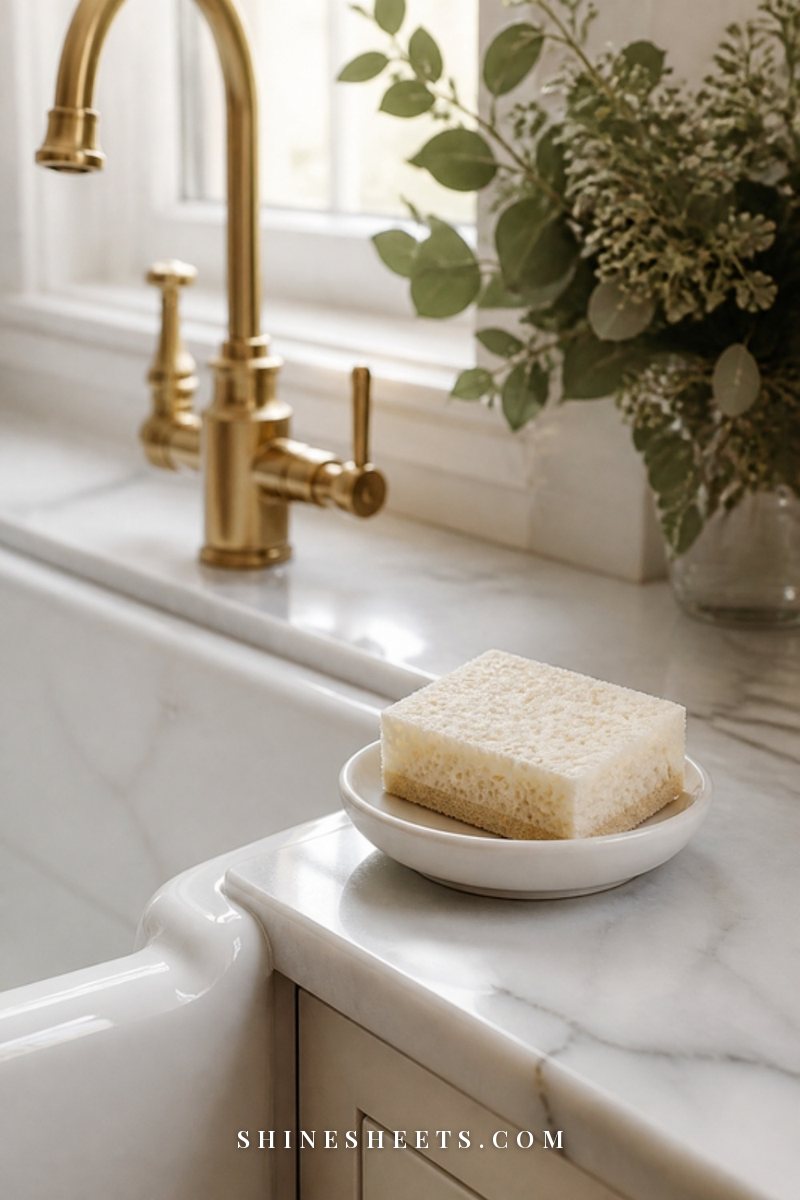
Most bathroom sinks have a pop-up stopper, the little metal plug you raise and lower with a lever behind the faucet. Hair and toothpaste collect around its stem, and pulling it out is often all it takes.
- Try lifting the stopper straight up. Some simply lift out, others need a quarter turn first.
- If it won't budge, look under the sink. You'll see a horizontal rod (the pivot rod) attached to the drainpipe with a small nut. Put a towel down, loosen that nut by hand, pull the rod back an inch and the stopper will lift free. Slide the rod back in and tighten the nut by hand afterward.
- Wipe the gunk off with a paper towel, then scrub the stopper with an old toothbrush and a little dish soap.
- Run hot water for 30 seconds before putting the stopper back.
Remove the Shower Drain Cover
Shower and tub drains usually have a cover or grate. Some snap or twist off, others are held by one or two small screws. Use a screwdriver if needed, set the screws somewhere safe (a small cup works, so they don't roll into the drain) and look inside with a flashlight. If you can see a mat of hair, you've found your clog.
6 Ways To Unclog a Bathroom Drain, Gentlest First
Work through these in order. After each one, run the tap for 30 seconds and check whether the water drains normally. If it does, stop there and flush with hot water.
1. Pull the Clog Out by Hand (With Gloves)
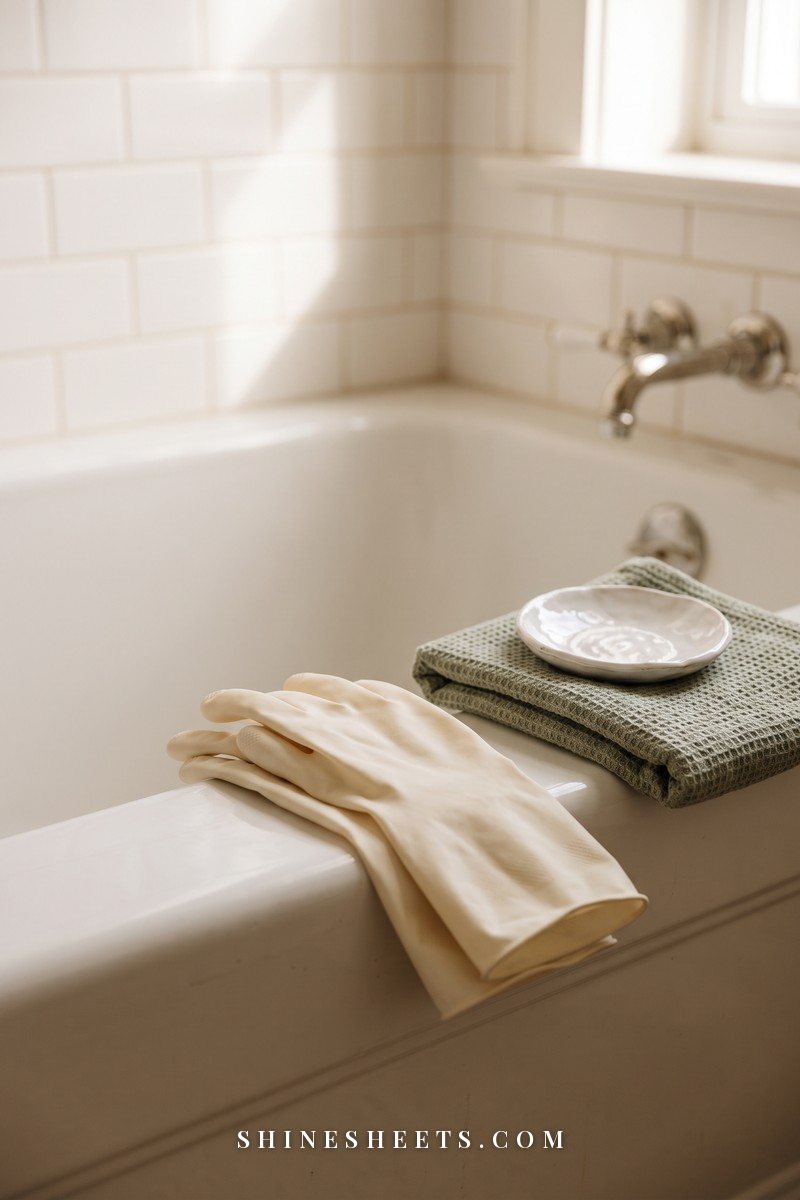
It's not glamorous, but it's the fastest fix. Put on a pair of cream rubber cleaning gloves, reach into the opening and pull out whatever hair you can grab. Tweezers or a bent paper clip help with strands caught just out of reach.
Drop everything into a paper towel or plastic bag and throw it in the trash, never back down the drain. Then run hot water for a minute. If the water drains freely, you're done in under five minutes.
2. Use a Plastic Drain Snake or Barbed Tool
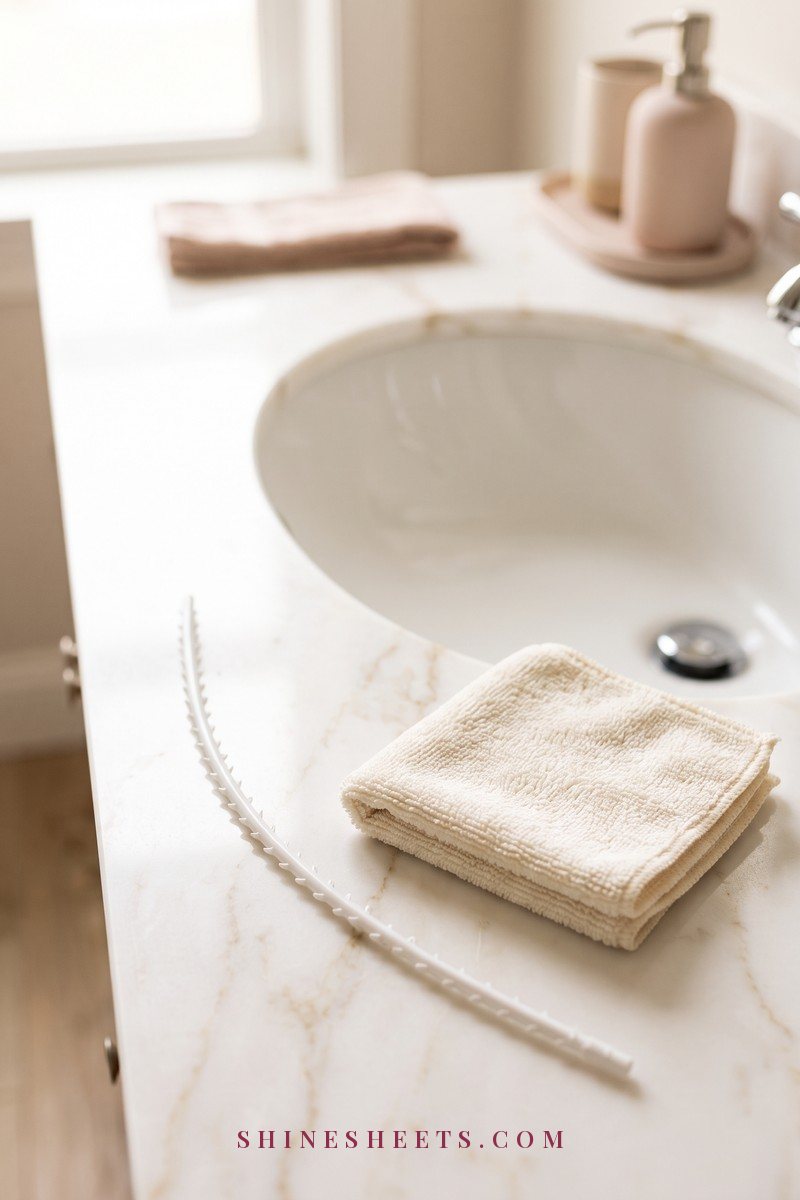
When the clog is a little deeper, a plastic drain snake is the next step. It's a long, thin strip with small barbs along the sides that grab hair as you pull it back up.
- Remove the stopper or drain cover first.
- Slide the tool down slowly, wiggling it gently, until you feel resistance (usually 6 to 12 inches in).
- Twist it a couple of times so the barbs catch the hair, then pull it straight up.
- Wipe the tool on a paper towel and repeat two or three times until it comes up clean.
- Flush with hot water for one minute.
Go gently. You're grabbing, not forcing. Plastic snakes are inexpensive, safe for finishes and honestly one of the most useful things you can keep under the bathroom sink.
3. Plunge With the Overflow Covered
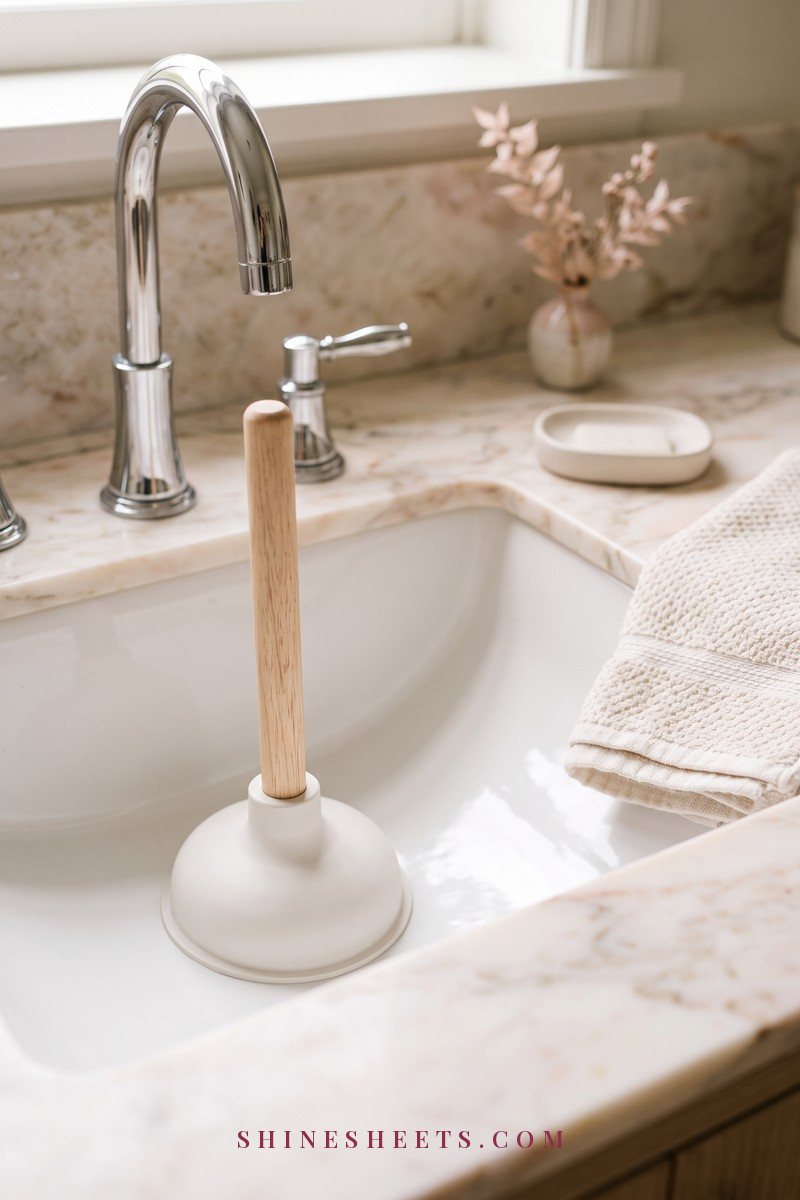
Plunging works by pushing and pulling water through the pipe to break the clog loose. The secret most people miss is the overflow: that small hole near the top of the sink or tub. If it's open, the pressure escapes through it and the plunger barely does anything.
- Use a small sink plunger with a flat cup (a flanged toilet plunger is shaped for toilets, not flat drains).
- Remove the stopper and stuff a damp cloth firmly into the overflow hole, or hold it there with your other hand.
- Fill the sink or tub with enough water to cover the plunger cup by about an inch.
- Seal the cup over the drain and push and pull sharply 15 to 20 times, keeping the seal.
- Lift the plunger and see if the water rushes down. Repeat up to three rounds.
Never plunge if you've already used a chemical drain cleaner. The splash risk isn't worth it.
4. Try Baking Soda, Vinegar and Hot Water
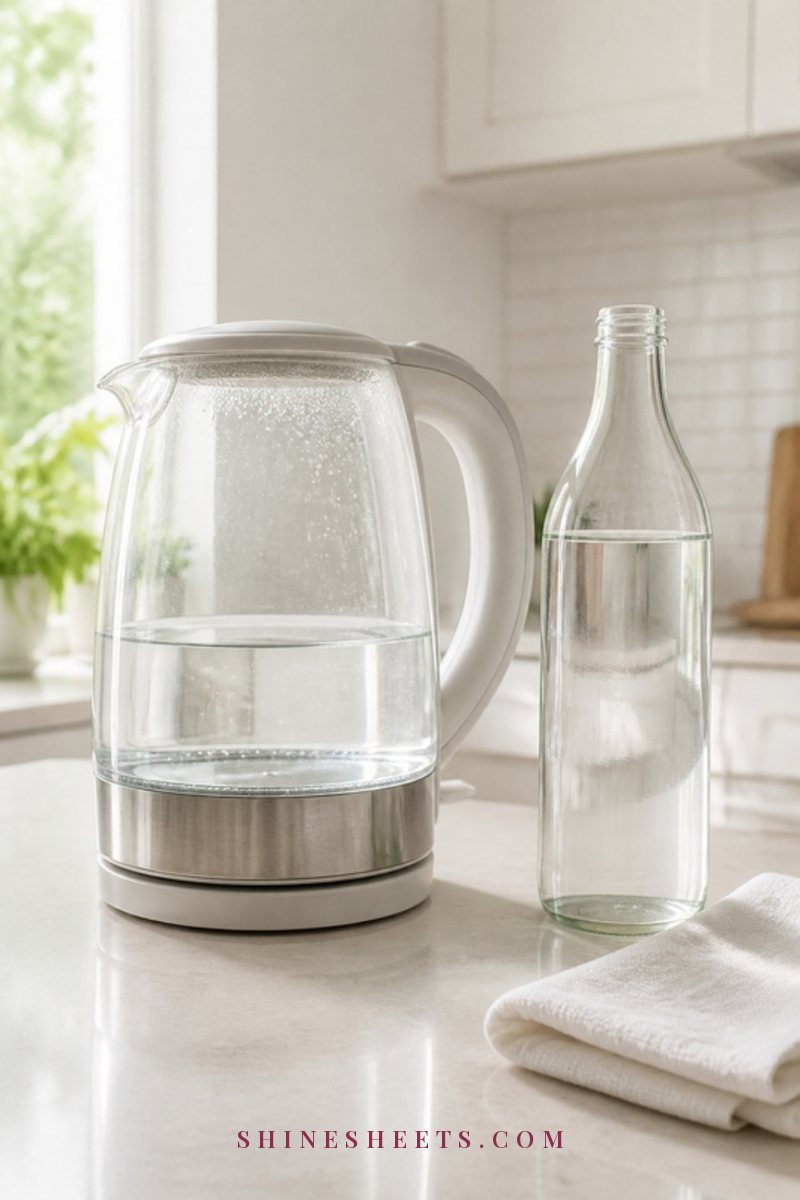
This classic combination won't dissolve a solid hair clog, but it's great for loosening soap scum and the slimy film that hair sticks to. It works best on slow drains rather than completely blocked ones.
- Remove standing water first, if there is any (a cup works).
- Pour about 1/2 cup of baking soda straight into the drain.
- Follow with 1 cup of white vinegar. It will fizz, which is normal.
- Cover the drain with the stopper or a damp cloth and leave it for 15 to 30 minutes.
- Flush slowly with about 4 cups of very hot water. Use boiling water only if your pipes are metal, and pour it directly into the drain opening, not onto the porcelain.
If the drain is still slow, repeat once, or go back to the drain snake now that the gunk is softened. The two together often work better than either one alone.
5. Use a Wet-Dry Vacuum
A wet-dry vacuum (the shop-vac kind, not your regular vacuum) can pull a clog back up instead of pushing it further down.
- Switch the vacuum to wet mode and remove any dry filter if your model says to.
- Cover the overflow hole with a damp cloth.
- Press the hose nozzle tightly over the drain. Wrapping it with an old rag helps make a seal.
- Turn it on for 30 to 60 seconds, then check.
- Empty and rinse the vacuum canister right away so it doesn't smell.
This is especially handy for tub drains, where hair can sit a bit deeper than a short snake reaches.
6. Clean the Sink P-Trap
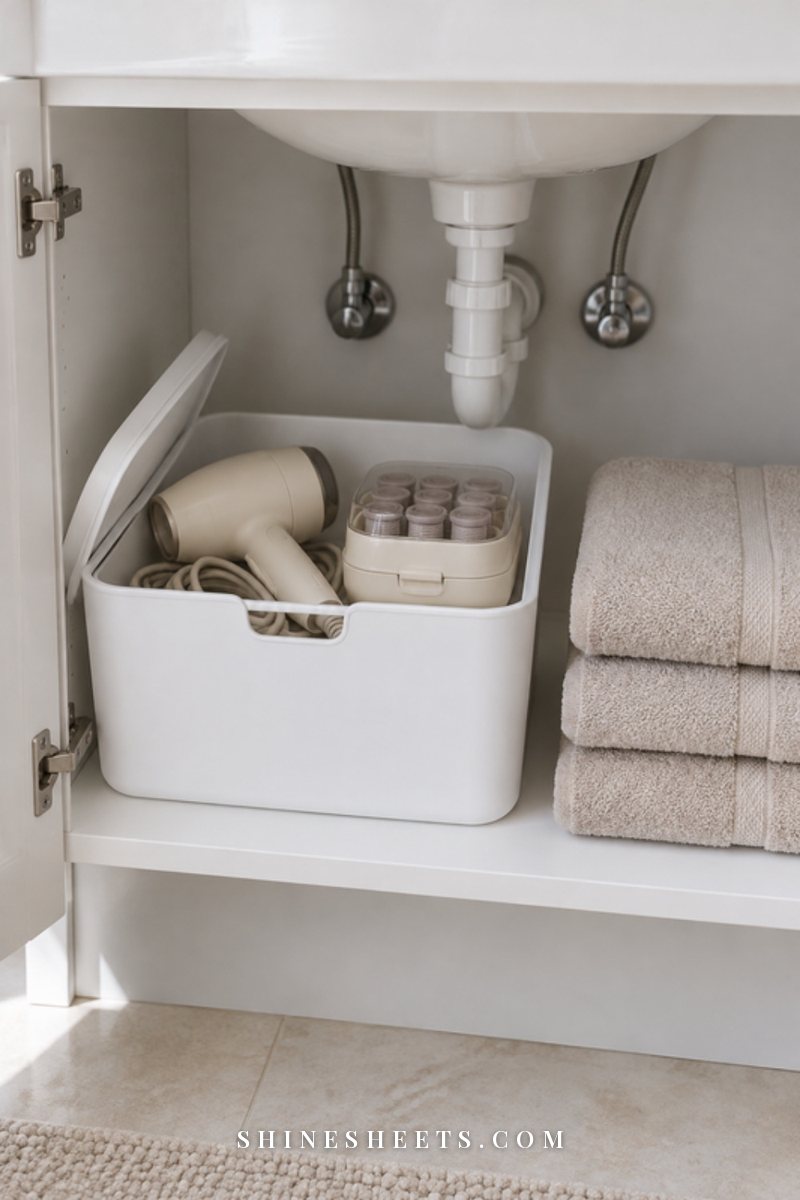
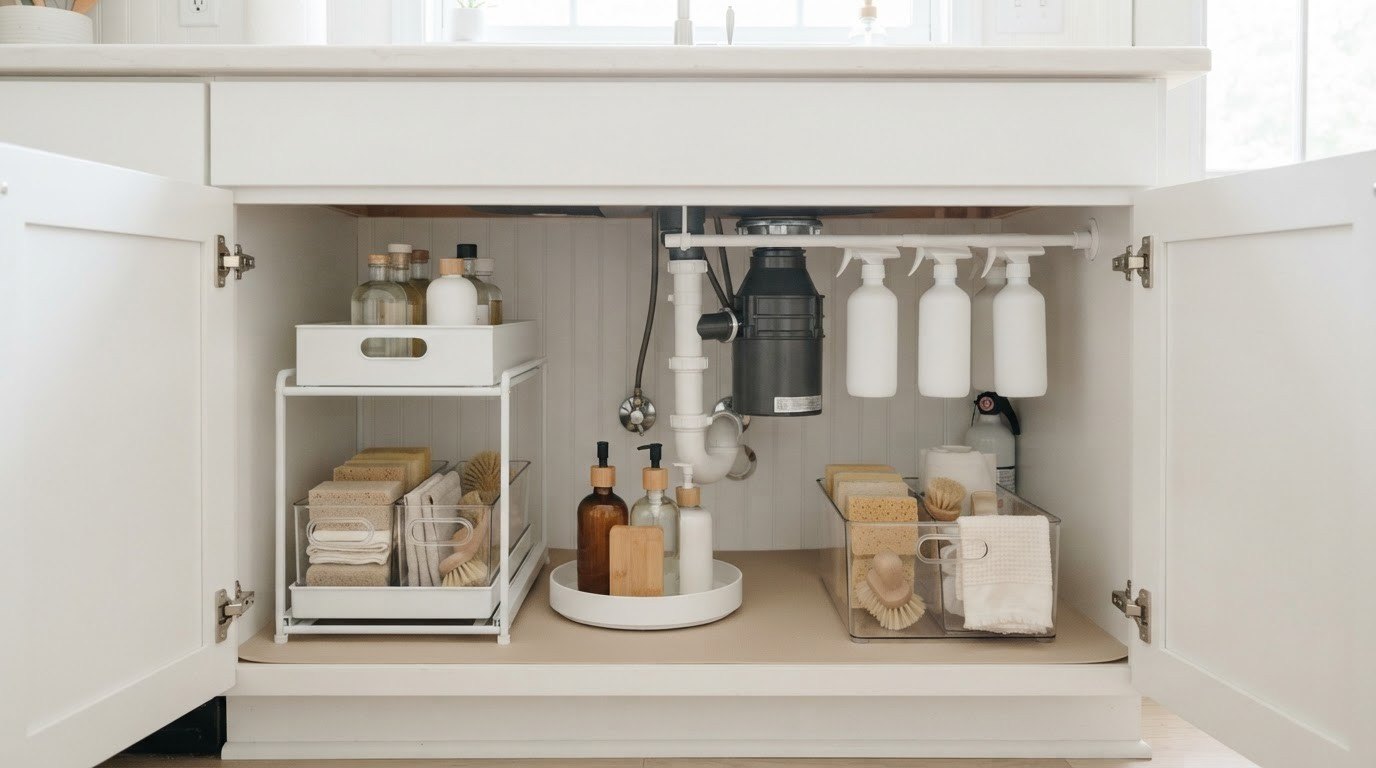
The P-trap is the curved pipe under your sink. It holds a little water to block sewer smells, and it's also where heavier gunk and small lost items settle. If nothing above has worked on a sink, this is the place to look. (Shower and tub traps are usually under the floor, so leave those to a plumber.)
- Clear out the cabinet and put a bucket directly under the curved pipe, with a towel around it.
- Most bathroom P-traps are plastic with two large slip nuts. Loosen them by hand (counterclockwise). Use slip-joint pliers gently only if they're stuck.
- Lower the trap carefully. Water will pour out, so keep it over the bucket.
- Clean out the trap with gloves and an old bottle brush, and rinse it in the bucket or bathtub, not the sink you just took apart.
- Check that the small rubber washers are in place, then reattach and hand-tighten the nuts.
- Run water for a full minute and check for drips. Tighten slightly if you see any.
While the trap is off, peek into the open pipe ends with a flashlight. If you can see hair or gunk just inside, pull it out with your gloved fingers or the drain snake before you reconnect everything. Plan on 20 to 30 minutes the first time. It feels intimidating, but it's mostly just unscrewing and rinsing.
Clog Sign Table: What To Try and When To Call a Plumber
Not sure where to start? Match what you're seeing to the most likely cause. Screenshot it and keep it for the next slow drain.
| Clog sign | Likely cause | Method to try | Call a plumber if |
|---|---|---|---|
| Sink drains slowly, water pools around the stopper | Hair and toothpaste on the stopper | Clean the pop-up stopper, then a plastic drain snake | It's still slow after cleaning the stopper and the P-trap |
| Shower water rises around your feet | Hair mat just under the drain cover | Remove the cover, pull hair by hand, then snake | The water still won't drain after snaking and plunging |
| Slow drain with a musty smell | Soap scum and slimy buildup in the pipe | Baking soda, vinegar and hot water, then a hot water flush | The smell stays after a week of cleaning |
| Tub drains slowly, gurgling sound | Hair deeper in the tub drain | Plunger with the overflow covered, or a wet-dry vacuum | Gurgling happens in several drains at once |
| Sink completely blocked, nothing moves | Dense clog or a lost object in the P-trap | Plunge, then clean the P-trap | The trap is clear and the water still won't go down |
| White crust around the drain opening | Hard water mineral buildup | Vinegar soak on the stopper and drain rim for 30 minutes | Buildup returns fast and several fixtures are affected |
| Water backs up into the tub when you use the sink or toilet | Blockage further down the main line | Stop using the drains and don't plunge | Call right away, this one isn't a DIY job |
How To Keep Bathroom Drains Clear

Once your drain is flowing again, a few small habits keep it that way. None of them take more than a minute.
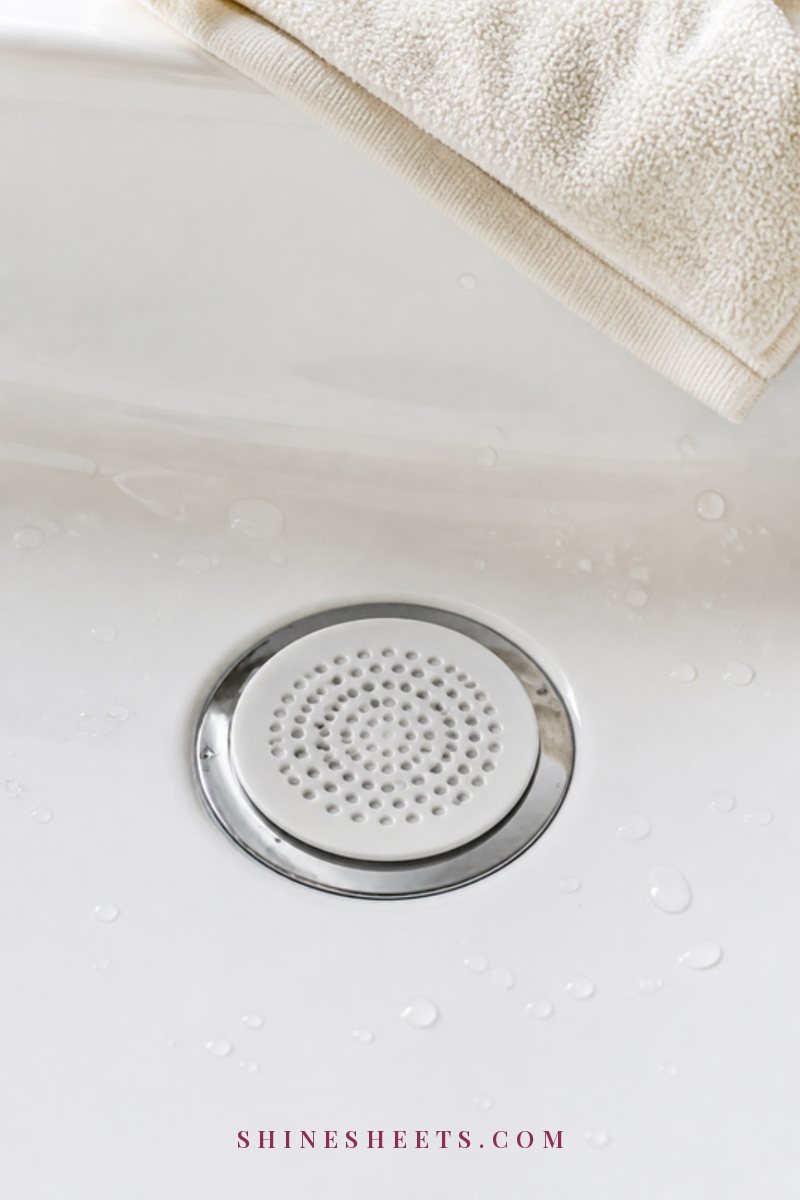
- Use a hair catcher. A silicone hair catcher sits over the shower drain and traps hair before it goes down. Look for one that's flexible, easy to rinse and sized to cover your drain. Empty it after every shower or two.
- Brush your hair before you shower. Loose strands come out on the brush instead of in the drain. (And while you're at it, here's how to clean a hairbrush so it stays fresh.)
- Flush with hot water weekly. Run very hot tap water down each bathroom drain for one to two minutes once a week to keep soap scum from settling.
- Do a monthly baking soda and vinegar refresh. Same method as above, 15 minutes of dwell time, followed by hot water. It's a nice add-on to a quick 20-minute bathroom clean.
- Keep the tap running a few seconds after brushing. It carries toothpaste all the way down instead of letting it settle on the stopper.
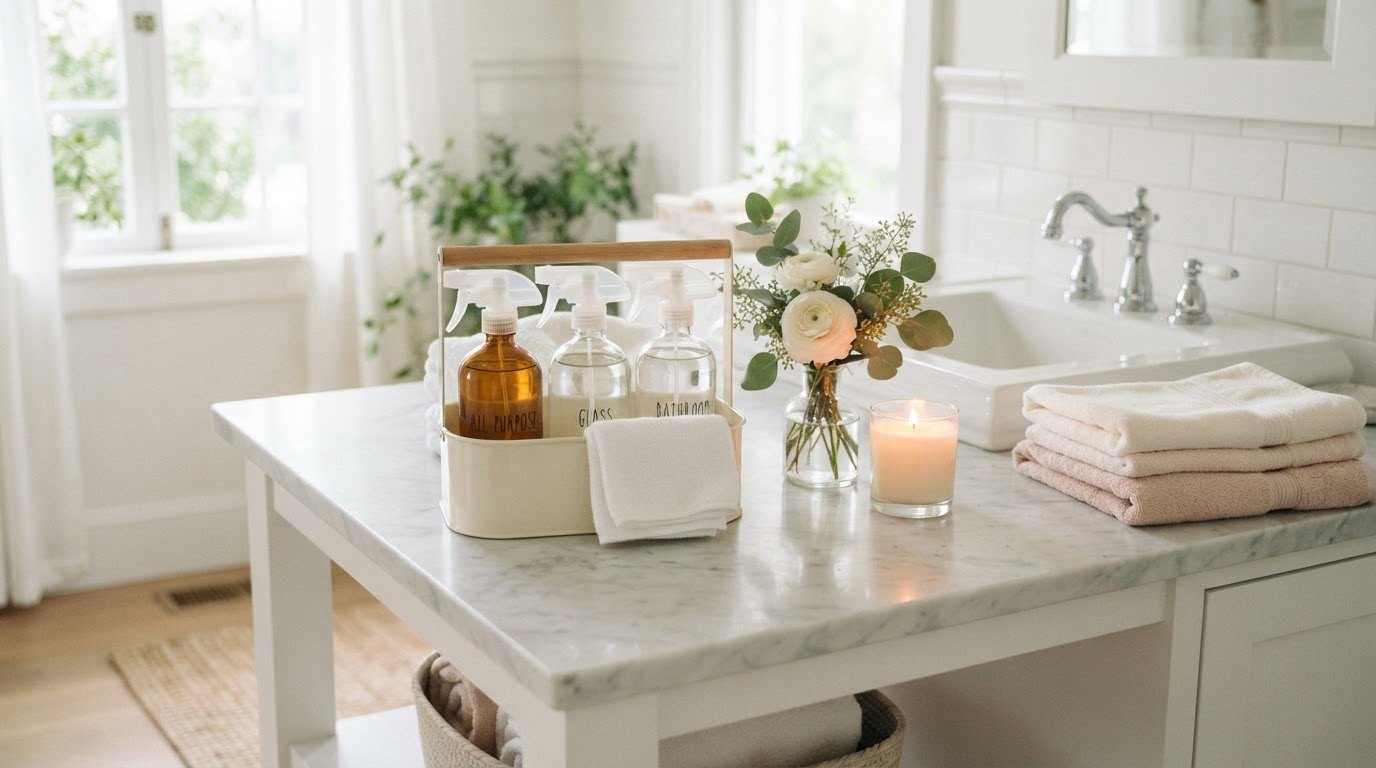
- Keep a small drain kit ready. A white cleaning caddy under the sink with gloves, the drain snake, an old toothbrush and a microfiber cloth means you'll deal with slow drains early, when they're easiest to fix.
If you'd like more daily habits like these, my guide on keeping your bathroom clean in five minutes a day fits drain care right into a simple routine. The same tricks work in the kitchen too, with a few tweaks for grease, in my post on how to clean a kitchen sink and drain.
When To Call a Plumber
DIY methods handle most bathroom clogs, but some signs mean the problem is deeper than hair and soap. Call a plumber if:
- You've tried the stopper, snake, plunger and P-trap and the drain is still blocked.
- More than one drain is slow or gurgling at the same time.
- Water comes back up in the tub or shower when you flush the toilet or run the sink.
- There's a sewage smell that doesn't go away after cleaning.
- You notice leaks, water stains or a soft spot in the floor or cabinet.
- The clog keeps coming back within days, even with a hair catcher.
There's no shame in calling. A plumber has longer augers and cameras to see what's going on, and fixing a deeper issue early can save you from water damage later.
Final Thoughts
A clogged bathroom drain feels like a big annoyance, but it's usually one of the easiest home fixes there is. Start gentle, work in order, protect your hands and your pipes and skip the harsh chemicals.
Then add a hair catcher and a weekly hot water flush, and you might not need any of this again for a very long time.