Cooking smells don't linger because your home is dirty. They linger because cooking sends tiny droplets of oil, smoke and moisture into the air, and those droplets land on everything: curtains, cushions, walls, the range hood and that tea towel hanging on the oven door. The smell isn't really "in the air" anymore. It's sitting on surfaces, which is exactly why spraying a room freshener barely helps.
That's actually good news, because it means the fix is practical, not mysterious. Move the air while you cook, clean the few surfaces that catch the most grease and give fabrics a little attention. Do that, and even fish night stops haunting the hallway the next morning.
This guide shows you how to get rid of cooking smells fast: why some smells stick harder than others, what to do while you're cooking, eight quick fixes for right after, the deeper fixes for smells that keep coming back, a smell-by-smell table and the safety basics. No heavy perfume masking, just a fresher home.
Why Cooking Smells Linger
Every time you heat oil, sear, fry or roast, three things happen at once. Fat breaks into microscopic droplets, steam carries odor molecules upward and, if anything browns too far, fine smoke joins in. Warm air rises and spreads, then cools and settles. Wherever it settles, the smell settles too.
Soft, porous materials hold onto odors the longest: curtains, upholstered chairs, rugs, throw pillows and even your hair and sweater. Hard surfaces like the backsplash and cabinet fronts collect a thin, sticky film of grease that slowly releases smell for days. And the range hood filter, if it hasn't been cleaned in a while, can turn into a little smell reservoir right above the stove.
When a smell lingers, think "where did it land?" rather than "how do I cover it?" That one shift makes everything below make sense.
The Worst Cooking Smells (and Why)
Not all cooking smells are equal. A few are famous for sticking around:
- Fish. Fish contains compounds that turn especially pungent with heat, and fish oils cling to surfaces. Pan-frying is the strongest; baking in a covered dish is much milder.
- Frying. Deep or shallow frying throws the most oil droplets into the air. That greasy, heavy smell is literally a fine coating of oil on your kitchen.
- Garlic and onions. Their sulfur compounds are potent and travel far. They also cling to hands, cutting boards and sponges.
- Burnt food. Smoke particles are tiny and get deep into fabrics. A burnt pan can scent a whole apartment within minutes.
- Strong spices. Curry blends, cumin and toasted spices are lovely while you eat and surprisingly persistent afterward, especially in curtains.
Knowing which smells are "sticky" helps you plan. On fish or frying nights, do everything in the next section, not just one thing.
What To Do While You Cook

Prevention is the fastest fix of all. These four habits take almost no extra time and cut lingering smells dramatically.
Run the Range Hood on High
Turn the hood on before you start cooking, not when the pan starts smoking. Use the highest setting for anything that sizzles, and leave it running for 15 minutes after you turn off the burners. Most of the smell is released in that cool-down window, so switching off the moment you take the pan off the heat wastes half the hood's work. If your hood is a recirculating model (it blows air back into the room instead of outside), it still helps, but a clean filter matters even more.
Open a Window for a Cross-Breeze
One open window helps a little. Two open windows on opposite sides of your home help a lot, because air actually moves through instead of just sitting there. Even 10 minutes of cross-breeze clears the air faster than any spray. If you only have one window, place a fan facing out of it to push kitchen air outside.
Keep Lids On
Lids trap steam and odor molecules in the pot instead of the room. Use them for simmering, boiling and anything with garlic, onions or spices. A splatter screen over frying pans also catches a surprising amount of oil mist.
Close Bedroom Doors
Bedrooms are full of fabric: bedding, curtains, clothes. Close those doors before you start cooking so the smell doesn't travel into your pillows. The same goes for closet doors near the kitchen.
8 Quick Fixes To Get Rid of Cooking Smells After
Dinner is done and the kitchen still smells like it. Here are eight quick fixes, in the order I'd do them. Most take under five minutes each.
1. Wipe the Stovetop and Backsplash
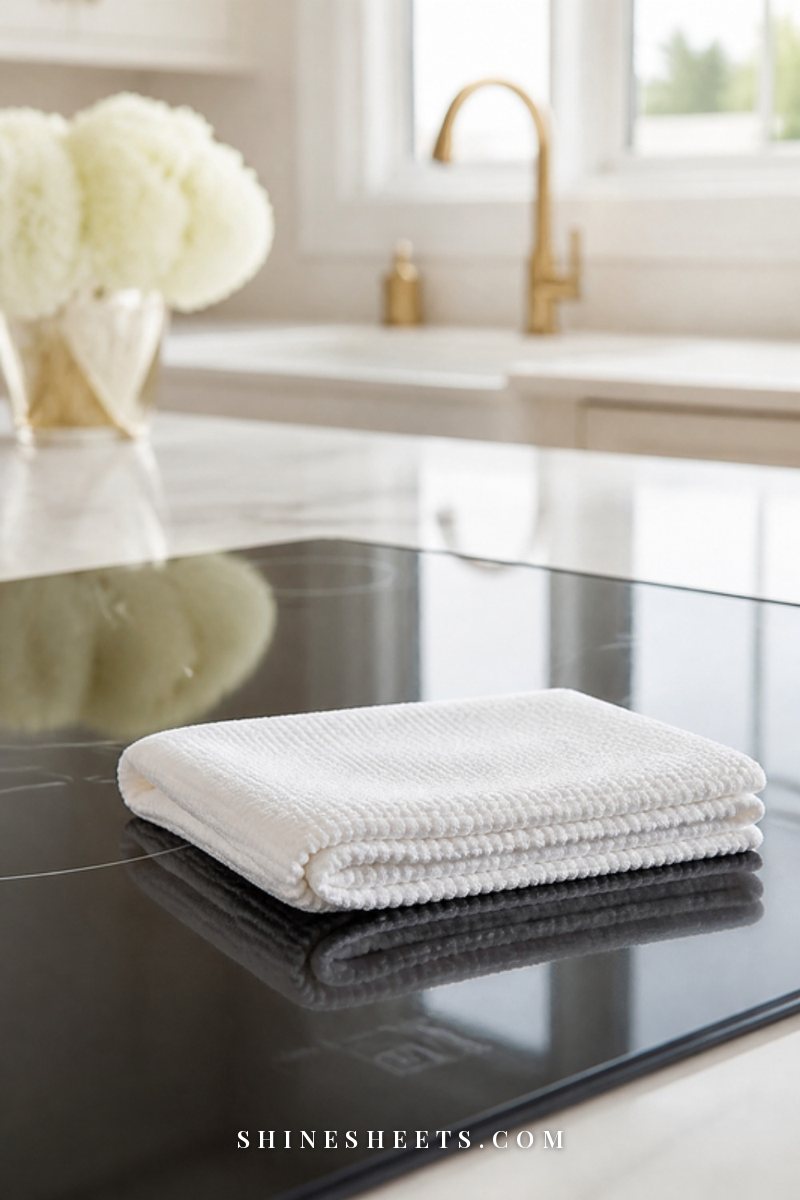
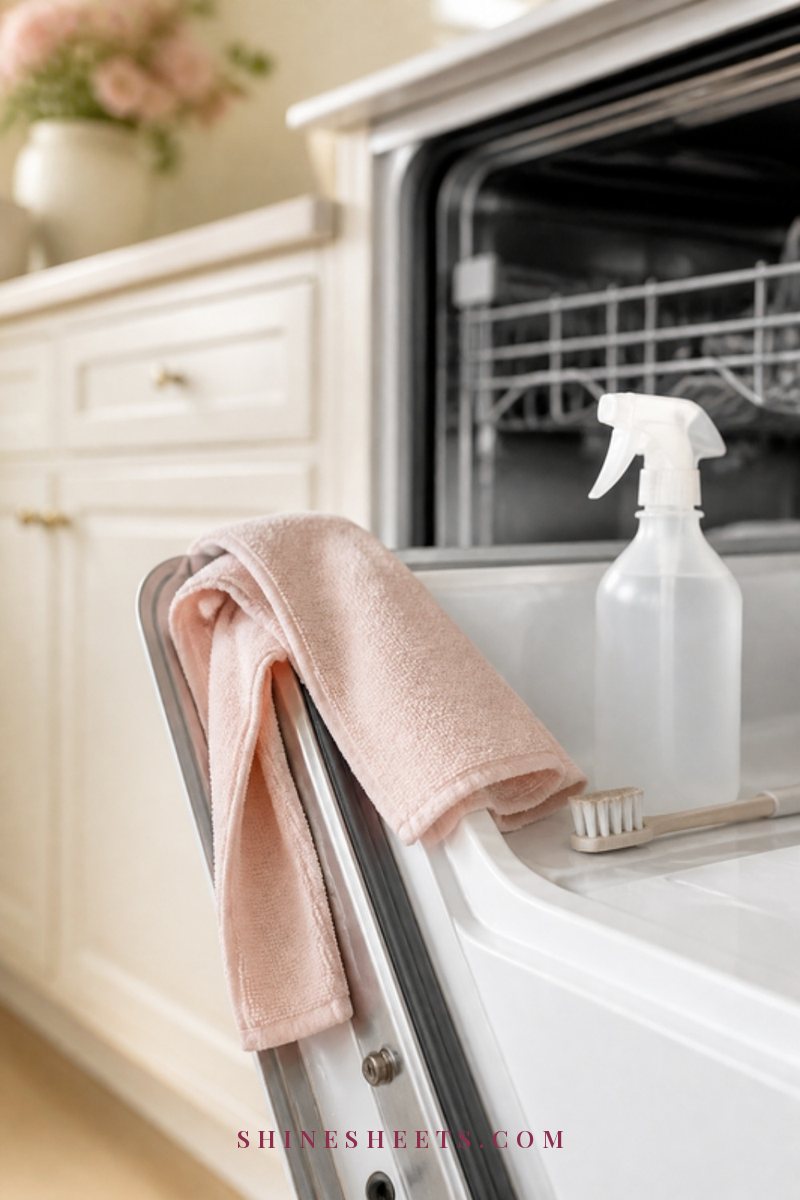
Wipe while the surfaces are still slightly warm (not hot), because fresh grease comes off easily. Spray warm water with a few drops of dish soap, wipe with a microfiber cloth, then go over everything once more with a clean damp cloth. Don't forget the knobs and the wall behind the stove. A refillable glass spray bottle filled with soapy water makes this a 2-minute habit. For a full countertop routine by surface type, my guide on how to clean kitchen countertops covers granite, quartz, marble and laminate.
2. Wash Pans Right Away
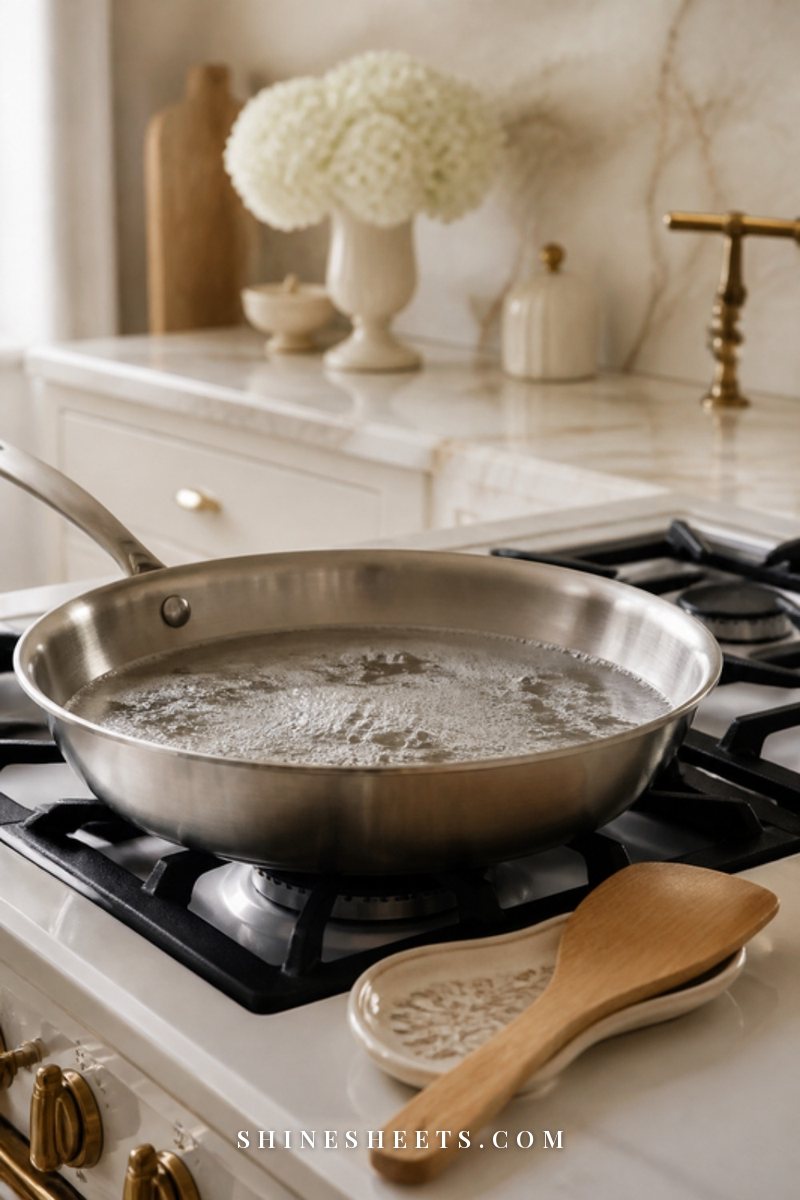
A pan with leftover fish oil or burnt bits keeps releasing smell as long as it sits there. Fill it with hot water and a squeeze of dish soap as soon as it's cool enough to handle, soak for 10 to 15 minutes, then wash. Rinse your sponge well afterward too, since it can hold onto garlic and fish smells.
3. Leave Out a Bowl of White Vinegar
Pour about a cup of plain white vinegar into a small bowl and leave it on the counter overnight. Vinegar helps neutralize lingering odors in the air, and the vinegar smell itself fades as it dries. Keep it out of reach of pets and kids, and pour it down the sink in the morning.
4. Sprinkle Baking Soda on Fabrics, Then Vacuum
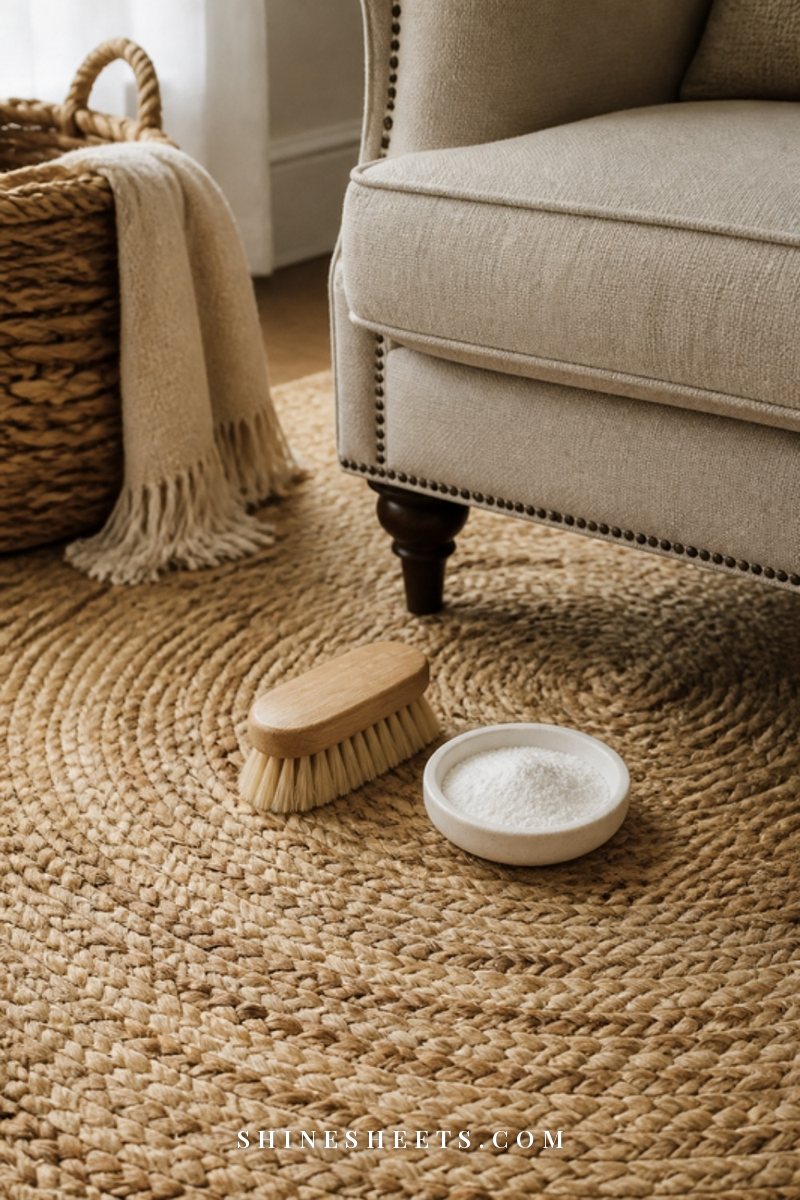
For rugs, fabric chairs and upholstered cushions near the kitchen, sprinkle a light, even layer of baking soda, leave it for at least 30 minutes (overnight is even better) and vacuum it up thoroughly. Test on a hidden spot first if the fabric is delicate or dark. Keeping baking soda in a pretty white ceramic canister with a lid under the sink means it's always ready.
5. Simmer Water With Citrus Peel
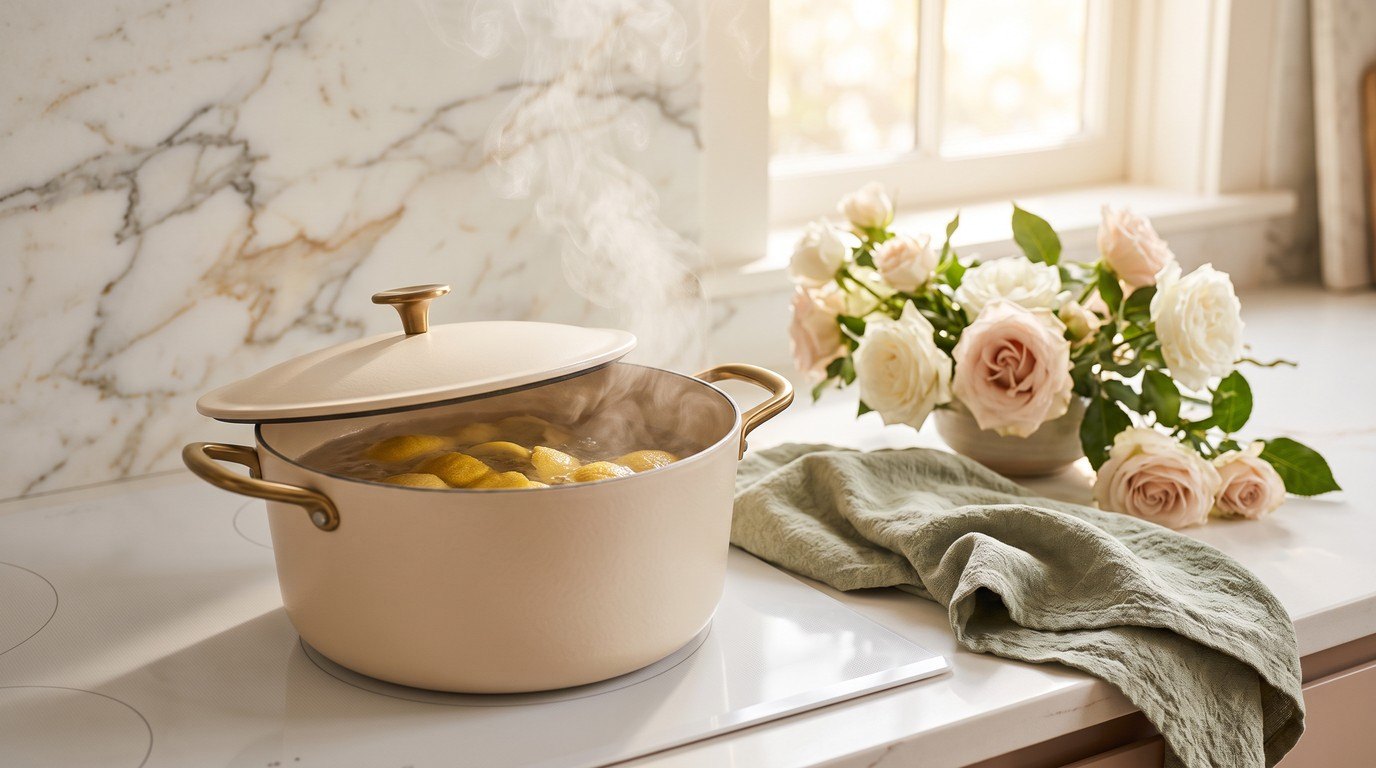
Put a small pot of water on low heat with a few leftover lemon or orange peels and a cinnamon stick if you have one. Let it barely simmer for 20 to 30 minutes. It doesn't just cover the smell, it adds gentle moisture and a fresh note while the other fixes do their work. Stay in the kitchen while it simmers and top up the water before it runs low. For more combinations, my list of simmer pot ideas has plenty of pretty options.
6. Empty the Bin
Fish skins, onion peels and greasy paper towels keep the kitchen smelling like dinner for days. Take the trash out the same night, especially on fish or frying nights. If the bin itself smells even when empty, wipe the inside with warm soapy water and let it air-dry before putting in a new bag.
7. Run an Air Purifier
An air purifier with a carbon (charcoal) filter helps capture odor molecules, while a HEPA filter catches smoke particles. Place it near the kitchen and run it on a higher setting for an hour or two after cooking. A pick for small homes: a compact cream air purifier with a carbon filter, sized for the room you'll use it in. Change filters as the manufacturer recommends, or they'll stop working quietly.
8. Wash the Tea Towels
Tea towels and oven mitts hang right above the action and soak up every smell. Swap them for fresh ones after any strong-smelling meal and wash the used ones on warm. Soft sage linen tea towels are lovely here because linen dries quickly and doesn't hold onto odors as stubbornly as thick terry cloth.
Deeper Fixes for Smells That Keep Coming Back
If your kitchen smells like last week's dinner even on days you haven't cooked, the smell has moved into somewhere the quick fixes don't reach. These deeper fixes take a little longer but last much longer too.
Clean the Range Hood Filter
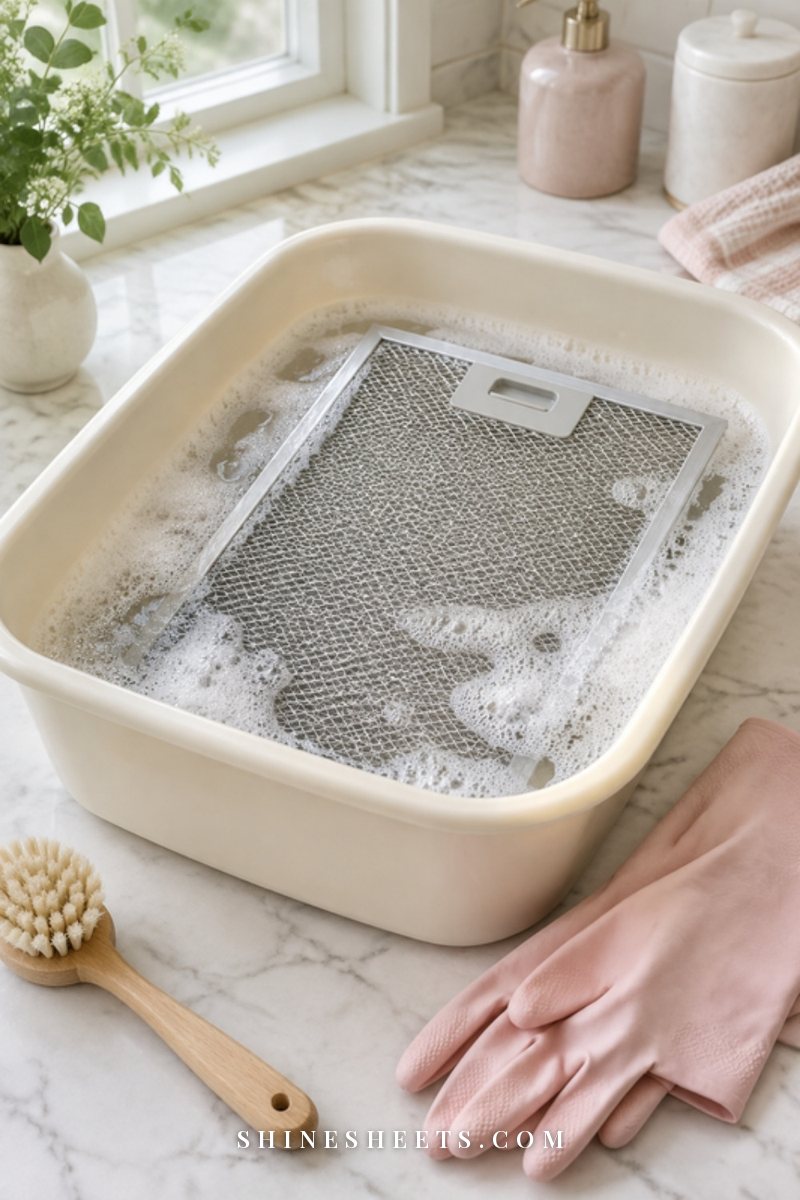
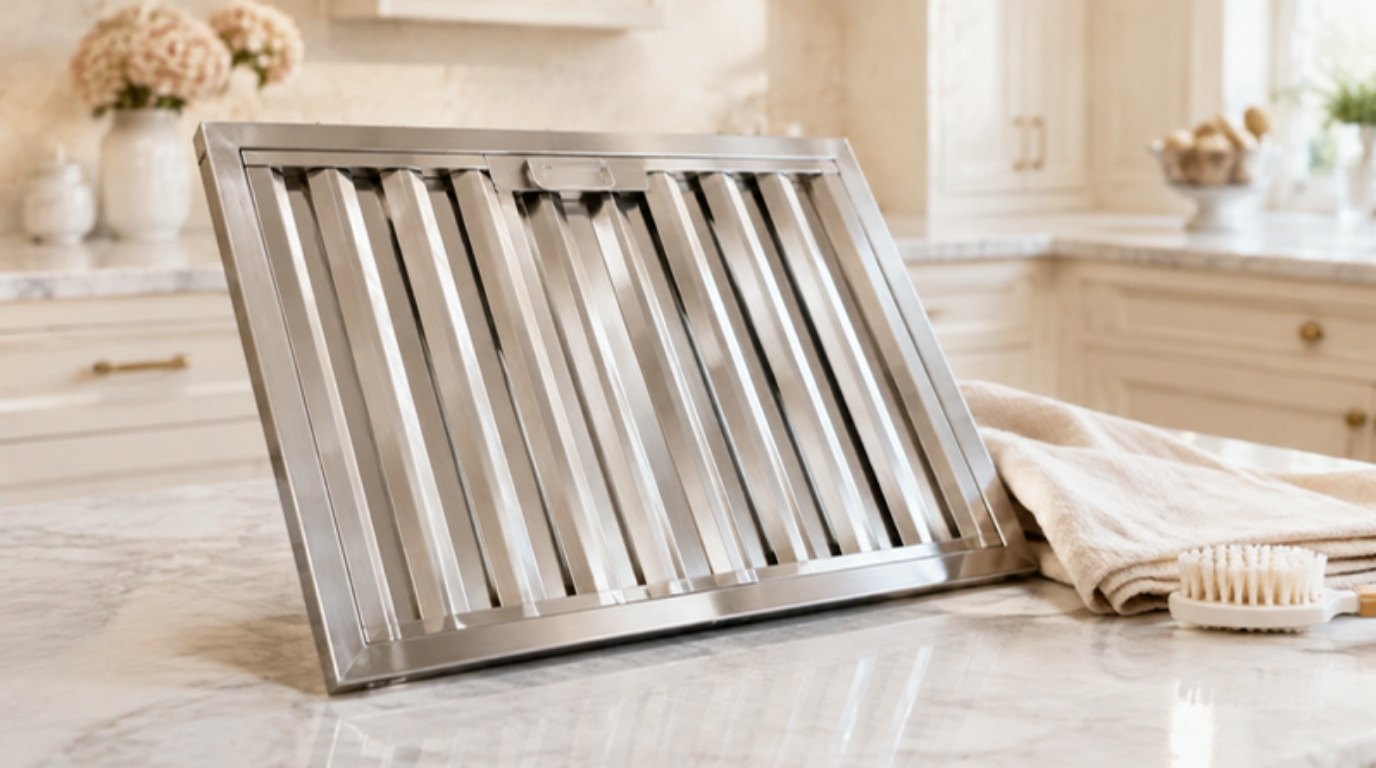
A greasy filter can't trap new grease, and it can release old smells every time the hood runs. Most metal mesh filters pop out easily. Soak them in very hot water with dish soap (and a little baking soda for heavy grease) for 15 to 20 minutes, scrub gently with a soft brush, rinse and let them dry completely before putting them back. Aim for once a month if you cook often. My full guide on how to clean a range hood filter covers stubborn grease and charcoal filters, which need replacing rather than washing.
Wash Curtains and Cushion Covers

Kitchen and living room curtains are some of the biggest odor sponges in a home. Wash them every two to three months if they're near the kitchen, following the care label. Removable cushion covers and throw pillow covers can go in at the same time. If your curtains are hard to take down, my guide on cleaning curtains without taking them down shows the easy way.
Degrease Cabinet Fronts and Walls
The cabinets right next to and above the stove collect a sticky film that slowly releases smell. Wipe them with warm water and a few drops of dish soap on a soft cloth, working top to bottom, then dry with a clean towel. Always test a hidden spot first on painted or wooden finishes.
Refresh the Sink and Drain
Food bits in the drain can smell long after dinner. Pour a few tablespoons of baking soda into the drain, follow with a cup of white vinegar, wait 10 to 15 minutes, then flush with hot tap water. Clean the sink strainer while you're there. If the smell seems to come from the drain itself, repeat once a week until it fades.
Wipe the Microwave and Fridge
Microwaves trap steam and splatters from reheated leftovers, and they release that smell every time you open the door. Heat a microwave-safe bowl of water with a few lemon slices for 3 minutes, leave the door closed for another 5 minutes so the steam loosens everything, then wipe the inside with a soft cloth. For the fridge, check for forgotten leftovers, wipe spills with warm soapy water and leave an open container of baking soda on a back shelf, replacing it every one to three months.
Freshen Up Yourself
This one sounds silly, but your hair, sweater and apron can carry cooking smells into every room you walk through. On frying or fish nights, wear an apron you can toss in the wash, tie your hair back and change into a fresh top after dinner. It also stops the smell from moving onto your sofa and bedding.
Cooking Smells Table: Quick Fix, Deeper Fix and How Long It Lasts
Here's the part I'd screenshot: the most common cooking smells with the fastest fix, the deeper fix and roughly how long each smell tends to hang around if you do nothing. Times are rough, since airflow and fabrics in your home change everything.
| Smell type | Quick fix | Deeper fix | How long it lasts |
|---|---|---|---|
| Fish | Hood on high + 15 min after, bowl of vinegar overnight, trash out tonight | Wash tea towels and nearby cushion covers, clean hood filter | 1–3 days |
| Frying oil | Wipe stovetop and backsplash while warm, cross-breeze for 15 min | Degrease cabinet fronts, wash hood filter | 1–2 days (longer with a greasy filter) |
| Garlic and onions | Lids on, wash boards and sponge, simmer citrus peel | Baking soda on nearby fabrics, then vacuum | Several hours to 1 day |
| Burnt food | Open windows wide, air purifier on high, soak the pan | Wash curtains and throws, wipe walls near the stove | 2–5 days |
| Strong spices | Hood on, close bedroom doors, simmer pot | Wash curtains and cushion covers | 1–2 days |
| Roasted meat | Wipe oven door and stovetop, empty the bin | Clean oven interior, wash tea towels | Several hours to 1 day |
How To Keep Your Kitchen Smelling Fresh Every Day
Once the big smell is gone, a few small habits keep it from building up again:
- Hood on, every time. Make it as automatic as turning on the burner.
- Wipe as you go. A 60-second stovetop wipe after each meal beats a 30-minute scrub on the weekend.
- Swap tea towels often. Every two or three days, and after any strong-smelling meal.
- Take out the trash daily on days you cook anything fishy or greasy.
- Clean the fridge shelf by shelf. One shelf a week keeps old food smells from sneaking out when you open the door.
- Air the home once a day. Five to ten minutes of open windows, even on cooler days, refreshes everything.
- Add a soft background scent, not a cover-up. A subtle beige reed diffuser in the hallway is a gentle finishing touch once the real smell is gone. Keep it light; strong fragrance on top of cooking odors just creates a confusing mix.
If you'd like more whole-home freshness ideas, my guide on keeping your apartment smelling fresh pairs nicely with these habits. And if a smell feels damp and stale rather than "dinner-like," it's probably mustiness, not cooking, so my room-by-room guide to getting rid of musty smells is the better place to start.
Safety Notes Before You Start
Freshening up a kitchen is low-risk, but a few rules matter every single time:
- Never mix bleach with vinegar or ammonia. These combinations release toxic gases. If you use bleach anywhere in the kitchen, keep vinegar well away and rinse surfaces with water in between.
- Never leave a simmer pot unattended. Stay nearby, keep the heat low and top up the water. A pot that boils dry can scorch and become a fire risk.
- Ventilate while cleaning. Open a window when you degrease or use any cleaning product, even mild ones.
- Wear gloves for long soaks in hot water, degreasing or anything with baking soda and vinegar if your hands are sensitive.
- Test hidden spots on painted cabinets, natural stone, wood and delicate fabrics before using any cleaner or baking soda.
- Treat smoke as a warning. If something is truly burning, turn off the heat first and deal with the smell later. Keep a lid nearby to smother a small pan fire and never pour water on burning oil.
- Go easy on fragrance. Strong sprays and candles can bother people with asthma or sensitive noses. Fresh air and clean surfaces do more than any perfume.
Final Thoughts
A home that smells like a lovely dinner is a home that's being lived in, and that's a good thing. The trick is simply helping that smell leave once the plates are cleared.
Turn on the hood early, wipe while things are warm, wash the tea towels and let some fresh air in. Do those few small things and your kitchen will smell clean and calm by morning, ready for whatever you cook next.