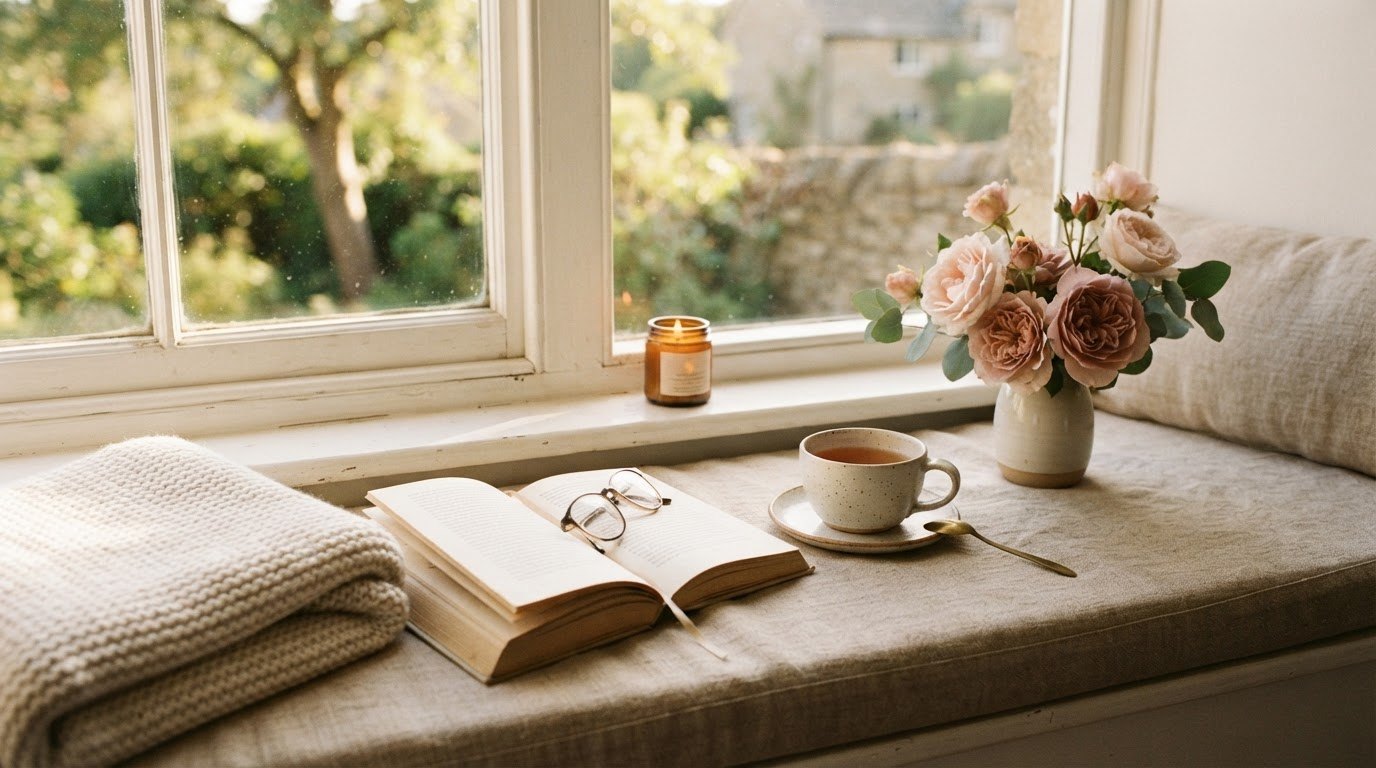
There's a particular kind of Saturday I once dreaded. No plans, nobody texting back, the whole afternoon stretching out in front of me like an empty hallway. I'd flick through other people's weekends on my phone and feel strangely behind, as if being alone meant I'd done something wrong.
These days, a free Saturday feels completely different. I make tea, light a glass candle, maybe take myself to a little café or wander a bookstore with no time limit. Nothing about my circumstances magically changed. What changed is that I slowly learned to enjoy my own company, and that turned out to be one of the kindest skills I've ever practiced.
This guide is all about how to be happy alone, in a warm, practical way. Not "pretend you love being lonely," but genuinely learning to like the time you spend with yourself. You'll find why it's harder than it sounds, 20 ways to enjoy your own company, an "alone time menu" organized by energy, money and time, a solo-date starter list and a gentle note for the days that feel lonely anyway.
Whether you live alone, have a quiet week ahead or simply want to feel more at home in your own life, let's start with one simple idea: being alone and being lonely are not the same thing.
Alone vs. Lonely: Why the Difference Matters
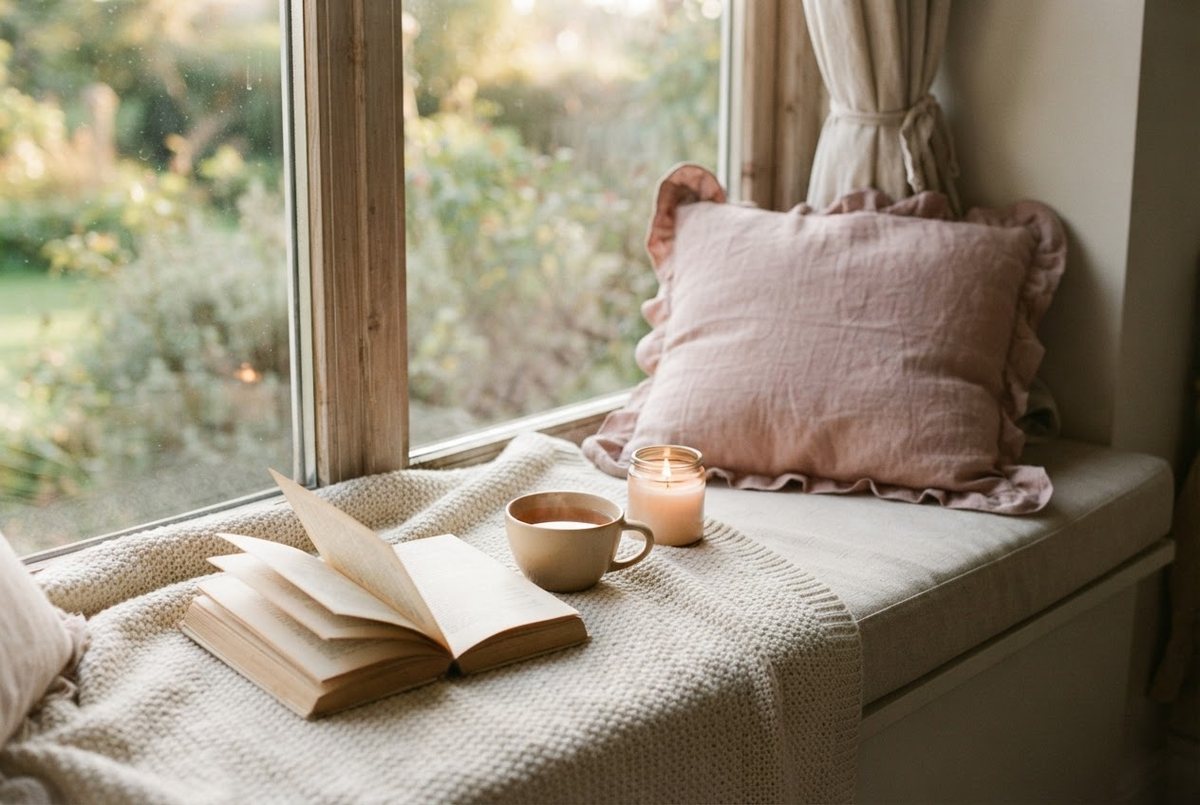
Being alone is a situation: there's nobody else in the room. Being lonely is a feeling: a sense that you're missing connection you need. You can be alone and perfectly content, and you can be surrounded by people and still feel lonely.
A lot of us never learned to separate the two. We absorbed the idea that time alone is a gap to be filled, a sign that our social life isn't working. So when we're on our own, we rush to fill the silence with noise, screens or busyness, and never really get to know what we like to do when nobody's watching.
Learning to be happy alone doesn't mean you stop wanting people. It means your happiness isn't completely on hold until someone else shows up. And honestly, that makes time with others better too, because you arrive full instead of empty.
Why Enjoying Your Own Company Feels Hard at First
If spending time alone makes you restless or a bit sad, there's nothing wrong with you. A few very normal things get in the way:
- The comparison trap. Social media shows everyone else's brunches and trips, rarely their quiet Tuesday nights.
- Silence feels loud. Without distraction, worries and to-do lists rush in. (As someone prone to anxiety, I know this one well.)
- We don't know what we like. If you've spent years going along with other people's plans, your own preferences can feel blurry.
- Old stories. "Only sad people eat alone" or "If I'm alone, it means nobody wants me." These thoughts are common, and they're not true.
The good news is that enjoying your own company is a skill, not a personality trait. You build it the same way you'd build any friendship: by spending time together, doing things you enjoy and being kind. My guide on how to be your own best friend is a lovely companion to this one if you'd like to go deeper on the kindness part.
How To Be Happy Alone: 20 Ways To Enjoy Your Own Company
You don't need all twenty. Pick two or three that make you feel a little spark of curiosity and try them this week. Some will become favorites; some won't be for you, and that's useful information too.
1. Change the Words You Use
Notice how you describe your free time. "I have nothing to do" and "I'm stuck at home alone" feel very different from "I have an evening to myself." Same evening, different story.
Try saying "I have plans with myself" when someone asks, even just in your head. It turns empty time into chosen time, and that small shift changes how the whole evening feels.
2. Start With Short, Planned Stretches
If long stretches of alone time feel heavy, don't start with a whole weekend. Start with 30 minutes you've planned on purpose: a walk with a podcast, a bath with a book, a slow coffee at the kitchen table.
Planned alone time feels like a treat. Unplanned alone time can feel like a void. As you get comfortable, stretch it to an hour, then an afternoon.
3. Make a Little Ritual Out of Your Evenings
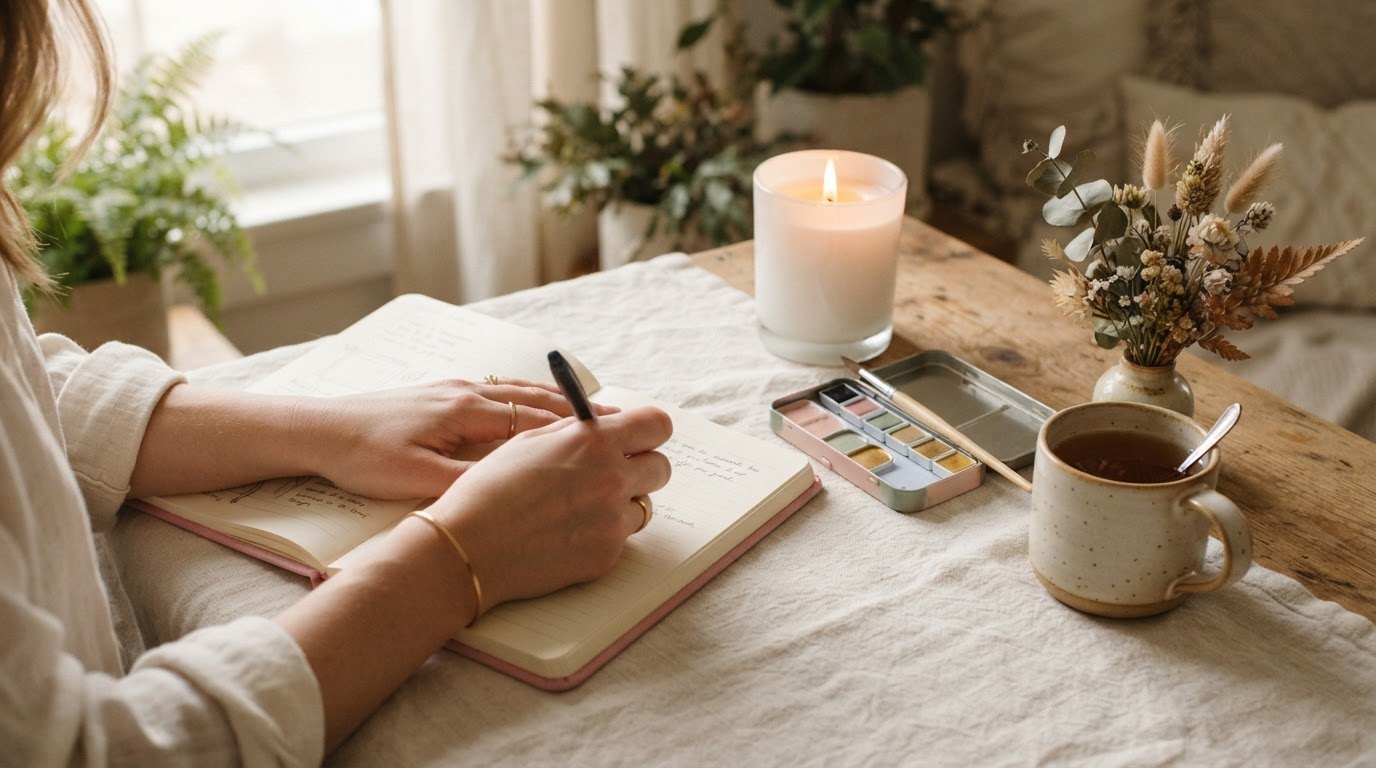
Rituals turn ordinary hours into something you look forward to. Mine is simple: evening tea, a candle and ten minutes of journaling after the tea. It's the same every night, and that sameness is exactly what makes it comforting.
Choose two or three small things that feel good to you and do them in the same order: put on soft lighting, make a warm drink, change into comfy clothes, put on one album. A candle in a glass jar is a pick if you want one simple signal that says "this time is mine now."
4. Take Yourself on a Solo Date
A solo date is just a regular outing with one guest: you. Coffee, a museum, a matinee, a walk through a pretty neighborhood. Dress up a little if you like. Bring a book or don't.
The first one can feel awkward for about ten minutes, and then it usually feels surprisingly freeing. You choose the pace, the table, the dessert. There's a whole starter list of ideas further down.
5. Eat a Real Meal at the Table
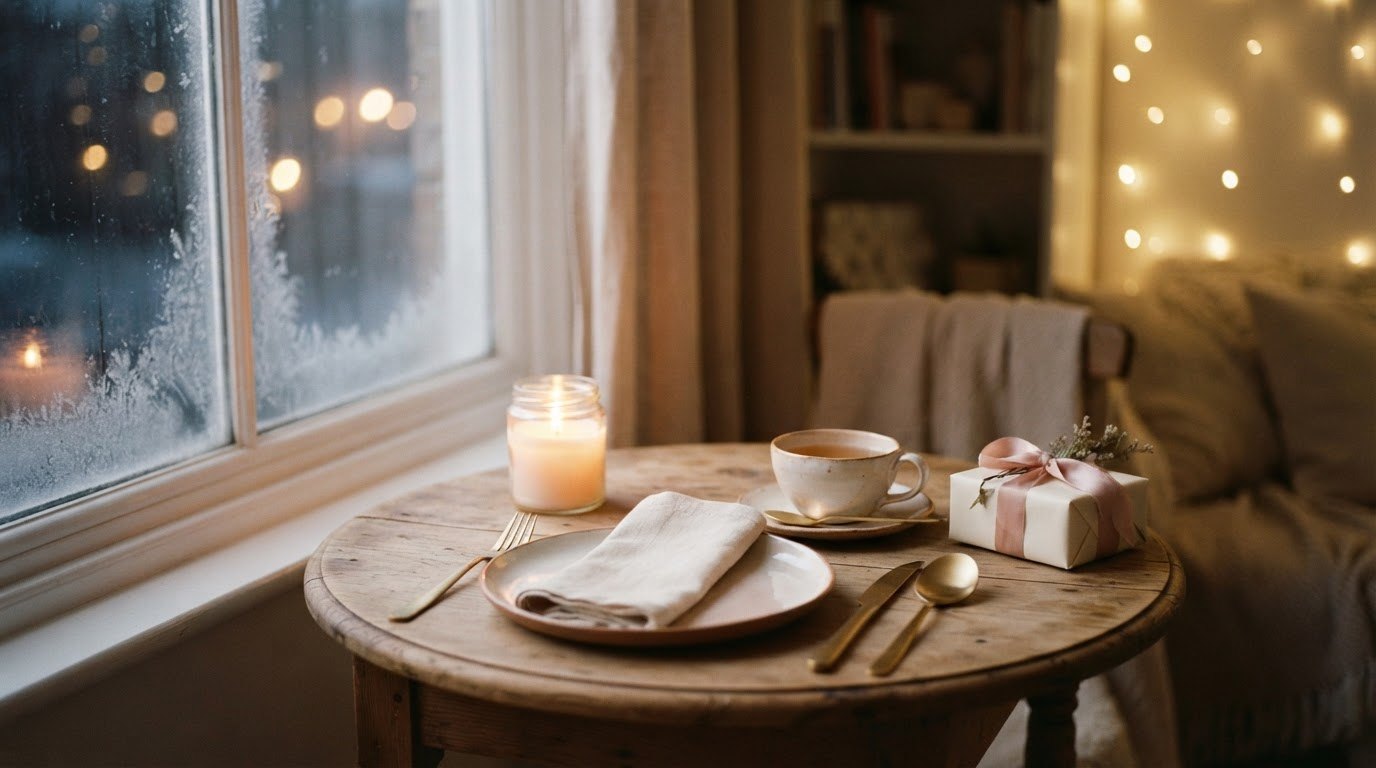
When we're alone, it's easy to eat standing up at the counter or in front of a screen. Once or twice a week, set the table properly for one: a nice plate, a cloth napkin, maybe a candle and some music.
It sounds like a small thing, but treating yourself like a guest worth setting the table for sends a quiet message: you count, even when nobody else is watching.
6. Rediscover What You Actually Like
Take ten minutes with a notebook and write three lists: things you loved doing as a child, things you've always wanted to try and things that make you lose track of time. Look for overlaps.
Maybe you loved drawing and have always wanted to try watercolor. Maybe you lose track of time in bookstores. Those overlaps are where your alone time can come alive.
7. Pick Up a Hobby You Can Do Alone
Hobbies are the backbone of a happy solo life, because they give alone time a shape and a sense of progress. Think of things you can do at the kitchen table or on the couch: painting, puzzles, knitting, baking, candle making, learning a language.
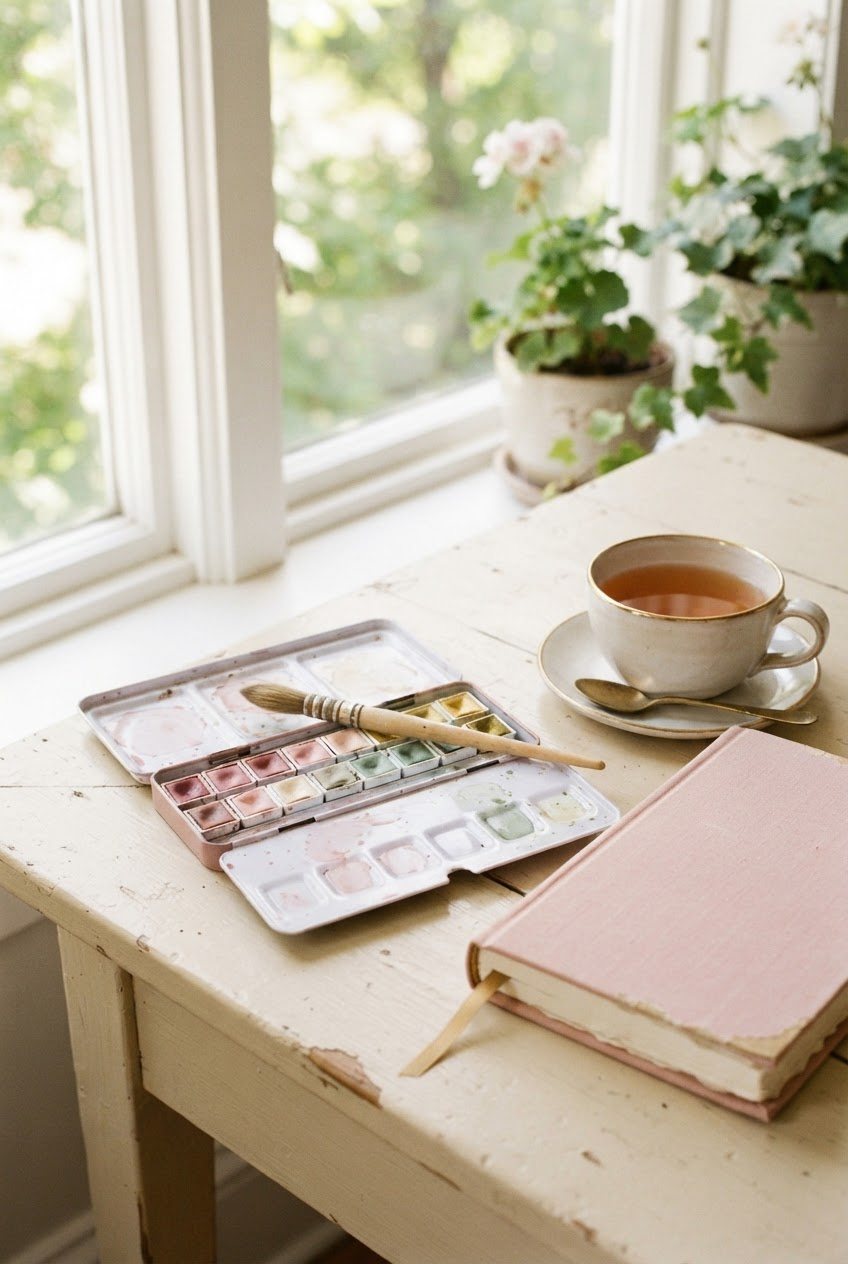
A beginner watercolor paint set is a lovely, low-pressure place to start, because nobody needs to see the results. For more ideas, my list of hobbies for fun, creativity and relaxation has a hundred of them.
8. Create a Corner That's Just for You
Having one spot at home that feels made for you makes alone time feel inviting instead of empty. It could be a chair by the window with a blanket, a soft lamp and a small side table for your tea.
A chunky cream knit throw folded over the arm makes it instantly inviting. If you'd like to build a proper one, my reading nook ideas are full of small-space options.
9. Read Something You Can Sink Into
A good book is the easiest company in the world. Pick something that pulls you in, not something you feel you "should" read: a comforting mystery, a big romantic saga, a memoir that makes you laugh.
Give it a proper slot, like twenty minutes before bed or an hour on Sunday afternoon, with your phone in another room. Reading for pleasure is one of the best ways to discover that your own company is actually very good company.
10. Move Your Body Without an Audience
Some kinds of movement feel even better alone: dancing around the living room to an old playlist, a long walk with no destination, gentle stretching on the floor while a show plays.
There's nobody to impress and nobody to keep pace with. Notice how your mood shifts after even fifteen minutes. It's a quick way to turn a flat afternoon into a lighter one.
11. Get Comfortable With Quiet
Try five minutes a day with no input at all: no phone, no music, no podcast. Sit with a warm drink and look out the window. At first it might feel strange or even uncomfortable, and that's normal.
Over time, quiet stops feeling like an absence and starts feeling like room to breathe. It's often in those quiet minutes that your own thoughts, ideas and wants finally get a word in.
12. Journal Like You're Talking to a Friend
Journaling is basically having a conversation with yourself, and it helps you get to know the person you're spending all this time with. Write about your day, what's on your mind or what you're looking forward to.
A soft linen-covered journal makes it feel like a ritual rather than homework. If you're not sure where to start, my journaling ideas give you fifty easy prompts.
13. Limit the Phone Comparison
Nothing makes a quiet evening feel lonelier than watching highlight reels of everyone else's night out. When you notice yourself comparing, put the phone face down in another room for an hour.
Better yet, swap the habit: when you reach for your phone out of boredom, reach for your book, your sketchbook or the kettle instead. Your evening is real; their highlight reel isn't the whole story.
14. Plan Something To Look Forward To
Anticipation is a big part of happiness. Put a few solo things on your calendar: a new café on Saturday morning, a film you've been waiting for, a long bath on Wednesday night.
Having something lovely ahead of you, even something small, makes the in-between days feel lighter. It also proves to yourself that your time alone is worth planning for.
15. Learn Something Just for Fun
Learning gives you a quiet sense of progress and a little thrill of "look what I can do now." Try a language app for ten minutes a day, a free online course, a cooking technique or a new kind of craft.
The key is "just for fun." No goals, no deadlines, no pressure to be good at it. Curiosity is one of the best companions there is.
16. Romanticize the Ordinary
Some of the best alone moments come from treating small things as special. Pour your coffee into your prettiest mug. Put on a vintage dress just to water the plants. Play Old Hollywood soundtracks while you tidy up.
It sounds silly, but these little touches make your everyday life feel like something you're enjoying rather than getting through. Pick one tiny touch a day and see how it changes the mood of an ordinary afternoon.
17. Treat Yourself to a Slow Tea Moment
A tea ritual is one of my favorite solo pleasures. Choose a tea you love, warm your cup, and actually sit down while you drink it instead of carrying it around the house.
A loose leaf tea sampler turns it into a small adventure: a different flavor every evening for a week. Ten slow minutes with a warm mug can feel like a reset button for the whole day.
18. Do Something Kind for Someone Else
Being happy alone doesn't mean being cut off. Small acts of kindness are a lovely way to feel connected while still enjoying your own time: write a card to a friend, leave a nice review for a local café, bake something for a neighbor, volunteer for a few hours a month.
Connection doesn't always require company. Sometimes it's simply knowing you made someone else's day a little brighter.
19. Keep a "Things I Loved Today" List
Every evening, write down three small things you enjoyed on your own: the first sip of coffee, a funny scene in a book, the light through the window at four o'clock.
Over a few weeks, the list becomes proof that your own company brings you real joy. It also trains your brain to notice good moments, which makes them easier to find on harder days.
20. Celebrate Your Own Wins
We often wait for someone else to notice our achievements. But you can celebrate them yourself: finished a hard week, cleared out a closet, finally booked that appointment. Mark it with something small and lovely, like flowers for your table, a long bath or your favorite takeout.
Celebrating yourself teaches you that your life is worth celebrating, with or without an audience. That's a big part of what it means to be truly happy alone.
The Alone Time Menu
This is the part I reach for most. When I have free time and no idea what to do with it, I don't want to think. I want a menu. So here's one, organized by how much time and money you have and how much energy you're bringing. Find your row, pick from your column, done. Screenshot it for later.
| Low energy | Medium energy | Feeling bold | |
|---|---|---|---|
| $0 | Re-read a comfort book under a blanket | Walk a new street in your neighborhood and notice five pretty things | Visit a free museum or gallery day on your own |
| $0 | Listen to a whole album with your eyes closed | Rearrange one corner of your home | Go to a free outdoor concert, talk, or library event |
| 15 minutes | Make tea and sit by the window with no phone | Write your "things I loved today" list | Dance around the kitchen to three favorite songs |
| 15 minutes | Stretch on the floor with soft music | Sketch or paint one small thing on your table | Call or voice-message a friend you've been meaning to reach |
| A whole evening | Movie night for one with blankets and a candle | Spa evening at home: bath, face mask, early bed | Dinner for one at a restaurant you've been curious about |
| A whole evening | A pastel floral jigsaw puzzle and a podcast | Start a new craft project from a beginner tutorial | A solo theater, comedy or concert ticket |
The menu isn't a to-do list. It's a reminder that there's almost always something nice you can do with an hour on your own, whatever your mood or budget. If you like this kind of list, my dopamine menu works the same way for flat, unmotivated days.
Solo-Date Starter List
If going out alone feels intimidating, start with dates that come with a built-in activity, so you always have something to focus on. Here are 12 easy first solo dates, roughly in order from easiest to boldest:
- A café with a book. Order something warm, pick a seat by the window and read for an hour.
- A bookstore wander. No time limit. Leave with one book you're genuinely excited about.
- A morning farmers market. Buy flowers for your table and taste something new.
- A long walk somewhere pretty. A park, a garden or a waterfront path, with your favorite playlist.
- A matinee movie. Afternoon screenings are quieter, and nobody notices who came with whom once the lights go down.
- A museum or gallery. Stand in front of whatever you like for as long as you like.
- A beginner class. Pottery, painting, dance or a cooking class gives you something to do and people to chat with if you want.
- A flower shop visit. Build yourself a small bouquet, just because.
- A scenic drive or train ride. Pick a nearby town, have lunch, come home.
- Brunch for one. Bring a journal and write while you wait for your order.
- Dinner at a restaurant. Sit at the bar or a cozy corner table, order what you really want and enjoy every bite.
- A concert or show. Single seats are often easier to find, and you get to focus completely on the music.
A little tip for the first few: bring a small "anchor" like a book or a journal. You probably won't need it, but knowing it's there makes walking in alone much easier.
When Being Alone Feels Lonely Anyway
Some days, no matter how many candles you light, alone just feels lonely. That's okay. It doesn't mean you've failed at any of this. It means you're human, and humans need connection.
On those days, try something gentle:
- Name it kindly. "I'm feeling lonely today, and that's allowed."
- Reach out in a small way. Send one message, call a family member or reply to that group chat you've been ignoring.
- Be around people without pressure. Work from a café, browse a library or take a class where you don't have to perform.
- Build connection slowly. If you'd like more friends nearby, my guide on how to make friends as an adult has realistic, low-pressure ideas.
And please be gentle with yourself if loneliness lasts for weeks, starts to feel heavy, or comes with a low mood that won't lift. Talking to a doctor, counselor or therapist is a strong, kind thing to do, not a sign of weakness.
Final Thoughts
Learning how to be happy alone isn't about needing nobody. It's about knowing that you'll always have at least one person who's good company: you. The tea, the candle, the solo café mornings and the slow evenings are all little ways of saying, "I like spending time with you."
Start with one idea from the menu this week and give it a fair chance. The more you show up for yourself, the more your own company will start to feel like home.