Being interesting has very little to do with having a wild life, a big personality or a stack of impressive stories. The people we remember after a dinner or a long coffee are usually the ones who were genuinely curious about us, who noticed small things and who shared a bit of their own world without making it a performance. Interested people become interesting people, almost by accident.
That's good news, because curiosity is a skill you can practice. You don't need to change who you are, travel the world or force yourself to be louder. You need a few habits that keep your mind fed and a few conversation tools that let other people see what's already there.
This guide covers how to be more interesting in a quiet, real way: what actually makes someone good company, 20 simple ways to practice it, a "boring answer vs interesting answer" table for the questions everyone gets asked, and a little story formula you can use the next time someone says "tell me about yourself."
And if you've ever walked away from a conversation thinking "I had nothing to say," please be gentle with yourself. Most of us have been there. It usually means you were nervous, not that you're dull.
What Actually Makes Someone Interesting

When you think about the people you love talking to, they probably have a few things in common. Not one of them is "has done the most exciting things."
- They're curious. They ask a follow-up question and actually wait for the answer.
- They notice specifics. They remember the name of your coworker's dog or the book you mentioned last month.
- They have a point of view. They'll tell you what they think, but they're happy to be wrong.
- They're into something. Pottery, old movies, birdwatching, sourdough science. The topic matters less than the enthusiasm.
- They make you feel interesting. This is the big one. You leave the conversation feeling more like yourself.
Notice what's missing: being funny on cue, having perfect stories, knowing a little about everything. Interesting is a feeling people have around you, and it's built mostly from attention. It took me a long time to understand that my anxious habit of planning what to say next was the very thing making conversations feel flat. The moment I started listening instead of rehearsing, everything got easier.
20 Simple Ways To Be More Interesting
These are grouped loosely from "how you talk" to "how you live," because both matter. Pick two or three to practice this month. You'll feel the difference faster than you think.
1. Be Interested First
The quickest shortcut to being interesting is being interested. When someone talks, give them your full attention for the first minute: eyes up, phone face down, no mental to-do list.
A simple practice: in your next three conversations, try to learn one thing about the other person that you didn't know before. Not a fact you could find on their profile, but something like why they chose their job or what they're looking forward to this week. That small goal shifts your brain from "how am I coming across" to "what's interesting about them," and people can feel it.
2. Ask the Second Question
Most conversations stall after the first answer. "How was your weekend?" "Good, pretty quiet." And then silence. The magic is in the second question.
Try: "Quiet in a good way, or quiet in a 'I needed to recover' way?" or "What made it good?" The second question tells the other person you actually care about the answer, and it's where real conversation starts. If you only remember one tip from this whole article, make it this one.
3. Listen for the Spark Word
In almost every answer, there's one word the person says with a little more energy. "I finally went to that flea market." "Work is fine, but I've been obsessed with this podcast." That's the spark word.
Follow it. "Wait, which flea market? What did you find?" People light up when you pick the thread they secretly wanted to talk about. It's one of the easiest ways to seem fascinating without saying much at all.
4. Ask Better Questions Than "What Do You Do?"
"What do you do?" is fine, but it often leads to a short, tired answer. Questions about enthusiasm and choices work better than questions about titles.
- "What are you looking forward to lately?"
- "What's something you could talk about for an hour?"
- "What's the best thing you've watched or read recently?"
- "How did you end up doing what you do?"
If you'd like to practice with a friend or a partner, a deck of conversation starter cards makes it playful instead of awkward. Look for a set with open-ended questions rather than yes/no ones. I've also gathered a long list of deep questions to ask friends when you're ready to go a little further.
Quick tip: keep one or two of these questions in your back pocket before a party or a work event. You won't need a script, but knowing you have a good question ready takes the pressure off.
5. Read Outside Your Usual Lane

Reading is one of the most reliable ways to have more to say, but the trick is variety. If you always read romance, try one popular science book. If you only read self-help, try a memoir or a novel set somewhere you've never been.
Aim for one "outside your lane" book every couple of months. You don't need to finish it if it's not working. Even a few chapters give you a new idea, a new place or a new way of seeing something, and that's exactly the kind of thing that comes up naturally in conversation. If you read on an e-reader, a soft pastel e-reader case makes it feel like a little treat to carry around. My guide on how to read more books has tips for fitting reading into a busy week.
6. Have a Few Opinions (and Hold Them Lightly)
Conversations get interesting when someone says what they actually think. "I think the book was better than the show, and here's why" is far more fun than "Yeah, both were good."
You don't need strong views on everything. Choose small, low-stakes topics where you have a real preference: the best season, whether breakfast for dinner counts as a meal, which movie ending was wrong. Then share it with a smile and stay curious: "But I could be convinced otherwise. What did you think?" That combination of conviction and openness is magnetic.
7. Share Small Specifics, Not Summaries
"I went for a walk" is a summary. "I went for a walk and found a tiny free library with a cookbook from the seventies in it" is a specific. Specifics are what make people lean in.
When you answer a question, add one concrete detail: a color, a name, a smell, a funny moment. You don't need more words, just better ones. This single habit will make ordinary weeks sound like something worth hearing about.
8. Learn the Story Behind Things You Love
Pick something you already enjoy and learn a bit of its backstory. Love a certain perfume? Find out why that note is so popular. Love Old Hollywood movies (I do)? Read about how one of your favorite films was made.
Backstory turns a simple preference into a conversation. "I love this song" becomes "Did you know it was written in about ten minutes?" Ten minutes of reading a week about something you already like is plenty.
9. Try a Hands-On Hobby
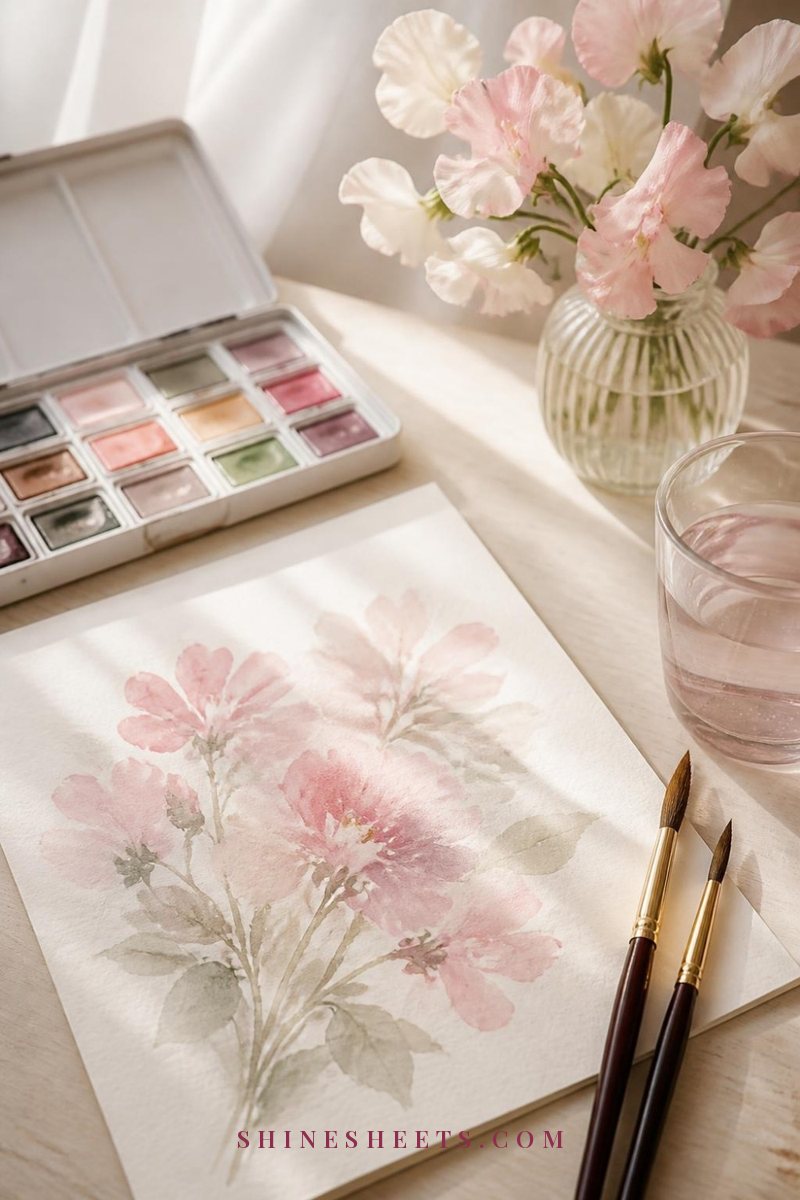
Making things with your hands gives you stories, small wins and a reason to talk to new people. It also gives you something to say when someone asks, "What have you been up to?"
Choose one beginner-friendly hobby and commit to four sessions before deciding whether you like it. A beginner watercolor set is a lovely place to start: look for one with around 24 colors, a few round brushes and thick, cold-press paper. Thirty minutes on a Sunday is enough. If you prefer quieter, solo hobbies, my list of hobbies for introverts has plenty more ideas.
10. Say Yes to One New Thing a Month
New experiences don't have to be big. A new café, a free museum evening, a class at the library, a different walking route, a cuisine you've never tried. The point is a steady drip of "first times."
Put one small new thing on your calendar each month. Write it down like an appointment so it doesn't quietly disappear. Twelve small firsts a year add up to a surprising number of stories.
11. Go Somewhere Alone
When you're alone, you notice more: the conversation at the next table, the light in a gallery, the way a city sounds on a Sunday morning. Solo outings also make you braver about talking to strangers.
Start with something easy like a matinee movie or a coffee with a book, and build up from there. There are lots of gentle ideas in my post on solo date ideas if you'd like a starting list.
12. Let People See What You're Into
Many of us hide our interests because we think they're too niche or a bit embarrassing. But enthusiasm is attractive, even when the topic isn't someone else's thing.
The next time someone asks what you've been up to, mention the real answer. "I've been learning about the history of perfume bottles, which sounds odd, but it's fascinating." Watch how often people respond with curiosity rather than judgment. And if they don't, that's fine too. You've lost nothing.
13. Carry a Camera for Ordinary Moments

Taking photos trains you to notice. You start seeing the shadow on a wall, the pastel door on a side street, the funny sign at the bakery. And you come home with little moments to share.
A simple reusable film camera is a charming way to do this, because you only get a limited number of shots and have to choose them carefully. Look for one that takes standard 35mm film and has a built-in flash. Your phone works too; the habit matters more than the gear.
14. Have a "Currently" List Ready
When someone asks "What's new?", the mind often goes blank. Keep a tiny "currently" list in your notes app and update it once a week:
- Currently reading:
- Currently watching:
- Currently learning:
- Currently loving (a small thing):
- Currently curious about:
Reading it before a social event takes thirty seconds and gives you five easy, honest answers. It's not a script. It's just a reminder that your life is fuller than nerves make it feel.
15. Admit What You Don't Know
"I have no idea how that works, can you explain it?" is one of the most charming sentences in any conversation. It gives the other person a chance to be the expert, and it shows you're secure enough not to pretend.
Pretending to know things makes conversations shallow. Asking makes them deeper. People rarely remember who knew the most, but they always remember who was curious about what they knew.
16. Tell Stories With a Small Turn
A good story doesn't need drama. It needs a small turn: a moment where something didn't go as expected. "I went to buy one candle and ended up talking to the owner for an hour about her grandmother's recipe for wax" is a story because something surprising happened.
When you think of something to share, ask yourself: where was the surprise? Start close to it and keep it under a minute. You'll find the full formula further down.
17. Notice Your Surroundings
Interesting people are often observant people. They mention the music in the café, the unusual plant in the corner, the beautiful old building across the street.
Shared observations are low-pressure conversation openers, especially with new people. "Have you noticed they change the window display every week?" is easier than inventing a topic, and it invites the other person to notice with you.
18. Keep a Curiosity Journal

Curiosity fades if you never write it down. A curiosity journal is a place to collect questions, quotes, little facts and things you want to look up later.
Spend five minutes in the evening adding one thing you learned and one thing you're wondering about. I like doing this after my evening tea, when the day has gone quiet. A book journal with sections for notes and quotes is a nice choice if you mostly read, but any notebook works. Mark your place with a pretty gold bookmark so it feels like something you want to return to.
19. Make Room for Other People's Stories
When someone shares a story, resist the urge to immediately top it with your own. "That happened to me too, but worse" ends their moment. Instead, ask one more question first: "What did you do next?"
Then, if your story connects, share it briefly. Conversation should feel like a game of catch, not a competition. This is also one of the quiet keys to making friends as an adult, because people come back to those who make them feel heard.
20. Stop Trying To Be Impressive
This is the one that makes everything else work. Trying to impress makes you stiff and self-focused. Trying to connect makes you warm and present.
Before a conversation, swap the goal in your head. Instead of "I need them to like me," try "I want to find out something good about this person." It sounds tiny, but it changes your face, your voice and your questions. Interesting isn't something you perform. It's something that shows up when you're relaxed enough to be yourself.
Boring Answer vs Interesting Answer
Here's the unique part of this guide: the everyday questions we all get asked, with a "boring" answer and a more interesting version. Notice that the interesting ones aren't longer or more impressive. They just have a specific detail, a feeling or an open door for the other person. Screenshot it if it helps.
| Question | Boring answer | Interesting answer | Why it works |
|---|---|---|---|
| "What did you do this weekend?" | "Not much, just relaxed." | "I had the slowest weekend. I finally tried that tiny bakery on the corner and read half a novel in the window seat. Did you do anything fun?" | A specific place plus an open question back |
| "How's work?" | "Fine, busy." | "Busy, but I'm working on one project I actually like. It's the first time I've been excited on a Monday in a while." | Shares a feeling, not a status update |
| "What do you do for fun?" | "Oh, the usual. Netflix, I guess." | "Lately I've been learning watercolor. I'm terrible at it, which is honestly half the fun." | A real interest plus a small honest admission |
| "Seen anything good lately?" | "Not really." | "I rewatched an old black-and-white movie and couldn't stop thinking about the costumes. Do you like older films?" | One detail that stuck with you |
| "What's new with you?" | "Nothing, same old." | "I've been trying to say yes to one new thing a month. This month it was a pottery class. My bowl is very lopsided." | A small project with a funny detail |
| "Where are you from?" | "[City name]." | "[City name]. It's the kind of place where everyone knows the best diner, and there's always an argument about which one it is." | Adds character to a plain fact |
| "Tell me about yourself." | "There's not much to tell." | "I'm a bit of a homebody who loves old movies and evening tea, but I'm trying to be more adventurous this year. Ask me about my lopsided bowl." | Two real traits and a playful hook |
You'll notice a pattern: specific detail + feeling + open door. That's all it takes. You don't need to rehearse these exact words. Just remember the shape.
The Little Story Formula
When you want to share something from your life but worry it'll ramble or fall flat, use this four-part formula. It works for a funny moment, a small win or a weird thing that happened at the grocery store.
- Set the scene in one line. Where were you and what were you trying to do? "I went to the farmers market just to buy flowers."
- Add the turn. What didn't go as planned? "And a woman selling honey talked me into a twenty-minute lesson about bees."
- Share one specific detail. The thing that makes it real. "She had a tiny bee pin on her apron and called all the bees 'the girls.'"
- Land it with a feeling or a question. "I came home with no flowers and three jars of honey. Have you ever been talked into something like that?"
Scene, turn, detail, landing. Keep it under a minute and let the other person respond. Stories are invitations, not monologues.
What Not To Do When You Want To Seem Interesting
A few habits feel like they should help but tend to backfire. Gently let go of these:
- Performing. Over-the-top stories and forced jokes usually feel like pressure to the listener.
- Interviewing. Firing questions without sharing anything of yourself makes people feel examined.
- One-upping. Topping every story with a bigger one shuts down connection.
- Fake enthusiasm. Pretending to love something you don't is tiring and people can usually tell.
- Constant self-deprecation. A little is endearing. A lot makes others feel like they need to reassure you.
If you notice yourself doing any of these, there's nothing to fix in the moment. Just slow down, ask one real question and listen to the answer. That resets almost any conversation.
Final Thoughts
Learning how to be more interesting isn't about becoming someone new. It's about feeding your curiosity, noticing the small specifics of your days and giving other people your full attention. Read something unexpected, try a hobby you're bad at, ask the second question and let your real interests show.
You already have stories, opinions and quirks worth sharing. The more relaxed and curious you let yourself be, the more people will see them, and the more you'll enjoy every conversation along the way.