The skills that make adult life feel easier are rarely the impressive ones. They're the quiet, practical things nobody formally teaches you: where the water shut-off valve is, how to read a credit report, what to say when you need to say no. Knowing them doesn't make you perfect. It makes you calmer, because fewer things catch you off guard.
The good news is that each of these skills is small on its own. Most take 15 minutes to start and a few repeats to feel natural. Nobody learns them all at once, and nobody is expected to.
This guide covers 30 life skills every woman should know, grouped into home, money, health, social, digital and emergency skills. Each one comes with a simple "how to start" step. At the end, you'll find a learn-one-a-week plan that spreads all 30 over 30 weeks, so it never feels like homework.
Pour yourself a cup of tea and pick the section that makes you think, "Oh, I really should know that." That's the perfect place to begin.
Why Life Skills Matter More Than You Think
Life skills are about independence, but they're also about peace of mind. When you know how to handle a leaky pipe, a scam text or an awkward conversation, everyday problems shrink back to their real size. You stop waiting for someone else to rescue you, and you stop feeling embarrassed for not knowing things you were never taught.
It took me a long time to realize that "I'm just not handy" or "I'm bad with money" are usually just "I haven't practiced yet." Every skill below is learnable. You don't need talent, only a first step and a little patience with yourself.
A small permission slip before we start: you don't have to love these skills. You can learn to change a tire and still call roadside assistance every time. The point is having the choice.
30 Life Skills Every Woman Should Know
The skills are grouped into six areas with five skills each. Read them in order or jump to the area that feels most urgent right now.
Home Skills
These are the skills that make your home feel like it's truly yours to take care of. None of them require a big toolbox or a weekend of YouTube.
1. Use a Basic Tool Kit
Hanging a frame, tightening a wobbly chair leg, putting together flat-pack furniture – most small home fixes need only four or five tools and ten calm minutes. Knowing which screwdriver fits which screw is half the battle.
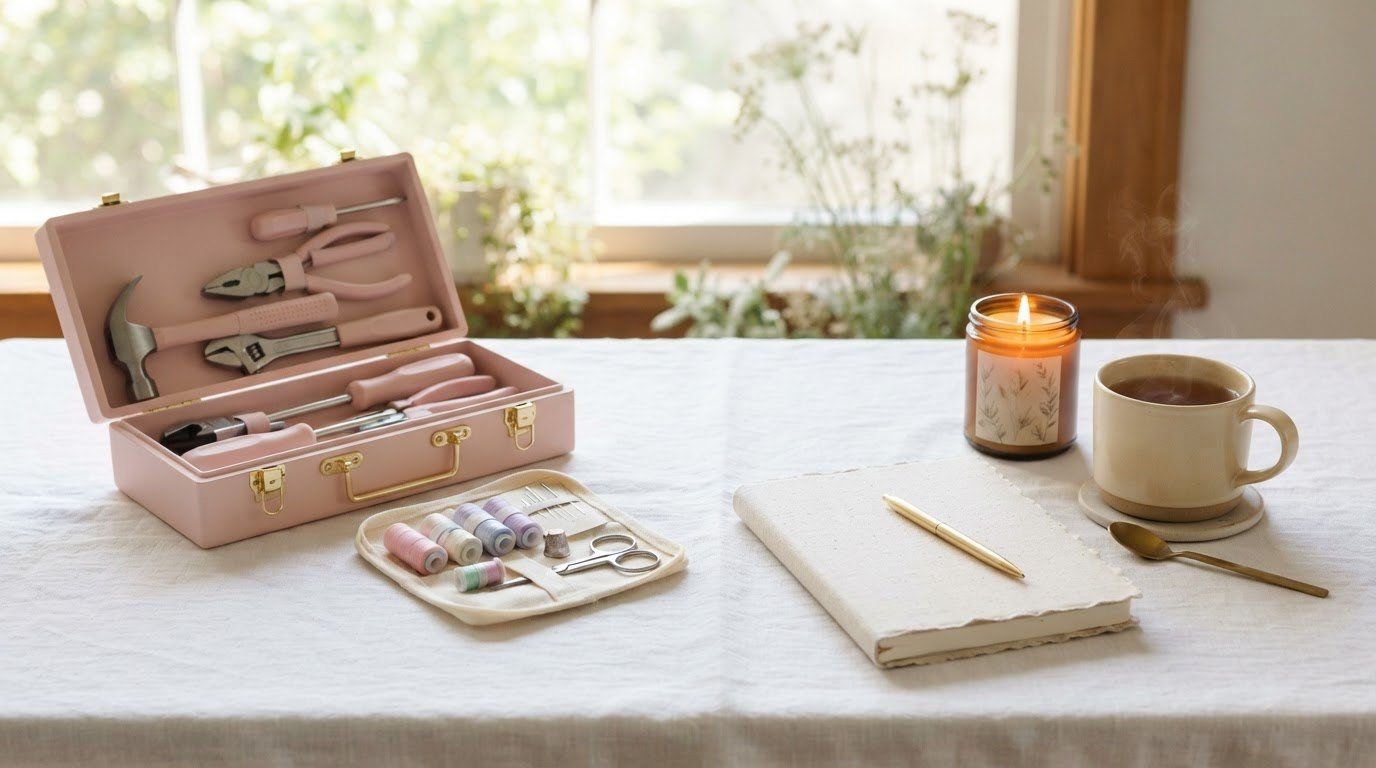
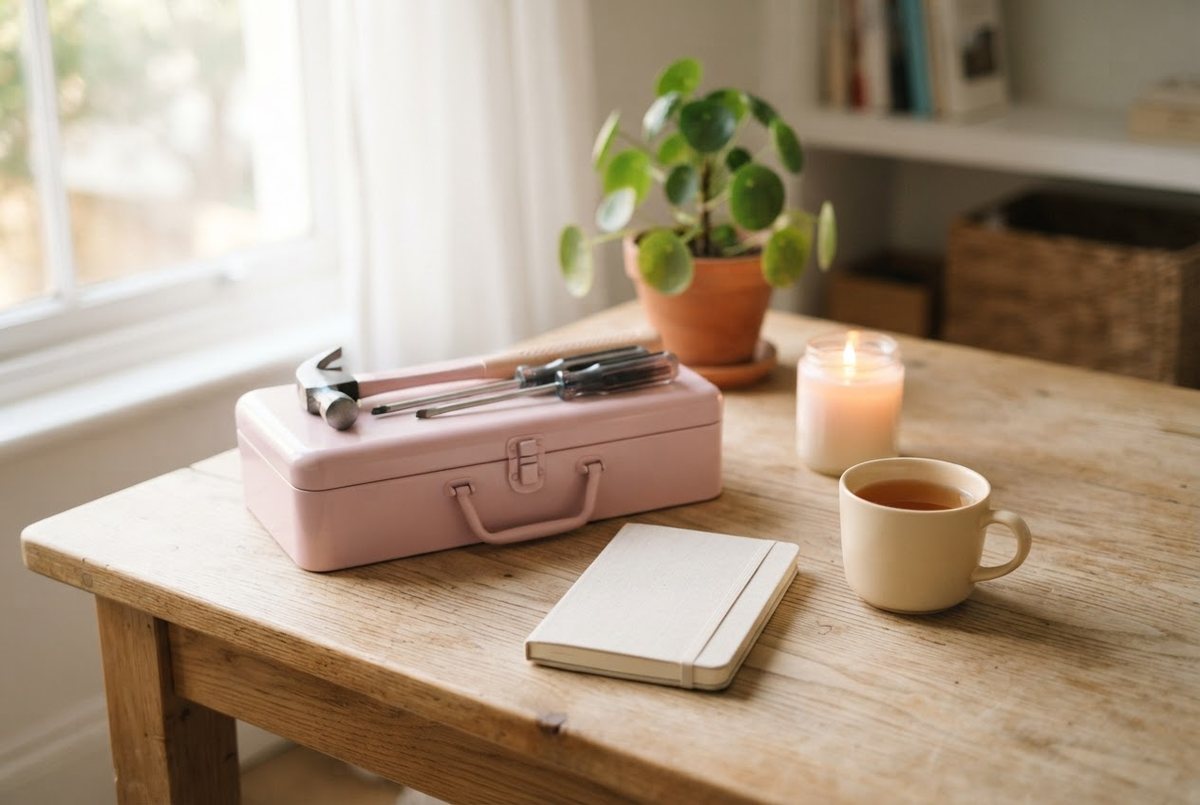
How to start: Learn the difference between a Phillips and a flathead screwdriver, then tighten every loose cabinet handle in your kitchen. A pink household tool kit with a hammer, screwdrivers, pliers, a tape measure and a level covers almost everything.
2. Hang Things Straight and Secure
Pictures, shelves and curtain rods are where most of us first feel stuck. The secret is matching the anchor to the wall: drywall needs wall anchors for anything heavier than a small frame.
How to start: Hang one frame using a pencil mark, a level and the right anchor. Read the weight rating on the anchor packet before you start.
3. Unclog a Drain Without Calling Anyone
A slow sink or shower is usually hair and soap build-up sitting just below the drain cover. A cheap plastic drain snake removes most of it in under five minutes.
How to start: Pull the stopper out of your bathroom sink and see how it comes apart. Clean it once a month and you'll rarely deal with a full clog.
4. Find Your Main Water Shut-Off Valve
If a pipe bursts or a toilet won't stop running, knowing where to turn off the water saves you a flooded floor and a lot of panic. Many renters never look for it until the moment they need it.
How to start: Walk around your home today and find the main valve (often near the water heater, under the kitchen sink or where the water line enters). Also find the small valve behind each toilet.
5. Do Laundry So Clothes Last
Washing in cold water, turning clothes inside out and skipping the dryer for delicates keeps your favorite pieces looking new for years. It's one of those quiet skills that saves real money.
How to start: Read the care labels on your five most-worn items. My laundry tips guide walks through sorting, stains and the settings that matter.
Money Skills
Money skills are where the most stress hides for many of us, mostly because nobody explained them clearly. Each of these takes far less time than worrying about it does.
6. Make a Simple Monthly Budget
A budget isn't a punishment. It's a plan that tells your money where to go before it disappears on its own. Even a rough one gives you a calm sense of control.
How to start: Write down your income and your fixed bills for one month. If you want a step-by-step version, the budgeting for beginners guide makes it painless.
7. Build an Emergency Fund
A small cushion turns a flat tire or a surprise vet bill from a crisis into an inconvenience. Many experts suggest three to six months of expenses, but your first goal can be much smaller.
How to start: Open a separate savings account and set up an automatic transfer of any amount on payday. Starting matters more than the number.
8. Read Your Credit Report
Your credit history affects renting an apartment, getting a loan and sometimes even insurance prices. In the US you can check your reports from the three bureaus for free through the official annual credit report site.
How to start: Pull one report, look for accounts you don't recognize and note the date so you remember to check again in a few months.
9. Negotiate a Bill or a Salary
Phone, internet and insurance companies often have better rates for people who ask. The same quiet confidence helps when you talk about pay. Negotiating is mostly preparation and a calm tone.
How to start: Call one provider and say: "I've been a customer for a while and I'm reviewing my bills. Is there a better rate or promotion you can offer me?" Then stay quiet and listen.
10. Understand Your Paycheck and Taxes
Knowing what comes out of your paycheck and why helps you spot mistakes and plan ahead. It also makes tax season far less mysterious.
How to start: Take one pay stub and look up each line you don't understand. Make a folder (digital or paper) for this year's tax documents today.
Health Skills
Taking care of your body is easier when the basics are already in place. A short safety note: nothing here replaces advice from your own doctor, so please treat these as practical starting points.
11. Basic First Aid
Cleaning a cut, treating a minor burn and knowing when something needs a doctor are skills you'll use for life. A well-stocked kit means you're not running to the store with a bleeding finger.
How to start: Keep a compact first aid kit at home and check what's inside. Many local Red Cross chapters and community centers offer short first aid and CPR classes – one afternoon is worth it.
12. Know Your Own Health Numbers
Your usual blood pressure, any allergies, your medications and your family history are things doctors will ask about, often when you're stressed. Having them written down makes appointments faster and calmer.
How to start: Create a note on your phone with allergies, medications and doses, your doctor's number and your insurance details.
13. Cook a Few Simple Meals
You don't need to love cooking. You only need three or four meals you can make without a recipe on a tired weeknight. That one skill saves money and keeps takeout as a treat instead of a default.
How to start: Pick one dish you already like and make it twice this month until it feels automatic. A tidy kitchen with the basics within reach makes it far easier to start.
14. Stock a Simple Medicine Cabinet
When you wake up with a fever at 2 a.m., you don't want to discover you have nothing but one expired pain reliever. A basic supply means less stress when you're already feeling awful.
How to start: Check expiration dates on everything you have and write a short list of what's missing. Ask a pharmacist what basics make sense for you.
15. Calm Yourself Down
Life will always bring stressful moments. Being able to slow your breathing and bring your body back to neutral is a real skill, and it gets easier with practice. (As someone prone to anxiety, I think of this one as non-negotiable.)
How to start: Try breathing in for four counts and out for six, five times. My guide on how to calm anxiety fast has more quick tools.
Social Skills
People skills are life skills. These are the ones that make friendships, work and family gatherings feel a little lighter.
16. Say No Kindly
A warm, clear no protects your time and energy without damaging relationships. It doesn't need a long explanation or an apology.
How to start: Practice this line: "Thank you for thinking of me, but I can't this time." Use it once this week for something small.
17. Set and Hold Boundaries
Boundaries tell people how to treat you well. They're less about walls and more about clear, kind information about what you need.
How to start: Name one situation that regularly drains you and decide what you'd like to happen instead. The guide to setting boundaries has scripts for family, friends and work.
18. Make Small Talk Without Panic
Small talk is the doorway to real conversation. A few go-to questions make networking events, weddings and new jobs much less nerve-racking.
How to start: Keep three open questions ready: "How do you know the host?", "What's been keeping you busy lately?" and "Anything fun planned for the weekend?"
19. Handle Conflict Calmly
Disagreements are normal. The skill is staying on the issue instead of attacking the person, and knowing when to pause before you say something you'll regret.
How to start: Learn this structure: "When ___ happened, I felt ___. What I need is ___." Use it in writing first if speaking feels hard.
20. Write a Thoughtful Message
Thank-you notes, condolence messages and polite emails to a landlord all follow the same idea: be specific, be brief and be kind. People remember them.
How to start: Write one thank-you note this week to someone who helped you recently. Three sentences is plenty.
Digital Skills
Most of our lives now live on our phones, which means a few digital habits protect your money, your memories and your peace of mind.
21. Use a Password Manager
Reusing the same password everywhere is one of the easiest ways to get hacked. A password manager creates and remembers strong passwords so you don't have to.
How to start: Choose a reputable password manager and move your five most important accounts (email, bank, phone, main shopping site, social media) into it.
22. Turn On Two-Factor Authentication
Two-factor authentication adds a second step to logging in, usually a code from an app. It stops most account takeovers even if someone steals your password.
How to start: Turn it on for your email first, since your email is the key to resetting everything else.
23. Spot a Scam Message
Scam texts and emails often create urgency: a package problem, a locked account, a prize. Real companies rarely ask you to click a link and confirm your details right now.
How to start: Make a rule: never click links in unexpected messages. Open the app or type the website yourself instead.
24. Back Up Your Photos and Documents
Phones get lost, laptops break and cloud accounts get locked. One backup routine protects years of photos and important files.
How to start: Turn on automatic cloud backup for your phone and set a monthly reminder to copy important documents to a second place.
25. Organize Your Important Documents
Passport, lease, insurance policies, car title, birth certificate – when you need one, you usually need it fast. A simple system ends the frantic search.
How to start: Gather your key papers into one accordion document organizer with labeled sections, and scan each one into a secure folder.
Emergency Skills
You hope you'll never need these, and you probably won't need them often. But knowing them changes how you feel in a hard moment: steadier, calmer and more capable.
26. Use a Fire Extinguisher
Most small kitchen fires can be stopped in seconds with an extinguisher, but only if you know how to use it before the moment comes. Remember PASS: pull the pin, aim at the base, squeeze the handle, sweep side to side.
How to start: Keep a home fire extinguisher near (not right next to) the stove and read its label today. If a fire is bigger than a wastebasket or spreading, leave and call 911.
27. Change a Flat Tire or Call for Help
Even if you'd rather call roadside assistance, knowing where your spare tire, jack and warning triangle live gives you options when you're stuck.
How to start: Open your trunk and find the spare and jack. Save your roadside assistance number in your phone right now.
28. Jump-Start a Car
A dead battery is common, especially in cold weather. Knowing the order of the cables (red to dead, red to good, black to good, black to bare metal on the dead car) keeps you moving and safe.
How to start: Read the jump-start section in your car manual and keep jumper cables or a portable jump starter in the trunk.
29. Make a Home Emergency Plan
Power outages, storms and evacuations are easier when you've already decided where to go, who to call and what to grab. It takes one evening to plan.
How to start: Write down two emergency contacts, a meeting place and a list of what you'd take in five minutes. Keep a flashlight and a phone power bank charged.
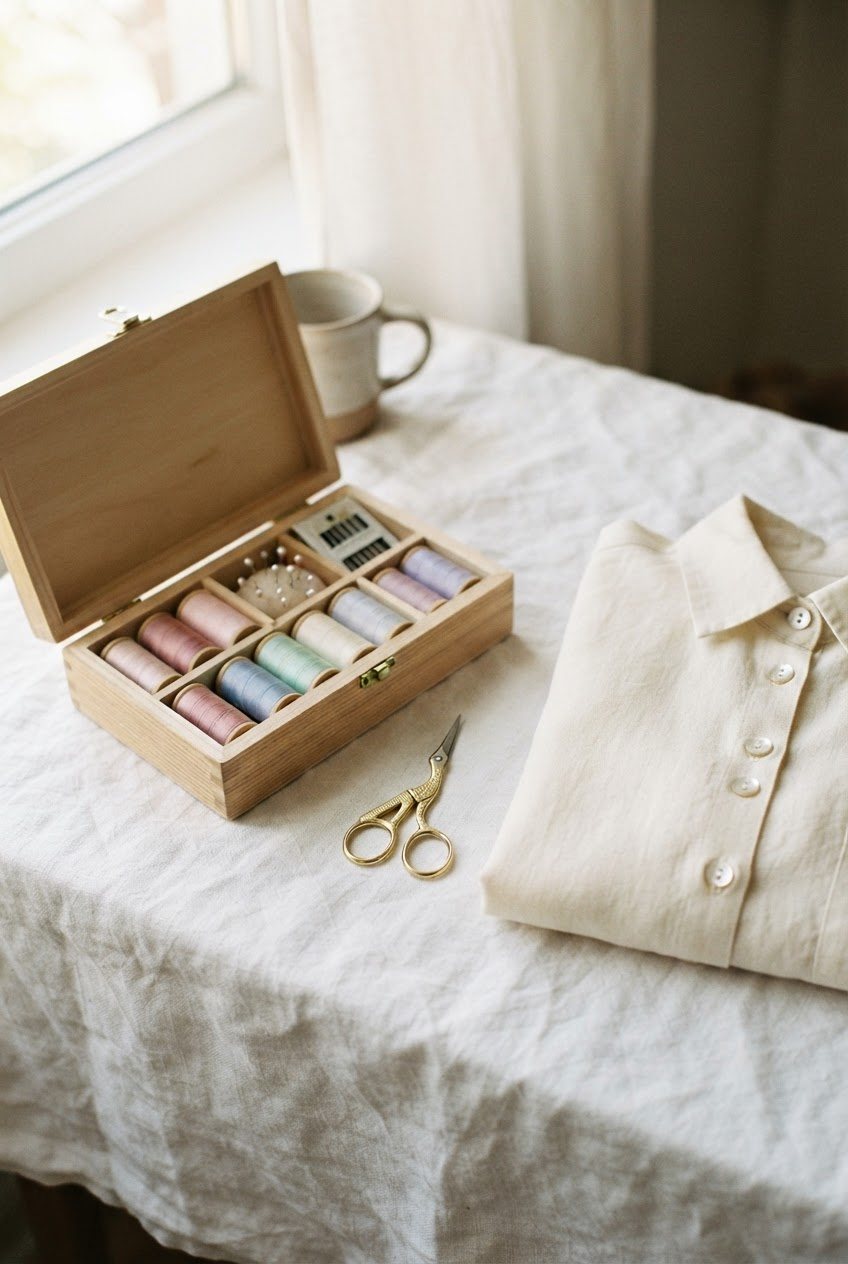
30. Sew a Button and Fix a Hem
A missing button or falling hem shouldn't mean a ruined outfit or a trip to the tailor. Both take about ten minutes once you've done them once.
How to start: Keep a small sewing kit in a drawer and practice sewing a button onto an old shirt. Use a double thread and go through the holes four or five times.
The Learn-One-a-Week Plan: 30 Skills in 30 Weeks
Here's the part I'd screenshot. Instead of trying to become a whole new person in a weekend, learn one skill a week with a single 15-minute first step. The order mixes easy wins with bigger skills so you build confidence early. After 30 weeks (about seven months), you'll have covered everything on this list.
| Week | Skill | 15-minute first step |
|---|---|---|
| 1 | Find your water shut-off valve | Locate the main valve and toilet valves, label them with tape |
| 2 | Use a basic tool kit | Tighten every loose handle and hinge in one room |
| 3 | Basic first aid | Check your kit, toss expired items, list what's missing |
| 4 | Make a simple monthly budget | Write income and fixed bills on one page |
| 5 | Use a password manager | Install one and add your email account |
| 6 | Turn on two-factor authentication | Turn it on for email and your bank |
| 7 | Use a fire extinguisher | Read the label and practice the PASS steps out loud |
| 8 | Say no kindly | Write three no-scripts in your phone notes |
| 9 | Do laundry so clothes last | Read the care labels on your five most-worn pieces |
| 10 | Build an emergency fund | Open a savings account and set an automatic transfer |
| 11 | Know your own health numbers | Create a health info note on your phone |
| 12 | Spot a scam message | Review your last ten texts and emails for warning signs |
| 13 | Sew a button and fix a hem | Sew one button onto an old shirt |
| 14 | Read your credit report | Request one free report and skim it |
| 15 | Hang things straight and secure | Hang one frame with a level and the right anchor |
| 16 | Make small talk without panic | Choose three go-to questions and memorize them |
| 17 | Back up your photos and documents | Turn on automatic phone backup |
| 18 | Change a flat tire or call for help | Find your spare and save the roadside number |
| 19 | Cook a few simple meals | Pick one dish and make it once |
| 20 | Understand your paycheck and taxes | Look up every unclear line on one pay stub |
| 21 | Write a thoughtful message | Write one thank-you note |
| 22 | Unclog a drain | Remove and clean your bathroom sink stopper |
| 23 | Stock a simple medicine cabinet | Check expiry dates and make a short list |
| 24 | Organize your important documents | Gather key papers into one folder |
| 25 | Set and hold boundaries | Name one draining situation and your ideal outcome |
| 26 | Jump-start a car | Read the jump-start page in your car manual |
| 27 | Negotiate a bill or a salary | Call one provider and ask for a better rate |
| 28 | Handle conflict calmly | Write a "When ___, I felt ___, I need ___" sentence |
| 29 | Make a home emergency plan | Write contacts, a meeting place and a grab list |
| 30 | Calm yourself down | Practice 4-in, 6-out breathing for five rounds |
A few tips to make the plan stick:
- Pick a set time. Sunday afternoon works well for many people. Pair it with something pleasant, like a favorite playlist or a candle.
- Write it down. Keep a simple linen notebook just for your life skills. Tick off each week and add one line about what you learned.
- Skip without guilt. If a week gets busy, move the skill to the next week. The plan works because it's flexible.
- Repeat the hard ones. If something still feels shaky, give it a second week. Confidence comes from repetition, not from reading about it once.
If you like planning your weeks in more detail, my guide on how to plan your week shows how to fit small goals like these around everything else.
How To Make New Skills Stick
Learning a skill once is different from knowing it when you're stressed. These small habits help the knowledge stay with you:
- Do it with your hands. Watching a video on sewing a button is useful, but sewing one is what makes it stick. Always pair reading with doing.
- Teach it to a friend. Explaining how two-factor authentication works to someone else shows you what you truly understand.
- Make a one-page cheat sheet. Write the steps for emergency skills (fire extinguisher, jump-start, water valve) on one page and tape it inside a kitchen cabinet.
- Revisit every few months. Check your first aid kit, review your budget and update your passwords on a calendar reminder.
- Celebrate small wins. You found the water valve? That counts. Little bits of pride build the confidence to try the next thing.
When To Ask for Help
Being capable doesn't mean doing everything yourself. Some things are better left to professionals: anything involving gas lines, electrical wiring, structural repairs, serious medical symptoms or complex legal and tax questions. Knowing when to call an expert is a life skill too, and a pretty important one.
Asking friends for help is also part of the picture. Maybe one friend is great with cars and another is a spreadsheet queen. Swap skills, learn together and turn it into an evening plan. Building that kind of support network is something I write about in my guide to making friends as an adult.
Final Thoughts
Life skills aren't about proving you can do everything alone. They're about feeling steady in your own life: knowing where things are, what to do first and who to call when you need more help.
Start with one skill this week, give it 15 minutes and let that be enough. A few months from now, you'll notice that small problems feel smaller and you trust yourself a little more. That quiet confidence is worth every minute.