The best conversations with friends rarely happen by accident. They happen when someone asks a question that's a little more interesting than "how's work?" and everyone suddenly leans in. A good deep question doesn't put anyone on the spot. It opens a door, and each person decides how far she wants to walk through it.
This guide has 80 deep questions to ask friends, split into four rounds that warm up gently: light and funny, memories, dreams, and deep but kind. You'll also find a simple "how to play" card so the night feels like a game rather than an interview, plus five follow-up phrases that keep things safe when someone shares something tender.
I'm prone to a little anxiety in groups, and what helps me most is structure. When everyone knows the rules, nobody has to wonder whether she's oversharing – and that's exactly when the good stuff comes out.

Why Deep Questions Bring Friends Closer
Most friendships run on updates. Who got a new job, whose landlord is being difficult, what happened at the weekend. Updates are lovely, but they keep you on the surface. You can know someone for years and never hear what she was like at twelve, what she's quietly hoping for or what makes her feel cared for.
Deep questions skip the small talk without skipping the fun. They give everyone a reason to share stories they'd never bring up on their own, because nobody casually says "by the way, here's the moment I felt most proud of myself." When you ask, you're telling your friend that you're curious about who she is, not only about what she's doing.
There's another quiet benefit: you learn how your friends like to be supported. Questions like "what does a friend do that makes you feel truly cared for?" are basically a user manual for the friendship. If you've been thinking about what makes someone a keeper, my list of the signs of a good friend pairs well with this one. And if your circle is still small or new, these questions are a gentle shortcut – they work just as well with newer friends as with old ones, which is something I also talk about in how to make friends as an adult.
One honest admission: the first time you try this, it might feel a bit staged. That feeling lasts about three questions. After that, people forget it's a "game" and simply talk.
The "How To Play" Card
This is the part that turns a list of questions into an actual evening. Read these rules out loud at the start (or screenshot them and pass the phone around once, then put it away). They take about a minute and make everyone feel safer straight away.
| Rule | How it works |
|---|---|
| Four rounds, in order | Light and funny → memories → dreams → deep but kind. Spend about 20–30 minutes per round. Never jump straight to round four. |
| Draw, don't choose | Write each question on a card or slip of paper and draw at random. Nobody can be accused of "picking that one on purpose." |
| Everyone answers | The person who draws reads the question, then everyone answers in turn, going clockwise. The reader answers last. |
| The pass rule | Each person gets two passes per night. Say "pass" – no explanation, no teasing, no "oh come on." A pass is always respected. |
| Swap rule | If a question doesn't fit the group, the reader can swap it for a new card once per round. |
| No phones | Phones go in a basket for the whole game. Photos can happen afterward. |
| Two-minute answers | Aim for about two minutes each so quieter friends get the same space as the storytellers. Longer is fine when it's clearly important. |
| Kind listening | No interrupting, no fixing, no jokes at someone's expense after a serious answer. |
| What's shared stays here | Nothing said in rounds three and four gets repeated outside the group. |
| End light | Finish the night with one question from round one so everyone leaves smiling. |
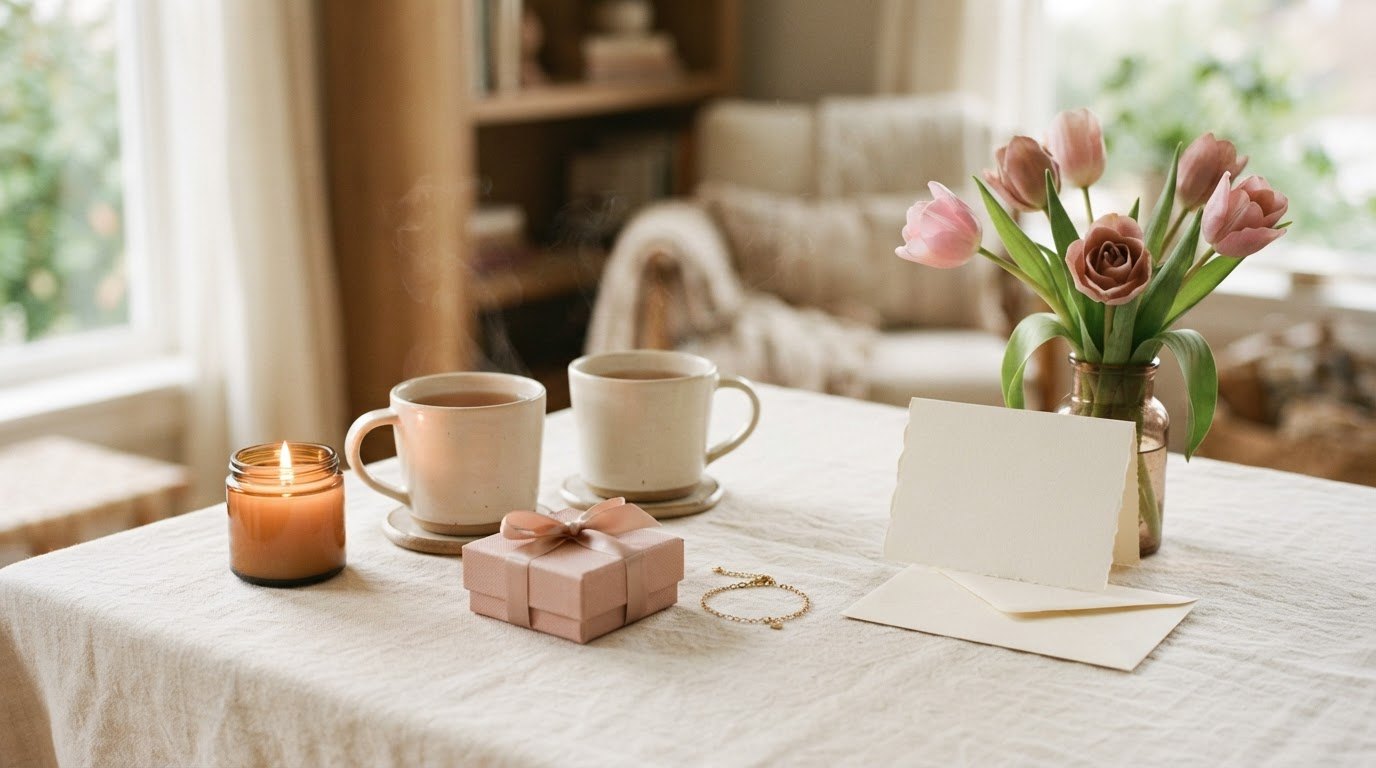
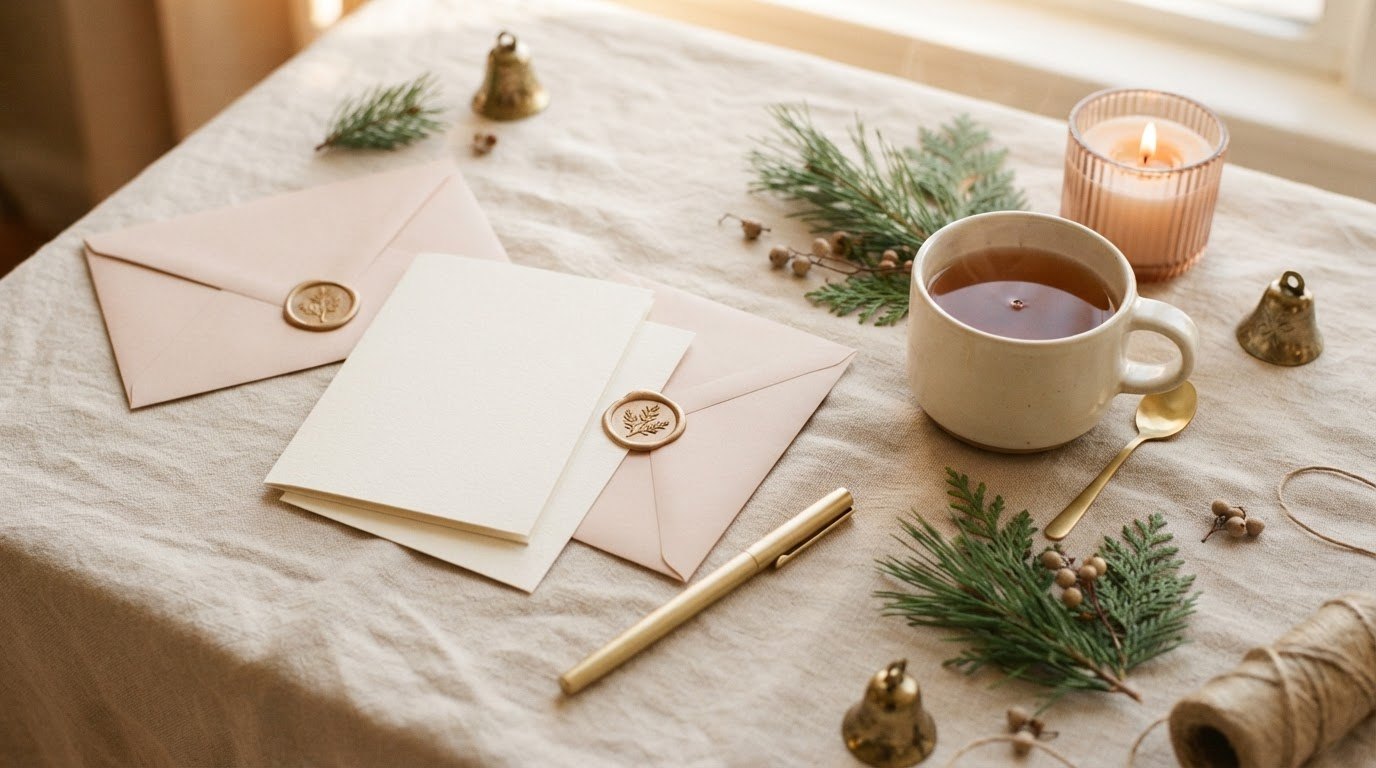
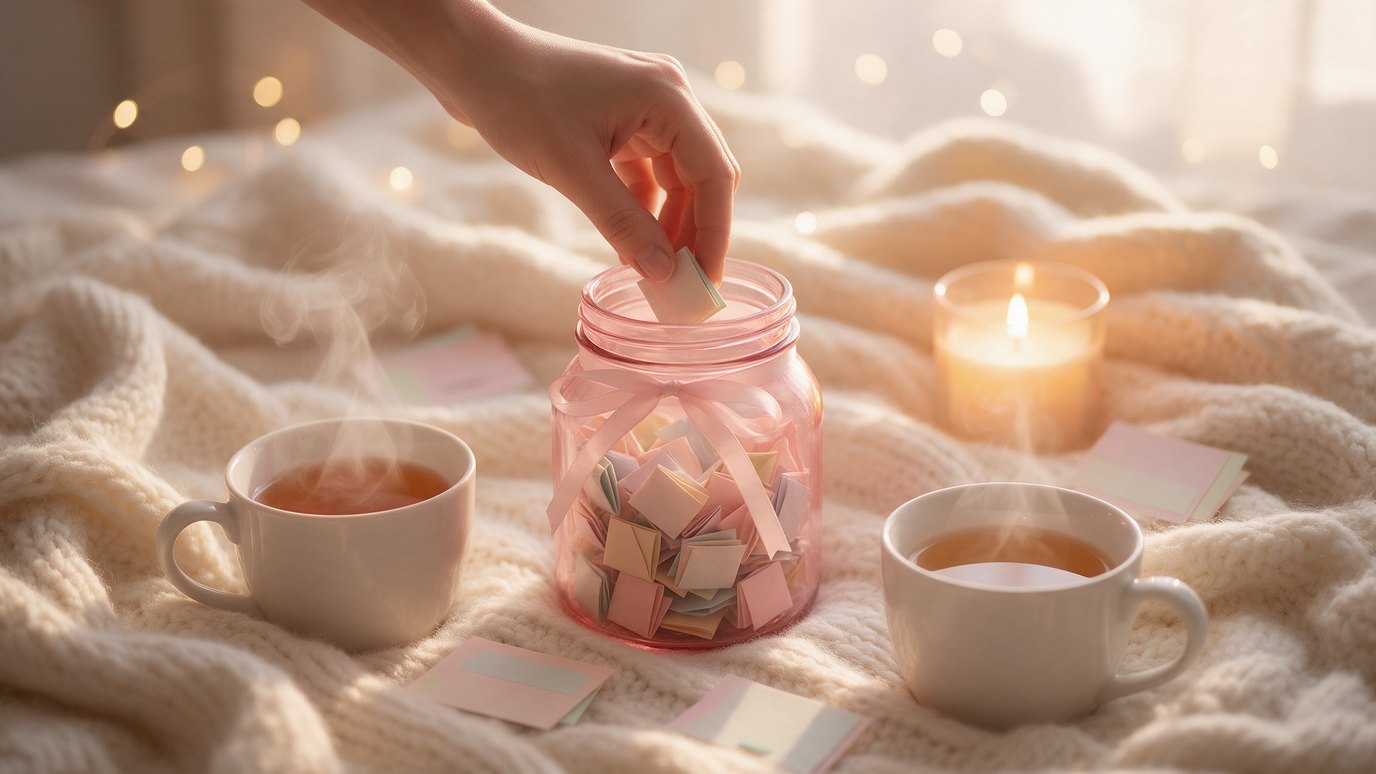
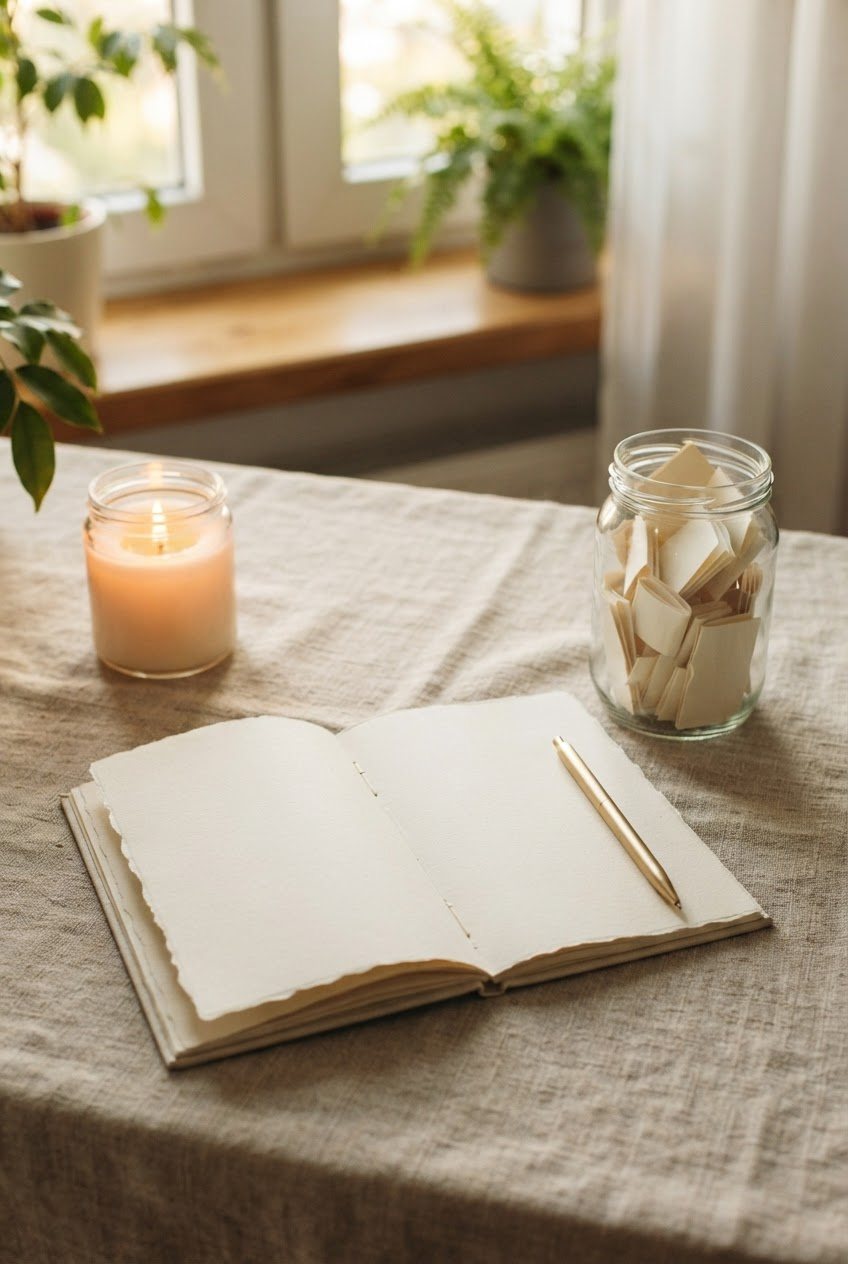
For the cards themselves, you can write questions on index cards, fold slips into a jar or use a set of blank cream cards and a gold pen if you like things pretty. I'd color-code the rounds with a small dot in the corner so you can sort them into four piles in seconds.
For the no-phones rule, place a small woven basket by the door and make it the first thing people see when they arrive. It feels much less awkward when it's a ritual rather than a request.
How To Set the Mood (Without Overthinking It)
Deep conversations happen more easily in a room that feels soft. You don't need to redecorate – three small things do most of the work.
Lower the lights. Turn off the big overhead light and use lamps and candles instead. A candle in a clear glass jar on the coffee table gives everyone something to look at during pauses, which takes the pressure off eye contact. (Keep candles away from blankets and never leave them burning in an empty room.)
Get everyone at the same level. Sitting in a circle on the sofa and floor cushions feels more equal than one person perched on a dining chair. Throw a soft blush knit throw over the sofa so people can tuck in.
Have something warm to hold. Tea, hot chocolate or decaf coffee in matching cream mugs keeps hands busy and makes the whole thing feel like a cozy ritual. I'm an evening tea person, and I've noticed people talk more freely when they're holding something warm.
If you want a full evening built around this, my girls' night ideas have plenty of ways to start the night before the cards come out.
Round 1: 20 Light and Funny Questions
Round one is the warm-up. The goal is laughter and easy answers, so nobody feels exposed. Keep the pace quick – these answers can be a single sentence.
- What's a small, silly thing that made you laugh this week?
- If your life had a theme song right now, what would it be?
- What's the most useless talent you have, and can you show us?
- Which fictional character would you want as a roommate?
- What's a harmless opinion you'll defend forever?
- If you could only wear one outfit for a whole year, what would it be?
- What's the strangest thing you've ever searched online late at night?
- Which of us would survive longest in a horror movie, and why?
- What's a trend you secretly loved that everyone else seemed to hate?
- If you opened a tiny shop, what would it sell?
- What's the most "you" purchase you've ever made?
- What would your perfect lazy Sunday look like, hour by hour?
- Which era would you time-travel to just for the fashion?
- What's a word or phrase you say way too often?
- If you were a candle scent, what would you be called?
- What's the best compliment a stranger has ever given you?
- What's a movie you can quote almost entirely?
- If you could instantly master one hobby, which would you pick?
- What's your most irrational small fear?
- What's something you're weirdly competitive about?
Tip: if someone gives a one-word answer, that's completely fine in this round. Momentum matters more than depth right now. You'll be surprised how often a silly question like the candle-scent one turns into a ten-minute riff that sets the tone for the rest of the night.
Round 2: 20 Memory Questions
Memories are the bridge between fun and deep. People love telling stories about their past, and stories are naturally easier than opinions. This is usually the round where you learn the most surprising things about friends you've known for years.
- What's your earliest happy memory?
- What did you want to be when you grew up, and how close did you get?
- Who was your first best friend, and what did the two of you do together?
- What's a smell that instantly takes you back somewhere?
- What's a song that reminds you of one specific summer?
- What was your bedroom like as a teenager?
- What's a family tradition you still love?
- What's the best trip you've ever taken, even a tiny one?
- Which teacher or adult believed in you when you were younger?
- When was the last time you laughed so hard you couldn't breathe?
- What's a moment you felt really proud of yourself?
- What's the kindest thing a friend has ever done for you?
- What's a decision that changed the direction of your life?
- What's your favorite memory with the people in this room?
- What's something from your childhood you wish kids still had?
- What's a hard season you're grateful you made it through?
- What's the best advice someone gave you when you were younger?
- What's a place you used to love that doesn't exist anymore?
- When did you first feel like a real grown-up?
- What's a memory you return to when you need comfort?
Tip: some memory questions can unexpectedly touch something sad – a grandparent who passed, a hard childhood, a lost friendship. If someone's voice changes, slow down, use one of the follow-up phrases below and let her decide whether to keep going. Never push for details.
Round 3: 20 Dream Questions
Dream questions are hopeful, which makes them feel safe even though they're quite personal. Saying a dream out loud in front of friends is a small brave act, so this is the round where cheering each other on really matters.
- What does a really good ordinary day look like for you?
- If money and time weren't an issue, how would you spend the next year?
- What's a skill you'd love to learn in the next few years?
- Where would you live if you could pick anywhere in the world?
- What's a dream you quietly set aside, and would you pick it back up?
- What kind of woman do you want to be in ten years?
- What would your dream home have that your current one doesn't?
- What's one adventure you want to have at least once?
- What would you try if you knew nobody would judge you?
- What's a goal you haven't said out loud yet?
- If you could have any job for one week, what would it be?
- What does "success" mean to you right now, and has that changed?
- What's a small luxury you'd love to turn into a habit?
- Who do you admire, and what would you borrow from her life?
- What's something you want more of this year?
- What's something you want less of?
- What would you like to be known for among your friends?
- If you wrote a book, what would it be about?
- What's a dream one of us could help you with?
- What would make the new year feel like a really good year?
Tip: when someone shares a dream, resist the urge to immediately give practical advice ("you should just apply!"). Respond with warmth first – "I can totally see you doing that" – and save the brainstorming for later, if she wants it.
Round 4: 20 Deep but Kind Questions
This is the heart of the night. These questions are deeper, but they're written to be kind – none of them ask anyone to relive trauma or confess something painful. By now the group is warm, everyone's laughed together and shared stories, so this round tends to feel natural rather than heavy.
- What's something you've changed your mind about in the last few years?
- When do you feel most like yourself?
- What's a compliment you secretly struggle to believe?
- What's something you're still learning to be gentle with yourself about?
- What does a friend do that makes you feel truly cared for?
- What's a fear that's gotten smaller over time?
- What's something you wish people asked you about more often?
- What are you most grateful for right now?
- What's a lesson you learned the hard way?
- How do you know when you need a break?
- What's a boundary you're proud of setting?
- What do you love about yourself that has nothing to do with looks?
- What does "home" feel like to you?
- When was the last time you felt really at peace?
- What's something you want your friends to understand about you?
- What's a small way we could support you this month?
- What's a version of yourself you've outgrown, and what did she teach you?
- What's something about this friendship you're thankful for?
- What would you tell your younger self if she were sitting here with us?
- What's one thing you hope never changes about us?
Tip: keep the two-pass rule especially visible here. Someone passing in round four isn't a sign the night has failed; it's a sign she trusts the rules. Often she'll come back to that question later on her own.
5 Safe Follow-Up Phrases
The question is only half the magic. What happens right after someone answers decides whether people keep opening up. These five phrases are simple, warm and almost impossible to get wrong. Screenshot them or write them on a card next to the question pile.
- "Thank you for telling us that." The simplest and most powerful one. It acknowledges that sharing took something, without making a big deal of it.
- "Do you want to say more, or should we keep going?" This hands control back to the person who shared. She decides whether the moment continues, and nobody has to guess.
- "That makes so much sense." Use it when someone shares a feeling or a fear. It tells her she's not strange or dramatic for feeling that way.
- "I didn't know that about you – I love learning it." Perfect for surprising stories and old memories. It turns a vulnerable answer into a moment of connection.
- "Take your time, there's no rush." For when someone pauses, gets emotional or searches for words. Silence is allowed. Filling it too quickly can cut off the most honest part of an answer.
What to avoid: jumping in with your own similar story straight away ("oh, that happened to me too, and…"), giving advice nobody asked for, or joking to break the tension. All three come from a kind place, but they move the spotlight away before the person is finished.
What To Do If Someone Gets Emotional
Even with gentle questions, tears can happen. That's not a disaster – it usually means the evening is doing exactly what it should. Here's how to handle it with care:
- Pause the game. Nobody should feel like the night is waiting for her to pull herself together.
- Offer tissues and a glass of water quietly, without a fuss.
- Use phrase two from above and let her choose what happens next.
- If she wants a break, suggest a ten-minute pause for more tea, then come back with a round-one question.
- Check in privately the next day with a short message: "Thank you for last night. I'm really glad you shared what you did."
A gentle note: a game night is a lovely place to feel heard, but friends aren't a replacement for professional support. If someone shares that she's been struggling for a long time, the kindest follow-up is often a private conversation later and, if it feels right, encouraging her to talk to a doctor or counselor.
Topics To Keep Off the Table at Group Nights
Deep doesn't mean anything goes. These topics tend to make group nights tense or leave someone feeling exposed, so I'd leave them out of the card pile:
- Bodies, weight and appearance comparisons.
- Salaries, debts and who earns what.
- Questions about exes when not everyone knows each other well.
- Ranking friends ("who's your closest friend here?").
- Gossip or secrets about people who aren't in the room.
- Big hot-button debates that turn conversation into an argument.
Any of these can come up naturally between two close friends on a long walk. They just don't belong in a game where everyone is expected to answer.
How To Make It a Tradition
Once your friends have played this once, they'll probably ask to do it again. A few ways to keep it going:
- Make it seasonal. Play once per season, or around the end of the year as a gentle reflection night. My end-of-year reflection questions make a perfect bonus round in December.
- Let everyone add a card. Each friend writes one new question before the next game. Your deck slowly becomes something only your group has.
- Keep a friendship journal. Write down one favorite answer from each person in a cream linen journal that lives with the cards. Reading old answers a year later is unexpectedly moving.
- Rotate the host. Whoever hosts picks which round gets extra time, so the game shifts with the group's mood.
- Try a two-person version. The same rules work on a walk or over coffee with one friend. Use rounds two and three, skip the passes and simply take turns.
Final Thoughts
The point of these deep questions to ask friends isn't to have a perfect, profound evening. It's to give the people you love a little more room to be fully themselves, and to give yourself the same. Some answers will be silly, some will be surprising and one or two will stay with you for a long time.
Start with round one, keep the rules kind and let the conversation go wherever it wants. The friendships worth keeping only get warmer when someone takes the time to ask.