Trimming your hair on a schedule isn't about losing length. It's about keeping the length you already have. A small, regular trim removes split ends before they travel up the strand, so the hair you grow actually stays on your head instead of snapping off halfway down.
The tricky part is that there's no single right number. A sleek short cut loses its shape in a month, while healthy curls can happily go three months or more. Your hair type, your goal and how much heat and color you use all change the answer.
This guide answers how often to trim hair by hair type and goal. You'll find why trims matter, a trim frequency table to save, timing for short, medium, long, curly, damaged and color-treated hair, the signs you're overdue, dusting vs. a trim, what to say to your stylist, a careful note on trimming at home and the habits that make every trim last longer.
Think of it as a calendar for your ends, not a rule you have to follow perfectly.
Why Trims Matter (Even When You're Growing Your Hair)

Hair grows from the root, but the ends are the oldest part of every strand. They've been through months (sometimes years) of brushing, washing, sun, heat and friction. Regular trims are simply maintenance for that oldest, most fragile section.
Split Ends Travel Upward
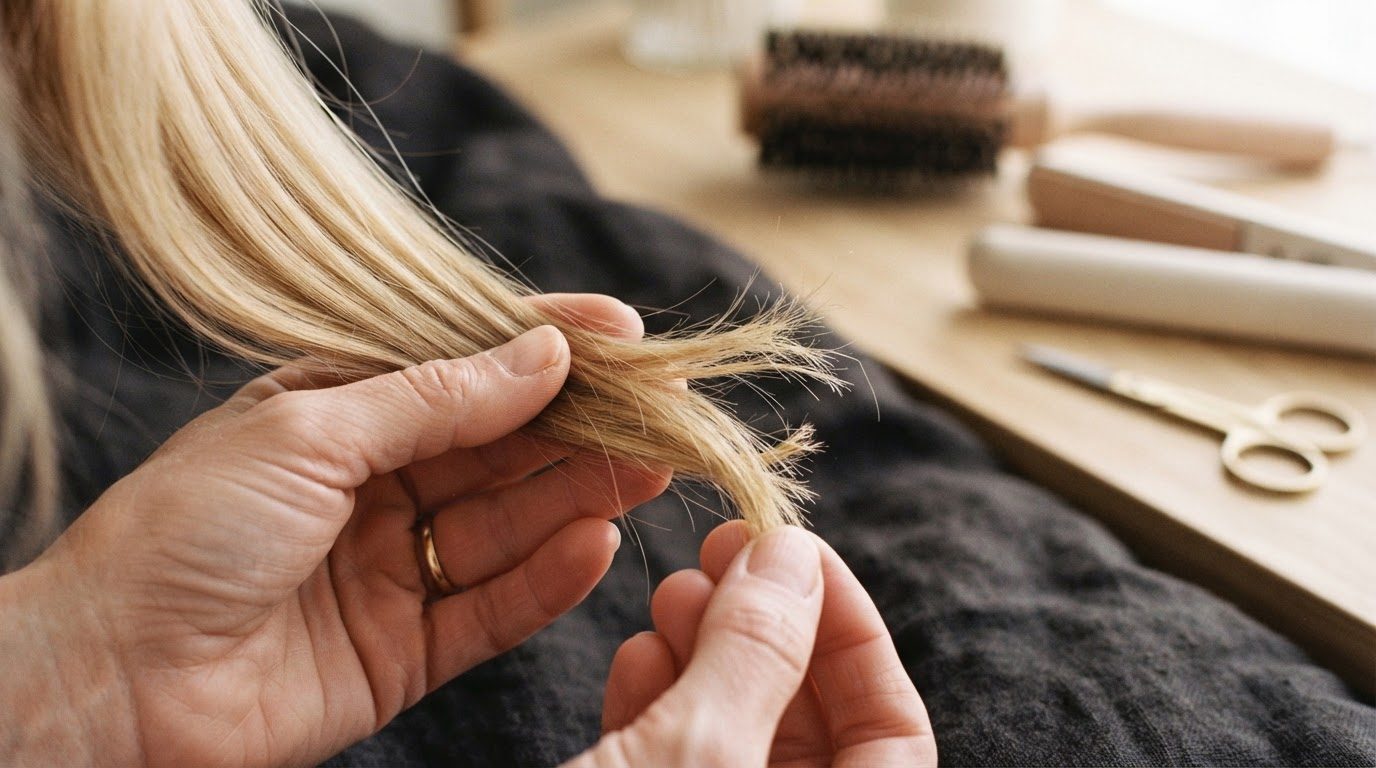
A split end doesn't stay put. Once the protective outer layer of the hair (the cuticle) wears away at the tip, the strand can keep splitting further up, a bit like a frayed thread. No product can permanently glue it back together. Serums and oils can smooth splits for a while, but cutting is the only real fix. If you're dealing with a lot of splits right now, my guide on how to fix split ends goes deeper into the repair side.
The practical takeaway: a quarter inch trimmed early saves you from cutting two inches later.
Shape and Weight
Trims also keep your cut looking intentional. Layers grow out and lose their shape, blunt ends become uneven, and long hair can get heavy at the bottom and flat at the top. Even if you love your length, a small tidy-up keeps it looking healthy instead of tired.
How Often To Trim Your Hair: The Quick Answer
For most people, every 6 to 12 weeks is the sweet spot. Shorter cuts sit at the lower end of that range, longer and curly hair at the upper end. Damaged hair benefits from more frequent small trims until the damage is cut out.
A good rule of thumb: the more structured the cut, the more often it needs attention. The healthier and longer the hair, the longer you can stretch it.
If you've never tracked it, start simple: note the date of your last trim in your phone and check your ends every four weeks after that. Look at them in daylight, run a few strands between your fingers and notice how easily your brush moves through the bottom inch. After two or three cycles, you'll know your own natural rhythm far better than any general rule could tell you, and booking ahead becomes easy.
What Changes How Often You Need a Trim
Two people with the same length can need very different schedules. These everyday factors wear ends down faster, so if several apply to you, lean toward the shorter end of your range:
- Heat styling. Daily blow-drying, curling or straightening dries out the ends quickly, especially without protection or at high temperatures.
- Bleach and lightening. Lightened hair is more porous and more fragile, so the ends split sooner than untreated hair.
- Tight hairstyles. Ponytails and buns pulled tight in the same spot every day create stress and breakage along that line.
- Friction. Cotton pillowcases, wool scarves, coat collars and bag straps all rub the ends, little by little.
- Sun, chlorine and salt water. Summers of swimming and sunshine leave hair drier and rougher, so a trim after a beach-heavy season is a good idea.
- Hard water. Mineral buildup can make hair feel stiff and dull, and stiff ends tangle and snap more easily.
- Rough detangling. Pulling a brush through wet knots is one of the fastest ways to create splits.
On the other hand, if you mostly air-dry, rarely color and treat your hair gently, you can often stretch your trims a few extra weeks without any trouble.
Common Trim Myths, Gently Cleared Up
A few ideas about trims get repeated so often that they feel like facts. Here's what's actually true:
- "Trims make your hair grow faster." Hair grows from the follicle in your scalp, so cutting the ends doesn't change the speed at the root. What trims do is prevent breakage, so more of your growth stays visible.
- "You must trim every six weeks, no matter what." That number fits some cuts and not others. Healthy long or curly hair can go much longer.
- "A good serum can repair split ends." Serums and oils can temporarily seal and smooth them, which looks lovely, but they can't permanently fuse a split strand back together.
- "If you're growing your hair, never cut it." Skipping trims usually leads to thin, broken ends that need a bigger cut later.
It took me a while to stop thinking of trims as a step backward. Once I saw them as protecting length rather than losing it, booking one felt much easier.
Trim Frequency Table by Hair Type and Goal

This is the part I'd screenshot. Use it as a starting point, then adjust based on how your ends actually look and feel.
| Hair type or goal | How often | How much to take off |
|---|---|---|
| Short hair (above the chin) | Every 4–6 weeks | Enough to restore the shape |
| Medium hair (chin to shoulders) | Every 6–8 weeks | About 1/4–1/2 inch |
| Long hair (past the shoulders) | Every 8–12 weeks | About 1/2 inch |
| Growing your hair out | Every 10–12 weeks, with dusting | 1/8–1/4 inch |
| Curly or coily hair | Every 12 weeks or more | Shaped dry, curl by curl |
| Damaged or heat-styled hair | Every 6–8 weeks | 1/4–1/2 inch until damage is gone |
| Color-treated hair | Every 6–10 weeks | About 1/4–1/2 inch |
| Fine hair | Every 6–8 weeks | A small amount to keep ends full |
| Thick hair | Every 8–10 weeks | Shape plus weight removal if needed |
Hair grows roughly half an inch a month on average, so a trim of a quarter to half an inch every couple of months still leaves you with steady growth.
Trim Timing by Hair Type
Here's a little more detail for each type, including why the timing differs.
Short Hair: Every 4–6 Weeks
With short hair, even half an inch of growth changes the shape noticeably. A cut that sat perfectly at the nape can start to look shaggy in about a month. Book your next appointment before you leave the salon, so it doesn't drift.
Medium Hair: Every 6–8 Weeks
Mid-length hair rests on the shoulders, which means extra friction from collars, scarves and bag straps. That rubbing roughs up the ends faster than you'd think. A small trim every six to eight weeks keeps the ends smooth and the length looking even.
Long Hair: Every 8–12 Weeks
Long hair has the oldest ends of all, so it needs care, but not constant cutting. Every two to three months is usually enough if you're gentle with it. If the ends start looking thinner than the rest, move closer to eight weeks.
Growing Your Hair Out: Every 10–12 Weeks

It feels backward, but skipping trims entirely usually slows down visible growth. Split ends travel, break and leave you with thin, uneven ends you eventually have to cut off anyway. When you're growing your hair, ask for a "dusting" (more on that below) every 10–12 weeks, taking off only an eighth to a quarter inch.
Tell your stylist clearly: "I'm growing it out. Please only take off what's damaged."
Curly and Coily Hair: Every 12 Weeks or More
Curly and coily hair often holds up well between cuts and can usually go 12 weeks or longer. Because curls shrink and spring up differently from strand to strand, many people prefer a dry cut, where the stylist shapes each curl in its natural pattern. That way, you see exactly how much is being removed.
Damaged or Heat-Styled Hair: Every 6–8 Weeks
If your hair has been through bleach, frequent flat ironing or a heat mishap, small frequent trims help you cut away damage gradually instead of in one big, dramatic chop. Pair the trims with a repair routine. My guide to fixing heat-damaged hair walks through it step by step.
Color-Treated Hair
Color-treated hair follows roughly the same timing as its length, but it tends to be drier at the ends. Many people find it easiest to book a small trim with every color appointment, roughly every 6–10 weeks, so the ends always look as fresh as the color.
7 Signs You Need a Trim
Calendars are useful, but your hair will also tell you when it's ready. Look for these signs:
- Visible split ends. Hold a small section up to the light. If you see forked or frayed tips, it's time.
- Tangles that start at the bottom. Rough ends catch on each other, so knots form low down first.
- See-through ends. If the last inch or two looks thin and wispy compared with the rest, those ends have been breaking.
- The shape is gone. Layers look flat, the line is uneven or the cut just doesn't fall the way it used to.
- Ends feel rough or straw-like. Run a strand between your fingers. Healthy ends feel smooth; damaged ends feel dry and catchy.
- Products don't help anymore. When conditioner and serum stop making a difference at the ends, the damage is past the point of smoothing.
- More short broken pieces. Little snapped strands on your sweater or brush often point to weak ends. If breakage is a big issue, my guide on hair breakage covers what else may be behind it.
One important note: if you notice shedding from the root, patches or sudden thinning rather than broken ends, that's not a trim issue. Please see a dermatologist, because hair loss can have many causes that deserve a proper look.
Dusting vs. Trim: What's the Difference?
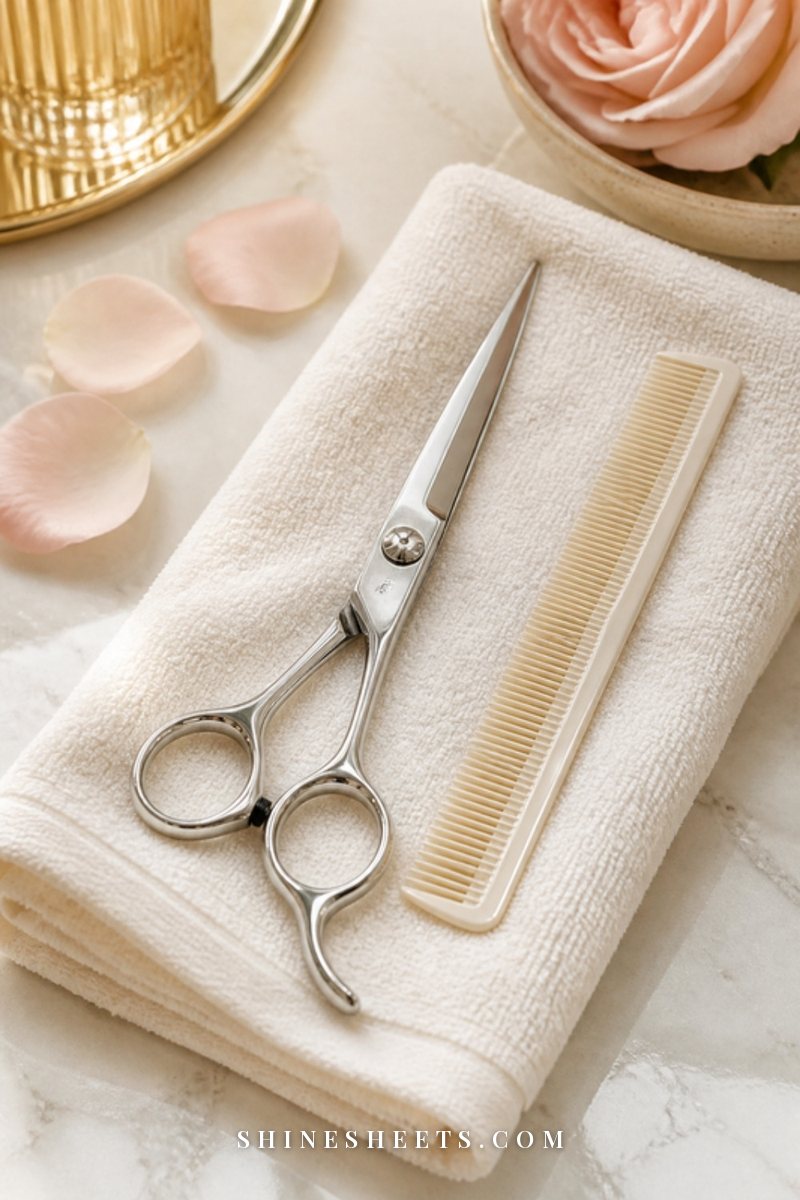
A trim takes off a set amount evenly, usually a quarter inch or more, to clean up the line and the shape.
A dusting removes only the very tips, often an eighth of an inch or less, sometimes by twisting small sections and snipping only the frayed ends that stick out. The length barely changes, which is why it's ideal when you're growing your hair out.
When to choose which:
- Choose a trim when your shape is gone, your ends are visibly thin or you have a lot of damage.
- Choose a dusting when your hair is mostly healthy, you want to keep every bit of length and you just want the ends tidy.
What To Ask Your Stylist

Most trim disappointments come from a mismatch between what you meant and what the stylist heard. "Just a trim" means half an inch to one person and three inches to another. Being specific is kind to both of you.
- Show, don't tell. Hold your fingers apart to show the exact amount, or point to where you want your hair to end once it's dry.
- Use measurements. "Half an inch" is clearer than "a little."
- Share your goal. Growing it out, removing damage or refreshing the shape all lead to different cuts.
- Mention your styling habits. If you air-dry, heat-style daily or wear your hair up most days, your stylist can cut for that.
- Ask about dry cutting if you have curls, so the length is judged in its natural state.
A Simple Script
Here's a script you can borrow word for word:
"I'm growing my hair, so I'd like to keep as much length as possible. Could you take off about this much (show with fingers), just enough to remove the damaged ends? I'd like to keep the shape soft, and I usually air-dry."
Before the scissors start, ask the stylist to show you the amount once more on a section. A five-second check saves weeks of regret.
Trimming Your Ends at Home: Keep It Simple
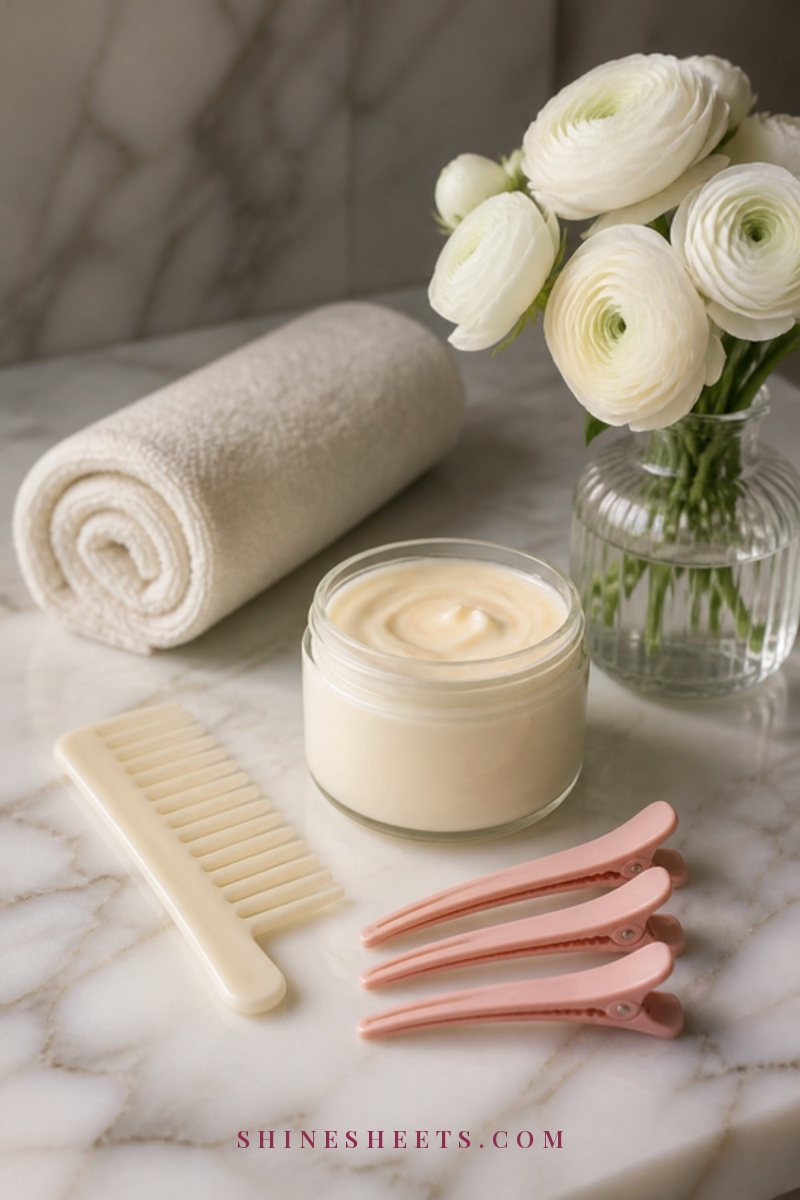
I'll be honest with you: a professional trim is the safest choice, especially for layered cuts, curls or anything with a defined shape. If you do want to tidy your own ends between appointments, keep it very simple and very small.
- Use proper shears only. Kitchen or paper scissors are too dull and crush the hair, which can create more splits. A pair of sharp professional hair-cutting shears kept only for hair is a must.
- Work on dry, detangled hair. Wet hair stretches and you can easily cut more than you meant to. Detangle first with a wide-tooth comb.
- Snip only the frayed tips. Twist a small section and trim only the split ends that poke out. That's dusting, not cutting.
- Take less than you think. Start with an eighth of an inch. You can always do more tomorrow, never less.
- Skip anything structural. Layers, fringe and blunt lines belong with a stylist.
Keep your fingers well away from the blades and work slowly in good light. If it feels fiddly or stressful, that's your sign to book the salon.
How To Make Your Trims Last Longer: 6 Habits

The gentler your routine, the longer your ends stay healthy and the more you can stretch the time between trims.
- Protect from heat, every time. Apply a heat protectant spray before blow-drying, curling or straightening, and keep tools at the lowest temperature that works for you. My guide to heat protectant explains how to apply it evenly.
- Brush gently, from the bottom up. Start at the ends, then work upward in small sections. Never rip through knots, especially on wet hair.
- Condition the ends. Focus conditioner on the lower half of your hair, and finish with a lightweight leave-in conditioner on damp ends. Patch test any new product on your inner arm first if your scalp or skin is sensitive.
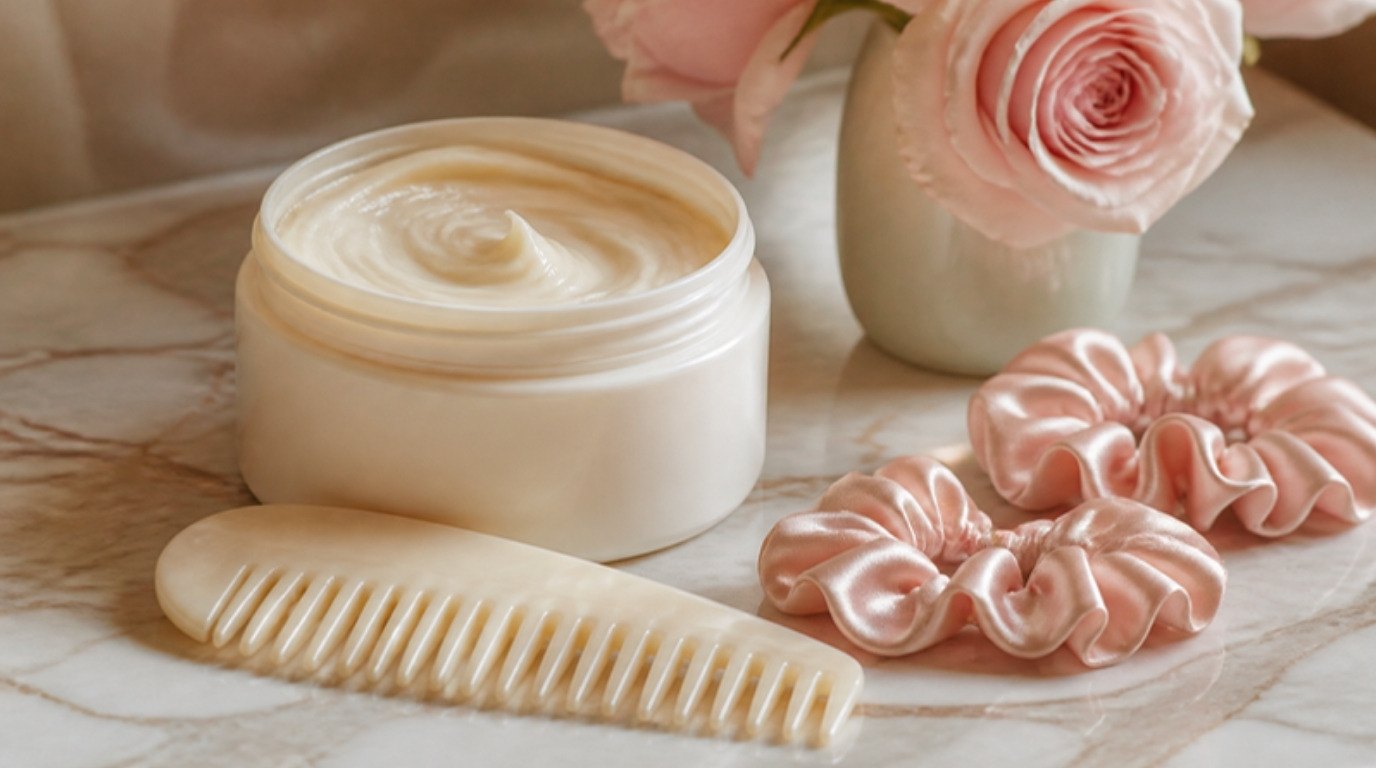
- Sleep on silk or satin. A silk pillowcase in a soft blush shade creates less friction than cotton, so your ends don't rough up overnight. You can read more about silk pillowcase benefits if you're deciding whether to switch.
- Swap tight elastics for soft ties. Satin scrunchies hold hair without the snagging and creasing that thin elastics can cause.
- Be kind with towels. Squeeze and blot instead of rubbing, and use a soft towel or an old cotton T-shirt.
Final Thoughts
How often to trim hair comes down to your length, your hair type and what you want from it. A rough calendar helps, but your ends are the best guide: when they look thin, tangle easily or feel rough, they're ready.
Small, regular trims and a gentle routine are what keep long hair long and short hair sharp. Your future self, with smooth, healthy ends, will be very glad you booked that little appointment.