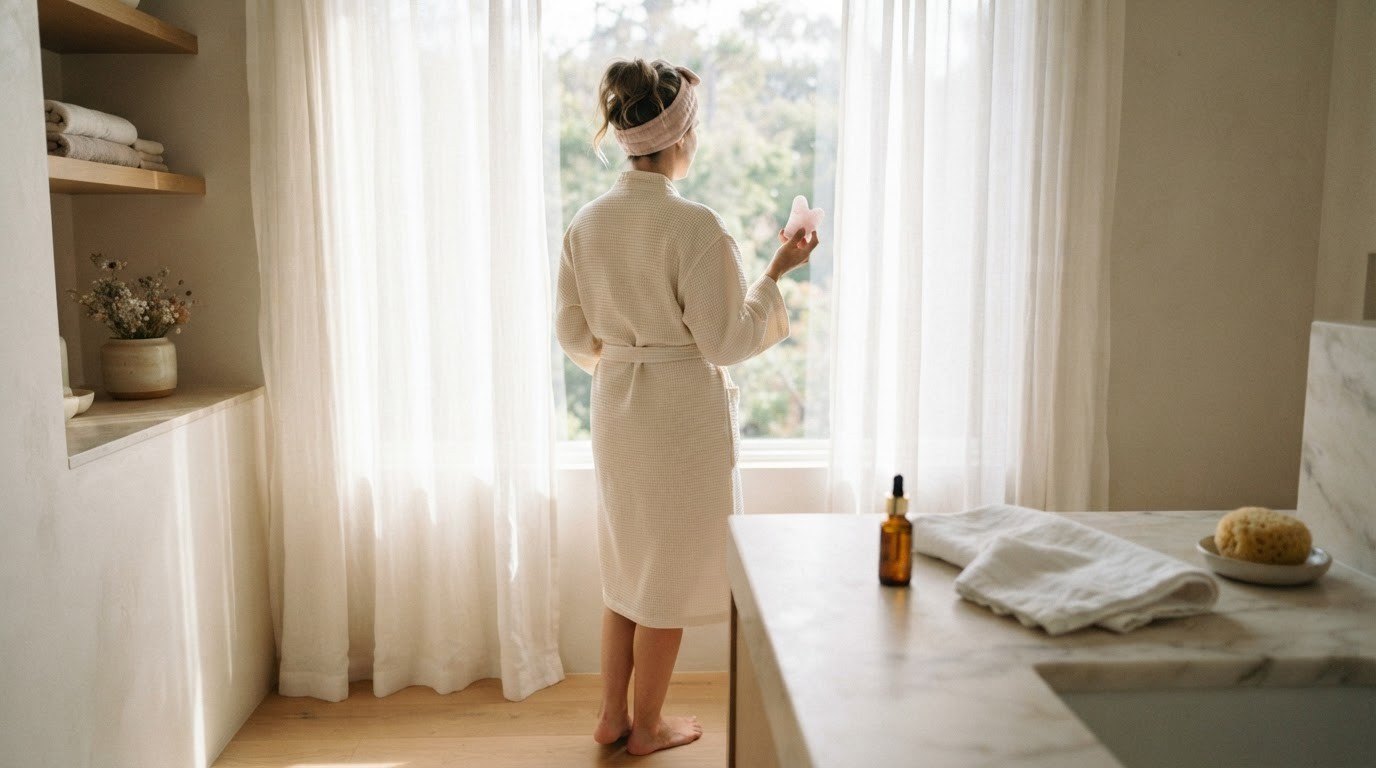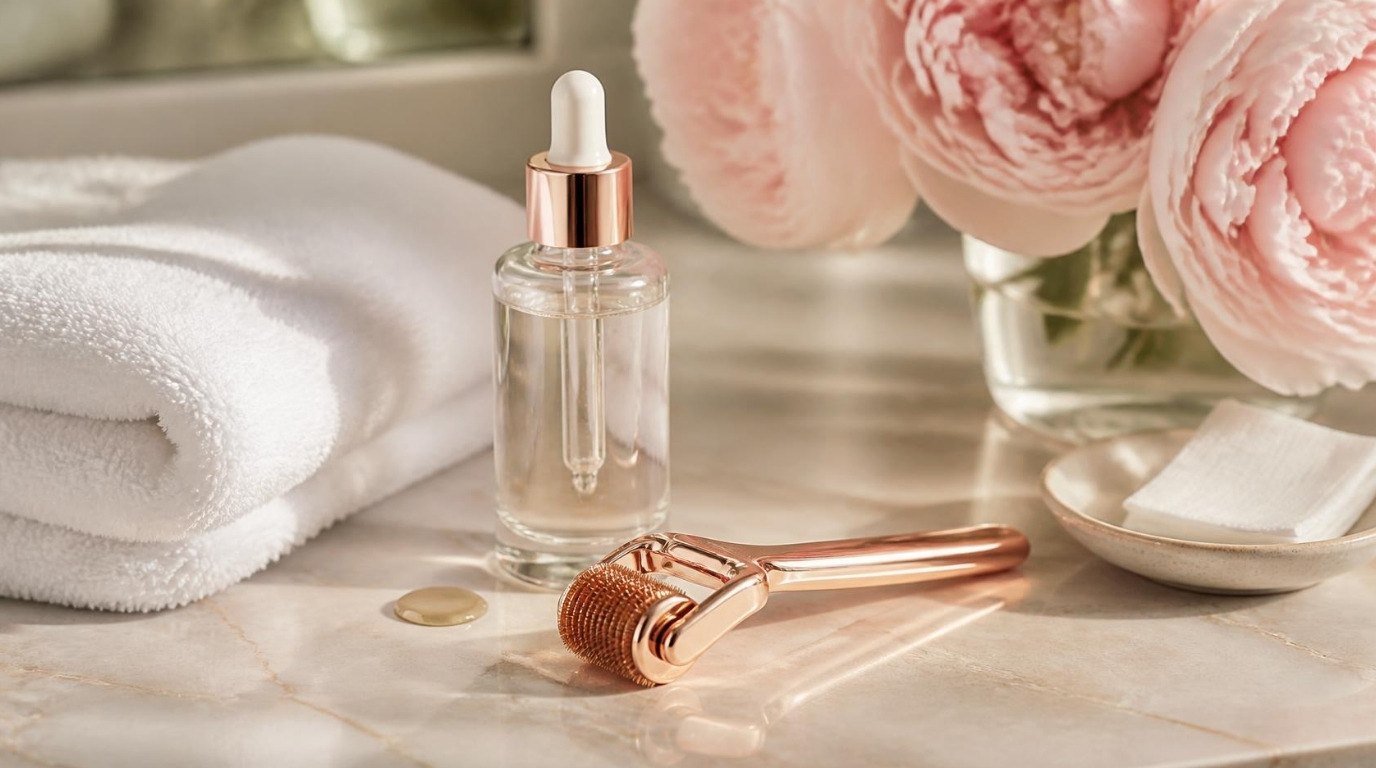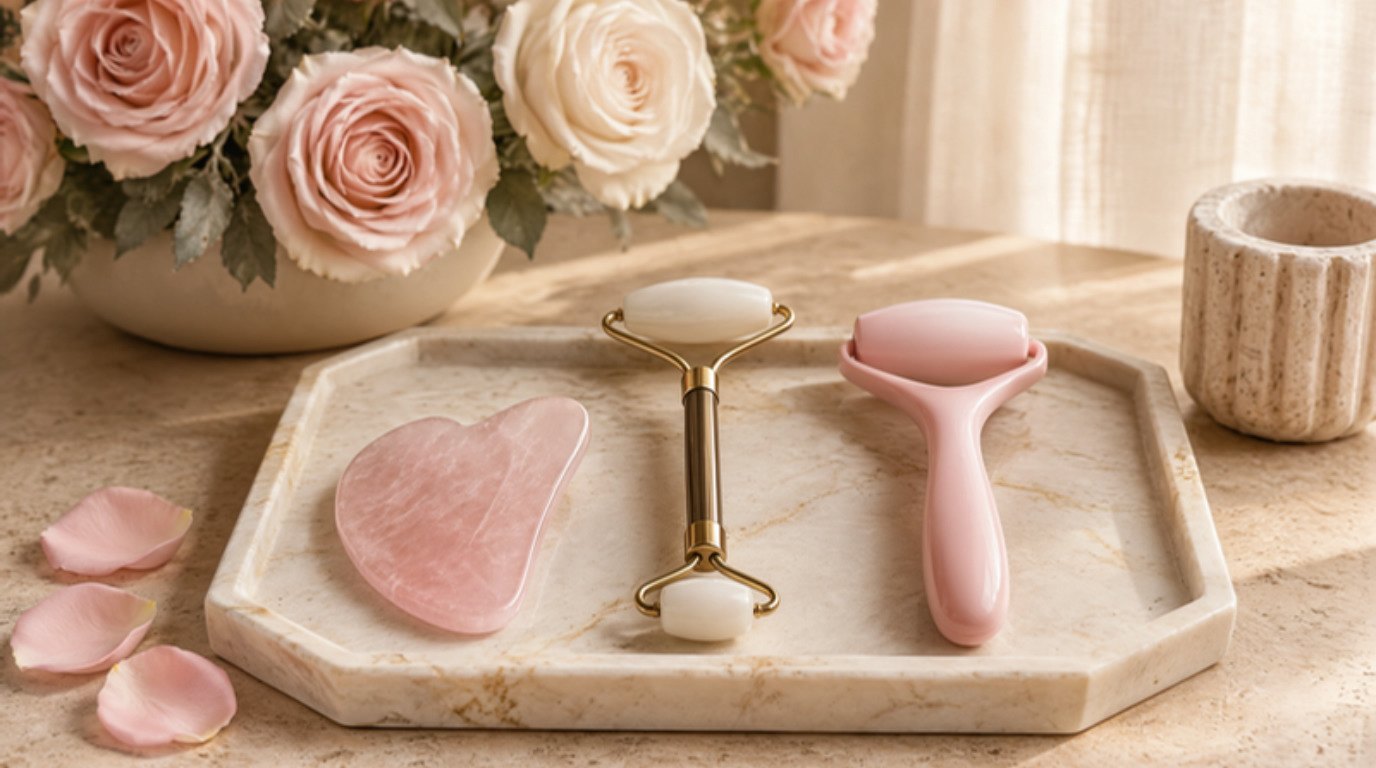
A face tool won't change your bone structure, and it doesn't need to. The real reason people love a gua sha, a jade roller or an ice roller is simpler: a few minutes of cool, slow, gentle touch can make a puffy morning face look calmer, help your skincare glide on and turn an ordinary routine into something that feels like care.
The trick is choosing the tool that matches what you actually want. A gua sha is a different experience from a roller, and an ice roller is different again. Pick the wrong one and it ends up in a drawer next to the hair gadgets you swore you'd use.
This guide is a clear, honest look at gua sha vs jade roller vs ice roller: what each tool is, what it can realistically do (and what none of them can), a side-by-side comparison table, which tool wins for morning puffiness, jaw tension, an evening ritual and sensitive skin, how to use each one in a few simple steps, and how to keep them clean.
I have combination, sensitive skin with a shiny T-zone that flushes easily, so I'll be upfront about where gentle beats enthusiastic every single time.
Gua Sha vs Jade Roller vs Ice Roller: The Short Answer

If you only have a minute, here it is:
- Choose a gua sha if you want a slow, hands-on massage ritual, especially for tension along the jaw, neck and brow. It takes a little practice and a few minutes, and it rewards patience.
- Choose a jade or rose quartz roller if you want the easiest, most beginner-friendly option. It's quick, hard to get wrong and nice for pressing in serum or oil.
- Choose an ice roller if your main goal is a cooler, calmer-looking face on puffy mornings. It's the most noticeable short-term effect of the three, and the shortest routine.
None of them is "better" in general. They're just good at different things, and plenty of people end up with two: one for mornings and one for evenings.
What Each Tool Actually Is
Before comparing, it helps to know what you're holding. These three tools look similar on a bathroom shelf, but they work in different ways.
Gua Sha

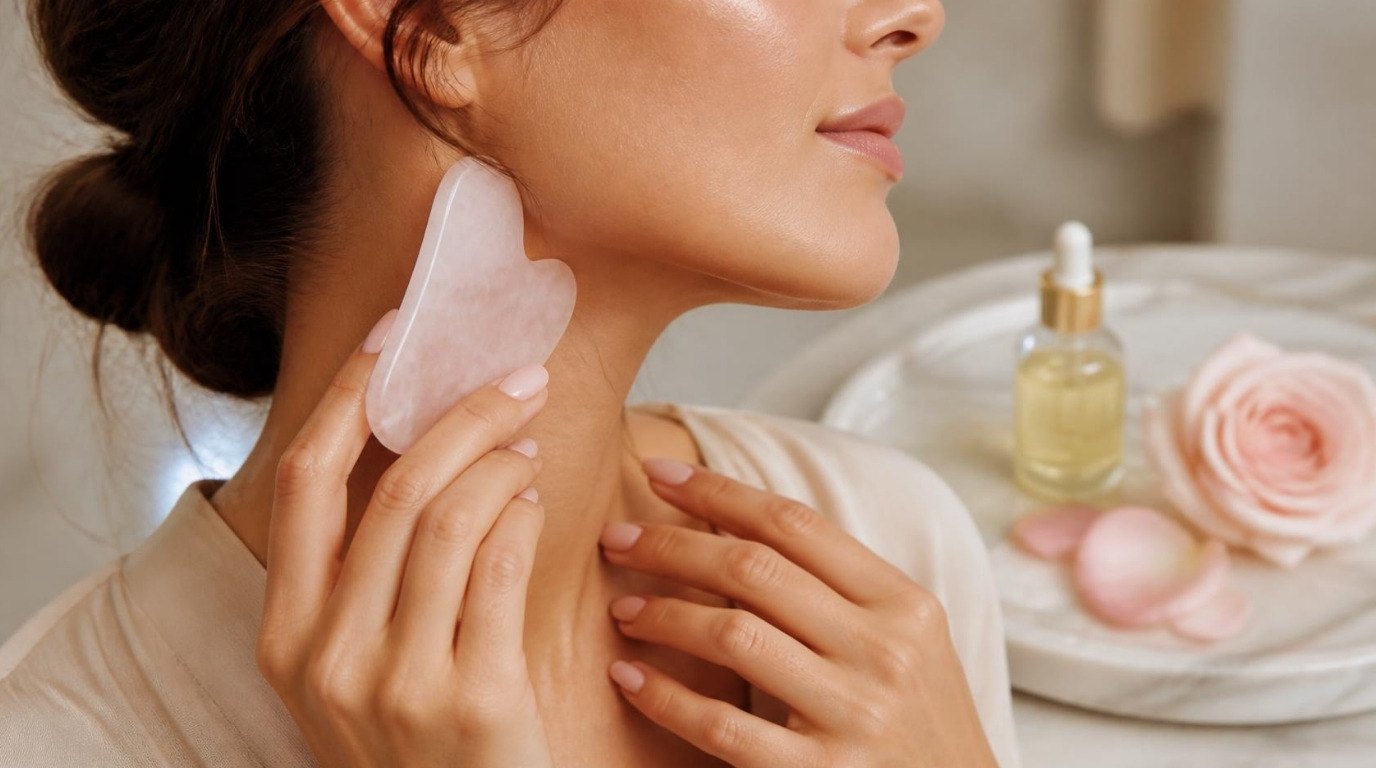
A gua sha (pronounced "gwah shah") is a flat, smooth stone with curved and notched edges, often shaped like a heart, a wing or a comb. The facial version comes from a much older traditional body practice, adapted into a gentle skincare ritual. You hold the stone almost flat against your skin and glide it in slow, outward strokes over a layer of oil or serum.
The different edges are made for different areas: the long curve hugs the jawline, the notch fits along the jaw and chin, and the smaller curve suits the cheekbones and brow. Common stones are rose quartz, jade, amethyst-colored quartz and stainless steel. Stainless steel stays cooler for longer and is easy to clean; stone feels softer and warms to your hand.
If you want more background on the practice itself, my guide to gua sha benefits for beauty and relaxation goes deeper into the ritual side.
Jade or Rose Quartz Roller

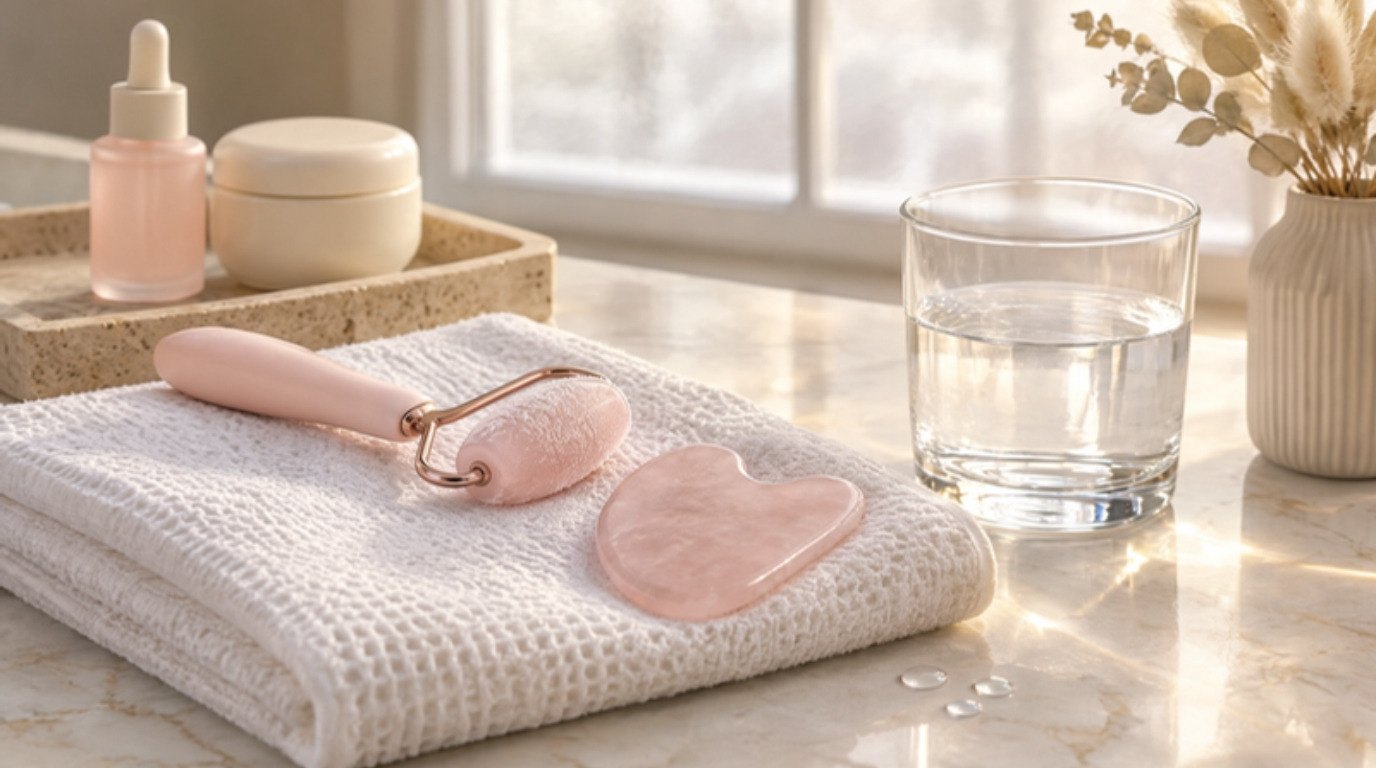
A facial roller is a small stone cylinder on a metal handle, usually with a large roller at one end and a tiny one at the other for smaller areas. You roll it over your face in short, light, outward passes. Jade and rose quartz are the classic options; you'll also see white jade, clear quartz and metal versions.
A roller does a lot less than a gua sha in terms of pressure and precision, and that's exactly why beginners like it. You can't really dig in with a roller, so it's a forgiving choice if you tend to press too hard. It's also lovely for pressing a serum or facial oil into the skin instead of rubbing with your fingertips.
One small honest note: the stone itself isn't doing anything mystical. Any effect comes from the cool surface and the gentle, rhythmic movement, not from the crystal's color.
Ice Roller

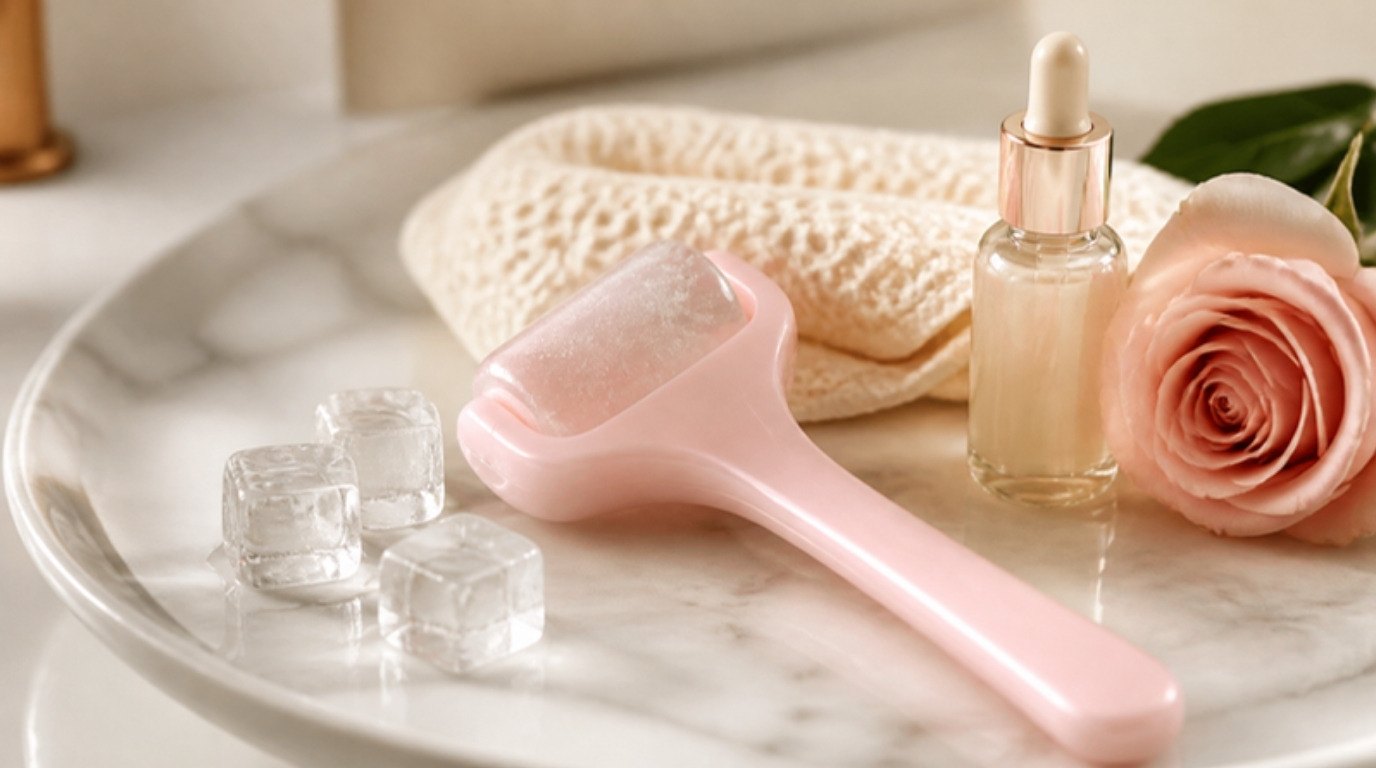
An ice roller is a plastic or stainless steel roller head filled with a liquid or gel that you keep in the freezer. When it comes out, it's properly cold, much colder than a stone roller from the fridge. You roll it over your face for a minute or two to cool the skin down.
Cold makes the skin look calmer and less puffy for a while, which is why ice rollers have become such a morning favorite. Because they're so cold, they also need the most care: short passes, a thin cloth if your skin is sensitive, and never on irritated skin. I cover the ice roller on its own in more detail in my post on ice roller benefits and how to use one; here we're focusing on how it stacks up against the other two.
What Face Tools Can (and Can't) Do
This is the part most product pages skip, and it's the part that saves you from disappointment. Face tools are pleasant, simple and genuinely nice to use. They're also small pieces of stone and plastic, not treatments.
What They Can Realistically Do
- Make puffiness look calmer for a while. Cool temperature and gentle movement can make a puffy morning face look a little less swollen. The effect is temporary, usually a few hours at most.
- Help you relax. Slow, repetitive strokes are soothing. Many people notice they unclench their jaw and drop their shoulders during a gua sha session.
- Help skincare glide on. A roller or gua sha spreads serum or oil evenly and makes you slow down while you apply it.
- Give your skin a brief cooling, fresh feeling. Especially with an ice roller, or a stone tool kept in the fridge.
- Create a ritual. This is underrated. A five-minute routine you look forward to is often what makes you stick with the rest of your skincare.
What None of Them Can Do
- They can't "detox" your face. Your body handles its own fluids and waste. Gentle massage may help puffiness look softer, but it isn't flushing out toxins.
- They can't permanently sculpt or contour. Any sharper look along the jaw or cheekbones after a session is about reduced puffiness and fades the same day.
- They can't lift sagging skin or erase lines. No amount of rolling changes skin structure. If lines or loss of firmness bother you, a dermatologist can talk you through real options.
- They can't treat acne, rosacea or puffiness with a medical cause. If puffiness, redness or swelling sticks around, see a dermatologist or doctor rather than rolling harder.
Once you see them as a soothing, temporary-results ritual rather than a fix, they become a lot more enjoyable. Expectations do most of the work here.
Face Tool Comparison Table
Here's everything side by side. Screenshot it if you're shopping, it makes the choice much easier.
| Tool | Best for | How often | Skin type fit | Care |
|---|---|---|---|---|
| Gua sha | Slow massage ritual, jaw and brow tension, helping oil glide | 3–5 minutes, 2–4 times a week (daily if your skin is happy) | Most skin types; go extra light on sensitive skin; skip on active breakouts | Wash with mild soap and lukewarm water after each use, dry fully, store in a soft pouch |
| Jade or rose quartz roller | Beginners, pressing in serum, a quick gentle routine | 1–3 minutes, daily is fine | Most skin types, including sensitive (it's the lightest option) | Wipe after use, wash weekly with mild soap, check the roller isn't loose or squeaky |
| Ice roller | Morning puffiness, a cooling feeling, a calm look before makeup | 1–2 minutes, once a day at most | Normal, oily and combination; wrap in a thin cloth for sensitive or dry skin; avoid if cold triggers redness | Wipe clean, let it dry, store in the freezer in a clean bag or case |
If you're stuck between two, go back to one question: do you want a ritual or a quick result? Ritual points to the gua sha. Quick result points to the ice roller. "I just want something easy" points to the roller.
Head-to-Head: Which Tool Wins for Your Goal
Here's how the three compare for the four reasons people usually reach for a face tool.
Morning Puffiness

Winner: the ice roller. Cold is the fastest way to make a puffy face look calmer, and an ice roller is the coldest of the three. One to two minutes in light outward passes, focusing on the cheeks, jaw and forehead, is plenty.
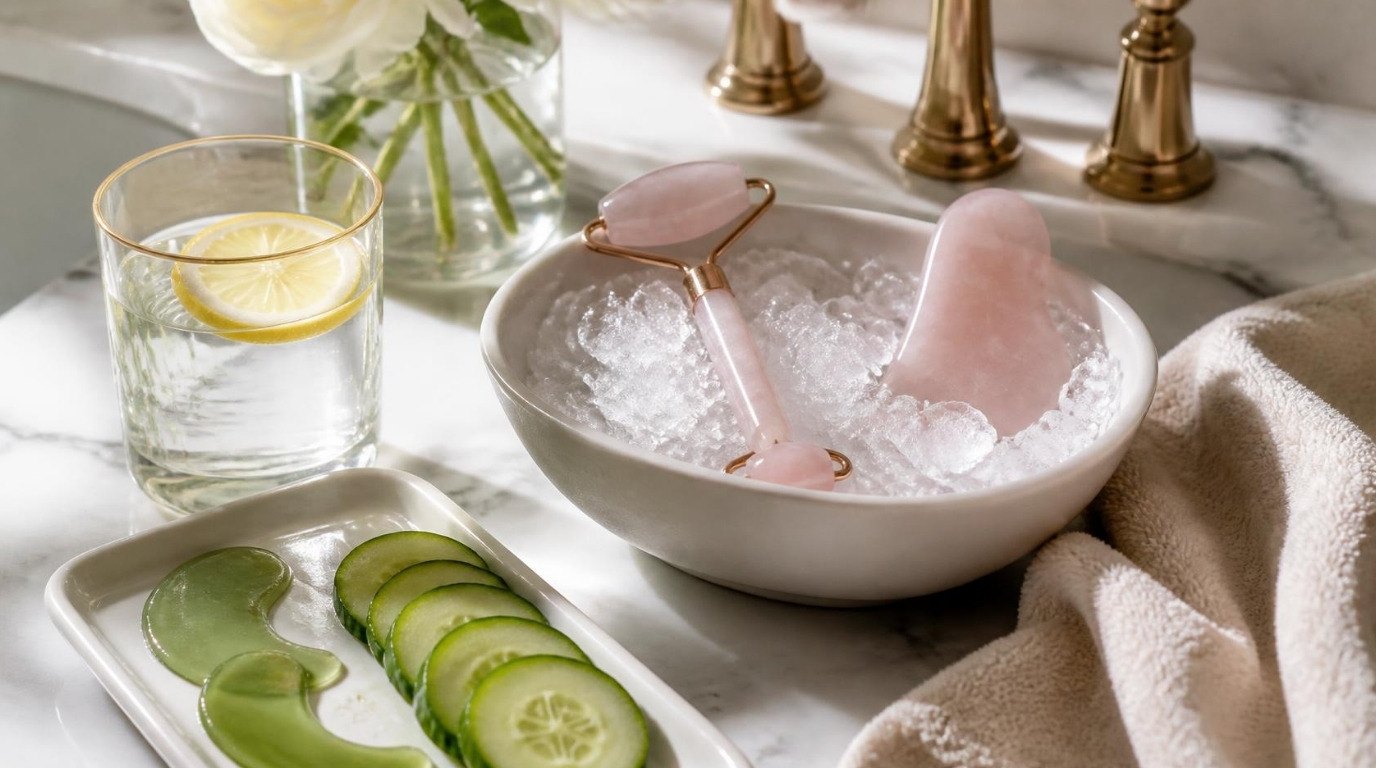
Runner-up: a stone roller or stainless steel gua sha kept in the fridge (not the freezer) gives a milder version of the same effect with a bit of massage on top.
Puffiness has lots of everyday causes, like salty dinners, short sleep, crying or sleeping flat on your face. If you'd like the full picture beyond tools, my guide on how to reduce face puffiness covers the habits that help most. A blush pink ice roller is a pick for this goal if you'd like one that looks pretty in the freezer door; look for a smooth, sealed roller head and a comfortable handle.
Jaw and Face Tension
Winner: the gua sha. The long curved edge follows the jawline beautifully, and the slow, steady strokes are what make a gua sha feel so relaxing. If you clench your jaw when you're stressed (my anxiety likes to live right there), a few slow strokes from chin to ear and down the side of the neck can feel like a full exhale.
A heart-shaped rose quartz gua sha stone is a classic pick for beginners. Look for smooth, polished edges with no chips, a size that sits comfortably in your hand and one curved edge that matches your jawline.
Runner-up: the roller, though it can't really follow the jaw the same way.
An Evening Wind-Down Ritual

Winner: the gua sha, closely followed by the roller. In the evening, you're not chasing a quick result. You're slowing down. A gua sha session takes three to five minutes, and the pace naturally calms your breathing.
My favorite way to set this up is simple: skincare done, a glass candle lit, a cup of tea cooling on the side, and a few minutes of slow strokes before journaling. It's not the stone doing the magic. It's that you've given yourself five unhurried minutes.
If you prefer something even easier, a roller with a few drops of oil is lovely here too. A lightweight facial oil is the ideal slip layer; look for a non-fragranced or lightly scented formula that suits your skin type, such as squalane for combination skin or a richer blend for dry skin. My guide to facial oils by skin type helps you choose one.
Sensitive or Reactive Skin
Winner: the roller. It applies the least pressure and the least friction, so it's the gentlest place to start if your skin flushes, stings or reacts easily.
A smooth white jade facial roller is a pick for sensitive skin. Look for a roller that turns smoothly without squeaking, has a securely attached stone and doesn't snag the skin.
Go carefully with: the gua sha (keep the pressure feather-light and the stone almost flat) and the ice roller (always wrap it in a thin, clean cloth and keep sessions to under a minute). If your skin gets redder or stays flushed for more than a few minutes after any tool, take that as a sign to scale back or skip it.
How To Use Each Tool
Each routine is short. The rules that matter most are the same for all three: clean skin, a clean tool, light pressure, outward strokes and a gentle hand around the eyes.
How To Use a Gua Sha in 5 Steps
- Start with clean skin and a clean stone. Wash your face, then apply a few drops of facial oil or a generous layer of serum. The stone should glide, never drag.
- Hold it almost flat. Angle the stone at about 15 degrees to your skin, so you're using the broad edge, not the tip.
- Start at the neck. Glide gently upward from the base of the neck toward the jaw, three to five times on each side. Use very light pressure here.
- Work outward on the face. Use the notched edge from the center of the chin out along the jaw toward the ear. Then glide from beside the nose outward under the cheekbone, and from the center of the forehead out to the temples. Three to five strokes per area.
- Finish lightly. End each side with a soft stroke from the temple down toward the ear and neck. Wipe the stone clean and you're done.
Pressure guide: if your skin turns more than lightly pink, you're pressing too hard. The traditional body practice can leave marks, but a facial routine should never leave redness that lasts, bruising or tenderness. For a slow, step-by-step massage you can follow with your fingers or a tool, my gentle 5-minute face massage routine is a nice companion.
How To Use a Facial Roller in 4 Steps
- Apply serum or oil first. A roller works over a thin slip layer, so the stone glides instead of tugging.
- Roll outward and upward in short passes. From the center of the face out toward the ears: chin to jaw, nose to cheekbone, center of the forehead to the temples. About five passes per area.
- Use the small end for small areas. The little roller suits the sides of the nose and the area around (not on) the brow bone.
- Keep it to one to three minutes. Longer isn't better. Wipe the roller clean when you're done.
Tip: keep your roller in the fridge if you like the cool feeling without the shock of the freezer.
How To Use an Ice Roller in 4 Steps
- Take it out of the freezer and wait 30 seconds. That tiny pause takes the harshest edge off the cold.
- Wrap it if your skin is sensitive or dry. A thin, clean cotton cloth or a fresh tissue between the roller and your skin keeps the cold comfortable.
- Roll in short, light passes and keep moving. Never hold the roller in one spot. Work over the cheeks, jaw and forehead for one to two minutes in total.
- Stop if it stings or burns. Cold should feel refreshing, not painful. Let your skin warm back up, then continue with your skincare.
Safety Rules for Every Face Tool
These tools are simple, but a few gentle rules keep them that way.
- Treat the eye area with extra care. The skin around your eyes is thin and delicate. Either keep tools away from it or use only the lightest touch along the orbital bone, never on the eyelid or pressing under the eye.
- Never drag the skin. If the tool tugs, add more oil or serum. Your skin should move as little as possible under the stroke.
- Skip broken, irritated or inflamed skin. Don't use tools over active breakouts, cuts, sunburn, rashes, eczema flares or a fresh procedure. Rolling over a pimple can spread bacteria and make inflammation worse.
- Keep ice rollers moving and wrapped if needed. Short passes only, a cloth for sensitive or dry skin, and never straight onto skin that's already irritated by cold or wind.
- Patch test your slip layer. Any new oil or serum you pair with a tool should be patch tested first. My guide on how to patch test skincare walks you through it.
- Check your tool for chips and cracks. A chipped stone can scratch skin. Retire it, or use it as a pretty paperweight.
- See a professional when needed. If puffiness, redness or swelling is persistent, comes on suddenly or is only on one side, check in with a dermatologist or doctor instead of trying to roll it away.
How To Clean and Care for Your Tools

A face tool touches clean skin every day, so it needs to stay clean too. Oil, serum and dead skin build up quickly, and a sticky tool is a breakout waiting to happen.
After Every Use
- Gua sha and stone rollers: rinse with lukewarm water and a drop of mild soap or gentle cleanser, rub off any oil, rinse and pat dry with a clean towel. Let it air-dry fully before storing.
- Ice roller: wipe the head with a damp cloth and a little mild soap, rinse, dry and return it to the freezer in a clean case or bag.
Once a Week
- Give each tool a slightly more thorough wash with mild soap and lukewarm water. On rollers, pay attention to where the stone meets the metal frame, as residue likes to hide there.
- Check rollers for looseness or squeaking and stones for chips.
- Avoid hot water and harsh cleaners, which can crack stones or loosen roller fittings. Never put stone tools in the dishwasher.
- If you'd like to disinfect, follow the maker's guidance. Some say a quick wipe with a little rubbing alcohol on a cloth is fine, but avoid soaking stones.
Storage
Store stone tools in a soft pouch so they don't chip against other things in your drawer or bag. A cream silk drawstring pouch is a pick for this; look for a lined pouch large enough to hold the tool without squeezing it. Keep your ice roller in a sealed case in the freezer, away from food.
Wash your face towels often too. A soft set of white cotton face towels that you swap every couple of days keeps the whole routine fresh.
Do You Need More Than One?
No. One tool used kindly is more than enough. But if you enjoy the ritual and want to cover both ends of the day, the most useful pairing is simple:
- Morning: an ice roller for one to two minutes before moisturizer and sunscreen.
- Evening: a gua sha or roller over facial oil for three to five slow minutes.
If you're starting from scratch and can only choose one, start with a roller if you're cautious or have sensitive skin, a gua sha if you love slow rituals and jaw tension is your thing, and an ice roller if puffy mornings are your main complaint. You can always add another later, once you know you actually reach for the first.
And if none of them feel right, your clean fingertips work too. Light, outward strokes with your hands give you most of the relaxing benefit, with nothing to clean afterwards.
Final Thoughts
A face tool is a small, lovely way to slow down and pay attention to your skin. It won't sculpt your face or detox anything, and it doesn't need to. What it can give you is a calmer-looking morning, a softer jaw after a long day and a few minutes that feel just for you.
Choose the tool that fits the moment you want to improve, keep it clean, keep the pressure light and let it be a ritual rather than a fix. That gentle, unhurried attention is the part your skin and your nerves will thank you for.