Dating an introvert rarely needs a big strategy. It mostly needs a different reading of the same signals: a quiet evening is not boredom, a slow text is not disinterest, and a request for a night alone is not a door closing. Once you see the energy behind the behavior, a lot of second-guessing simply falls away.
Introverts aren't one type of person, either. Some are chatty and funny with people they trust, some love a dance floor for exactly one hour, and plenty are not shy at all. What most of them share is that social time costs energy and quiet time gives it back. That one idea explains more than any list of traits.
This guide covers dating an introvert from the first dates to the long run: what introverts often value, date ideas that suit them, how to communicate without guessing, social events, alone time, showing love, a balance plan for introvert–extrovert couples and how to tell introversion apart from real red flags. There's also a table that translates the most common misunderstandings into kind responses.
Take what fits the person in front of you and leave the rest. People are always more interesting than the label.
What Being an Introvert Really Means

Introversion is about energy, not about liking or disliking people. An introvert can adore you, enjoy a party and still feel drained afterward, the way you might feel after a long workout you actually loved. Recharging happens in quieter settings: a book, a walk, a slow morning, one close person instead of twelve.
A few things introversion is not:
- It's not shyness. Shyness is nervousness about being judged. Many introverts are calm and confident, they just prefer smaller doses of socializing.
- It's not coldness. Introverts often feel things deeply and show it quietly, in ways that are easy to miss if you're watching for big gestures.
- It's not a fixed box. Most people sit somewhere on a spectrum, and some land in the middle. If you're curious where you or your date fall, my guide on introvert vs ambivert walks through the differences gently.
The most useful thing you can do is stop treating introversion as a puzzle and start treating it as a preference, just like preferring mornings to late nights.
What Introverts Often Value in a Relationship
Every introvert is different, but a few values come up again and again. Think of these as good first guesses, then let the real person correct you.
Depth Over Small Talk
Many introverts find small talk tiring because it uses social energy without giving much back. A question with a little depth ("What's something you changed your mind about recently?") often lights them up far more than "So, how was your week?" You don't need to be intense. Just leave room for the conversation to go somewhere real.
Quiet Time To Recharge
Quiet time is maintenance, not avoidance. An introvert who gets regular recharge time usually shows up warmer, funnier and more present. An introvert who never gets it tends to go flat, short or distant, and that's when misunderstandings start.
One-on-One Over Big Groups
Group settings split attention in many directions, which can feel like listening to five radios at once. One-on-one time lets an introvert focus on you, which is often exactly where they shine.
Thoughtful Over Loud
A remembered detail can mean more to an introvert than a grand gesture. Remembering the tea they like, the book they mentioned or the hard meeting they had on Thursday says "I see you" in their language.
Early Dating: 8 Date Ideas That Suit Introverts

Early dates go better when the setting does some of the work. Look for places where you can talk without shouting, where there's something to look at besides each other and where leaving after an hour feels natural. For the basics of the first meeting itself, my first date tips cover the night before through the goodbye.
- A long walk. Side by side is easier than face to face for many introverts. Pick a park loop or a waterfront path of about 45 minutes, so there's a natural end point.
- A bookstore wander. Browse separately for 15 minutes, then show each other one book you'd pick for the other person. Instant conversation, zero pressure.
- A museum or gallery. Quiet rooms, plenty to react to and easy pauses. Choose one wing rather than the whole building.
- A cooking class for two. Shared hands-on tasks take the spotlight off conversation. Smaller classes of 6–10 people are calmer than big ones.
- Coffee at an off-peak hour. A Saturday at 10 a.m. café is a roar. Mid-afternoon on a weekday is often half empty and much easier to talk in.
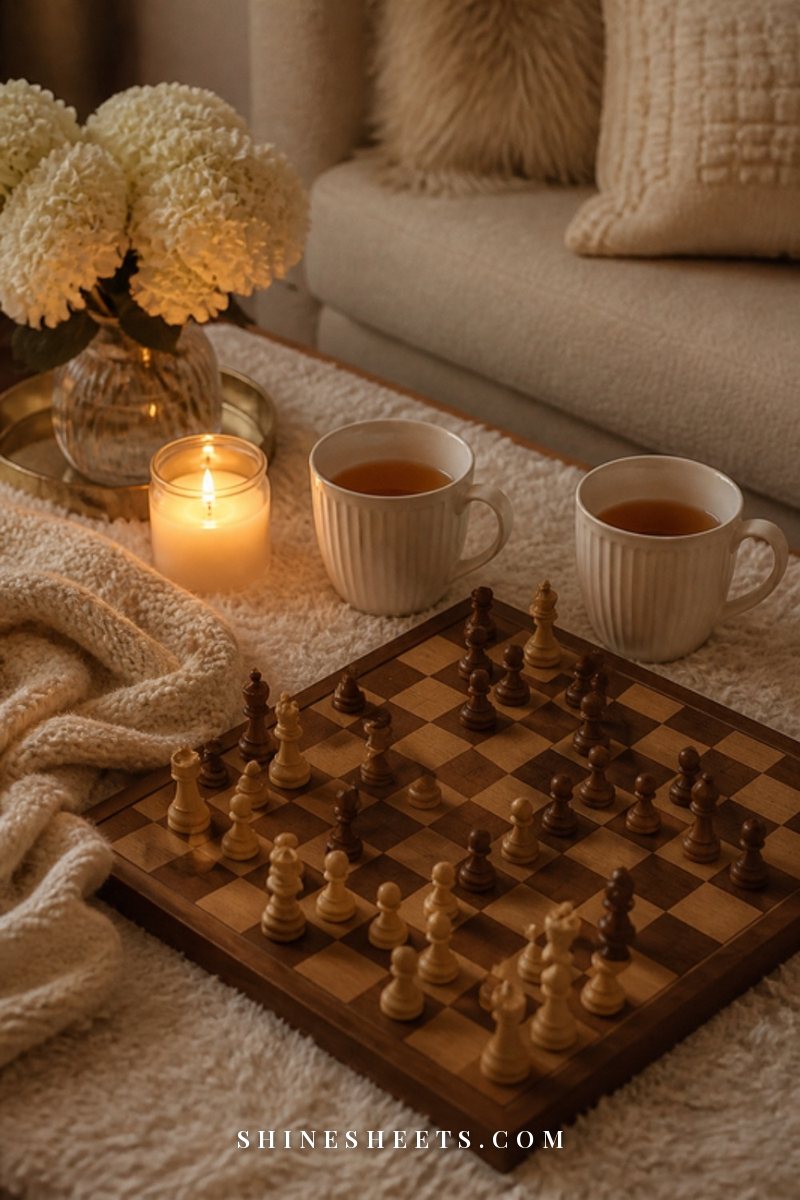
- A board game evening. Games give the conversation a structure and something to laugh about. A strategy board game made for two players is perfect, because nobody has to perform for a group.
- A matinee film plus a short walk afterward. The film gives you a shared topic, and the walk gives you the conversation.
- A picnic in a quiet spot. Bring a blanket, something to drink and a plan to stay about an hour. Outdoors, slow and easy to end kindly.
A small tip: suggest an end time up front ("I have about two hours, does that work?"). Knowing the shape of a plan helps many introverts relax into it instead of quietly budgeting energy the whole time.
How To Communicate With an Introvert
Good communication with an introvert is mostly about pace and directness. Introverts often prefer to think first and talk second, which can look like hesitation when it's actually care.
Texting Styles Differ

Some introverts love texting because it lets them answer when they have energy. Others find constant messaging draining, the same way a phone call can be. Neither means anything about how much they like you.
Instead of decoding reply times, ask directly in the first few weeks: "Are you more of a quick-texts-all-day person or a longer-catch-up-at-night person?" Then meet in the middle. A good starting point is one or two light messages during the day and a proper conversation in the evening or in person.
Give Time To Process
When something important comes up, many introverts need time to sort out what they think before they can say it well. Pushing for an answer on the spot tends to produce a vague "I don't know" that frustrates you both.
Try: "No rush on this one. Want to think about it and talk tomorrow evening?" Then actually follow up at that time. The follow-up is what makes the pause feel safe instead of like a brush-off.
Ask, Don't Guess
The single most helpful question in dating an introvert is a simple one: "Do you need some recharge time?" It turns a silent mood into a shared plan. Other easy check-ins:
- "Are you up for company tonight, or is it a quiet night?"
- "Do you want to talk about it now, or later?"
- "What would make this weekend feel restful for you?"
Asking also works the other way. Share your own needs plainly ("I'd love one evening this week where we really talk"), because introverts can't read your mind any better than you can read theirs.
Common Misunderstandings and Kind Responses
This is the part I'd screenshot. Most friction in introvert relationships comes from reading a behavior through your own energy style. Here's how the most common moments often look, what they may mean and a kind way to respond.
| What happens | What it may mean | A kind response |
|---|---|---|
| They're quiet at dinner | They're content, tired or thinking, not unhappy with you | "Comfortable quiet or tired quiet?" and let either answer be fine |
| They cancel plans after a big week | Their social battery is empty | "Totally okay. Want to reschedule for Sunday afternoon?" |
| Slow replies during the day | They batch messages when they have energy | Send one warm text, then let it rest |
| They want to leave a party early | They've hit their limit, not that they're bored of you | Agree an exit time before you go |
| They need a night alone | They're recharging so they can show up fully | "Enjoy your quiet night. See you tomorrow." |
| "Let me think about it" | They want to give you a real answer | "Sure, let's talk tomorrow evening" |
| They don't share much at first | Trust builds slowly, then deeply | Ask open questions and share a little yourself first |
| They skip the group chat but text you directly | One-on-one feels more meaningful to them | Take it as a compliment |
The pattern is simple: respond to the need, not the worst-case story your mind writes about it. I'm prone to anxiety, so I know how quickly "they're quiet" can become "they're upset with me" in your head. A gentle question almost always beats a silent spiral.
Social Events Together: 5 Ways To Make Them Easier

Weddings, birthdays and work parties don't have to be a tug-of-war. A little planning lets an introvert enjoy the event instead of enduring it.
- Arrive together. Walking into a room alone is often the hardest moment. Arriving as a pair gives them a soft landing.
- Agree on an exit plan. Decide a rough leaving time before you go ("around 10?") and a quiet signal for "I'm ready," like a hand on the shoulder. Then honor it without sighing.
- Check in once or twice. A quick "Doing okay?" across the evening helps far more than hovering. Don't make them responsible for your fun, and don't babysit them either.
- Give them a small role. Some introverts relax when they have a task: helping in the kitchen, choosing music, chatting with the one person they already know.
- Protect the day after. If you have a big Saturday event, keep Sunday light. Recovery time is part of the plan, not a punishment.
It also helps to understand the idea of a social battery, because it gives you both a shared, blame-free way to say "I'm at 20%."
Alone Time Isn't Rejection

This is the big one. When an introvert asks for a night alone, it can feel personal, especially early on or if you're someone who recharges with people. But alone time usually has nothing to do with you. It's how they refill the tank so they can be warm and present when you're together.
A few ways to make it easier on both of you:
- Name it out loud. "Tonight's my quiet night" sounds very different from silence and a vague "I'm busy."
- Put it in the week. Many couples do well with one or two predictable solo evenings, so nobody has to ask every time.
- Try parallel time. Being in the same room doing separate things (one reading, one sketching) can recharge an introvert while still feeling close to you.
- Fill your own cup too. Use those evenings for friends, a class or your own self-care, not for waiting by the phone.
If you'd like to understand the other side of this, my piece on how to make an introvert miss you explains why space often makes an introvert feel closer, not further away.
How To Show Love to an Introvert: 6 Thoughtful Ways

Introverts often notice the small, specific things. These are some of the most meaningful ways to say "I care" without making a big production of it.
- Quality time with no audience. A slow breakfast, an evening walk, a film under one blanket. A large, soft throw blanket big enough for two turns any sofa into a date spot.
- Thoughtful notes. A short note on the counter ("Good luck today, you've got this") often means more than a long public post. Keep it real and specific.
- Protecting their quiet. Taking a phone call in the other room or handling an errand so they can rest is love in a very practical form.
- Remembering the details. Their tea order, the friend they mentioned, the show they're halfway through. Small memories add up to feeling known.
- Deep conversations. Set aside an evening to talk properly. A couples conversation card game or a list of date night questions gives you a gentle starting point.
- A small shared ritual. Evening tea together, a Sunday walk, reading side by side. A pair of matching cream ceramic mugs sounds tiny, but a ritual object makes the habit feel like yours.
If You're an Introvert Dating an Extrovert
Introvert–extrovert couples can be wonderfully balanced. One brings energy and new experiences, the other brings depth and calm. The friction usually comes from unspoken expectations, not from the difference itself.
If you're the introvert, your job is to explain your needs clearly instead of quietly retreating. Your partner isn't being too much when they want to go out. They recharge the way you drain. Saying "I'd love to come for two hours, then I'll head home and you stay" is kinder than a reluctant yes or a flat no.
If you're the extrovert, your job is to keep your social life full outside the relationship, so your partner isn't your only source of energy. Friends, classes and solo plans are healthy, not a sign of distance.
A Simple Weekly Balance Plan
Sit down together once and sketch a rough week. Here's a gentle starting layout:
- One social night together (friends, an event, a dinner out), with an agreed leaving time.
- One social night apart for the extrovert, with no guilt on either side.
- One or two quiet nights for the introvert, alone or with parallel time.
- One proper date night just for the two of you, phones away.
- A weekend mix: one active plan and one slow morning.
Keep a shared journal for the two of you where you jot down how the week felt, then adjust every month or so. Plans are meant to change as you learn each other.
For more ideas on growing closer in quiet ways, a book about introverts and relationships can help both of you put words to things. Look for a well-reviewed book on introversion written by a psychologist or researcher rather than a list of stereotypes.
Introversion vs. Red Flags: Know the Difference
Being kind about introversion doesn't mean accepting everything under that label. Introversion explains a need for quiet. It doesn't explain disrespect. Here's how to tell them apart:
- Introversion: "I need a quiet night, can we see each other Thursday?" Red flag: disappearing for days with no word, again and again.
- Introversion: preferring small gatherings. Red flag: refusing to ever meet your friends or family, with no explanation.
- Introversion: needing time to think before a hard talk. Red flag: never coming back to the talk at all, or using silence as punishment.
- Introversion: being quiet in groups. Red flag: being dismissive, mocking or cold toward you when you're alone together.
- Introversion: taking time to open up. Red flag: keeping parts of their life deliberately hidden or lying about plans.
The difference is usually communication and consistency. An introvert who cares about you will tell you what they need and follow through. Avoidance, stonewalling or emotional unavailability are separate issues, and you're allowed to name them. If something feels off over weeks rather than days, trust that feeling and talk about it directly.
Final Thoughts
Dating an introvert is less about learning rules and more about learning one person's rhythm. Ask more than you guess, make room for quiet, and notice the small, steady ways they show up for you.
When both of you feel free to be exactly who you are, the quiet moments stop feeling like distance and start feeling like home.