A dry, red nose in cold season is almost never about needing more products. It's about friction and moisture loss happening over and over in one small spot: every tissue, every gust of wind, every hour in a heated room takes a little more from skin that is already thin and busy. Soothe the friction, seal in moisture and give it a few calm days, and the skin around your nose usually settles faster than you'd expect.
The nose has a hard time because it's the most exposed part of your face. It sticks out into cold air, it gets wiped constantly during a cold, and the skin around the nostrils is delicate. On my combination, sensitive skin, the sides of my nose can be shiny in the morning and flaky by evening when I have a cold, which tells you how quickly that area changes.
This guide covers how to soothe a dry red nose gently: why it happens, a table of causes and quick fixes, a soothing routine in six simple steps, what to pause until it heals, how to cover redness with makeup without making it worse, prevention for windy days and the signs that mean it's time to see a doctor.
Why Your Nose Gets Dry, Red and Flaky in Cold Season

Usually it's several small things stacking up at once. These are the most common ones.
Tissue Friction During Colds
This is the big one. When you have a cold or allergies, you might blow or wipe your nose dozens of times a day. Every wipe is a little bit of friction that scrubs away the outer layer of skin, the part that holds moisture in. Rough, dry tissues and a quick side-to-side rub make it worse. Add a runny nose that keeps the skin damp and then dry again, and the area around the nostrils can turn red, sore and flaky within a day or two.
Cold Wind
Cold air holds very little moisture, and wind pulls water out of exposed skin quickly. Your nose and cheeks take the hit first. If your cheeks also sting and feel hot after time outside, my guide to windburned skin covers that kind of redness on the whole face.
Dry Indoor Heat
Radiators and heating systems make indoor air very dry, especially overnight. Skin keeps losing moisture into that dry air for hours while you sleep, so you can go to bed with a slightly pink nose and wake up with flakes.
Hot Showers
A long, hot shower feels wonderful when you're stuffy, and steam can help you breathe. But very hot water strips natural oils from your skin, and the face gets a lot of it. Afterward, skin often feels tighter and drier than before.
You don't have to give up warm showers. Keep the water warm rather than hot, let the steam help your stuffy nose, and keep the stream itself off your face. Then moisturize within three minutes of stepping out, while your skin is still slightly damp. That small window makes a real difference to how tight your nose feels afterward.
Harsh Cleansers
Foaming cleansers, scrubs and products with strong fragrance or a lot of alcohol can be too much for skin that's already irritated. What your face handles happily in summer might sting on a chapped nose in winter.
The same goes for menthol or eucalyptus rubs dabbed under the nose during a cold. They can feel soothing for breathing, but on raw skin they often sting and add to the redness. Keep them on your chest instead, and leave the skin around your nostrils for plain, unscented balm.
Dry Red Nose Causes and Quick Fixes
Here is the whole picture in one table. Find the row that sounds most like you, and start there.
| Cause | What you notice | Quick fix | Prevention |
|---|---|---|---|
| Tissue friction | Red, raw, flaky skin around the nostrils, stings when you wipe | Pat, don't rub, and apply a thin balm after every blow | Soft lotion tissues, balm in your pocket during colds |
| Cold wind | Red, tight, slightly stinging nose and cheeks after time outside | Rinse with lukewarm water, then a calm, rich cream | Balm before going out, a scarf over the lower face |
| Dry indoor heat | Flakes and tightness in the morning | Thicker cream or balm at night | A humidifier near the bed, cooler bedroom |
| Hot showers | Tight, pink skin right after showering | Moisturize within a few minutes, while skin is damp | Lukewarm water on the face, shorter showers |
| Harsh cleansers or actives | Stinging when products go on, rough patches | Pause scrubs, acids and retinoids | Gentle cream cleanser, patch test new products |
Most people have two or three of these at once during a cold. That's fine. The routine below covers all of them.
A Soothing Routine in 6 Steps
These six steps work together. You don't need anything fancy, just a few gentle, unscented basics and a bit of consistency for several days.
1. Switch to Soft or Lotion Tissues and Pat
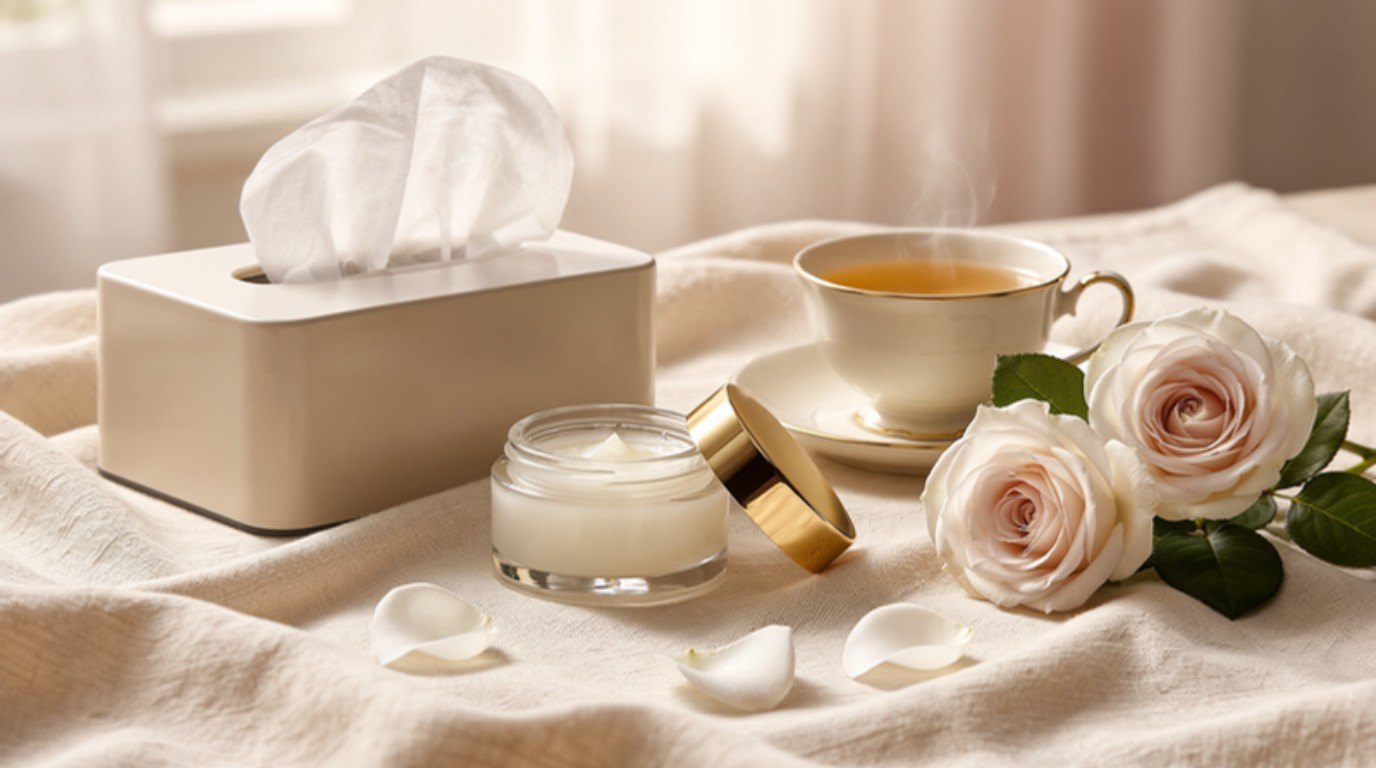
This step alone often makes the biggest difference. Swap rough tissues for soft lotion-infused tissues, which glide instead of scrape. Then change how you use them: blow gently, one nostril at a time, and pat the skin dry instead of wiping side to side. If your nose is already raw, a soft, clean cotton handkerchief or a damp cotton pad pressed lightly can feel kinder than any tissue. Throw tissues away after each use and wash your hands, so you don't spread the cold.
2. Wash With Lukewarm Water and a Gentle Cleanser
Wash your face once or twice a day with lukewarm, never hot, water. Use a mild, non-foaming cream or lotion cleanser, a small amount, and massage softly with your fingertips, not a cloth or brush. Rinse, then pat dry with a clean, soft towel. If your skin feels very sensitive, it's completely fine to rinse with just water in the morning and cleanse properly only at night.
3. Apply a Thin Barrier Balm After Every Blow
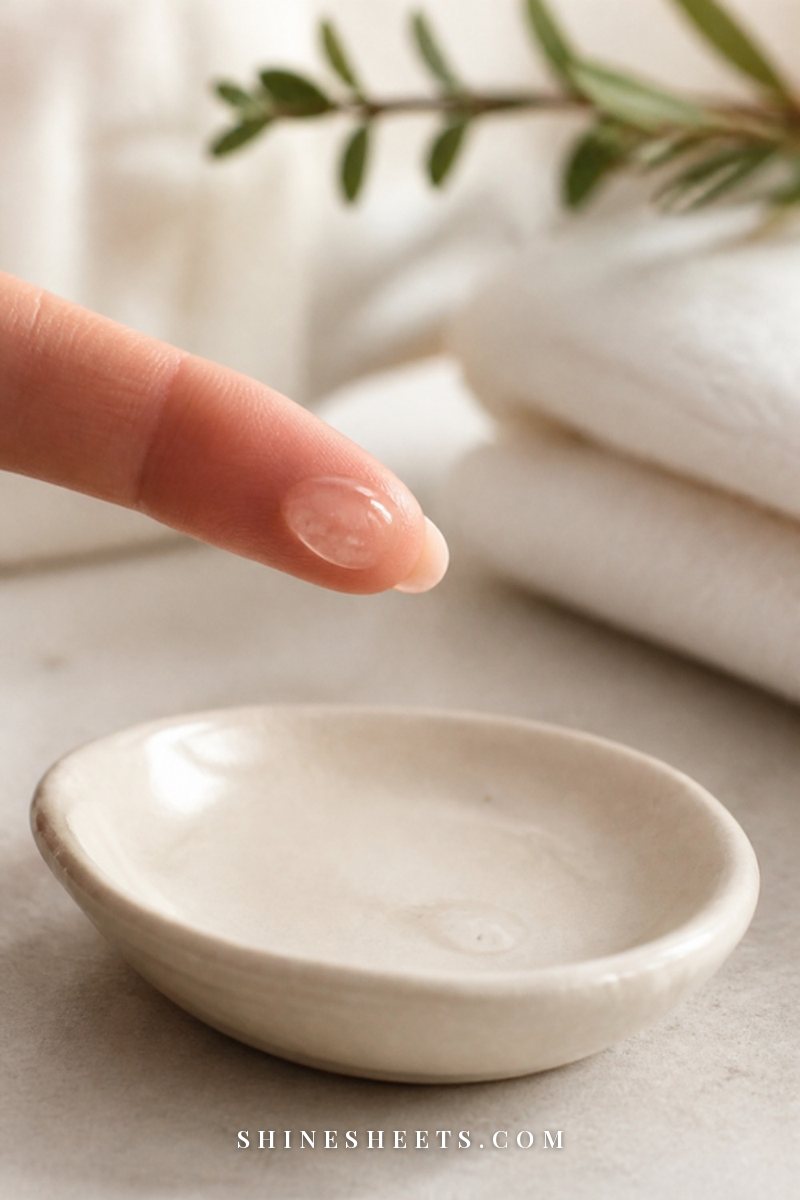
A barrier balm sits on top of the skin like a soft shield, so the next tissue slides over the balm instead of your skin. A petrolatum healing balm is a classic choice because it's simple, unscented and very protective. Use a clean fingertip or a cotton swab and dab a thin layer around the nostrils and on any pink spots after each time you blow your nose. Keep it on the outside of the nose, not inside the nostrils. During a cold, a small tube in your pocket or bag makes this easy to keep up.
4. Press a Ceramide Cream Into Damp Skin
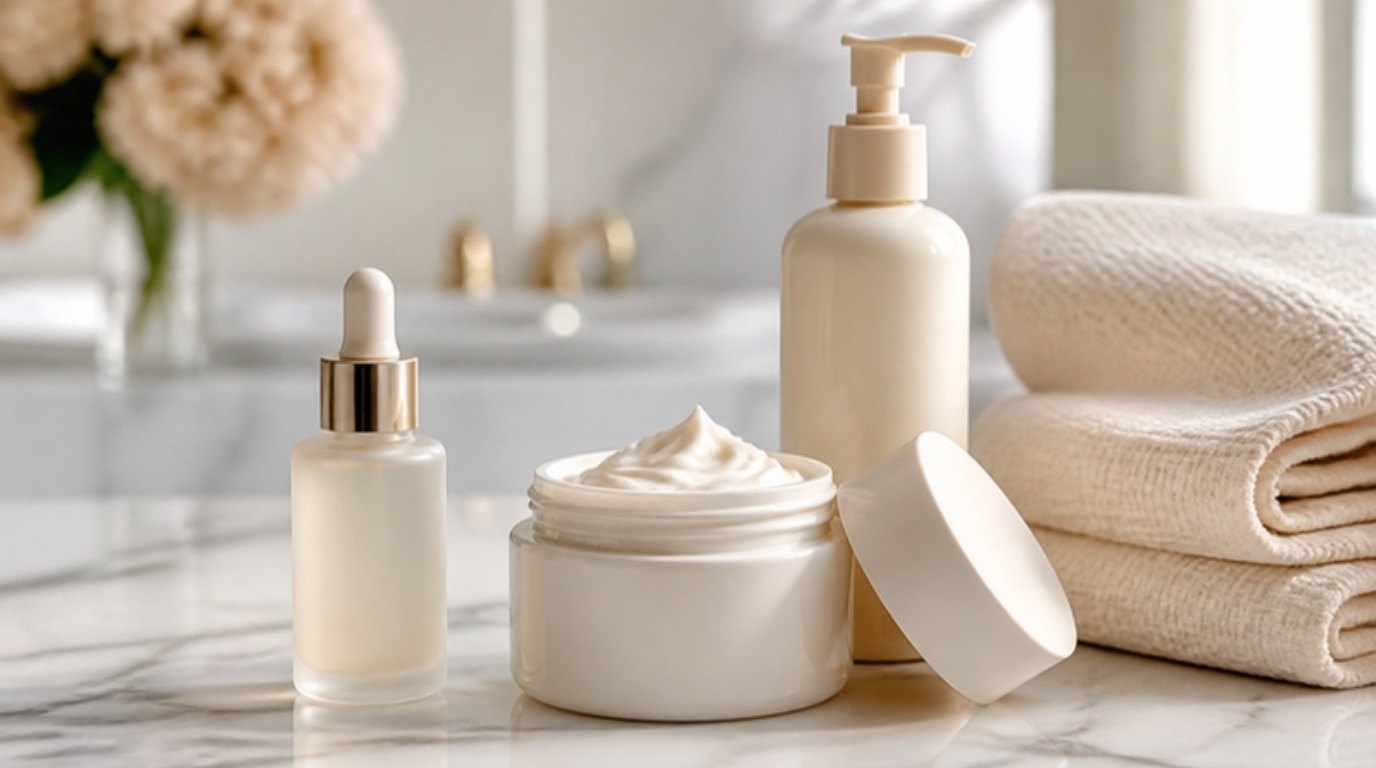
Morning and evening, after cleansing, leave your face slightly damp and press in an unscented ceramide cream. Ceramides are a natural part of the skin barrier, and a cream with ceramides, glycerin or similar comforting ingredients helps the skin hold on to water. Pressing rather than rubbing avoids extra friction. Use a little more on your nose and around the nostrils than on the rest of your face. If you'd like to understand why barrier care helps so much, my guide on how to restore your skin barrier explains it simply.
5. Go Thicker at Night
At night your skin has hours to recover, but it also loses moisture into dry indoor air. After your ceramide cream, add a thin layer of the barrier balm over the driest, flakiest areas. It feels a little greasy, and that's the point: it seals moisture in while you sleep. Put an old, clean pillowcase on if you're worried about your bedding.
6. Run a Humidifier Near Your Bed

A white cool-mist humidifier next to your bed adds moisture to the air while you sleep, so your skin (and your stuffy nose) loses less water overnight. Place it a few feet from the bed on a stable surface, use clean water, and empty and clean it regularly so it doesn't grow mold or bacteria. My gentle guide to humidifiers for skin covers placement, humidity levels and cleaning.
Give the full routine at least five to seven days. Many dry red noses look calmer within a few days, but the skin barrier needs a little longer to really recover.
What To Pause Until Your Nose Heals
When skin is irritated, some products that are normally fine can sting and slow healing. Until your nose looks and feels normal again, take a short break from:
- Scrubs and exfoliating brushes, including washcloths rubbed over the nose.
- Exfoliating acids such as glycolic, lactic and salicylic acid in toners, serums or pads.
- Retinoids and retinol, at least on the nose area.
- Strong fragrance and products with a lot of drying alcohol.
- Clay masks and peel-off masks on the nose.
And please don't pick or peel the flakes, however tempting. Pulling them off removes skin that isn't ready to come away and can leave raw, sore patches. Soften flakes with cream and balm instead, and let them lift on their own. Once your nose is fully healed, bring back actives one at a time, every other night at first.
How To Cover Redness With Makeup Gently
You can absolutely wear makeup over a dry red nose. It just needs a softer approach than usual so it doesn't cling to flakes or rub the skin.
- Moisturize first. Apply your ceramide cream and wait three to five minutes so it settles. A dry nose grabs pigment unevenly.
- Skip the balm where makeup goes. In the morning, keep the balm very thin or press off the excess with a tissue, or makeup will slide.
- Neutralize strong redness lightly. If the redness is very visible, a tiny amount of a green-tinted color corrector, pressed on with a fingertip, softens it. Use only a sheer layer, or it can look gray.
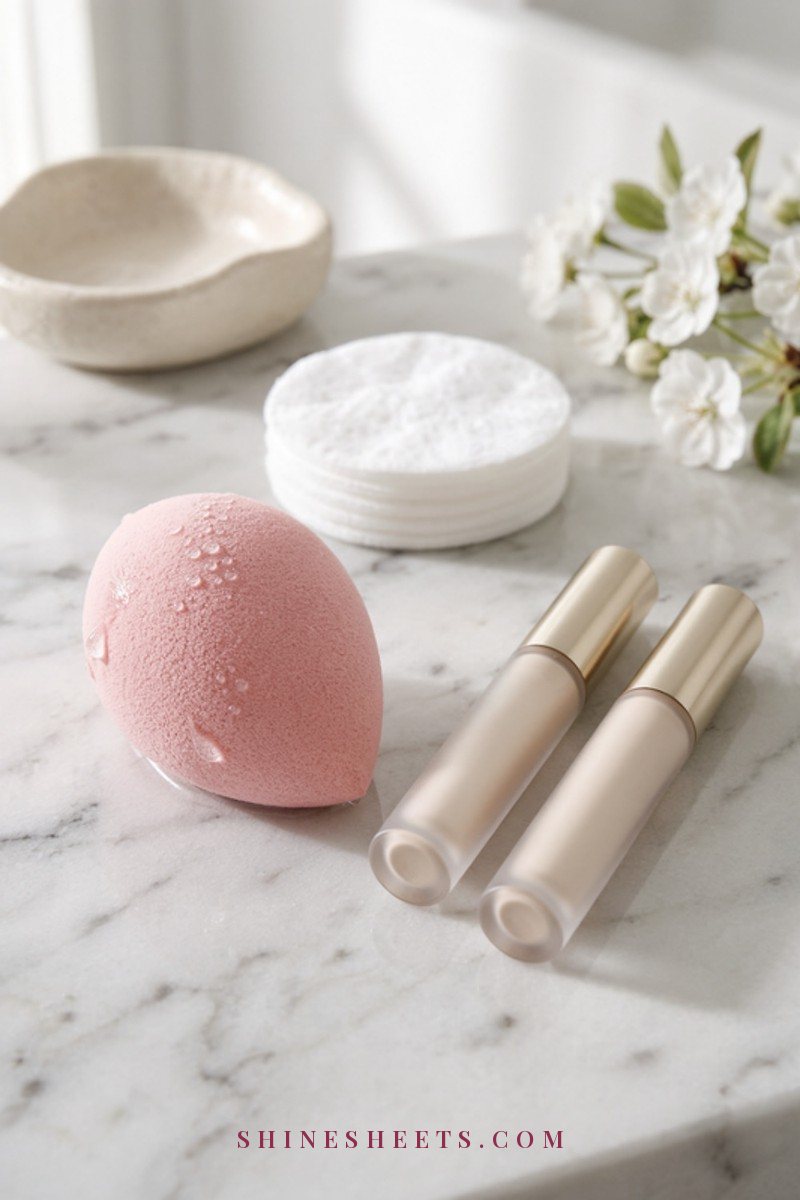
- Use a creamy concealer. A creamy concealer moves with dry skin better than a matte one. Tap it on the red areas with your ring finger or a damp sponge. Don't drag.
- Powder sparingly, if at all. Powder can make flakes stand out. If you need it, use the smallest amount of a finely milled one and press it on.
At night, remove makeup gently with a cream cleanser or a cleansing balm, without rubbing, and go straight into your night routine. If redness on your face isn't only around your nose and it lasts beyond the cold, my guide to calming redness on your face is a helpful next read.
Preventing a Dry Red Nose on Windy Days

Prevention is easier than fixing. Before you head out into cold, windy weather:
- Moisturize 10–15 minutes before going out, so the cream has time to settle.
- Add a thin layer of balm on your nose and around the nostrils as a wind shield.
- Wear sunscreen in the daytime. Winter sun still reaches your skin, and snow reflects it.
- Cover up. A soft scarf pulled up over your nose and cheeks on very windy days blocks most of the chill. Choose a smooth knit rather than scratchy wool against irritated skin.
- Carry soft tissues and a small balm in your coat pocket during cold season, so you're never stuck with rough paper napkins.
- Come in gently. Back indoors, don't rush to splash your face with hot water. Lukewarm, then cream.
Small daily habits matter here too. Keep your bedroom a little cooler, drink water through the day and save the hottest part of your shower for your shoulders, not your face. For the rest of your face, my winter skincare routine covers what to swap when the heating comes on.
A Gentle Day-and-Night Plan While You Have a Cold
When you feel run-down, the last thing you want is a complicated routine. Here is how the six steps fit into a normal sniffly day, so you don't have to think about it.
Morning
- Rinse your face with lukewarm water, or use a small amount of gentle cleanser if your skin feels oily.
- Pat dry, then press in your ceramide cream while the skin is still slightly damp.
- Wait a few minutes, add sunscreen if you're going out, and dab a very thin layer of balm around the nostrils.
- Put a small balm and a pack of soft tissues in your bag or pocket.
During the Day
- Blow gently and pat dry every time, then add a dot of balm. It takes ten seconds.
- Wash your hands after each tissue, then use a little hand cream so your hands don't crack too.
- Sip water or warm tea through the day. Feeling dehydrated during a cold doesn't help your skin either.
- If you wear makeup, touch it up by pressing, never rubbing, and skip extra powder on the nose.
Evening
- Take a warm, not hot, shower and keep the water off your face for most of it.
- Cleanse gently, then press in your ceramide cream on damp skin.
- Add a thicker layer of balm on the driest areas.
- Switch on the humidifier, make a cup of evening tea and go to bed a little earlier than usual.
That's all. Keep it up for the length of your cold and a few days afterward, and your skin has everything it needs to recover. If you only manage the tissue and balm steps on a bad day, that still counts.
Patch Testing and Sensitive Skin
If your skin is sensitive, irritated skin is even more likely to react to something new. Before using a new cream, balm or concealer on your nose, try it for a few days on a small area, such as the side of your neck or along your jaw. If it stings, itches or makes the skin redder, stop using it. Keep your routine short while you heal: a gentle cleanser, one cream, one balm. Fewer products mean fewer chances to irritate an already tender spot.
When To See a Doctor
A dry red nose from colds, wind and tissues usually improves with gentle care. Please check in with a doctor or dermatologist if:
- The skin is cracked, bleeding or very painful.
- You see yellow or honey-colored crusts, oozing, swelling or warmth, which can be signs of infection.
- You notice blisters, tingling or sores around the nostrils or lips.
- Redness lasts more than a few weeks, spreads, or keeps coming back without a cold.
- You have visible bumps, broken blood vessels or flushing that doesn't fade.
- Nothing helps after one to two weeks of gentle care.
Some skin conditions can look like simple dryness at first, and a doctor can tell the difference and suggest the right treatment. This article shares general skincare tips and isn't a replacement for medical advice.
Final Thoughts
A dry red nose is one of those small, uncomfortable parts of cold season that can make you feel extra run-down. The good news is that it usually responds to simple kindness: soft tissues, a gentle pat, a thin layer of balm, a rich cream on damp skin and a humidifier humming by the bed.
Be patient with it for a week, keep your routine short and calm, and treat yourself to an evening cup of tea while your skin catches up. Your nose will be back to its usual self before you know it.