Delayed gratification isn't about being strict with yourself or saying no to every nice thing. It's about choosing what you want most over what you want right now – and making that choice a little easier, again and again, until it starts to feel natural. The patience part isn't a personality trait you either have or don't. It's a skill, and like any skill, it grows with small, kind practice.
That's an encouraging thing to know when everything around you is designed to be instant: next-day delivery, endless feeds, food in twenty minutes, answers in a second. Of course waiting feels harder than it used to. The goal isn't to fight that with willpower alone, but to set up your life so the patient choice is the easy one more often. I'm someone who loves a small treat in the moment, so trust me when I say this guide is about balance, not deprivation.
Here's what this guide to delayed gratification covers: what it really means, why it feels so hard now, the famous marshmallow study (told carefully, because the story is more complicated than it sounds), everyday examples, practical strategies, a "now vs later" decision card, when not to delay at all and how to build patience a little every day.
What Delayed Gratification Really Means
In simple words, delayed gratification is resisting a smaller reward now so you can have a bigger or more meaningful reward later. Going to bed instead of watching one more episode so you wake up rested. Practicing the guitar instead of only listening to music. Waiting a week before buying something to see if you still want it.
A few things it is not:
- It's not punishment. You're not denying yourself because you don't deserve good things. You're choosing a better thing.
- It's not all-or-nothing. Small delays count. Waiting ten minutes is practice too.
- It's not about never enjoying the present. Some joys are meant to be had right now (more on that later).
- It's not a measure of your worth. Everyone struggles with this, especially when tired, stressed or overwhelmed.
I like to think of it as a quiet conversation between "present you" and "future you." Present you wants comfort and fun right now. Future you wants rest, progress and peace. Delayed gratification is simply learning to give future you a seat at the table.
Why Waiting Feels So Hard Now

If patience feels harder than it should, you're not imagining it, and it's not a personal failing. A few things make waiting genuinely difficult:
- Instant everything. When so much arrives immediately, any wait starts to feel unusual and uncomfortable.
- Our brains favor now. Humans naturally value rewards that are close in time more than ones far away. A treat in your hand feels more real than a goal months from now.
- Stress and tiredness. When you're running on empty, the quick comfort is understandably more tempting.
- Vague future rewards. "Being healthier someday" is hard to picture. "Dessert right now" is very easy to picture.
- Uncertainty. When you're not sure the future reward will actually come, waiting feels pointless. This one matters a lot, as you'll see in the study below.
The encouraging part: almost every one of these can be softened with the strategies further down. You don't need a stronger will. You need a better setup.
The Marshmallow Study, Told Carefully
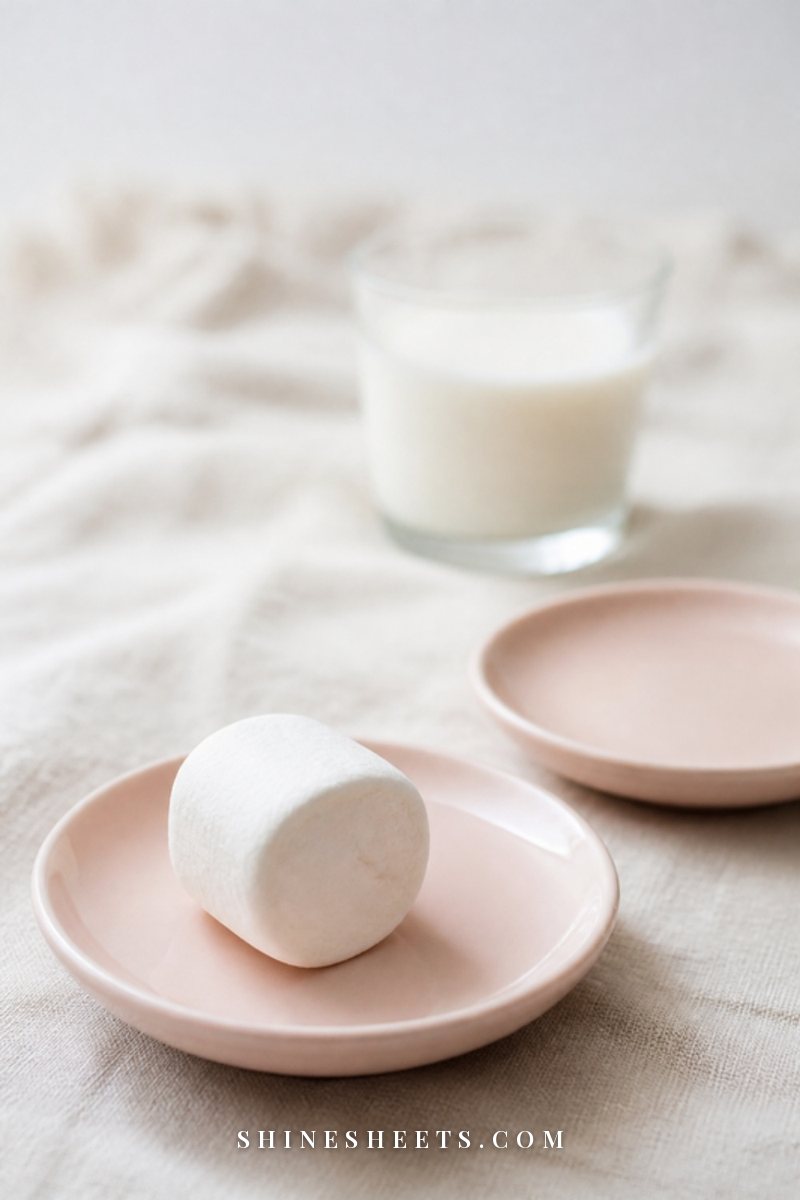
You've probably heard of it. In the late 1960s and early 1970s, psychologist Walter Mischel and his colleagues at Stanford offered preschoolers a choice: one treat (like a marshmallow or a pretzel) right away, or two treats if they could wait alone in the room for a while – often up to about fifteen minutes.
Some children ate the treat quickly. Others waited, often by distracting themselves – covering their eyes, singing, turning away. Follow-up studies years later found that, in that group of children, those who had waited longer tended to have some better outcomes as teenagers and young adults. Those findings became a famous story: wait for the marshmallow and you'll succeed in life.
Here's where it gets more complicated, and more interesting:
- The original groups were small and not very diverse – mostly children of families connected to a university.
- A larger replication published in 2018 with a more varied group of children found a much smaller link between waiting and later achievement, and much of that link shrank further once family background and early skills were taken into account.
- Trust changes the result. A study from the University of Rochester found that children waited much longer when the adult had kept an earlier promise, and much less when the adult had been unreliable. Waiting makes sense when the future reward feels real.
The honest takeaway isn't "kids who wait are destined for success." It's gentler and more useful: the ability to wait is shaped by circumstances, trust and strategies, not just by character. The children who waited longest often weren't the ones with the most willpower. They were the ones who found clever ways not to stare at the marshmallow.
That's good news for all of us. It means patience can be supported and learned, and that the environment you build matters as much as the willpower you bring.
Everyday Examples of Delayed Gratification

Delayed gratification shows up in small moments far more often than in big, dramatic choices. A few everyday examples:
- Health habits: Taking a walk when you'd rather stay on the couch, going to bed on time, drinking water before the afternoon coffee.
- Learning: Practicing a language for ten minutes a day, reading a challenging book, sticking with a hobby through the awkward beginner phase.
- Money in general terms: Waiting before an impulse purchase, saving toward something you really want rather than buying the cheaper version now.
- Work and projects: Finishing the hard part of a task before checking your phone, building something slowly that pays off later.
- Relationships: Pausing before sending an angry message, listening fully before responding, choosing a calm conversation over a quick win.
- Home: Tidying for five minutes tonight so tomorrow morning feels lighter.
- Self-care: Doing your evening skincare and taking off your makeup when you'd rather collapse into bed.
Notice how most of these are tiny. That's the point. Patience is built in five- and ten-minute choices, not grand sacrifices.
Strategies To Build Patience for What Matters
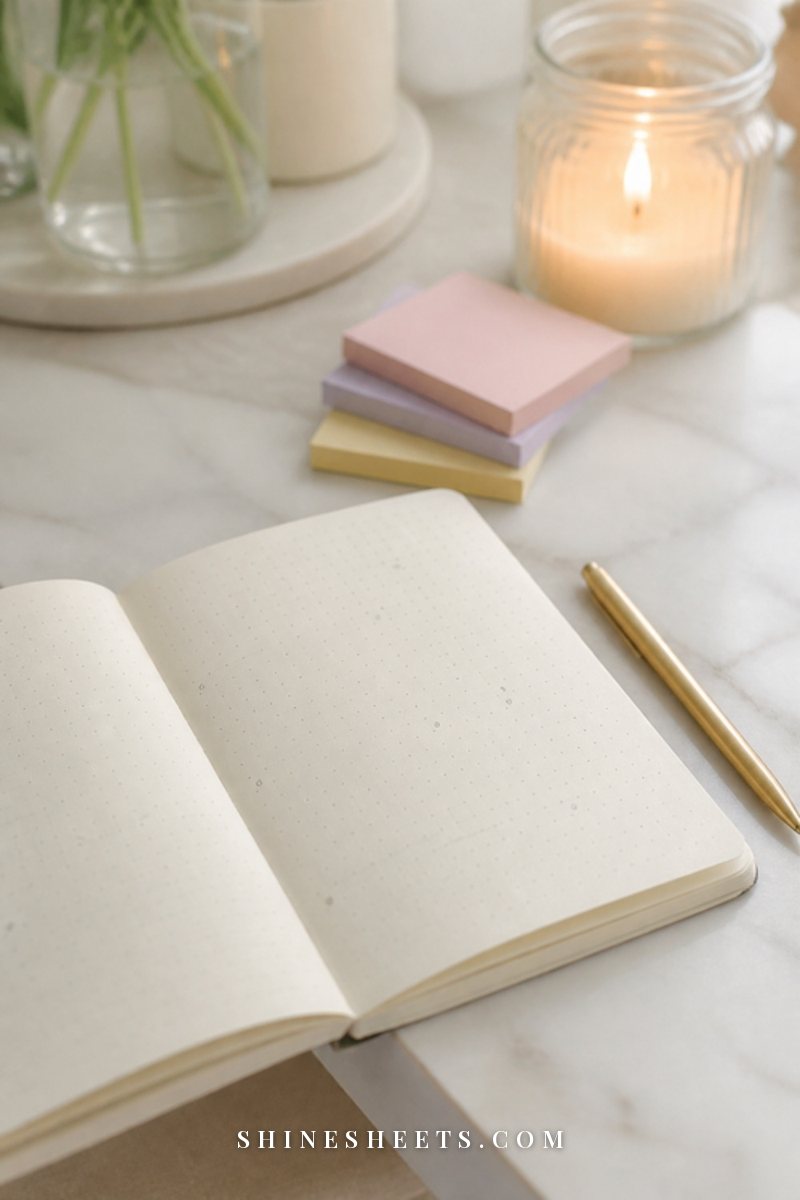
These are the practical tools that make the patient choice easier. You don't need all of them – pick one or two that feel doable and start there. A cream habit tracker journal or a simple notebook is helpful for keeping track of which ones you're trying.
Make the Future Feel Real
The future reward needs to feel as vivid as the present one. Instead of "I want to be fitter," picture a specific scene: hiking that trail next summer without stopping, or feeling strong carrying groceries up the stairs. Write it in detail in a cream linen journal, including how it feels, what you're wearing, who's with you.
Another lovely trick: write a short note from future you to present you. "Thank you for going to bed early this week. I feel so much calmer." It sounds simple, but it makes the reward tangible.
Try Temptation Bundling
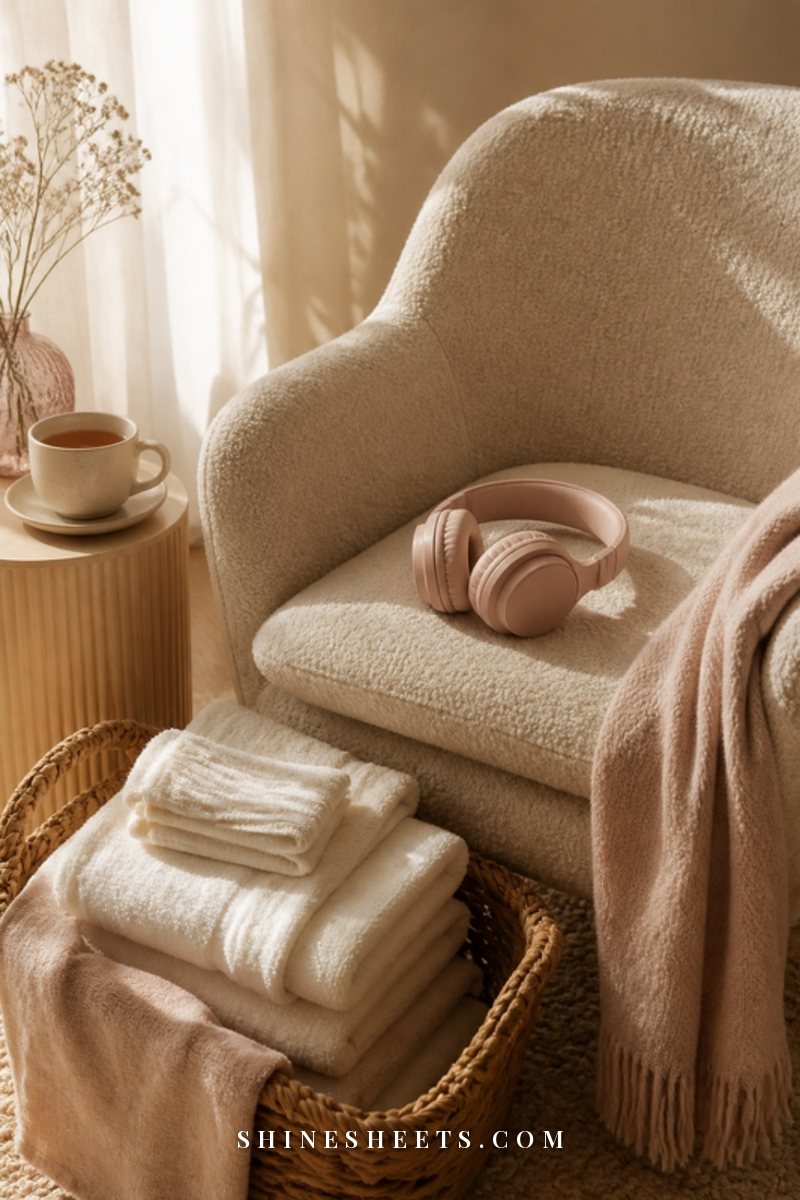
Temptation bundling pairs something you want to do with something you should do. You only get the fun thing while doing the less fun thing. Some ideas:
- Listen to your favorite podcast only while walking or folding laundry.
- Have your favorite tea only during your weekly planning session.
- Watch a comfort show only while ironing or meal prepping.
- Light your nicest candle only when you sit down to do admin tasks.
The reward becomes part of the task, so you're not relying purely on waiting.
Use If-Then Plans
If-then plans (psychologists call them implementation intentions) decide your response before the temptation shows up. The formula is: "If [situation], then I will [action]."
- "If I want to buy something online that isn't on my list, then I'll leave it in the cart for 48 hours."
- "If I reach for my phone during focused work, then I'll put it in another room for 25 minutes."
- "If I feel like skipping my walk, then I'll put my shoes on and go for just five minutes."
Because the decision is already made, there's less negotiation in the moment. Pairing these with habits you already have makes them even stronger – my guide on habit stacking shows exactly how.
Add a Little Friction
Make the instant option slightly harder and the patient option slightly easier. Small barriers work surprisingly well:
- Log out of shopping apps and remove saved cards.
- Charge your phone outside the bedroom.
- Keep treats in a high cupboard rather than on the counter.
- Put your walking shoes by the door and your journal on your pillow.
Friction isn't about restriction. It just gives your thoughtful brain a few seconds to catch up with your impulsive one.
Use a Timer To Shrink the Wait
Long waits feel impossible; short ones feel manageable. When a craving or impulse hits, set a ten-minute timer and tell yourself you can decide afterward. A small glass sand timer on your desk is a lovely, screen-free way to do this. Very often, the urge passes by the time the sand runs out. If it doesn't, you can still choose freely – but now it's a choice, not a reflex.
The same idea helps with putting things off: a timer for "just ten minutes of the hard thing" is one of my favorite tools from how to stop procrastinating.
Celebrate Milestones Along the Way

Big goals can feel endlessly far away. Break them into smaller milestones and reward each one with something small and meaningful – fresh flowers, a new book, a long bath, an afternoon off. Write each milestone on a pastel sticky note and stick them on your mirror or desk, moving each one to a "done" page as you go.
These little rewards aren't cheating. They're how you keep present you happy enough to keep going for future you.
Remember Why It Matters
Patience is easier when the goal genuinely matters to you, not just to someone else's idea of success. Ask yourself: "Why do I want this? What will it give me?" If the answer feels hollow, it might be a goal worth letting go of. If the answer feels warm and true, write it somewhere you'll see it often.
The Now vs Later Decision Card
This is the card I'd keep close for those in-the-moment choices. Read across each row and ask yourself the question. Screenshot it and keep it on your phone's photo favorites for easy access.
| Ask yourself | Leans "now" | Leans "later" |
|---|---|---|
| Will I still want this in a week? | Yes, and it's small and affordable | Probably not, or I'm not sure |
| Does it support or undo something I care about? | It supports it, or it's neutral | It quietly undoes a goal |
| Am I tired, stressed, hungry or lonely right now? | No, I'm calm and choosing freely | Yes – wait until that's handled |
| Is this rest or joy I actually need? | Yes – rest and joy count | It's numbing more than nourishing |
| Is the later reward real and likely? | No, the "later" is vague or uncertain | Yes, it's specific and in reach |
| How will I feel about it tomorrow morning? | Glad I did it | Glad I waited |
| Could a smaller version work now? | A small version is perfect | Even a small version would pull me off track |
Notice that this card doesn't always point to "later." Sometimes "now" is the right answer, and that's exactly the point of the next section.
When Not To Delay

Delayed gratification is a tool, not a life philosophy. Used everywhere, it can turn into a habit of always postponing happiness until some imaginary future where everything is finished. Some things are better right now:
- Rest when you're exhausted. Pushing through every time isn't patience, it's depletion. If resting brings up guilt, my guide on how to stop feeling guilty for resting is a gentle place to start.
- Small daily joys. A good coffee, a sunset walk, calling a friend, wearing the nice dress on an ordinary day.
- Time with people you love. Connection doesn't always wait.
- Medical and emotional needs. Never delay getting help when you need it.
- Experiences with a window. Some opportunities are only available now.
The real skill isn't always waiting. It's knowing which moments deserve your patience and which ones deserve your full, happy yes.
Building Patience Day by Day
Patience grows best with small, regular practice. A few gentle exercises you can weave into ordinary days:
- The ten-minute pause. Before any unplanned purchase or snack, wait ten minutes. Just notice what happens.
- Single-tasking. Drink your morning tea without your phone. Five minutes of only tea.
- Finish before you switch. Complete one small task fully before starting the next.
- Slow evenings. Light a glass jar candle, read a few pages of a book and let the evening unfold without rushing to the next thing.
- Long-game hobbies. Gardening, knitting, learning an instrument – anything where results take weeks teaches your brain that waiting pays off.
- Reflect weekly. Every Sunday, write down one moment you chose later over now, and how it felt.
Patience and discipline are close friends. If you want more on building that steady inner strength without being harsh with yourself, my guide on how to be more disciplined is a gentle next read. And if you catch yourself thinking "I'm just not a patient person," remember that patience can grow – the core idea behind a growth mindset.
Teaching Your Brain That Waiting Pays Off
The Rochester finding about trust has a lovely practical lesson: you'll find it easier to wait for future rewards when you've seen your own promises to yourself come true. If you've told yourself "I'll treat myself after this project" a dozen times and then never did, part of you has quietly learned that waiting leads nowhere.
Rebuild that trust in small ways:
- Keep the small promises. If you said you'd have a slow Saturday morning after a busy week, protect it.
- Make rewards specific. Not "something nice later," but "a new novel and an afternoon in the bath on Sunday."
- Keep waits short at first. A one-day wait you honor builds more trust than a one-month wait you abandon.
- Notice the payoff. When waiting worked out, pause and enjoy it fully. Let your brain register that it was worth it.
Over time, "later" stops feeling like "never," and patience becomes far less of a struggle.
What To Do When You Slip
You'll choose "now" when you meant to choose "later." Everyone does. What matters is how you respond:
- Skip the self-criticism. Harshness makes you more likely to give up entirely.
- Get curious. Were you tired? Stressed? Was the temptation too easy to reach? That's information, not failure.
- Adjust one thing. Add a bit more friction, a clearer if-then plan or a better reward.
- Start again at the next choice, not next Monday.
Consistency is never about a perfect streak – it's about coming back. My guide on how to be more consistent has more gentle ways to restart without the guilt.
Every single choice is a fresh start. One impulse doesn't erase weeks of patient choices.
Final Thoughts
Delayed gratification isn't about being hard on yourself. It's about loving your future self enough to give her a few good choices today, while still enjoying the small joys that make the present worth living. Make the future vivid, add a little friction, celebrate milestones and use a timer when a craving feels loud.
Patience grows quietly, one ten-minute pause at a time. Be gentle with yourself while it does.