
Being articulate has very little to do with big words. The people we think of as well-spoken usually say simple things in a clear order, at a calm pace, with a small pause before the important part. That's a skill, not a personality trait, and it can be practiced like any other.
If you've ever had a brilliant thought in your head that came out as a tangle of "um, like, you know what I mean," you're in very good company. Your mind isn't the problem. Usually the gap is between thinking and speaking: no structure, too much speed and a little nervous pressure to fill every silence.
This guide covers how to be more articulate in everyday life: what being articulate really means, 12 practical habits that make your words clearer, a table of sentence frames for common situations, tips for meetings and conversations, and exactly what to do when your mind goes blank.
Nothing here requires you to become a different person. You'll just sound more like the clear, thoughtful version of yourself that's already in there.
What Being Articulate Really Means

Being articulate means people understand what you mean the first time you say it. That's it. It isn't about sounding academic, using rare vocabulary or speaking without a single pause. In fact, the clearest speakers often use plain, everyday words.
Articulate speech usually has four qualities:
- Clarity: you know your main point, and you say it early.
- Structure: your ideas come in an order the listener can follow.
- Pace: you speak slowly enough for people to absorb what you're saying.
- Precision: you choose the word that fits, rather than the first word that shows up.
Notice what's not on the list: confidence, charisma or a perfect accent. Those can grow alongside it, but you can be articulate and still a little nervous. I'm prone to anxiety myself, and what helped me most wasn't feeling braver. It was having a simple structure to lean on when my heart rate went up.
Why Smart People Still Struggle To Find Their Words
Plenty of thoughtful, well-read women feel tongue-tied when they speak. A few common reasons:
- Thinking while talking. You start speaking before you know where the sentence is going, so it wanders.
- Too many ideas at once. Your brain offers three related points and you try to say all of them in one breath.
- Fear of silence. A pause feels awkward, so you fill it with "um" or keep talking past your point.
- Speed. Nerves make you speak faster, and fast speech leaves no time to pick the right words.
- Less practice than you think. Many of us write all day but rarely explain things out loud at length.
The good news: every item on this list has a practical fix, and none of them involve memorizing a dictionary.
It also helps to know that being articulate isn't fixed. Most of us speak beautifully with a close friend on the couch and stumble in a meeting or on a phone call with someone new. That difference tells you the skill is already there. What changes is the pressure, and pressure is something you can prepare for with structure, pace and a bit of practice.
12 Ways To Be More Articulate
Pick two or three of these to practice this week rather than all twelve at once. Small, repeated habits change how you speak much faster than a big overhaul.
1. Pause Before You Speak
A one- or two-second pause before you answer feels long to you and completely normal to everyone else. It gives your brain time to choose a starting point, and it makes you look thoughtful instead of rushed.
Try this: when someone asks you a question, take one slow breath in through your nose before you answer. If you need longer, say "Good question, let me think for a second." People respect that far more than a rushed answer.
2. Know Your Point Before You Start
Before speaking, silently finish this sentence: "The one thing I want them to understand is…" If you can't finish it, you're not ready yet, and that's fine. Ask a clarifying question or take your pause.
Once you know your point, say it first. Background and details come after. Most rambling happens when we save the point for the end and get lost on the way there.
3. Use the PREP Structure
PREP is the simplest speaking structure I know, and it works for meetings, interviews, dinner conversations and difficult talks:
- Point: say what you think. "I think we should move the launch to next month."
- Reason: say why. "The team needs two more weeks to test it properly."
- Example: make it concrete. "Last time we rushed it, we spent a month fixing small issues."
- Point again: wrap it up. "So I'd rather launch a little later and do it well."
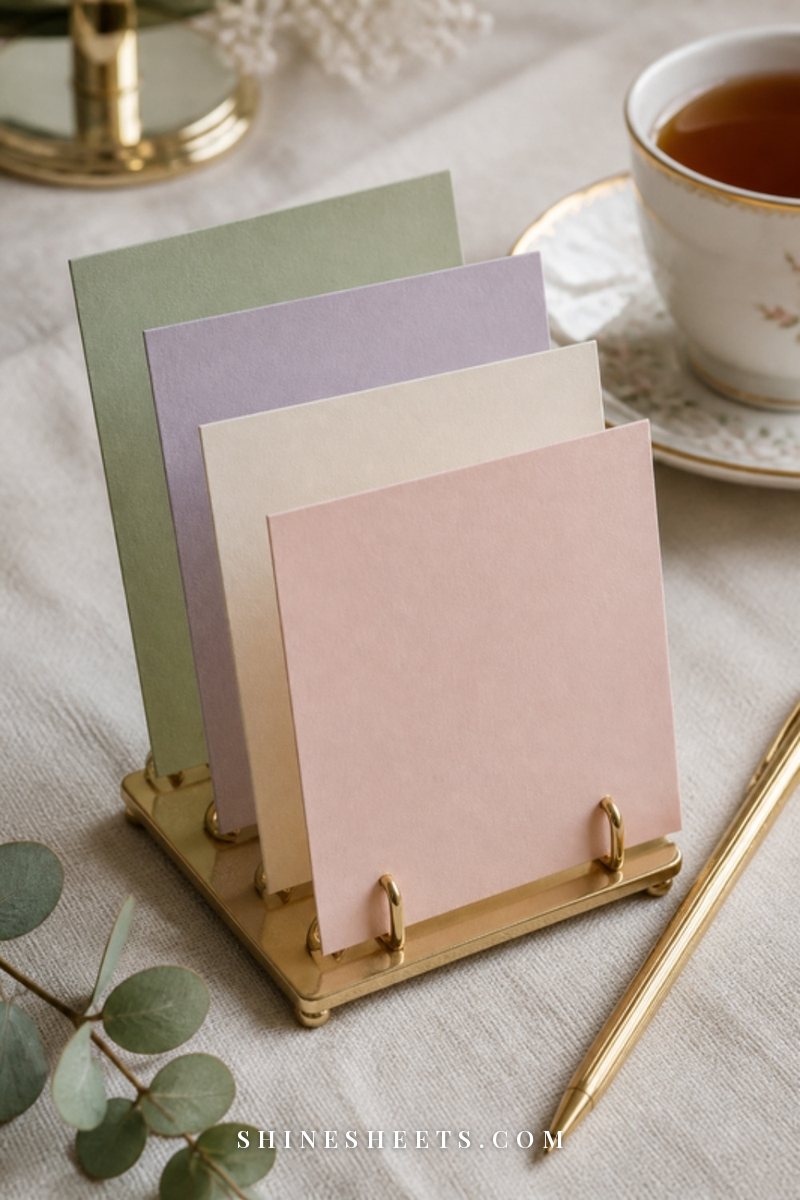
Write the four letters on a few pastel index cards and keep them in a little gold card holder on your desk. Glancing at them before a call is a gentle reminder to lead with your point. A shorter version for quick answers is "point–reason," two sentences and done.
4. Cut Filler Words Gently
Everyone uses some filler words. A few are natural; a lot of them distract from what you're saying. The goal isn't zero "ums" – it's replacing most of them with a short silent pause.
A practical way to start: choose one filler word you overuse ("like," "basically," "so," "you know") and notice it for a week without trying to fix it. Awareness alone reduces it. In the second week, every time you feel it coming, close your mouth and pause for a beat instead. The pause sounds confident; the filler sounds unsure.
5. Slow Down by About 20 Percent
Most of us speak faster when we're nervous or excited. Slowing down slightly gives you time to choose words and gives your listener time to follow. It also makes your voice sound calmer and lower, which reads as confident.
A helpful cue: finish your sentences fully, including the last word, instead of trailing off. Breathe at the end of each sentence. If you're unsure whether you're rushing, ask a friend you trust, or listen back to a recording (see tip 10).
One small exercise: read a paragraph from any book out loud at your normal speed, then read it again while pausing at every comma and full stop. The second version will feel almost too slow to you. To a listener, it sounds calm, warm and easy to follow, which is exactly the effect you want.
6. Use Shorter Sentences
Long sentences with lots of "and then… and also… which means…" are hard to follow out loud. Spoken language works best in short pieces. If a sentence has more than one "and," try breaking it into two.
Instead of: "I looked at the numbers and they were lower than we thought and I think it's because of the holidays and also the new pricing." Try: "The numbers were lower than we expected. I think there are two reasons: the holidays and the new pricing." Same content, much clearer.
7. Build Vocabulary Through Reading

Reading is the most natural way to grow your vocabulary because you meet words in context, used by people who write well. Fiction gives you emotional and descriptive language; good nonfiction and essays give you words for ideas and arguments.
Make reading easy to fall into: a wooden book stand on your desk or kitchen counter keeps a book open while you sip your tea, and a soft cream desk lamp makes an evening reading spot feel inviting rather than like homework. If finding the time is the hard part, my guide on how to read more books has easy ways to fit it into a busy week.
8. Learn New Words in Context, Not From Lists
Memorizing word lists rarely sticks. Instead, when you meet a word you like in a book or article, write down the whole sentence it appeared in, then write one sentence of your own using it. Try to use it out loud within the next two days, even if it's just while talking to yourself in the car.
Keep these in one place: a cream linen notebook just for words and phrases you love becomes a lovely little collection over time. Aim for two or three new words a week, not twenty. Words you actually use beat words you once highlighted.
9. Explain Things Out Loud
The fastest way to get better at speaking is to speak more, with a bit of intention. Pick something you know well (a city you love, a book you just finished, how your job works, a show you're watching) and explain it out loud for two minutes as if to a friend who knows nothing about it.
You'll notice right away where you ramble, where you skip steps and which words you keep reaching for. Doing this three or four times a week, in the shower or on a walk, builds the same muscle you use in real conversations.
10. Record Yourself Once a Week
Listening to your own voice is uncomfortable for almost everyone. It's also the most honest feedback you'll get. Once a week, use your phone to record a two-minute explanation (from tip 9) or answer a question like "What's something you've changed your mind about?"
When you listen back, look for three things only: your main point (was it clear, and how early?), your filler words (count them) and your speed. Don't judge your voice itself. Then record the same answer again and notice how much better the second take is. That improvement is the skill growing.
11. Write Before You Speak

Writing slows your thinking down enough to organize it. Before an important conversation, meeting or call, spend five minutes jotting down your main point, two supporting reasons and one example. You won't read from it, but having written it once makes the words easier to find when you speak.
Journaling helps too. When you put your thoughts into sentences on paper regularly, your spoken sentences get clearer as well. If you'd like prompts to get started, my list of journaling ideas has plenty.
12. Listen Closely Before Responding
Articulate people often seem quick, but much of their clarity comes from listening properly. When you really hear the question, your answer naturally fits it. When you're busy planning what to say, you end up answering something slightly different.
Try reflecting back before answering: "So you're asking whether we can finish by Friday?" It buys you a moment to think and makes sure you're answering the right thing. My guide on how to be a good listener goes deeper into this if you want to practice it.
Sentence Frames for Everyday Situations
Sentence frames are ready-made openings that give your thoughts a shape. They're especially helpful when you're nervous, because you don't have to invent the structure on the spot. Screenshot this table and try one or two this week.
| Situation | Sentence frame |
|---|---|
| Sharing an opinion | "I think ___, mainly because ___." |
| Disagreeing politely | "I see it a bit differently. From my side, ___." |
| Giving an update | "Quick update: ___ is done, ___ is in progress, and I need ___ from you." |
| Asking for time to think | "Let me think about that for a second." |
| Explaining something complex | "There are three parts to this. First, ___." |
| Making a request | "Could you ___ by ___? It would help me ___." |
| Answering a question you're unsure about | "I'm not certain, but my best understanding is ___. I'll double-check and follow up." |
| Bringing a rambling answer back | "So the short version is ___." |
| Telling a story | "The short story is ___. What surprised me was ___." |
| Ending your point clearly | "That's why I'd suggest ___." |
How To Be More Articulate in Meetings

Meetings bring extra pressure: several people listening, limited time and the feeling that you'll be judged. A little preparation takes away most of that pressure.
- Prepare one point per topic. Before the meeting, look at the agenda and write one sentence for each item you might speak on.
- Speak early. Saying something in the first ten minutes, even a short question, makes it easier to speak again later.
- Lead with the headline. "My recommendation is…" or "The main issue is…" then details.
- Use numbers sparingly. One or two clear numbers are memorable; six in a row are noise.
- Finish cleanly. End with "That's my view" or "Happy to hear other thoughts" instead of trailing off with "so… yeah."
If confidence is the bigger hurdle, my guide on how to speak with confidence covers body language, voice and nerves in more detail.
How To Be More Articulate in Everyday Conversations
Casual conversation is more relaxed, but clarity still matters. A few gentle habits:
- Tell stories in order. Start with the setting in one sentence, then what happened, then why it mattered. Skip side details unless they're funny.
- Use specific words. "The dinner was nice" becomes "The pasta was so good I almost ordered a second plate." Specifics make you sound more expressive without being fancy.
- Ask follow-up questions. Good conversation is a back-and-forth, and asking about someone else's story takes pressure off your own words.
- Let silences breathe. A comfortable pause in conversation is not a failure. It's often when the best thoughts arrive.
Being articulate also makes you easier to connect with, because people can follow your stories and opinions. For more on that side of it, my guide on how to be more interesting pairs nicely with this one.
What To Do When Your Mind Goes Blank
It happens to everyone, including people who speak for a living. The difference is that experienced speakers have a plan for it. Here's a simple four-step reset:
- Pause and breathe. Take one slow breath. A silent second feels much longer to you than to anyone listening.
- Repeat the last thing you said. "So, as I was saying, the timeline is tight…" often brings the next thought back.
- Use a bridge phrase. "The main thing I want to say is…" forces your brain to jump to the point.
- Be honest if needed. "I've lost my train of thought – give me a second." Saying it calmly is surprisingly disarming, and people almost always smile and wait.
The more often you practice tips 9 and 10, the less often this happens, because your brain gets used to finding words under a little pressure.
A Simple 10-Minute Daily Practice
If you want a routine rather than a list, this one fits into a tea break:
- 2 minutes: read a page of a well-written book or essay, slowly.
- 2 minutes: write down one new word or phrase and a sentence using it.
- 3 minutes: explain one thing out loud using PREP.
- 3 minutes: record yourself once a week, or on other days, simply repeat your explanation more slowly and with fewer filler words.
Do this for a month and you'll notice your sentences getting shorter, your pauses calmer and your point arriving earlier. Those small shifts are what people hear as "articulate."
Final Thoughts
Learning how to be more articulate isn't about polishing yourself into someone else. It's about giving your real thoughts a clear path out: a pause, a point, a reason and a calm pace. You already have the ideas. Now you're just making room for them to be heard.
Start with one habit this week, maybe the pause or the PREP structure, and let it become second nature before adding the next. Clear speaking grows quietly, one conversation at a time, and every small step counts.