The days after a chemical peel are when the real results are made. The peel itself takes minutes, but how your skin looks two weeks later depends mostly on what you do (and, just as much, what you don't do) while it heals. The good news is that the right aftercare is wonderfully boring: gentle cleansing, a plain moisturizer, serious sun protection and a lot of patience with your hands.
The tricky part is that peeling skin looks like it needs help. It flakes, it feels tight, it might look a little pink and blotchy, and every instinct says scrub it, pick it or cover it. Those instincts are exactly what cause most of the problems people blame on the peel itself – irritation, raw patches and dark marks that linger long after the flakes are gone.
This guide walks you through chemical peel aftercare step by step: what light, medium and deep peels do to your skin in plain words, a normal healing timeline, a day-by-day care table, the seven things to avoid, when to bring back your actives and makeup, and the warning signs that mean it's time to call your provider. If you had a professional peel, their instructions come first, always. Think of this as the calm, practical companion to them.
What Happens to Your Skin After a Chemical Peel
A chemical peel uses an acid solution to loosen and remove the outer layers of skin in a controlled way. Your skin then rebuilds from below, which is why it can look smoother and brighter once it settles. The depth of the peel decides how much skin is removed, how long healing takes and how careful you need to be.
Light Peels
Light (superficial) peels work on the very top layer. These include many in-office "lunchtime" peels and most at-home peels with glycolic, lactic, mandelic or salicylic acid. You might see mild redness for a few hours, a tight feeling for a day or two and fine, powdery flaking for a few days – or almost no visible peeling at all. Both are normal. Visible flaking is not a measure of how well a peel "worked."
If you're curious about one of the gentler options, my guide to the salicylic acid peel explains why it's often a good fit for oily and breakout-prone skin.
Medium Peels
Medium peels go deeper and are done by a dermatologist or a trained professional. Expect more noticeable redness, swelling for the first few days, darker or browner patches of skin that then peel in larger sheets, and pinkness that can last for a few weeks. Your provider will usually give you a specific routine, sometimes with prescription products. Follow that routine over anything you read online, including this article.
Deep Peels
Deep peels are a medical procedure done by a physician, often with pain relief and a recovery period measured in weeks rather than days. Aftercare for a deep peel is managed closely by the medical team, with check-ups and very specific instructions. Everything below is mainly for light peels and as a general understanding for medium peels – for a deep peel, your doctor's plan is the only plan.
A Normal Healing Timeline (and What Isn't Normal)

Every peel, every skin type and every person heals a little differently, but a light peel usually follows a similar rhythm. Knowing it ahead of time takes away a lot of the worry, because the awkward middle part is expected.
- Day 1: Pinkness, warmth or a mild sunburn-like feeling. Skin can look shiny and feel tight.
- Days 2–3: Tightness peaks. Skin may look a little darker, dull or crinkly, especially around the mouth and nose. Flaking often starts here.
- Days 3–5: The main flaking phase. Fine flakes or small sheets lift, usually starting around the mouth, chin and nose, then the cheeks and forehead.
- Days 5–7: Flaking slows down. The new skin underneath can look pink and feel more sensitive than usual.
- Weeks 2–4: Pinkness fades gradually. Skin feels smoother. For medium peels, this stage can take longer.
With my combination, sensitive skin, the shiny T-zone is usually the first place to flake and the cheeks are the last to calm down. Small differences like that are completely normal.
What isn't normal: blisters, oozing or crusting you weren't told to expect, redness that spreads instead of fading, intense or worsening pain, swelling that keeps growing, a fever, or yellowish crusts that could mean infection. Any of these is a reason to contact your provider or a doctor the same day rather than wait it out. There's a fuller list of warning signs further down.
Chemical Peel Aftercare Day by Day
Here is the whole recovery in one place. Screenshot it and keep it on your phone for the first week – it's much easier than trying to remember what's allowed while your face feels like a paper bag. This table is written for light peels; for medium peels, the same order applies but each stage can last longer, and your provider's instructions win every time.
| Day range | What skin looks and feels like | What to do | What to avoid |
|---|---|---|---|
| Day 0–1 | Pink, warm, tight, maybe slightly stinging | Rinse with cool or lukewarm water, apply a bland moisturizer, stay out of the sun, sleep on a clean pillowcase | Makeup, hot water, exercise, any actives, touching your face |
| Days 2–3 | Tight, dull, slightly darker or crinkly; flaking may start | Gentle non-foaming cleanser once or twice a day, moisturizer as often as skin feels tight, mineral SPF 30+ every morning | Scrubs, cleansing brushes, picking, saunas, steam rooms |
| Days 3–5 | Main flaking phase, patchy texture, sensitive spots | Keep flakes soft with moisturizer, trim a loose flake with clean small scissors only if it catches, reapply SPF if you're outside | Pulling or peeling flakes, retinoids, acids, new products, waxing |
| Days 5–7 | Flaking slows, fresh skin looks pink and feels delicate | Same simple routine, a soothing balm on dry patches, shade and a hat outdoors | Heavy sweaty workouts, hot yoga, swimming in chlorinated pools |
| Weeks 2–4 | Smoother, still a little sensitive; pinkness fading | Reintroduce one product at a time once skin is calm, keep daily SPF | Restarting everything at once, another peel too soon |
If your skin is still red, stinging or flaking past the point your provider described, pause and check in with them rather than pushing on to the next stage.
The Gentle Daily Routine While You Heal
Your post-peel routine needs only four steps. It may feel too simple, but healing skin is busy enough rebuilding itself – your job is to keep it clean, comfortable and protected, and then stay out of the way.
1. Cleanse With Lukewarm Water and a Non-Foaming Cleanser
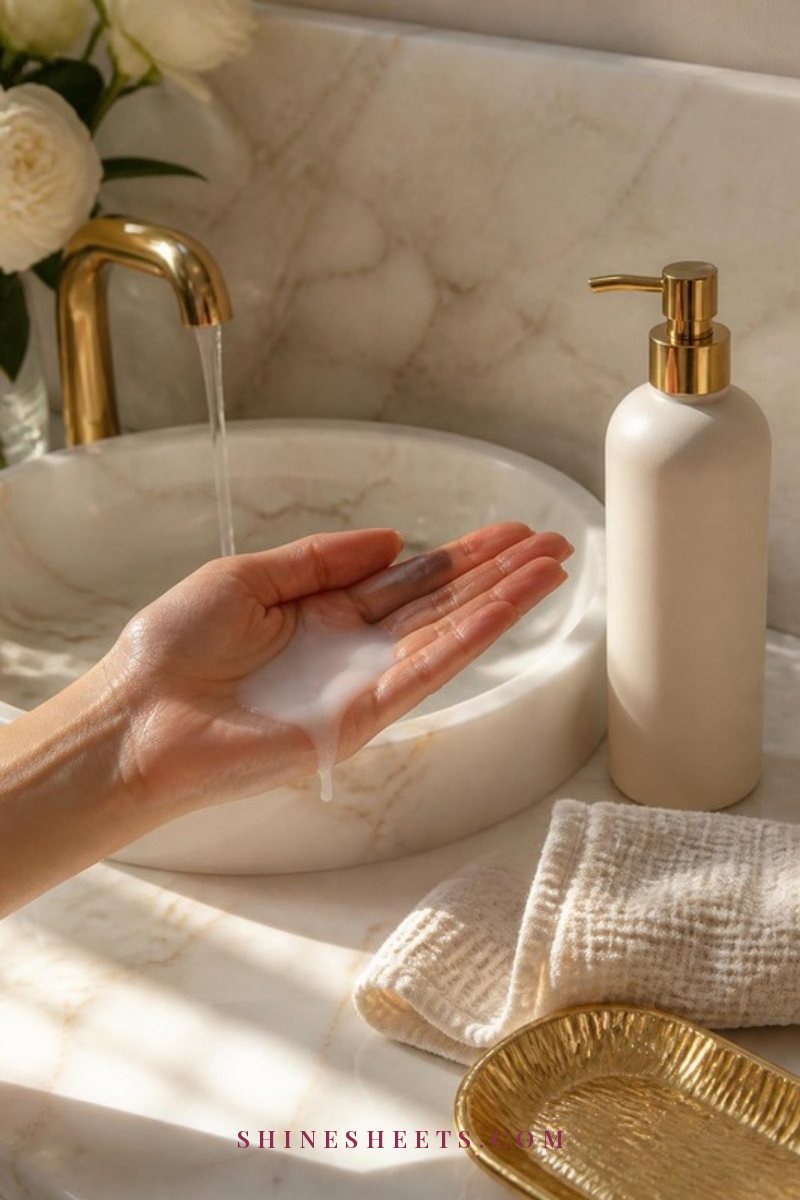
For the first 24 hours, many providers suggest just rinsing with cool or lukewarm water. After that, wash once or twice a day with a gentle hydrating cream cleanser – look for one that's fragrance-free, non-foaming or low-foaming and free of exfoliating acids or beads.
Use your fingertips only, no cloths, sponges or cleansing brushes. Spend about 20–30 seconds with light pressure, rinse with lukewarm water (hot water makes peeling skin sting and dries it further), then pat dry with a soft, clean towel. Don't rub. Patting feels a little silly the first time; by day three, you'll be grateful for it.
2. Moisturize With a Bland Barrier Cream
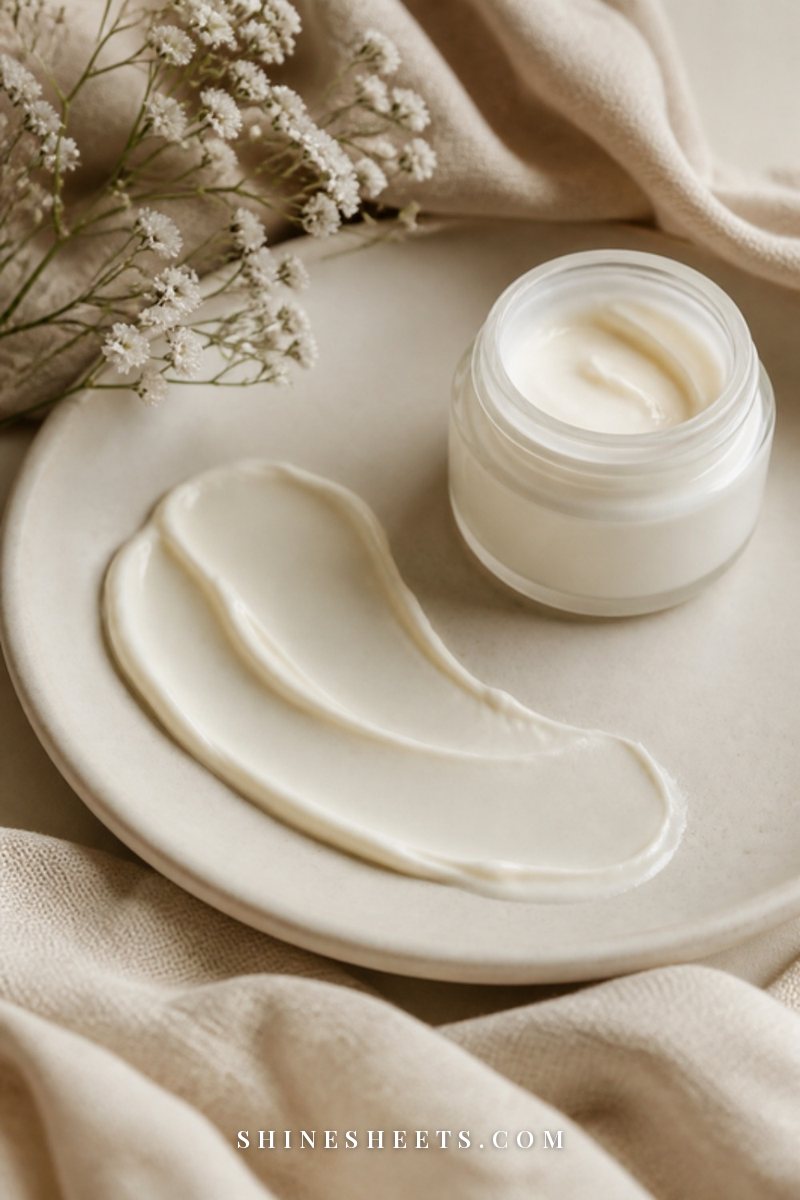
A bland moisturizer is the heart of chemical peel aftercare. It keeps flakes soft so they lift on their own instead of cracking, and it eases that tight, stretched feeling. Choose a ceramide moisturizing cream with simple ingredients: ceramides, glycerin, squalane or petrolatum are all good signs. Skip anything with fragrance, essential oils, alcohol high on the list, or "brightening" and "resurfacing" claims for now.
Apply it after cleansing while skin is still slightly damp, and then again whenever your skin feels tight – that might be three, four or even five times a day in the main flaking phase. That's not too much. If you want to understand textures better, my moisturizer guide explains when a cream or a balm makes more sense than a gel.
3. Protect With Mineral Sunscreen and Shade
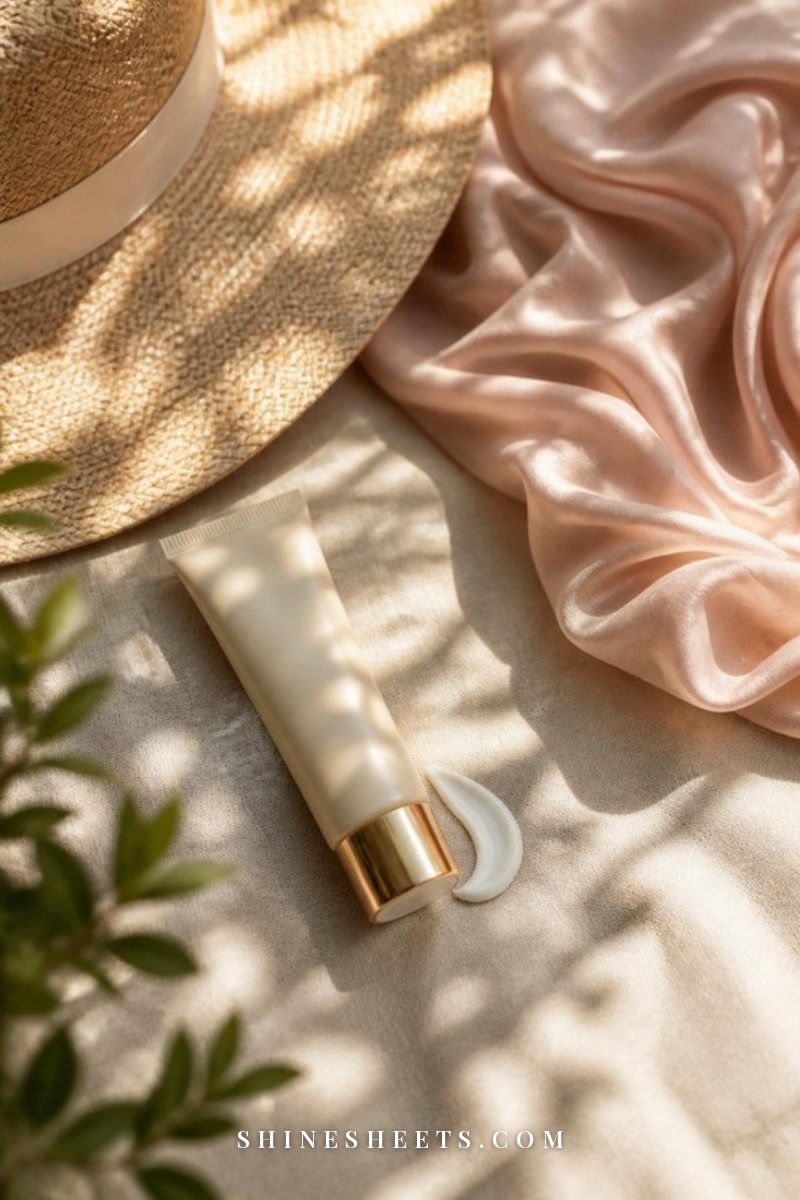
Fresh skin after a peel burns faster and is much more likely to develop dark spots from sun exposure. This step is not optional, even on cloudy days and even if you're mostly indoors near a window. Apply a broad-spectrum SPF 30 or higher every morning; a mineral sunscreen with SPF 50 made for sensitive skin is a gentle choice, since zinc oxide and titanium dioxide tend to sting less on freshly peeled skin.
Use a generous amount (around two finger-lengths for the face and neck), pat it on rather than rubbing, and reapply every two hours if you're outside. Better still, keep outdoor time short for the first week and add shade: a cream wide-brim sun hat does a lot of quiet work. If you're unsure which filter suits you, I've compared mineral vs chemical sunscreen in detail.
4. Soothe Tight Spots With a Simple Balm
Some areas – the corners of the nose, around the mouth, the chin – often get drier than the rest. For these, a thin layer of a soothing cica or panthenol balm on top of your moisturizer helps. Panthenol and centella asiatica are popular, generally well-tolerated soothing ingredients, though no product is right for everyone. Patch test anything new on a small spot along your jaw first, and if your provider gave you a specific ointment, use that instead.
A plain occlusive like petroleum jelly is also a classic option for very dry patches, especially at night.
7 Things Not To Do After a Chemical Peel
Most aftercare problems come from doing too much, not too little. These seven don'ts protect the fresh skin while it rebuilds.
1. Don't Pick or Peel the Flakes
This is the big one. Pulling a flake before it's ready removes skin that isn't finished healing underneath, which can leave raw patches, prolong redness and raise the risk of dark marks or even scarring. If a loose edge is catching on everything, snip just that bit with clean, small scissors – never pull. Honestly, keeping your hands busy helps: a mug of evening tea in one hand is a surprisingly effective picking deterrent.
2. Don't Use Scrubs or Exfoliating Tools
No scrubs, washcloths, cleansing brushes, dermaplaning or exfoliating gloves until your skin has completely finished peeling and feels normal again. The peel has already done the exfoliating.
3. Don't Use Retinoids or Acids Until You're Cleared
Retinol, tretinoin, adapalene, glycolic, lactic, salicylic and azelaic acid, vitamin C serums and benzoyl peroxide all wait. Your provider will tell you when; for light peels, it's often about a week, and longer for medium peels.
4. Don't Take Hot Showers, Saunas or Steam Rooms
Heat increases redness and dries the skin. Keep showers lukewarm and short, let the water hit your back rather than your face, and skip saunas, steam rooms and hot baths for at least a week, or as long as your provider advises.
5. Don't Do Heavy, Sweaty Workouts at First
Sweat can sting, irritate and trap heat in healing skin. For the first few days, stick to gentle walks (in the shade) or a slow stretch at home. Most people can return to normal exercise once peeling has settled – ask your provider for your timing.
6. Don't Try New Products
Healing skin is more reactive than usual, so this is not the week for a new serum or a sample you got in a gift bag. If something irritates you now, you won't know whether it was the product or the peel.
7. Don't Wax, Thread or Use Hair Removal Creams on Your Face
Waxing can lift fresh skin right off, and depilatory creams are harsh even on healthy skin. Wait until you're fully healed – usually at least one to two weeks after a light peel, longer after a medium one.
Sleeping, Showering and Everyday Life While You Heal

A few small everyday habits make the week easier:
- Sleep on a fresh pillowcase. A soft white cotton pillowcase that you change every two to three nights keeps sweat, oils and hair products off healing skin. Sleeping on your back, if you can, means less rubbing.
- Keep your hair off your face. A soft headband or a loose low clip keeps conditioners, dry shampoo and styling products away from the skin.
- Wash hands before touching your face. Every time you apply moisturizer, start with clean hands.
- Drink water and keep your room comfortable. Very dry indoor air can make tightness worse; a humidifier in the bedroom can help some people.
- Clean your phone screen. It rests on your cheek more often than you think.
If your skin barrier feels fragile long after the flakes are gone, these ways to restore your skin barrier are a gentle next step.
When To Restart Your Usual Skincare
Once flaking has completely stopped and your skin no longer stings with your bland moisturizer, you can begin bringing products back – slowly, one at a time. For a light peel, that's often around day 7 to 10. For a medium peel, your provider may ask you to wait several weeks.
A calm order that works for most people:
- Hydrating serums first (hyaluronic acid, niacinamide at a low percentage), about a week after peeling stops.
- Vitamin C a few days later, if it never irritated you before.
- Retinoids and exfoliating acids last, starting two to three nights a week once your provider says it's fine.
Give each product three or four days before adding the next. If anything stings or makes you red again, step back to the simple routine for a few more days. If you have reactive skin in general, a calm sensitive skin routine is a good long-term base to return to.
When Can You Wear Makeup Again?
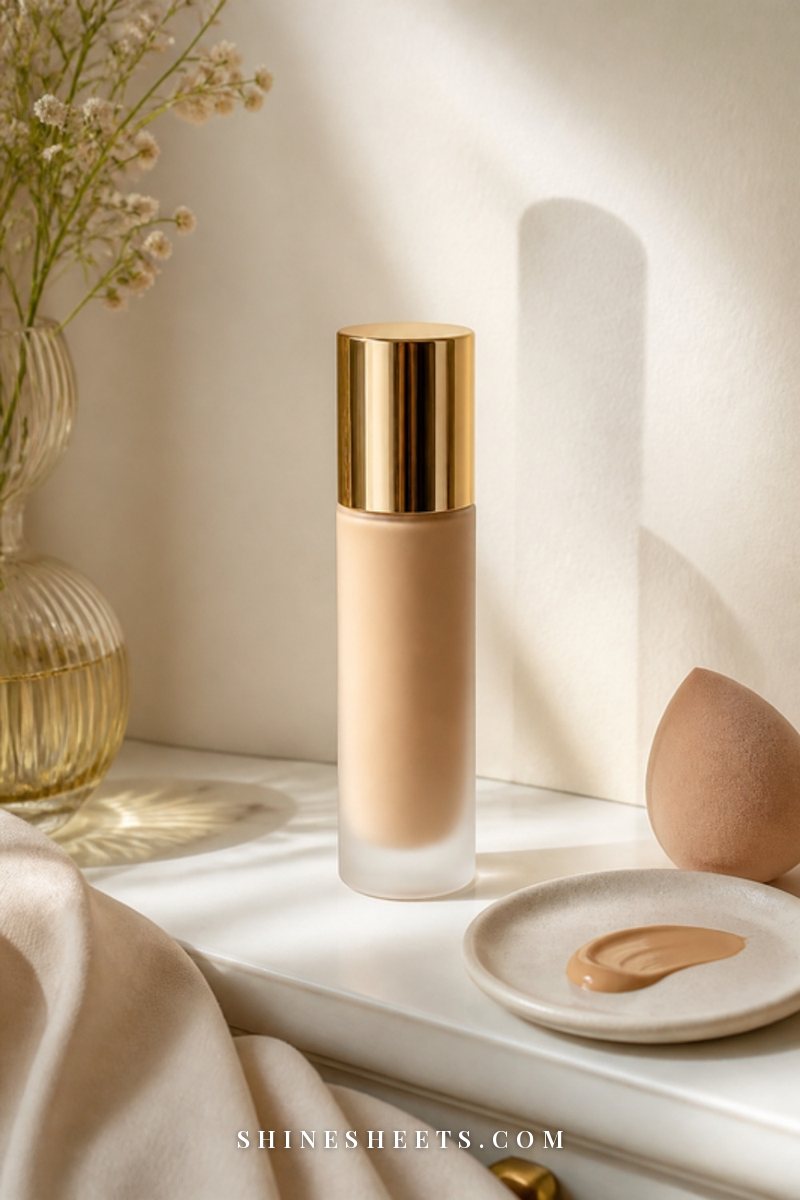
For light peels, many providers say makeup is okay after 24 to 48 hours if your skin isn't broken or stinging. For medium peels, it's usually after the peeling stage, often a week or more. Ask your provider and follow their timing.
When you do go back to makeup, keep it light: a tinted mineral sunscreen or a simple skin tint over your moisturizer is kinder than a full-coverage matte foundation, which tends to cling to flakes and emphasize them. Use clean brushes or a freshly washed sponge, apply with patting motions and remove everything at night with your gentle cleanser, never with makeup wipes, which drag across the skin.
A little Old Hollywood trick I love here: let the eyes or lips do the talking for a week. A soft lip color and a bit of mascara look polished and keep attention away from any patchy texture.
At-Home Peels: Patch Test and Read the Instructions
At-home peels are milder than professional ones, but they still contain acids that can irritate, especially on sensitive skin. A few rules keep them safe:
- Patch test first. Apply a small amount along your jawline or behind the ear, follow the timing on the package, and wait 24–48 hours to see how your skin reacts.
- Follow the instructions exactly. If the box says leave it on for 5 minutes, don't leave it for 10. More time doesn't mean better results – it means more irritation.
- Skip it on broken or irritated skin, sunburn, active cold sores, or a fresh breakout that's inflamed.
- Don't layer it with retinoids or other acids the same night, and pause retinoids for a few days before and after unless the product says otherwise.
- Never make your own peel from kitchen ingredients or mix products. Concentrations matter, and homemade versions are unpredictable.
The aftercare is the same as above, just shorter: bland moisturizer, gentle cleanser, SPF and no picking for a few days.
Warning Signs: When To Call Your Provider or a Doctor
Most peels heal without drama, but it's worth knowing when something needs attention. Contact your provider or a doctor promptly if you notice:
- Blisters or areas of raw, weeping skin
- Oozing, yellow crusts or pus
- Redness, warmth or swelling that spreads or gets worse after the first couple of days
- Intense pain, burning that doesn't settle, or pain that increases
- A fever or feeling unwell
- Cold sore-like clusters, especially if you've had cold sores before
- Swelling around the eyes that makes it hard to see
For an at-home peel, rinse it off right away with cool water if it burns intensely, and don't apply anything else until you've spoken to a pharmacist or doctor. It's always okay to ask. Nobody will think you're overreacting.
Dark Patches and Lingering Irritation
Sometimes, especially on deeper skin tones or after sun exposure, a peel can leave dark patches (post-inflammatory hyperpigmentation) or redness that lingers for weeks. This is not a reason to panic or to start scrubbing – it's a reason to be even stricter about sunscreen and to book a visit with a dermatologist.
See a dermatologist if irritation, stinging or dryness lasts longer than your provider said to expect, if dark patches appear or spread, or if your skin simply doesn't feel like itself after a few weeks. They can tell you what's going on and suggest treatment that suits your skin, which is far better than guessing with more products.
Please keep in mind that this article is general information, not medical advice. Every peel and every face is different, and the person who did your peel knows your skin and your procedure best.
Final Thoughts
Chemical peel aftercare is really an exercise in trust: trusting that the flakes will lift on their own, that a plain moisturizer is enough, and that your skin knows how to rebuild if you protect it from the sun and keep your hands away.
Keep the routine small, follow your provider's instructions first, and let the awkward middle days be awkward. On the other side of them is calmer, smoother skin – and the quiet satisfaction of having let it heal properly.