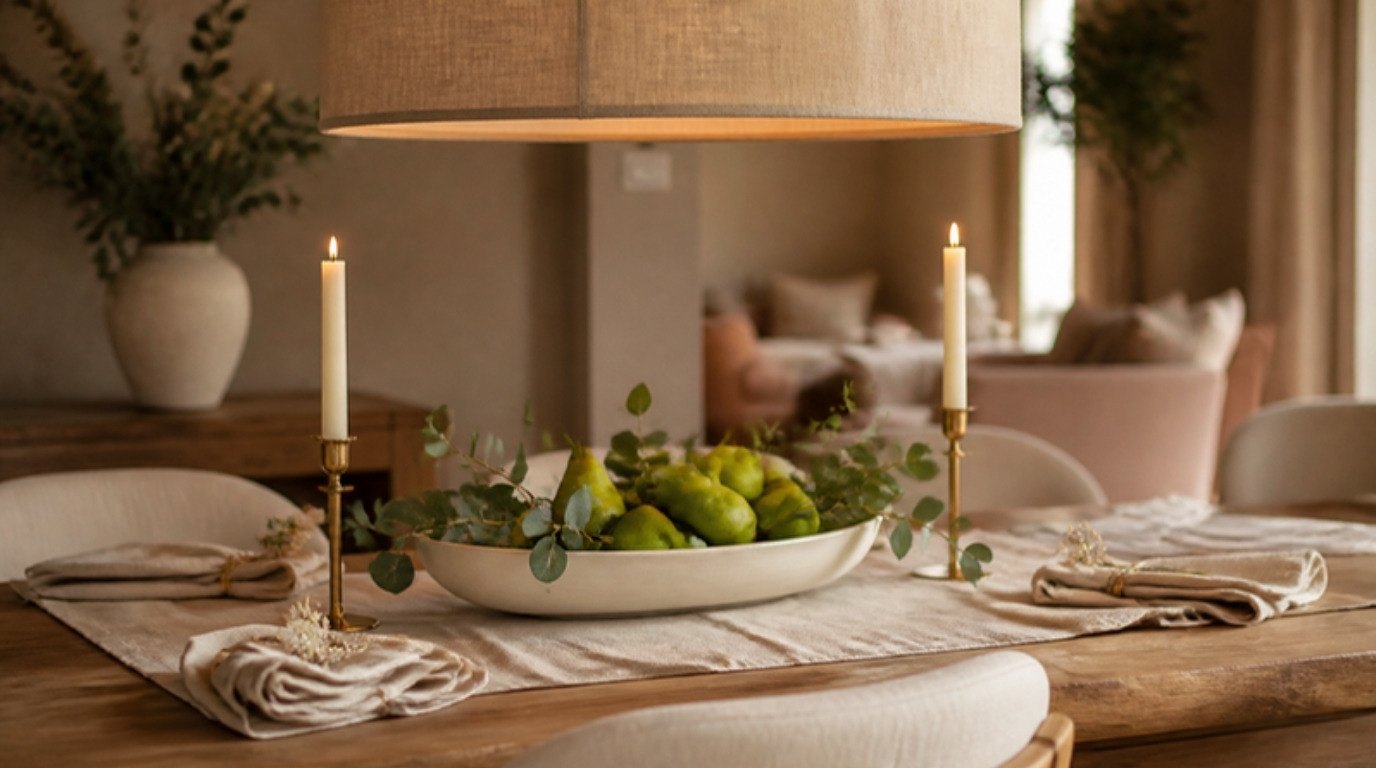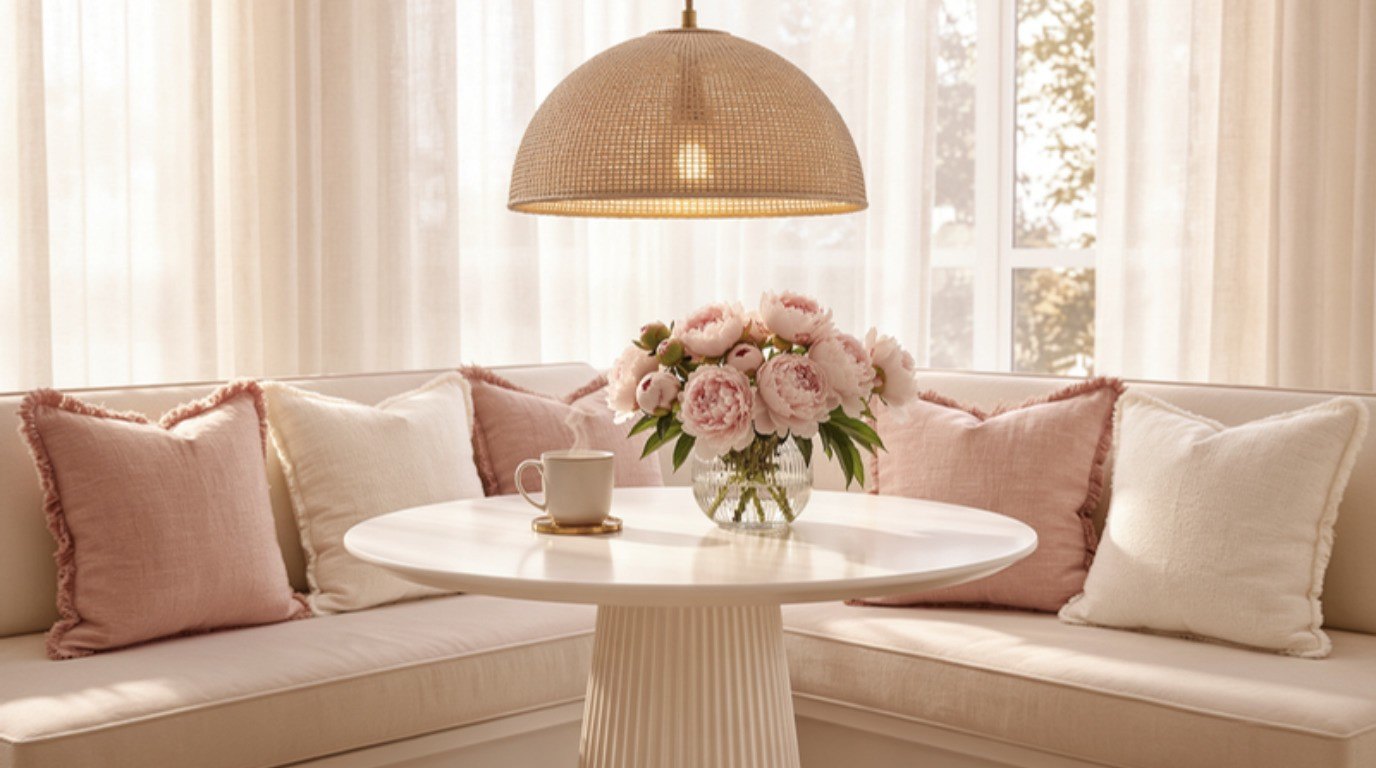
A breakfast nook is less about square footage and more about one small promise: a spot where you can sit down, put your mug on a flat surface instead of eating standing up at the counter. Even a tight kitchen usually has a corner, a wall or a window that can hold that promise, as long as you plan around how people actually move through the room.
The trick is to start with measurements, not furniture. A pretty bench that blocks the dishwasher door will annoy you every single day, while a plain round table in exactly the right spot will feel like it was always meant to be there. I learned that the slightly embarrassing way, by falling in love with a table before checking whether a chair could actually be pulled out next to it.
This guide walks you through breakfast nook ideas that work in small kitchens and in the corner of a living area: how to measure clearance, a quick size table, nine layouts with exact numbers, how to make the spot feel warm and calm, and renter-friendly options that need no drilling at all.
Before You Start: Measure Your Space
Grab a tape measure, a notepad and ten quiet minutes. You are measuring three things: the furniture itself, the space people need around it and anything that swings or opens nearby.
- Chair pull-out space: plan about 30–36 inches from the table edge to the nearest wall or cabinet so a chair can slide back and someone can stand up comfortably. If people need to walk behind a seated person, aim for 42–44 inches.
- Walkways: keep a main path of at least 36 inches through the kitchen. If two people cook together, more is better.
- Door and appliance swings: open the fridge, oven, dishwasher and any cabinet doors near your corner. Mark where each one reaches on the floor with a strip of painter's tape.
- Seat width: each person needs roughly 20–24 inches of table edge to eat without bumping elbows.
- Heights: a standard dining table is 28–30 inches tall, a counter is around 36 inches (stools with 24–26 inch seats) and a bar ledge is 40–42 inches (stools with 28–30 inch seats).
Then do the painter's tape trick: tape the outline of the table or bench you have in mind directly on the floor and live with it for two or three days. Walk past it with a laundry basket, open the fridge, carry a hot pan. If you keep stepping on the tape, the piece is too big or in the wrong spot. It is the cheapest design advice you will ever get.
Breakfast Nook Size Table
Use this table to match your measured corner to a nook type. The minimum space includes the furniture plus the room you need to sit down and stand up, not just the footprint of the table. Screenshot it before you go shopping.
| Nook type | Minimum space needed | Seats | Renter-friendly? |
|---|---|---|---|
| Corner banquette with storage bench | About 5 x 5 ft | 3–4 | Yes, if freestanding |
| Round pedestal table in a corner | About 6 x 6 ft for a 30–36 in table | 2–3 | Yes |
| Drop-leaf or wall-mounted fold-down table | About 3 x 5 ft when open | 2 | Drop-leaf yes; wall-mounted needs permission |
| Window seat with cushions | Window wall at least 4 ft wide, 18–20 in deep seat | 2–3 | Yes, with a freestanding bench |
| Bar ledge with two stools | About 4 ft of wall, 12–16 in deep ledge | 2 | Freestanding console yes; wall ledge needs drilling |
| Bench against a wall plus chairs | About 4 x 6 ft | 3–5 | Yes |
| Small bistro set by a window | About 4 x 4 ft | 2 | Yes |
| Nook at the end of a counter | About 3 ft of counter end plus 3 ft of clearance | 1–2 | Yes, with a rolling cart or small table |
| Nook built around a rug and pendant | About 5 x 7 ft rug zone | 2–4 | Yes, with a plug-in pendant |
If your measurements land between two rows, choose the smaller option. A nook that feels a little generous always beats one that makes you turn sideways to get past.
9 Breakfast Nook Ideas for Small Kitchens
Each idea below has a sweet spot: the kind of room it suits, the numbers that make it work and one small detail that makes it feel finished. Read them with your tape outline in mind.
1. Corner Banquette With a Storage Bench
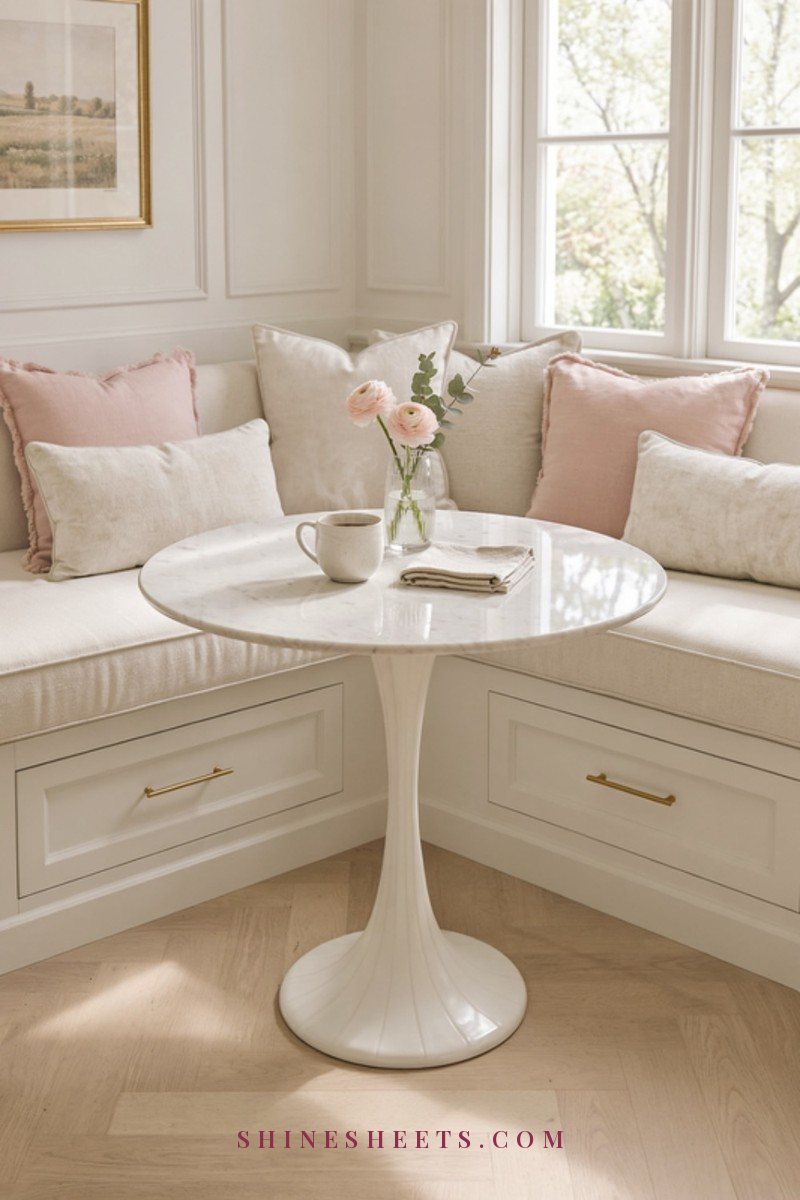
An L-shaped banquette tucks into a corner and seats more people than chairs ever could, because no one needs pull-out space on the bench side. That alone can save you two feet in a small kitchen.
Look for benches with a lift-up lid or open cubbies underneath. That hidden storage is perfect for table linens, extra napkins or the slow cooker you use twice a year. Keep the seat height around 18 inches and the depth 18–20 inches so it feels like a real chair, not a perch. A seat cushion 2–3 inches thick is plenty; anything thicker raises you too high for a standard table.
Pair the banquette with a table that has a single center base or legs set well in from the corners, so knees on the bench side can slide in without a fight.
2. Round Pedestal Table in a Corner
If you only try one idea, try this one. A round table has no sharp corners to bump into, it lets people shift around naturally and it softens a room full of straight lines. The pedestal base is the real hero, because it leaves the floor open for feet and chairs.
For two people, a 30-inch top is enough. For three or four, go for 36 inches. A small round white pedestal table keeps the corner light and makes the space look bigger, especially next to white or cream cabinets. Push it close to the corner (not flush) and add two or three chairs that tuck fully under the edge when you are not sitting.
Small tip: if the walls feel bare around it, hang one framed print at seated eye level, about 8–10 inches above the table surface. It anchors the corner without taking any floor space.
3. Drop-Leaf or Wall-Mounted Fold-Down Table
For the tiniest kitchens, the best breakfast nook is one that disappears. A drop-leaf table sits narrow against the wall most of the day (often only 10–14 inches deep) and opens to a full surface for two in a few seconds.
A wall-mounted fold-down table goes even flatter, but it needs secure screws into studs, so it is best for homeowners or renters who have permission. Check that the folded table does not block a light switch or outlet, and test the hinge with a gentle push before you rely on it for a full mug of tea.
Pair either version with two folding chairs that hang on a peel-off hook or slide behind a door. The whole nook can vanish in under a minute when you need floor space back.
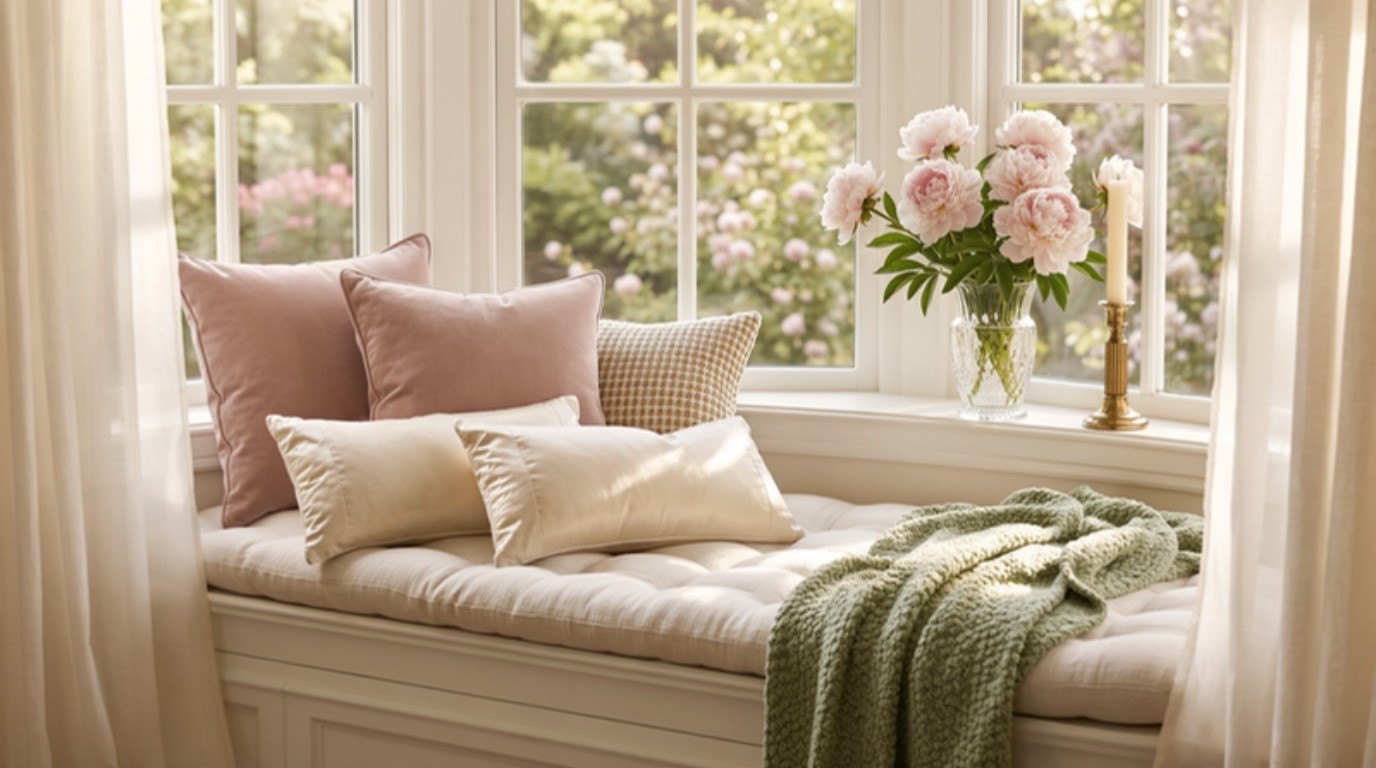
4. Window Seat With Cushions
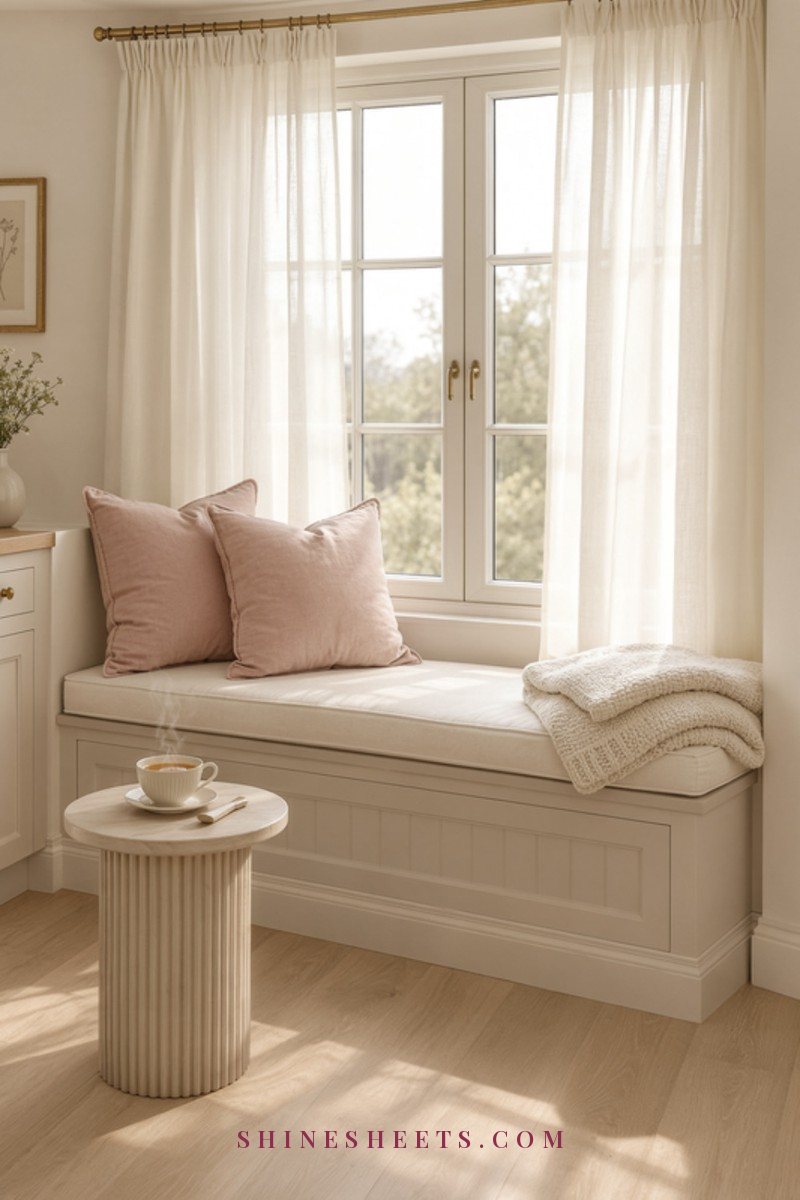
A window is the most natural place for a nook, because daylight does half the decorating for you. A built-in window seat is lovely, but a freestanding bench pushed under the window gives you almost the same feeling with zero construction.
Aim for a seat that is 18–20 inches deep and leave a gap of an inch or two from the wall so curtains can still move. Add a cushion, two pillows and a small table pulled close. If you love this look, my guide to window seat ideas for bay windows and small rooms has more ways to style it.
One honest note: if the window gets strong afternoon sun, pick fade-resistant fabric, or your pretty blush cushion will be beige by spring.
5. Bar Ledge With Two Stools
A narrow ledge along a wall or under a pass-through window is a smart choice when you have length but no depth. A ledge just 12–16 inches deep holds two plates and two mugs, and the stools slide fully underneath when you are done.
For a ledge at 40–42 inches, choose stools with 28–30 inch seats. At counter height (around 36 inches), go for 24–26 inch seats. Leave about 10–12 inches between the top of the seat and the underside of the ledge for your knees.
No drilling allowed? A tall, slim console table pushed against the wall does the same job. Just check that it does not wobble, and put felt pads under the feet so it stays put on tile.
6. Bench Against a Wall Plus Chairs
This is the relaxed cousin of the corner banquette. A straight bench goes against one wall, the table sits in front of it and two chairs face the bench from the open side. It fits more people than a set of four chairs and it is easy to rearrange.
A simple wooden bench becomes instantly more comfortable with a cream cushioned bench pad that ties on or has a non-slip back. Choose a bench about 12 inches shorter than the table so people can slide in from the ends without climbing.
Bonus: when you have guests, the bench happily squeezes in one extra person, and nobody minds sitting close at a breakfast table.
7. Small Bistro Set by a Window
A bistro set (a small round table, often 24 inches across, with two light chairs) is the easiest nook to add to a living area, a studio or the edge of a kitchen. It reads as a little café corner, and because the pieces are light, you can move them in seconds.
Place it near a window so morning light hits the table. Add a small vase with a single stem, a linen napkin and that is honestly enough. Metal bistro chairs can feel cold, so tie on two thin cushions for the cooler months.
If the set will live in a living room, choose a finish that matches something already in the room, such as a brass lamp base or a cream sofa, so it looks planned instead of borrowed.
8. A Nook at the End of the Counter
Sometimes the nook is already there, hiding in plain sight. The short end of a counter or a peninsula can become a seat for one or two with nothing more than a stool and a tidy surface.
Clear the last 24 inches of counter completely. That is the rule that makes it work: no fruit bowl, no mail, no small appliances. Add one or two stools with a backrest, and if the counter has no overhang, use a small rolling cart pushed against the end as a mini table that you can move away when you cook.
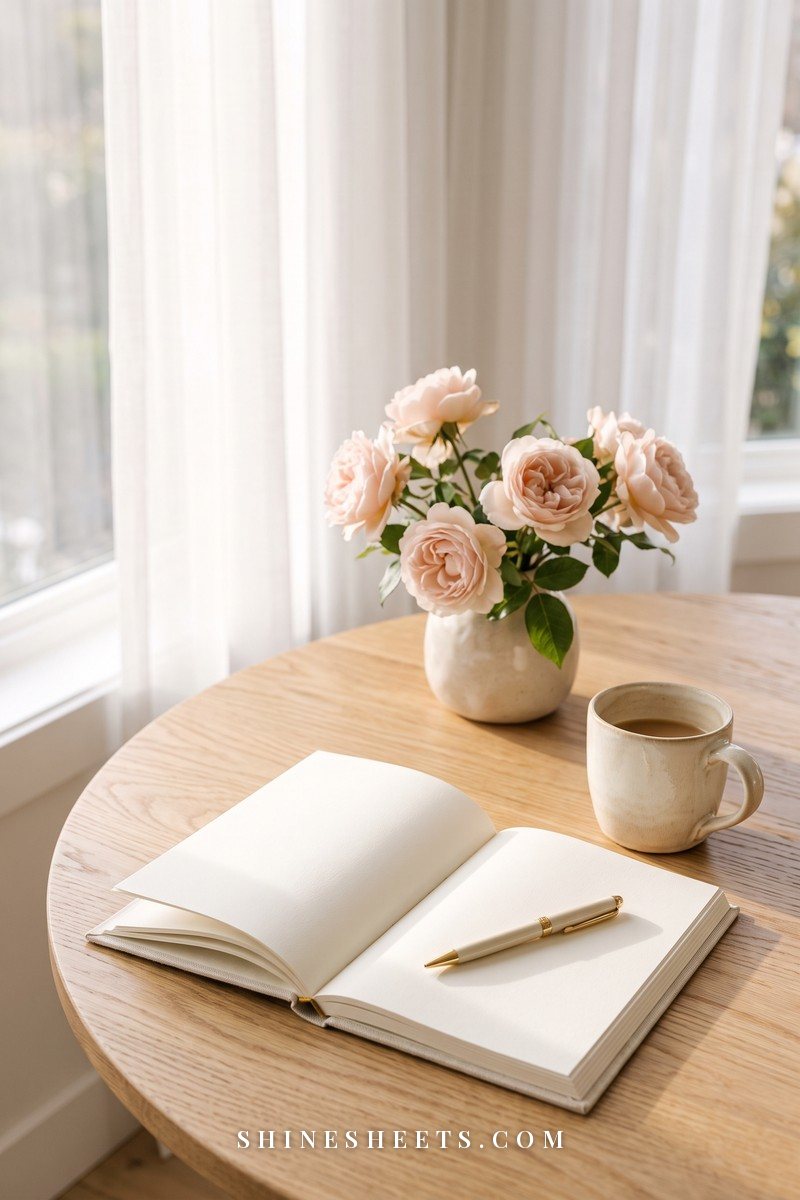
This is also a lovely spot for a mug and a notebook in the evening, after the dishes are done and the kitchen is quiet.
9. A Nook Built Around a Rug and Pendant
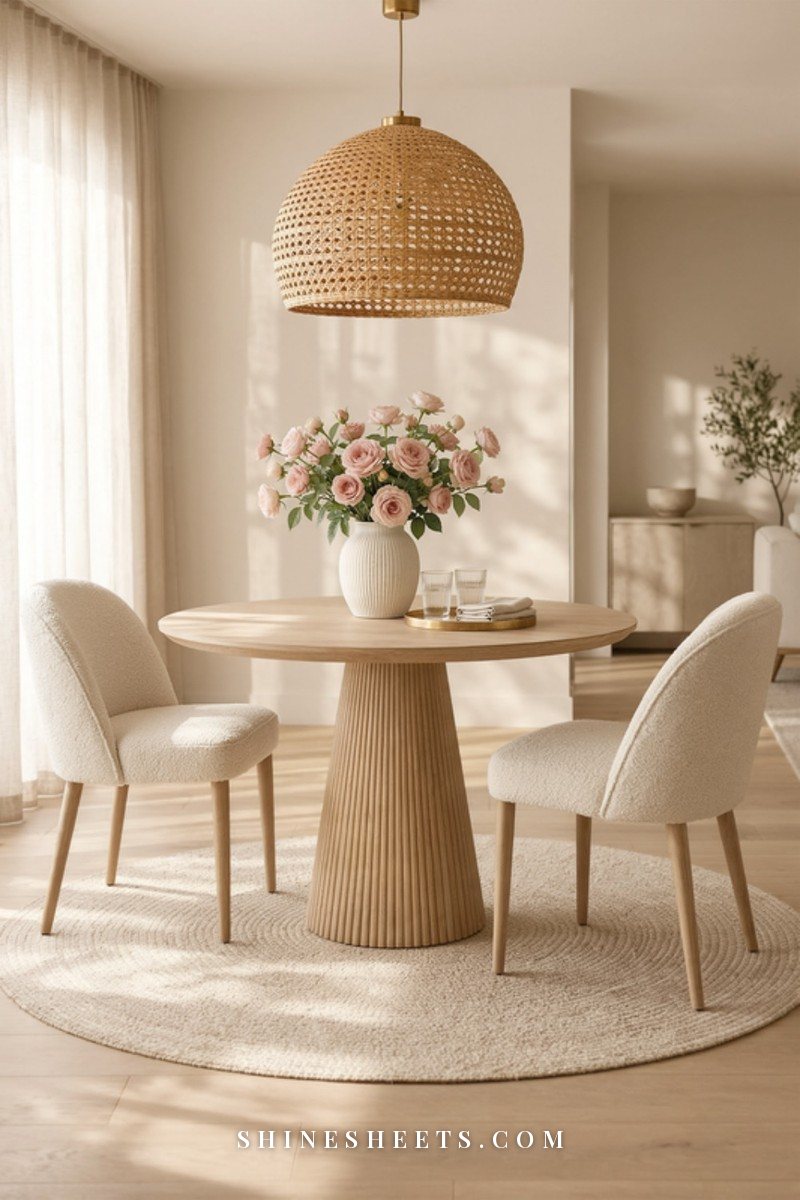
In an open-plan room, a nook does not need walls. It needs edges. A rug on the floor and a light hanging above create an invisible room that says "this is where we sit and eat".
Choose a rug that extends at least 24 inches past the table on every side, so chair legs stay on the rug when someone sits back. A round rug under a round table looks especially calm. Hang the pendant so the bottom sits about 30–34 inches above the tabletop, centered over the middle of the table rather than the middle of the rug.
Pick a flat-weave or low-pile rug that you can wipe or wash. Breakfast involves crumbs, and a shaggy rug under a table quickly becomes a crumb museum.
How To Make Your Breakfast Nook Feel Warm and Inviting
Once the layout works, the feeling comes from four small layers: soft seats, warm light, a little storage and a calm palette. None of them need a big budget.
Cushions and Washable Seat Covers
Soft seating is what makes people linger. Look for cushions with removable, machine-washable covers, ideally in a cotton or linen blend that you can wash on a gentle cycle and line dry. Tie-on washable chair cushions in beige are a simple pick for wooden or metal chairs. If you have a bench, two or three pillows against the wall make it feel like a sofa for breakfast.
Keep a second set of covers in a drawer under the bench. When one set goes in the wash, the nook still looks finished.
Plug-In Pendant or Wall Sconce
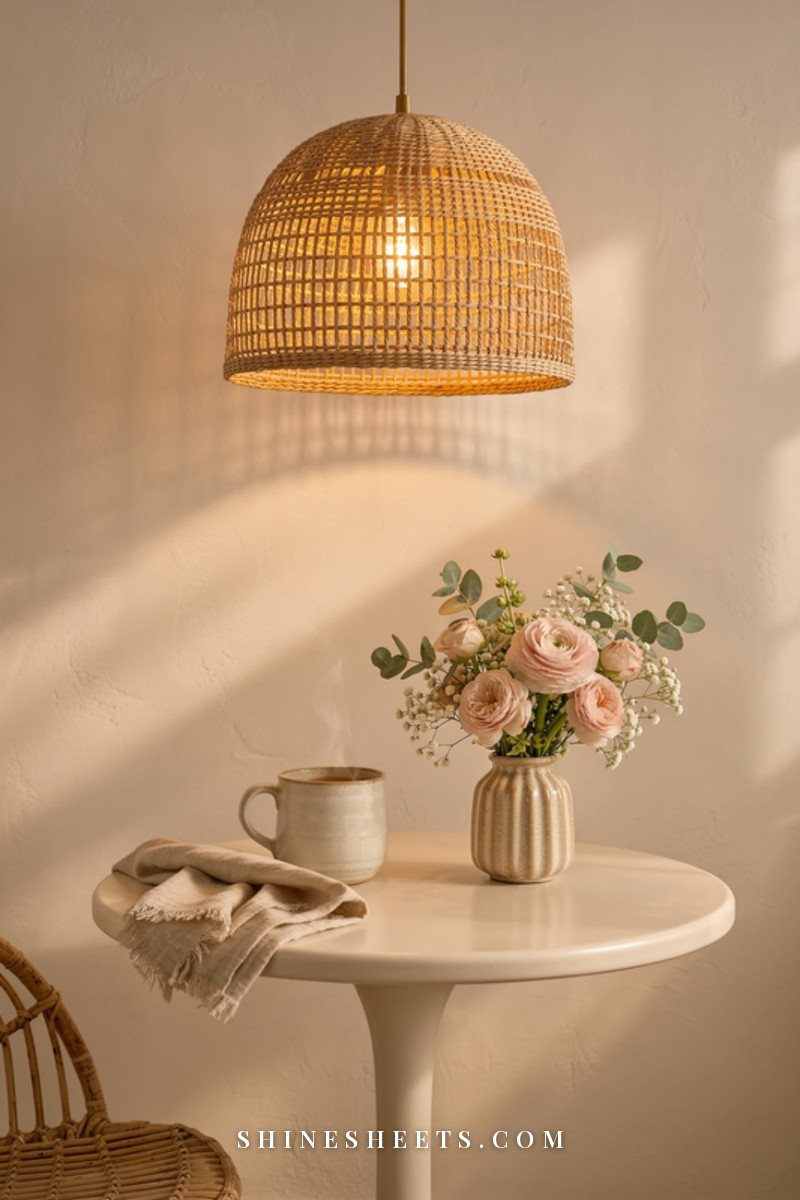
Overhead kitchen lights are usually bright and flat, which is great for chopping and not so great for slow mornings or evening tea. A light that belongs only to the nook changes everything.
A plug-in rattan pendant light hangs from a ceiling hook and plugs into a nearby outlet, so there is no wiring needed. Swag the cord neatly along the ceiling with small clear hooks and run it down the wall with a paintable cord cover. A plug-in wall sconce works the same way for a bench against a wall. Choose warm bulbs around 2700K, and for more ideas my post on easy lighting ideas that make a room feel warm goes deeper.
Safety note: keep cords away from walkways and from the stove, and never cover a hot bulb with fabric.
A Small Shelf for Mugs
One short shelf above or beside the nook turns it into a little morning station. Keep it to three or four things: a few mugs, a jar of tea bags, a small plant and maybe a candle. An ivory ceramic mug set looks calm and matching on open shelving, even when you only display four of them.
If you want to go further and set up a full drinks spot nearby, my guide to coffee corner ideas for a morning ritual spot shows how to keep it tidy. (Coffee sometimes perks me up and sometimes makes me jittery, so my shelf always has a tea jar too.)
A Calm Color Palette
A small nook looks bigger and calmer when it sticks to two or three colors. Try warm white walls, natural wood and one soft accent like sage, blush or pastel yellow. Repeat the accent at least twice: in a cushion and a vase, or a tablecloth and a print.
A sage linen tablecloth is an easy way to bring color in, and it hides small scratches on an older table. Fold it in half for a narrow table, or use it as a runner down the middle. Avoid busy patterns in a tiny corner; texture (linen, rattan, ceramic) gives interest without visual noise.
Renter-Friendly Breakfast Nook Tips
You do not need to own your home to have a nook that looks custom. Most of the ideas above work with freestanding furniture and a few clever swaps.
- Choose freestanding over built-in: a storage bench, a round table and two chairs create a banquette look with no screws at all.
- Use peel-off hooks: they hold folding chairs, a tote of napkins or a light cord. Test on a hidden spot first and remove slowly by pulling the tab straight down.
- Plug-in lighting: pendants and sconces with cords need no electrician and come down in minutes when you move.
- Removable wall color: peel-and-stick wallpaper on one small wall behind the table defines the nook beautifully. Test a sample patch first, since some paints peel off with it.
- Anchor tall pieces: any shelf or cabinet taller than it is wide should be anchored to the wall, especially if children visit. Ask your landlord about a small anchor screw, or choose low furniture instead. Tip-overs happen faster than you would think.
For more small changes that work in rentals, my list of renter-friendly kitchen upgrades that look custom pairs well with a new nook.
Common Breakfast Nook Mistakes To Avoid
A few small mistakes come up again and again. The good news is that each one is easy to fix before you buy anything.
- Buying the table first: measure, tape and test before you shop. The space chooses the table, not the other way around.
- Forgetting the swing: the dishwasher, oven and fridge doors need their full arc. If a chair blocks one, someone will be annoyed every day.
- Square table in a tight corner: square corners catch hips. A round or oval top is kinder in small spaces.
- Too many chairs: two chairs used daily look better than four squeezed in. Keep a folding chair elsewhere for guests.
- Turning the table into storage: mail, bags and keys land on any flat surface. Give them a basket or hook near the door so the table stays clear for sitting.
Final Thoughts
A breakfast nook does not need a big kitchen or a renovation. It needs one corner you measure honestly, one piece of furniture that fits and a few soft touches that make you want to sit down instead of eating standing up.
Start with the tape on the floor, live with it for a few days and let the room tell you what it can hold. Even the smallest nook can become the place where your day starts a little slower and a little kinder.