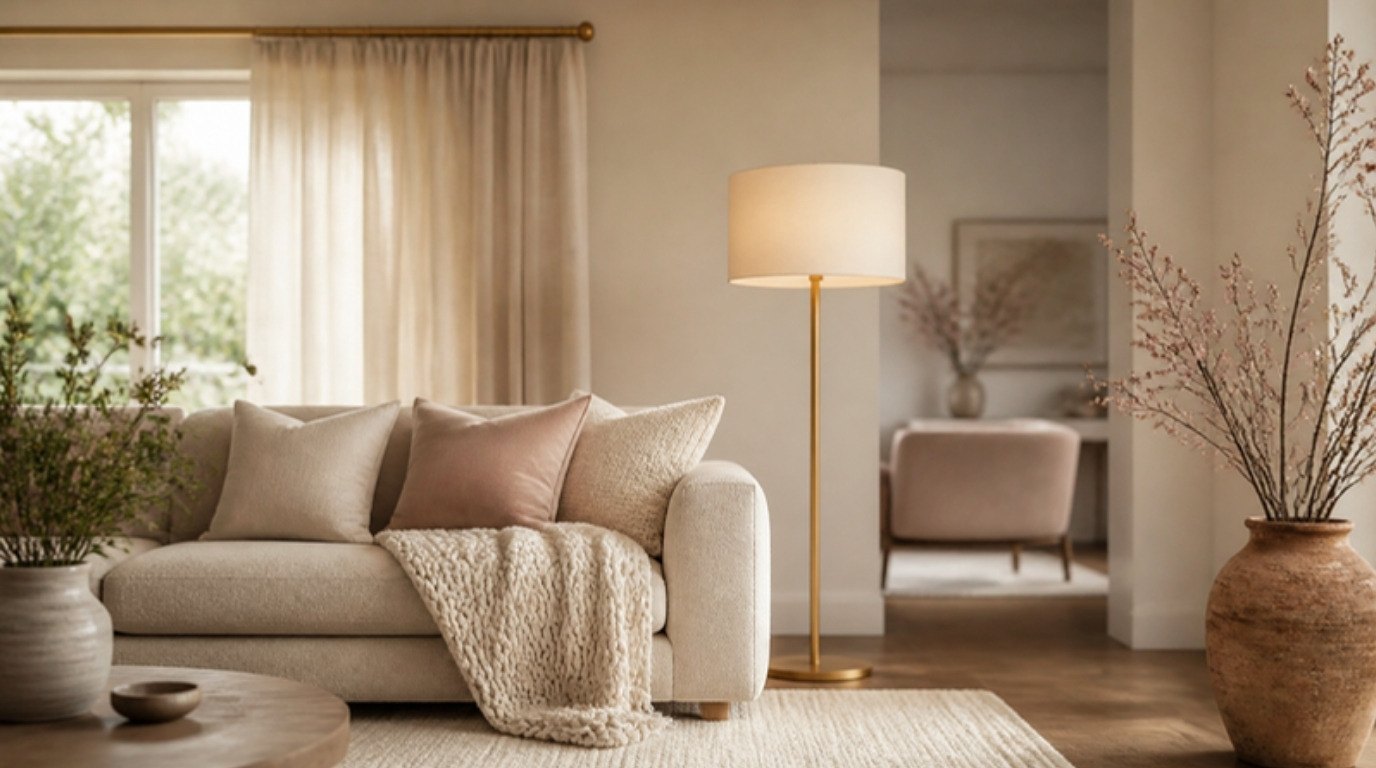
A dining room feels cozy when people want to stay at the table after the plates are cleared. That has very little to do with how big the room is or how expensive the furniture is, and almost everything to do with light, softness and a few sizes done right.
Most dining rooms go wrong in quiet, fixable ways: one bright overhead light, a rug that catches the chair legs, a tall centerpiece everyone has to peek around, bare chairs that feel hard after twenty minutes. Fix those and even a plain table in a rental corner starts to feel like the warmest spot in the home.
These cozy dining room ideas are grouped by what they change: lighting, textiles, table styling, color and wood, furniture, small-space nooks and how to switch between everyday and hosting. You'll also find a measurements table with the size rules I wish someone had handed me sooner, and almost every idea works for renters.
What Makes a Dining Room Feel Cozy
Before the ideas, here's the simple formula I come back to every time: low, warm light + something soft to touch + a table that invites people to linger. If one of those three is missing, the room feels formal or cold, no matter how pretty it looks in photos.
Warmth also means practical. Chairs that slide out easily, enough room to walk behind someone seated, a surface for the water jug. Comfort is what makes people relax, and relaxed people are what make a room feel warm. If you're working on the whole home, my renter-friendly cozy home ideas use the same principles room by room.
The Cozy Dining Room Measurements Table
This is the part that quietly makes everything else work. Screenshot it before you shop.
| What | Cozy size rule |
|---|---|
| Pendant height | Bottom of the shade 30–36 in above the tabletop |
| Pendant width | About half to two-thirds of the table's width; keep 6 in or more from each table edge |
| Bulb warmth | 2700K (warm white) or lower, ideally dimmable |
| Rug size | At least 24 in beyond the table on every side, so chairs stay on it when pulled out |
| Walkway around the table | 36 in minimum to a wall; 42–48 in where people walk behind chairs |
| Space per person | About 24 in of table edge per seat |
| Centerpiece height | Under 12 in, so people can see each other |
| Table runner | 12–18 in wide; hangs 6–12 in over each end |
| Tablecloth drop | 6–12 in over the edge for everyday, longer for hosting |
| Seat to tabletop | 10–12 in between the chair seat and the table's top |
| Bench length | About 6–12 in shorter than the table so it tucks between the legs |
| Art above a sideboard | Bottom of the frame 8–10 in above the sideboard top |
| Curtain rod | 4–6 in above the window frame, 8–12 in wider on each side |
Lighting: Where Warmth Begins
If you only change one thing, change the light. Overhead light alone flattens a room and makes everyone look tired. Layers make it glow.
1. Hang Your Pendant at the Right Height
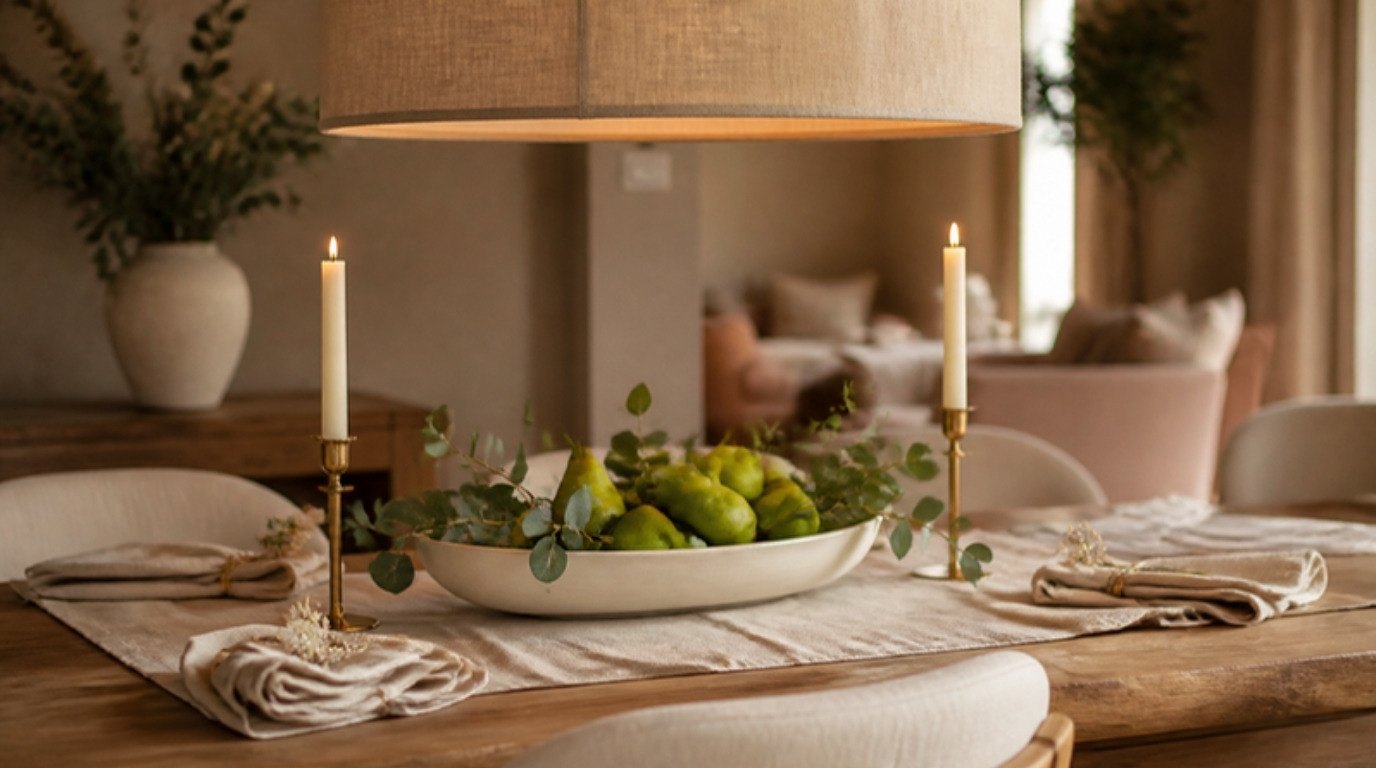
A pendant hung too high floats up near the ceiling and lights the room like an office. Lower it so the bottom of the shade sits 30–36 in above the tabletop. That puts the light where the people are and creates a little pool of warmth around the table. Renters can swap the shade without touching the wiring: a soft linen pendant shade diffuses light beautifully and fits most standard fittings. Many pendants also have adjustable cords or chains, so check before assuming you need an electrician.
2. Put the Light on a Dimmer
Breakfast light and evening light shouldn't be the same. If you can't install a wall dimmer, use smart bulbs or a plug-in dimmer on a lamp. Then set a rule for yourself: full brightness for homework and paperwork, about half for dinner, and low with candles for slow evenings.
Bulb choice matters just as much as brightness. Look for bulbs labeled 2700K or "warm white," and avoid anything marked daylight or cool white in a dining space. If your pendant has several exposed bulbs, try lower-wattage versions so the light feels soft rather than glaring when you look up from your plate.
3. Add a Lamp on the Sideboard
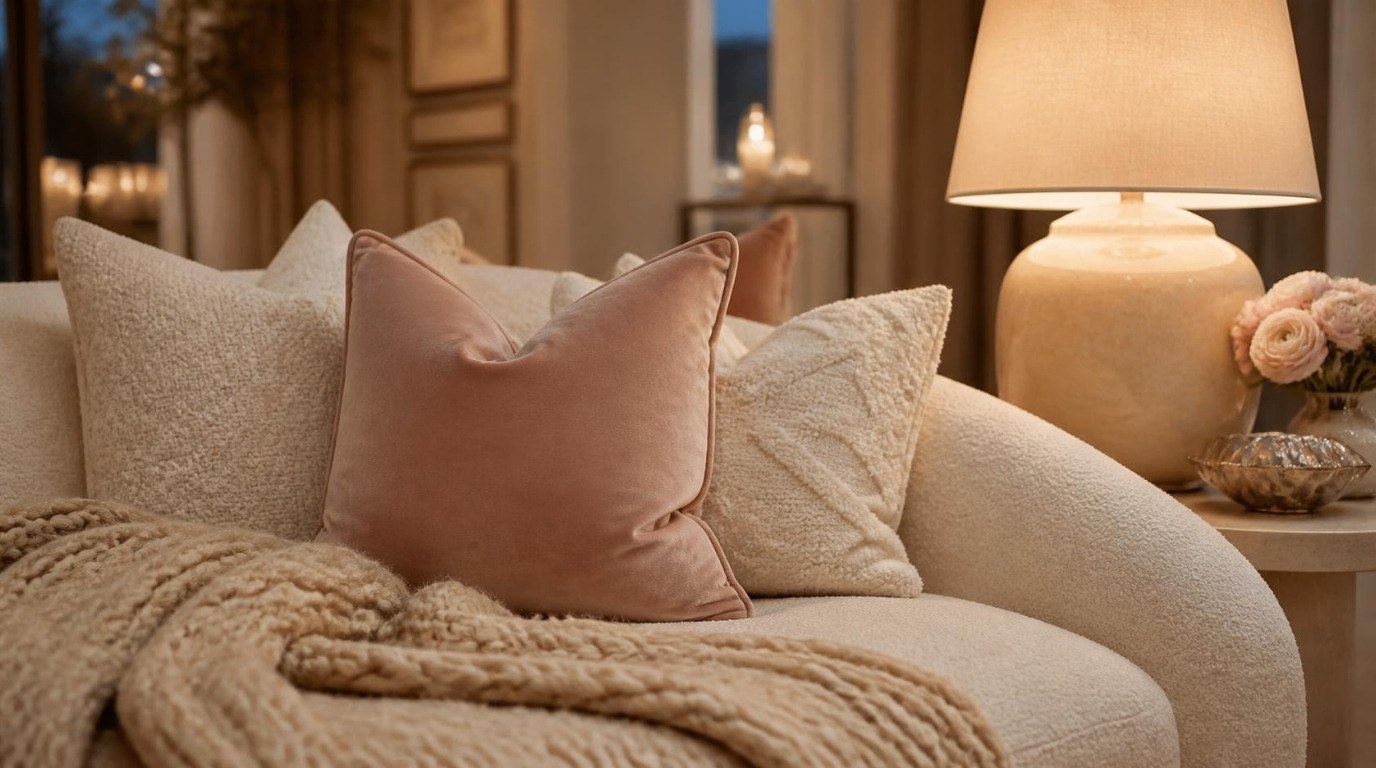
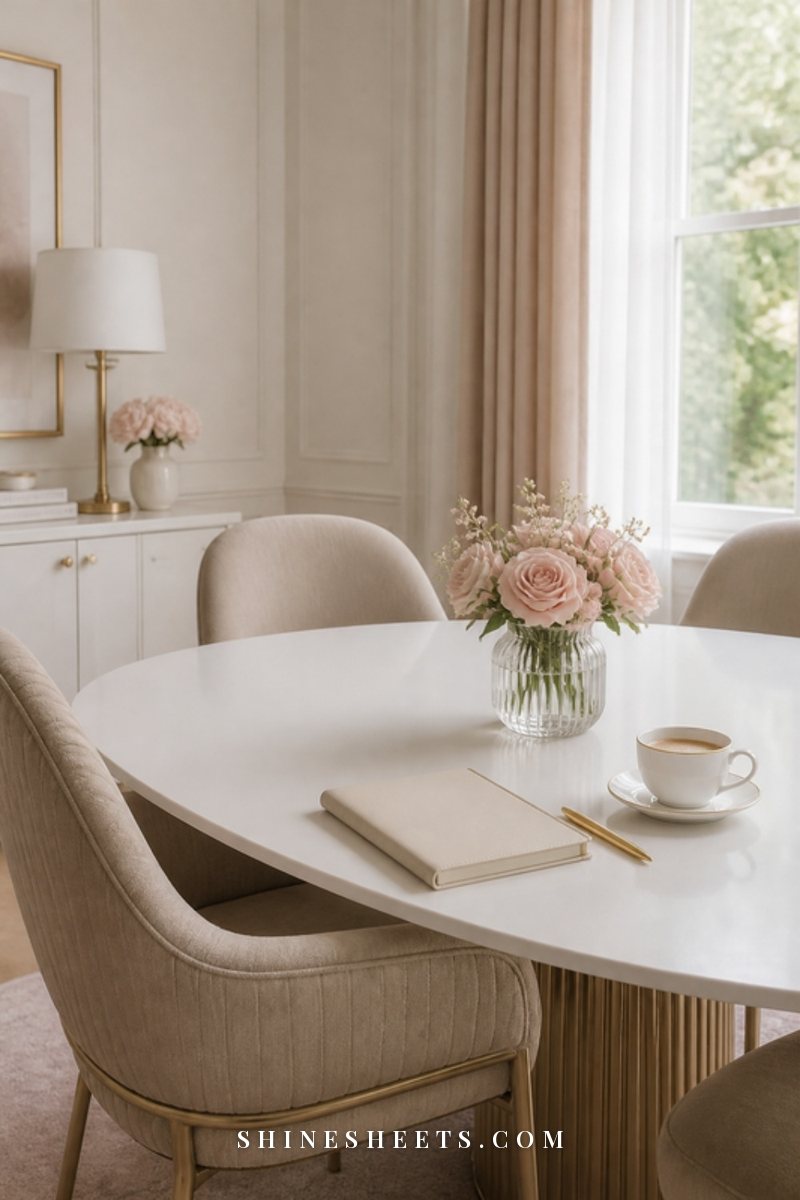
A table lamp at eye level is the single most underrated dining room trick. Place it on a sideboard, console or shelf, ideally on the side of the room farther from the pendant, so the light comes from two directions. Choose a fabric shade in cream or warm linen and a bulb at 2700K. Even when nobody's eating, that lamp makes the room look lived in from the hallway.
No sideboard? A slim lamp on a bookshelf, a wall sconce with a plug-in cord (a lovely renter option) or even a small lamp on a windowsill does the same job. Put it on a simple outlet timer so it switches on at dusk and the room greets you every evening.
4. Make Candles Part of Every Meal
Candles aren't just for guests. A pair of cream taper candles in simple brass or glass holders turns a Tuesday dinner into something you remember. Choose unscented ones for the table so they don't compete with food, keep them away from napkins and greenery, and never leave them burning in an empty room. My guide on how to style candles at home has more ideas for grouping heights and holders.
Textiles: The Soft Layer
Dining rooms are full of hard surfaces: wood, glass, ceramic, tile. Fabric absorbs sound, warms up the look and makes the room feel like part of the home rather than a showroom.
5. Layer a Linen Runner or Tablecloth
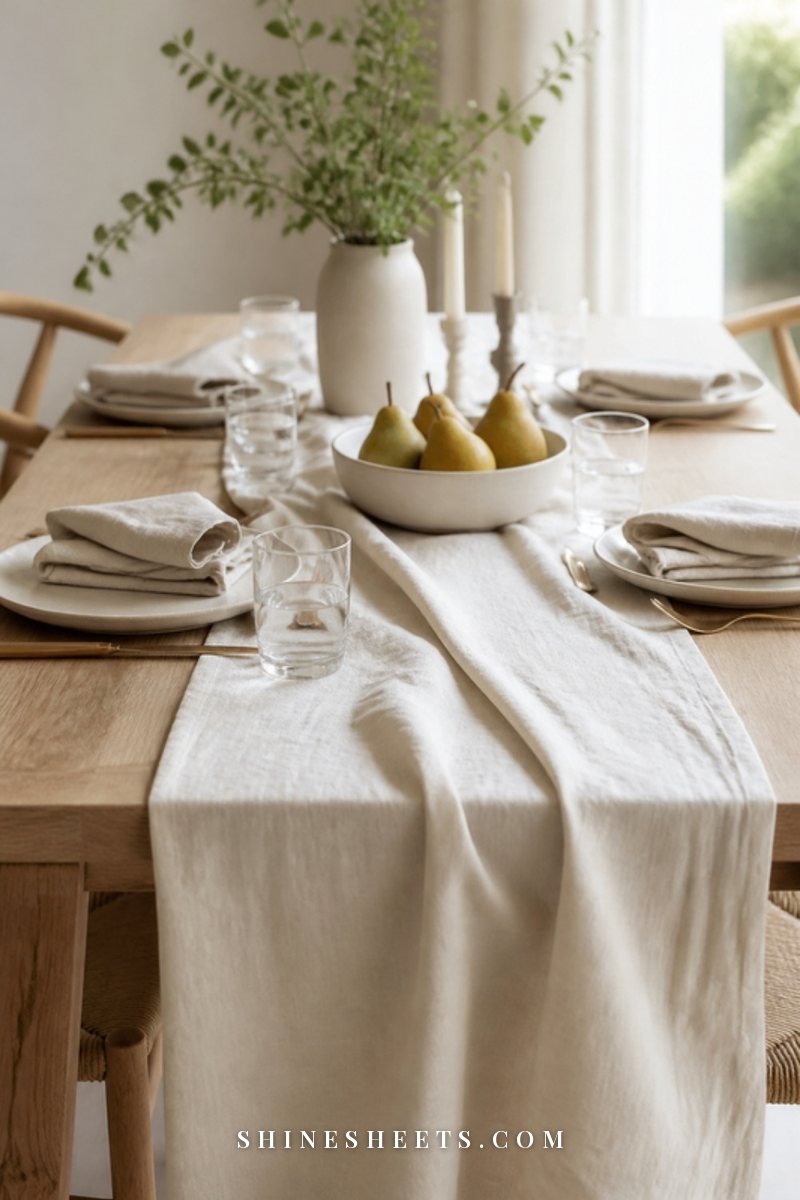
A runner is the easiest way to soften a table without hiding pretty wood. A cream linen table runner works with every season and every set of dishes. Aim for 12–18 in wide with 6–12 in hanging over each end. On a round or very worn table, a full linen tablecloth with a short drop feels relaxed rather than formal. Linen looks best slightly rumpled, so you can skip ironing (truly).
Cloth napkins are the small sister of this idea. A stack of mismatched linen napkins in cream, oatmeal and soft sage costs very little, washes easily and makes every meal feel a bit more intentional than paper ever will. Keep them in a basket on the sideboard so they're the default, not the special-occasion option.
6. Add Seat Cushions
Hard wooden chairs are the fastest way to end a conversation. Tie-on dining chair cushions in oatmeal, cream or soft sage add comfort and color, and they're completely renter-friendly. Look for removable, washable covers and ties that match the chair color so they disappear.
For upholstered chairs that are looking tired, washable linen slipcovers are a gentle refresh, and they're easy to take off before guests arrive if a spill happens. A sheepskin-style throw on one or two chairs adds winter softness without committing the whole set.
7. Size the Rug for Pulled-Out Chairs
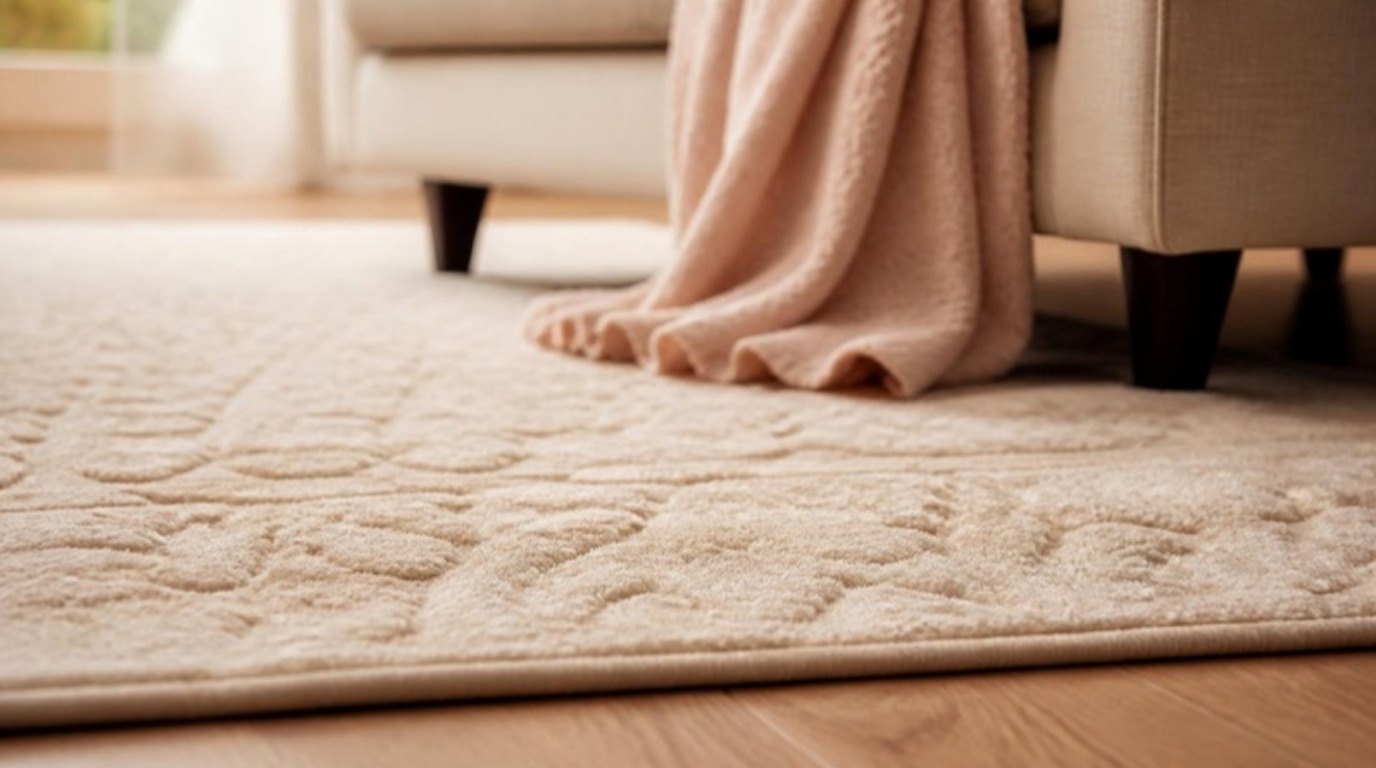
A rug under the table pulls the dining area together and quiets footsteps, but only if it's big enough. The rule: it should extend at least 24 in beyond the table on every side, so the back legs of a pulled-out chair stay on the rug. A washable flatweave rug is the practical choice under a table, since chairs slide easily and spills go straight into the machine. My guide on how to choose a rug walks through sizes and materials room by room.
8. Soften the Windows
Bare windows make a dining room feel echoey at night. Hang light-filtering linen or cotton curtains 4–6 in above the frame and 8–12 in wider on each side so they frame the view instead of blocking it. In cream or warm white, they reflect candlelight back into the room after dark.
Table Styling That Invites People To Stay
9. Keep the Centerpiece Low
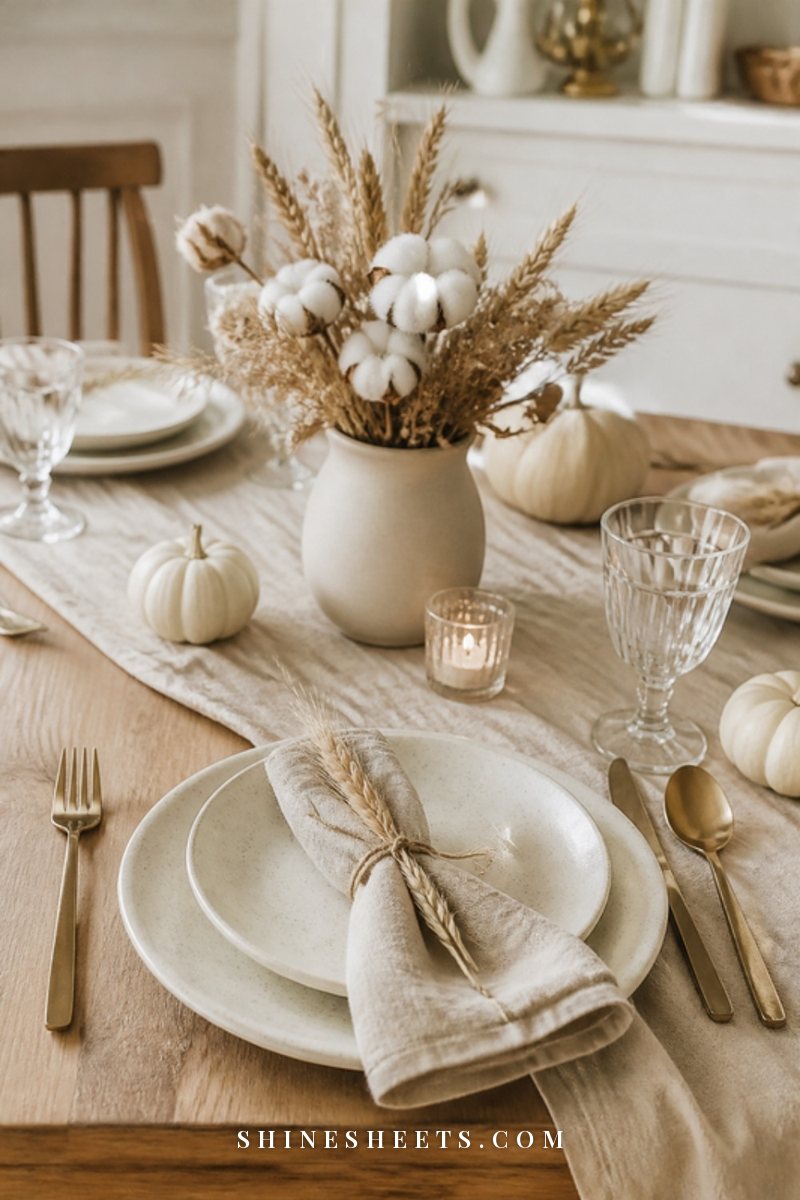
Tall arrangements look lovely in photos and awful in real conversations. Keep anything in the center under about 12 in high so people can see each other across the table. A low ceramic centerpiece bowl is endlessly useful: fill it with fruit, a few cut stems in a small frog, or simply leave it empty as a sculptural piece.
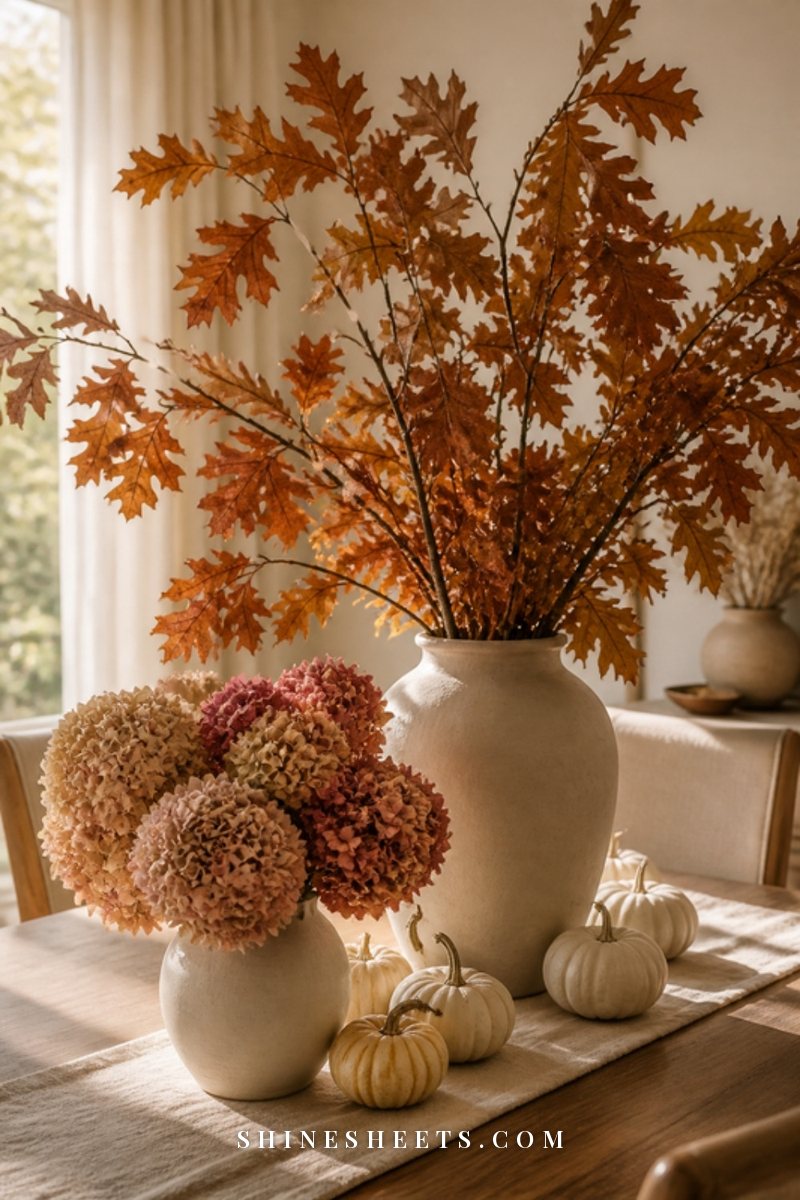
10. Bring In Autumn Branches and Pears
For a seasonal touch that isn't holiday decor, think of what's outside: a few branches with turning leaves in a stoneware jug on the sideboard, a scattering of pears or small squash in that low bowl, dried grasses in a tall vase in the corner. Keep it loose and natural, and switch to bare branches or evergreens when the leaves fall.
The idea is to let the season show up gently, in color and texture, rather than in themed objects. Warm rust, mustard and deep green in napkins or a single vase is enough. When you put the pears away, the table still looks finished.
11. Leave a Small Everyday Setup Out
An empty table looks like it's waiting for someone. A tray with a water carafe, two glasses and a small plant makes it feel used and loved. Keep it on one side so you can slide it away for meals.
A small stack of books, a single candle in a glass holder or a little dish of salt and pepper mills can join it. Three objects is plenty. The goal is a table that looks ready for someone to sit down with a cup of tea, not a table covered in things to move.
Warm Colors, Wood and Walls
12. Choose Warm Wall Colors
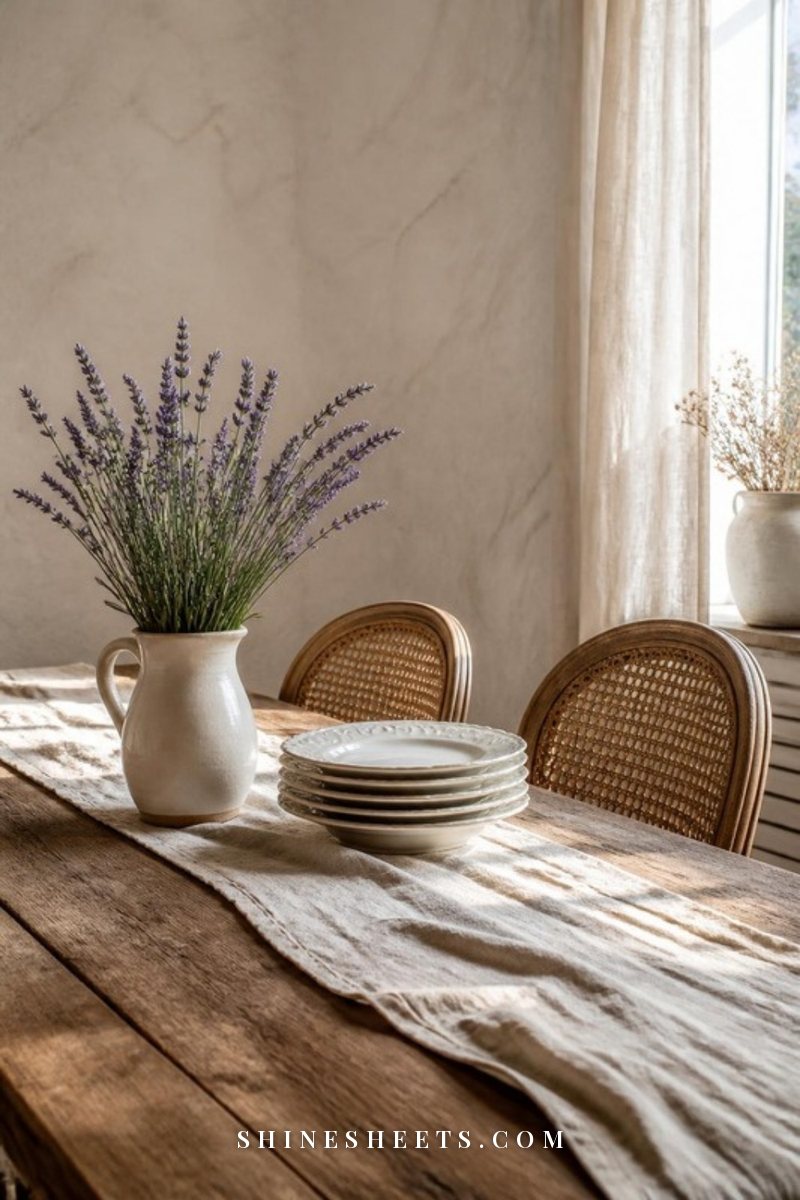
Cool, stark whites can make a dining room feel clinical in the evening. Warm whites, soft creams, mushroom beige, muted sage or a dusty blush all glow under lamplight. If you rent and can't paint, bring the warmth in through fabric, wood and art instead. If you can, test samples on two walls and look at them at dinnertime, not just at noon.
Want something richer? A warm, muted color below a picture rail or on just the lower half of the walls feels enveloping without darkening the whole room. Pair it with a lighter tone above and the ceiling will still feel high.
13. Mix Wood Tones
A room with wood in only one exact shade can feel flat. Pair a light oak table with a slightly darker sideboard, a walnut frame or woven seats. The trick is to keep the undertones similar (all warm, or all neutral) and repeat each tone at least twice in the room.
14. Hang Art at Seated Eye Level
In a dining room, you look at the walls while sitting down, so art can hang a little lower than elsewhere. Above a sideboard, leave 8–10 in between the furniture and the bottom of the frame. Landscapes, still lifes and soft abstracts in warm tones suit a dining space beautifully.
One large piece usually feels calmer than many small ones in a dining room, because people see the wall from one seat for a long time. If you love a gallery look, keep frames in the same finish and gaps of about 2–3 in between them.
15. Place a Mirror Thoughtfully
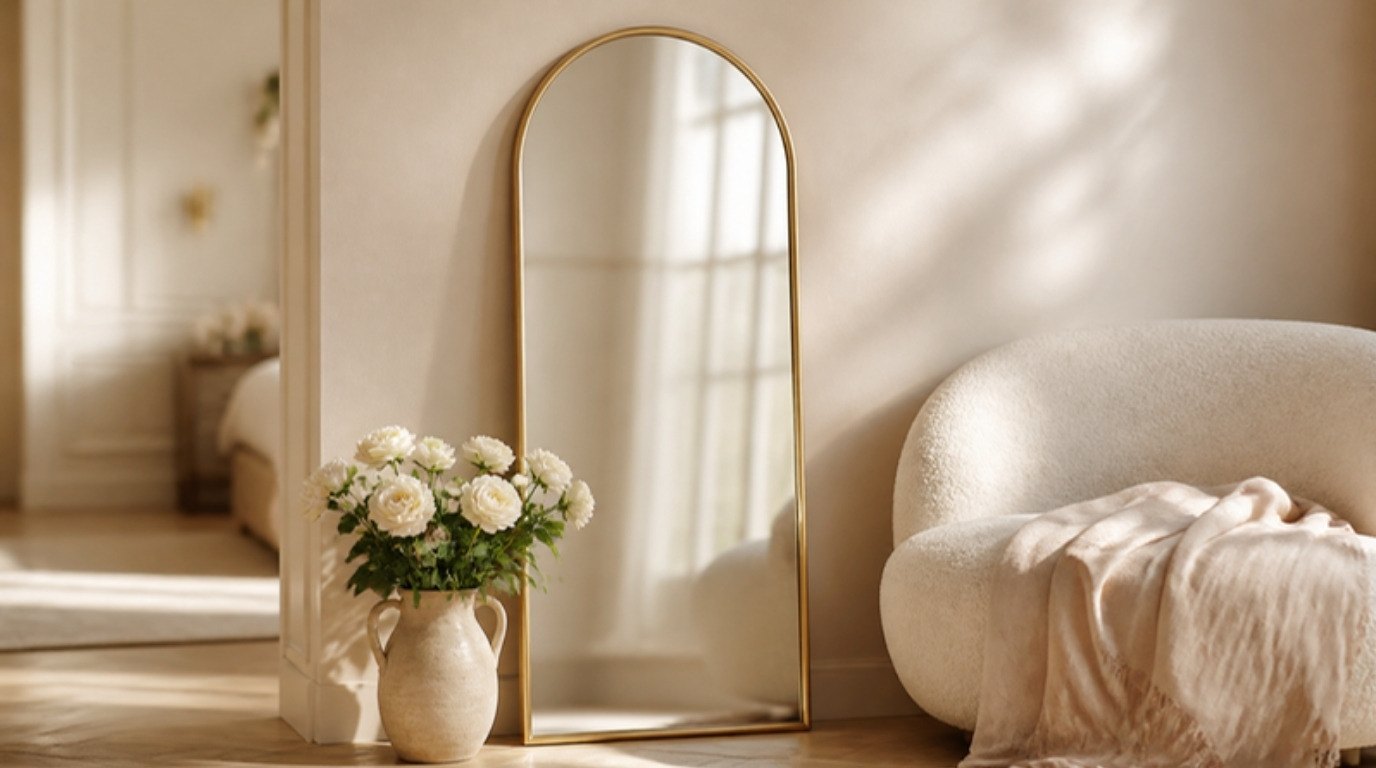
A mirror can bounce candlelight and daylight around a darker dining room. Hang it opposite or beside a window rather than directly facing the table, so diners aren't watching themselves eat. An arched or vintage-style frame in brass or wood adds warmth.
Furniture That Adds Flexibility
16. Swap One Side for a Bench
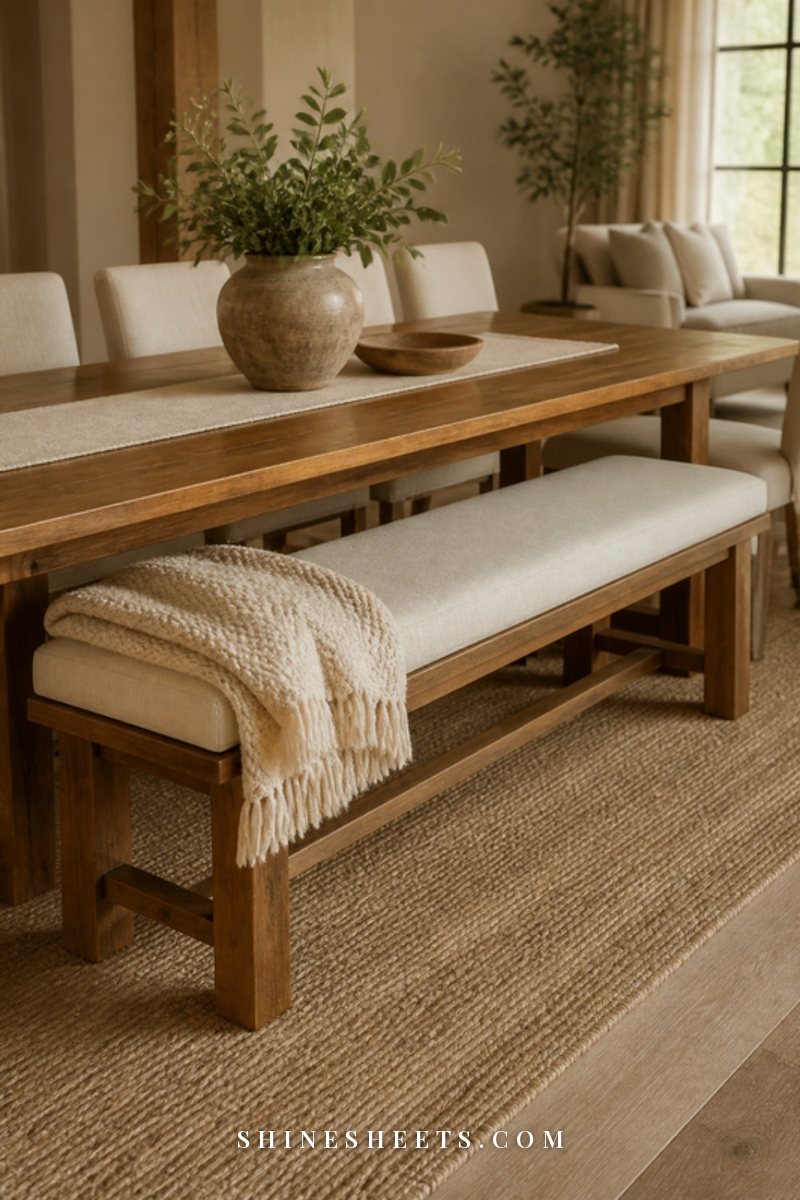
A bench makes a table feel casual and welcoming, and it squeezes in an extra person when you need it. Choose one about 6–12 in shorter than the table so it tucks neatly between the legs. Add a long cushion and a folded throw at one end and it becomes the spot everyone fights over.
17. Give the Sideboard or Bar Cart a Job
A sideboard or bar cart keeps the table clear and holds the things that make meals feel easy: napkins, candles, a stack of plates, a teapot and cups for slow evenings. Style the top with one lamp, one vase and one low stack, and keep the rest inside closed doors so it never looks cluttered.
Small-Space Dining Nooks
18. Create a Corner Banquette Nook
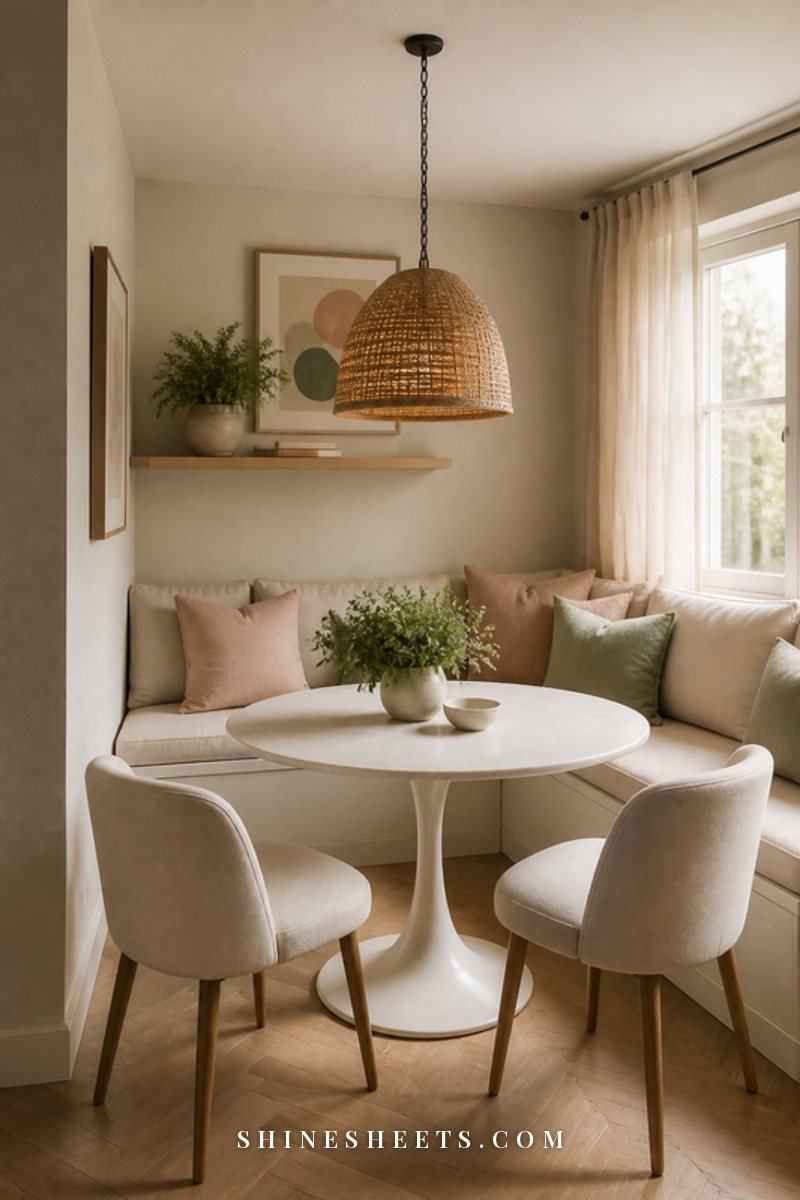
A corner with a bench along two walls seats more people in less space than chairs ever can. Renters can recreate it with two freestanding benches pushed into an L, a stack of cushions against the wall, and a pendant or plug-in wall light above. Aim for a seat depth of 18–24 in and enough cushions to lean back comfortably.
Lighting makes a nook feel like a destination. Center a pendant over the table rather than the bench, keep the bulb warm, and add a small sconce or picture light on the wall if the corner is dark. A narrow shelf above the bench holds a candle and a plant without taking up any floor space.
19. Use a Round Table in Tight Spots
Round tables have no corners to bump into and make conversation feel more intimate. A 36–44 in round seats four comfortably and fits small kitchens and living room corners. Pair it with armless chairs that slide fully underneath. My small living room ideas include a few ways to tuck a dining spot into an open-plan room.
Everyday vs Hosting Setup
20. Keep Two Simple Setups
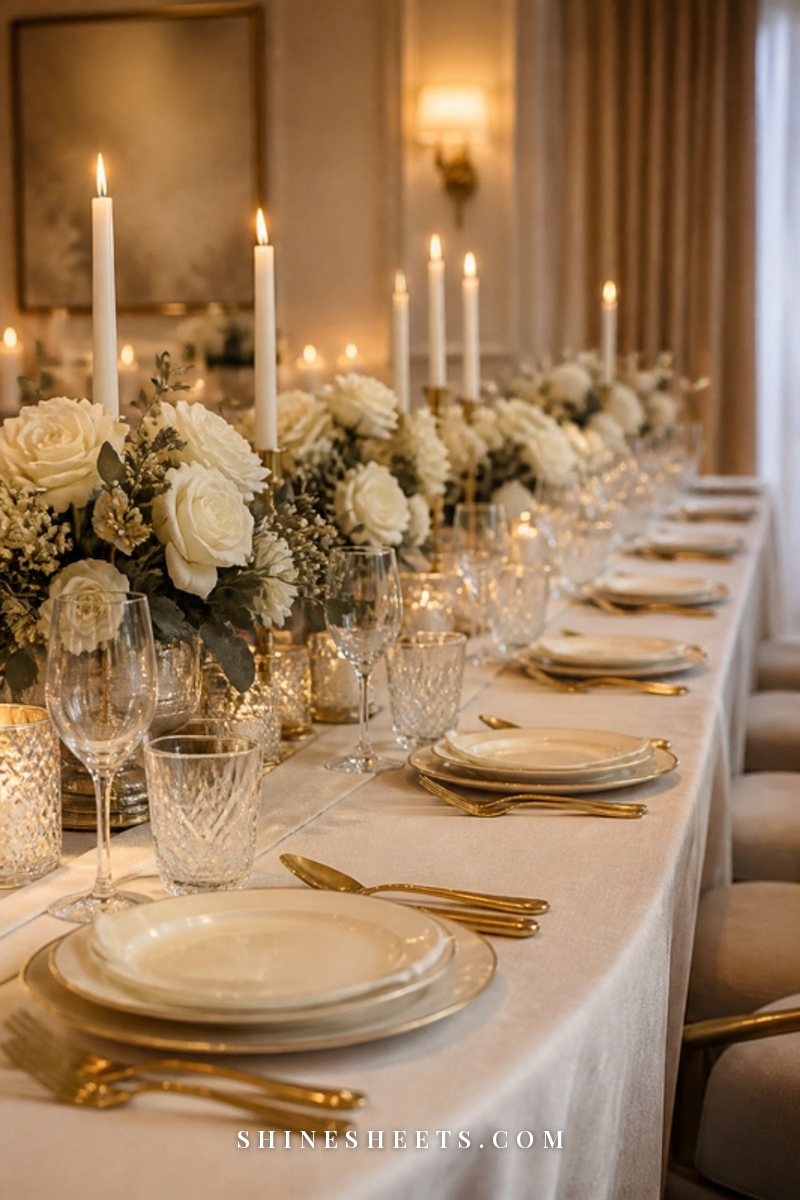
The warmest dining rooms don't stay "staged" all the time. They shift between a relaxed everyday look and a slightly dressier one for guests. Here's how I'd think about the two:
- Everyday: runner or bare wood, a low bowl, a tray with a carafe, lamp on, candles ready but unlit, cushions on the chairs.
- Hosting: a full linen tablecloth, cloth napkins, the low centerpiece moved slightly off-center to make room for serving dishes, candles lit, pendant dimmed to about half, the sideboard cleared for drinks and dessert.
Keep everything for the hosting look together in one sideboard drawer or basket, so switching takes ten minutes, not an hour. And when the table's set and guests are arriving, my friendly guide to table manners every adult should know is a lovely reminder that warmth matters far more than doing everything perfectly.
Where To Start: A Simple Weekend Order
Twenty ideas can feel like a lot, so here's the order I'd follow if you have one weekend and a modest budget. Each step builds on the one before.
- Fix the light. Lower the pendant, switch to warm bulbs and add one lamp.
- Clear and reset the table. Take everything off, then put back only a runner and a low bowl.
- Add softness. Seat cushions first, then cloth napkins, then curtains if the windows are bare.
- Check the rug. Pull a chair out and see whether its back legs stay on. If not, that's your next purchase.
- Finish with one personal touch. A piece of art you love, a vase you found at a market, a candle holder with a story.
That's it. Everything else in this list can come slowly, as you notice what the room still needs.
Final Thoughts
A warm dining room isn't built in a weekend shopping trip. It's built one small fix at a time: a lower light, a softer seat, a rug that's the right size, a centerpiece low enough to see across.
Start with whichever idea bothers you most when you sit down to eat tonight. Fix that one, light a candle, and let the table become the place people want to stay a little longer.