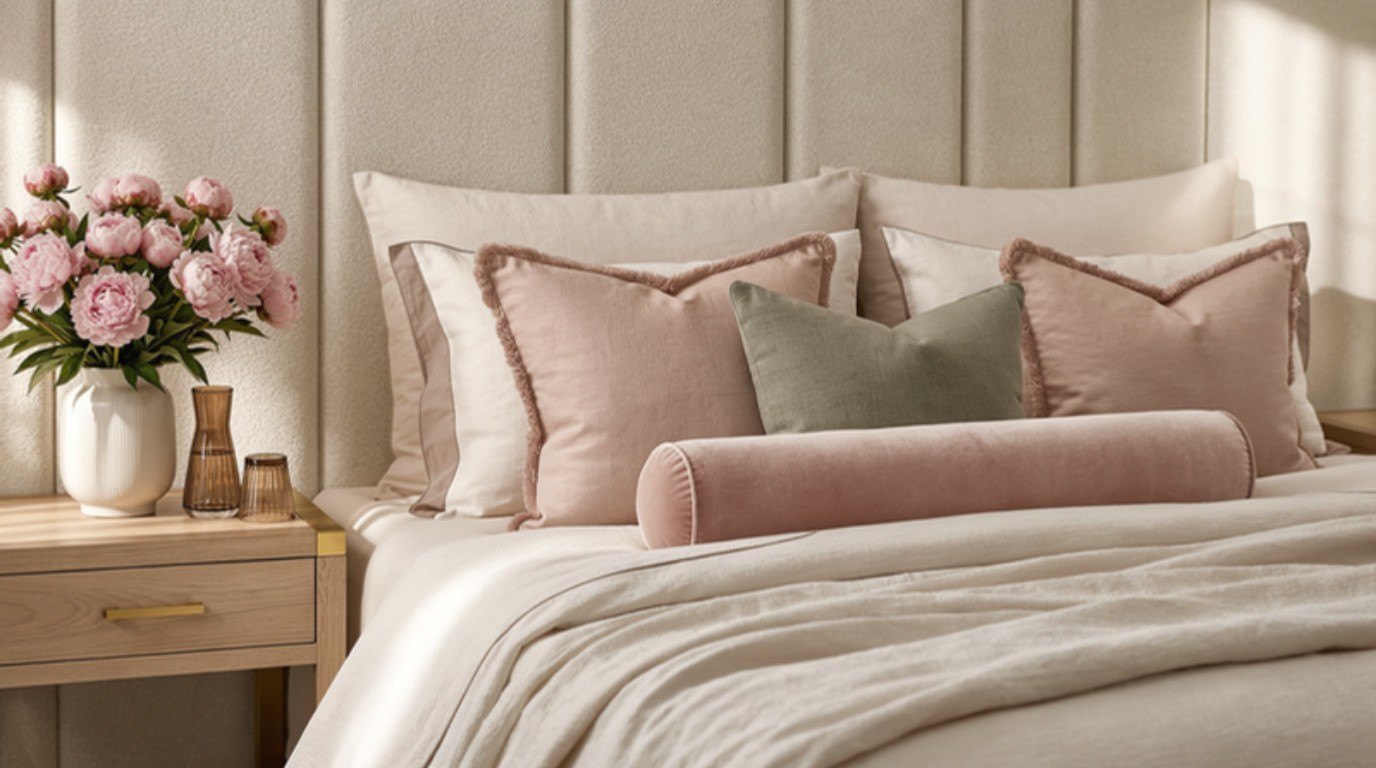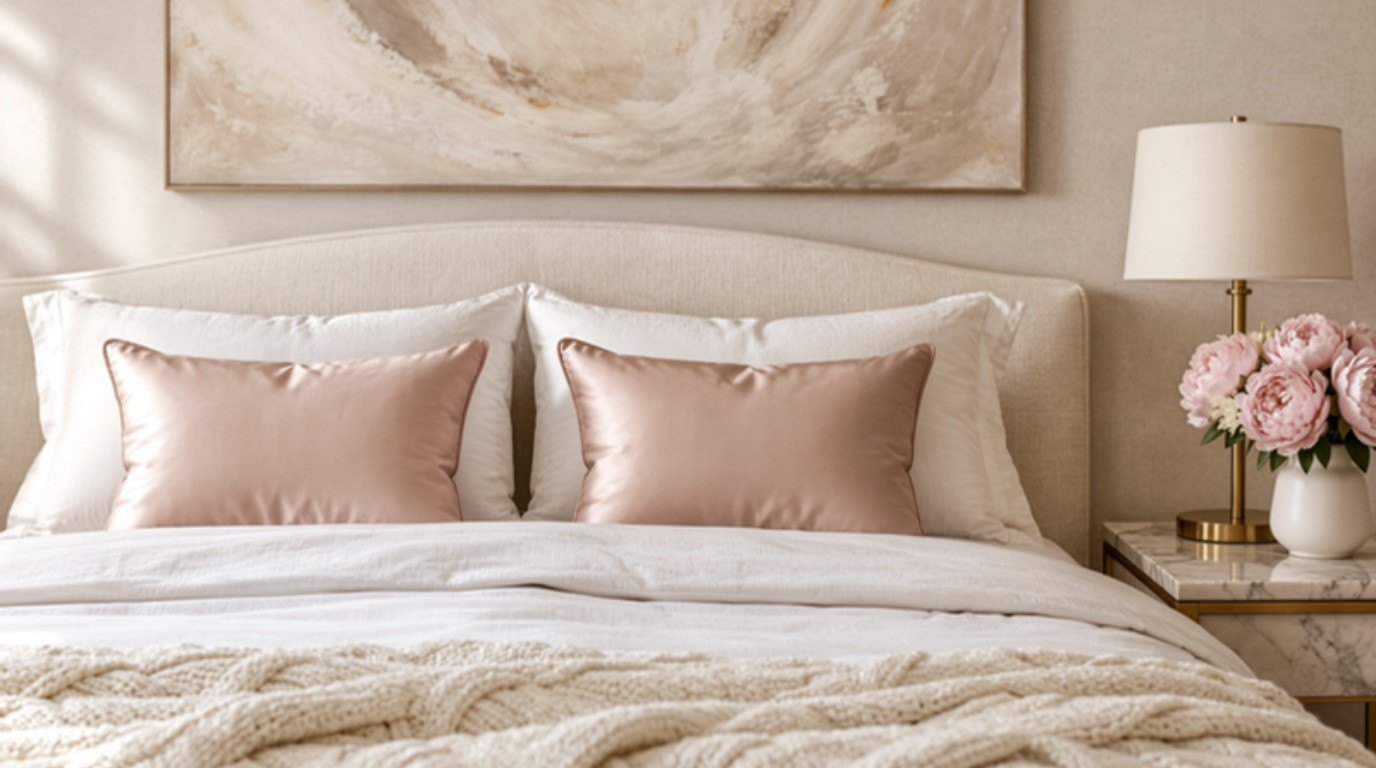
The wall above your bed is the biggest blank canvas in most bedrooms, and it's also the one people get wrong most often. Not because they pick the wrong art, but because they hang it too small, too high or off-center, so the whole bed looks a little lost. Get the size and the height right, and even a simple print looks like it was planned by a designer.
There's one more thing that makes this wall special: you sleep under it. That means what you hang there needs to be light, secure and calm to look at, not just pretty.
This guide is all about above the bed decor: how wide your art should be for your bed size, exactly how high to hang it, a quick sizing table, eight ideas that work on real bedroom walls, the safety rules I'd never skip, and renter-friendly options that come down without a trace.
Why the Bed Wall Needs Its Own Rules

Most wall decor rules are written for sofas, hallways and empty walls. The bed wall is different in three ways. First, the bed is a huge, wide piece of furniture, so small art next to it looks like a postage stamp. Second, there's usually a headboard in the way, which changes how high things should go. Third, your head is right underneath it, every single night.
If you're looking for ideas for every wall in your home, my guide to wall decor ideas for bare walls covers the rest. This one is only about the space above the bed, so we can get very specific.
How Wide Should Above-the-Bed Art Be?
The simplest rule: your art, or your whole arrangement, should be about two-thirds the width of your bed. Not the width of the wall, and not the width of the bed plus the nightstands. Just the bed itself.
Two-thirds is wide enough to feel grounded and intentional, but it leaves a little breathing room on each side so the art doesn't fight with your lamps or bedside tables. If you love a bolder look, you can go up to about three-quarters of the bed width, but I wouldn't go narrower than half, or it will start to float.
For a pair or a group of frames, measure the total width from the outer edge of the first frame to the outer edge of the last one, including the gaps. That's the number that should land at roughly two-thirds.
How High To Hang Art Above the Bed
This is where most bed walls go wrong. Art hung too high feels disconnected, as if it belongs to the ceiling instead of the bed. Here's the guideline that works in almost every bedroom:
- With a headboard: the bottom edge of the art sits about 20–25 cm (8–10 inches) above the top of the headboard.
- Without a headboard: the bottom edge sits about 45–60 cm (18–24 inches) above the top of the mattress, so you won't bump it when you sit up to read.
- With a very tall headboard: keep the gap at the lower end, around 15–20 cm (6–8 inches), so the art still feels connected and doesn't crowd the ceiling.
Before you put a single hole in the wall, sit up in bed with your back against the headboard and reach up behind you. If your head or hand touches the planned bottom edge, raise it a little. Comfort wins over any rule.
For the general technique of measuring, marking and leveling, my step-by-step guide on how to hang art and frames walks through it with a pencil, tape and a level.
Center It to the Bed, Not the Wall
If your bed isn't in the exact middle of the wall (very common, especially in small rooms), always center the art to the bed. Find the center line of the bed, mark it lightly on the wall with a pencil, and build everything out from there. Art centered to the wall but not the bed looks crooked, even when it's perfectly straight.
A painter's tape trick that helps: cut paper or tape outlines in the size of your frames and stick them on the wall first. Live with them for a day or two. It's much easier to move tape than to patch holes.
Above-the-Bed Sizing Table
Here's the quick reference that ties it all together. Find your bed size, and you'll have your ideal art width, hanging height and the option that tends to look best. Screenshot it before you head to the shop. Bed widths are standard US mattress sizes.
| Bed size | Ideal art width (about 2/3) | Hanging height (bottom edge) | Best option |
|---|---|---|---|
| Twin (97 cm / 38 in) | 60–65 cm (24–26 in) | 20–25 cm above headboard, or 45–60 cm above mattress | One medium canvas or a single woven piece |
| Full (137 cm / 54 in) | 85–90 cm (34–36 in) | 20–25 cm above headboard, or 45–60 cm above mattress | One large canvas or a pair of prints |
| Queen (152 cm / 60 in) | 100 cm (about 40 in) | 20–25 cm above headboard, or 45–60 cm above mattress | A pair of matching prints or a low gallery grouping |
| King (193 cm / 76 in) | 125–130 cm (50–52 in) | 20–25 cm above headboard, or 45–60 cm above mattress | A wide canvas, three prints in a row or a fabric hanging |
| Daybed or bed against a long wall | Two-thirds of the visible long side | 45–60 cm above mattress | A horizontal canvas or removable wallpaper panel |
If your art is a little smaller than the ideal width, don't worry. You can make it read wider by adding a matching print, choosing a wider mat inside the frame, or placing a pair of wall sconces or plants to either side.
8 Above-the-Bed Decor Ideas
Each of these ideas works with the sizing rules above. I've kept them all light, calm and easy to install, because this is the wall you look at last thing at night and first thing in the morning.
1. One Large Canvas
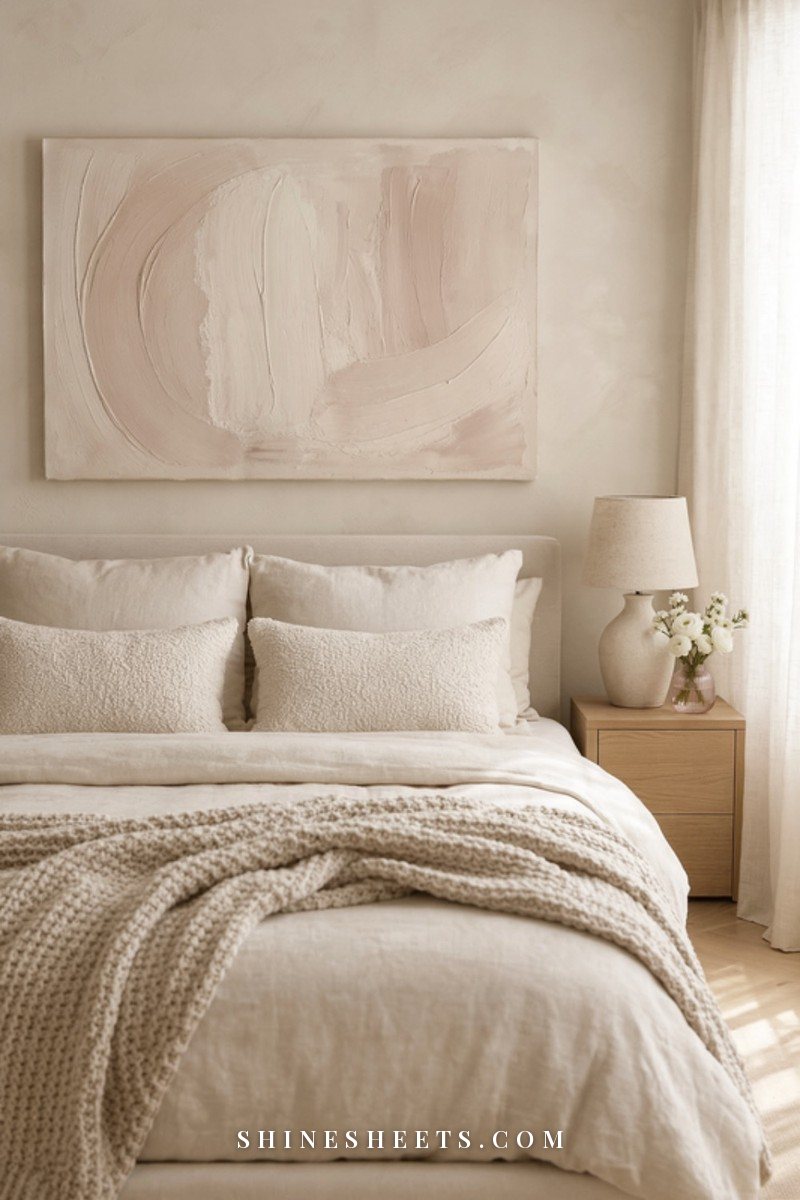
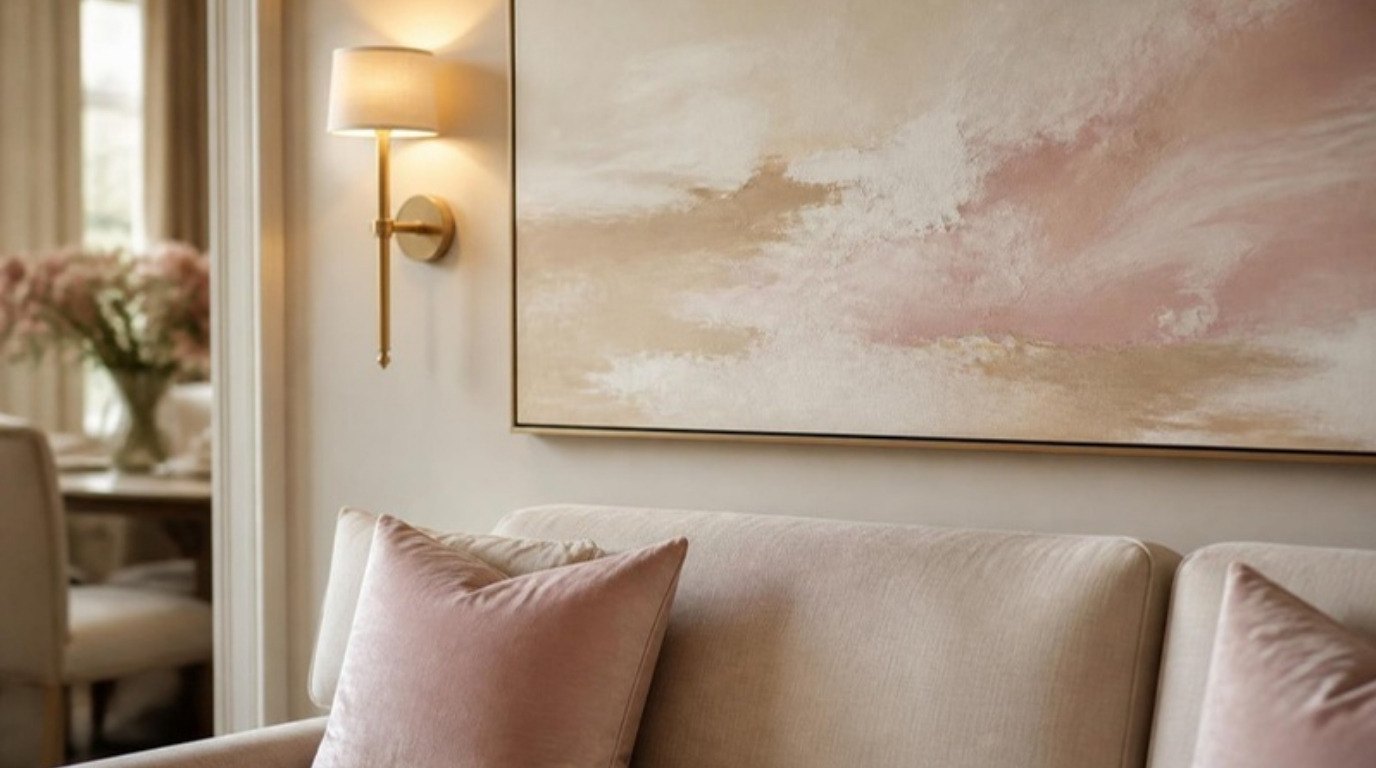
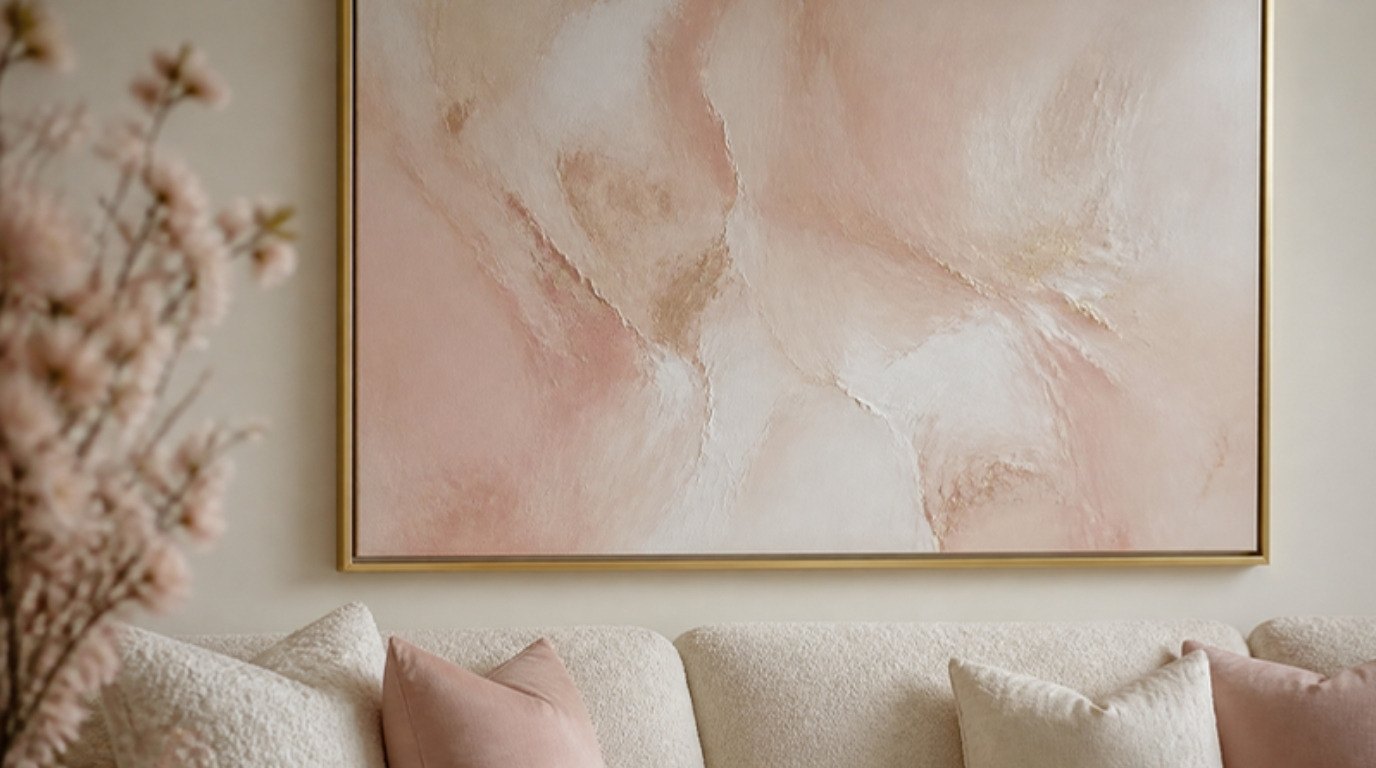
A single big canvas is the easiest way to make the bed wall look finished. Canvas has no glass and is usually very light, which makes it ideal for hanging over your head. Choose something soft and quiet rather than busy: abstract washes, a calm landscape, a blurry floral or simple line art.
For a queen bed, look for something around 100 cm (40 in) wide. A large cream abstract canvas print in neutral tones works with almost any bedding, and if you change your duvet cover every season, it'll still match. Hang it from two hooks or D-rings rather than one wire, so it stays level when you lean against the headboard.
2. A Pair of Matching Prints
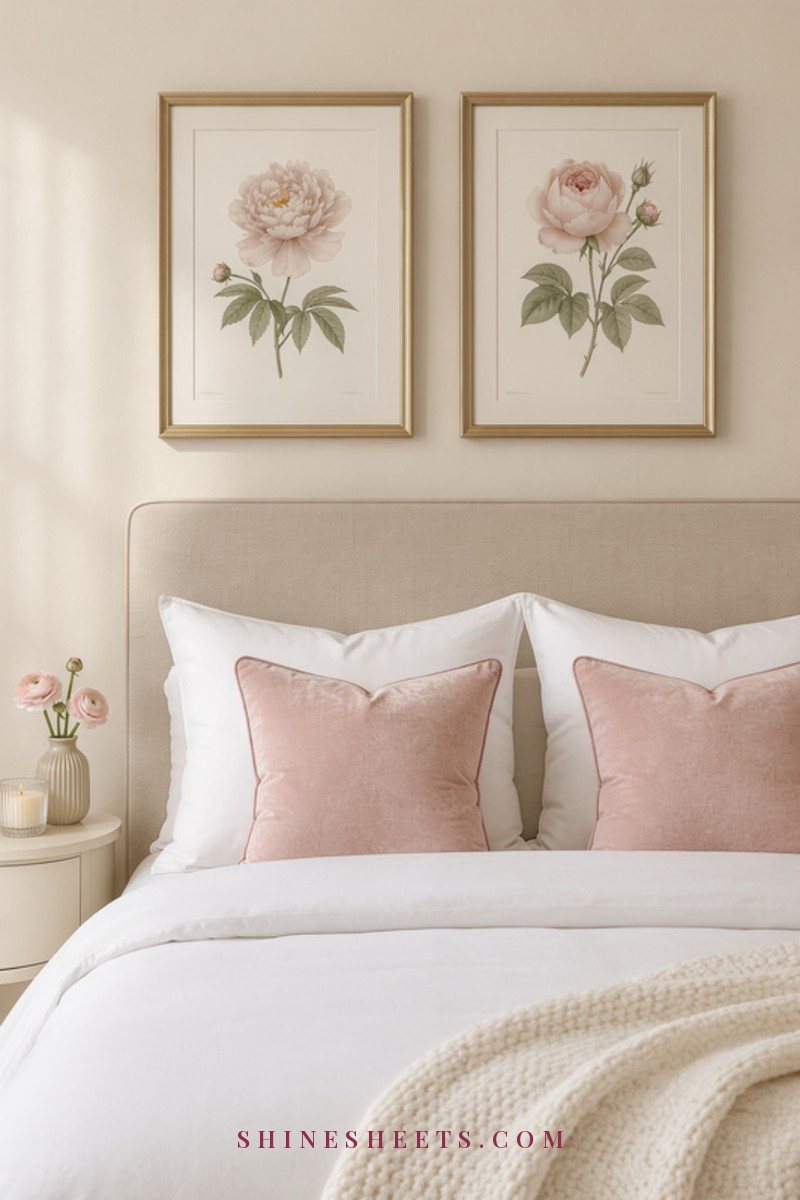
Two prints side by side feel balanced and a little bit classic. They're perfect if you love symmetry, or if you can't find one piece that's big enough. Keep the gap between them small, about 5–8 cm (2–3 in), so they read as one unit.
A set of blush botanical prints looks soft and fresh against white or cream walls. Pair them with gold-accent acrylic frames, which give you the look of glass without the weight or the risk of shards over your pillow.
3. A Simple, Low Gallery Grouping
A small gallery grouping can look lovely above a bed, as long as it stays simple and low. Think three to six frames in a tidy grid or a single row, not a sprawling wall of twenty frames. Keep all the frames in the same finish (all gold, all white or all light wood) and repeat one or two colors in the art.
Lay everything out on the floor first, measure the total width, and check it against the two-thirds rule. The bottom row should follow the same height rule as a single piece. For layout ideas and spacing, my guide to gallery wall layouts and spacing has several arrangements that adapt well to a bed wall.
4. A Fabric Wall Hanging
Fabric is one of the softest, lightest things you can put above a bed, and it brings in texture that frames can't. A large linen panel, a quilted textile or a simple woven textile in cream or sand tones makes the room feel instantly calmer.
Hang it from a lightweight wooden dowel or a slim rod on two small hooks, and steam it once before hanging so the creases drop out. Make sure the fabric isn't close to any wall lights or bedside lamps; keep at least a hand's width between bulbs and fabric.
5. A Woven Wall Piece

Macrame, woven rattan or a round seagrass piece adds a relaxed, natural feel. These pieces are very light, so they're among the safest choices for over the bed, and they look especially nice with linen bedding and wooden furniture.
An ivory macrame wall hanging that's wide rather than long suits the bed wall best; a long, narrow piece can dangle too close to your head. Check that the bottom of the fringe still sits above your sitting-up height.
6. A Light Canopy
A soft canopy turns the bed into its own little retreat. You don't need a four-poster bed for this. A lightweight sheer fabric draped from a ceiling hook or a slim ring above the headboard creates the same dreamy effect.
Use a single small ceiling hook fixed into a joist, or a renter-friendly adhesive hook rated well above the fabric's weight. A white sheer bed canopy made from light voile is ideal; skip heavy velvet or anything with a metal frame overhead. Keep canopy fabric well away from candles, heaters and hot bulbs.
7. A Painted Arch
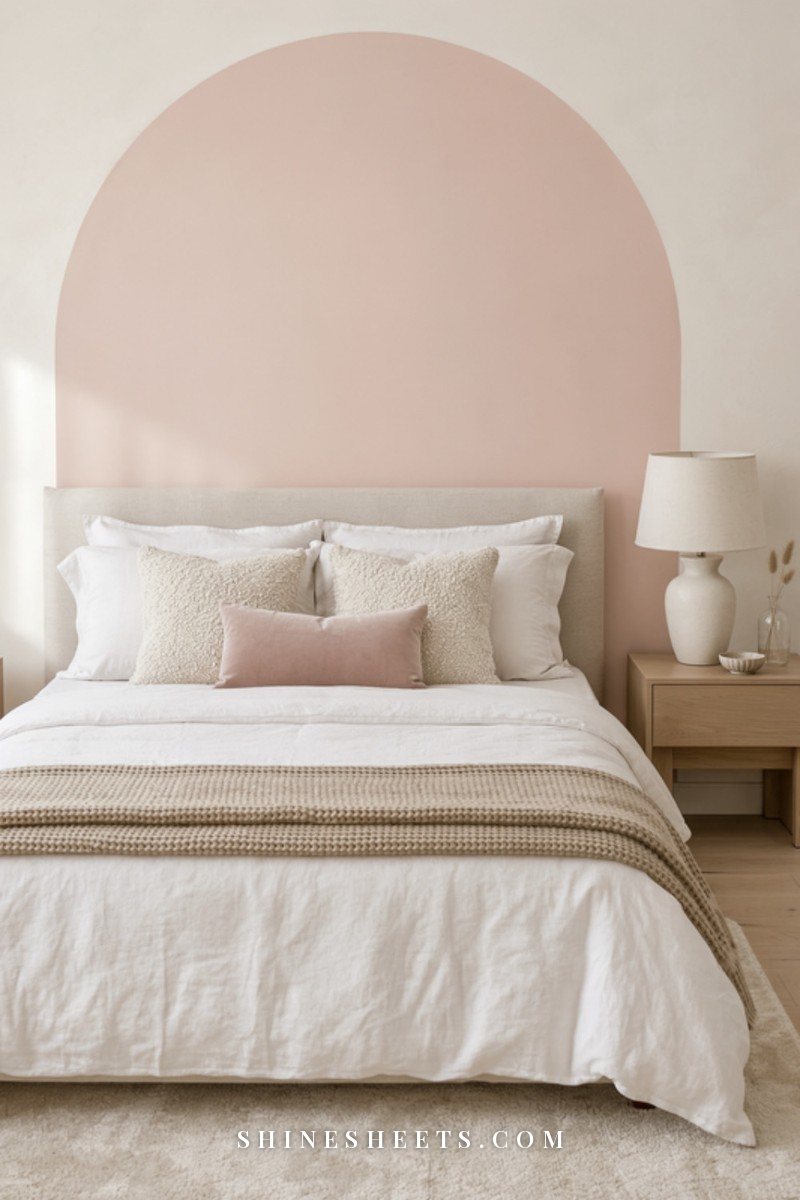
A painted arch is a clever way to create a "headboard" or a frame for your bed with nothing hanging over your head at all. It's just paint. Choose a soft tone a few shades darker than your wall (blush on cream, sage on white, warm beige on ivory) and make the arch slightly wider than the bed.
Mark the center of the bed, use a pencil tied to a piece of string as a compass for the curved top, and outline with painter's tape for the straight sides. Two thin coats look better than one thick one. If you rent, ask your landlord first; many are happy as long as you repaint before moving out.
8. Removable Wallpaper
Peel-and-stick wallpaper on just the bed wall gives the whole room a new personality in an afternoon. Small florals, soft stripes, gentle checks or a plain textured look all work beautifully. You can paper the whole wall, or just a panel the width of the bed for a headboard effect.
A sage peel-and-stick wallpaper feels calm and fresh, and it pairs well with cream bedding and wooden furniture. Clean the wall with a dry cloth first, start from the center line of the bed, and smooth out bubbles with a plastic smoother as you go. If you're working with a smaller room, my list of small bedroom ideas that make the room feel bigger has tips on which patterns help a tiny space feel open.
Safety First: What Not To Hang Over Your Head
This part isn't the fun part, but it's the most important. Anything above the bed should be safe enough that you'd be happy to sleep under it during a storm, a bump in the night or a slammed door. Here are my non-negotiables:
- Only lightweight pieces. Canvas, acrylic-front frames, fabric and woven pieces are your friends. If something feels heavy in your hands, it doesn't belong over your pillow.
- Secure fixings, always. Screw into a wall stud where you can, or use proper wall anchors rated for well over the weight of the piece. Use two hanging points rather than one so the art can't swing or slide.
- Acrylic instead of glass. Acrylic (sometimes called plexiglass) looks almost identical but won't shatter into sharp pieces if a frame falls.
- No heavy shelves. A shelf full of books or plants above the bed is a real risk. Save shelves for the side walls or a nearby nook.
- No mirrors above the bed. They're heavy and made of glass, which is exactly what you don't want over your head.
- No picture ledges with loose objects. Small frames, candles or vases on a ledge can tip over with one bump of the headboard.
- Mind earthquake-prone areas. If you live somewhere with earthquakes, keep the bed wall to fabric, wallpaper or paint, or use closed hooks that frames can't slip off.
If you're not sure what's inside your wall (plaster, drywall, brick), a simple stud finder from a hardware store helps, and so does asking your landlord or building manager.
Renter-Friendly Ways To Decorate Above the Bed
You don't have to own your home to have a beautiful bed wall. A few options that come down cleanly:
- Adhesive strips for very light frames only. Use them for small, light frames and always stay well under the weight rating on the pack. Press firmly for 30 seconds and wait an hour before hanging the frame.
- Peel-and-stick wallpaper on the whole wall or just a headboard-width panel.
- Fabric hangings on removable hooks. A lightweight textile on a slim dowel needs just two small adhesive hooks.
- A tall upholstered headboard that stands on the floor or attaches to the bed frame, which fills a lot of the wall with nothing hanging on it.
- Washi tape or removable decals to create a soft arch, frame or simple line shape.
Whatever you choose, test a removable product on a hidden spot first (behind the headboard is perfect), and remove strips slowly by pulling the tab straight down along the wall. For more soft, renter-friendly touches beyond the bed wall, my bedroom ideas that feel like a hug are full of them.
Common Above-the-Bed Mistakes To Avoid
- Hanging art too high, so it floats near the ceiling instead of connecting to the bed.
- Choosing a piece that's far too small for the bed width.
- Centering to the wall instead of the bed.
- Using one nail and a wire for a large piece, so it tilts every time you lean back.
- Putting anything heavy, glass or fragile over your pillows.
- Picking very busy, high-contrast art for a room meant for rest.
Avoid these six and your bed wall will already look better than most. And if you're unsure about a piece, picture yourself sleeping calmly under it every night. If that picture makes you hesitate even a little, choose something lighter, softer or simply hang it on another wall. The bed wall should feel like a quiet exhale, not something you have to think about.
Final Thoughts
The wall above your bed doesn't need to be complicated. Get the width close to two-thirds, keep the bottom edge a hand or two above the headboard, center it to the bed, and choose something light and secure. That's really all it takes.
After that, it's about what feels calm to you at the end of a long day. A soft canvas, a pair of florals, a simple arch of paint: the right one is the one that makes you sigh a little when you walk into the room.