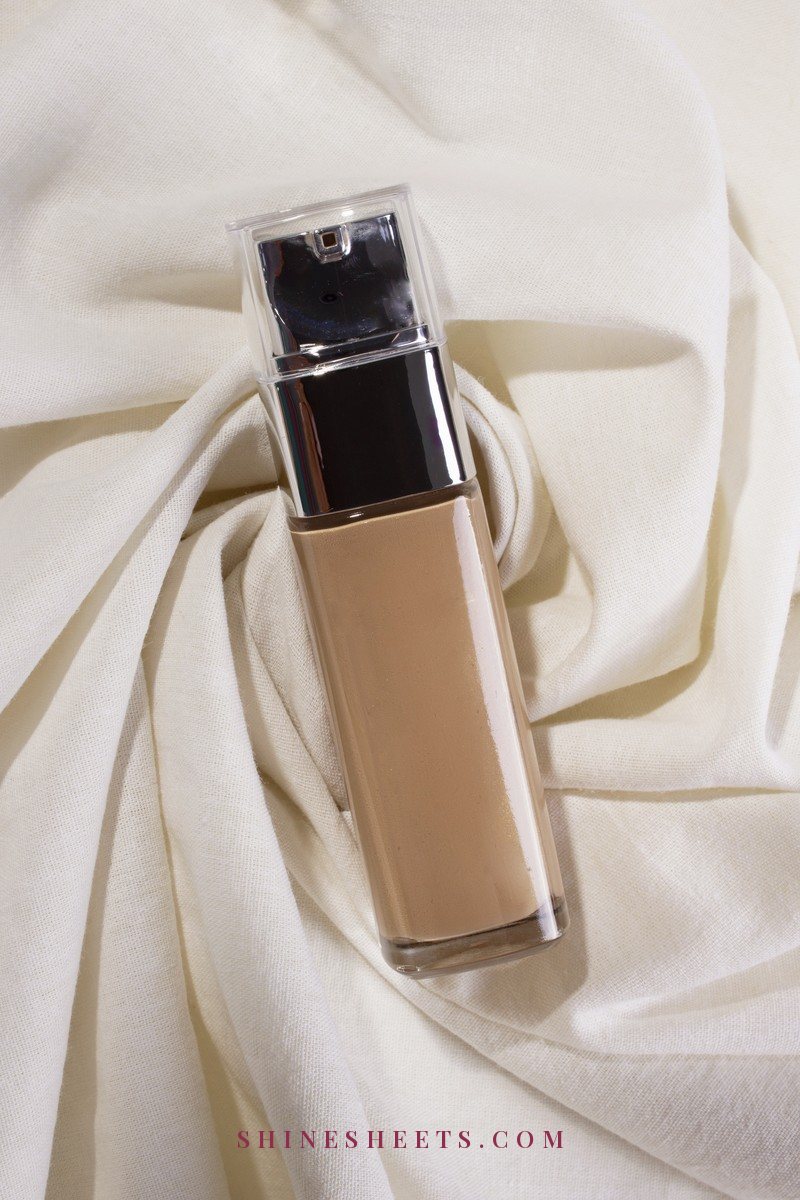
A foundation in the wrong shade is rarely a lost cause. Most "wrong" bottles are only one step away from working: a little lighter, a little warmer, a little sheerer, or simply moved to a different job in your makeup bag. Before you push it to the back of the drawer, it's worth figuring out what exactly is off, because the fix depends completely on that.
This guide is all about rescuing a wrong foundation shade you already own. You'll learn how to tell whether it's too light, too dark or the wrong undertone, six practical fixes that actually blend, a quick table that matches each problem to a fix, and how to give a bottle a second life if it truly can't be your everyday base.
I have combination, sensitive skin with a shiny T-zone, so I've learned that "wrong" sometimes isn't the shade at all. Sometimes it's the light, the oxidizing, or a neck that's a different color from the face. Let's sort that out first.
How To Tell What's Actually Wrong
Bathroom lighting is very good at lying. Warm bulbs make everything look golden, cool bulbs make everything look gray, and a mirror that sits too close shows you a face your friends never actually see. Before you decide a foundation is wrong, give it a fair test.
Test in Daylight on Your Jaw and Neck
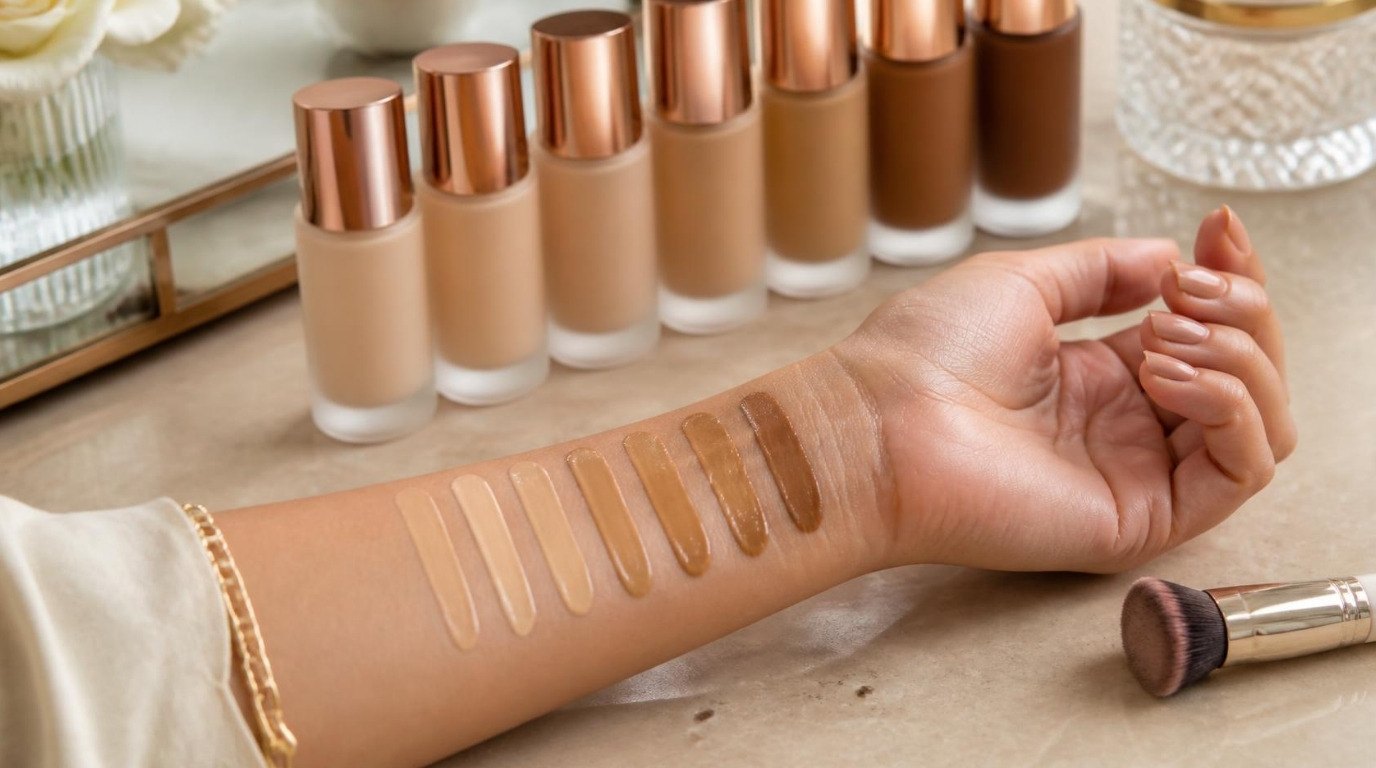
Swipe three small stripes along your jawline, right where your face meets your neck: the foundation in question, plus anything lighter and darker you happen to have. Leave them unblended for a moment, then walk to a window with indirect daylight (not direct sun, which bleaches everything out).
The right shade almost disappears into your skin. A shade that's too light looks like a pale, chalky stripe. A shade that's too dark looks like a muddy line or a faint shadow. If none of the stripes vanishes but one looks oddly pink or oddly yellow, that's a clue the issue is undertone rather than depth.
Always check against your neck and chest, not only your cheek. Many of us have a face that's slightly redder or slightly lighter than the neck, and a foundation that matches only the cheek can look like a mask once you step back.
Wait 15 Minutes for Oxidizing
Some foundations look perfect for the first five minutes and then turn darker or more orange as they settle. That's oxidizing, and it can happen with oils in the formula, with your skin's own oil, or with the skincare underneath. Check your jaw stripes again after 15 minutes, and once more after an hour if you can.
If the foundation darkens noticeably, you may not have the wrong shade at all, just a formula that shifts on your skin. My guide to why foundation oxidizes and how to stop it goes deeper into primers and skin prep, but for this article, simply note it: a bottle that darkens by half a shade usually needs the "too dark" fixes below.
Too Light, Too Dark or the Wrong Undertone
Once you've tested in daylight and waited, you should be able to name the problem in one of three ways:
- Too light: your face looks paler than your neck, a little flat, sometimes gray or ashy, and the edges look obvious in photos.
- Too dark: your face looks muddy, tired or slightly dirty, there's a visible line at the jaw, and the foundation looks "on" the skin rather than part of it.
- Wrong undertone: the depth is roughly right, but the shade looks too pink, too yellow, too orange or too olive next to your neck.
It's very possible to have two of these at once (a little too dark and a little too pink, for example). In that case, fix the depth first and the undertone second. The table below helps.
Wrong Foundation Shade Fix Table
Here's the quick version. Find your problem in the first column, try the quick fix for today, and use the longer fix if you want the bottle to work long term. The last column is the bottle's second career if it never quite matches.
| Problem | Quick fix today | Longer fix | Best use for the bottle |
|---|---|---|---|
| Slightly too light | Warm blush and a soft sweep of bronzer | Mix with a darker foundation or a drop of liquid bronzer | Concealer under the eyes or a soft highlight |
| Much too light | Use it only on the center of the face | Mix 1:1 with a deeper shade | Highlight down the nose and under the cheekbones |
| Slightly too dark | Sheer it with moisturizer and blend down the neck | Mix with a lighter foundation | Summer foundation or a body-matching base |
| Much too dark | Don't wear it all over | Add a white mixer or a very light shade | Cream contour or a warm bronzer base |
| Too pink | Yellow-toned powder on top | A yellow adjusting drop or a golden-toned foundation | Mix into a neutral shade |
| Too yellow or orange | Neutral or slightly pink powder | A pink adjusting drop or a neutral foundation | Contour if it's also dark |
| Turns darker after 15 minutes | Apply a thinner layer | Buy half a shade lighter next time, mix lighter now | Treat it as "too dark" |
Screenshot it if you like and keep it next to your vanity. You'll notice that almost every row has at least one way to keep the bottle useful.
6 Ways To Fix a Foundation That Doesn't Match
These six fixes cover nearly every mismatch. You don't need all of them. Pick the one that matches your problem from the table, try it once in daylight, and adjust from there.
1. Mix Two Shades Together
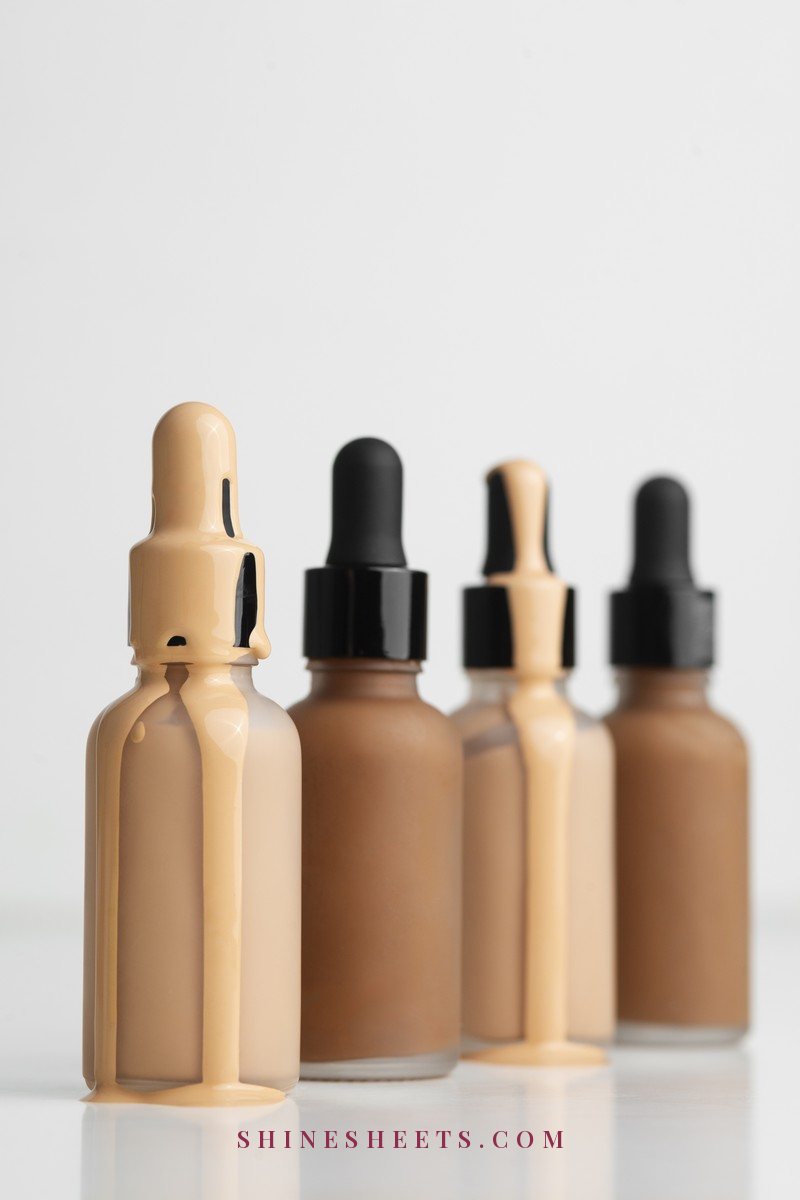
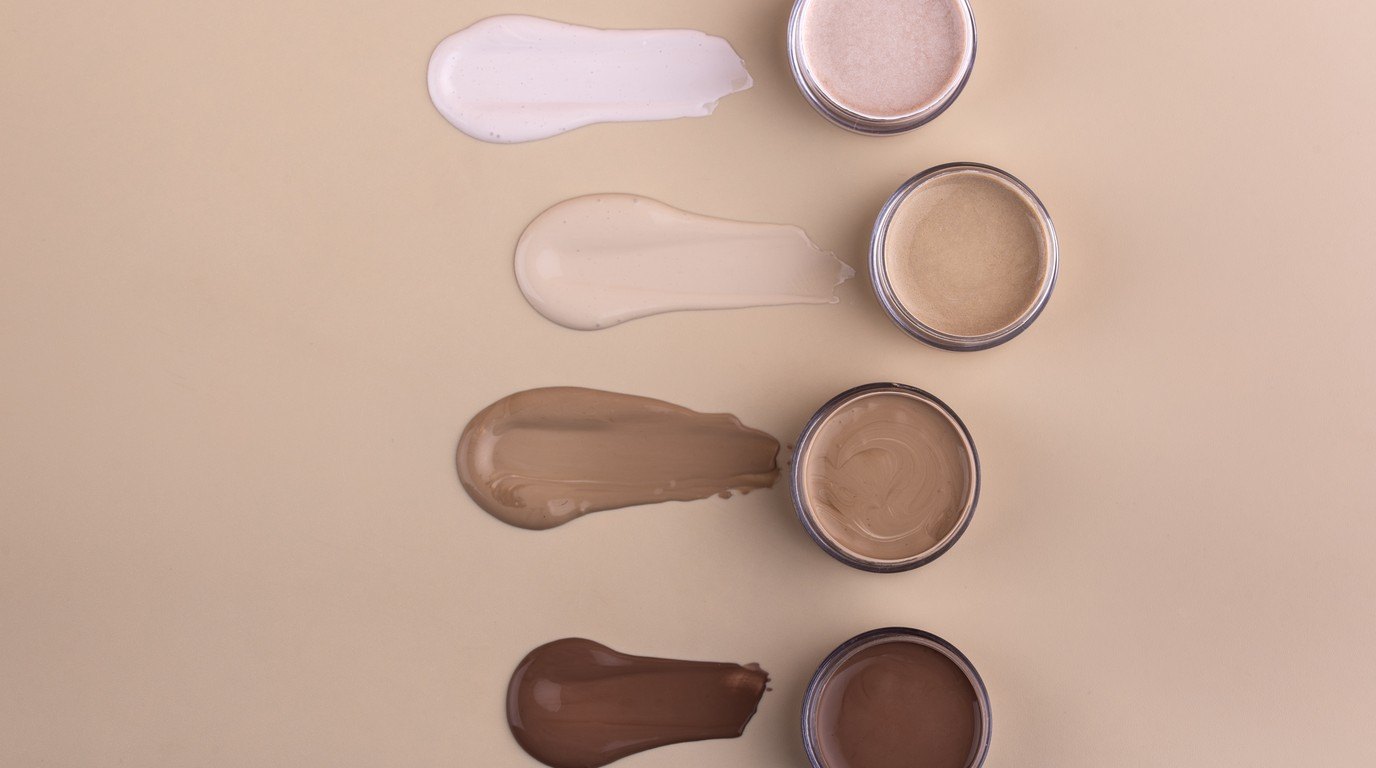
This is the most reliable fix for a shade that's too light or too dark, and it's the one makeup artists rely on every day. If you have (or can borrow) a second foundation that misses in the opposite direction, mixing the two often lands you on the exact right shade.
Do it on a flat surface, not in your palm, because your hand warms the product and makes it hard to judge the color. A small white makeup mixing palette works well because white shows the true shade. Add one pump of your main foundation, then a small amount of the second, and stir with a little stainless steel makeup spatula so you don't waste product on brushes or fingers.
Start with a ratio of about 3:1 (three parts of the closer shade, one part of the correcting one), swatch it on your jaw, then adjust one tiny drop at a time. When you find the ratio, write it down. "Two pumps of A plus a pea of B" is the kind of note that saves you ten minutes every morning.
A small honest admission: I always assume I need more of the correcting shade than I actually do. The first drop changes more than you think, so go slowly.
2. Add Adjusting Drops
Adjusting drops are highly pigmented liquids you add to foundation to make it lighter, darker, warmer or cooler. They're especially useful for undertone problems, because they correct the tone without changing the finish or the coverage much.
If your foundation is the right depth but too pink, look for foundation adjusting drops in a yellow or golden tone. If it's too yellow or orange, a pink or neutral drop calms it down. For a shade that's too dark, a white drop lightens it; for too light, a deeper or bronze drop adds depth.
The formula is simple: one drop per pump of foundation, mixed on the back of your palette, then tested on your jaw. Two drops is usually the maximum before the texture starts changing. If you need more than two drops every day, it's a sign the foundation is too far off and mixing with a second shade will look more natural.
3. Sheer It Out With Moisturizer
A foundation that's only slightly too dark or slightly too light becomes much more forgiving when it's sheer. Less pigment on the skin means less contrast with your neck, and your real skin tone shows through and does half the matching for you.
Mix one pump of foundation with roughly the same amount of a light moisturizer. A simple lightweight gel-cream moisturizer blends in smoothly and doesn't make combination skin greasy (my T-zone appreciates that). Apply with fingers or a damp sponge and press it in rather than rubbing.
The trade-off is coverage. You'll get a skin-tint finish, so spot-conceal anything you want covered after. On days when you only want a fresh, even look, this fix is often all you need.
4. Use a Too-Dark Shade as Cream Contour
If a foundation is two or more shades too dark, it may simply be a contour that hasn't found its calling yet. Cream contour is essentially a foundation a few shades deeper than your skin, ideally with a neutral or slightly cool undertone so it reads as a shadow rather than a tan.
Dab a small amount under your cheekbones, along the sides of the nose or at the edges of the forehead, then blend upward with a damp sponge until there's no edge. If you're not sure where to place it for your face shape, my contour guide for beginners walks you through it step by step.
A warm, orange-leaning dark shade works better as a bronzer base instead: mix a drop with your regular foundation on days you want a sunnier look.
5. Use a Too-Light Shade as Highlight or Concealer
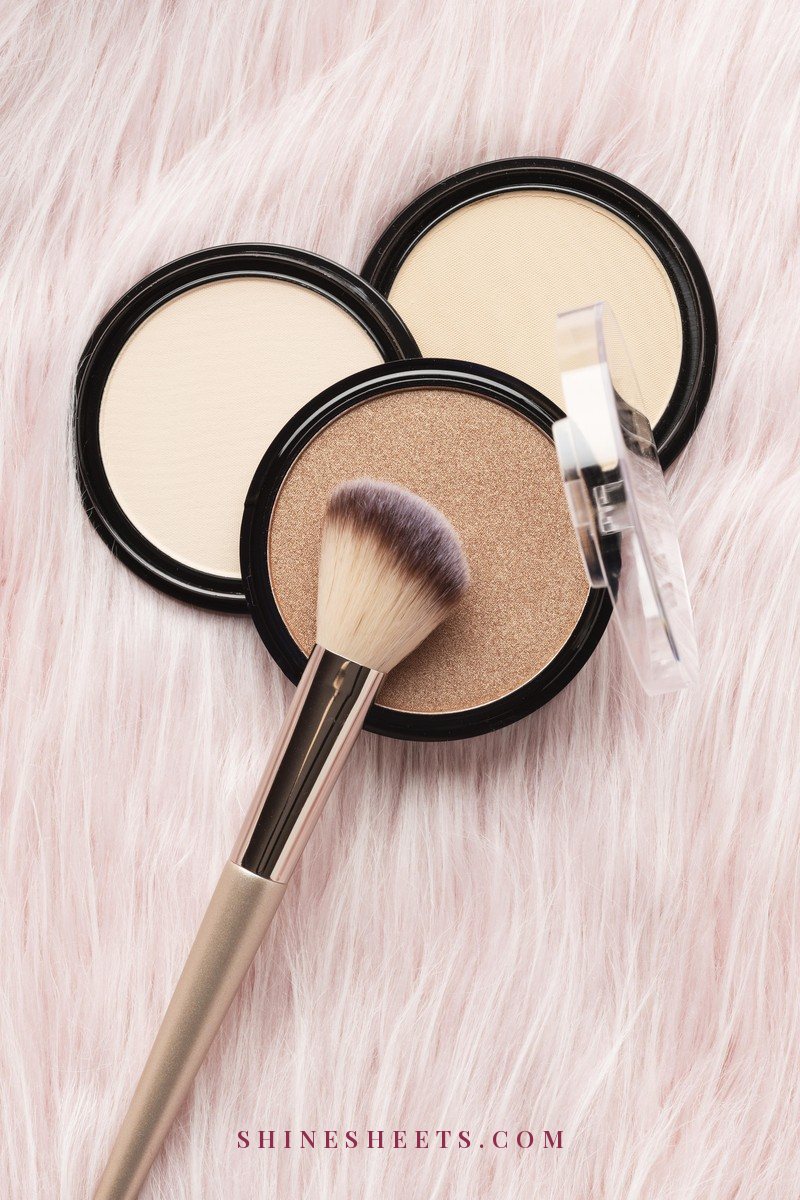
A foundation one or two shades lighter than your skin is exactly what many people buy on purpose as a brightening concealer. Use it under the eyes, on the center of the forehead, down the bridge of the nose and on the chin, then blend the edges into your regular base.
This works best with a foundation that has at least medium coverage. If it's very sheer, it will brighten but not cover, which is still lovely for a soft, lit-from-within look. For darker spots or redness, keep a concealer that matches your skin exactly, because a lighter shade on a spot makes it more noticeable, not less. My concealer shade guide explains which shade goes where.
6. Set With Powder in the Right Shade
Powder is a small but surprisingly strong color corrector. A powder in your true shade, or a slightly correcting tone, can nudge a mismatched foundation closer to your skin once it's set.
If your foundation is a touch too light, a warm beige setting powder pressed on top adds a little warmth and depth. If it's a touch too dark or orange, a translucent or very light neutral powder takes the edge off. If it's too pink, a yellow-toned powder calms it down.
Press the powder in with a puff rather than sweeping, and focus on the areas where the mismatch shows most: the jaw, the hairline and the sides of the face. On combination skin, keep the cheeks lighter and give the T-zone a little more.
What To Do When It's Too Light
A foundation that's too light usually looks flat or slightly gray, so the goal is to add warmth and dimension back to the face. Here's the order I'd follow:
- Mix first, if you can. A pea-sized amount of a deeper foundation or one drop of liquid bronzer per pump is often enough.
- Apply it only where you need coverage. The center of the face, then blend outward thinly so the outer edges are mostly your own skin.
- Add a warm blush. Peach, apricot or a warm rose brings life back to a pale base quickly.
- Bronze lightly. One soft sweep along the temples, cheekbones and jaw connects your face to your neck.
Four steps, about three extra minutes. If you still look paler than your neck afterward, the bottle is best used as a concealer or highlight (fix 5).
What To Do When It's Too Dark
A foundation that's too dark is a little trickier, because darkness is more noticeable than paleness. The aim is to dilute it or move it to a job where depth is the point.
- Lighten it. Mix with a lighter foundation, add a white adjusting drop, or sheer it out with moisturizer.
- Thin layers only. One thin layer pressed in looks far less obvious than two layers buffed on.
- Brighten the center. A lighter concealer under the eyes and on the center of the face balances the overall look.
- Retire it to contour. If it's two or more shades too dark, fix 4 is its true calling.
And if it's only "too dark" because it oxidizes, apply it in thinner layers and set it with a light powder. That usually stops the shift from showing.
How To Fix the Wrong Undertone
Undertone mismatches are the most confusing, because the shade can look "almost right" and still feel off. Here's a simple way to read it:
- Too pink: your face looks flushed or a little irritated next to your neck. Add a yellow drop or mix with a golden-toned foundation.
- Too yellow: your face looks sallow or tired. Add a pink drop or mix with a neutral shade.
- Too orange: often an oxidizing issue or a shade made for deeper skin. Mix with a lighter neutral foundation and set with a translucent powder.
- Too olive or green: a touch of a warmer or pinker foundation softens it.
If you've never been sure of your undertone, my guide on how to choose a foundation shade has a simple undertone test you can do with your wrist and a white towel. It's worth doing once, because it makes every future fix (and purchase) easier.
Always Blend Down the Neck

Whatever fix you choose, this one habit makes the biggest difference: take the foundation past your jawline and blend it a little way down your neck. Not a full layer, just the leftovers on your sponge, so the transition from face to neck is gradual instead of a line.
A damp makeup blending sponge is the easiest tool for this, because it sheers the product as it goes. Bounce it along the jaw, under the chin and slightly below the ears. Check from the side in daylight, since that's where lines usually hide.
If you want a refresher on placement and layers, my guide on how to apply foundation so it looks like skin covers the whole routine. For this purpose, remember just one thing: the jaw is where a mismatch shows, and blending is where it disappears.
How To Avoid a Mismatch Next Time
Once you've rescued this bottle, a few small habits make the next purchase easier:
- Swatch on the jaw, never the back of the hand.
- Wait 15 minutes before deciding, so oxidizing has time to show.
- Check in daylight, ideally near a store entrance or a window.
- When torn between two shades, choose the slightly lighter one; it's easier to warm up with bronzer than to lighten a dark base.
- Remember that your shade can shift a little through the year, so a light and a deeper bottle you can mix is a very practical pair.
None of this requires buying more makeup. It mostly just means slowing down for those 15 minutes.
Final Thoughts
A wrong foundation shade feels like a wasted purchase, but most of the time it's just a bottle waiting for the right mix, the right drop or a different job. Test it in daylight, give it 15 minutes, name the problem, and pick one fix to try.
Your skin deserves a base that looks like you, and you deserve to stop feeling guilty about that bottle in the drawer. With a palette, a little patience and a good blend down the neck, it can still earn its place.