Self-soothing isn't about making a feeling disappear. It's about giving your body a clear signal that, right now, in this room, you are safe enough to settle. The feeling can stay for a while. You just stop fighting it with your whole nervous system.
That shift matters, because most of us were never taught how to calm ourselves as adults. We learned to push through, distract ourselves, or wait for someone else to make it better. Those work sometimes. But when you're alone at 11 p.m. with a racing heart, or sitting in your car after a hard conversation, it helps to have a few reliable tools that are fully yours.
This guide walks you through self-soothing techniques for adults: what self-soothing actually is, when it helps most, a simple "what I feel → what to try" table, techniques grouped by breath, body, senses, movement, words and place, a 3-minute reset you can memorize, how to build a small soothing kit, and how to tell soothing apart from numbing. I'm prone to anxiety that I mostly manage, and these are the kinds of tools I keep coming back to.
Take what fits, leave the rest, and go slowly. Calm is a skill, and skills grow with gentle practice.
What Self-Soothing Really Means

Self-soothing is the ability to calm your own nervous system when it's stirred up. Think of it as the grown-up version of what a caring parent does for a crying child: warmth, a steady voice, slow rocking, a quiet room. As adults, we can learn to offer ourselves that same steadiness.
A few things self-soothing is not:
- It's not "fixing" the feeling. You can still be sad, angry or worried after soothing yourself. The goal is a body that can hold the feeling without going into overdrive.
- It's not ignoring the problem. Calming down first usually makes it easier to deal with the real issue later, with a clearer head.
- It's not a sign of weakness. Needing to settle your body is a human thing, not a personal failing.
When your stress response is switched on, your heart beats faster, your breathing gets shallow and your muscles brace. Self-soothing techniques work by sending the opposite signals: slower breath, warmth, softness, rhythm and kind words. If you'd like the bigger picture of how this system works, my guide to nervous system regulation explains it in plain language.
When Self-Soothing Helps Most
You can practice these tools anytime, but they're especially useful in a handful of everyday moments:
- Stress spikes. A tense email, a missed deadline, a sudden change of plans. Your body reacts before your mind has caught up.
- After conflict. Even when an argument is over, your body often stays on alert for an hour or more. Soothing helps you come back down before you replay every sentence.
- Before sleep. Night is when worries get loud. A short soothing ritual tells your body that the day is finished.
- Panic-ish moments. That rising wave of "something is wrong" when nothing obvious is. Grounding and breath can take the edge off while it passes.
- Lonely or tender days. Grief, homesickness, a quiet weekend that feels too quiet. Soothing gives you company in your own corner.
Noticing which moments are hardest for you is useful information. You can then keep the right tool close for exactly that time of day.
What You Feel and What To Try
Different feelings respond to different tools. A racing heart usually wants breath and grounding, while heavy sadness often wants warmth and company. Keep this table somewhere handy (screenshot it if you like) so you don't have to think when you're already overwhelmed:
| What I feel | What it often needs | What to try first | Time |
|---|---|---|---|
| Racing heart, shaky | Slower breathing, a sense of ground | Exhale twice as long as you inhale; press feet into the floor | 2–3 minutes |
| Spinning thoughts | Something to anchor attention outside your head | 5-4-3-2-1 grounding; name what you see out loud | 3 minutes |
| Tense, irritated | A way to let energy move | Brisk 10-minute walk; shake out hands and shoulders | 5–10 minutes |
| Sad, heavy | Warmth and comfort | Warm drink, soft blanket, hand on chest, gentle music | 10–15 minutes |
| Lonely | Connection or a sense of being cared for | Kind self-talk script; text one safe person | 5 minutes |
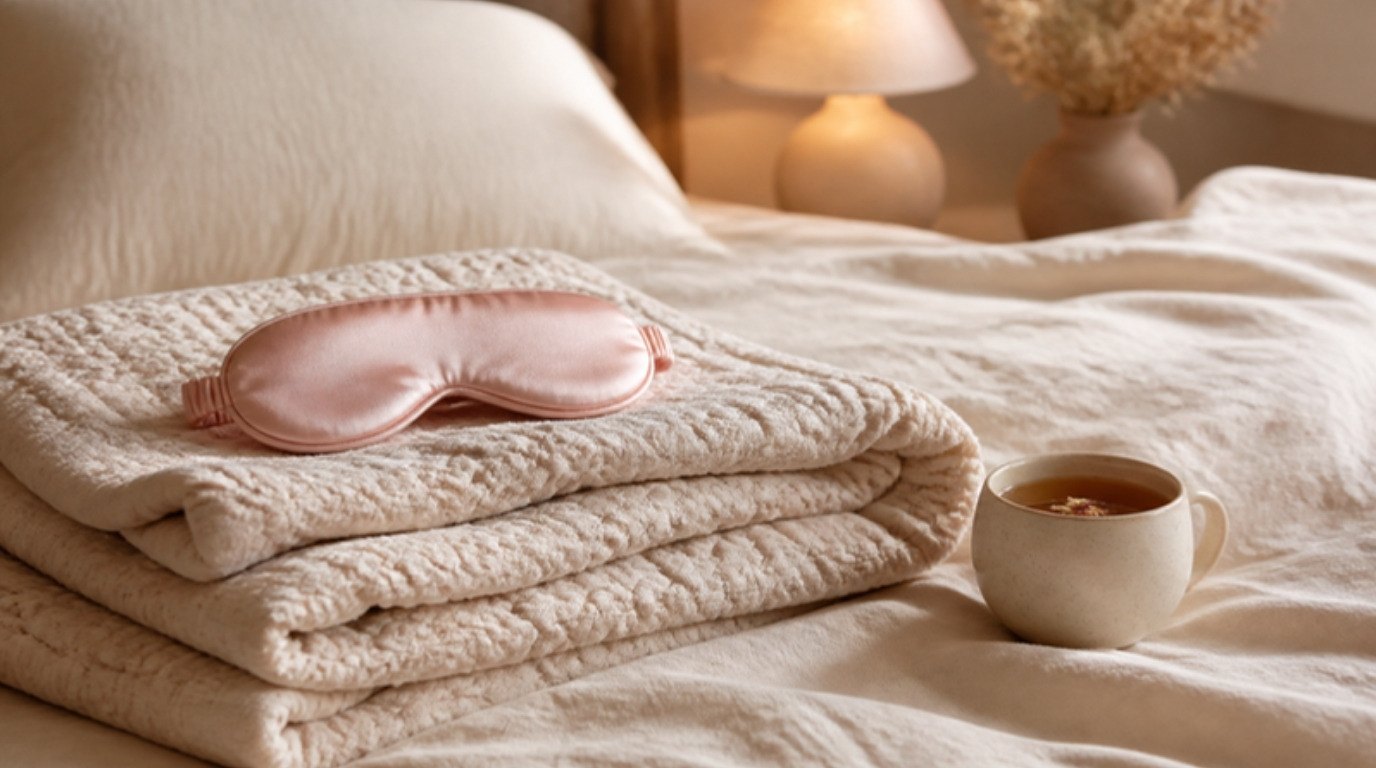
| Overstimulated | Less input | Dim the lights, silence your phone, eye mask, quiet room | 10 minutes |
| Wired at bedtime | A clear "day is over" signal | Warm shower, herbal tea, slow stretch, lights low | 20 minutes |
None of these are rules. They're starting points, and you'll learn over time which ones your body likes best.
Self-Soothing Techniques by Category
Here are my favorite techniques, grouped into six families. Try one or two from each group, then keep the ones that genuinely help. Most take less than five minutes.
Breath: Make Your Exhale Longer
Your breath is the fastest calming tool you carry everywhere. The key detail: a longer exhale than inhale tends to nudge the body toward rest.
- The 4–6 breath. Breathe in through your nose for a count of 4, out through soft lips for a count of 6. Repeat for 2 minutes.
- The sigh. Take a breath in through your nose, add a second small sip of air on top, then let it all go in a long, slow sigh. Two or three of these can soften a tight chest.
- Humming exhale. Breathe in, then hum gently on the way out. The light vibration is surprisingly settling, and it's a nice option if counting feels like too much.
Keep breathing gentle. If you feel dizzy, go back to normal breathing for a moment. For more variations, my guide to breathing exercises for calm has step-by-step options for different moments.
Body: Warmth, Weight and Touch
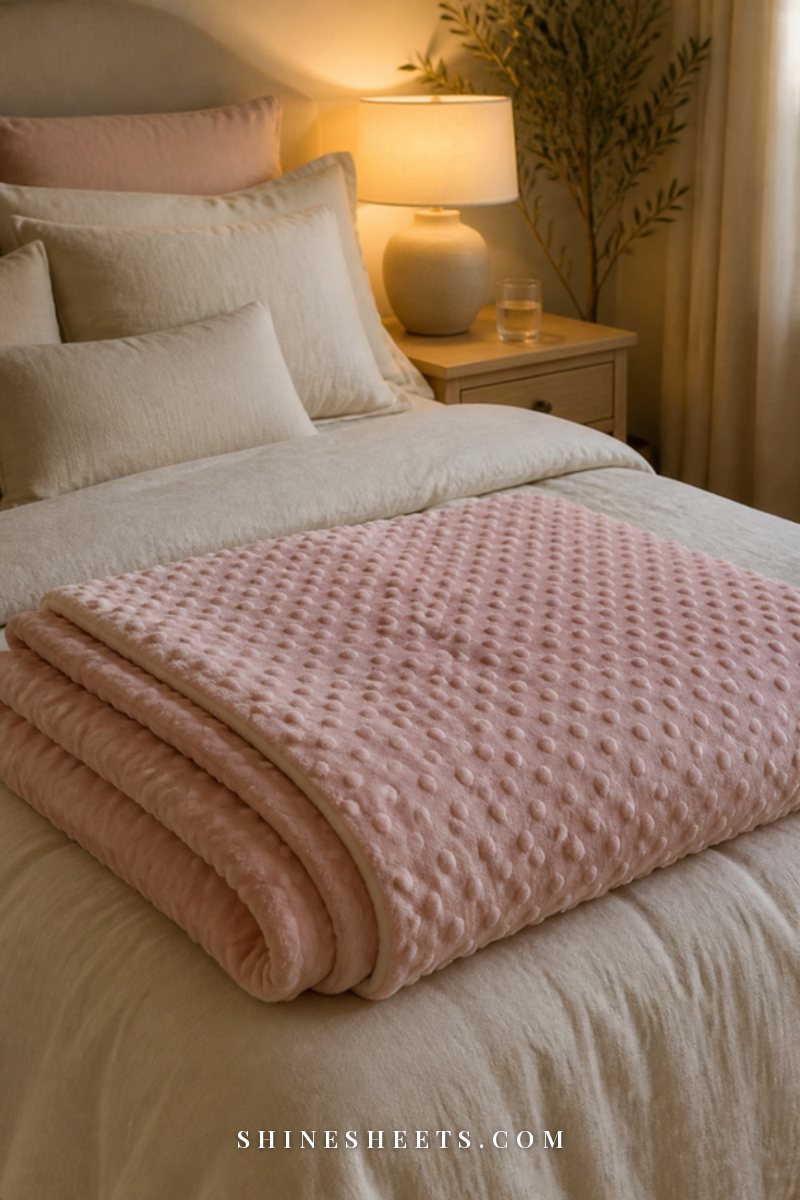
Your body responds to physical comfort long before it responds to logic. That's why a warm mug or a heavy blanket can calm you faster than any pep talk.
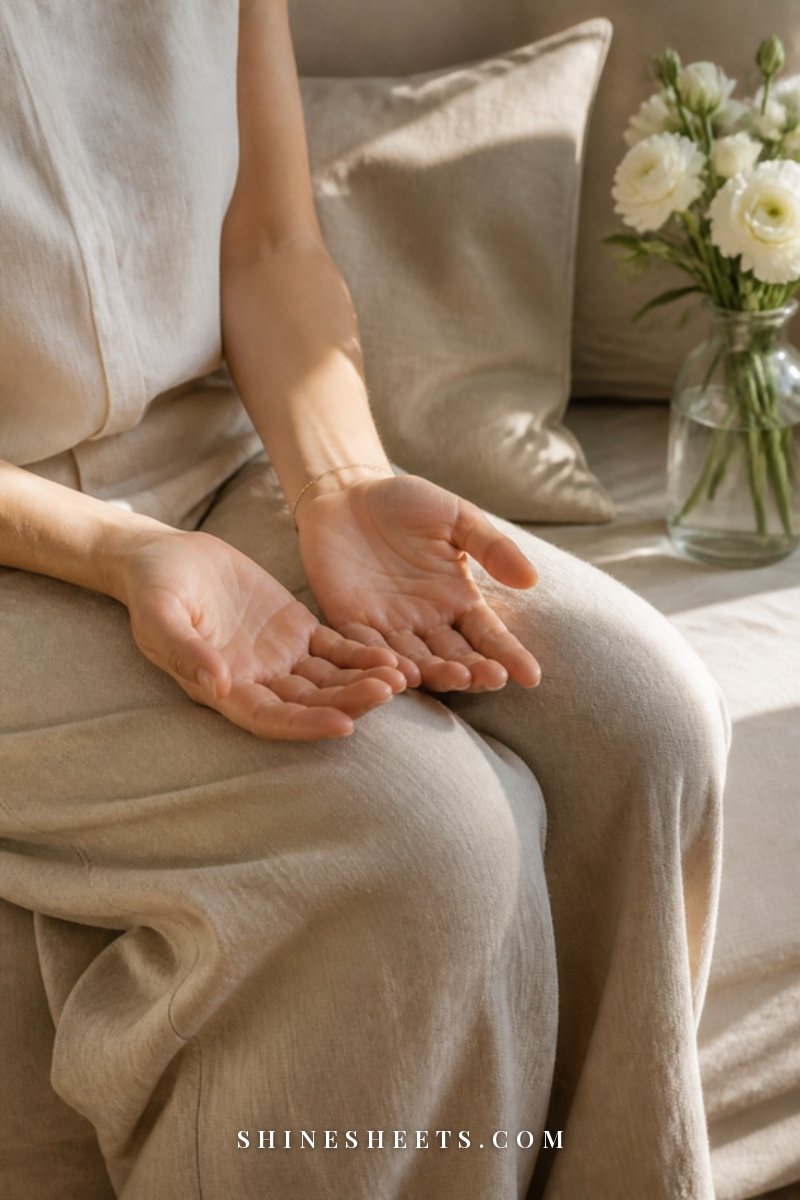
- Hand on chest. Place one hand on your chest and one on your belly. Feel the warmth and the rise and fall for 1 minute. It sounds simple, and that's exactly why it works when you're tired.
- Warmth. A warm shower, a heating pad on your lap or a hot drink held in both hands. Warmth is one of the oldest signals of safety.
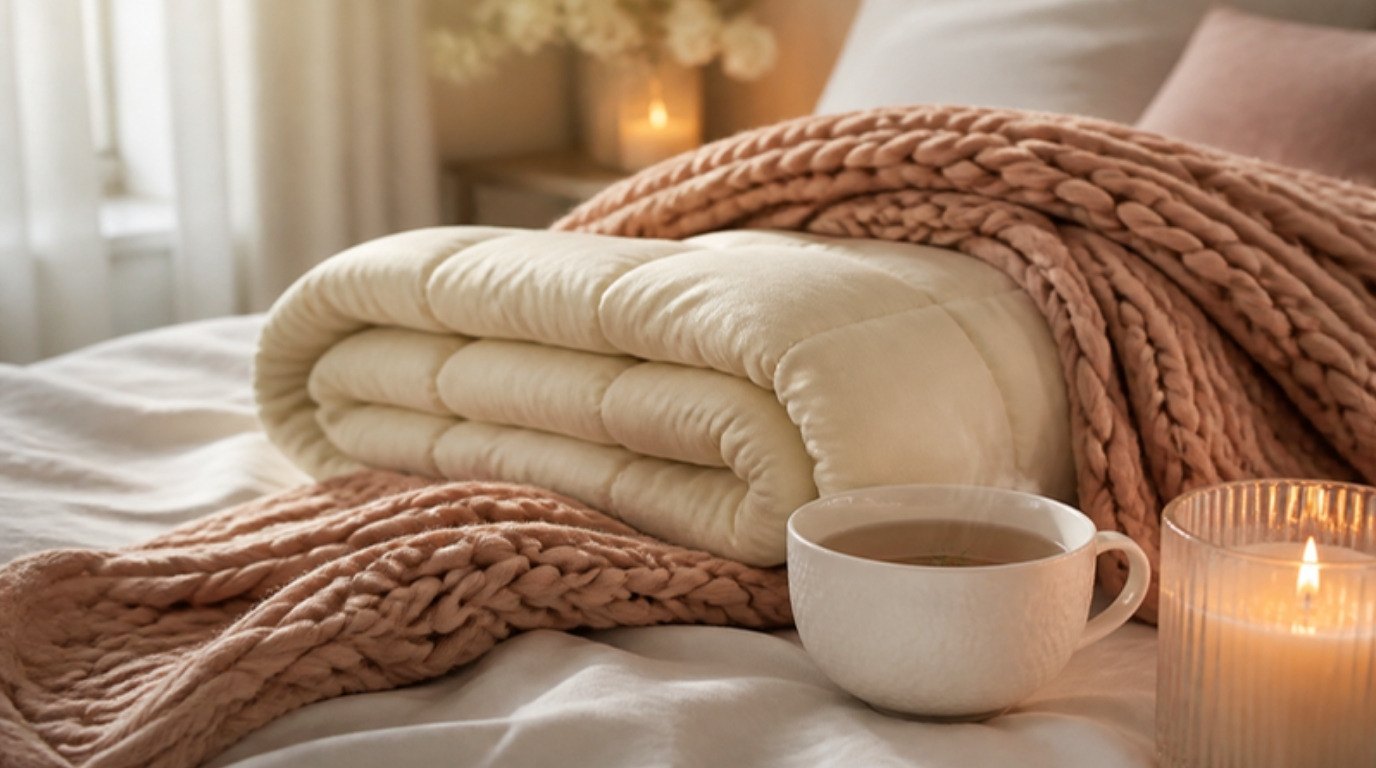
- Gentle pressure. Many people find deep, even pressure calming. A soft weighted blanket over your lap or legs for 10–20 minutes is a lovely option. Look for one around 10% of your body weight, with a removable washable cover, and skip it if it ever feels restrictive.
- The self-hug. Cross your arms, hold your upper arms and squeeze gently for 20 seconds. Then let go and drop your shoulders.
Keep a chunky knit throw on your sofa or reading chair so comfort is always within reach. Texture matters more than you'd think: something soft under your fingertips gives your attention a gentle place to rest.
Senses: Ground Yourself in the Room

When your thoughts are spinning into the future or the past, your senses bring you back into the present moment. Here are three ways to use them:
- 5-4-3-2-1 grounding. Name 5 things you can see, 4 you can feel, 3 you can hear, 2 you can smell and 1 you can taste. Say them out loud if you're alone. Go slowly, and describe details ("the cream curtain with the little fold at the bottom").
- A calming scent. Pick one scent you only use for winding down so your brain links it with calm. An aromatherapy rollerball on your wrists is easy to carry in your bag. Patch test first, keep it away from your eyes, and skip it if scent tends to give you headaches.
- Soft sound. A slow instrumental playlist, rain sounds or a familiar album you know by heart. Keep the volume low enough that you could still hear someone call your name.
I also like to collect tiny moments of calm during the day, which is what glimmers are all about. Noticing them trains your attention toward safety, not only toward threat.
Movement: Slow Walks and Gentle Stretches
Stress hormones prepare your body to move, so sometimes the kindest thing is to let it. Movement for soothing is slow and rhythmic, not a hard workout.
- A 10-minute walk. Walk at an easy pace, swing your arms and notice your feet touching the ground. Outside is best, but walking around your home works too.
- Neck and shoulder release. Roll your shoulders back 5 times, then gently tip your ear toward each shoulder for 3 slow breaths.
- Rocking. Sit on the edge of your bed or in a chair and rock slowly forward and back for 1–2 minutes. Rhythm is deeply calming, and that's why we rock babies.
- Shake it out. Shake your hands, then your arms, then your legs for 30 seconds. It feels silly and works anyway.
Words: Kind Self-Talk Scripts
How you talk to yourself in a hard moment can either calm the storm or add thunder. When you're upset, your inner voice may say "What is wrong with you?" Try swapping it for one of these:
- "This is hard, and I'm allowed to find it hard."
- "My body is trying to protect me. I'm safe enough right now."
- "I don't have to solve this tonight. I only have to get through the next ten minutes."
- "This feeling is a wave. Waves rise, and they always come back down."
- "I'm here. I'm not leaving myself."
Say them slowly, in the voice you'd use with a friend. If they feel awkward at first, that's normal. Writing one on a sticky note by your bed or as your phone's lock screen note makes it easier to remember when your mind goes blank.
Place: Make a Calm Corner
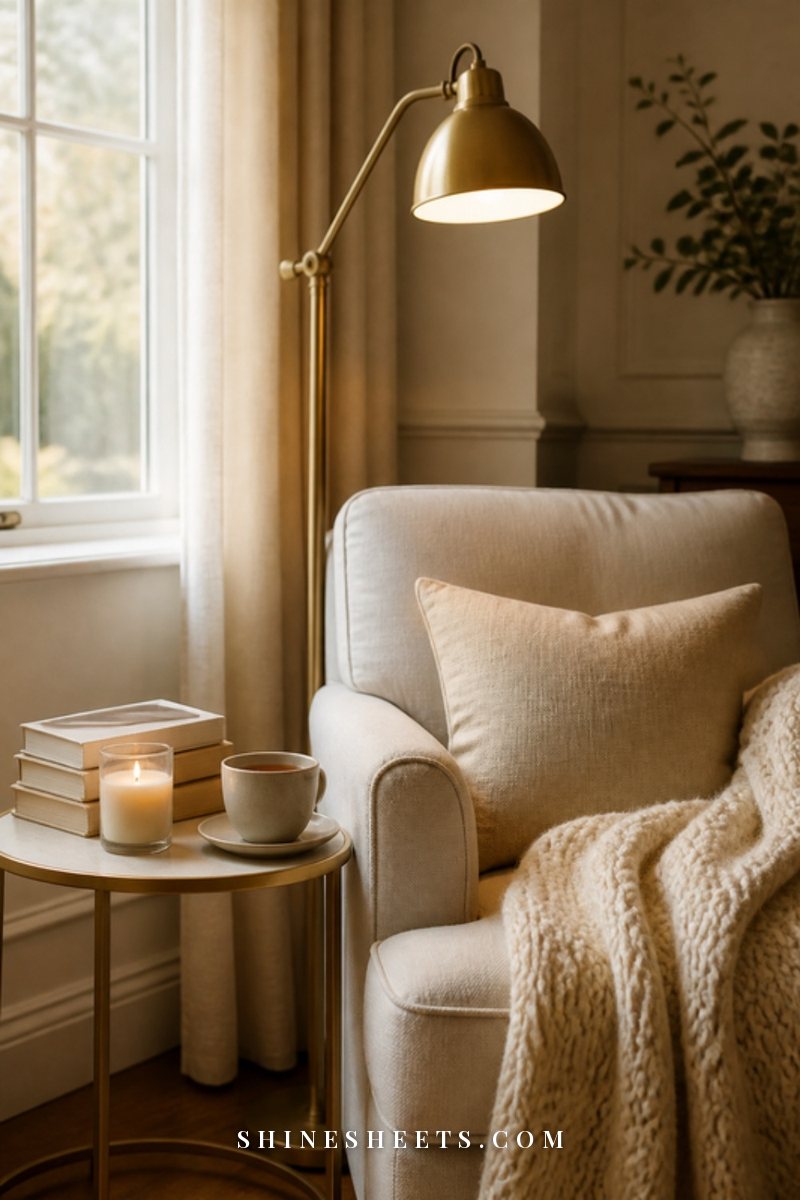
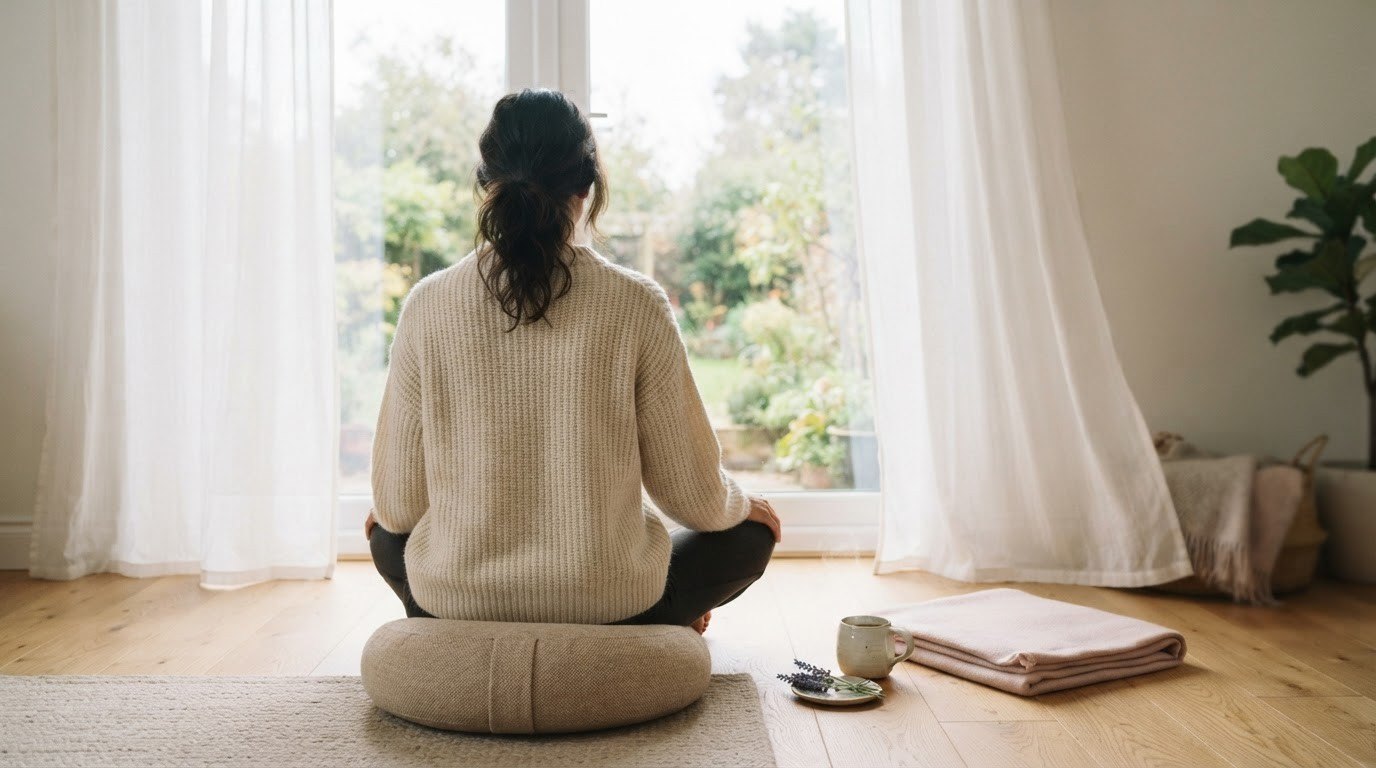
Having one spot that means "calm" gives your body a shortcut. It doesn't need to be big: a reading chair, one end of the sofa or even a cushion on the floor by a window.
- Choose a spot with soft, warm light rather than a bright overhead bulb.
- Keep a blanket, a pillow and one comforting object there.
- Add a glass candle or a lamp you only switch on when you're winding down.
- Keep the area clear of work papers and laundry so it doesn't remind you of tasks.
Over a few weeks, simply sitting there starts to calm you, because your brain learns that this is where you exhale.
A 3-Minute Reset Sequence

When you're overwhelmed, choosing a technique can feel like one more task. This short sequence removes the choice. Memorize it once and use it anywhere: at your desk, in the car (parked), in a bathroom stall.
- Stop and name it (20 seconds). Say silently, "I'm feeling anxious" or "I'm feeling hurt." Naming a feeling often lowers its intensity a little.
- Feet and seat (20 seconds). Press your feet into the floor and feel the chair holding you. Notice three points where your body touches something solid.
- Long exhales (60 seconds). Six rounds of breathing in for 4 and out for 6.
- Look around (40 seconds). Slowly turn your head and name five things you can see. Let your eyes rest on something soft or pleasant.
- One kind sentence (20 seconds). Pick one script from the list above and say it to yourself.
- Choose the next small step (20 seconds). A glass of water, a short walk, a text to a friend or going back to your task more slowly.
Three minutes won't change everything. It will often move you from "I can't think" to "I can handle the next thing," and that's a big win. If you need more quick options for the hard moments, my guide on how to calm anxiety fast has more ideas.
How To Build a Personal Soothing Kit
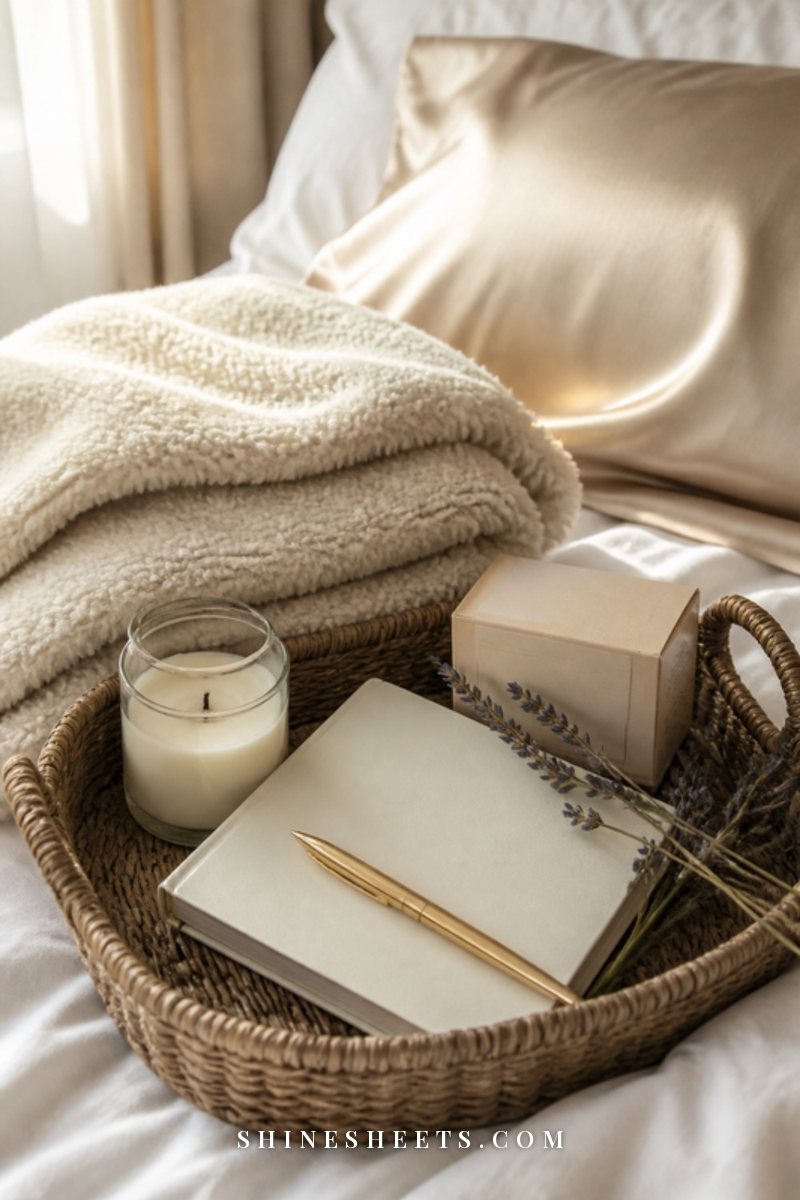
A soothing kit is a small box or basket of things that help you calm down, ready before you need it. When you're upset, you won't want to search for anything, so the kit does the remembering for you.
Include one item for each sense, plus something for your mind:
- Touch: a soft pair of socks, a smooth stone or a small square of velvet.
- Smell: your calming rollerball or a sachet of dried lavender.
- Taste: a few bags of caffeine-free chamomile tea or a peppermint you like.
- Sight: a photo that makes you feel loved, or a postcard of a place that feels peaceful.
- Sound: a note with the name of your calm playlist, plus earbuds.
- Rest: a silk eye mask for moments when you need the world to go dim.
- Mind: a linen journal and pen for getting the swirl out of your head, plus a card with your favorite self-talk lines.
Make a mini version for your bag or car too: a rollerball, a tea bag, earbuds and a card with the 3-minute reset steps. Check your kit once a month and refill anything you used.
Healthy Soothing vs Numbing
Here's the honest part: some ways of "calming down" don't actually soothe. They numb. Numbing feels like relief in the moment, but the feeling usually comes back stronger, often with a side of guilt.
| Soothing | Numbing |
|---|---|
| Helps you feel the feeling with less intensity | Helps you avoid feeling anything at all |
| Leaves you a bit clearer afterward | Leaves you foggy, tired or ashamed |
| Has a natural end point | Tends to stretch on ("just one more episode") |
| Examples: breathing, walking, a warm shower, journaling, talking to a friend | Examples: hours on your phone, drinking to switch off, overspending, working until you collapse |
The difference is rarely the activity itself, and more about how you use it. One episode of a comfort show while wrapped in a blanket can be soothing. Five episodes to avoid a feeling you know is waiting is numbing. No judgment here, because everyone numbs sometimes. The goal is just to notice, and to reach for a soothing option a little more often.
A good question to ask yourself afterward: "Do I feel more like myself, or less?"
Self-Soothing Before Sleep

Bedtime is when a lot of us feel our anxiety most, because the distractions of the day fall away. A short, repeated wind-down routine gives your body a predictable signal that it's safe to rest.
- 60 minutes before bed: dim the lights and lower the noise in your home.
- 45 minutes before: a warm shower or bath, then soft, comfortable sleepwear.
- 30 minutes before: a cup of caffeine-free tea (evening tea is one of my favorite rituals) and 5 minutes of writing down whatever is on your mind.
- 15 minutes before: a few gentle stretches, then the weighted blanket or a cozy throw over your legs.
- In bed: 10 slow 4–6 breaths and one kind sentence, such as "The day is done. I did enough."
If you wake in the night with racing thoughts, keep the lights low and repeat the breathing and the self-talk instead of reaching for your phone. A notepad by the bed for "deal with this tomorrow" thoughts helps too.
When To Get Extra Support
Self-soothing is a wonderful skill, but it isn't meant to carry everything alone. Please consider talking to a therapist or your doctor if:
- you feel anxious, low or on edge most days for more than a couple of weeks;
- panic attacks are happening often or stopping you from going places;
- you're relying on numbing habits to get through the day;
- old memories or trauma come up strongly when you try to relax;
- sleep, eating or work are being seriously affected.
A therapist can help you understand what's under the distress and build tools that fit your life. Reaching out is a form of self-soothing too, perhaps the bravest one. If you are ever in crisis or think you might hurt yourself, contact your local emergency services or a crisis line in your country right away.
For more ways to steady yourself day to day, I've also gathered 30 ways to calm down your mind that work well alongside the tools above.
Final Thoughts
You don't need to master every technique on this list. Pick one breath, one comfort and one kind sentence, and practice them on ordinary days so they're ready on hard ones.
Every time you calm yourself, you're teaching your body a quiet truth: you can feel big things and still come home to yourself. That's not a small skill. It's one of the kindest things you'll ever learn to give yourself.