Most days don't need more effort. They need effort in the right places. A handful of small actions usually does most of the heavy lifting in your home, your schedule and your mood, while a long tail of other tasks quietly eats your time without changing much at all.
That pattern has a name: the Pareto principle, also called the 80/20 rule. In this guide I'll explain it in plain words, share a short origin note, and walk you through six everyday ways to use it, from cleaning and getting dressed to your to-do list, your energy, your spending and your learning. You'll also find a simple way to find your own 20%, the mistakes that turn 80/20 into another source of pressure, and a table you can screenshot.
None of this is about squeezing more out of yourself. It's about doing less, better, and keeping the time you get back for rest and the things you love.
What Is the Pareto Principle?
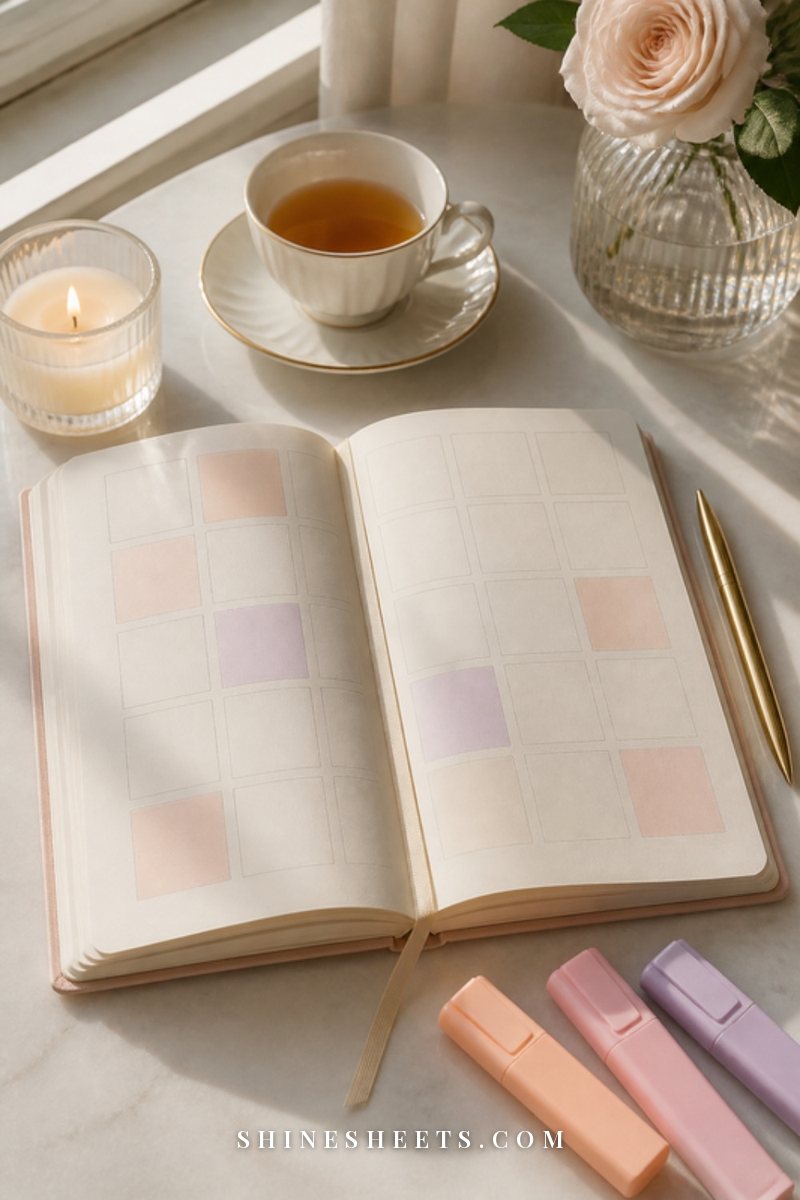
In plain words, the Pareto principle says that roughly 80% of results come from about 20% of causes. A few things matter a lot, and many things matter a little.
You've probably seen it without naming it. A small number of your clothes get worn most of the time. A few rooms make your whole home feel messy or calm. Two or three tasks decide whether a day felt productive. A couple of people leave you feeling lighter after every conversation.
The useful part isn't the math. It's the question the principle invites: which few things are doing most of the work here, and can I give them a little more attention while I give everything else a little less?
A Short Origin Note
The idea is named after Vilfredo Pareto, an Italian economist who noticed in the late 1800s that a small share of people owned most of the land in Italy. The often-told story is that he spotted a similar pattern in his garden, where a few pea pods produced most of the peas.
Decades later, the quality expert Joseph Juran borrowed Pareto's name for the idea of "the vital few and the trivial many," using it to show factories that most defects came from a small number of problems. From there, the idea spread into business, time management and, eventually, everyday life.
A Pattern, Not an Exact Law
Here's the part people skip: 80/20 is a rough pattern, not a rule of nature. Sometimes it's 70/30, sometimes 90/10, and sometimes the numbers don't add up to 100 at all, because they describe two different things (effort and results). Some areas of life don't follow the pattern in any useful way.
Think of it as a lens, not a law. You're not trying to find exactly 20% of anything. You're looking for the uneven spots, where a little attention gives you a lot back, and the places where a lot of effort gives you very little.
Why the 80/20 Rule Feels So Calming
A lot of overwhelm comes from treating every task as equally urgent. When everything matters the same, nothing can be let go, and your to-do list starts to feel like a judgment instead of a tool.
The Pareto principle gently breaks that spell. Once you can see that a few things carry most of the weight, you're allowed to give the rest less. Less time, less worry, a lower standard. Not because you've stopped caring, but because you're choosing where your care goes.
It took me a while to understand that "doing less" isn't laziness. For someone who's prone to anxiety (hi), a shorter list of things that truly matter is one of the kindest tools there is. My mind settles when it knows what the main thing is.
There's also a practical bonus: when you stop spreading your energy thin, the important things usually get done better. A focused hour on one meaningful task often beats a scattered afternoon of twenty small ones.
6 Everyday Ways To Use the 80/20 Rule
Pick one area to try first. You don't need to apply the Pareto principle to your whole life this week (that would be a very un-80/20 thing to do).
1. Home Cleaning: The Few Zones That Make a House Feel Tidy

A home rarely feels messy because of every square foot. It usually comes down to a few high-visibility zones: the kitchen counter, the coffee table, the entryway, the bathroom sink and the bed. When those five spots are clear, the whole space reads as calm, even if a closet is chaos behind its door.
Try this: name your three to five "feel-tidy zones" and give them a 10-minute reset each evening. Clear the surface, wipe it once, put things back where they live. Everything else (baseboards, the junk drawer, the garage) goes on a slower, once-a-month rhythm.
A woven storage basket by the sofa or entry is a pick for the "drop zone" problem: blankets, chargers and mail go in it, and the surface stays clear. Look for one with handles and a lid if you'd rather not see the contents.
If you'd like a fuller routine, my guide to lightening your mental load covers how to share and simplify home tasks so they don't all live in your head.
2. Your Wardrobe: The Pieces You Actually Wear
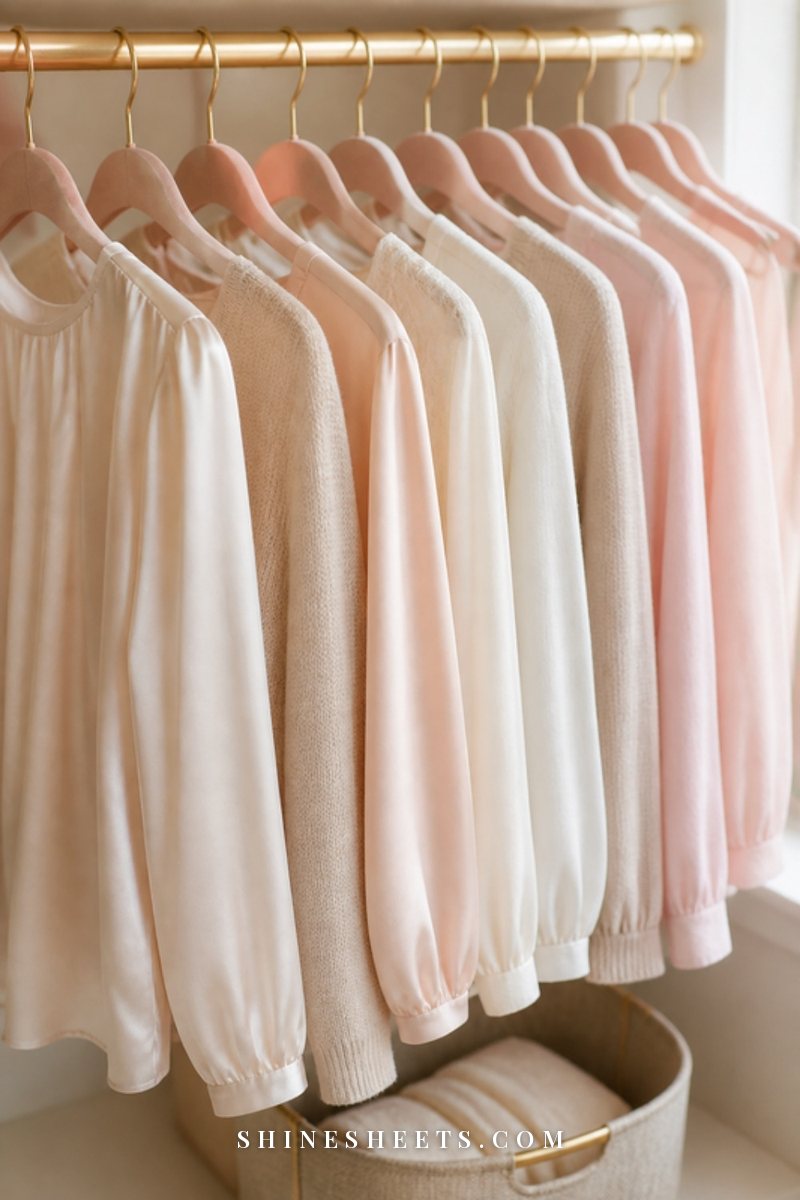
Most of us wear a small share of our clothes most of the time. The rest hangs there, slightly guilt-inducing, making it harder to see the things we love.
Try this: for two weeks, turn every hanger backward. When you wear something and put it back, hang it the normal way. At the end, you'll see your real 20% very clearly. You don't have to give away the rest right now; just move the untouched pieces to one side, so your favorites are easy to reach every morning.
Then notice what your favorites have in common. Maybe it's a soft fabric, a certain neckline, a waistband that doesn't pinch or colors that work with everything. That's your shopping filter from now on, and it will save you far more than any sale.
3. Your To-Do List: The 2–3 Tasks That Move the Day
A long to-do list can make you feel busy all day and still unsatisfied at night. Usually only two or three items on it really move things forward: the email that unblocks a project, the appointment you've been avoiding, the one hard conversation.
Try this: before you start your day, look at your list and circle no more than three tasks with this question: "If I only finished these, would today count?" Do one of them first, before email and messages. Everything else becomes a bonus, not a debt.
An undated weekly planner works nicely here, because you can start any week and skip weeks without wasted pages. Look for a layout with a small "top three" box per day; it does the circling for you. My eat the frog method article goes deeper on doing the hardest task first, if that's the part you struggle with.
And a small kindness: pour your coffee or tea into a mug you love before you start. A cream ceramic coffee mug won't finish your list for you, but a pleasant little ritual makes the first task feel less like a chore. (Coffee sometimes perks me up and sometimes makes me jittery, so on anxious days I switch to tea.)
4. Relationships and Energy: What Refills You

Energy follows the 80/20 pattern too. A few people, places and habits leave you calmer and more like yourself, while others drain you even when you can't say exactly why.
Try this: at the end of each day for a week, jot down one thing that gave you energy and one that took it. By Sunday you'll likely see a short list of "refillers": a walk with a certain friend, ten minutes of reading, an early night, a phone call with your sister. Protect those first when your week gets full.
This isn't about cutting people off or ranking your loved ones. Some important relationships take energy, and that's okay. It's about noticing what fills you back up, so you have enough to give to the people and commitments that matter.
5. Money Noticing: A Few Spending Categories
I'm not going to promise you savings, because everyone's situation is different. But noticing is useful on its own. For most households, a few categories (housing, groceries, transport, subscriptions, eating out) make up most of the spending, while dozens of small purchases add up to a smaller share.
Try this: look at one month of spending and list your top three or four categories. That's where any change you choose to make will matter most. Fussing over a single coffee usually matters far less than checking one large recurring bill.
If you like paper, clip receipts by category with gold binder clips for one month. It's a gentle, visual way to see where things go, without spreadsheets or shame.
6. Study and Learning
Whether you're learning a language, studying for a course or picking up a hobby, a small set of basics tends to deliver most of the progress. In many languages, a few hundred common words cover a large share of everyday conversation. In most skills, a handful of fundamentals matter more than every advanced trick.
Try this: ask "what would a beginner need most in the first month?" and start there. Study in short, focused blocks (25 to 45 minutes) and practice the core skill before reading about the extras. My deep work for beginners guide shares how to protect those focus blocks.
A clear desk helps more than it seems. A cream desk organizer with a few compartments keeps pens, notes and your current book within reach, so starting a study session takes seconds instead of a hunt.
One more gentle idea: notice which learning methods actually stick for you. Some people remember best by speaking out loud, some by writing by hand, some by explaining what they just learned to a friend. Lean into the method that works and stop forcing the ones that don't, even if they're popular.
Your 80/20 Life Table
Here's the whole idea on one page. Read across each row, pick the one that feels most useful, and take only the first small step this week.
| Life area | The 20% that matters | The 80% to trim | First small step |
|---|---|---|---|
| Home | 3–5 high-visibility zones (counter, coffee table, entry, sink, bed) | Deep-cleaning everything every week | A 10-minute evening reset of your feel-tidy zones |
| Wardrobe | The pieces you reach for again and again | Clothes you keep "just in case" | Turn hangers backward for two weeks |
| To-do list | 2–3 tasks that make the day count | Low-impact busywork and endless tidying of the list | Circle your top three before checking messages |
| Energy | People, places and habits that refill you | Optional commitments that leave you drained | Note one energy gain and one drain each night |
| Money | Your 3–4 biggest spending categories | Guilt about tiny purchases | List your top categories from one month |
| Learning | Core basics and fundamentals | Advanced extras before the basics are solid | One 25-minute focused session on the core skill |
Screenshot it and keep it somewhere you'll see it. One row at a time is plenty.
How To Find Your 20%
The table gives you starting points, but your own 20% will be a little different from mine. Here's a simple three-step way to find it.
Step 1: Do a One-Week Notice-and-Note
For seven days, don't change anything. Just notice. At the end of each day, write down three things: what took the most time, what made the biggest difference and what you wouldn't miss if it disappeared.
Keep it light. A few words per line is enough. Pastel sticky notes are handy if you like to jot things the moment you notice them; stick them on one page of your planner and read them all on Sunday.
By the end of the week, patterns usually jump out. The same two tasks keep making the biggest difference. The same small chore keeps eating an hour. That's your map.
Step 2: Ask "What Would Make Everything Else Easier?"
This question does a lot of work. Look at your notes and ask: Which one thing, if I did it regularly, would make the rest easier or unnecessary?
Often the answer is boring and small. Planning your week for 20 minutes on Sunday. Laying out clothes the night before. A five-minute kitchen reset after dinner. Going to bed at a regular time. My simple weekly planning routine is a good example of one small habit that quietly makes everything else smoother.
Write your answer down in one sentence. That's your 20% for this month.
Step 3: Trim, Delegate or Simplify the Rest
Now look at the long tail: the tasks that take time but don't change much. For each one, choose one of three gentle options:
- Trim it. Stop doing it, or do it less often. Ironing pillowcases, refolding a drawer nobody sees, checking an app ten times a day.
- Delegate it. Hand it to someone else in your home, or share it. Even a small shift (someone else takes out the recycling) frees a little mental space.
- Simplify it. Keep it, but make it easier. Fewer steps, a shorter version, a "good enough" standard.
You don't need to sort everything at once. Pick one or two things to trim this week and see how it feels. For more ideas on making your days less rushed, my time management tips for busy women pair nicely with this step.
Common Pareto Principle Mistakes

The 80/20 rule is meant to make life lighter. These four mistakes turn it into one more thing to feel bad about:
- Treating 80/20 as an exact rule. You don't need to measure precise percentages or force everything into neat numbers. If something is roughly true and helpful, that's enough.
- Cutting rest and joy because they don't "produce" anything. A long bath, an evening cup of tea, a slow walk, a hobby you're not good at: these aren't the 80% to trim. They're often the very things that make the important 20% possible. Rest is not a waste.
- Optimizing everything. Not every part of life needs to be efficient. Some things are worth doing slowly, fully and inefficiently, like a long conversation with a friend or decorating your home bit by bit. Use the principle where it helps and leave the rest alone.
- Never checking again. Your 20% changes as life changes. What mattered most last season might not matter now. A quick look every month or two keeps your focus honest.
If you notice the Pareto principle making you feel guilty or rushed, that's your sign to step back. It's a tool for doing less, not a reason to judge how you spend your time.
Final Thoughts
The Pareto principle is a quiet permission slip. You don't have to do everything well. You only have to find the few things that matter most right now and give them your best, then let the rest be simpler, smaller or simply done.
Start with one row from the table, one week of noticing and one gentle trim. The time and energy you get back are yours to spend on rest, people you love and the small joys that make a day feel like your own.