
A no-spend month isn't really about money. It's about noticing. Most of us don't overspend on big, thought-through purchases – we leak money through tiny, automatic ones: the coffee on the way somewhere, the "it's only $12" cart, the free-shipping threshold we pad with something we didn't need. Pausing all of that for a few weeks shows you, very clearly, where your money goes when you're not paying attention.
January is the kindest month to try it. The holidays are over, the bank account usually looks a little tired, and the whole world is quietly in reset mode anyway. A short, clear challenge with an end date feels much easier than a vague promise to "spend less this year."
This guide walks you through a no-spend January from start to finish: what it is (and isn't), how to set rules that fit your real life, how to prep in the last week of December, what to do when a craving or an invitation shows up, and a 31-day list of free things to do instead of shopping. There's also a rules table you can screenshot and keep on your phone.
And one promise before we start: this is not a punishment month. Nobody is grading you. If you slip, you simply keep going.

What a No-Spend January Actually Is (and Isn't)
A no-spend January is a 31-day pause on non-essential spending. You still pay rent, bills and debt payments. You still buy groceries, medicine and the things you truly need. What you stop, for one month, is the "extra" layer: shopping for fun, takeout out of habit, new beauty products while the old ones are still half full, little treats that have quietly turned into a daily routine.
It is not:
- A month of eating plain rice and sitting in the dark.
- A test of willpower you can fail.
- A reason to feel guilty about every dollar you've spent before.
- A rule that you can't buy a birthday gift for your best friend or replace your broken winter boots.
Think of it as a reset button for your habits. When you take away the automatic purchases for a while, you get to decide, with fresh eyes, which ones you actually want back.
Why January Works So Well
You could do a no-spend month any time, but January has a few quiet advantages:
- The holiday spending is fresh in your mind. You're motivated, and you remember exactly how it felt to look at that December statement.
- You already have a lot of new things. Gifts, holiday leftovers in the pantry, that candle someone gave you – January is the perfect month to actually enjoy them.
- The calendar is calmer. Fewer parties, fewer obligations, fewer "I need a new outfit for this" moments.
- It pairs naturally with new-year planning. If you're already writing your goals for the new year, a no-spend month gives the money goals a real, concrete start.
It took me a while to understand that the challenge isn't the point – the information is. After a month, you'll know which spending you missed and which you didn't even notice was gone. That second list is pure gold for your budget.
Step One: Decide Your "Why"
Before you set a single rule, write down why you're doing this. One or two sentences is enough. A clear reason is what carries you through the third week, when the novelty has worn off and a sale email lands in your inbox.
A few examples:
- "I want to pay off the holiday credit card balance by February."
- "I want to start an emergency fund with at least $300."
- "I want to find out where my money actually goes."
- "I want to feel less pulled toward shopping when I'm bored or anxious."
Write yours on the first page of a simple beige notebook that becomes your no-spend journal for the month. You'll use it to note cravings, wins and the money you didn't spend. A plain notebook is honestly all you need – look for lay-flat binding and thick-ish paper so it feels nice to open every evening.
How To Set Your No-Spend Rules
This is the part most people skip, and it's the reason most no-spend months fall apart around day nine. If your rules are fuzzy, every purchase turns into a debate with yourself. If they're clear, you don't have to decide anything in the moment – you already did.
Sort your spending into three buckets:
- Allowed: things you need to live, work and stay healthy. Bills, rent, groceries from a list, medicine, transport to work.
- Not allowed: the "extras" you're pausing. Clothes, decor, beauty products you don't need yet, takeout, coffee out, impulse buys.
- Gray area: things that depend on your situation. Decide them now, before the month starts, and write the decision down.
Your rules should fit your life. Someone who commutes needs gas; someone who works from home might not. Someone on a tight budget might allow one small treat a week so the month feels sustainable. That's not cheating. That's designing a challenge you'll actually finish.
The No-Spend Rules Table
Here's a starting point you can adjust. Screenshot it, then cross out or change anything that doesn't fit your real life.
| Category | Allowed | Not allowed | Gray area (decide in advance) |
|---|---|---|---|
| Groceries | Food from a weekly list, basic household staples | Snacks "just because," fancy extras not on the list | One small weekly treat (set a dollar amount) |
| Coffee & drinks | Coffee and tea you make at home | Daily café coffee, drive-through drinks | One café coffee with a friend per week |
| Eating out | Nothing planned | Takeout, delivery, lunches out | A birthday dinner already on the calendar |
| Bills & debt | Rent, utilities, insurance, minimum and extra debt payments | – | – |
| Transport | Gas, transit pass, parking for work | Rideshares for convenience | A ride home late at night (safety always wins) |
| Health | Prescriptions, doctor visits, basic toiletries when you run out | – | Supplements (only refill what you already take) |
| Beauty & skincare | Replacing something that is completely empty | New products, "backups," trying a trend | A haircut that was already booked |
| Clothes & shoes | Replacing something broken you need daily | New outfits, sale shopping, "just browsing" | Work clothes you genuinely need |
| Home & decor | Repairs, cleaning basics when empty | Decor, candles, organizers, storage you "might" need | A replacement for something broken |
| Gifts | Birthdays already on the calendar (set a budget) | Random "saw this and thought of you" gifts | Handmade or experience gifts |
| Subscriptions | The ones you actively use every week | New sign-ups, upgrades | Pause or cancel the rest for one month |
| Fun & hobbies | Free activities, library, what you already own | New hobby supplies, tickets, apps | One planned outing with friends |
A tip that saves so much mental energy: when something isn't on the table, the default answer is "not this month." You can add it to a wish list (more on that below) and decide in February.

How To Prep in Late December: 7 Steps
The last week of December is quiet for a lot of people, which makes it the perfect time to set yourself up. An hour or two here makes the whole month easier.
- Look at last month's spending. Open your bank app and look back through December – no judgment, just notice. Circle three things that showed up again and again (coffee, takeout and one online store are the usual suspects).
- Write your rules. Use the table above, adjust it, and put the final version in your notebook and on your phone.
- Plan your groceries for week one. A short list based on what's already in your pantry and freezer means you won't wander the store hungry on January 2.
- Unsubscribe from shopping emails. Do a quick sweep of your inbox and unsubscribe from every store newsletter. If it feels like too much, at least mute shopping apps or delete them from your home screen for the month. My gentle digital detox plan has more ideas for loosening the pull of your phone.
- Log out and remove saved cards. Removing your card from your favorite online stores adds just enough friction to make you pause.
- Set up your cash envelopes. If you allowed a few gray-area treats, put that exact amount in cash into a cream cash envelope wallet. Look for one with labeled dividers so you can split groceries, treats and gifts. When the envelope is empty, the treat budget is done.
- Tell one person. Not everyone, just one friend or family member who will cheer you on instead of tempting you to "just come to the mall."
If you've never really looked at your monthly numbers, this is a lovely moment to start. My guide to budgeting for beginners walks you through a simple monthly plan, and a no-spend January makes a perfect first chapter.
Track It in a Way You'll Actually Enjoy
Tracking doesn't need to be a spreadsheet. The easiest method I know: every evening, write down two things in your notebook – what you spent (if anything) and what you didn't spend. "Skipped café latte, $6." "Didn't buy the sweater in my cart, $48." Watching that second column grow is so satisfying.
If you like structure, a soft pink undated budget planner is a nice upgrade. I'd choose an undated one so you can start any month, with a monthly overview page, a bill tracker and a simple savings page. Skip anything with dozens of complicated sections – you want something you'll open, not something that intimidates you.
A small habit that helps: give every day a tiny mark. A heart for a no-spend day, a dot for a day you spent only on essentials. By the end of January you'll have a little row of hearts that feels oddly motivating.
Make the Savings Visible
Money you didn't spend is invisible, which is exactly why it's so easy to forget. Make it real.
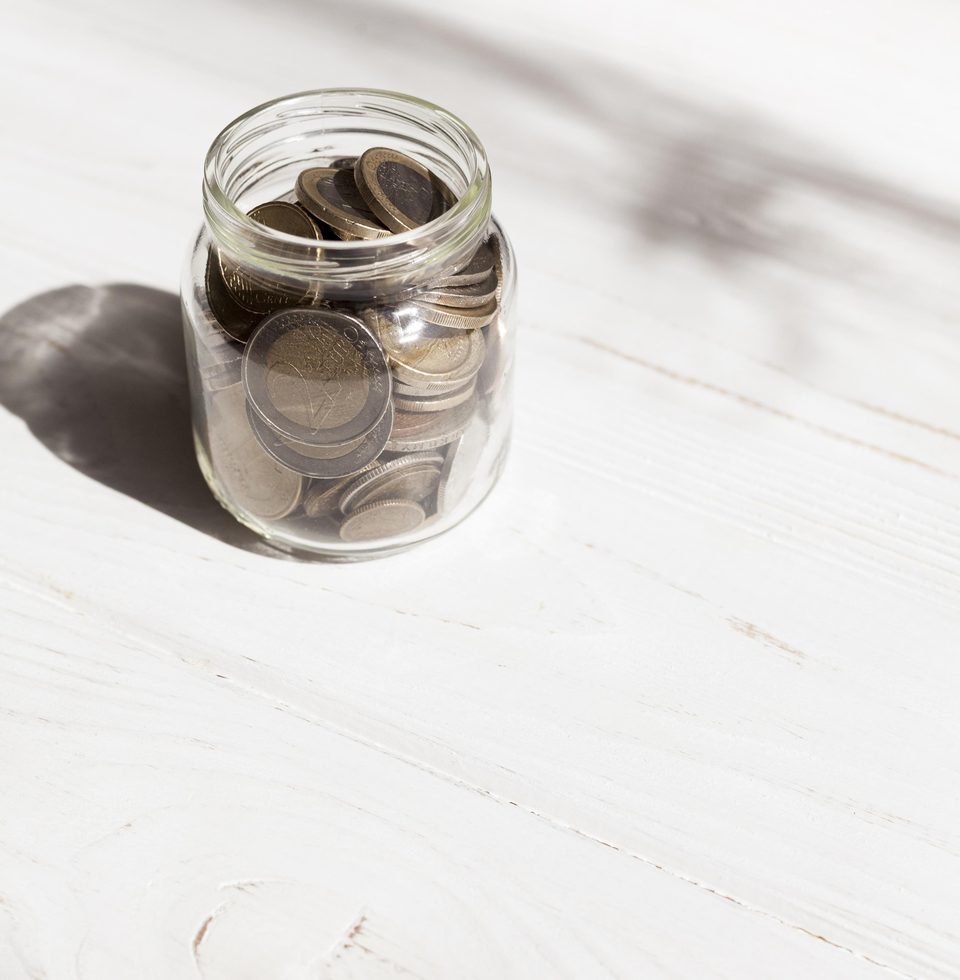
One simple way: every time you skip a purchase, move that amount from checking into a savings account the same day. Another, more tactile option: a savings jar. Pick a pretty glass jar with a lid, label it with your "why," and drop in a folded note (or actual cash) for each thing you didn't buy. Look for a jar wide enough to fit your hand and with a lid that closes properly, so it feels like a real little vault on your shelf.
At the end of the month, you add it up. Then you decide what that money does next: pays off a balance, starts an emergency fund, or goes toward something you really, truly want.
31 Free Things To Do Instead of Shopping
Here's the honest truth about a no-spend month: the hardest part isn't the shopping you skip. It's the empty space where shopping used to be. Boredom, stress and a long gray afternoon are when most of us reach for our phones and start adding things to a cart.
So give yourself something to reach for instead. Here are 31 free (or nearly free) ideas, one for each day of January, grouped by week. You don't have to do them in order. Pick whatever fits the day.
Week 1: Settle In (Days 1–7)
- Write your "why" and your rules in your notebook, then make a cup of tea and read them back.
- Do a full "shop your home" walk: open every drawer and cabinet and pull out things you forgot you had.
- Take a 30-minute walk without headphones and notice three pretty things.
- Get a library card (or dust off your old one) and borrow two books.
- Make your coffee at home and drink it slowly in your favorite mug, pretending it's a café.
- Rearrange one shelf or corner using only things you already own.
- Have a movie night with something you already have access to, plus a blanket and a candle you already own.
Week 2: Use What You Have (Days 8–14)
- Cook from your pantry for one full day – a fun little challenge rather than a sacrifice.
- Try every skincare product sample you've been saving.
- Build five new outfits from your closet and lay each one flat on your bed to see it as a whole.
- Write a letter to a friend and mail it with a stamp you already have.
- Do a free online workout or a 20-minute stretch on your floor.
- Finish one book you started and abandoned.
- Have a "spa night" with products already in your bathroom cabinet.
Week 3: Connect and Create (Days 15–21)
- Invite a friend for a walk-and-talk instead of brunch.
- Host a potluck or tea night where everyone brings something they already have.
- Start a free hobby: sketching, journaling, learning a language with a library app.
- Visit a free museum day or a local gallery.
- Call someone you haven't talked to in months.
- Organize your photos and make an album of your favorite moments from last year.
- Write a list of 20 things that made you happy that cost nothing.
Week 4: Reset and Reflect (Days 22–28)
- Declutter one drawer and sell or donate what you don't use.
- Look at your subscriptions and cancel one you didn't miss.
- Take yourself on a free solo date: a long walk to a pretty neighborhood, a bench, a library.
- Do a "gratitude for my stuff" round: write down five things you own and genuinely love.
- Try a new walking route or a nearby park you've never visited.
- Write a February wish list and sort it into "still want," "maybe" and "not anymore."
- Spend an evening fully offline: tea, a book, early bed.
Bonus: The Final Stretch (Days 29–31)
- Add up everything in your savings jar or tracking column.
- Write a one-page reflection: what was easy, what was hard, what surprised you.
- Decide your new "keep" rules for February – the few no-spend habits you want to hold onto.
If you're looking for more gentle, low-cost ideas, my solo date ideas fit beautifully into a no-spend month.

How To Handle Cravings, Invitations and Pressure
Cravings will come. That's normal, and it's actually useful information. Here's what helps:
The 48-Hour Wish List
When you want something, don't argue with yourself. Write it on your wish list with the date and the price. You're not saying no forever – you're saying "not this month." A surprising number of things on a wish list lose their shine within a couple of weeks. The ones that are still there in February are probably worth buying.
Name the Feeling
Before you open a shopping app, ask yourself one quiet question: "What am I actually feeling right now?" Bored, tired, anxious, lonely, celebrating? Shopping is often a fast way to change a feeling. I'm prone to anxiety myself, and I noticed that my urge to browse was strongest on stressful evenings. Knowing that helped me swap the browsing for a walk or a bath instead.
Bring Your Own Coffee
The daily café stop is one of the hardest habits to pause, mostly because it's tied to a routine, not to the coffee itself. Keep the ritual and change the source. A cream insulated coffee tumbler makes a home-brewed coffee feel like a treat on the way out. Look for a leak-proof lid and one that keeps drinks hot for at least a few hours – and one pretty enough that you actually want to carry it.
Mini Scripts for Invitations
You don't have to say no to your social life. You just need a few easy lines:
- "I'm doing a no-spend month – could we do a walk instead of brunch?"
- "I'd love to see you! Want to come over for tea? I'll light a candle and we can catch up."
- "I'll skip dinner this time, but I'd love to join for a drink at home after."
- "I'm in for the movie at your place – I'll bring the blankets."
Most friends are lovely about it, and some will want to join you. And if a special event comes up that truly matters to you, it's allowed to be a planned gray area. Relationships are worth more than a perfect streak.
If You Slip, Here's What To Do
At some point, you might buy something you meant to skip. Maybe it was a tired evening, a "flash sale," or a moment of "I deserve this." Please hear this clearly: a slip is not failure. It's one purchase in a month of many good choices.
Here's a kind three-step reset:
- Notice without drama. Write it down in your notebook: what you bought, how much, and what you were feeling right before.
- Decide if it stays. If you can return it easily and you don't love it, return it. If you do love it, keep it and enjoy it fully – no guilt allowed.
- Restart the next morning. Not next month. Not next Monday. Tomorrow is day one of the rest of your challenge.
The goal was never to be perfect. The goal was to notice, and you just did.
A Few Things That Make the Month Easier
- Carry a bag with you. A simple beige canvas tote for library books, your tumbler and your notebook makes free outings feel planned and pleasant. Look for sturdy handles and an inside pocket.
- Plan one "free treat" a week. A long bath, a sunset walk, a new library book – something to look forward to.
- Do a weekly check-in. Sunday evening, 10 minutes: count your no-spend days, add up the savings, plan next week's groceries.
- Keep it private if you prefer. You don't have to announce it anywhere. It's your month.
- Don't stockpile beforehand. Buying a bunch of things on December 31 "for January" defeats the whole idea. Use what's already there.

How To End Your No-Spend Month Well
The last few days of January are where the real value is. Before you hop back into normal spending, take an evening to reflect. Grab your notebook and answer these:
- How much did I save, in total?
- Which purchases did I truly miss?
- Which ones did I not even notice were gone?
- When was the urge to spend strongest – what time, what mood, what place?
- What free activities did I enjoy so much I want to keep them?
Then choose two or three "keep" habits for February. Maybe coffee at home on weekdays. Maybe the 48-hour wish list forever. Maybe no shopping apps on your home screen. Small habits like these are what make the challenge pay off long after January is over.
My monthly reset checklist is a gentle way to keep the momentum going on the first of every month, and if your home could use a fresh start too, the January home reset plan pairs perfectly with a month of using what you already have.
Final Thoughts
A no-spend January isn't about restriction. It's about giving yourself a quiet month to see your habits clearly, enjoy what you already have and decide, on purpose, what you want your money to do. Some days will feel easy, some will feel like a little test, and both are completely fine.
Start with your "why," keep your rules simple, and be gentle with yourself on the slip days. By the end of the month, you'll have a little more money, a lot more clarity and a handful of free pleasures you'll want to keep long after January is gone.