
Monk mode isn't about becoming a different person for a month. It's about giving the person you already are a quieter room to work in. Fewer pings, fewer late nights, fewer half-started things, and a lot more space for the one goal that keeps tugging at your sleeve.
The internet version can sound intense: no friends, no fun, icy showers at dawn, a diet of black coffee and willpower. You don't need any of that. The gentle version works better, because it's something you can actually keep up for thirty days and then walk out of feeling rested instead of burned out.
In this guide I'll walk you through what monk mode really means, how to choose one clear focus and three supporting habits, how to set kind rules, a 30-day plan in four weekly phases with a simple table, what to do on low days and how to end it without a crash.
Think of it as a focused season, not a punishment. Let's set it up together.
What Monk Mode Really Means

Monk mode is a self-chosen stretch of time, usually a few weeks, when you deliberately narrow your attention. You pick one thing that matters, protect time for it every day and quietly turn down the volume on everything that scatters you.
The name borrows the image of a monastery: simple routines, quiet mornings, a clear purpose. You aren't taking vows, of course. You're borrowing the structure, the calm and the focus, and leaving the rest behind.
A gentle monk mode usually has four parts:
- One clear focus – the meaningful thing you want to move forward.
- Three supporting habits – small daily actions that make the focus easier.
- A few kind rules – limits on the things that drain your attention.
- A set end date – usually 30 days, so it feels like a season, not a life sentence.
That last part matters more than it looks. Knowing there's a finish line makes the quiet feel like a gift instead of a sacrifice.
Why People Try Monk Mode
Most people don't reach for monk mode because life is going badly. They reach for it because life is busy in a way that leaves nothing for the things they care about most. A few common reasons:
- Scattered attention. You open your phone to check one thing and look up twenty minutes later, a little foggy and not sure where the time went.
- A meaningful project that keeps slipping. A course, a portfolio, a creative project, a big reset of your home, a book you've wanted to write for ages.
- Feeling pulled in too many directions. Every commitment gets a sliver of you, and none of them gets your best.
- Wanting a reset. Late nights and constant noise have crept in, and you'd like to remember what a calm, focused day feels like.
- Wanting proof you can follow through. Finishing one thing well can rebuild trust with yourself faster than a dozen new plans.
If one of these made you nod, monk mode might be a good fit. If you mostly feel exhausted, though, start with rest. A focused season works best when your tank isn't completely empty, and my guide on how to slow down and enjoy life again is a softer place to begin.
What Monk Mode Is Not
Before we plan anything, let's clear up the parts of monk mode that get shared online and quietly do more harm than good.
- It's not isolation. You don't cut off your friends, your family or your partner. You might see people a little more intentionally, but you still see them.
- It's not extreme fasting or skipping meals. Your brain needs regular food to focus. Eat normally and drink water through the day.
- It's not sleep deprivation. Waking at 4 a.m. after going to bed at midnight isn't discipline. It's just tired.
- It's not a hustle challenge. The goal isn't to squeeze more output from every hour. It's to give your attention to something that matters to you.
- It's not all-or-nothing. Missing a day doesn't cancel the month. You simply pick it up again.
Something I learned the slow way: plans built on harsh rules usually collapse around day nine. Plans built on kind rules tend to make it to the end.
Choose One Clear Focus

Your focus is the heart of the whole month, so give it a little time. The best monk mode focus is meaningful, specific and doable with 30 days of steady effort, not 30 days of heroics.
Answer these three questions in your notebook:
- What have I been wishing I had time for?
- If I moved one thing forward by the end of the month, which would make me proudest?
- What can I realistically give it each day – 30 minutes, 60 minutes, 90?
Then shape your answer into a single sentence: "For the next 30 days, I'm focusing on [one thing], for [time] a day, so that [why it matters]."
A few examples:
- "For the next 30 days, I'm focusing on finishing my online course, for 45 minutes a day, so that I can apply for the role I really want."
- "For the next 30 days, I'm focusing on drafting ten short stories, for 30 minutes a day, so that writing feels like part of my life again."
- "For the next 30 days, I'm focusing on decluttering my home room by room, for 40 minutes a day, so that my space finally feels calm."
Write your sentence on the first page of an undated planner with a soft cream cover so it greets you each morning. Undated is the kind choice here: if you start mid-month, nothing is wasted and no empty dates stare back at you.
And yes, just one. Two focuses become two half-efforts very quickly. Everything else can wait thirty days.
Pick 3 Supporting Habits

Supporting habits are the small daily actions that make your focus easier. They don't need to be impressive. They need to give you energy, protect your attention or keep you steady.
Choose three from areas like these:
- Body: a 20-minute walk, ten minutes of stretching, a glass of water before coffee.
- Mind: five minutes of slow breathing, a short journal page, ten pages of a book before bed.
- Space: a five-minute desk reset each evening, making the bed, laying out tomorrow's things.
- Rhythm: a set wind-down time, a steady wake-up time, a phone-light first half hour of the day.
The trick is to attach each habit to something you already do. Stretch right after brushing your teeth. Journal after your evening tea. Reset your desk as soon as you close your laptop. If you want more ideas for linking small actions together, my guide to habit stacking has plenty of examples.
A tiny ritual can work as a starting cue, too. A warm drink in an ivory ceramic mug before every focus block tells your brain, "Now we begin." Coffee sometimes perks me up and sometimes makes me jittery, so on anxious days tea is my pick, and the cue works just as well.
Set Your Rules Kindly
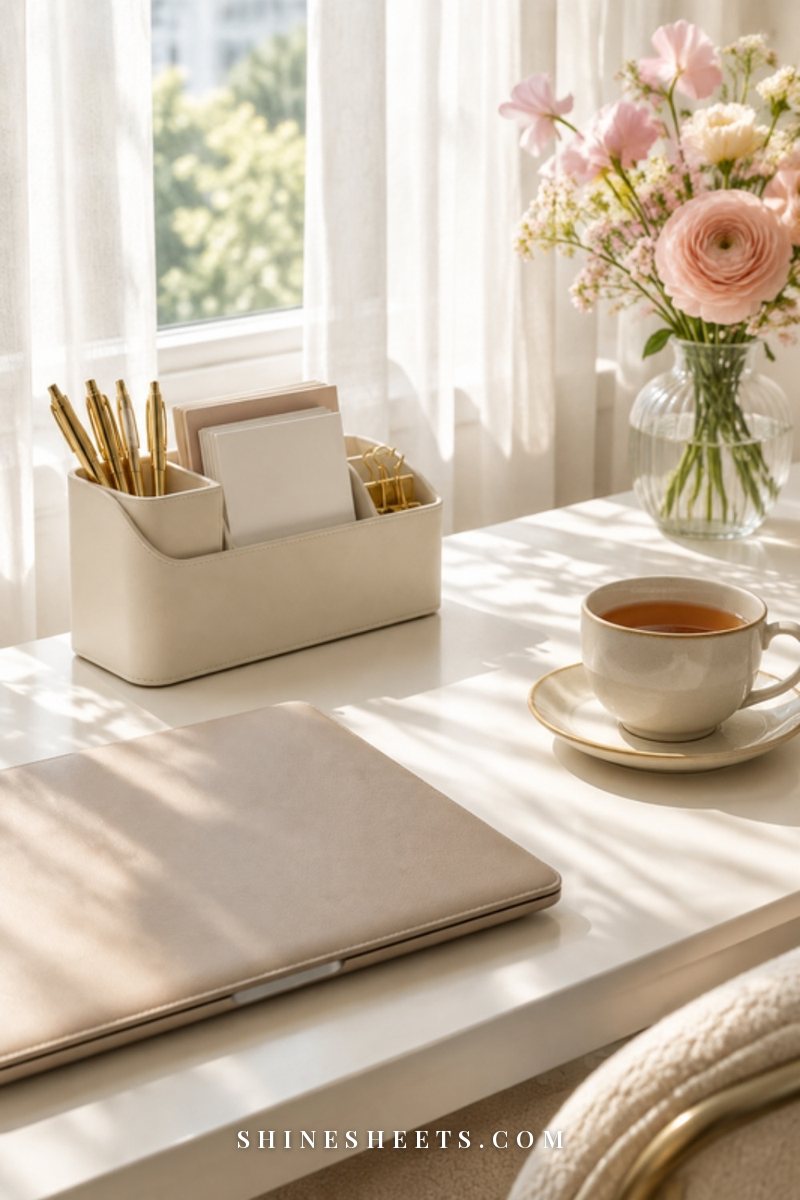
Rules are where monk mode can turn harsh, so let's keep them gentle and specific. Aim for three to five, each one protecting either your focus or your rest. These four areas help most people.
Fewer Notifications
Turn off every notification that isn't from a real person you'd want to hear from. Keep calls and messages from close people; silence shopping apps, news alerts, social apps and most email. This one change alone can make a day feel twice as long.
A Calmer Phone Setup
Move distracting apps off your home screen and into a folder on the last page. Switch your display to grayscale during focus blocks if your phone allows it. Charge your phone outside the bedroom and wake up with a simple cream analog alarm clock instead, so the first and last thing you see each day isn't an endless feed. For a fuller reset, my gentle 7-day digital detox pairs beautifully with week one.
Fewer Late Nights
Pick a "lights low" time and protect it on most nights. You don't need to become an early bird; you need enough sleep to think clearly. If you usually go to bed at 1 a.m., try 12:15 for the first week and 11:30 after that. Small steps stick.
Protected Focus Blocks
Put your focus time in your calendar like an appointment. One or two blocks a day is plenty. During a block, close extra tabs, put your phone in another room and keep a notepad nearby to catch stray thoughts ("email the landlord", "buy candles") without acting on them. A sage green desk lamp that you switch on only for focus time can become a lovely signal that the block has started. For help shaping your day around these blocks, see my guide to time blocking for beginners.
Write your rules as kind sentences, not threats. "I keep my phone in the hallway during focus time" feels very different from "NO PHONE." Then add one line at the bottom: "If I slip, I start again at the next block, not next Monday."
What Stays: Rest, Meals, Friends and Family

This is the part that makes monk mode sustainable. Some things are protected by your rules, not cut by them.
- Rest: at least one easy evening a week with no goals at all. Bath, film, early night – your choice.
- Regular meals: eat at normal times, sit down when you can and don't trade lunch for "just one more hour."
- Friends: keep at least one real connection each week – a walk, a coffee, a long call.
- Family and partner: tell the people close to you what you're doing and why, so a quieter week doesn't feel like distance.
- Movement and fresh air: even ten minutes outside helps your focus more than another hour at the desk.
A simple script for the people you love: "I'm doing a focused month on my course. I'll be a bit quieter online and in bed earlier, but I'd still love our Sunday walk." Most people respond with warmth when they know what's going on, and some will even cheer you on.
Your 30-Day Monk Mode Plan in 4 Weekly Phases
Thirty days is long enough to make real progress and short enough to stay motivated. Here's the whole month at a glance, then each phase in a little more detail.
| Week | Focus | Daily habit | Gentle rule |
|---|---|---|---|
| Week 1 (days 1–7): Set up | Write your focus sentence, prepare your space, start with short focus blocks of 20–30 minutes | Start one supporting habit, such as a 20-minute walk | Notifications off, except for close people |
| Week 2 (days 8–14): Settle in | Full-length focus blocks at the same time each day | Add the second habit, such as an evening journal page | Phone charges outside the bedroom |
| Week 3 (days 15–21): Deepen | Tackle the hardest part of your project; one longer session this week | Add the third habit, such as a five-minute desk reset | Lights low at your set time on most nights |
| Week 4 (days 22–30): Reflect | Finish one visible milestone and look back on the month | Keep all three habits, lighten any that feel heavy | One full rest evening, plus a plan for what stays after day 30 |
Screenshot it or copy it into your planner so it's always within reach.
Week 1: Set Up

The first week is about building the container, not pushing hard. Write your focus sentence, choose your three habits and draft your rules. Clear your desk, put a notebook and pen where you'll work and decide where your phone will live during focus time.
Start with focus blocks of 20 to 30 minutes. That might feel too easy. Good. You're teaching your brain that sitting down to work is calm and doable, and that feeling is what carries you into week two. Begin only one habit this week; the other two come later.
If you've never worked in long, uninterrupted stretches before, my guide to deep work for beginners explains how to build focus gradually without forcing it.
Week 2: Settle In
By now the novelty has worn off, which is exactly when real habits start to form. Lengthen your focus blocks to your chosen time (45 to 90 minutes suits many people) and keep them at the same time each day if you can. Add your second supporting habit.
Expect some restlessness. Your hand may reach for your phone out of pure habit, especially in the first ten minutes of a block. That itch usually fades after a few days. A pair of blush noise-cancelling headphones can help a lot here, especially if you share your space or work somewhere busy. Soft instrumental music or plain silence both work.
A quick end-of-day note helps too: two lines about what you did and one thing you'll start with tomorrow. It takes two minutes and saves you ten the next morning.
Week 3: Deepen

Week three is often where monk mode starts to feel good. Your rhythm is familiar, your habits are mostly automatic and you have real momentum. Use it. Pick the hardest or most avoided part of your project and give it your best block of the week.
Add your third habit now, and consider one slightly longer session – maybe two hours on a weekend morning with a tea break in the middle. Keep an eye on your energy, though. Deepening means more attention, not more hours at any cost. If you feel wired and tired at the same time, pull back a little.
This is also a nice week to notice what has changed. Maybe you sleep better. Maybe you reach for your phone less. Write those little wins in a linen-covered notebook kept just for this month; they're easy to forget and lovely to read later.
Week 4: Reflect
The final stretch is about finishing and looking back. Aim for one visible milestone: a finished module, a completed draft, a cleared room. Then spend part of a quiet evening, ideally with a cup of tea and your journal, answering a few questions:
- What did I move forward this month?
- Which habit made the biggest difference?
- Which rule felt light and helpful, and which one felt heavy?
- What do I want to keep after day 30?
A done list is a wonderful way to see the whole month at once. Seeing everything you actually finished, written in your own handwriting, is a quiet kind of pride.
Signs Your Monk Mode Is Working
Progress in a focused month is often quieter than you expect. Look for these gentle signs rather than a dramatic transformation:
- You sit down to work with less resistance than in week one.
- You notice the urge to check your phone and let it pass more often.
- Your evenings feel calmer and your mornings a little less rushed.
- You can name, clearly, what you moved forward this week.
- You feel more like yourself, not less.
That last one is the real test. If monk mode is making you feel lonely, anxious or brittle, it's a sign to loosen the rules, not tighten them.
What To Do on Low Days

There will be days when you wake up flat, foggy or a little sad, and the plan suddenly feels very far away. That's normal. Low days are part of every focused season, not proof that you're failing at it.
On a low day, try the "minimum version":
- Shrink the focus block to 10 or 15 minutes. Showing up small still counts.
- Keep one habit, the easiest one, and let the other two rest.
- Keep your rules about rest and loosen the others for the day.
- Do one nourishing thing: a shower, a walk, a proper meal, a call with someone kind.
- Go to bed early instead of trying to make up for lost time.
A small honest admission: I'm prone to anxiety, and on anxious days the minimum version is all I can manage. It still keeps the thread unbroken, and the next day is almost always easier.
If low days start to outnumber good ones, or you feel down or anxious most of the time, please take that seriously. Pause the plan, rest and talk to a doctor or therapist. No focus month is worth more than your wellbeing.
How To End Monk Mode Without a Crash
The biggest risk with monk mode isn't quitting halfway. It's finishing on day 30, throwing every rule out at once and ending up right back where you started, only more tired. A soft landing lets the month keep paying off.
- Keep your best habit. Choose the one that helped most and make it a permanent part of your week.
- Keep one rule. Phone outside the bedroom, notifications off or your lights-low time. One is enough.
- Taper the rest over a week. Loosen one rule at a time and notice how each change feels.
- Celebrate with something restful. A slow morning, a long bath, an afternoon with a friend.
- Decide on your next season. Maybe another focus month later, maybe a gentle everyday rhythm. Put a rough date on it.
Some people like to run two or three monk mode seasons a year, with ordinary months in between. That rhythm – focus, rest, focus – tends to feel much kinder than trying to live at full intensity all the time.
Final Thoughts
Monk mode, done gently, isn't about shutting the world out. It's about choosing what gets your best attention for a little while and protecting it with kind, simple boundaries.
Pick one focus, three small habits and a handful of soft rules. Keep your rest, your meals and your people close. Thirty days from now you'll have real progress in your hands and, just as importantly, a calmer way of moving through your days.