Slowing down isn't about moving to the countryside, quitting everything and baking bread all afternoon. It's about taking back small pieces of your day from autopilot. Most of us aren't rushed because our lives are huge – we're rushed because every gap gets filled, every notification gets answered and every evening is already promised to something.
The good news is that you don't need a whole new life to feel the difference. You need a few gentle practices that remind your body there's no emergency. This guide is all about how to slow down and enjoy life again: why everything feels so fast, the quiet signs you need a slower pace, 15 practical ways to ease off the gas, a slow living starter week you can begin on any Monday and a simple slow weekend template.
Take what helps and leave the rest. Slow living is the one thing you really can't do wrong by doing it slowly.
Why Life Feels So Rushed Right Now
If you feel like you're always running a little late for your own life, you're not imagining it. A few things tend to stack up quietly:
- Always-on everything. Messages, emails, group chats and news arrive all day, and each one asks for a tiny decision. Your brain never gets a full stop.
- Comparison. When you can see what everyone else is doing at all times, your own normal, lovely life starts to feel like it's behind. Behind what, exactly, nobody can say.
- Overcommitting. Saying yes is easy in the moment and expensive later. A week of "sure, I can do that" becomes a calendar with no air in it.
- Productivity as identity. Many of us learned that being busy means being good. Rest starts to feel like something you have to earn.
- No transitions. We go from work to errands to dinner to bed without a single pause in between, so the day blurs into one long rush.
None of this is a personal failing. It's the water we all swim in. But once you can name it, you can start to step out of the current for a few minutes at a time.
Signs You Need To Slow Down
Sometimes the body notices before the mind does. Here are some gentle signals that your pace has become too fast. Even two or three are worth paying attention to:
- You eat most meals standing up, in the car or in front of a screen.
- Whole weeks pass and you can't remember what you actually did.
- You feel guilty or restless the moment you sit down.
- Small delays (a slow line, a red light) make you disproportionately irritated.
- You reach for your phone in every quiet moment, almost without deciding to.
- Things you used to love, like reading or a long bath, feel like "too much effort".
- You're tired in the evening but can't switch off at night.
- You keep saying "once things calm down…" but they never do.
Here's my small honest admission: I'm prone to anxiety, and for me the first sign is always the restless one. When I can't sit through a cup of tea without picking something up, I know it's time to slow down on purpose. (A quick, kind note: if you feel low, exhausted or anxious most days for weeks at a time, please talk to your doctor or a therapist too. Slower days help, but you deserve real support as well.)
15 Gentle Ways To Slow Down and Enjoy Life
You don't need all fifteen. Pick two or three that feel easy, try them for a week and add more only when they feel natural. Slowness that's forced just becomes another task on the list.
1. Single-Task One Thing a Day
Multitasking feels efficient, but it mostly makes everything feel half-finished. Choose one daily task and give it your full attention: folding laundry, answering emails, washing your face, making tea. No podcast, no second tab, no phone nearby.
Start with just 10 minutes. You'll notice two things quickly: the task goes faster than you expected, and you feel calmer afterwards rather than more drained. Once that feels easy, try single-tasking a whole hour of work with one tab open.
2. Build a Slow Morning
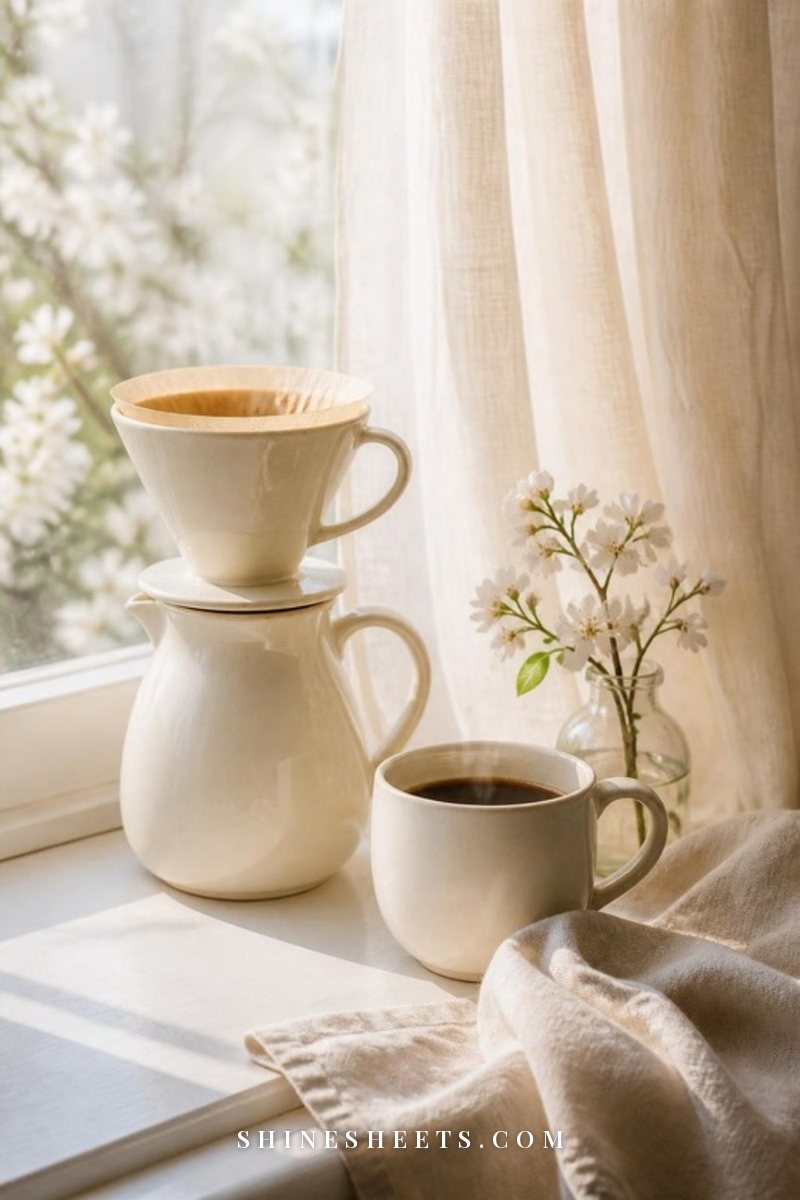
How you start the day often sets the speed for everything after. A slow morning doesn't have to mean waking at dawn. It just means the first 15–20 minutes belong to you, not to your inbox.
Try this simple order: water first, then light (open the curtains or step outside), then something warm in your hands before you look at a screen. Making coffee by hand is a lovely anchor because it can't be rushed – a cream ceramic pour-over coffee set turns two minutes of waiting into a tiny ritual instead of a delay. (I'll admit coffee sometimes perks me up and sometimes makes me jittery, so on anxious days the same ritual works just as well with tea.)
If you'd like a full step-by-step version, my guide to a slow morning routine that starts the day calmly walks you through it.
3. Walk Without Headphones
We've filled every walk with sound, which means our minds never get to wander. Once or twice a week, take a 15–20 minute walk with nothing in your ears. Notice three things you can see, two you can hear and one you can smell. Let your pace drop to the speed of someone who isn't late.
It may feel strangely quiet at first. That's the point. A lot of good ideas and small feelings only show up when there's space for them. (And on busy streets, it's also simply safer to hear what's around you.) If you'd like to go deeper, try mindful walking as a simple moving meditation.
4. Savor One Meal Properly
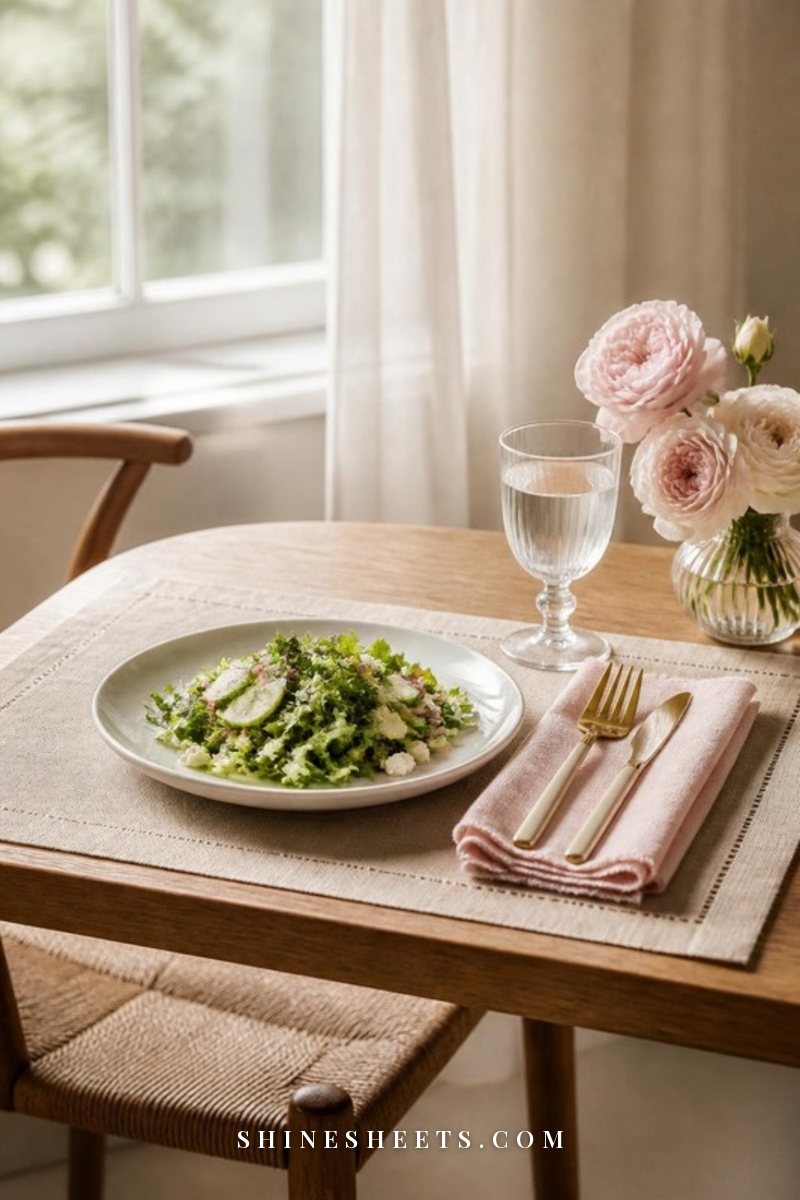
You don't need to cook anything special to eat slowly. Choose one meal a day, even a simple lunch, and give it a proper setting: a real plate, a seat at the table, a glass of water and no screen.
Put your fork down between bites for the first five minutes. Notice texture, temperature and how full you feel halfway through. Most of us finish a meal before we've really tasted it, and slowing down this way is one of the easiest pleasures you can get back for free.
5. Leave Margins Between Plans
Back-to-back days feel rushed even when every single thing on them is nice. The fix is margins: deliberate empty space before and after commitments.
A simple rule: add 15 minutes of buffer around every appointment, and never schedule more than two "things" on a weekend day. Arriving early, with time to sit in the car or have a glass of water, changes how the entire event feels. You show up as a person instead of a deadline.
6. Make Fewer Commitments
Look at the next two weeks of your calendar and ask one question of each plan: "If this were cancelled, would I feel disappointed or relieved?" Relief is information.
You don't have to cancel everything that makes you feel relieved. But you can let one or two go, say no to the next similar invitation and slowly shape a calendar that holds the things you actually want. Fewer plans, more presence at each one.
7. Keep Phone-Free Hours
Your phone is probably the single biggest source of speed in your day. You don't have to give it up, just give it edges. Start with one phone-free hour each evening and the first 30 minutes after you wake.
The easiest trick is physical distance: charge your phone outside the bedroom and wake up with a simple white analog alarm clock instead. Mornings start with your own thoughts rather than everyone else's. For a gentle, structured version, try my 7-day digital detox plan.
8. Say No Kindly and Without a Long Explanation
Every yes you don't mean takes time from something you do. A slower life needs a few warm, short ways to decline. Keep these ready:
- "Thank you for thinking of me. I can't this time, but I hope it's lovely."
- "I'm keeping this weekend quiet, so I'll pass, but let's find another time."
- "I don't have the space to do that well right now."
- "Let me check and get back to you tomorrow." (Then actually decide, calmly.)
You don't owe anyone a detailed reason for protecting your time. A kind no is still kind.
9. Notice Your Glimmers
Glimmers are the tiny moments that make you feel safe or happy: sunlight on the wall, the smell of clean sheets, a song you forgot you loved. When life is fast, we walk right past them.
Each evening, write down three glimmers from your day. Keep it short, one line each. A small linen-covered journal on your nightstand makes it feel like a ritual rather than homework. After a few weeks, you'll start noticing them in real time, which is really the whole goal. If you need ideas, here are 100 examples of glimmers to get you started.
10. Pick Up a Hobby With No Goal
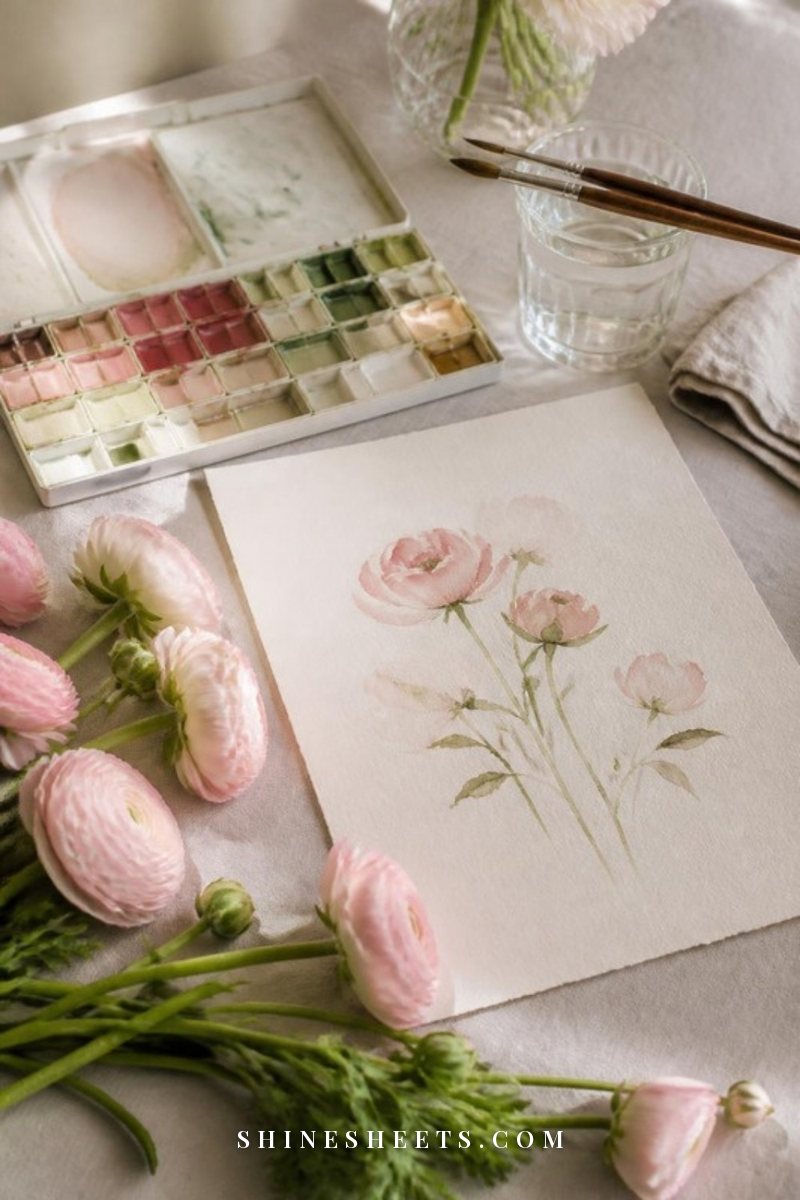
A lot of our hobbies turn into side hustles, challenges or something to track. Choose one thing you do purely because it feels nice: watercolor, knitting, pressing flowers, baking for no occasion, doing a jigsaw puzzle, tending a single houseplant.
The rule is simple: no posting, no measuring, no "getting good". Give it 20–30 minutes once or twice a week. If you notice yourself trying to optimize it, smile at that and go back to just enjoying the colors.
11. Read Something Slow
Reading a novel is one of the few things that stretches your attention instead of chopping it into pieces. Choose a story you're genuinely curious about, not the book you feel you should read, and give it 15 minutes before bed.
A real paperback (a gentle classic like Little Women) works better than a phone app here, because there's nothing else to tap. Keep it somewhere you'll see it, like the arm of your favorite chair, so reaching for it becomes the easy option.
12. Create Seasonal Rituals

Rushing makes every month feel the same. Seasonal rituals bring back the sense of time moving slowly and beautifully. They can be tiny: the first candle of autumn, a spring flower market visit, a summer evening walk after dinner, a winter afternoon with a puzzle.
Write down one ritual for each season and put it in your calendar like an appointment. In the colder months, lighting a candle in a clear glass jar at the same time each evening is my favorite signal that the busy part of the day is over.
13. Do Some Things the Long Way
Convenience saves time, but it also removes small pleasures. Pick one thing a week to do the long way on purpose: write a card instead of a text, walk to the bakery instead of driving, make tea in a pot instead of microwaving a mug, hand-wash a favorite sweater.
These little detours remind you that not every minute has to be squeezed. Some of the nicest parts of life live in the slow version.
14. Rest Before You're Exhausted
Most of us only rest when we're completely empty, which means rest always feels like recovery instead of pleasure. Try scheduling one 20-minute rest break in the middle of a normal day: lie down, close your eyes, stretch on the floor or simply sit by a window.
Make it inviting. A soft cream wool throw folded on the sofa is a little visual permission to stop. If resting still feels like doing something wrong, my thoughts on living a softer, gentler everyday life might help you loosen that rule.
15. End the Day Gently
The last hour before bed decides how rushed tomorrow feels. Instead of collapsing straight from chores into sleep, give yourself a short wind-down: dim the lights, make a cup of evening tea, write a few lines in your journal and put tomorrow's to-do list on paper so it doesn't follow you into bed.
Fifteen minutes is enough. Over time, this little ending becomes a soft line between "doing" and "being", and that line is where a slower life begins.
The Slow Living Starter Week
If you'd like a gentle place to begin, try this one-week plan. Each day has a single slow practice and a realistic number of minutes. Screenshot it and start on any day you like:
| Day | One slow practice | Minutes |
|---|---|---|
| Monday | Single-task one chore with no podcast or phone nearby | 10 |
| Tuesday | Keep the first part of the morning screen-free with a warm drink by the window | 15 |
| Wednesday | Walk without headphones and notice three things you see | 20 |
| Thursday | Eat one meal at the table with no screen, fork down between bites | 20 |
| Friday | One phone-free hour in the evening (phone charging in another room) | 60 |
| Saturday | Spend time on a hobby with no goal, no posting, no measuring | 30 |
| Sunday | Write three glimmers from the week and one thing to let go of | 10 |
That's less than three hours across a whole week, and most of it fits into things you already do. At the end of the week, keep the one or two practices you enjoyed most and repeat them next week. That's how a slower life is built: not in one big leap, but in small choices you keep making.
A Slow Weekend Template
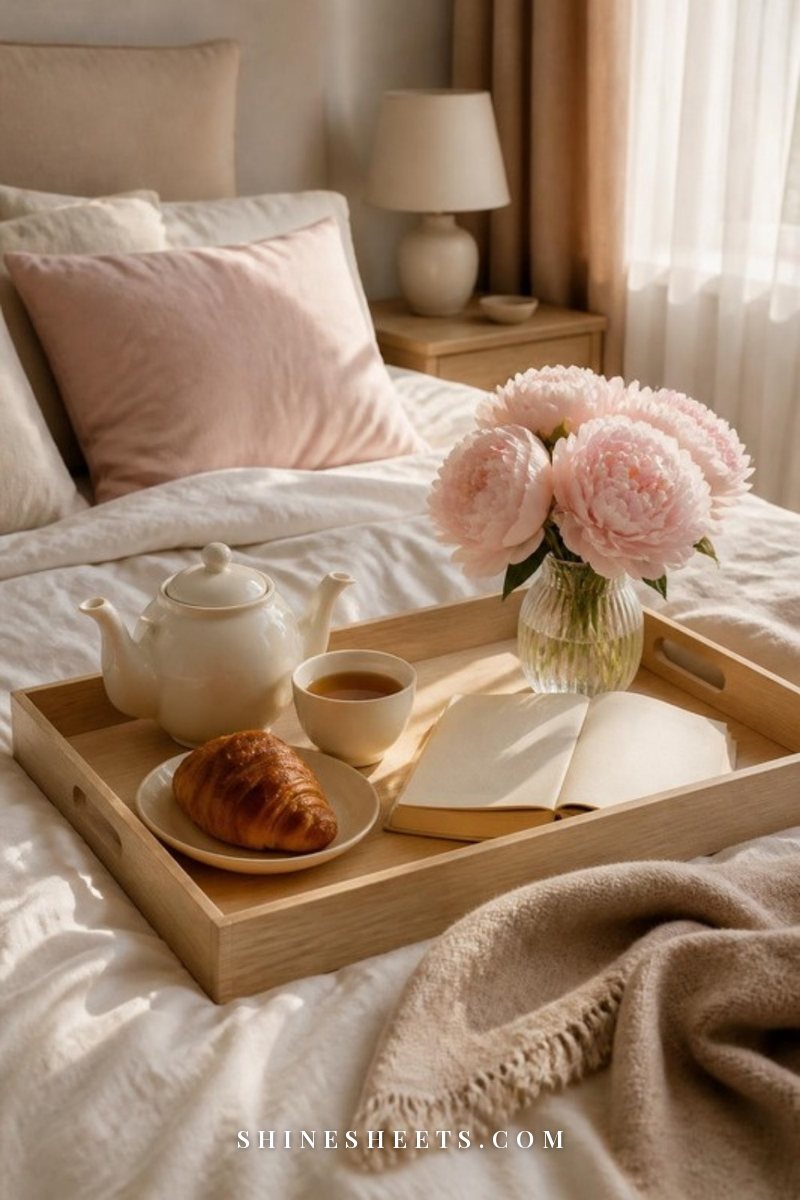
Weekends are where slowness has the most room, and also where it often disappears into errands. This template keeps a balance between rest, small pleasures and the things that genuinely need doing. Adjust the times to your life:
- Friday evening: Do a 10-minute reset of one room, light a candle and decide on just one plan for the weekend. Phone away by your usual wind-down time.
- Saturday morning: Sleep without an alarm if you can. Have breakfast at the table or on a tray in bed, and read for 20 minutes before checking anything.
- Saturday afternoon: Your one plan or outing, with buffer time on both sides. Walk part of the way if possible.
- Saturday evening: Something unhurried: a long bath, a film you've wanted to see, a slow phone call with a friend.
- Sunday morning: A headphone-free walk, then a hobby with no goal for 30 minutes.
- Sunday afternoon: Errands and chores in one focused block (single-tasking, music on if you like), then done.
- Sunday evening: Write your glimmers, look gently at the week ahead and put tomorrow's first task on paper.
Notice what's missing: a packed list. One plan, one block of chores and lots of soft space around both. If the weekend still feels too full, remove something rather than adding more structure.
What To Do When Slowing Down Feels Uncomfortable
Here's something nobody tells you: slowing down can feel bad before it feels good. When the noise stops, you may notice restlessness, guilt or feelings you've been outrunning. That doesn't mean you're doing it wrong.
- Start smaller. If 20 minutes of quiet feels unbearable, try five. Build from wherever you are.
- Give your hands something to do. Knitting, sketching or folding laundry slowly can make stillness feel safer than sitting with nothing.
- Name the feeling. "This is restlessness" or "This is guilt" is often enough to soften it.
- Remember the why. You're not slowing down to be perfect. You're slowing down so your own life stops passing you by.
- Let it be imperfect. Some days you'll rush. That's fine. Tomorrow is another chance to try one slow thing.
For more small ways to come back to the moment when your mind races ahead, my guide on how to be present in everyday life pairs beautifully with everything here.
Final Thoughts
A slower life isn't something you arrive at one day when everything finally calms down. It's built in small, quiet moments: the walk without headphones, the meal at the table, the evening you leave empty on purpose.
Start with one practice this week and let it be enough. The world will keep moving fast, but you're allowed to move at your own pace, and that pace can be gentle, unhurried and full of little things worth noticing.