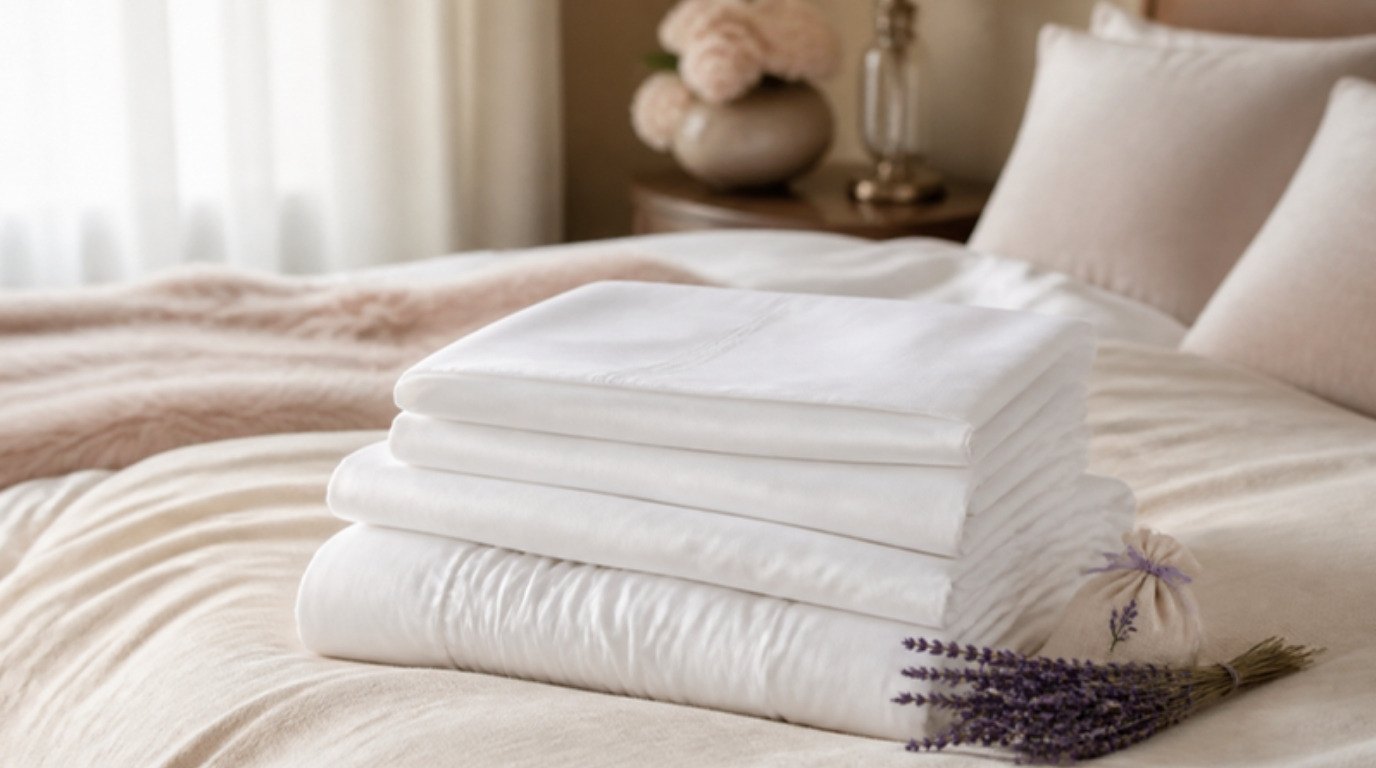
A fitted sheet isn't impossible to fold – it's just built differently from everything else in your linen closet. Those four elastic corners are designed to grip a mattress, not to lie flat, so the usual "fold it in half and in half again" approach ends in a lumpy ball every time. Once you know the one trick that tames the corners, the rest is just folding a rectangle.
And it's worth learning. A neatly folded fitted sheet takes up about half the space of a balled-up one, it comes out of the closet with fewer creases, and it turns your linen shelf from a jumble into something that actually makes you happy to open.
This guide shows you how to fold a fitted sheet neatly, step by step, plus a faster "good enough" version for busy laundry days, how to fold the flat sheet and pillowcases to match, how to store whole sets together, and how to keep everything fresh on the shelf. Grab a sheet straight from the dryer and follow along.
Why Fitted Sheets Are So Tricky
A flat sheet is a simple rectangle. A fitted sheet is a rectangle with four deep pockets sewn into the corners and elastic running around the edge. When you try to fold it like a flat sheet, the elastic pulls the edges inward, the pockets bunch up, and the whole thing refuses to sit square.
The secret is to stop fighting the corners and use them instead. When you tuck one corner pocket inside another, the elastic edges line up, the curved sides become straight, and suddenly you're holding something that behaves much more like a regular sheet.
Deep-pocket sheets (made for thick mattresses or toppers) take a little more tucking, and jersey or stretchy sheets slip around more than crisp percale. Both can still be folded neatly – they just need a bit more patience on the first try.
Before You Start
A few small things make folding much easier:
- Fold while warm. Take the sheet out of the dryer right away and fold it within a few minutes. Warm fabric is softer and creases fall out instead of setting in.
- Shake it out first. One or two firm shakes untangle the corners and show you where the pockets are.
- Find all four corners. Turn the sheet so the elastic side faces you and locate each corner pocket before you begin.
- Clear a space. A bed, a table or a clean stretch of floor gives you room to square it up.
If your sheets come out of the wash tangled or wrinkled, my guide on how to wash sheets covers load size, temperature and drying times that keep them smoother from the start. Always follow the care label on your bedding, especially for linen, silk or bamboo.
How To Fold a Fitted Sheet: The Classic Method
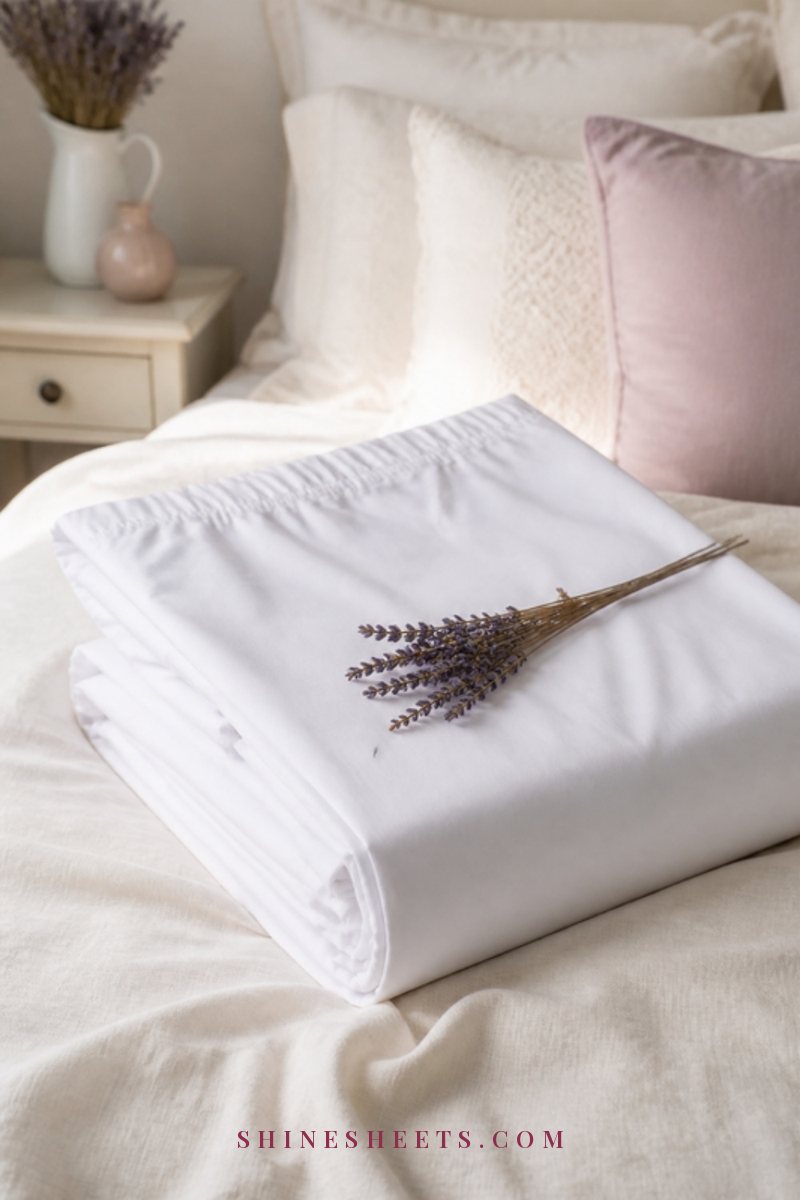
This is the method that gives you a flat, crisp rectangle that stacks beautifully. It takes about two minutes once you've done it a few times. Read through the five steps first, then try it with a sheet in hand.
1. Turn Two Corners Inside Out
Hold the sheet lengthwise, with the inside (the side that touches the mattress) facing you. Slip your hands into the two corner pockets on one short end, one hand in each, so the corners sit over your hands like mittens. The sheet should hang down in front of you with the elastic edge facing you.
2. Tuck the Corners Into Each Other
Bring your hands together and flip the corner on your right hand over the corner on your left, so one pocket slides neatly over the other. Now both corners are nested on your left hand, with the seams lined up. Smooth the fabric so the nested corners sit snugly.
If this feels awkward, take your time. It's the one step that matters most, and after a few sheets your hands will do it without thinking.
3. Repeat on the Other Side
With your free right hand, find one of the two remaining corners at the other end of the sheet (follow the edge down from the corner you're holding). Slip your hand into it, then pick up the last corner and tuck it over, the same way as before. You should now have two sets of nested corners, one in each hand.
Bring the two sets together and tuck one over the other once more, so all four corners are stacked into a single neat pocket. Now the sheet is folded in quarters, with all the elastic gathered on one side.
4. Lay It Flat and Square It Up
Lay the sheet on your bed or table with the elastic side facing up. The corner bundle should sit at one end, and the edges will look curved and gathered. Gently pull the edges out so you have a rough rectangle. The elastic edges will form a curved shape along one side – fold them in toward the middle so that every side becomes a straight line.
Smooth your hands over the whole surface to push out air and wrinkles. Don't aim for perfection here; aim for "mostly straight."
5. Fold Into a Neat Rectangle
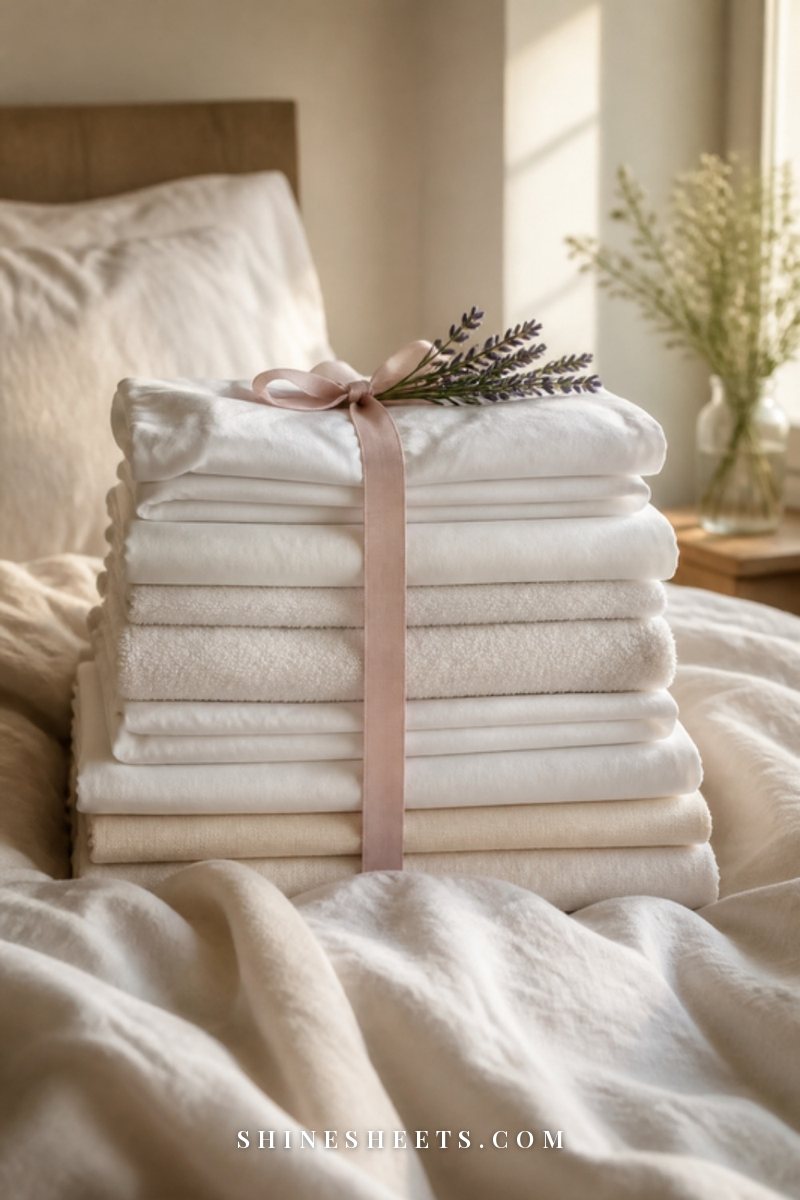
Now treat it like any other piece of linen. Fold the long sides in by thirds so the elastic is hidden inside. Then fold the strip from one end to the other in thirds (or in half and in half again) until it's the size you want for your shelf. A finished rectangle about the size of a large book (roughly 12 by 10 inches for a queen) fits most linen shelves and baskets nicely.
Give it one last smooth with your palm and you're done. The first one might take five minutes. By the third sheet, you'll have it down to two.
The Faster "Good Enough" Method
On busy laundry days, or for sheets that go straight back on the bed in a few days, a neat-ish fold is perfectly fine. This version takes about 45 seconds and still looks tidy on a shelf.
- Lay the sheet flat on the bed, elastic side up.
- Fold it in half lengthwise, lining up the corners roughly – don't bother nesting them precisely.
- Fold it in half again lengthwise, tucking the corner pockets inward as you go.
- Smooth out the biggest bumps with your hand.
- Roll or fold it from one end into a compact bundle.
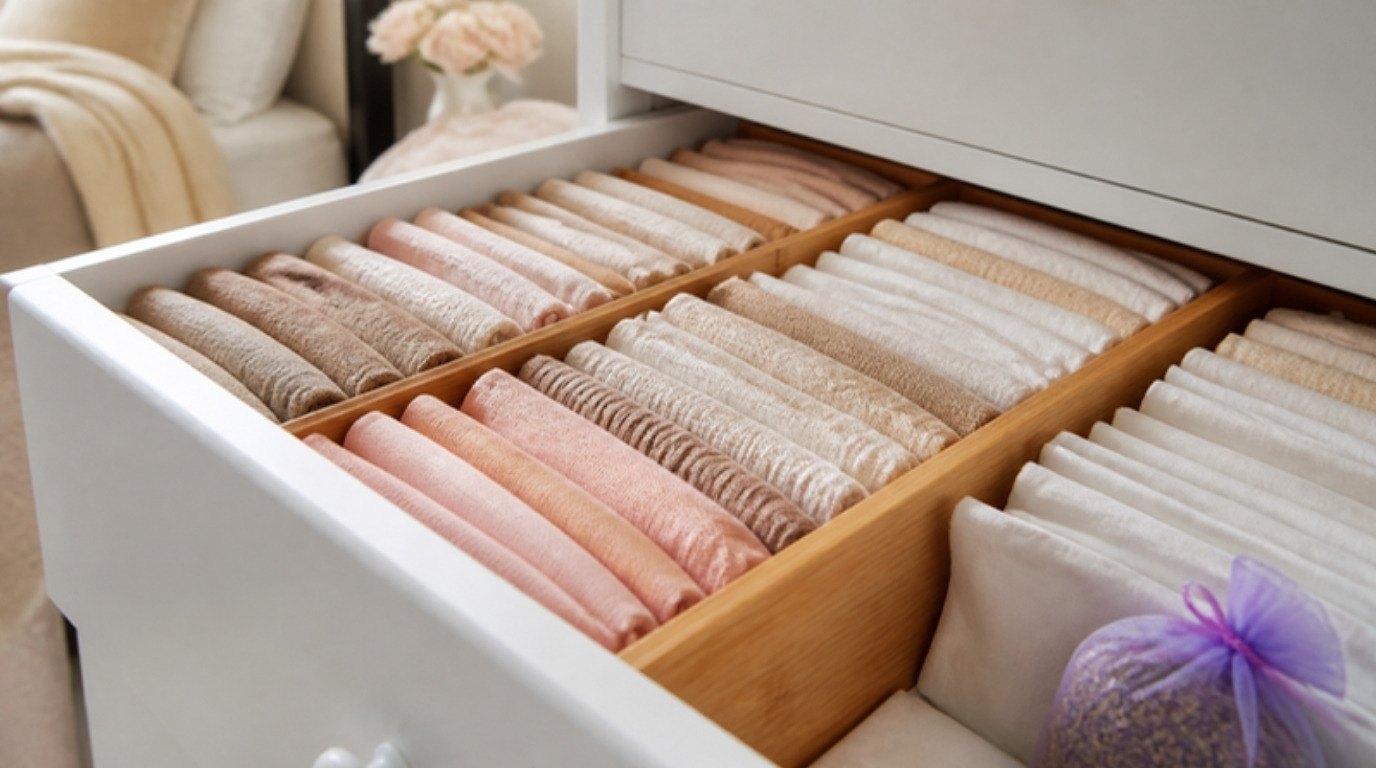
Rolling is especially handy for drawers and baskets: rolled sheets stand upright, so you can see every set at a glance. It won't win a neatness contest, but it's miles better than a ball, and honestly, nobody is grading your closet.
Folding on a Bed vs on a Table
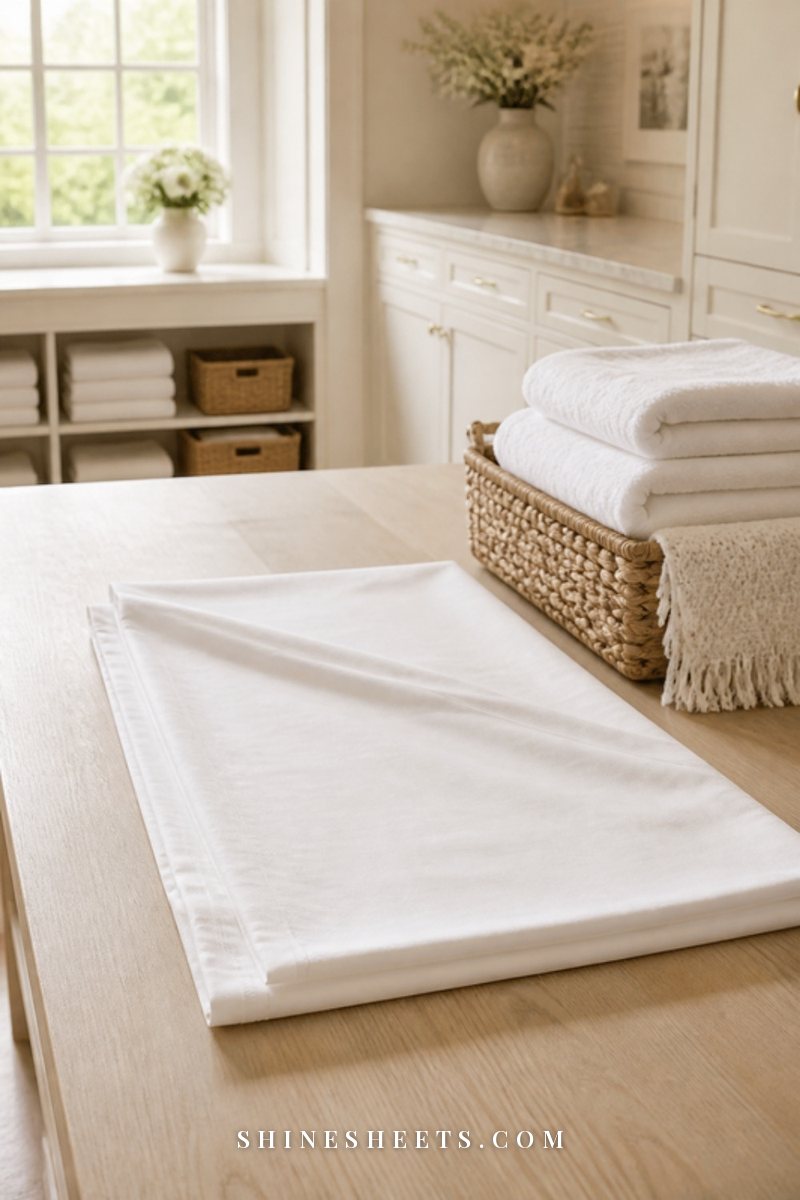
Both work, but they suit slightly different people.
- On a bed: Plenty of space, a soft surface and it's right where you are. The downside is that the duvet underneath makes it harder to get crisp edges. Fold on top of a smooth, made bed rather than a rumpled one.
- On a table: A hard, flat surface gives you the sharpest folds and the neatest rectangles. Just wipe the table first and check it's completely dry. A dining table or a laundry room counter is ideal.
- In the air: The classic method's first steps happen in the air, but most people find it easier to finish on a surface. You don't get extra points for folding everything mid-air.
If you're tall or have a high bed, the bed may be easier on your back. If you have a big table near the dryer, use it – you'll get better results with less effort.
How To Fold Flat Sheets and Pillowcases To Match
Once your fitted sheet is folded, fold the rest of the set to the same size so everything stacks evenly.
Flat sheet: Fold in half lengthwise, then in half lengthwise again. Then fold from one short end to the other, in thirds or halves, until it matches the size of your fitted sheet.
Pillowcases: Lay the pillowcase flat and fold it in half lengthwise. Then fold it in thirds from end to end. If you plan to store the set inside a pillowcase (see the next section), keep one pillowcase unfolded.
Duvet cover: Fold in half lengthwise, then in half again, then fold it into thirds or quarters end to end. Duvet covers are bulky, so they usually go on a separate shelf or at the bottom of the set stack.
Store Each Set Inside a Pillowcase
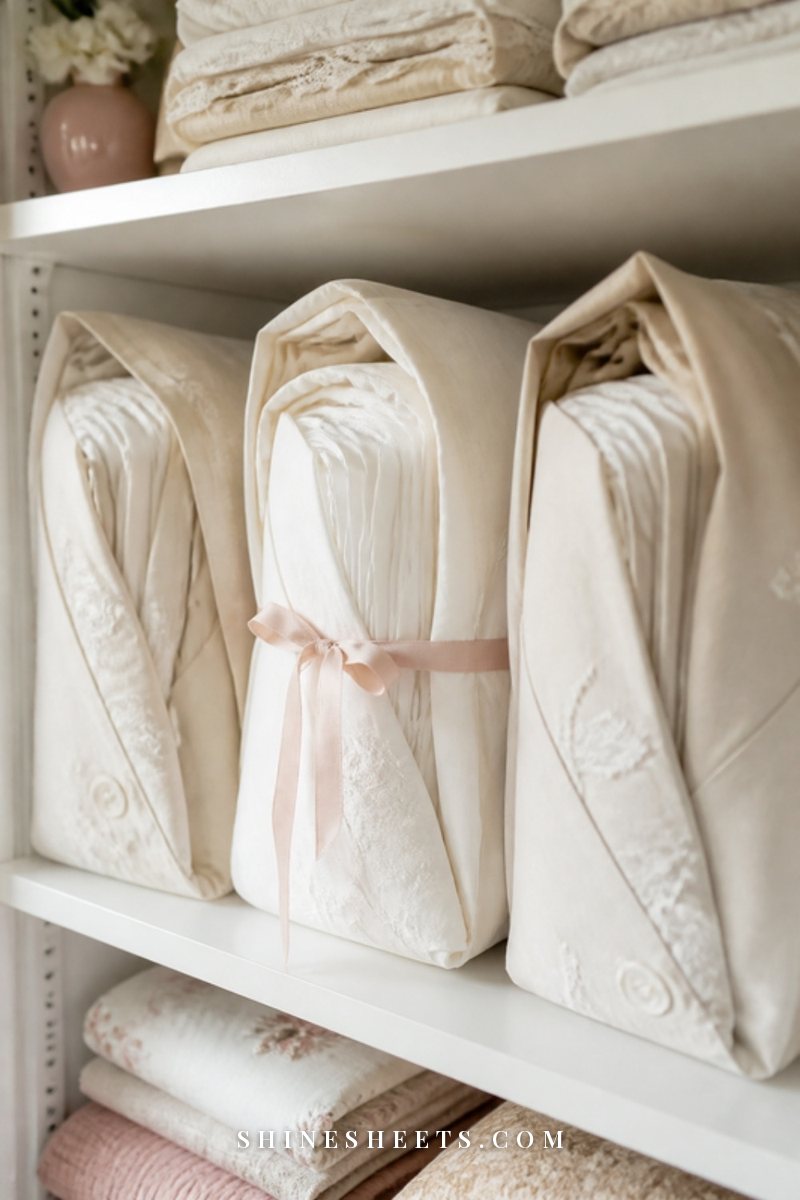
This is my favorite linen closet habit, because it makes changing the bed so much faster. Instead of hunting for a matching flat sheet and two pillowcases, you grab one tidy bundle and everything is there.
- Fold the fitted sheet, flat sheet and one pillowcase to roughly the same size.
- Stack them neatly.
- Slide the whole stack into the second pillowcase.
- Fold the open end of the pillowcase under, like an envelope flap.
- Place it on the shelf with the folded side facing out.
Each set becomes its own neat little package. If you have more than one bed in the house, tuck a small fabric tag or ribbon on each bundle (a pink one for the guest room, a cream one for your bed) so you can tell them apart at a glance.
Bedding Set Storage Table
Here's a quick guide to how big to fold each piece and where it lives best. Screenshot it if you're about to reorganize your shelves.
| Item | Fold size | Where to store |
|---|---|---|
| Fitted sheet | Book-sized rectangle (about 12 x 10 inches) | Inside its set pillowcase, linen closet shelf |
| Flat sheet | Same size as the fitted sheet | Inside its set pillowcase |
| Pillowcases | Folded in thirds, about 10 x 7 inches | One inside the set, spares in a small basket |
| Duvet cover | Large rectangle, folded in quarters | Separate shelf or a lidded fabric bin |
| Spare blankets and throws | Folded in thirds, then rolled | Top shelf, in a breathable basket |
| Off-season bedding | Folded flat | Under-bed storage bag or top shelf bin |
| Mattress protector | Folded like a fitted sheet | Bottom of the set stack or a labeled bin |
Organizing Your Linen Closet
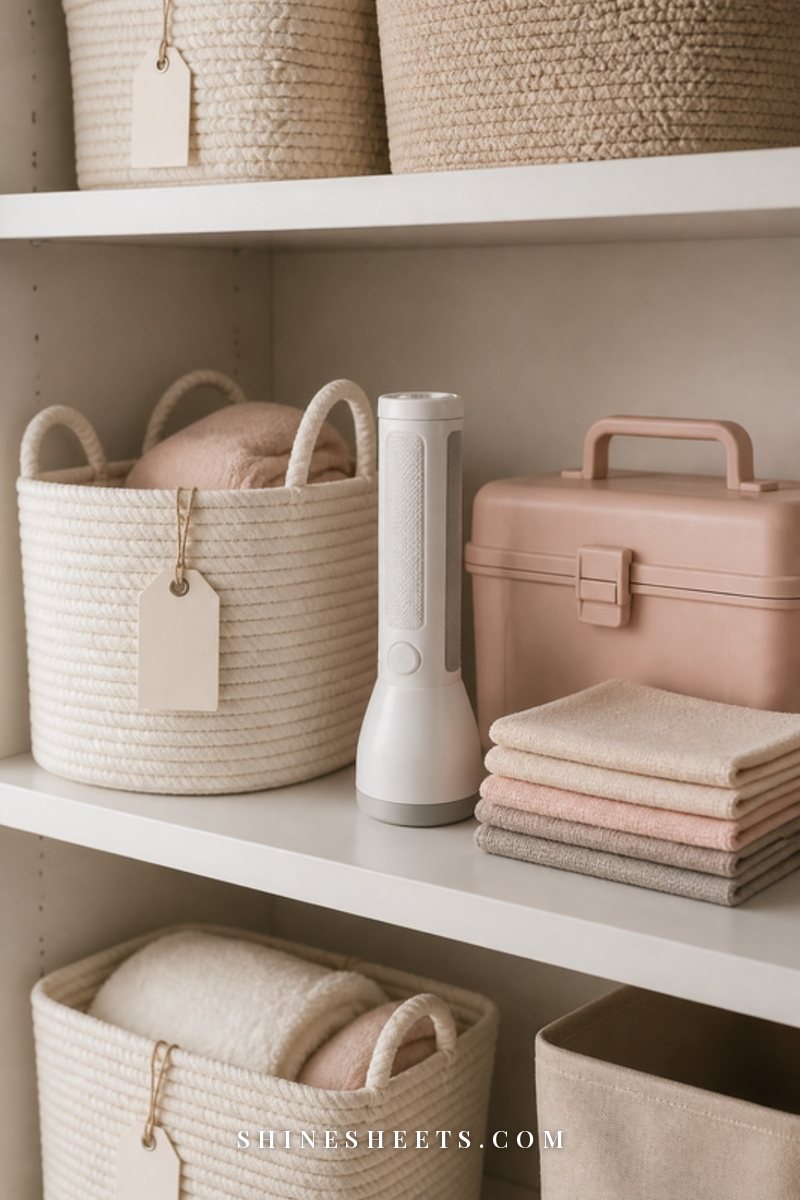
Neatly folded sheets look lovely, but they stay neat only if they have a clear home. A few ideas:
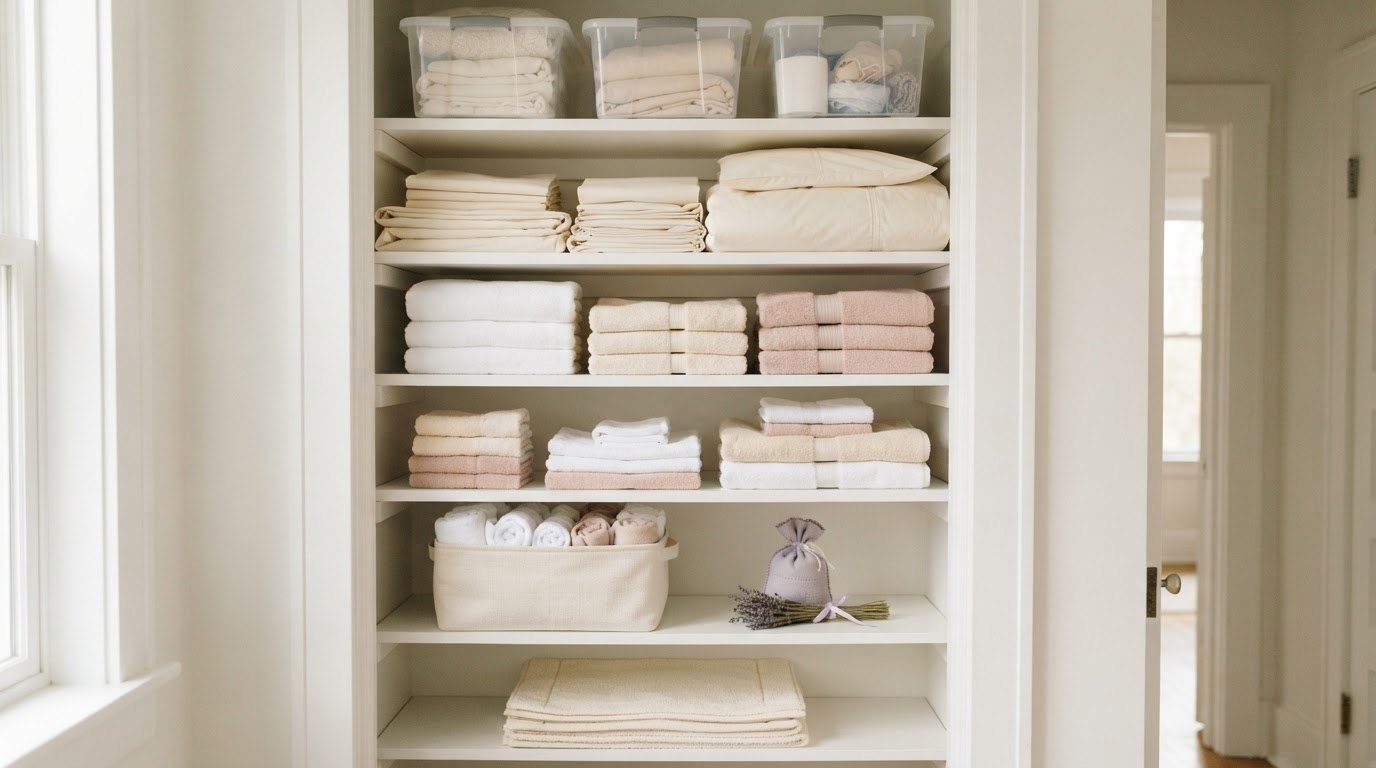
- Sort by room or bed size. One shelf section per bed keeps queen and twin sets from getting mixed up.
- Use shelf dividers. Clear acrylic shelf dividers clip onto shelves and stop tall stacks from toppling into each other.
- Add baskets for small items. Pillowcases, spare protectors and small throws are easier to manage in soft fabric storage baskets than loose on a shelf.
- Use bins for bulky items. Lidded linen closet storage bins keep off-season duvets and extra blankets dust-free.
- Keep the most-used set at eye level. Guest sets and spares can go higher up.
For a full closet makeover, my linen closet organization guide walks through zones, labels and what to keep on each shelf. And if your bedroom closet is the one doing double duty as linen storage, these tips on organizing a closet help you carve out a sheet section.
How Many Sheet Sets Do You Need?
Most homes do well with two to three sets per bed: one on the bed, one clean in the closet, and one in the wash (or a spare for unexpected guests and spills). More than that usually just means sheets sitting unused for years and taking up shelf space.
When you buy new sheets, choose a set you'll love sleeping in. A crisp white cotton percale sheet set is a classic pick: it washes well, folds crisply, stays cool, and mixes and matches with any other white bedding you already have. White sets also make it easy to swap individual pieces when one wears out.
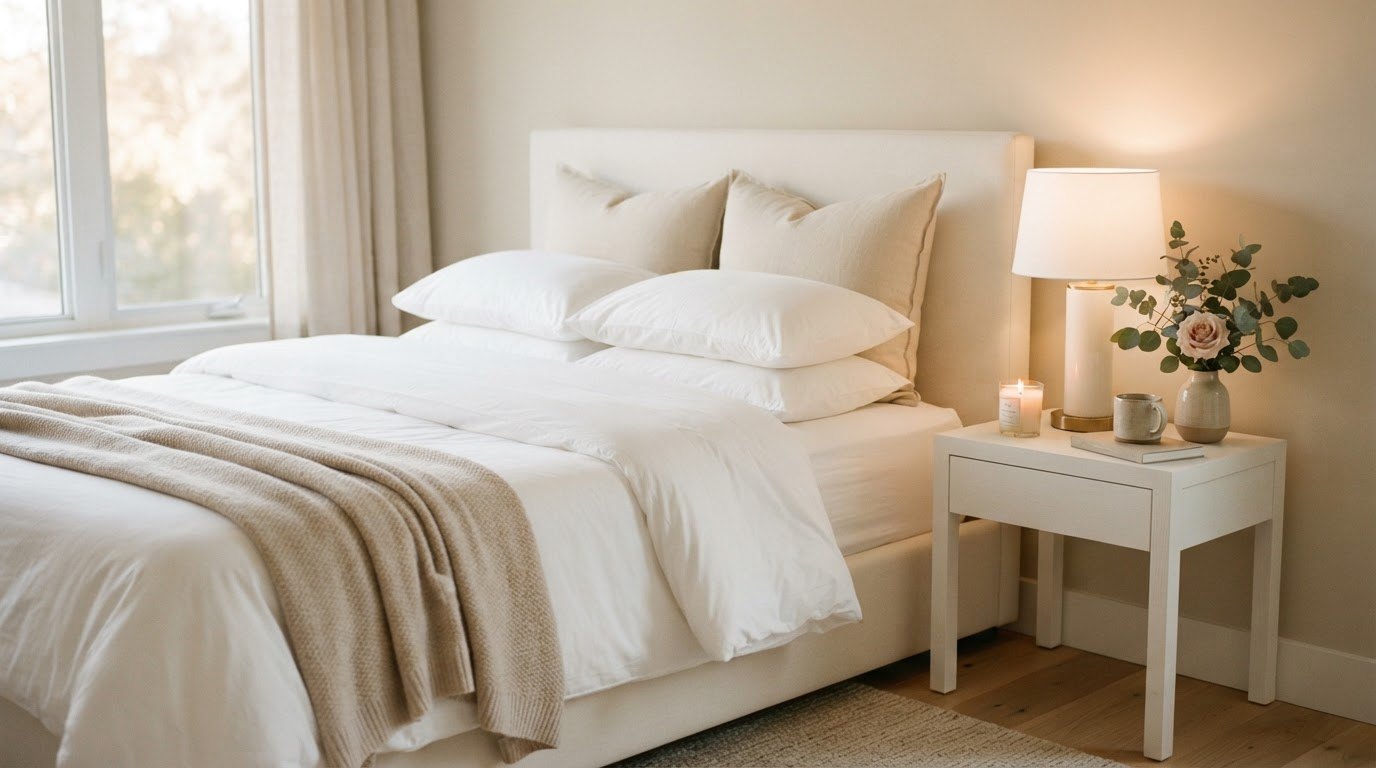
If you're building a calm, hotel-style bed, my guide to cozy bedroom ideas has more ways to layer sheets, throws and pillows so the whole room feels like a soft place to land.
Keeping Sheets Fresh in Storage
Even freshly washed sheets can start to smell a little stale after weeks in a closet. A few easy habits keep them smelling clean:
- Make sure sheets are completely dry before folding. Even slight dampness can lead to a musty smell. If they feel cool to the touch, give them another 10 minutes in the dryer.
- Let the closet breathe. Avoid packing shelves so tightly that air can't move. Leave a little space between stacks.
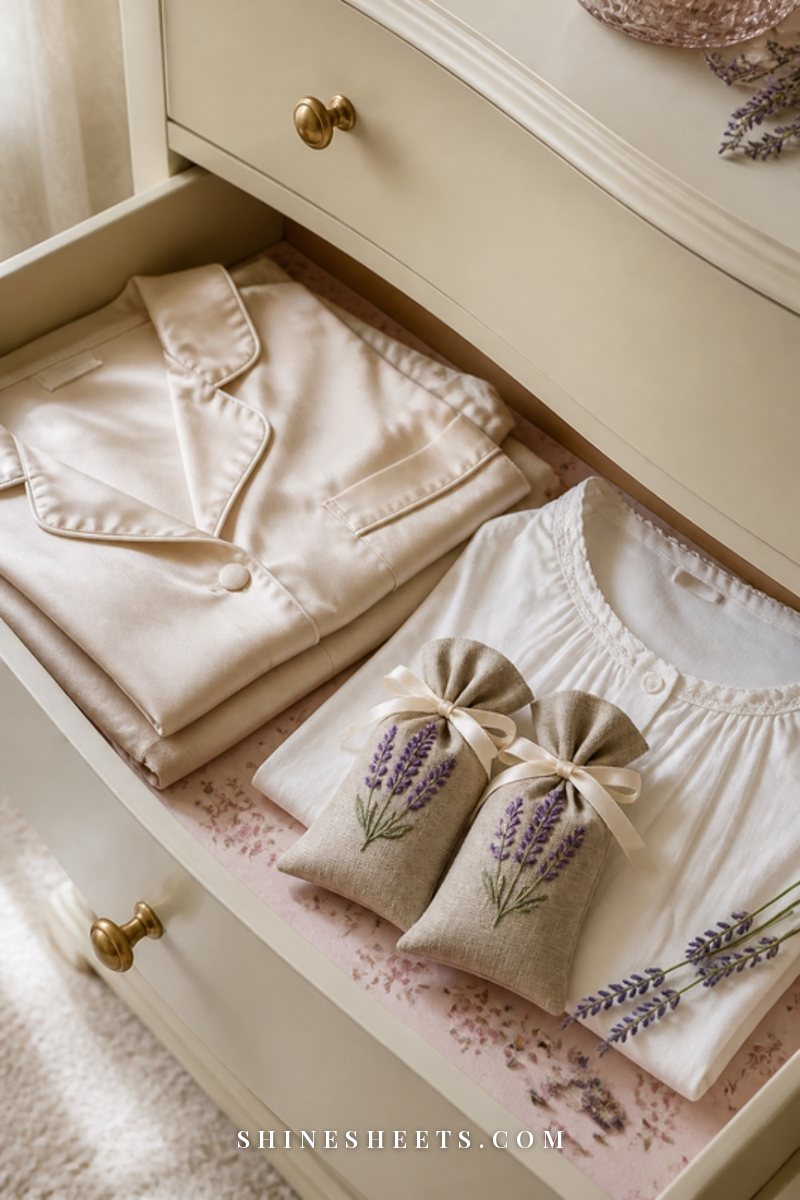
- Add a gentle scent. Tuck a few lavender sachets between sets. Replace or refresh them every few months when the scent fades.
- Rotate your sets. Put freshly washed sheets at the bottom of the pile and use from the top, so every set gets used regularly.
- Skip plastic bags for long-term storage. They trap moisture. Breathable cotton bags or fabric bins are better for off-season bedding.
- Air out stored sets. If a set has been sitting for months, toss it in the dryer on a cool setting for 10–15 minutes before using.
Troubleshooting Common Folding Problems
- "My corners won't stay tucked." Hold the nested corners together firmly with one hand while you lay the sheet down, and smooth outward from there.
- "The sheet ends up lopsided." Check that you nested corners from the same short end first. If you accidentally grab a corner from the long side, the fold twists.
- "It's still bulky." Deep-pocket sheets have more fabric in the corners. Fold the elastic edge in a little further before folding into a rectangle.
- "Jersey sheets slide everywhere." Fold them on a table rather than the bed, and roll them instead of stacking.
- "It's so wrinkled." Fold straight out of the dryer and smooth with your palms. For linen, embrace a little texture – it's part of the charm.
Folding Tips for Different Fabrics
The classic method works for every fitted sheet, but each fabric has its own small quirks:
- Cotton percale: The easiest to fold. It's crisp, holds a sharp edge and stacks beautifully. Fold it warm for the smoothest finish.
- Cotton sateen: Slightly slippery and silky, so the corners can slide apart. Hold the nested corners a beat longer before laying the sheet down.
- Linen: Linen naturally wrinkles, and that relaxed look is part of its appeal. Fold it loosely in larger rectangles so you don't press deep creases into it, and store it where it won't be squashed under heavy stacks.
- Jersey and bamboo: Soft and stretchy, these shift around while you fold. Work on a table, keep your folds simple, and consider rolling instead of stacking.
- Flannel: Thick and warm, so it takes up more room. Fold into fewer, larger sections and give flannel sets their own shelf for the colder months.
Whatever the fabric, check the care label before washing and drying, since heat settings affect both shrinkage and how smoothly a sheet folds afterward.
Final Thoughts
Folding a fitted sheet is one of those small life skills that feels silly to practice and wonderful to have. After a few tries, the corner tuck becomes second nature, and opening your linen closet starts to feel calm instead of chaotic.
Start with one set this week. Fold it, slip it into its pillowcase, and put it on the shelf. That little tidy bundle is a quiet promise to your future self that changing the bed will be easy.