Bad habits aren't proof that you're lazy or weak. They're usually clever little shortcuts your brain built to get you something you needed – comfort, rest, a tiny hit of fun, a break from a feeling you didn't want to sit with. That's exactly why gritting your teeth rarely works for long: you're fighting a need, not a flaw.
The good news is that the same system that built the habit can take it apart. Once you see what sets it off and what it's quietly giving you, you can keep the need and swap the routine. Less shame, more strategy.
This guide is all about how to break bad habits without relying on willpower alone. You'll learn how habits work in plain words, why willpower runs out, a ten-step method that starts with simply noticing, a habit swap planner table you can fill in for your own habits, and real examples – from mindless phone use and nail biting to hitting snooze, overspending, procrastinating and late nights.
It took me a long time to understand that the habits I was hardest on myself about were the ones doing the most emotional work for me. Be kind to yourself as you read. You're not starting from zero – you're starting from information.
How Habits Actually Work (In Plain Words)

Every habit, good or bad, runs on the same simple loop. Once you can name the four parts, you stop feeling at the mercy of it:
- Cue – the trigger. A time of day, a place, a person, an emotion, or the thing you just did. (Sitting down on the couch after dinner is a classic.)
- Craving or feeling – the itch the cue creates. Boredom, restlessness, stress, loneliness, tiredness, a wish to feel something nicer right now.
- Routine – the behavior itself. Picking up the phone, biting a nail, opening a shopping app, pressing snooze.
- Reward – what you get. A small distraction, relief, a burst of novelty, a few more minutes of not dealing with something.
Your brain doesn't care whether the routine is good for you in the long run. It only remembers that this routine reliably delivered that reward after that cue. Repeat it enough and it becomes automatic – you do it before you've even decided to.
Here's the part that changes everything: you can't really delete a loop, but you can rewire one piece of it. Change the cue, satisfy the feeling another way, swap the routine, or make the reward less appealing. Every step later in this guide works on one of those four parts.
Why Willpower Alone Doesn't Work
Willpower is real, but it's a terrible long-term strategy. It's at its strongest when you're rested, fed and calm – and at its weakest exactly when bad habits tend to show up: late at night, after a hard day, when you're anxious or tired or bored out of your mind.
Relying on willpower means fighting the same battle every single day, often at your lowest moment. No wonder it feels like you keep losing. A few other reasons it falls short:
- It ignores the need. If your phone is how you decompress, banning it leaves the stress with nowhere to go, and the habit comes back louder.
- It leaves the environment untouched. If the phone is on your pillow and the shopping app is on your home screen, you're asking yourself to resist temptation that's literally in your hand.
- It runs on shame. "Just stop it" thinking makes every slip feel like a character verdict, and shame is one of the most reliable cues for doing the habit again.
People who seem disciplined usually aren't resisting more – they've built a life where they have to resist less. If you'd like to go deeper on that idea, my guide on how to be more disciplined without burning out pairs beautifully with this one.
How To Break Bad Habits: 10 Steps That Actually Work
Work through these in order the first time. Later, you can come back to whichever step your habit needs most. You don't have to do all ten in a week – one habit, one step at a time is plenty.
1. Track the Habit for Three Days
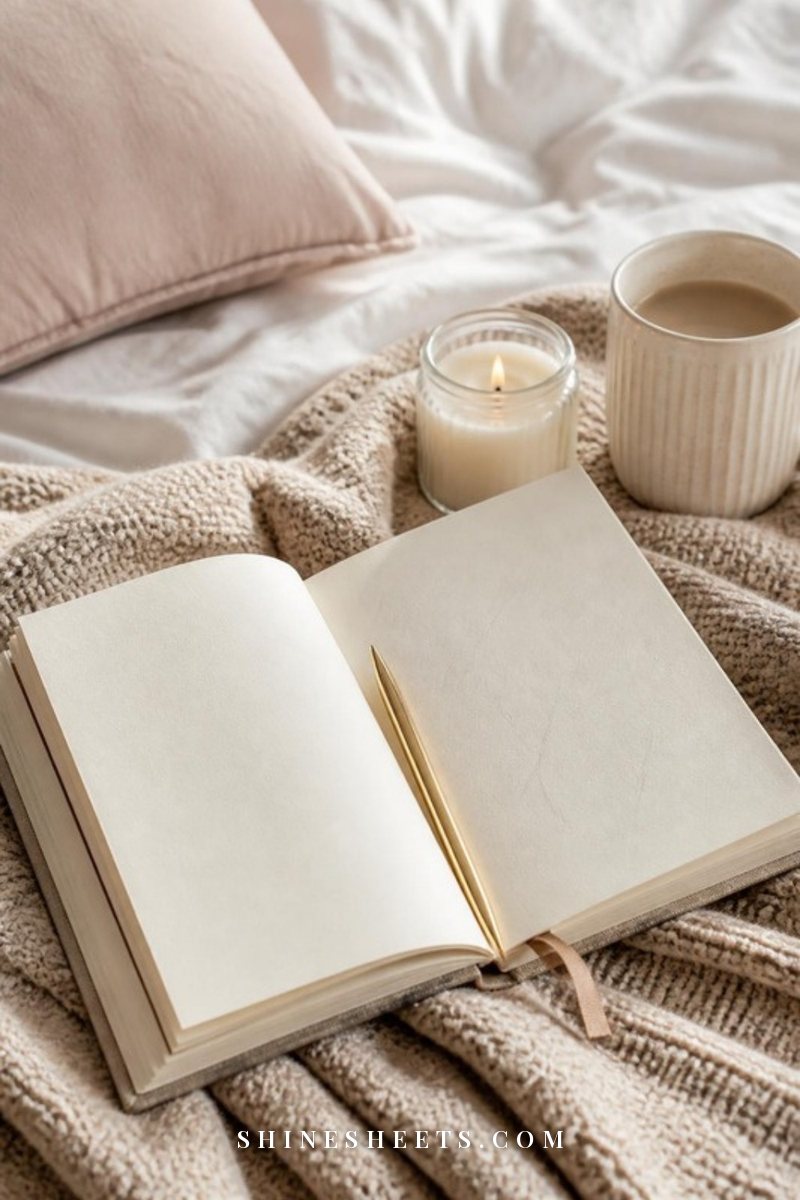
Before you change anything, watch. For three ordinary days, write down every time the habit happens (or every time you notice the urge). Don't try to stop – just collect data. A small cream linen notebook you keep in your bag or on your nightstand makes this feel calmer than a notes app, which is often where the habit lives anyway.
For each moment, jot down four quick things:
- When: the time and what you were doing just before.
- Where: the room or place.
- Who: alone or with someone.
- How you felt: one word is enough – bored, tired, wired, lonely, stressed.
Three days is short enough to stick with and long enough to show a pattern. Most people discover their habit isn't random at all. It clusters around a few specific moments – and those moments are where you'll do the real work.
2. Find the Real Need Behind It
Look at your notes and ask one question for each entry: what was this habit giving me in that moment? Most bad habits are meeting one of a handful of needs:
- Rest – you're tired and the habit is a way to switch off.
- Relief – something feels uncomfortable (a task, a feeling, a conversation) and the habit lets you escape it.
- Stimulation – you're bored or understimulated and want a little spark.
- Comfort or connection – you feel lonely, low or unseen.
- Control – life feels messy and the habit gives you something to do with your hands or your money.
Name it plainly. "I reach for my phone at 10 p.m. because it's the only time all day nobody needs anything from me" is a far more useful sentence than "I have no self-control." The first one gives you something to work with.
3. Replace It Instead of Erasing It
A gap where a habit used to be doesn't stay empty for long. The habit you're trying to quit will rush right back into it. Instead, keep the cue and the need, and give yourself a new routine that delivers a similar reward.
The simplest formula: When [cue] happens and I feel [need], I will [new routine] instead. For example: "When I sit down on the couch after dinner and feel like switching off, I'll put on one podcast episode and make a cup of tea instead of opening social apps."
The replacement doesn't have to be virtuous. It just has to be good enough to satisfy the need and a little better for you than the old routine. A slightly better swap you'll actually do beats a perfect one you won't.
4. Add Friction to the Old Habit

Friction is anything that makes the old habit a few seconds harder. It sounds tiny, but a few seconds is often exactly the window you need for the automatic part of your brain to hand over to the thinking part.
- Charge your phone outside the bedroom, or close it in a phone lock box for set hours.
- Log out of shopping apps and delete saved card details so every purchase needs a few extra steps.
- Unsubscribe from sale emails that land right when you're tired.
- Move tempting things out of sight – into a high cupboard, another room, or simply a drawer.
- Put the TV remote in a basket across the room if you tend to start "just one more" episode.
And do the opposite for the habit you want: make it easier. Leave the book on your pillow, the water bottle on your desk, the walking shoes by the door. Friction for the old routine, a clear path for the new one.
5. Reduce Your Triggers
If your tracking showed that the habit clusters around certain cues, see which ones you can simply avoid or soften. You don't have to be brave in every situation – sometimes the smartest move is not walking into it.
- If you overspend when you browse online stores to relax, find a different way to relax on those evenings.
- If you procrastinate most when your desk is cluttered, clear it at the end of each day so tomorrow starts clean.
- If late nights happen because one more show autoplays, switch autoplay off.
- If a certain group chat leaves you anxious and reaching for your phone every two minutes, mute it for a few hours.
Some triggers are emotions, and you can't avoid those. But you can catch them earlier. Tiredness and stress are the two biggest cues for almost every bad habit, so looking after your sleep and building small calm moments into your day quietly weakens everything on your list.
6. Change the Story You Tell About Yourself
Habits stick best when they match who you believe you are. If you think of yourself as "someone who's always on her phone," every evening on the couch with your phone just confirms the story. Flip it. Pick a gentle, believable identity and let your small actions prove it.
Try finishing this sentence: "I'm someone who…"
- "I'm someone who protects her evenings."
- "I'm someone who takes care of her hands."
- "I'm someone who gets up with the first alarm."
- "I'm someone who thinks before she buys."
Then, each time you choose the new routine, count it as a vote for that version of you. You don't need to believe it fully on day one. You just need a handful of votes. The identity grows from the evidence.
7. Start With Tiny Wins
Big, dramatic quits ("no phone after 8 p.m. ever again!") tend to collapse by Thursday. Start so small it feels almost silly. Instead of quitting snooze forever, aim to get up with the first alarm twice this week. Instead of no online shopping for a year, wait 24 hours before buying anything over a set amount.
Tiny wins matter because they build trust with yourself. Every time you keep a small promise, the next one feels more doable. A simple habit tracker journal can help here – a little row of filled-in boxes is a surprisingly motivating thing to look at.
8. Use Habit Stacking
Habit stacking means attaching your new routine to something you already do every day without thinking. The existing habit becomes the cue for the new one, so you're not relying on memory or motivation.
The formula: After I [current habit], I will [new routine].
- After I brush my teeth at night, I'll put my phone on the charger in the hallway.
- After I pour my morning coffee, I'll open the one task I've been avoiding for five minutes.
- After I sit down on the bus, I'll put on lotion instead of picking at my cuticles.
This is one of my favorite ways to build something new, and if you want more on making good routines stick, my guide on how to create new habits walks through it in more detail.
9. Plan for Slips (and Never Miss Twice)
You will slip. Everyone does. A slip is not a reset to zero; it's one data point in a long line of better days. The habit that ruins progress is rarely the slip itself – it's the "well, I already blew it" spiral that follows.
Use a simple rule: never miss twice. Miss once, and the very next chance you get, do the new routine again – even a tiny version of it. One off day is an accident. Two in a row starts to become a pattern again.
It also helps to plan ahead for your hardest moments. Write one or two "if–then" plans: "If I've had a terrible day and want to shop to feel better, then I'll put things in my cart, close the app and decide tomorrow." When a slip happens anyway, talk to yourself the way you'd talk to a friend. My guide on self-compassion basics is a lovely companion for exactly these moments.
10. Notice and Celebrate Progress
Your brain learns through reward, so give the new routine a reward of its own. It doesn't need to be big: a satisfying tick in your tracker, a favorite tea, a minute of feeling proud before you move on. At the end of each week, look back at your notes and write one line about what got easier.
Progress with habits is often quiet. The urge shows up less often, or you catch it a few seconds sooner, or you slip and get back on track by lunchtime instead of next Monday. All of that counts.
The Habit Swap Planner
This is the heart of the method in one place. Pick one habit, fill in each column, and you'll have a full plan in five minutes. Here's how it looks with six common habits – screenshot it, copy the columns into your notebook and add your own row underneath.
| Bad habit | Cue | Real need | Replacement | Friction to add |
|---|---|---|---|---|
| Late-night phone time | Getting into bed | Switching off, quiet time alone | A chapter of a book or a short audiobook | Phone charges outside the bedroom |
| Nail biting | Reading, watching TV, waiting | Calming restless hands | Fidget ring, hand cream, stress ball | Keep nails filed short and smooth |
| Hitting snooze | Alarm goes off in a dark room | More rest, a softer start | Light first, then sit up and sip water | Alarm across the room |
| Overspending online | Tired evenings, sale emails | A little treat, novelty | A 24-hour wishlist, a free small pleasure | Delete saved cards, unsubscribe |
| Procrastinating | Opening a hard or vague task | Avoiding discomfort or overwhelm | Five minutes on the smallest first step | Close all tabs except the task |
| Staying up too late | Autoplay, "me time" after a busy day | Time that feels like your own | Earlier wind-down ritual you look forward to | Autoplay off, lights dimmed at a set time |
The most important column is real need. If your replacement doesn't meet that need, you'll drift back to the old habit no matter how much friction you add. When a swap isn't working, check that column first.
Common Bad Habits and How To Swap Them
Here's how the method looks in real life for six habits that come up again and again. Borrow whatever fits and adjust the rest.
Mindless Phone Use

Mindless phone time usually serves rest or stimulation. Track when it happens most – for many of us, that's in bed, on the couch, and the first minutes after waking. Pick one of those moments to start.
- Move social apps off your home screen into a folder on the last page.
- Charge your phone outside the bedroom and keep a book or a journal on your nightstand instead.
- Set a "phone parking" spot for evenings – a basket or box by the door.
- Give your hands and mind something else to do: tea, a short stretch, a chapter, a podcast with the screen face down.
If nighttime is your biggest struggle, my guide on how to put your phone down before bed has a whole evening plan for it.
Nail Biting
Nail biting and cuticle picking are usually about calming restless hands or a restless mind. They often show up while reading, watching something, waiting or concentrating.
- Keep your nails filed short and smooth so there are no rough edges asking to be fixed.
- Wear a spinner fidget ring and turn it whenever you notice your hand moving toward your mouth.
- Put hand cream on during your most common trigger moments – the slipperiness alone is a gentle interruption.
- Keep cuticle oil on your desk and by the couch, so caring for your hands becomes the new routine.
Expect this one to take a few weeks. Each time you catch your hand halfway, that's a win, even if it gets there sometimes.
Hitting Snooze

Snoozing usually means you need more rest, or that mornings feel harsh. Pressing the button feels like kindness, but broken sleep in nine-minute pieces rarely leaves you more rested.
- Move your alarm across the room so you have to stand up to switch it off.
- Try a sunrise alarm clock that slowly brightens before the sound, so waking up feels softer and less like an ambush.
- Set one alarm instead of three, at the time you actually plan to get up.
- Give yourself something to look forward to in the first ten minutes – a warm drink, a slow stretch, light on your face.
And look at the evening side too. If you're snoozing every day, you may simply need an earlier night (more on that below).
Overspending
Overspending is often about a little treat, novelty or comfort after a hard day. That's a completely valid need – the trick is meeting it in a way your bank account can live with.
- Keep a running wishlist and wait 24 hours (or a full week for bigger items) before buying anything.
- Delete saved cards and log out of your most tempting shopping apps.
- Unsubscribe from sale emails and mute brand accounts that make you feel behind.
- Make a small list of free treats for the moments you'd normally shop: a long bath, a walk, a library book, a new playlist.
If you'd like to go further, giving your money a simple monthly plan takes away a lot of the guesswork, and saying yes to treats inside that plan feels much better than the guilt afterward.
Procrastinating
Procrastination isn't really about time management. It's usually about avoiding a feeling – overwhelm, boredom, fear of doing it badly. The habit loop: you open the task, feel uncomfortable, and escape to something easier.
- Break the task into a first step so small it's almost embarrassing ("open the document and write the title").
- Set a flip timer cube for ten minutes and promise yourself you can stop when it rings.
- Close every tab and app that isn't the task.
- Do the hardest task at the time of day you feel most like yourself, not when you're already drained.
There's a whole toolkit for this in my guide on how to stop procrastinating, full of tricks for the moments you feel completely stuck.
Staying Up Too Late
This one has a name some people use – revenge bedtime procrastination – and the need behind it is real: when your day belongs to everyone else, late night is the only time that feels like yours. Cutting it without replacing it rarely works.
- Protect a small slice of "me time" earlier in the evening, even 20 minutes, so it doesn't all get pushed to midnight.
- Switch off autoplay and decide how many episodes you'll watch before you start.
- Set a gentle wind-down alarm an hour before bed – the cue to dim lights, make tea and get comfortable.
- Make bedtime itself something you look forward to: fresh sheets, a candle you love (blown out before sleep), a few lines in your journal.
My own evening tea followed by a few minutes of journaling started as a replacement for late-night screen time, and it ended up being the part of the day I protect the most.
When To Ask for Support
Most everyday habits respond well to the steps above. But some habits are tied to deeper things, and it's not a failure to want help with them. It's a smart, caring choice.
Consider talking to your doctor or a licensed therapist if:
- The habit is causing physical harm, such as skin picking or hair pulling that leaves marks, wounds or bald patches.
- You feel unable to stop despite really wanting to, and it's been going on for a long time.
- The habit is connected to alcohol, substances, gambling, or spending that's putting you into serious debt.
- It seems tied to anxiety, low mood or a past experience that feels heavy to carry alone.
Some repetitive habits (like hair pulling and skin picking) have specific, well-studied approaches that a professional can guide you through. Getting support doesn't replace the work you're doing – it makes it lighter.
Final Thoughts
Breaking a bad habit isn't about becoming a stricter person. It's about getting curious, meeting the real need behind the habit, and making the better choice a little easier than the old one. Start with three days of noticing and one swap. That's enough.
Some weeks will feel like progress and some will feel like nothing has changed. Keep casting small votes for the woman you're becoming. They add up faster than you think, and you deserve the patience you'd give anyone you love.