Hosting anxiety rarely has much to do with the guests. It comes from the story running in your head before they arrive: the home isn't nice enough, the evening won't be fun enough, and you won't be ready in time. The good news is that this story is usually louder than the truth, and you can turn the volume down without becoming a different kind of person.
Most people who feel nervous before hosting are the ones who care most about making others comfortable. That care is a lovely quality. It just needs a calmer plan to lean on, so it can show up as warmth instead of panic. I'm prone to anxiety myself (mostly well managed, with the odd wobbly day), and it took me a while to see that the dread before guests is a feeling to look after, not a verdict on my hosting.
This guide is all about hosting anxiety and how to feel calm when guests are coming: why it happens, how it shows up, a table that compares your worries with what guests actually notice, a calm plan for the days before, a 5-minute reset for the day itself, five recoveries for when something goes wrong, and how to rest afterward. If you're looking for the cleaning side, my guide to getting your home guest-ready covers that. This one is about your nerves.
What Hosting Anxiety Really Is
Hosting anxiety is the worry, tension and pressure you feel before (and sometimes during) having people over. It can show up for a big holiday gathering or for a single friend coming over for tea. It isn't a diagnosis. It's a very common mix of anticipation, self-judgment and the wish for everything to go well.
The three worries that come up most often sound like this:
- "Is my home good enough?" The couch is old, the hallway is small, and there's a mark on the wall you had stopped seeing until now.
- "Will people enjoy themselves?" You picture awkward silences, a bored face, someone leaving early.
- "Will I run out of time?" The to-do list keeps growing, and the clock seems to move faster than usual.
Notice that all three are predictions. None of them has happened yet. That matters, because a prediction can be questioned, softened and planned around. A feeling that pretends to be a fact is much harder to argue with.
Why Hosting Makes You So Nervous
There's usually more than one thread pulling at you. Knowing which one is loudest helps you pick the right tool.
Perfectionism Raises the Bar Too High
If part of you believes the evening has to be flawless to count, every small detail turns into a test: the napkins, the timing, the music, the bathroom towels. Perfectionism likes to hide inside "high standards," but the giveaway is how it feels: tight, urgent and never quite finished. My article on letting good enough be enough goes deeper, and the good-enough standard further down is built on the same idea.
You Want To Be Liked
Hosting puts your home, your taste and your company on display all at once. It's natural to want people to leave thinking well of you. The trouble starts when their enjoyment feels like your sole responsibility. Guests are adults. They bring their own moods, their own tiredness and their own conversation, and that part was never yours to control.
A Small Space Feels Like a Spotlight
In a small apartment there's nowhere to hide the laundry basket, and guests can see the kitchen from the sofa. That can feel exposing. Small spaces also have a real advantage, though: they pull people close, and closeness is what most guests remember. If space is your main worry, my guide to hosting holiday guests without a guest room has practical layout ideas.
Old Memories of Stressful Gatherings
If you grew up around tense holidays, or around someone who rushed about stressed before visitors, your body may have learned that "guests are coming" means "something is wrong." That isn't anyone's fault. It simply means your nervous system is running an old script, and it can learn a new one with a bit of practice.
How Hosting Anxiety Shows Up
Sometimes the anxiety is obvious. Other times it hides inside behavior that looks productive. These are the most common signs:
- Racing thoughts. Mental lists looping at night, imagined conversations, worst-case scenes playing on repeat.
- Over-cleaning. Scrubbing grout nobody will look at, re-folding towels three times, wiping the inside of a cupboard that will stay closed all evening.
- Snapping at people you love. A short tone with whoever is helping, irritation at small questions, then a wave of guilt.
- Body tension. Tight shoulders, a clenched jaw, a fluttery stomach, shallow breathing.
- Sleep trouble. Lying awake the night before, or waking up early with your heart already busy.
- Wanting to cancel. A sudden urge to send a "so sorry, something came up" message, even though you were looking forward to it.
If you recognized yourself in several of these, you're in very good company. None of them mean you're bad at hosting. They mean your body is trying to protect you from a danger that isn't really there.
Worry vs Reality: What Guests Actually Notice
This table is the heart of the guide. When a worry shows up, find it in the left column and read across. Screenshot it and glance at it on the morning of your gathering.
| Your worry | What guests actually notice | Calm reframe | Small action |
|---|---|---|---|
| "My home isn't nice enough." | Warm light, a place to sit, a host who seems glad to see them | People come for me, not for the furniture. | Switch on lamps and LED candles 15 minutes before arrival. |
| "There's clutter everywhere." | The surfaces they use: the table, the sofa, the bathroom sink | Guests see the three spots they touch. | Clear only those three spots and put the rest in one basket. |
| "The bathroom isn't spotless." | A clean towel, soap and toilet paper within reach | Fresh and stocked beats perfect. | Hang one fresh hand towel and refill the soap. |
| "There will be awkward silences." | Almost nothing; pauses feel longer to the host than to guests | A pause is just people breathing. | Keep one easy question ready, like "What's been good this week?" |
| "Dinner will be late." | Whether they feel welcome while they wait | Waiting with a warm drink is still part of the evening. | Offer tea or coffee and a seat the moment they arrive. |
| "I'll look stressed." | Your smile at the door and whether you sit down with them | Guests mirror my mood, so I can lead with calm. | Sit with them for the first ten minutes, even if something is unfinished. |
| "Someone won't have fun." | Their own day, their own mood, the people they're talking to | Their evening isn't mine alone to carry. | Check in once, kindly, then let it go. |
What I find most comforting about this table is the middle column. Guests rarely notice the things we lose sleep over. They notice how they felt, and how they feel depends far more on warmth than on polish.
Before Guests Arrive: 4 Calm Steps
Most hosting anxiety lives in the days before, so this is where a little planning pays off the most. These four steps take the guesswork out of getting ready.
1. Name the Feeling You Want Guests To Have
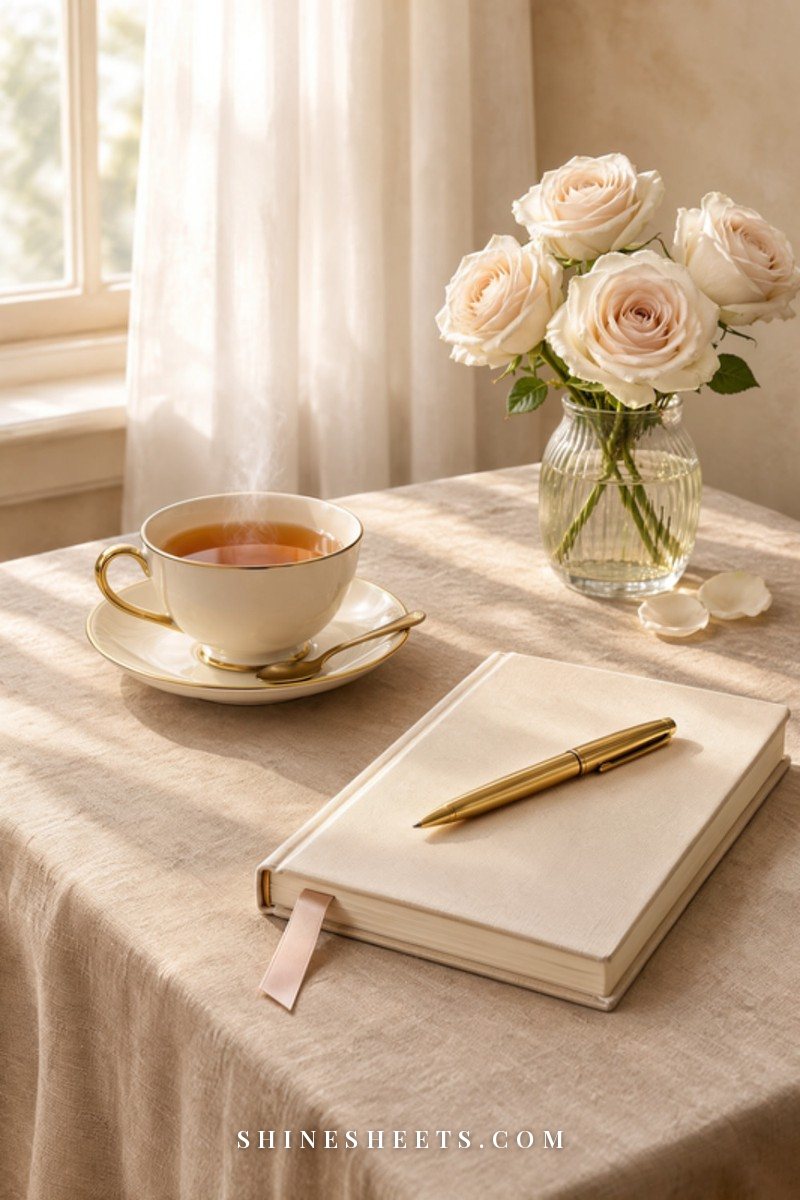
Before you write a single to-do, decide on one feeling. Relaxed. Welcome. Cared for. Light-hearted. Pick one word and write it at the top of your plan. Then run every task through it: does this help guests feel relaxed? Re-grouting the shower doesn't. A soft lamp in the corner and a clear seat for everyone does.
This tiny step changes the whole list. It moves the focus from "How will I be judged?" to "How can I help people feel good?", and that second question is much kinder to answer. I like doing it in my journal after evening tea, when the day is quiet and the stakes feel smaller.
2. Set a Good-Enough Standard
A good-enough standard is a short, written description of "ready." Without one, the finish line keeps moving. For a relaxed evening with friends, it could look like this:
- Entryway clear, with a spot for coats and shoes.
- Table wiped and set with something simple, like a soft cream linen table runner and a stack of plates.
- Bathroom: fresh towel, full soap, empty bin.
- Living room: cushions plumped, blankets folded, lamps on.
- Kitchen: sink or dishwasher empty, so there's room to tidy later.
That's five lines. When they're done, you're done. Anything extra is a choice, not a requirement. If you catch yourself adding "and also clean the oven door," ask whether it serves the feeling you chose in step one.
3. Build a Timeline That Ends an Hour Early
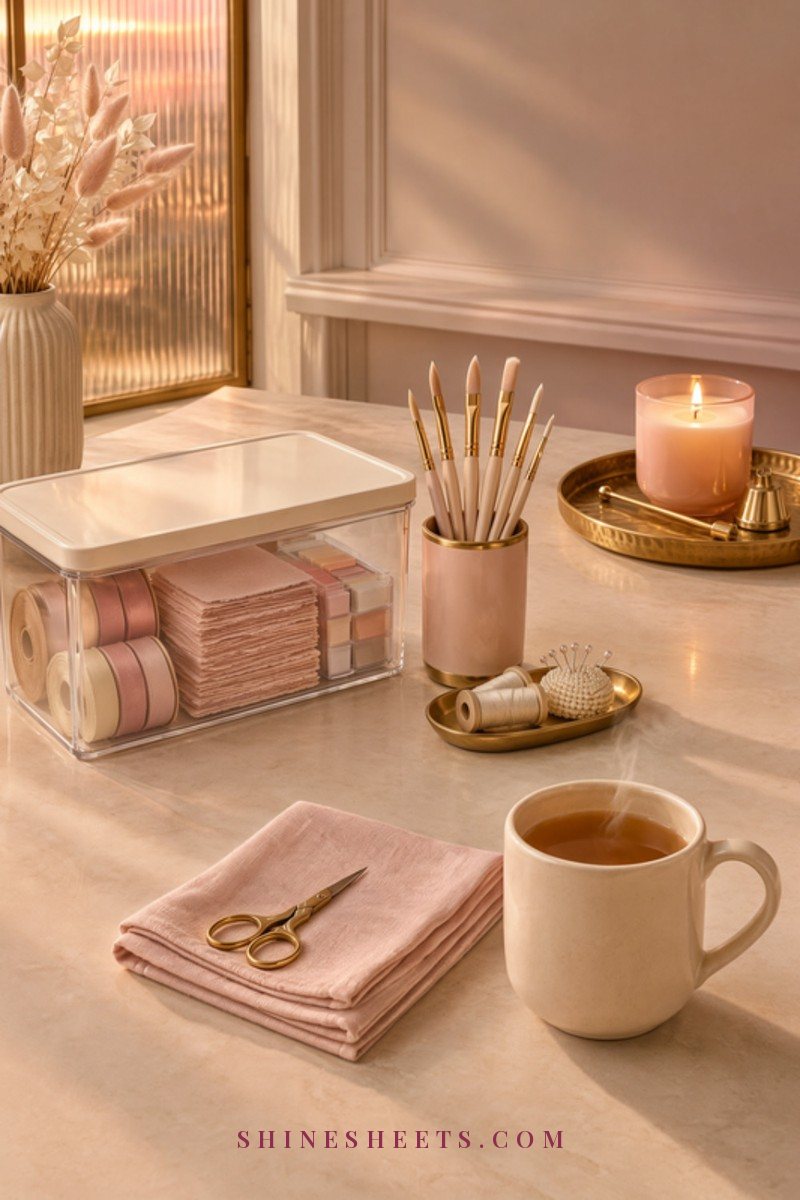
The secret to a calmer arrival is a plan that finishes one full hour before the doorbell rings. That hour is your buffer. If everything goes smoothly, it becomes time to shower, dress slowly and sit down with a cup of tea. If something runs late, the buffer absorbs it without panic.
Working backward is easiest. Write down the arrival time, subtract an hour, and spread small tasks across the days before. An undated weekly planner works well here because you can start it on any day of any month. A simple shape for an evening gathering:
- Three days before: Confirm numbers, write your good-enough standard, and decide what you'll buy and what guests will bring.
- Two days before: Do the shopping, set aside serving dishes, and wash towels and a throw.
- The day before: Tidy the three spots guests use, set the table, and prepare anything that can be done early.
- The day of: A quick bathroom refresh and the last bits in the kitchen, all wrapped up an hour before arrival.
Write the timeline down rather than holding it in your head. A plan on paper means your mind doesn't have to keep rehearsing it at two in the morning.
4. Accept Help (and Mean It)
When someone asks "What can I bring?", the anxious answer is "Oh, nothing, just yourself!" The calmer answer is specific: "A bag of ice would be wonderful," "Could you bring a dessert?" or "Would you come twenty minutes early and help me set out chairs?"
Accepting help isn't a sign that you can't cope. It gives people a way to contribute, and most guests feel more at ease once they've had a hand in the evening. If you share your home with someone, divide the tasks clearly a few days ahead, so nobody is guessing (and snapping) on the day.
On the Day: Your 5-Minute Reset
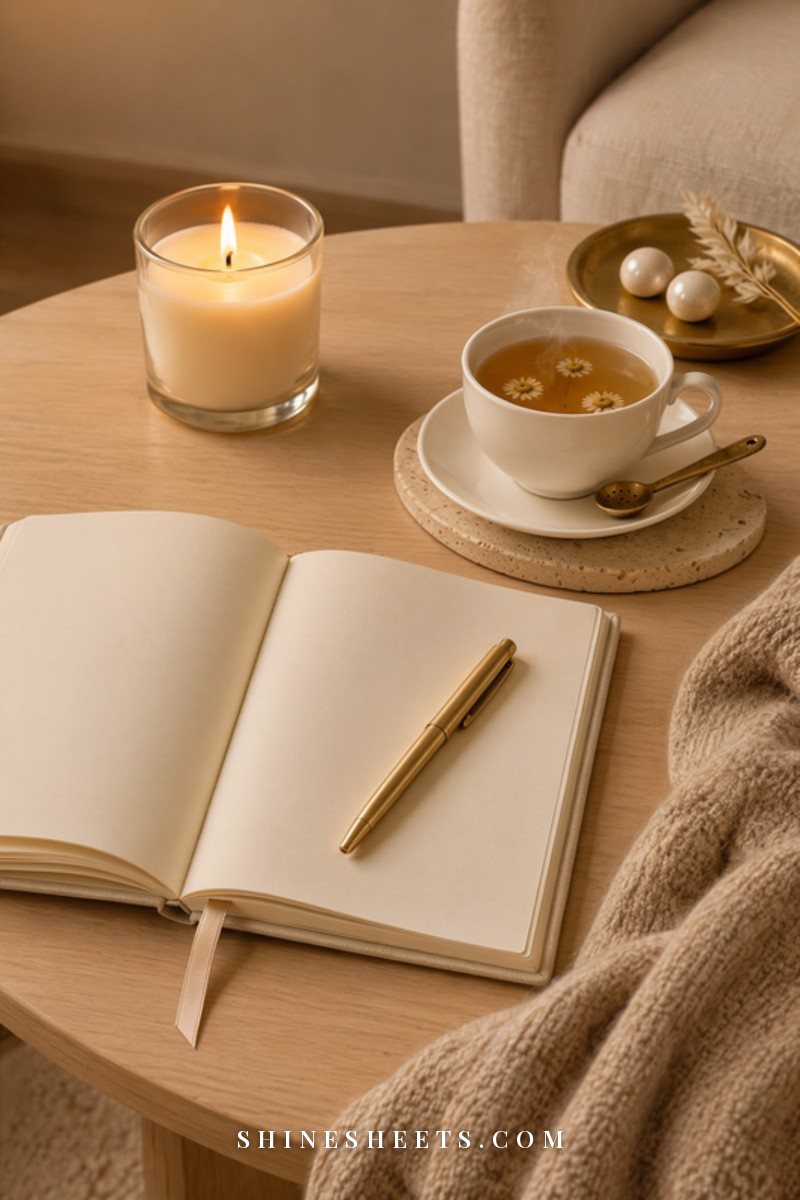
Even with a good plan, nerves usually spike in the last hour and again when the doorbell rings. That's completely normal. This reset takes about five minutes, and you can do it in the bedroom, the bathroom or standing at the kitchen counter. Do it once before guests arrive and again whenever the pressure climbs.
Breathe 4 In, 6 Out
Breathe in through your nose for a count of four, then out slowly through your mouth for a count of six. The longer exhale gently tells your body it's safe to slow down. Keep going for about two minutes, roughly ten rounds. If counting feels fiddly, simply make the out-breath longer than the in-breath. My guide to breathing exercises for calm has more techniques if this one doesn't feel like yours.
Ground Yourself in the Room
Next, spend a minute or two with your senses. Name five things you can see, four you can touch, three you can hear, two you can smell and one you can taste. A soft scent helps here: a light spritz of lavender room spray on a cushion gives your nose something calm to find. Feel your feet on the floor and let your shoulders drop away from your ears.
Then set the light. I'd choose ivory flameless LED candles for hosting, because you get the soft flicker without having to watch a flame while you're busy with guests (and nobody's sleeve gets near a wick). If you do light real candles, keep them away from coats, curtains and busy walkways, and never leave them unattended.
Give Your Nerves an Easy Job
Anxious energy wants somewhere to go. Instead of fighting it, give it a simple, useful task that keeps you moving without pressure. Taking coats and showing people where everything is works beautifully. Making tea or coffee for each new arrival does too. A herbal tea sampler on the counter lets guests choose their own, which also gives you a small, friendly reason for a one-on-one chat in the kitchen.
These easy jobs are especially handy in the first twenty minutes, when the room is still warming up and everyone is a little shy. You're not hiding. You're hosting in a way that suits your nerves.
When Something Goes Wrong: 5 Calm Recoveries
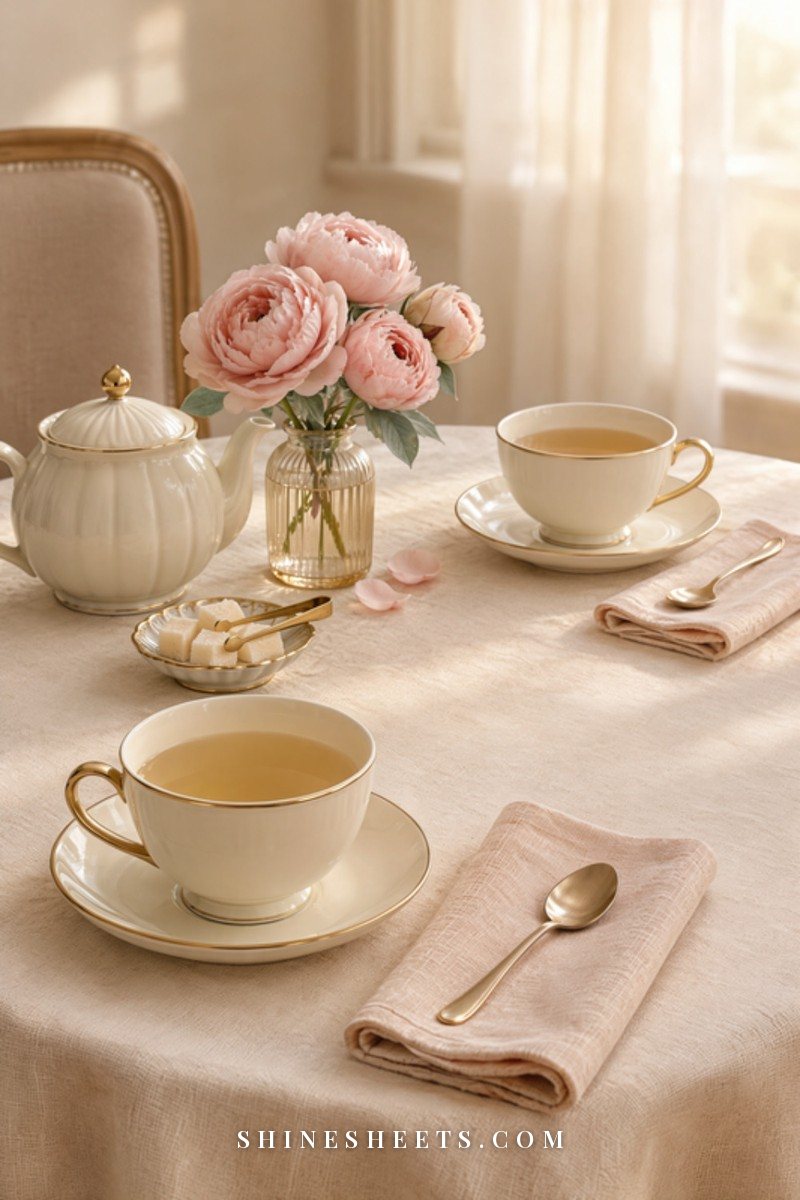
Something small will go sideways. It almost always does, at every gathering, for every host. What guests remember isn't the slip. It's how relaxed you were about it. Here are five common moments and a calm way through each one.
1. The Meal Runs Late
Say it simply and with a smile: "Dinner needs another twenty minutes, so let's sit down with something warm to drink." Put out whatever is ready, refill cups and join the conversation. A late meal with a relaxed host feels like a leisurely evening. A late meal with a frantic host feels like a problem.
2. Something Spills or Breaks
Respond to the person first and the mess second: "Don't worry at all, it happens. Are you okay?" Grab a cloth, deal with it in under a minute and go back to the table. If your guest looks embarrassed, a light "Now it's officially a party" usually lets everyone laugh.
3. The Conversation Stalls
Pauses feel enormous to a nervous host and perfectly ordinary to everyone else. If you'd like to restart things, try an open, easy question: "What's something good that happened this month?" or "Has anyone watched anything lovely lately?" Then let others carry it. You don't have to be the evening's entertainment.
4. Guests Arrive Early
This is where your one-hour buffer earns its keep. Even if you're mid-task, welcome them warmly and give them a role: "Perfect timing, would you switch on the candles?" or "Come keep me company while I finish this." People love being useful, and early guests often turn into your best helpers.
5. You Snap at Someone
Stress makes all of us a little sharp. If you hear yourself use a tone you didn't mean, repair it quickly and lightly: "Sorry, that came out short. I'm a bit nervous, and you're helping a lot." A fast, honest apology resets the moment and usually brings you closer instead of pushing anyone away.
After Everyone Leaves: Rest Without Replaying
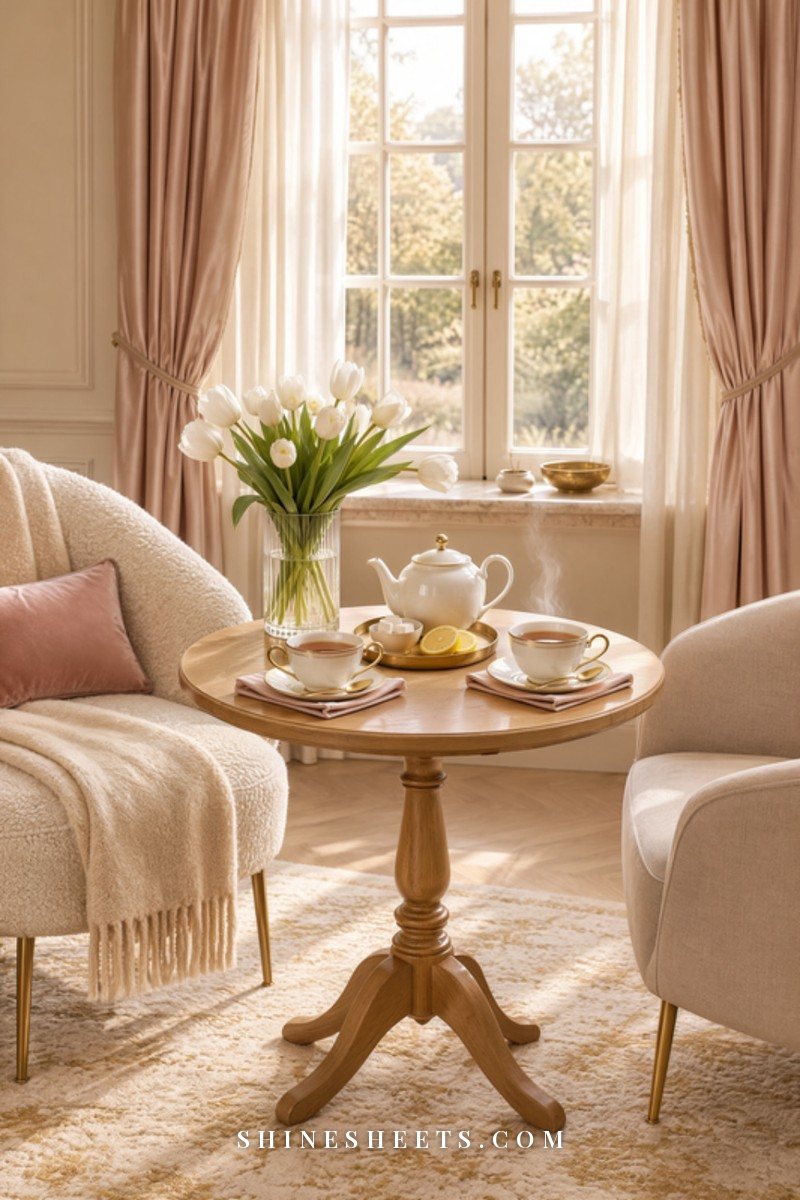
When the door closes, an anxious mind often starts a replay: what you said, what you forgot, the face someone made. This kind of mental review is very common and rarely helpful. It zooms in on one awkward moment and ignores the twenty warm ones around it.
Try this instead:
- Leave the big tidy for tomorrow. Put food away, blow out any real candles and stop there. My after-party cleanup guide has a quick plan for the next morning.
- Change into something soft. Wrap yourself in a chunky cream knit throw and make a cup of tea.
- Write down three good moments. A laugh, a kind word, someone lingering at the door. Your brain needs evidence to balance the replay.
- Notice the replay and name it. "There's the replay again." You don't have to argue with it. Naming it is often enough to let it fade.
- Skip the apology messages tonight. If something truly needs a follow-up, it will still be there tomorrow, and it usually looks much smaller in daylight.
Give yourself a slow morning afterward if you can. Hosting uses a lot of energy, even when it goes beautifully, and rest is part of the evening too.
When It Might Be More Than Nerves
A flutter of nerves before guests is normal. If the fear feels much bigger than the situation, if you avoid having people over (or going to gatherings) because of it, or if worry about being judged affects your work, friendships or daily life, it may be social anxiety rather than ordinary hosting jitters. A therapist or doctor can help with that, and reaching out is a sign of strength, not failure. This article is gentle guidance, not a replacement for professional care.
Final Thoughts
Hosting anxiety tells you that everything has to be perfect for people to feel welcome. The truth is gentler: people feel welcome when you're glad they came. A few lamps, a clear seat, a warm drink and a host who sits down with them is more than enough.
Plan for good enough, finish an hour early, breathe slowly and let the small slips stay small. Your home, just as it is, is a lovely place to gather.