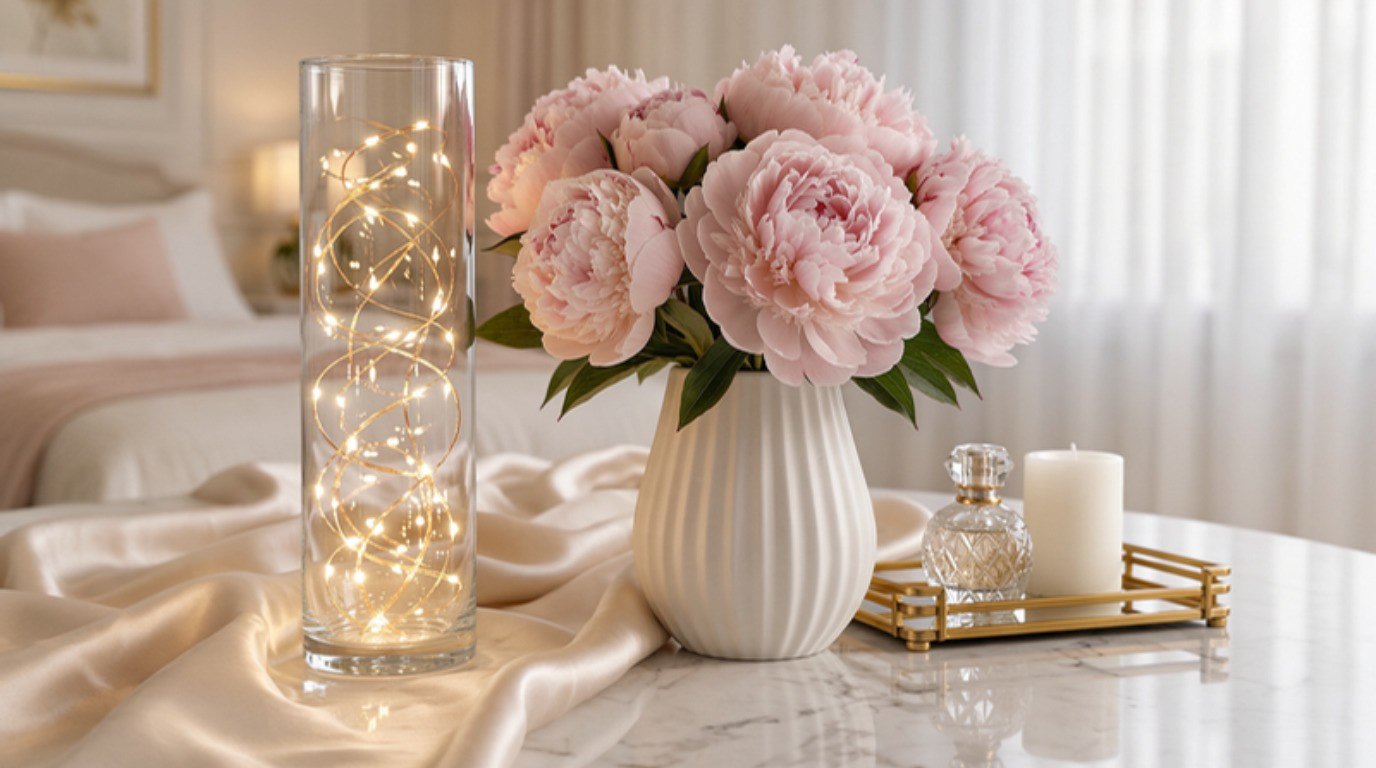
Fairy lights work best when they're treated like a soft accent, not the main light in a room. A single strand along a shelf or behind a sheer curtain adds warmth and a little sparkle; ten strands everywhere just look like you forgot to take something down. The magic is in choosing the right lights and putting them in a few places where they make sense.
They're also one of the most renter-friendly upgrades there is. No wiring, no drilling, nothing you can't remove in five minutes on moving day.
In this guide to fairy light ideas, you'll learn how to choose string lights (color temperature, wire type and power), fifteen placement ideas for every room, a quick table that tells you which light and hanging method suits each spot, how to hang them without damaging walls, how to hide cords and battery packs, and the safety basics that keep the whole thing calm instead of worrying.
How To Choose Fairy Lights
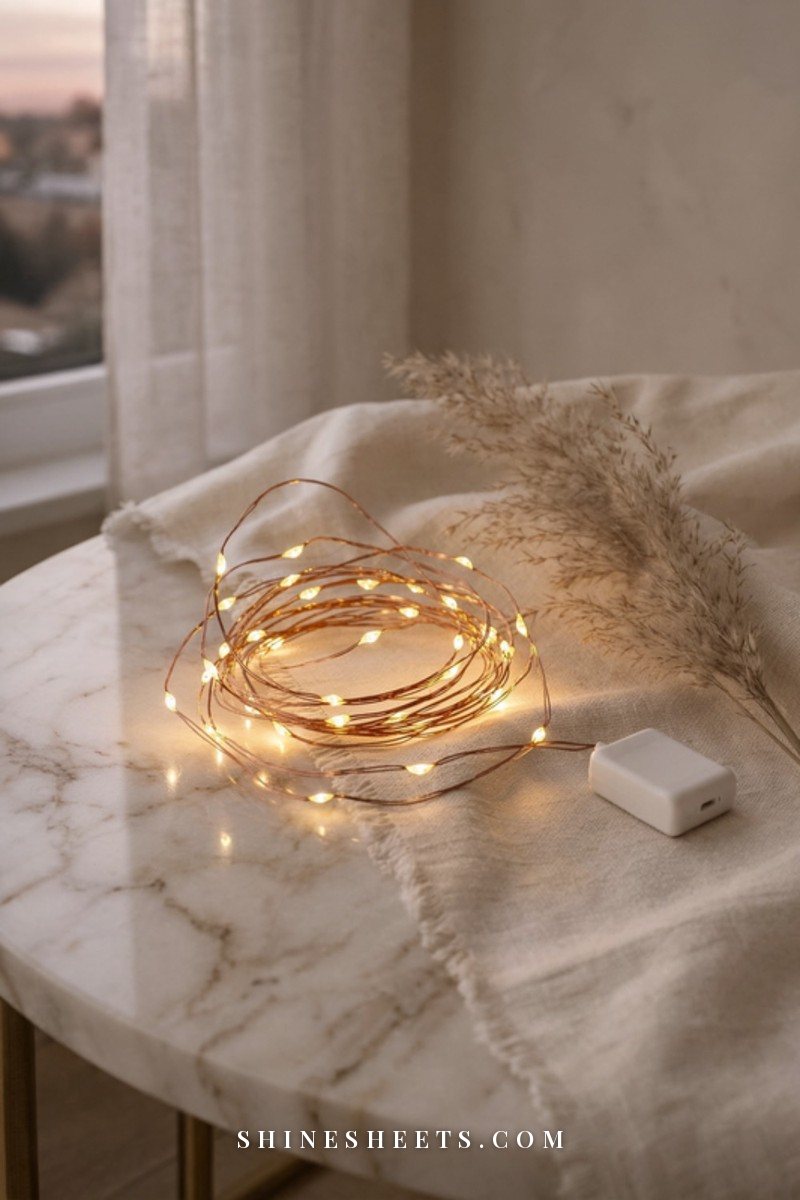
Before you think about where to hang them, get the lights themselves right. Most disappointing string-light setups come from the wrong color or the wrong power source, not the wrong spot.
Warm White, Around 2700K
Look for "warm white" on the box, ideally around 2700K. That's the soft, golden color of candlelight and classic bulbs. "Cool white" or "daylight" strings (5000K and up) look bluish and clinical indoors, and multicolor strings read instantly as party decor. If a listing doesn't mention a color temperature, check the photos and the reviews for a yellow, not blue, tone.
LED Only
Choose LED fairy lights every time. They stay cool to the touch, use very little power and last for years. Old-style incandescent mini lights get warm, and that's exactly what you don't want near curtains, pillows and paper.
Copper Wire vs Cable
Thin copper or silver wire strings are the delicate "fairy" kind: the wire almost disappears, and you can bend it around frames, jars and branches. They're perfect for close-up spots. Thicker cable strings (often white or clear rubber) are sturdier and better for longer runs along a curtain rod or a stair rail. A pack of warm white LED copper-wire fairy lights is the most flexible place to start.
Battery, Plug-In or USB
- Battery: best for jars, vases, shelves and anywhere without an outlet. Small packs usually take two or three AA batteries; rechargeable ones save money and waste.
- Plug-in: best for long strands and spots you light every evening, like a headboard or window.
- USB: handy at a desk or near a bedside charger. Use a proper wall adapter, not an overloaded laptop port.
Timers and Remotes
A built-in timer (usually six hours on, eighteen off) or a small remote is the secret to actually enjoying your lights. They switch on as the evening starts and off before you fall asleep, so you never leave them running all night. For plug-in strings without one, a simple white plug-in outlet timer does the same job.
Fairy Light Ideas at a Glance
Here's the quick version of every idea below. Screenshot it, then pick the two or three spots that fit your home.
| Spot | Light type | Power option | How to hang |
|---|---|---|---|
| Headboard frame | Copper wire or soft cable | Plug-in with timer | Wrap along the frame, tuck behind the headboard |
| Curtain rod | Cable string | Plug-in | Drape in loose swags, secure with small clear clips |
| Mirror outline | Copper wire | Battery | Clear adhesive clips on the frame back |
| Bookshelf edge | Copper wire | Battery or USB | Run under the shelf lip with tiny clips |
| Glass jar or vase | Copper wire micro string | Battery | Loosely coil inside, pack hidden behind |
| Reading nook canopy | Cable string | Plug-in with timer | Ceiling hook plus removable side hooks |
| Window frame | Cable or copper | Plug-in | Removable hooks at each top corner |
| Photo line | Copper wire with clips | Battery or USB | Two removable hooks, string hung slightly loose |
| Plant shelf | Copper wire | Battery | Weave between pots, away from soil and water |
| Desk hutch | Copper wire | USB | Clips under the top shelf |
| Behind a sheer curtain | Curtain light (vertical strands) | Plug-in | Hooks on the rod or a tension rod behind the sheer |
| Staircase rail | Cable string | Plug-in or battery | Wrap loosely, never across steps |
| Dining table runner | Copper wire | Battery | Lay among the runner and vases |
| Wall cluster | Copper wire | Plug-in or battery | Removable hooks in a loose shape |
| Entryway hooks | Copper wire | Battery | Wind around the hook rail |
15 Fairy Light Ideas for Every Room
Pick two or three of these to start. A home with fairy lights in just a couple of spots looks thoughtful; a home with lights everywhere looks busy.
1. Headboard Frame
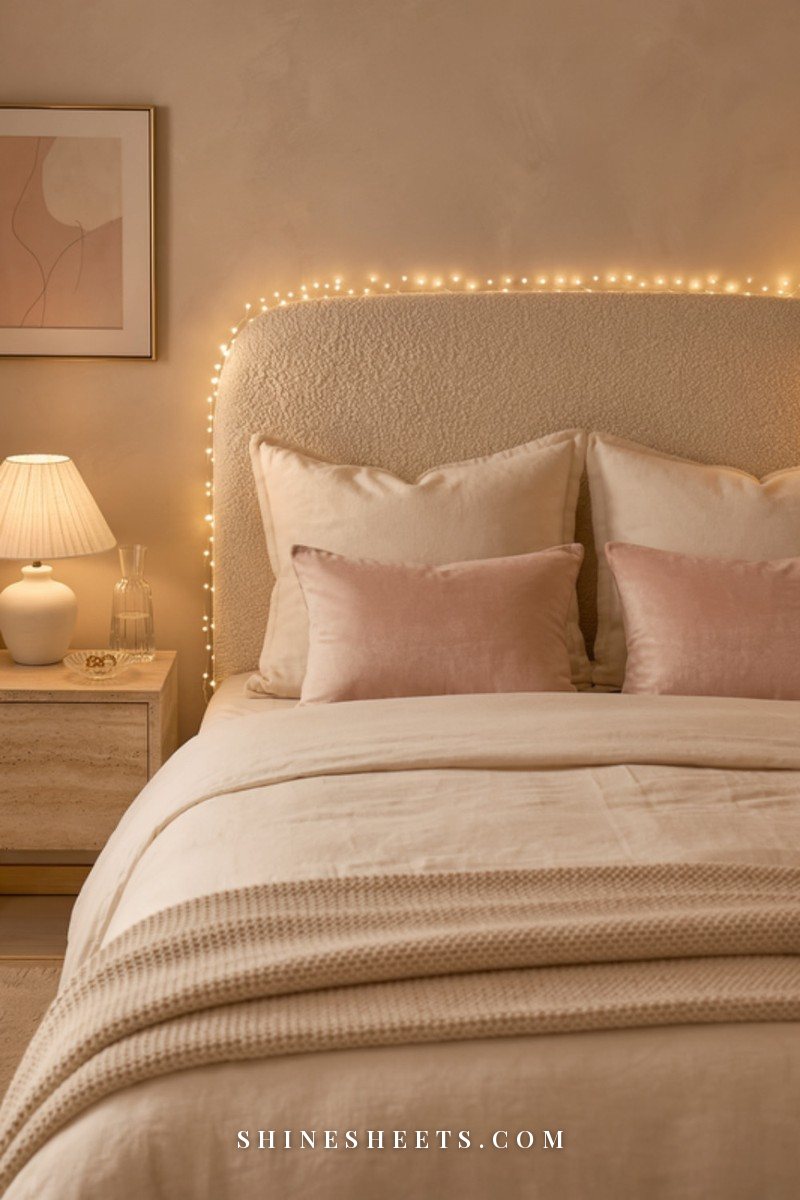
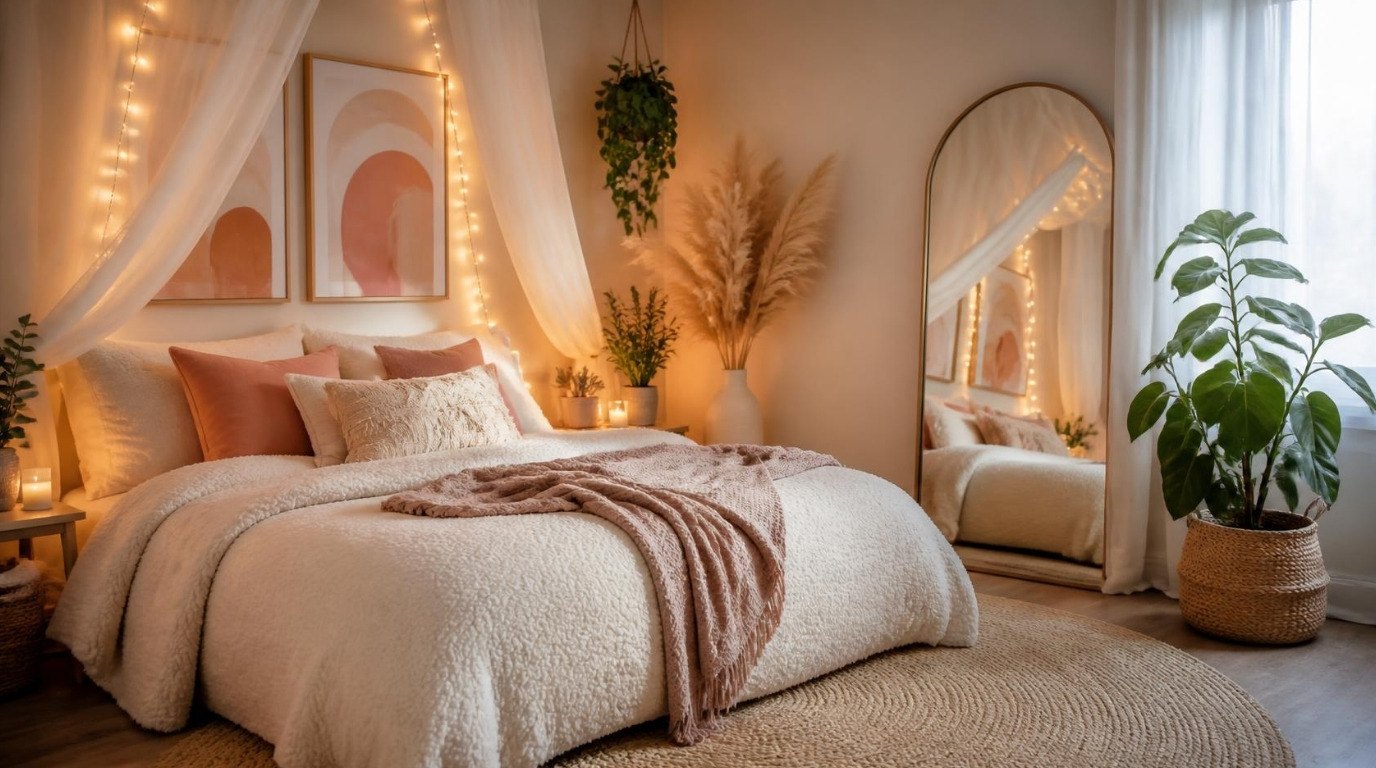
This is the classic for a reason: it turns a bed into the softest spot in the room. Run a strand along the top of the headboard, tucking the wire behind so only the tiny lights show. On a metal or wooden frame, wrap loosely around the top rail. On an upholstered headboard, lay the lights along the back edge instead of pinning them into the fabric.
Plug it into a timer so it switches off on its own, and keep the cord tidy behind the bed. If you're building a calm bedroom from scratch, my renter-friendly bedroom ideas pair beautifully with this one.
2. Curtain-Rod Drape
Drape a cable string along the curtain rod in shallow loops, letting it dip about 4–6 inches between clips. It frames the window and adds a soft edge at night. Keep the lights on top of or in front of the rod, not tangled inside the fabric, and use small clear clips so the loops stay even.
3. Mirror Outline
Outline a large floor or wall mirror with copper wire, attaching it to the back edge of the frame with clear clips so the wire wraps around the side. The reflection doubles the sparkle, which means one short strand goes a long way. A battery pack taped to the back keeps it fully cordless.
4. Bookshelf Edge
Run a strand under the front lip of one or two shelves so the light falls gently onto the books below. It looks like built-in lighting at a fraction of the effort. Choose one shelf, not every shelf, for the most elegant result. A couple of small clear removable adhesive hooks at each end keep the strand straight.
5. Glass Jar or Vase
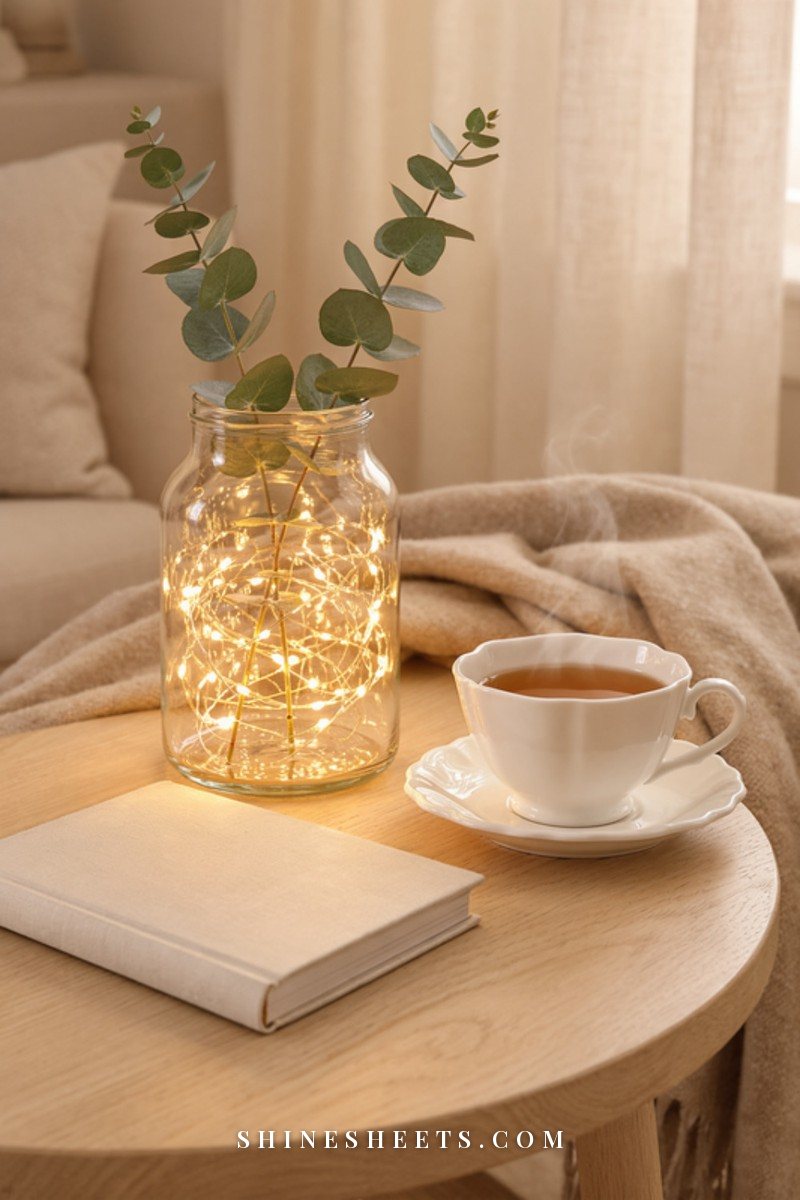
The easiest idea of all and the one that looks most like a little lantern. Coil a battery micro string loosely inside a clear glass jar or vase, letting some loops touch the glass, and hide the pack behind it or inside at the bottom. Put it on a side table, a windowsill or the middle of a bookshelf.
A few eucalyptus stems or dried grasses tucked in with the lights make it look styled rather than crafty. Because LEDs stay cool, this is a lovely, worry-free swap for a candle in spots where you'd rather not have a flame.
6. Canopy Over a Reading Nook
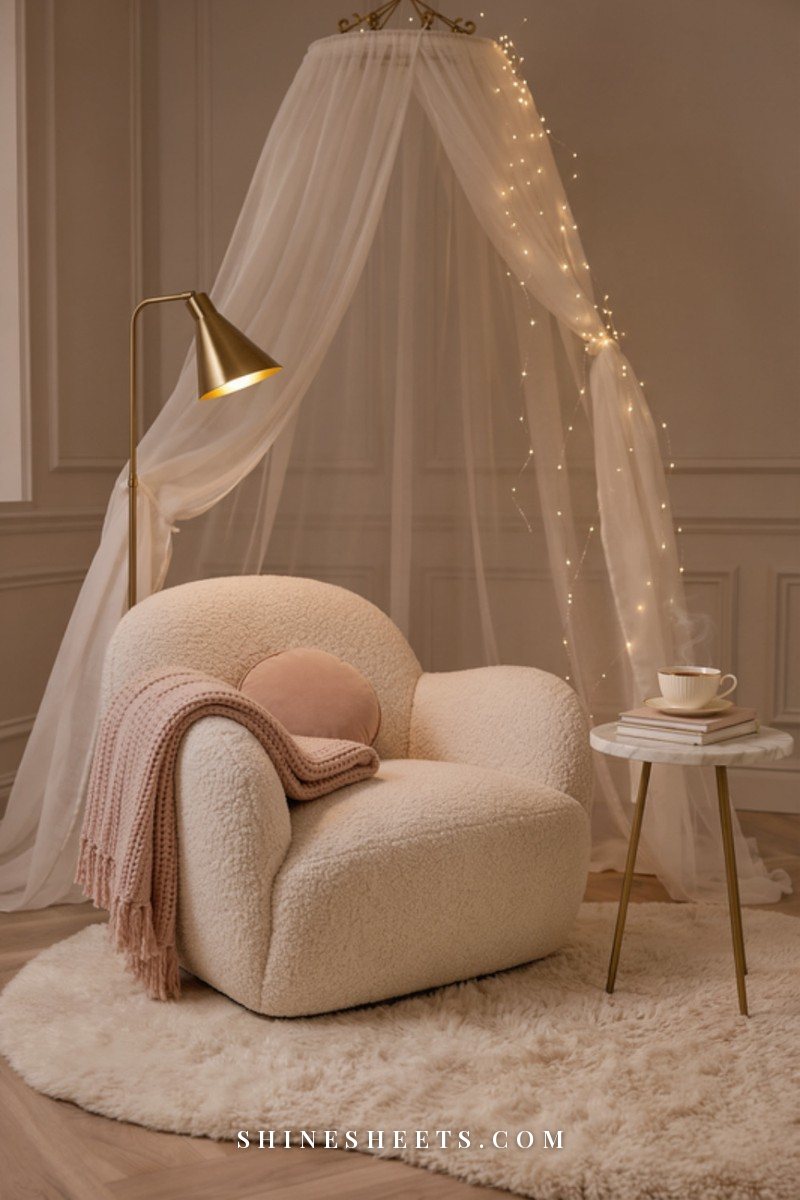
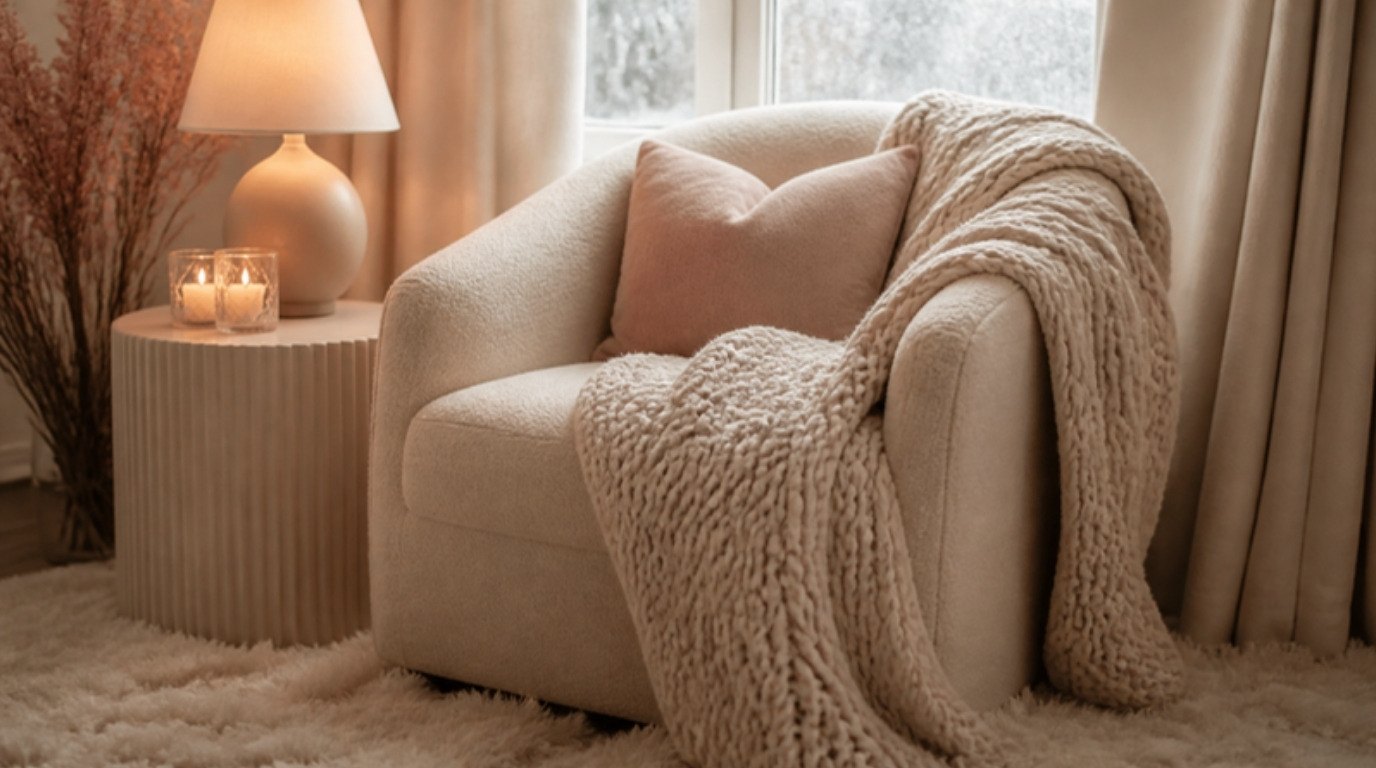
Fix one hook to the ceiling above a reading chair (a removable ceiling hook or the one left by an old plant), then run several strands outward to removable hooks on the walls, like the spokes of an umbrella. Underneath, a chair, a soft throw and a lamp for actual reading. The lights are for mood; your book still needs a proper lamp.
If you'd like a sheer canopy too, hang the fabric and the lights on separate hooks so the fabric never rests on the strings. My reading nook ideas have plenty of spots to build this kind of corner.
7. Window Frame
Outline the inside or outside of a window frame with a plug-in strand, using a removable hook at each top corner and small clips down the sides. It's the most street-friendly idea on the list, lovely to come home to. Keep the strand clear of the window's opening edge so it doesn't get pinched.
8. Photo Line With Clips
Hang a copper-wire string between two hooks and clip favorite photos, postcards or little notes to it. Some strings come with clips already; otherwise white wooden photo clips are pretty and won't scratch prints. Hang the line slightly loose so it curves, and space photos about 8–10 inches apart so it doesn't look crowded.
9. Plant Shelf
Weave a fine strand between pots on a plant shelf, letting it trail like a vine. It looks especially lovely with trailing plants like pothos. Keep battery packs and plugs well away from soil and watering, and move the lights before you water so drips never land on the wire.
10. Desk Hutch
Clip a USB strand under the top shelf of a desk hutch, or along the back edge of the desk, for soft light while you journal or work in the evening. It's not task lighting (keep a desk lamp for that), but it makes a desk feel less like an office.
11. Behind a Sheer Curtain
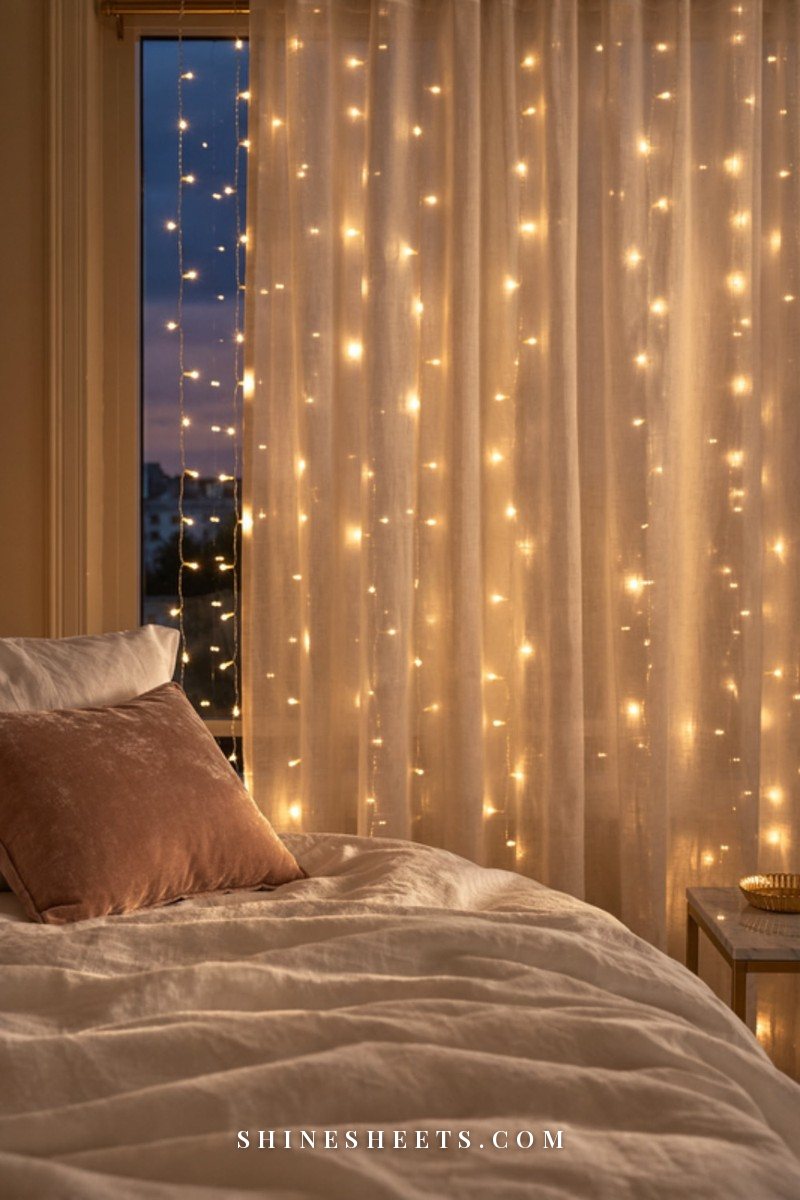
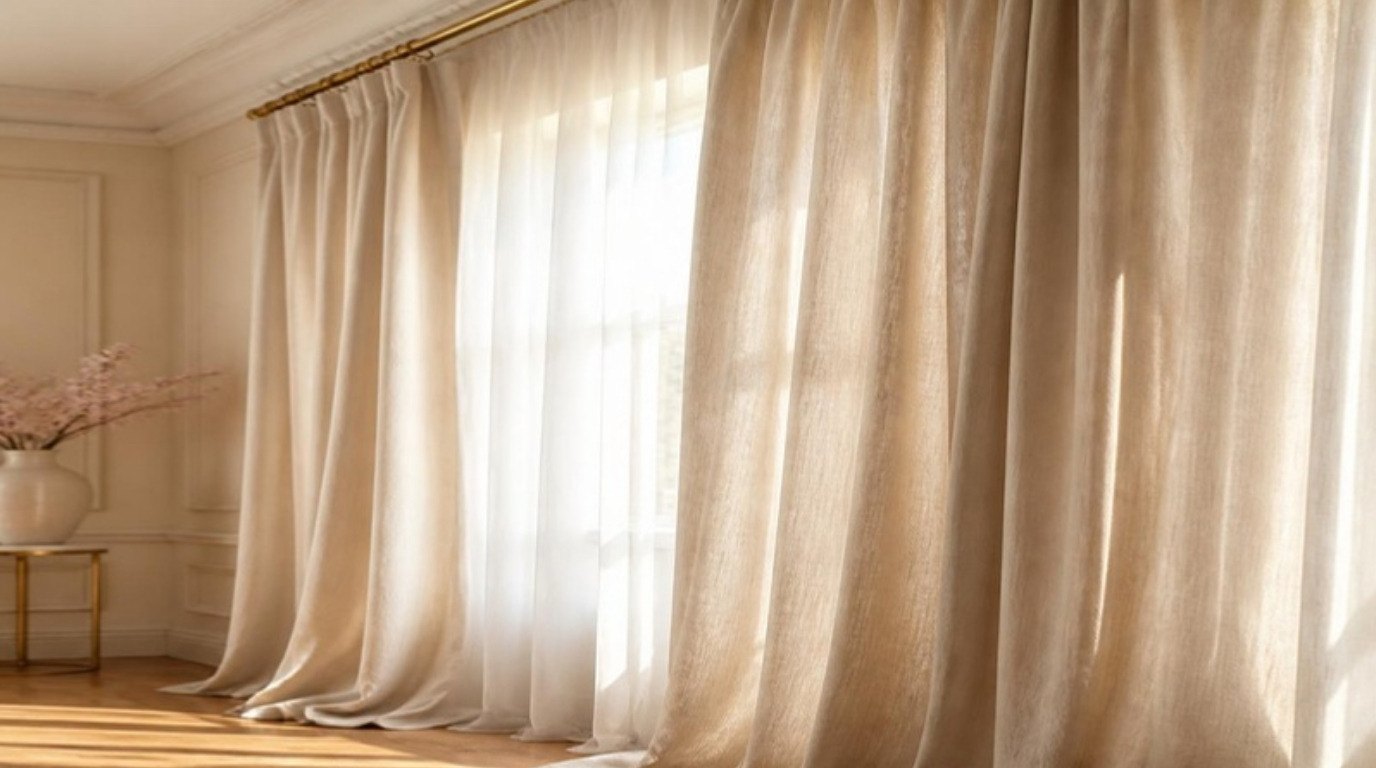
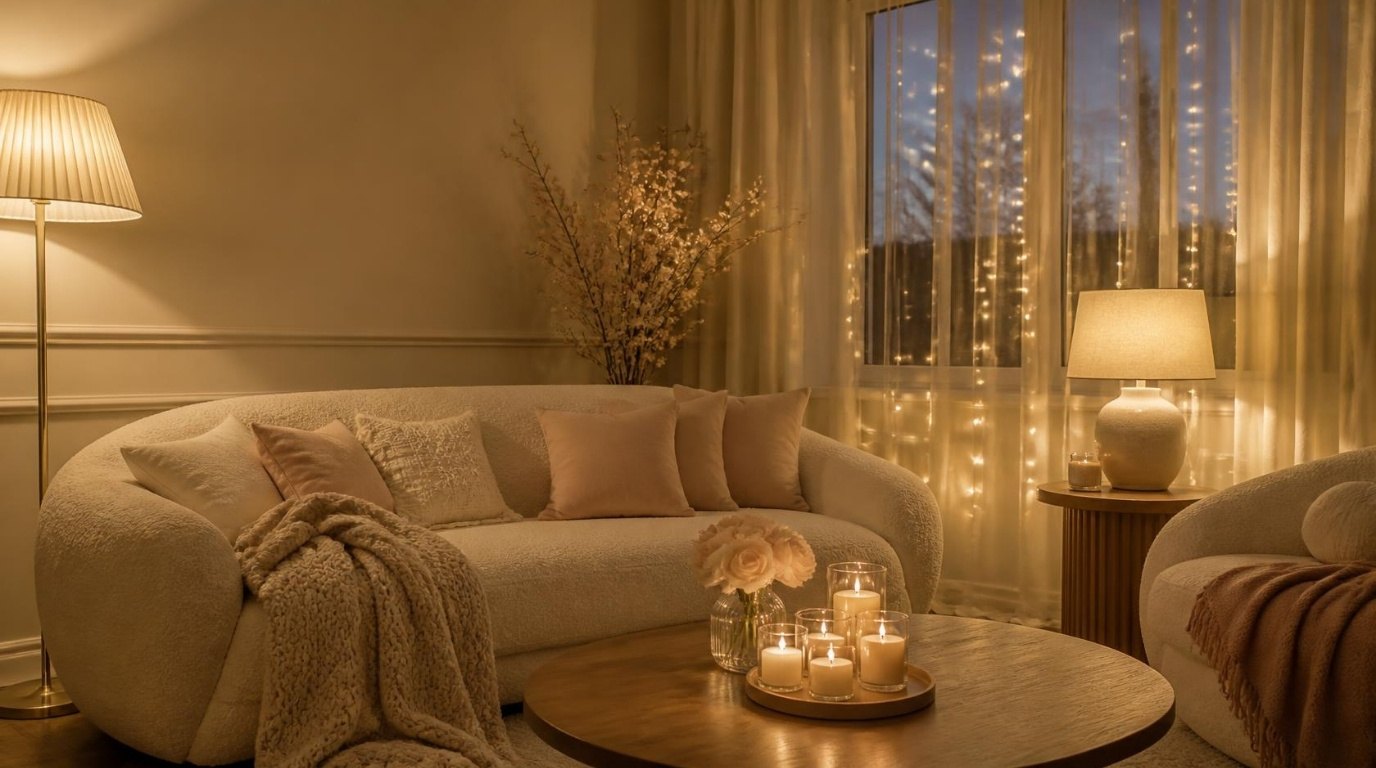
This is the most romantic idea here. Hang a "curtain" style light (several vertical strands from one cable) on hooks or a tension rod a few inches behind a cream sheer linen curtain. The fabric diffuses the lights into a soft, starry haze. It works beautifully as a backdrop behind a bed or in a bare window.
Keep a few inches between the lights and the fabric, use LEDs only, and switch them off at night. For more on choosing and hanging the curtain itself, my curtain ideas guide has the details.
12. Staircase Rail
Wrap a cable string loosely around a banister, about one twist per foot, and secure the ends with clear clips. It's lovely in a hallway and doubles as a soft nightlight. Never run the cord across a step or where anyone could catch a foot, and keep the plug end at the top or bottom of the stairs, not in the middle.
13. Dining Table Runner
For a dinner with friends, lay a battery copper string along a linen runner, weaving it between small vases and candle holders (use LED candles here). Tuck the battery pack under the runner at one end. It turns an ordinary dinner into something that feels planned, and you can take it away in seconds afterward.
14. Wall Cluster
Pin a strand onto the wall in a loose cloud or soft zigzag above a sofa or bed, using removable hooks every 8–12 inches. Keep the shape organic rather than trying to write a word or draw a shape; loose drapes always look more elegant.
15. Entryway Hooks
Wind a short battery string around an entryway hook rail or a small shelf by the door. It's a warm welcome when you walk in after dark, and a small timer means it's already on when you get home.
How To Hang Fairy Lights Without Damaging Walls
Renters, this is the section for you. Fairy lights are light, so you rarely need anything stronger than these:
- Removable adhesive hooks and clips. The clear kind disappears against most walls. Clean the spot with rubbing alcohol first, press for 30 seconds and wait an hour before hanging. To remove, pull the tab straight down along the wall, slowly.
- Tension rods. Perfect inside window frames, alcoves and behind sheer curtains. No holes at all.
- Existing hardware. Curtain rods, picture rails, bed frames and shelf edges are free anchor points.
- Washi or painter's tape. Fine for very light copper wire for a short time; test on a hidden spot first, since some paints lift.
Skip thumbtacks and nails through the wire. They can pierce the insulation, and that's the one thing you never want.
How To Hide Cords and Battery Packs
Nothing breaks the spell like a white cord snaking across the wall. A few easy fixes:
- Run cords along the edges of furniture, baseboards and door frames, where the eye doesn't land.
- Use paintable cord covers or clear clips to keep vertical runs straight.
- Tuck battery packs behind jars, inside the back of a basket or under a shelf lip with a removable adhesive strip.
- Pick strings with a long lead wire, so the plug can reach an outlet that's hidden behind furniture.
My full guide on how to hide cords has twelve more renter-friendly tricks, room by room.
Fairy Light Safety Basics
LED fairy lights are low-risk, but a few habits keep them that way:
- LED only. They run cool. Avoid old incandescent mini lights indoors, especially near fabric.
- Never drape fabric over hot bulbs. Even with LEDs, keep scarves, blankets and canopy fabric from resting directly on the strand or the plug.
- Keep them away from water and heat. No lights near sinks, bathtubs or plant watering, and keep curtains with lights well away from heaters and radiators.
- Check cables before every use. Look for cracked insulation, exposed wire, loose bulbs or a warm plug. If you see damage, replace the string; don't tape it.
- Don't overload outlets. Follow the maker's limit on how many strings can connect end to end, and avoid stacking adapters.
- Unplug or switch off when you're away or asleep. A timer makes this effortless.
- Keep real candles separate. Fairy lights are a lovely alternative to candles near fabric. If you love candles too (I do, especially in glass), keep them on a stable surface far from curtains and strings.
- Batteries out when stored. Remove batteries from packs you won't use for a while to prevent leaks.
How Many Fairy Lights Do You Need?
A simple formula: measure the edge you want to light, then add about 20 percent for loops, corners and the run to the power source. A headboard that's 60 inches wide needs roughly 6 feet of lit string plus a lead to the outlet. For a wall drape or canopy, multiply the straight distance by 1.5 to allow for the curves.
As for brightness, a strand with LEDs spaced about 4 inches apart reads as soft and delicate; tightly spaced lights look brighter and more festive. For everyday decor, softer is almost always better. Fairy lights layer beautifully with the lamps you already have, and my guide to lighting ideas shows how to build those layers so a room feels warm from every angle.
Common Fairy Light Mistakes To Avoid
A few small missteps make string lights look more dorm room than dreamy. They're all easy to fix:
- Mixing color temperatures. Two strands of slightly different whites side by side look mismatched. Buy from the same set, or keep different strings in different rooms.
- Pulling the wire too tight. Taut lines look stiff and strain the connections. A gentle curve always looks softer.
- Using lights as the only light. Fairy lights are atmosphere, not illumination. Keep a lamp nearby for reading and getting ready.
- Leaving the flashing mode on. Many remotes default to twinkle or fade effects. Steady light looks calm and elegant; save the effects for a party.
- Forgetting the off switch. If you have to climb behind the sofa to turn them off, you'll leave them on. Plan the switch, remote or timer before you hang anything.
Fairy lights fit right into a slower, softer way of living at home, the kind I write about in my guide to the hygge lifestyle all year round. A strand switched on with your evening tea is a tiny ritual that tells your whole body the day is winding down.
Final Thoughts
Fairy lights are one of the smallest, gentlest ways to make a home feel like yours. Start with one warm white LED strand in the spot you spend your evenings, hang it with something removable and let a timer do the remembering for you.
Add a second spot only when the first one feels right. A little light in the right place is all a room needs to feel like a soft place to land.