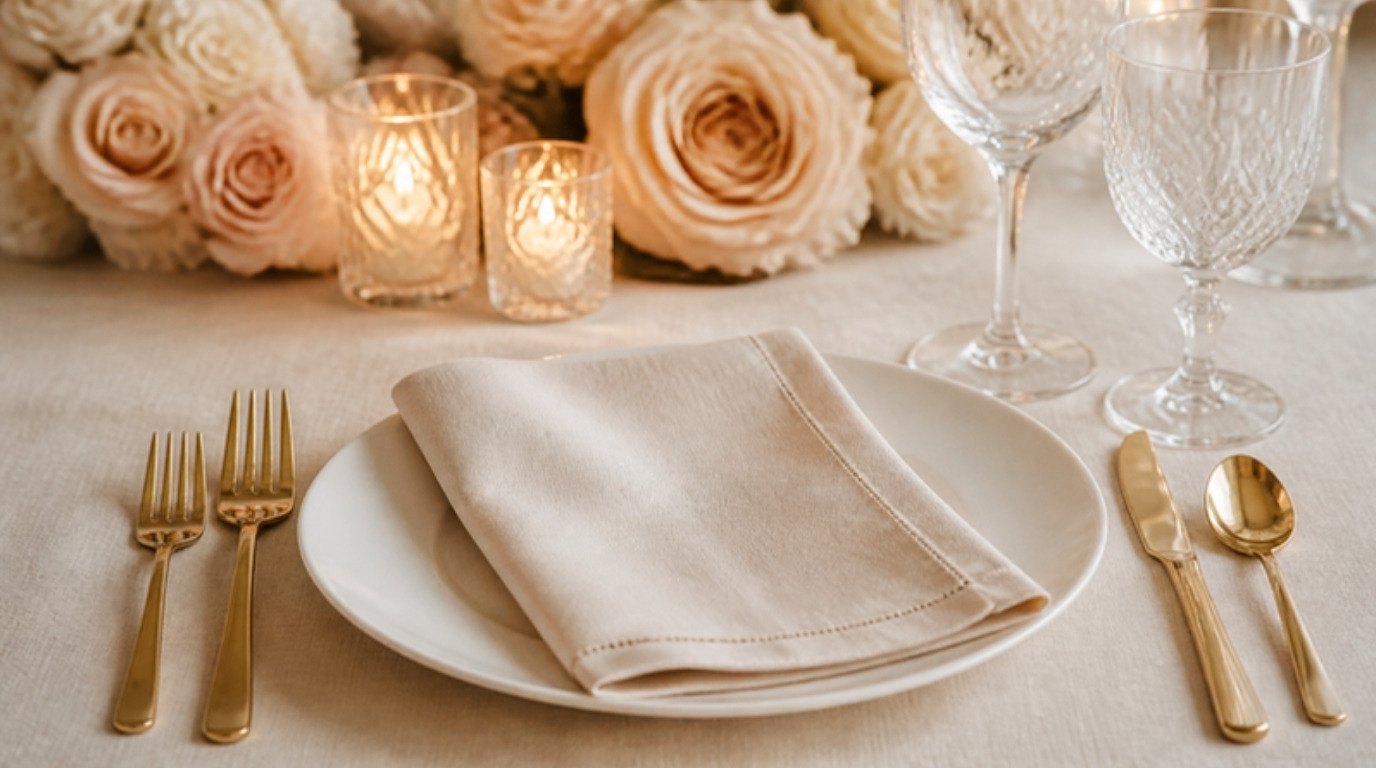
Good table manners aren't about knowing which of four forks to pick up at a royal banquet. They're about one simple thing: helping everyone at the table feel comfortable, so the meal can be about the people and the conversation instead of the awkward moments. Most of the "rules" you've heard over the years are really just small kindnesses that somebody eventually wrote down.
This guide covers the table manners every adult should know, in plain, friendly words: what to do before the meal, how a place setting works (explained in words, no diagram needed), everyday habits while you eat, conversation, restaurants and tipping, awkward moments, how to show you're finished and how to be a lovely guest at someone's home. Near the end you'll find a do / instead table you can screenshot for a quick refresher before a big dinner.
Nobody gets all of this perfect, by the way. I still pause at a formal place setting and quietly count the forks. Knowing the basics simply means you can relax sooner and enjoy the evening.
Why Table Manners Still Matter
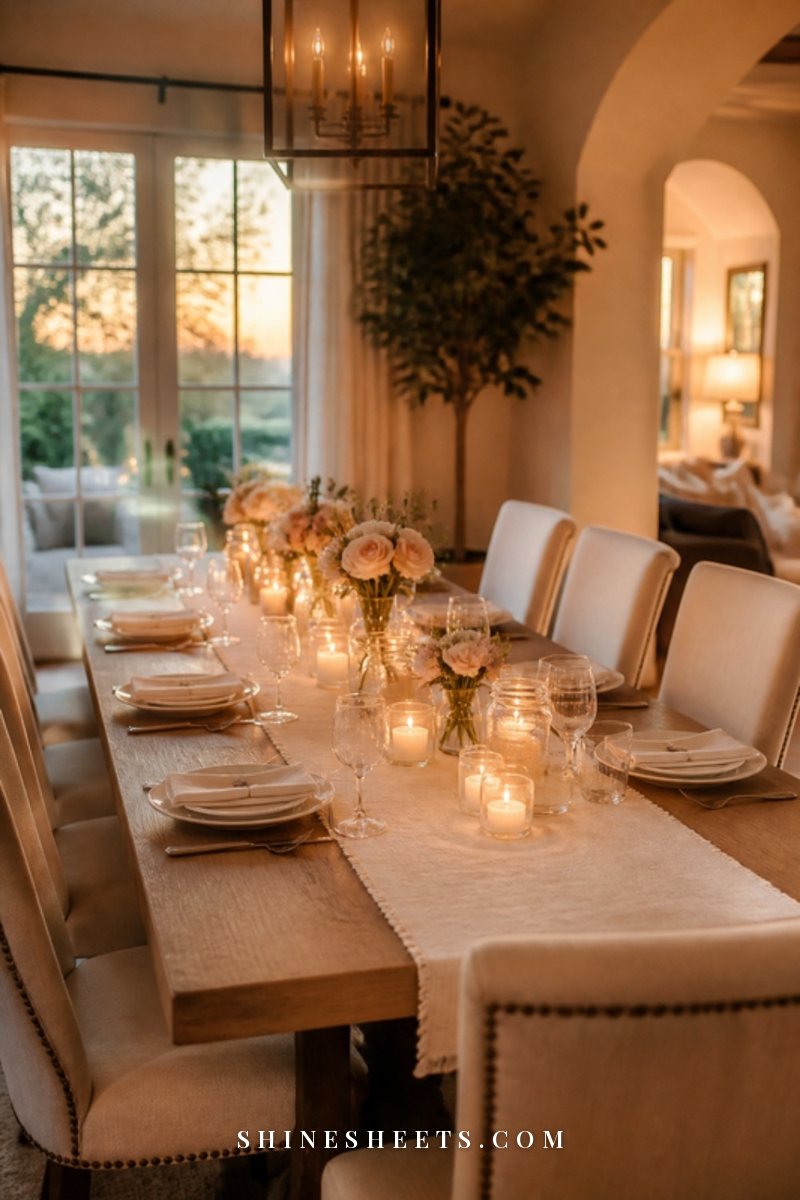
Table manners can sound old-fashioned, even a little snobby. But at their heart they do two useful jobs. They make a shared meal predictable (everyone knows roughly what happens next, so nobody feels lost), and they keep attention on the people instead of on how someone is eating.
When you strip away the fussy details, almost every rule comes back to three ideas:
- Be considerate. Think about the person next to you: their space, their plate, their turn to talk.
- Be unhurried. Eat at the pace of the table, pass things calmly, let the meal unfold.
- Don't draw attention to the mechanics. Chewing, reaching, spills and phones are the things people notice. Everything else fades into the background.
And here's the most freeing tip of all: when you're unsure, watch the host and do what they do. If they start eating, you start. If they put their napkin on the table, the meal is ending. Hosts set the tone, and following their lead is always correct.
If you'd like the bigger picture beyond the dinner table, my guide to everyday social etiquette rules covers greetings, invitations and the small courtesies that make people feel at ease with you.
Before the Meal: 6 Things That Set the Tone
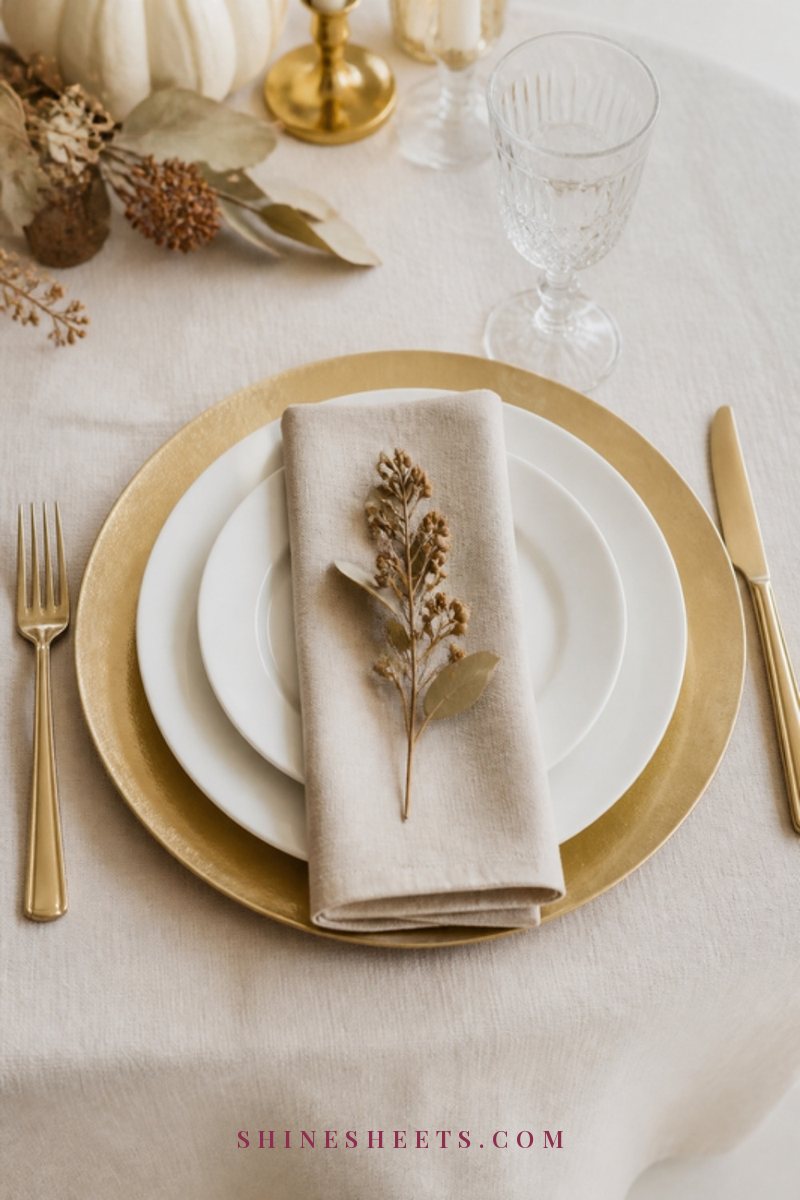
Good manners start before anyone picks up a fork. These six small habits quietly tell your host and your companions that you're glad to be there.
- Arrive on time. For a restaurant, aim to be at the table within five minutes of the booking. For a dinner at someone's home, arrive on time or up to ten minutes after, but never early (the host is probably still lighting candles). If you're running late, send a short text as soon as you know: "So sorry, I'm running about 15 minutes behind, please start without me."
- Dress for the occasion. If the invitation doesn't say, ask the host, "Is it a dressy evening or more relaxed?" A clean, simple outfit is never wrong, and my guide on how to dress classy has easy ideas for dinners where you're not sure what to wear.
- Put your phone away. Not face down on the table (that still says "I'm half here"), but in your bag or pocket on silent. If you're waiting for an important call, say so at the start: "I might need to step out for one call, I'm sorry in advance."
- Wait to be seated. At a home dinner, the host may have a seating plan. Stand by the table for a moment or ask, "Where would you like me?" At a restaurant, let the host or server show you the table.
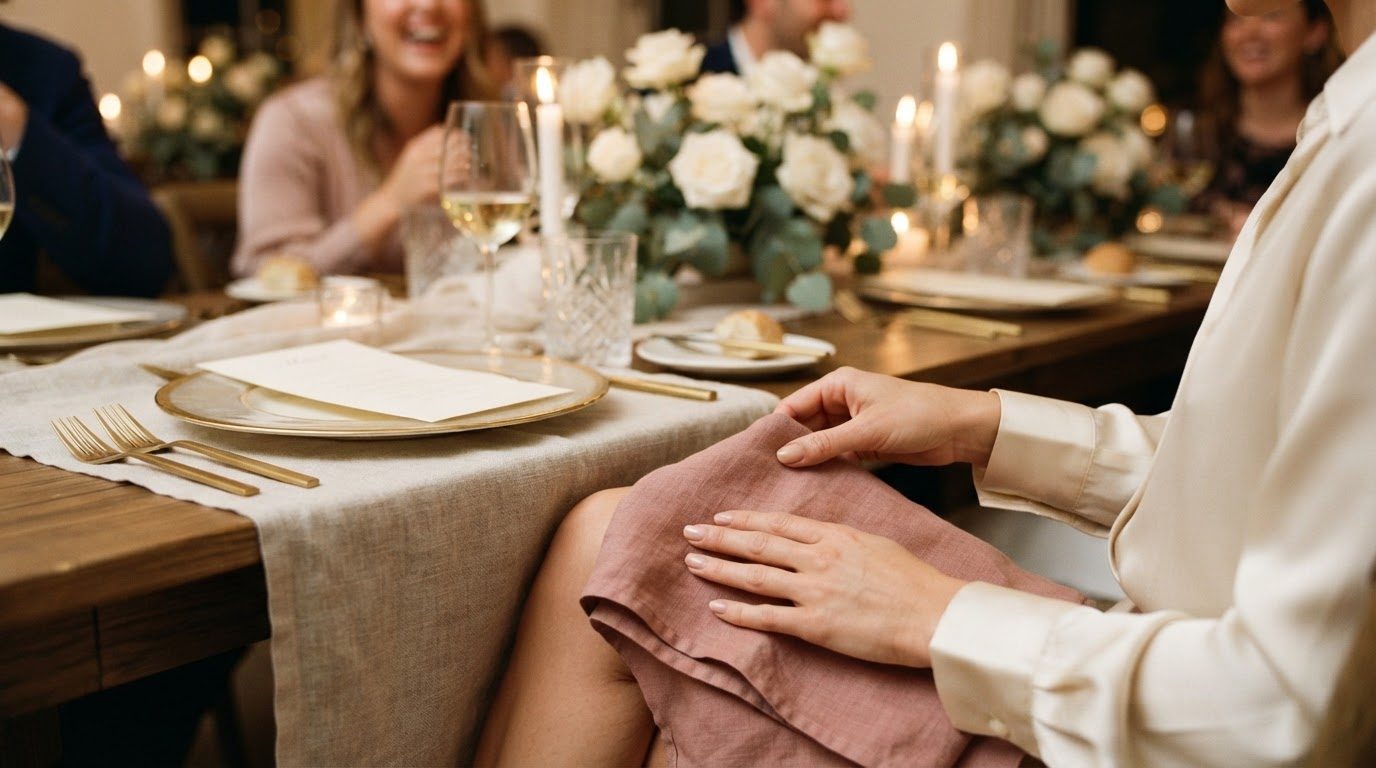
- Put your napkin on your lap. Do it once you sit down (or when the host does at a formal dinner). Fold a large napkin in half with the fold toward your body; a small one can open fully. If you're setting the table yourself, a set of soft cream cotton dinner napkins feels so much nicer than paper, and tucking them into simple gold napkin rings makes even a Tuesday dinner look intentional.
- Wait before you start eating. At a small table, wait until everyone has been served and the host picks up their fork. At a large table, it's fine to begin once a few people have their plates and the host says, "Please, start while it's warm." If someone raises a glass for a toast, wait for it before you sip.
Place Setting Basics, in Plain Words
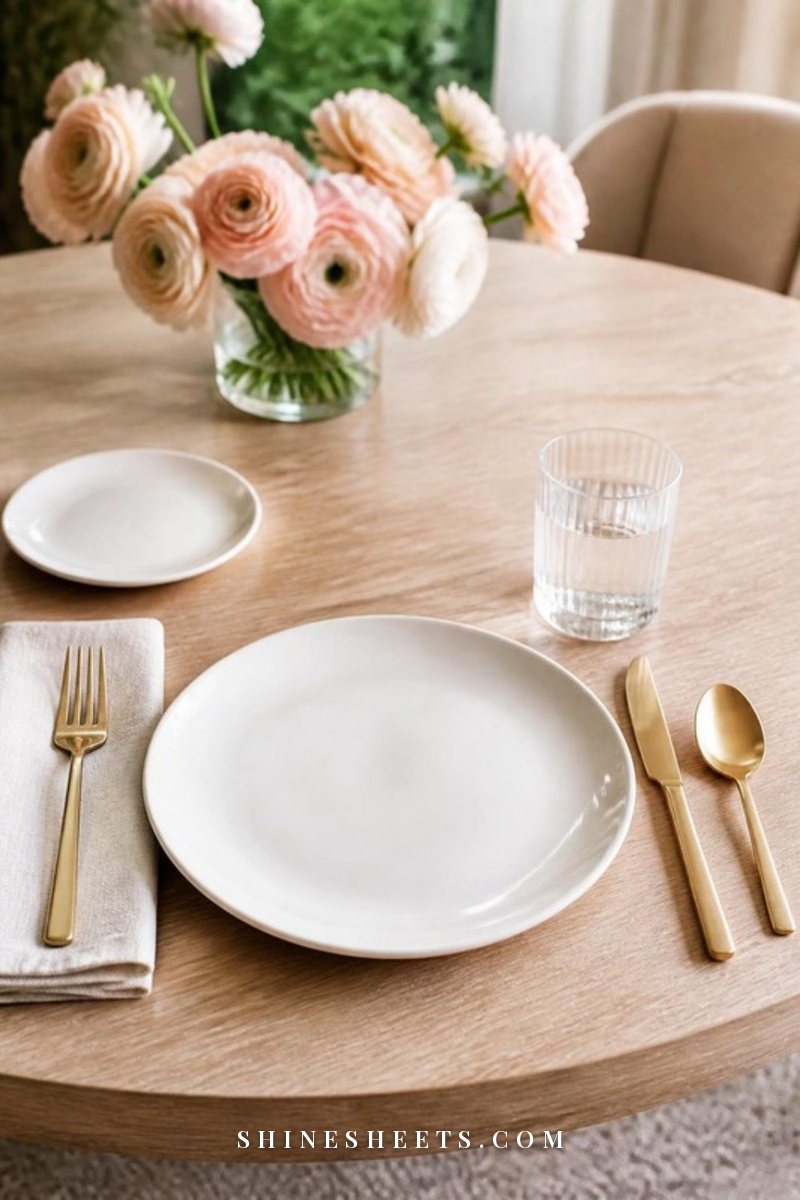
A full formal place setting can look like a puzzle, but it follows a very simple logic. Once you know it, you'll be able to sit down at any table, from a wedding to a friend's holiday dinner, and feel calm.
- Forks go on the left of your plate.
- Knives and spoons go on the right, with the knife blade facing the plate.
- The bread plate is on the left, usually just above the forks, often with a small butter knife lying across it.
- Drinks are on the right, above the knives. The water glass usually sits closest to the tip of the knife, and wine glasses sit to its right.
- Dessert cutlery lies horizontally above the plate – a small spoon and fork that you'll use at the end.
- The napkin sits on the plate, to the left of the forks or in the water glass at fancier places.
If you love setting a pretty table at home, a flatware set with soft gold accents and a few woven beige placemats make practicing feel like a treat rather than a lesson. For festive inspiration, my Christmas table setting ideas show how to make a place setting look generous without any extra rules.
The "b and d" Trick
This is the one trick everyone remembers. Under the table (or just in your mind), touch your thumb and index finger together on both hands and keep the other fingers straight. Your left hand makes a lowercase "b" and your right hand makes a "d."
B is for bread, on the left. D is for drink, on the right. No more accidentally buttering your neighbor's roll or sipping from their water glass (it happens to everyone, and the person next to you will usually just laugh and quietly use yours).
Outside In, Every Time
With several forks and knives, start with the pieces furthest from the plate and work your way in with each course. The outermost fork is usually for salad or a starter, the one closest to the plate is for the main course. If a course arrives and you're truly unsure, glance at the host and copy them. If you've used the "wrong" fork, simply carry on – a good server or host will bring you another one without a word.
During the Meal: 10 Everyday Table Manners
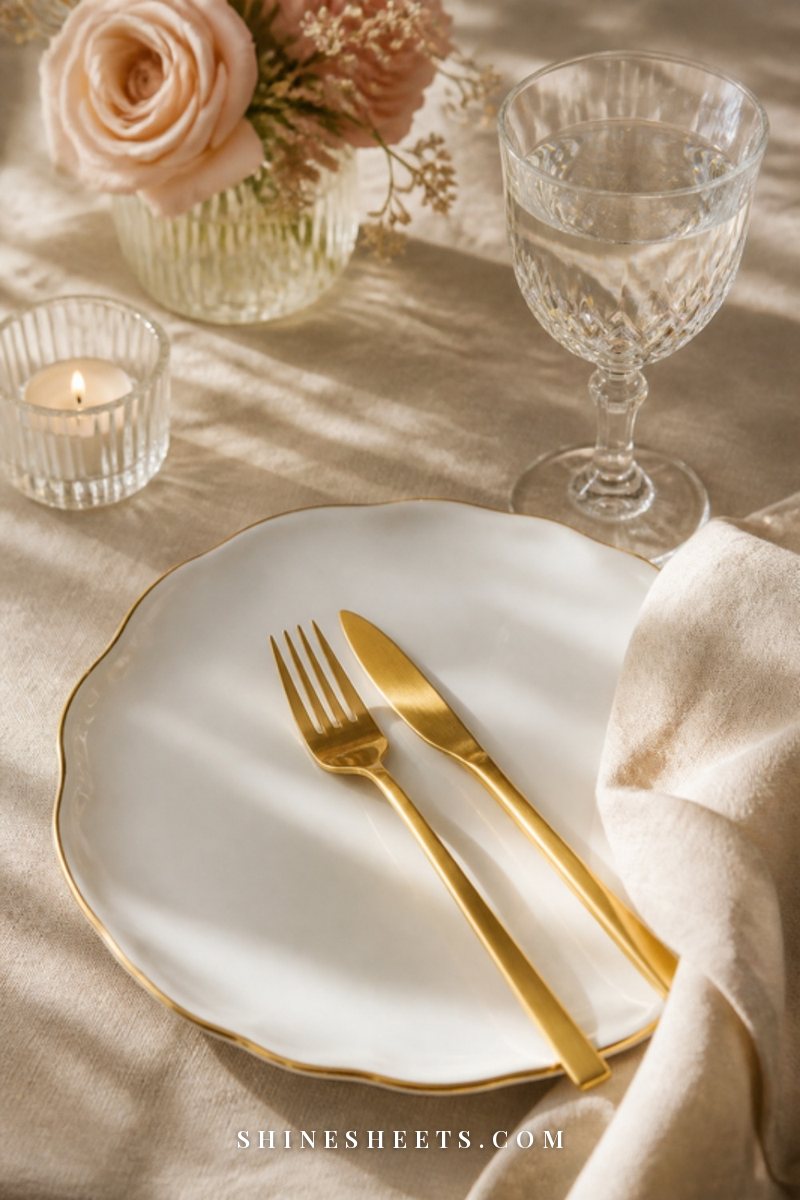
These are the habits people actually notice. None of them are complicated, and most of them you probably do already. Think of this as a gentle tune-up.
- Match the pace of the table. Try not to finish long before everyone else or keep the whole table waiting. Putting your cutlery down between bites is the easiest way to slow down, and it gives you natural moments to join the conversation.
- Take small bites. A bite you could answer a question after a few chews is the right size. Cut one or two pieces at a time rather than your whole plate at once.
- Chew with your mouth closed and don't talk with food in your mouth. If someone asks you something mid-bite, raise a hand slightly, smile, finish chewing and then answer. Everyone understands that little signal.
- Keep elbows off the table while you eat. Between courses or over coffee, resting your forearms lightly on the table is perfectly fine and often looks relaxed and engaged.
- Ask instead of reaching. If something is further than your own place setting, ask: "Could you please pass the salt?" Reaching across someone's plate is the classic table faux pas.
- Pass to the right. When dishes are being shared around the table, they usually travel to the right (counterclockwise). If someone asks for a specific dish, pass it the shortest way to them.
- Salt and pepper travel together. Even if someone only asks for the salt, pass both. It saves the next person from asking, and it's one of those quiet details people do notice.
- Taste before seasoning. Salting a host's dish before you've tried it can feel a little like a critique. Take a bite first, then season if you'd like.
- Bread: tear, butter, eat, repeat. Break off one bite-sized piece of your roll, butter just that piece over your bread plate, eat it, then tear off the next. Take butter from the shared dish onto your bread plate first rather than straight onto the bread.
- Use your napkin to dab, not wipe. A quick dab at the corners of your mouth before you sip from a glass keeps the rim clean. If you need to leave the table briefly, place your napkin loosely on your chair and push the chair in.
One gentle note about soup, because it comes up so often: spoon it away from you, sip quietly from the side of the spoon, and tip the bowl away from you to get the last bit. That's it.
Conversation at the Table
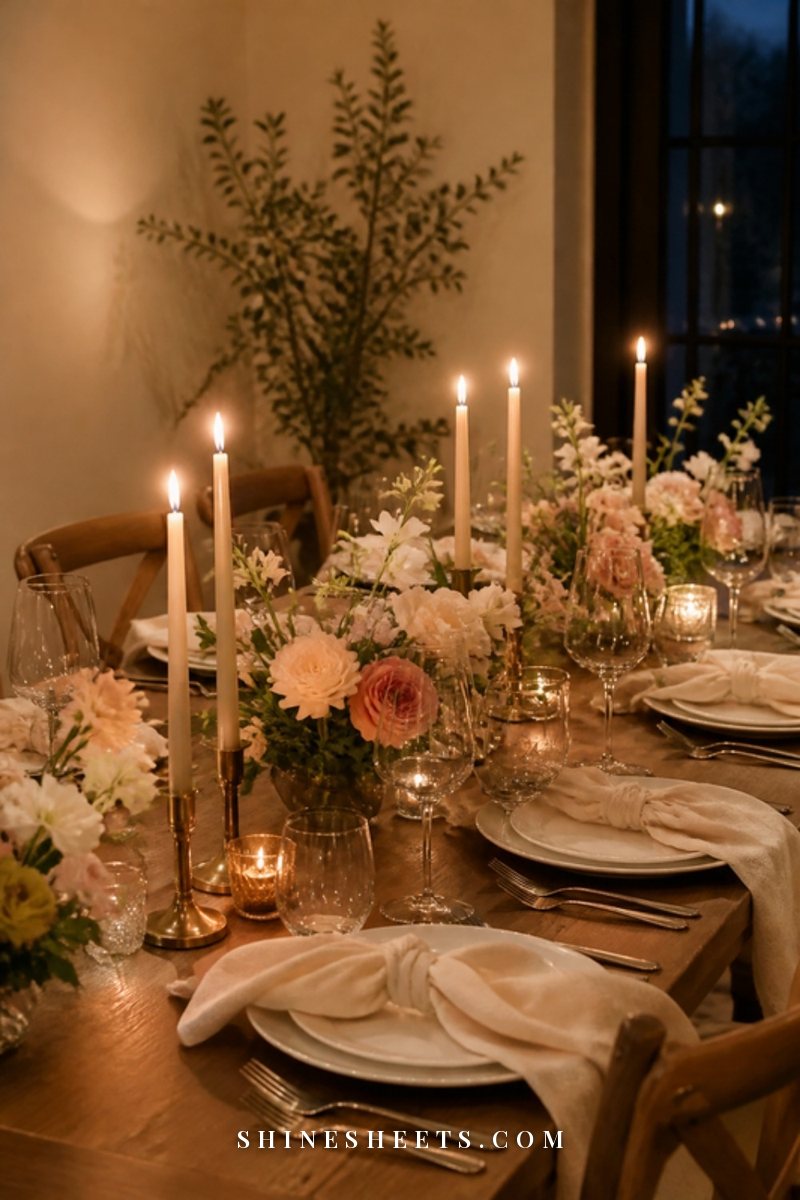
Honestly, conversation matters more than any fork rule. People rarely remember whether you held your knife perfectly, but they always remember whether they felt included and listened to.
- Talk to both sides. At a long table, chat with the person on your left and the person on your right. If someone seems quiet, bring them in: "Maya, you just got back from a trip, didn't you? How was it?"
- Choose topics everyone can join. Travel, books, shows, the food you're enjoying, plans for the season, funny small stories. Heavy topics can wait unless the whole table clearly wants to go there.
- Share the airtime. A simple rule: after you've told a story, ask a question. "That's what happened to me. Has anything like that ever happened to you?"
- Skip remarks about food choices. Avoid talking about diets, calories or what other people are or aren't eating. Let everyone enjoy their plate in peace.
- Keep private matters private. Money details, health details and complaints about people who aren't there rarely make a table feel good.
If you tend to freeze when the conversation goes quiet, my guide on how to make small talk has easy openers and follow-up questions that work beautifully at dinners with people you don't know well.
Restaurant Etiquette
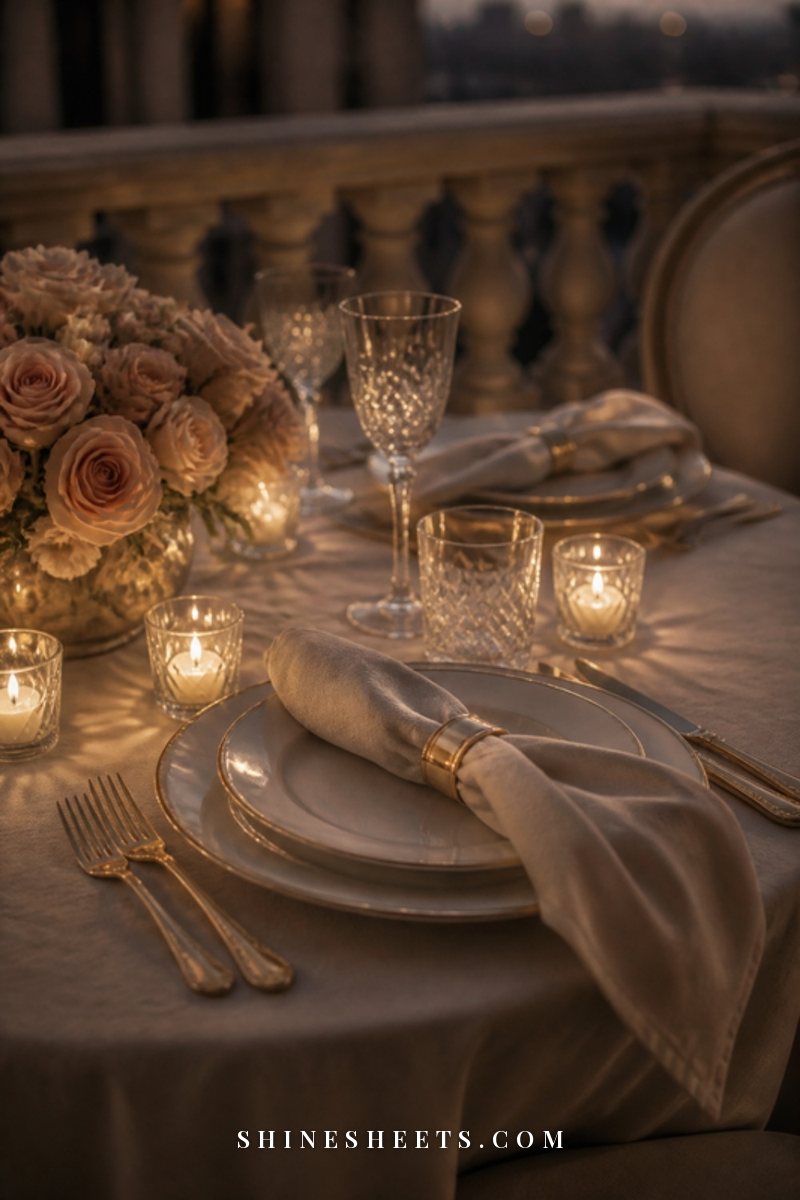
Restaurants add a few extra moments to navigate: ordering, the staff and, of course, the bill. Here's how to handle each one gracefully.
Ordering
Let guests order first if you're hosting, and let the host guide the pace if you're the guest. If someone else is paying, choose something in the middle of the menu price range, and follow their lead on starters, wine or dessert ("Are we doing dessert? I'd love to if you are"). Close your menu when you've decided – it's a quiet signal to the server that you're ready.
Allergies and dietary needs are absolutely fine to mention. Tell the server calmly and clearly: "I have a nut allergy. Could you check whether this dish is safe for me?" No apology needed.
Being Kind to the Staff
How someone treats the server says more about them than any etiquette rule. Make eye contact, say please and thank you, and learn names if they introduce themselves. To get attention, catch their eye or raise your hand slightly. Never snap, whistle or wave a menu.
If something isn't right, say so early and kindly: "I'm so sorry, I think this might be medium rather than well done. Would it be possible to fix it?" Calm and specific always works better than a dramatic sigh.
Splitting the Bill
Money is where friendly dinners can get awkward, so decide early. When you sit down or order, say: "Shall we ask for separate checks?" or "Is everyone happy to split it evenly?" If you ordered much less than everyone else, it's fair to say kindly, "Would you mind if I just pay for mine tonight?"
If someone invited you and says it's their treat, accept warmly ("Thank you, that's so generous of you") and offer to get the next one.
Tipping in the US
In US sit-down restaurants, servers rely on tips, so tipping is part of the cost of the meal. In general terms, 15 to 20 percent of the bill is the usual range, and around 20 percent is common for good service. Many people tip on the amount before tax, and if you used a discount or gift card, tip on the full value of the meal. If service was slow because the restaurant was clearly overwhelmed, try not to punish the server for it.
Awkward Moments (and Exactly What To Say)
Awkward moments happen at every table, including the fanciest ones. Good manners aren't about avoiding them, they're about handling them calmly so everyone can move on in a few seconds.
- Something in your teeth. If you suspect it, excuse yourself and check in the restroom rather than picking at it at the table. If you notice it on someone else, tell them quietly and kindly: "You've got a little something, just here," with a small gesture to your own tooth. Most people are grateful.
- A spill. Stay calm, set your glass upright, and dab with your napkin. At a restaurant, let the server know: "I'm so sorry, I've had a little spill." At someone's home, apologize once, help clean up if they want help, and then let it go. Apologizing five times makes the moment bigger, not smaller.
- Food you don't like. Take a small portion, eat what you comfortably can and leave the rest quietly. If you're offered seconds, "No, thank you, I'm wonderfully full" is all you need to say.
- Allergies or dietary needs at someone's home. Tell the host when you accept the invitation, not when you sit down: "I'd love to come! Just so you know, I don't eat shellfish – please don't go to any trouble, I'm happy with the sides."
- A bone or pit in your mouth. Remove it the way it went in, as discreetly as you can: quietly onto your fork and then onto the edge of your plate.
- Dropped cutlery. At a restaurant, leave it on the floor and ask for a new one. At home, pick it up and ask the host for a fresh one.
- A cough or sneeze. Turn away from the table and cover with your elbow or napkin. If it doesn't stop, excuse yourself for a moment.
- Needing to leave the table. A simple "Excuse me for a moment" is enough. No explanation required.
How To Show You're Resting or Finished
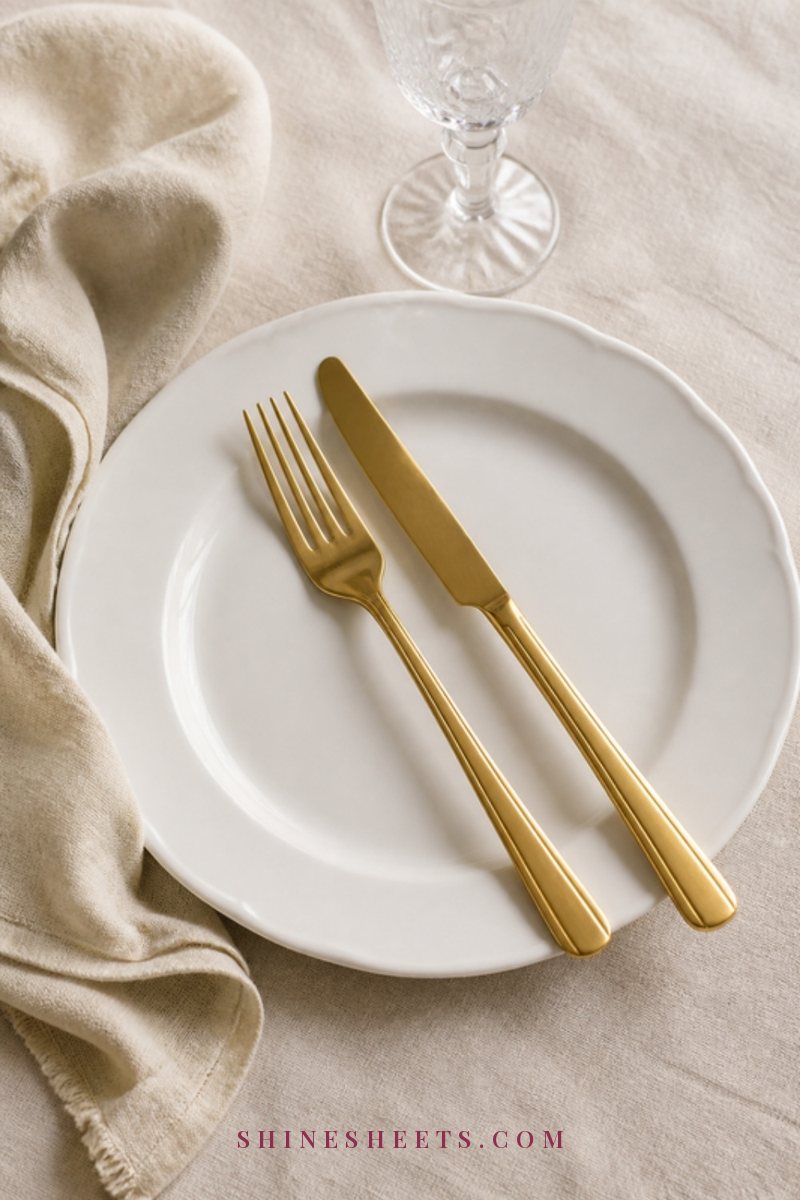
Your cutlery quietly "talks" to the server or host, so they know whether to take your plate. In the American style, there are two simple positions.
- Resting (still eating): Place your knife across the top edge of your plate with the blade facing in, and rest your fork on the plate below it, or simply lay them in an upside-down V with the tips toward each other and the handles on the rim. Either one says, "I'm not done yet."
- Finished: Lay your fork and knife side by side, diagonally across the plate, with the handles pointing to about four o'clock on an imaginary clock face. The knife blade faces in, toward the fork.
A few related details:
- Once a piece of cutlery has been used, it never goes back on the tablecloth. It stays on your plate (or the saucer, for a coffee spoon).
- Don't push your plate away or stack plates at a restaurant. If you want to help at a friend's home, ask first: "Can I help clear?"
- At the end of the meal, place your napkin loosely to the left of your plate. Not crumpled, not refolded perfectly, and never on the plate itself.
Table Manners as a Guest at Someone's Home
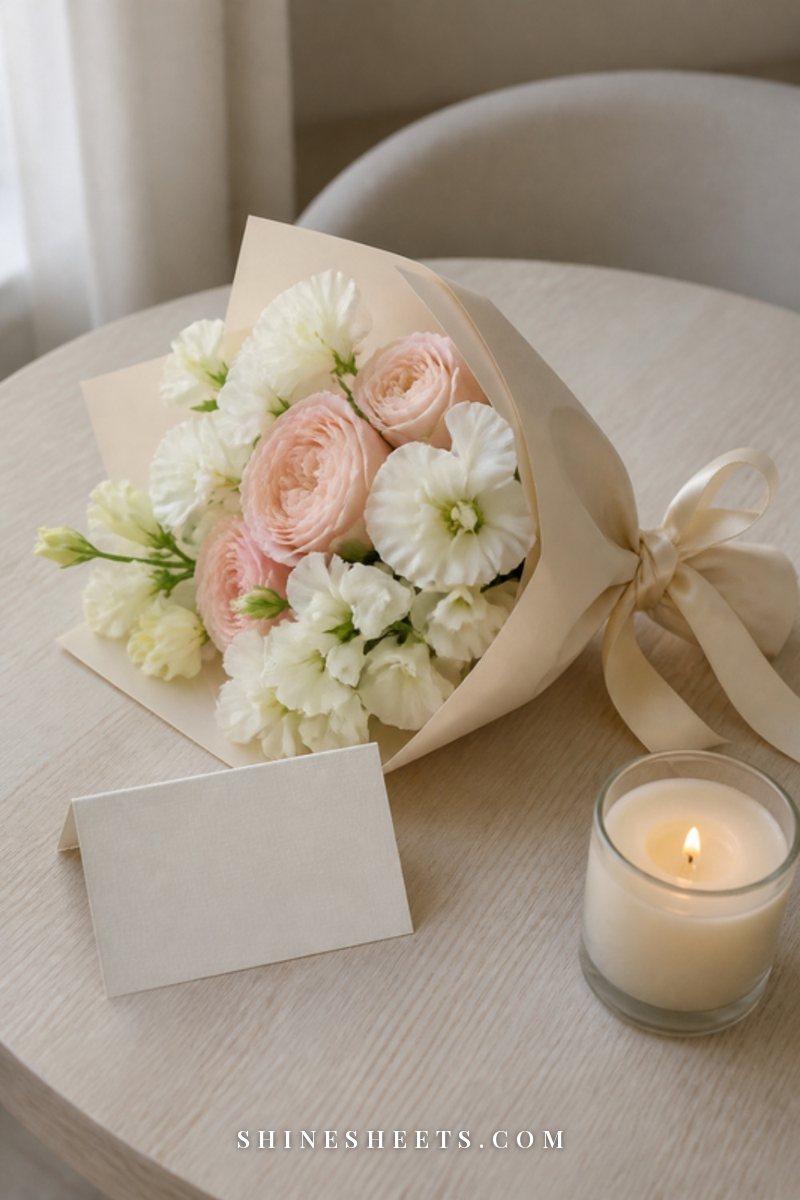
Dinner at someone's home is the warmest kind of invitation. A few thoughtful touches make you the guest everyone wants to invite back.
- Bring a small gift. Flowers already in a vase or a simple bouquet, a candle, a nice tea or a bottle of something if you know they enjoy it. Don't expect your gift to be served that evening – it's for them.
- Offer help once. "Can I help with anything?" If they say no, believe them and stay out of the kitchen. If they say yes, do exactly the task they give you.
- Compliment specifically. "This sauce is wonderful" or "The table looks so beautiful" means more than a general "Everything's great."
- Read the evening. When the host starts clearing, yawning politely or mentioning an early start tomorrow, it's time to begin saying goodbye. Thank them at the door, not in a long speech at the table.
- Follow up. Send a short thank-you text the same evening or the next morning: "Thank you for such a lovely dinner, I'm still thinking about that dessert. It was so good to see you." For a more formal evening, a handwritten note on blank cream thank-you cards is a gorgeous touch, and my guide to thank-you notes has wording for every occasion.
If you're staying over rather than just coming for dinner, my sister guide on how to be a good houseguest covers everything from what to pack to how to leave your room.
The Table Manners Do / Instead Table
Here is everything above in one quick view. Screenshot it before a big dinner, a work lunch or a first meal with a partner's family, and you'll walk in feeling calm.
| Moment | Instead of… | Do this |
|---|---|---|
| Sitting down | Grabbing any chair | Wait or ask, "Where would you like me?" |
| Phone | Face down next to your plate | In your bag on silent; mention it if you're expecting a call |
| Napkin | Tucked into your collar | Folded in half on your lap, fold toward you |
| Starting to eat | Digging in as soon as your plate lands | Wait until everyone is served or the host invites you to start |
| Bread | Buttering the whole roll | Tear one bite, butter it, eat it |
| Something far away | Reaching across your neighbor | "Could you please pass the…?" |
| Salt | Passing only the salt | Pass salt and pepper together |
| Talking | Answering with a full mouth | Small hand signal, finish chewing, then answer |
| Conversation | One long story about you | Tell a story, then ask a question back |
| Getting the server's attention | Waving or snapping | Eye contact and a slightly raised hand |
| Splitting the bill | Arguing over it at the end | Agree on separate checks or splitting when you order |
| A spill | Apologizing five times | Dab, tell the host or server once, move on |
| Finished eating | Pushing the plate away | Fork and knife side by side, handles at four o'clock |
| Leaving a dinner party | Disappearing without a word | Thank the host at the door, text a thank-you later |
If you enjoy this kind of thing and want to go deeper, a modern etiquette book on your nightstand is a lovely way to pick up a page or two at a time, the same way you'd read a novel with your evening tea.
Final Thoughts
Table manners were never meant to make anyone feel small. At their best, they're a quiet way of saying, "I'm glad to be here with you, and I want this to be easy for everyone."
You don't need to memorize every detail. Remember the "b and d" trick, work from the outside in, ask instead of reaching, and when you're unsure, follow the host. The rest is simply kindness at a table, and you already know how to do that.