
Feeling tired after a full night's sleep usually doesn't mean you need more sleep. It often means you're short on a different kind of rest – the kind that quiets your mind, calms your senses or gives your heart a break from holding everyone else's feelings. Sleep is only one way to recover, and it can't cover all of them on its own.
This guide maps out the types of rest you might be missing: seven kinds, the signs you're low on each, three small ways to get it in under 15 minutes, and one bigger option for the weekend. You'll also find a quick self-check to spot your biggest rest gap and an easy way to fit one tiny rest into every day.
No overhauls, no perfect routines. Just a clearer picture of what your particular kind of tired is asking for.
Why Sleep Alone Doesn't Always Fix Tiredness

Sleep restores your body in ways nothing else can, and it's always worth protecting. But a lot of modern tiredness doesn't come from physical effort. It comes from hours of decisions, notifications, noise, screens and keeping a pleasant face on when you don't feel pleasant. Eight hours in bed doesn't automatically undo all of that.
The same goes for the way we usually "rest." Flicking through your phone on the sofa, catching up on messages in bed or watching three episodes in a row can feel like a break, but your eyes, mind and nervous system are still working the whole time. That kind of downtime often leaves you just as tired as before, and then you wonder why rest doesn't seem to work for you. Real rest is less about stopping activity and more about giving the specific part of you that's tired a genuine pause.
Think of yourself as having several batteries instead of one. Your body battery might be fine while your social battery is at two percent and your mental battery is flashing red. Charging only one of them leaves you wondering why you still feel flat.
It took me a long time to understand that my most tired days weren't always my busiest ones. They were the days with the most input and the least quiet. Once I started noticing which kind of tired I was, rest became far more effective (and a lot less guilty – if guilt is your sticking point, my guide on how to stop feeling guilty for resting is a good companion to this one).
The 7 Types of Rest
Each type below follows the same layout: signs you're missing it, three small ways to get it in under 15 minutes, and one bigger option for a weekend or a free afternoon. You don't need all seven at once. Read through and notice which one makes you think, "Oh. That's me."
1. Physical Rest (Passive and Active)
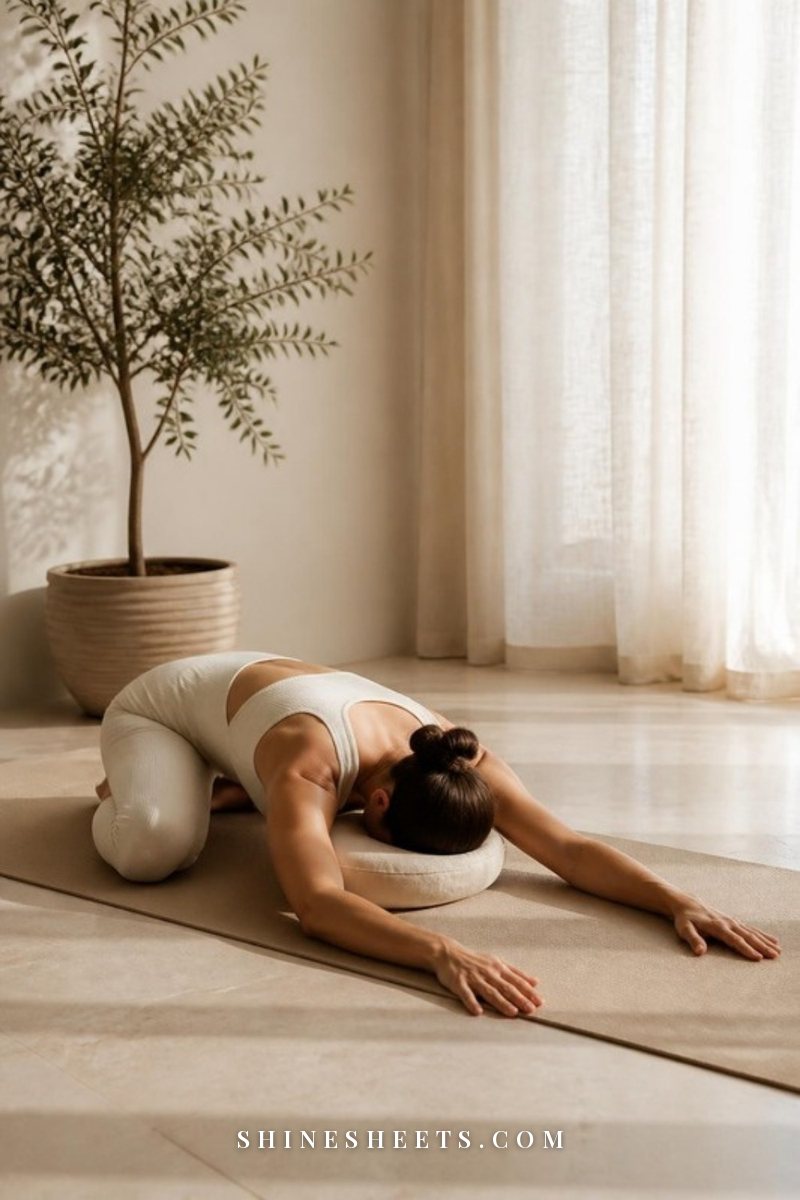
Physical rest comes in two forms. Passive physical rest is sleep, naps and simply lying down. Active physical rest is gentle movement that helps your body recover – stretching, slow walks, easy yoga – especially if you sit a lot or carry tension in your neck and shoulders.
Signs you're missing it: heavy limbs, a stiff neck or lower back, tension headaches, dozing off in the afternoon, feeling achy even though you haven't done much.
Three ways in under 15 minutes:
- A 10-minute lie-down with your legs up the wall or propped on sofa cushions, eyes closed, phone in another room.
- Five minutes of slow neck rolls, shoulder circles and a soft forward fold, breathing out longer than you breathe in.
- A 12-minute walk around the block at an easy, chatty pace.
Weekend option: plan a slow morning with no alarm, a long bath or shower, and an afternoon nap of 20 to 30 minutes. Slipping into a soft cream waffle robe afterwards makes it feel like a real day off rather than a lazy one.
2. Mental Rest

Mental rest is a break from thinking, deciding and holding information in your head. If your mind keeps running long after you've stopped working, this is probably the one you need. For a deeper look at this kind of tiredness, see my guide to mental exhaustion and how to recover from it.
Signs you're missing it: trouble concentrating, rereading the same email three times, forgetting why you walked into a room, lying awake with a mental to-do list, feeling irritated by small decisions like what to wear.
Three ways in under 15 minutes:
- A two-minute brain dump: write every open loop on paper so your mind doesn't have to hold it.
- A 10-minute "nothing break" between tasks – look out of a window, no phone, no podcast.
- Single-tasking for 15 minutes: one tab, one task, notifications off.
Weekend option: a half-day with zero decisions. Plan it the evening before (what you'll wear, where you'll walk, what you'll watch), then simply follow the plan without choosing anything new.
3. Emotional Rest
Emotional rest means having time and space where you don't have to manage anyone's feelings, including your own performance of being "fine." It's the rest that comes from being honest and unguarded.
This one is easy to overlook, because emotional work rarely looks like work. Listening to a friend's problems, smoothing over tension at home, staying calm with a difficult client, reassuring everyone that it'll all be fine – it all draws from the same well, and that well needs refilling too.
Signs you're missing it: feeling drained after conversations, saying "I'm fine" on autopilot, resentment that sneaks up out of nowhere, being the person everyone comes to while having nowhere to bring your own worries.
Three ways in under 15 minutes:
- Write three honest sentences that start with "Right now I actually feel…"
- Send one message to a safe person: "Can I vent for five minutes? No advice needed."
- Say one small, kind no today instead of a reluctant yes.
Weekend option: a long, unhurried walk with the one person you never have to perform for, or a quiet afternoon alone with a journal where you let yourself write the things you don't say out loud. If you've been running on empty for a while, my gentle burnout recovery plan goes further.
4. Sensory Rest

Sensory rest is a break from input: bright light, screens, noise, background music, crowded shops, constant pings. Our senses rarely get a moment off, and that low-level overload adds up by evening.
Signs you're missing it: sounds feel grating, you snap at noise, your eyes feel dry or strained, you crave silence, you feel fried after a busy store or an open-plan office.
Three ways in under 15 minutes:
- Ten minutes lying down in a quiet room with a lavender eye mask over your eyes.
- Turn off overhead lights in the evening and switch to a lamp or a glass candle (never left unattended).
- Wear noise-cancelling earbuds with nothing playing on your commute or in a busy café.
Weekend option: a slow morning with no screens until noon, or an hour somewhere naturally quiet – a park early in the day, a library, a calm corner of your home with the window open.
5. Creative Rest

Creative rest is what refills you when you've been solving problems all day. It comes from beauty, play and making something with no goal attached – not a productive hobby or a side project, just enjoyment.
Signs you're missing it: feeling uninspired, struggling to come up with ideas, everything looking flat and gray, finding it hard to enjoy things that used to delight you.
Three ways in under 15 minutes:
- Paint loose shapes and colors with a beginner watercolor set – no subject, no skill needed.
- Step outside and look closely at one beautiful thing: a tree, the evening sky, flowers at a market stall.
- Play one album you love from start to finish and do nothing else.
Weekend option: wander a museum, garden or bookshop with no plan, or spend an afternoon arranging flowers, sketching or leafing through Old Hollywood photo books purely for inspiration.
6. Social Rest
Social rest isn't about avoiding people. It's about noticing which relationships drain you and which ones refill you, getting more of the second kind, and having enough time alone to recharge.
Signs you're missing it: dreading plans you agreed to, needing a long time to recover after gatherings, feeling lonely even when surrounded by people, letting calls go to voicemail because you can't face one more conversation.
Three ways in under 15 minutes:
- Take a 15-minute solo break at lunch – a walk, a café, a bench – instead of more small talk.
- Send a short voice note to a friend who makes you feel easy and light.
- Move one non-essential plan this week to a later date, kindly and without a long explanation.
Weekend option: block one full evening with no social plans at all, or spend time with one person who restores you rather than a big group. My guide to your social battery and how to recharge it has more ideas for when you feel completely drained.
7. Meaning Rest

Meaning rest is quiet time with what matters to you. It's the rest that comes from feeling connected to your values, to nature, to the people you love, to something bigger than your to-do list. You don't need any particular belief for it – just a moment to remember why your days matter.
Signs you're missing it: feeling like you're on a treadmill, going through the motions, wondering "what's the point?" about everyday tasks, feeling disconnected from yourself.
Three ways in under 15 minutes:
- Write down three things that mattered most to you today and why.
- Sit outside for ten minutes and simply notice the sky, the trees and the sounds around you.
- Do one small kind thing for someone without telling anyone.
Weekend option: a long walk somewhere green, an afternoon helping with a cause you care about, or a slow evening reflecting on what you'd like more of in your life. If everything feels rushed lately, my guide on how to slow down and enjoy life again pairs well with this one.
Types of Rest at a Glance
Here's the whole map in one place. Screenshot it and keep it on your phone for the days when you're tired but can't tell why.
| Type of rest | Signs you need it | 5-minute fix | Weekend fix |
|---|---|---|---|
| Physical | Heavy body, stiff neck, afternoon dozing | Legs up the wall with eyes closed | Slow morning, long bath, short nap |
| Mental | Foggy, forgetful, racing thoughts at night | Two-minute brain dump on paper | Half-day with zero decisions |
| Emotional | Drained after talking, "I'm fine" on autopilot | Three honest sentences in a journal | Time with someone you don't perform for |
| Sensory | Noise feels grating, tired eyes | Lights off, eye mask, quiet room | Screen-free morning or a quiet park |
| Creative | Uninspired, everything feels flat | Look closely at one beautiful thing | Museum, garden or an afternoon of painting |
| Social | Dreading plans, slow to recover after people | A short solo walk | One full evening with no plans |
| Meaning | Going through the motions | Write three things that mattered today | A long walk in nature or helping a cause you love |
Notice that none of the 5-minute fixes require money, equipment or a perfect setting. That's on purpose. Rest works best when it's easy enough to do on an ordinary, imperfect day.
A Quick Self-Check: Find Your Top Rest Gap
Read each statement and score it based on the past two weeks: 0 = not really, 1 = sometimes, 2 = most days. The type with the highest score is your top rest gap, and that's where to start.
- Physical: My body feels heavy or achy, and I'm sleepy in the afternoon.
- Mental: I can't concentrate, and my mind won't switch off at night.
- Emotional: I often say I'm fine when I'm not, and conversations drain me.
- Sensory: Noise, light or screens make me irritable by evening.
- Creative: Nothing feels inspiring, and I struggle to enjoy things I once loved.
- Social: I dread plans I agreed to, or I feel lonely in a crowd.
- Meaning: I feel like I'm going through the motions.
If two or three types tie, pick the one that feels easiest to address this week. Small wins build momentum. And if nearly every type scores a 2, take that as a sign to be extra gentle with yourself – you may be more depleted than you've let yourself notice.
How To Build One Tiny Rest Into Each Day

Rest works best as a small daily habit, not a rare treat you wait for. The trick is to attach it to something you already do, so you don't have to remember it.
- Pick your top gap from the self-check above.
- Choose one under-15-minute fix for that type of rest.
- Anchor it to an existing moment: after your morning coffee, after lunch, when you get home, after your evening tea.
- Keep it for seven days, then check in with yourself. Keep it, swap it, or add a second type.
A simple formula: After I [existing habit], I will [tiny rest] for [minutes]. For example: "After I get home, I'll lie down with my eyes closed for ten minutes before I do anything else." Or: "After my evening tea, I'll write three honest sentences in my journal."
Mine is a small one: after evening tea, I turn off the overhead lights, light a glass candle and sit quietly for ten minutes before I journal. It's not dramatic, but my evenings feel completely different with it. If you'd like to make your own rest corner more inviting, a soft oatmeal knit throw folded over the arm of a chair is a lovely visual cue that this spot is for slowing down.
How To Protect Your Rest Without Guilt

Knowing what kind of rest you need is half of it. The other half is actually letting yourself have it. A few gentle ways to make rest stick:
- Put it in your planner. A 15-minute rest block deserves the same respect as a meeting.
- Use a simple line. "I'm taking a short break, I'll be back at three" needs no further explanation.
- Lower the bar. Ten imperfect minutes beats a perfect rest day that never happens.
- Notice the after. Jot down how you feel after resting. Seeing the difference on paper makes it easier to choose rest next time.
- Stop earning it. Rest isn't a reward for finishing everything. Your to-do list will never be empty, and you're allowed to rest anyway.
I'm prone to anxiety, and I've noticed that the days I skip rest because I'm "too busy" are usually the days my anxiety runs loudest. Rest isn't time taken away from your life. It's what makes the rest of your life feel manageable.
When Tiredness Doesn't Lift
If you've been resting in all the ways that make sense and you still feel exhausted for weeks, please talk to a doctor. Ongoing tiredness can have physical causes worth checking, such as low iron, thyroid changes or sleep problems, and you deserve a proper look rather than more self-blame.
It's also worth reaching out to a therapist if your exhaustion comes with low mood, losing interest in things you usually enjoy, or feeling hopeless. Needing support isn't a failure to rest correctly. It's simply another kind of care.
Final Thoughts
Being tired doesn't always mean you need more sleep. Sometimes it means you need quiet, beauty, honesty, solitude or a moment to remember what matters. Once you can name your kind of tired, rest stops being a vague wish and becomes something you can actually give yourself.
Start with one type, one tiny habit and one week. Your energy has been asking for something specific all along, and you're already learning how to listen.