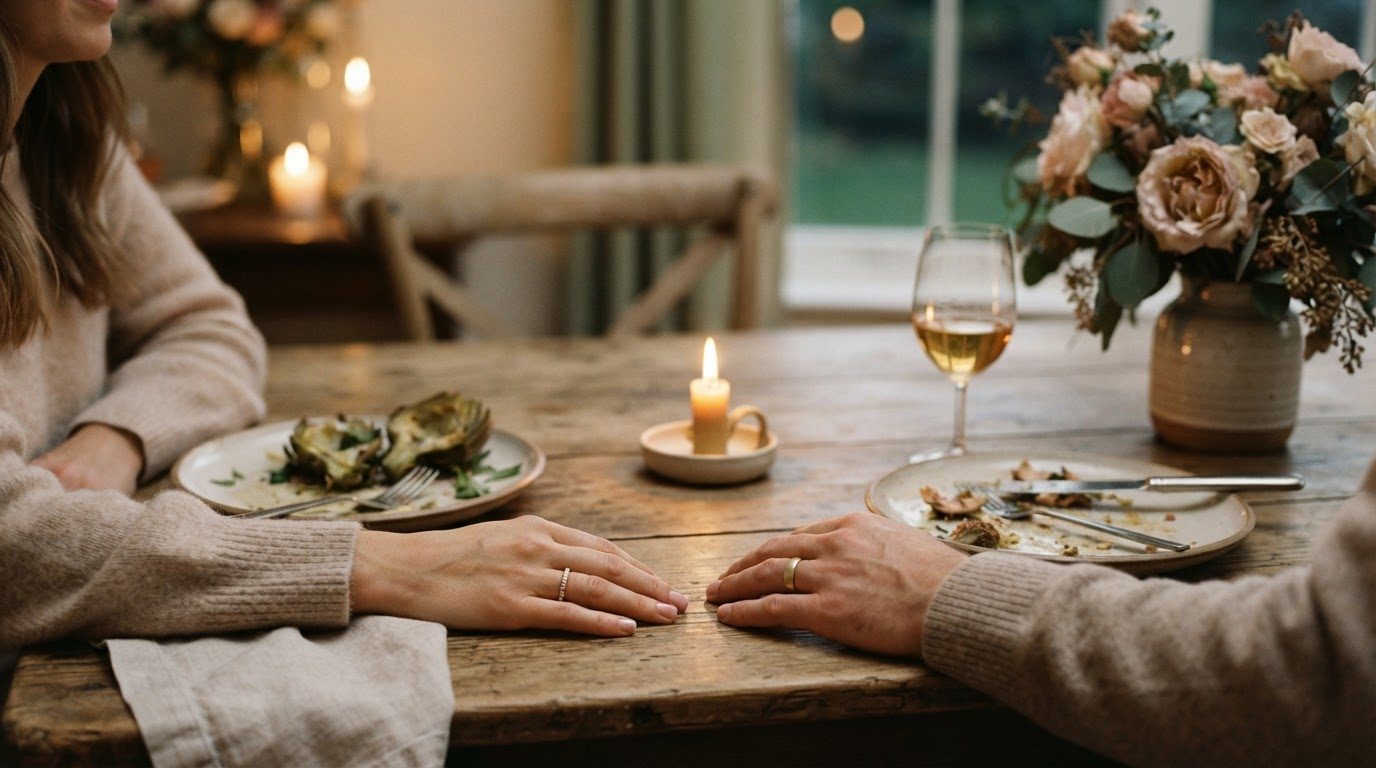
A friend once told me about the moment she realized her relationship was a good one. Nothing dramatic happened. She'd had an awful day, came home quiet and a little snappy, and instead of getting defensive, her partner just put the kettle on and said, "Want to talk about it, or want to watch something silly?" She told me she nearly cried, not because it was grand, but because it was so easy.
I think about that story a lot, because so much of what we learn about love comes from movies and social media, where the big gestures get all the attention. The airport chase. The surprise proposal. The jealous outburst that somehow gets framed as romantic. Meanwhile, the things that actually make a relationship feel safe and happy are usually small, quiet and a little boring from the outside.
So this guide is all about the signs of a healthy relationship – 20 green flags you can look for, whether you're a few dates in or many years together. You'll also find a green flag vs. "work on it" comparison table (because no relationship is perfect, and that's fine), a five-question check-in script you can use together, and a kind note on what to do if something feels off.
Make a cup of tea, settle in and read this with an open heart, not a scorecard. Nobody is grading you, and nobody is grading your partner.

What a Healthy Relationship Actually Feels Like
Before we get into the list, here's the simplest test I know: how do you feel around this person, most of the time? Not on the best day or the worst day, but on an ordinary Tuesday.
In a healthy relationship, the general feeling is safe. You can relax. You can be in a bad mood, say something clumsy, change your mind or need space, and the relationship doesn't wobble. You don't spend energy managing the other person's reactions or rehearsing how to bring something up.
That doesn't mean it's always easy. Healthy couples still argue, get on each other's nerves and go through hard seasons. The difference is that problems feel like something you're facing together, side by side, instead of something you're facing against each other.
Healthy relationships also aren't one-size-fits-all. Some couples text all day, some barely text at all. Some share every hobby, some have almost none in common. The green flags below aren't about how a relationship looks. They're about how it feels and how two people treat each other.
20 Signs of a Healthy Relationship
You don't need to tick every single one. Read through, notice which ones feel strong and which ones feel shaky, and remember that many of these are skills couples build over time, not traits you either have or don't.
1. You Feel Safe Being Yourself
You don't have to perform. You can wear the old sweatshirt, admit you've never seen the famous movie, laugh too loudly and share the opinion that isn't popular. Being fully yourself doesn't cost you affection.
A quick self-check: think about the last time you held something back. Was it because the moment wasn't right, or because you were worried about how they'd react? Occasional tact is normal. Constant editing is worth noticing.
2. Disagreements Don't Feel Dangerous
You argue, but you don't fear the argument. Nobody yells to win, slams doors to end the conversation or brings up every past mistake as ammunition. You can disagree about money, plans or how to load the dishwasher and still feel like a team when it's over.
3. They Do What They Say They'll Do
Trust isn't built by big promises. It's built by a hundred small kept ones: calling when they said they would, picking up the thing from the store, showing up on time (or texting when they can't). Reliability is one of the least glamorous and most important green flags there is.
4. You Can Say No Without a Fight
"I don't feel like going tonight." "I'm not ready for that yet." "I'd rather not." In a healthy relationship, a no is received as information, not as rejection. There might be a little disappointment, but there's no sulking, guilt-tripping or punishment afterward.
If saying no is something you struggle with in general, my guide on how to stop people pleasing has gentle scripts that work in relationships too.
5. You Both Apologize (and Mean It)
A real apology names what happened, doesn't add a "but" and comes with an effort to do better. "I'm sorry I snapped at you this morning. I was stressed, but that's not on you. I'll tell you when I need a minute instead." Both people can do this, not just one.
6. You Have Your Own Lives Too
You still see your friends. You still have your hobbies, your alone time and your own opinions. They're happy for you to have a girls' night or a quiet Saturday with a book. Two whole people make a stronger couple than two halves trying to fill each other in.
7. They're Genuinely Glad When Good Things Happen to You
You get the promotion, finish the course, run the 5K, and their reaction is pure joy. Not a backhanded remark, not a quick change of subject back to themselves. Being celebrated by the person closest to you is a lovely, steadying feeling.
8. Communication Is Mostly Easy
You can talk about the light stuff and the heavy stuff. You don't need to wait for the "right moment" for weeks to mention something that bothers you. If you'd like some fresh conversation starters for date nights, my list of questions to ask your boyfriend has deep, fun and sweet ones for every mood.
9. There's Room for Your Feelings
When you're sad, anxious or frustrated, they don't rush to fix it, dismiss it or make it about them. They let you feel it. Sometimes the most loving sentence in the world is "That sounds really hard. I'm here."
As someone prone to anxiety, I can tell you how much this matters. Being told to "just relax" makes everything worse. Being met with patience makes everything lighter.
10. Jealousy Is Rare and Handled Kindly
A little jealousy can be human. What matters is what happens next. In a healthy relationship, it's talked about calmly ("I felt a bit insecure when…"), not acted out through checking phones, controlling who you see or accusations.
11. Your Privacy Is Respected
Trust means they don't go through your messages, demand your passwords or track your location without a conversation you both agreed to. Having private thoughts, friendships and space is normal, not suspicious.
12. You Share the Load
Chores, planning, remembering birthdays, booking appointments, the emotional work of checking in – it doesn't all fall on one person. It doesn't have to be a perfect 50/50 every week, but over time it feels fair to both of you.
A quick fix if the mental load feels lopsided: sit down for 15 minutes and write every recurring household task on a list, then take turns choosing who owns what. Owning means remembering, not just doing when asked.
13. You Repair After Hard Moments
Every couple has rough patches and bad days. Healthy couples come back to each other afterward. A hug, a "can we start over?", a quiet cup of tea together after an argument. The repair matters more than the fight.
14. You Laugh Together
Inside jokes, silly voices, laughing at the same ridiculous video three times. Playfulness is a sign that you feel relaxed with each other. If life has gotten a bit too serious lately, a few cozy winter date ideas can bring the fun back without much planning.
15. They're Kind When You're Not Around
How someone talks about you to friends and family says a lot. In a healthy relationship, your partner speaks about you with respect, even when they're venting. They don't make you the punchline or share your private struggles to get a laugh.
16. You Can Talk About the Future Without Panic
Whether it's next summer's vacation or bigger life plans, you can bring up the future without someone shutting down or changing the subject. You may not want all the same things yet, but you can talk about it honestly.
17. Affection Feels Natural, Not Transactional
Hugs, compliments, small kindnesses – they're given freely, not used as rewards for "good behavior" or withheld as punishment. And if you show love in different ways, you're curious about each other's style. My guide to love languages is a fun way to explore that together.
18. Your Friends and Family Feel Comfortable
The people who love you generally seem relaxed around your partner, and your partner makes an effort with them. You don't feel like you have to keep your worlds apart or constantly explain their behavior.
19. You Both Keep Growing
They support you trying new things, changing careers, picking up a hobby or working on yourself. And you do the same for them. A healthy relationship makes room for you to become more yourself over time, not less.
20. You Feel More Like Yourself, Not Less
This is the one I'd put at the top if I could. After time with them, do you feel calmer, braver, more you? Or smaller, quieter and a little anxious? A healthy relationship is a soft place to land and a strong place to launch from.
Green Flag vs. "Work On It": A Quick Comparison
Here's the honest truth: every relationship has a few areas that need attention. That doesn't make it unhealthy. The question is whether both people are willing to work on them. This table shows what a green flag looks like, what a "work on it" area might look like, and a small first step. (A "work on it" is different from a red flag – there's a section on that further down.)
| Area | Green flag | "Work on it" sign | A small first step |
|---|---|---|---|
| Communication | You can bring things up without bracing yourself | Small issues pile up because the timing never feels right | Try a weekly 15-minute check-in (script below) |
| Conflict | Arguments stay on topic and end with a repair | Fights drag on, get personal or end in silence | Agree on a "pause word" and a time to come back to it |
| Trust | Promises are kept, plans are clear | Small things slip and lead to doubt | Name one promise each and keep it all week |
| Independence | You each have friends, hobbies and alone time | You've slowly dropped your own plans | Each book one solo activity this week |
| Fairness | Chores and mental load feel balanced | One person always remembers, plans and reminds | List recurring tasks and split ownership |
| Affection | Love is shown freely, in ways you both feel | One of you feels unseen or taken for granted | Each share one thing that makes you feel loved |
| Support | Wins are celebrated, hard days are met with care | Support feels distracted or rushed | Ask, "Do you need advice or just a listener?" |
| Fun | You laugh and play together regularly | Life has become all logistics | Plan one phone-free evening a week |
If you see a lot of "work on it" signs, please don't panic. Most of these are habits, and habits can change when both people care. If you'd like a bit more structure, my post on relationship rules that keep relationships strong has more ideas for building good everyday patterns.
The 5-Question Couples Check-In
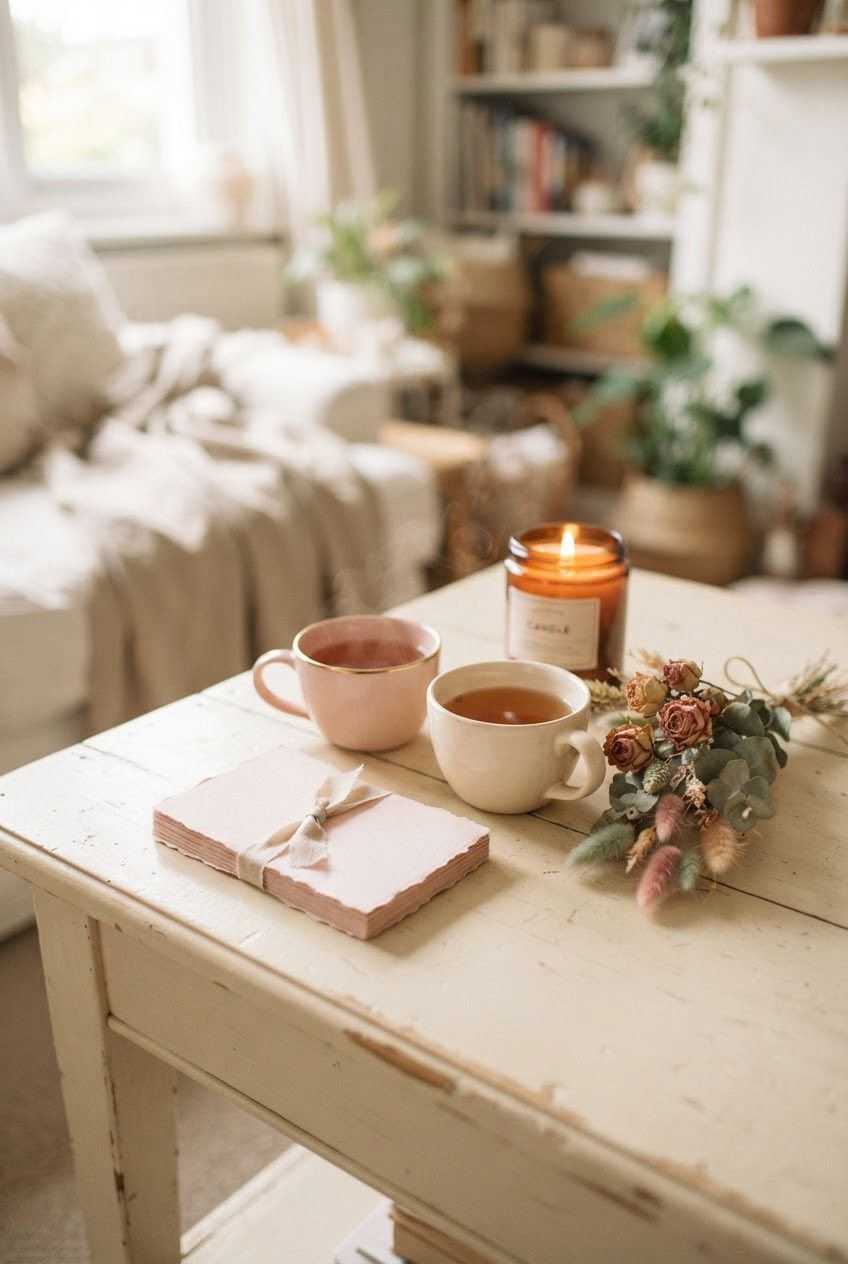
This is a simple ritual couples can do once a week, ideally at the same time – Sunday evening, after dinner, on a walk. It takes about 15 minutes and keeps small issues from turning into big ones. Make two cups of tea, sit somewhere comfortable and take turns answering. A deck of couples conversation cards is a nice backup for weeks when you want to go a little deeper.
Here's the script. One person asks, the other answers fully, then you swap. The listener's only job is to listen – no defending, no fixing, just "thank you for telling me."
- "What's one thing I did this week that made you feel loved?" Start with appreciation. It sets a warm tone and teaches you both what's working.
- "How are you really doing – not the quick answer?" Make space for stress, worries and wins outside the relationship. Sometimes this is where the most important things come up.
- "Is there anything small that's been bothering you?" Keep it small and specific. "I felt a bit ignored when you were on your phone at dinner on Thursday." Small issues are much easier to fix when they're fresh.
- "What do you need from me this coming week?" Practical or emotional. "A night to myself on Wednesday." "Help with the grocery run." "Extra patience – work is a lot right now."
- "What's something we can look forward to together?" End on a bright note: a walk, a movie night, a new recipe to try together, a weekend plan.
A few ground rules make this work: keep phones in another room, use "I feel" instead of "you always," and stop at 15 minutes even if you're mid-topic (you can continue another day). If something big comes up, it's okay to say, "This deserves more time. Can we talk about it properly on Saturday?"
Some couples like to jot down one line after each check-in in a shared notebook. A cream linen couples journal left on the coffee table turns into a sweet little record of your weeks together, and you'll love reading it back months later.
Small Rituals That Keep a Relationship Healthy
Green flags don't appear by luck. They grow from small, repeated moments of care. A few easy rituals to try:
- The six-second hug. Hold a hug a little longer than usual when you say hello or goodbye. It sounds tiny, but it slows you both down.
- A morning drink together. Ten minutes of coffee or tea before the day takes over. A set of two matching white ceramic mugs makes it feel like a little ritual instead of rushing past each other.
- A weekly date, even at home. Light a candle in a cream glass jar, put the phones away and cook, play a game or just talk. Please keep candles away from curtains and never leave them burning unattended.
- A shared blanket for movie night. Cuddling under a soft cream knit throw is about as simple as connection gets.
- A date night jar. Write 20 date ideas on slips of paper and keep them in a glass date night jar. When neither of you can decide, pull one out. No more "I don't know, what do you want to do?"
- A goodnight debrief. Two minutes before sleep: "Best part of your day? Hardest part?" It keeps you connected even during busy weeks.
For more simple ways to connect, my post on how to have great couple time together is full of gentle ideas.
What If You Don't See Many Green Flags?
Maybe you read the list and felt a little sinking feeling. First, take a breath. Noticing is not the same as deciding. You don't have to make any big choices today.
Here's a gentle way to think it through:
- Is it a rough season or a pattern? Stress, illness, grief and big life changes can make any couple a little disconnected for a while. Patterns that have lasted months or years are a different conversation.
- Are you both willing? A relationship can grow a lot when both people want it to. It's very hard when only one person is doing the work.
- How do you feel in your body around them? Calm and loose, or tense and watchful? Your body often knows before your brain is ready to admit it.
- What would you tell a friend? If your best friend described your relationship to you, word for word, what would you hope for her?
Writing about it can help untangle your thoughts. A few pages after your evening tea, with a simple prompt like "What do I need to feel safe and happy?", can make things clearer than hours of overthinking. Couples counseling is also a wonderful option – it's not only for relationships in crisis, and many couples use it to learn better communication early on.
When It's More Than "Work On It"
Some things aren't communication hiccups or rough patches. If your partner controls who you see or what you spend, checks your phone, threatens you, puts you down constantly, makes you feel afraid or hurts you in any way, that is not a "work on it" area. It's not your fault, and you deserve to feel safe.
Please reach out to someone you trust, and know that confidential support exists. In the US, the National Domestic Violence Hotline offers free, private help by phone, text or chat, any time of day. If you're ever in immediate danger, call 911 or your local emergency number. This article is general encouragement, not professional advice, and a counselor or advocate can help you think through your options at your own pace.
Final Thoughts
The signs of a healthy relationship are rarely loud. They live in kept promises, easy laughter, honest apologies and the feeling that you can exhale around someone. No couple has all twenty green flags all the time, and that's perfectly normal.
What matters is the direction you're both moving in. Try the five-question check-in this week, pick one small ritual and notice how it feels. You deserve a love that feels like home – calm, kind and wholly yours.