Comparing your relationship to someone else's almost never tells you the truth about your own. It tells you how a single moment of theirs looks next to a long, real, unedited stretch of yours. That's not a fair fight, and it's no wonder it leaves you feeling a little flat.
The good news is that comparison isn't a sign that something is wrong with you, your partner or your love. It's a very human habit, and most of the time it's pointing at something quieter underneath: a need, a wish, a tired heart. Once you can hear that need, the sting gets a lot softer.
This guide is all about comparing your relationship to others: why it hurts so much, six signs it's quietly costing you, what you never see in other couples, a simple table to untangle your own comparisons, and kind, practical steps to stop. No blaming, no games, just a gentler way to look at the love you already have.
If it helps, keep a guided reflection journal or any notebook nearby while you read. A few of the steps below work best on paper.
Why Comparing Your Relationship Hurts So Much
Comparison hurts because it isn't really about facts. It's about feelings, and feelings fill in the gaps with whatever we're most afraid of. When you see a friend's anniversary dinner or a couple laughing in a video, your brain doesn't think "that's one evening." It thinks "they have something we don't."
I'm prone to anxiety (I mostly manage it, but it still likes to visit), and I've noticed comparison shows up loudest on the days I already feel a bit unsure. That's a useful clue. The comparison isn't creating the doubt; it's borrowing it from somewhere else.
Highlight Reels Aren't the Whole Story
Most of what you see from other couples is chosen. The flowers get posted; the argument about the dishwasher doesn't. The surprise trip is shared; the months of saving and the stress before it aren't. Even in real life, people tend to show their best side at a dinner party or a family lunch. You're comparing your whole movie to their trailer.
A small habit that helps: whenever you catch yourself admiring another couple, quietly add "and they also have hard days I'll never see." It sounds simple, but it brings the picture back to life size.
You're Missing the Context
Even when you know a couple well, you don't know their history, their private agreements or what each person actually needs. The partner who texts all day might be filling a gap that your relationship simply doesn't have. The couple who never argue might also never talk about anything difficult. From the outside, you can't tell which is which, and that's okay. It's not your job to know.
Context also works in reverse. Someone looking at your relationship might envy the way you two laugh at the same strange things, or how calm your Sunday mornings are. You just don't notice it, because it's normal to you.
Different Couples, Different Seasons
A relationship has seasons, just like a life does. Some are full of firsts, some are steady and quiet, some are heavy with stress from work, family or health. Comparing a quiet season of yours to a bright season of someone else's is like comparing November to June and deciding November is broken.
If you're in a slower, more ordinary stretch, that's not a failure. Often it's the part where the real foundation gets built.
6 Signs Comparison Is Costing You
A little comparison now and then is normal. It becomes a problem when it starts shaping how you feel about your partner and how you treat each other. Here are six gentle signs to look out for. You don't need to see yourself in all of them; even one or two are worth noticing.
1. Ordinary Days Start To Feel Disappointing
A regular evening of dinner, a show and an early night used to feel nice. Now it feels like proof that you're "boring" compared to the couple who seem to be out every weekend. When ordinary starts to feel like failing, comparison is usually the reason, not your relationship.
2. You Quietly Test Your Partner
You drop hints instead of asking, then wait to see if they notice. You don't say you'd love flowers, but you're hurt when they don't show up, because someone else's partner "just knew." Testing feels safer than asking, but it sets your partner up to fail a test they didn't know they were taking.
3. You Reach for Couple Content After an Argument
After a disagreement, you find yourself on your phone looking at other couples, relationship videos or old photos of friends' weddings. It's a way of soothing yourself, but it usually leaves you feeling worse, because you're comparing your most tender moment to someone else's polished one.
4. You Feel Ashamed of Your Pace
Friends are moving in, getting engaged or planning a family, and you feel embarrassed that you're "behind," even if your own pace genuinely suits you both. Relationships aren't a race with a shared timetable. The right pace is the one you two choose together, honestly.
5. You Dismiss What's Good
Your partner makes you tea every morning, but you think "that's nothing, her husband plans whole trips." When you start brushing off the real kindness in front of you, comparison has turned into a filter that only lets the missing things through.
6. You Keep Score
You count who planned the last date, who said sorry first, who posted about whom. Keeping score often comes from feeling unseen, and it's worth taking seriously, but a scoreboard rarely brings two people closer. A conversation does.
If several of these feel familiar and the comparison is tangled up with jealousy or resentment, my guide to the difference between envy and jealousy can help you name exactly what you're feeling, which makes it much easier to handle.
Every Couple Has Invisible Struggles

This is the reframe that helped me most: every couple you admire has something they're working through that you can't see. Money worries, a sick parent, different needs for closeness, an old hurt that keeps coming back, a stressful job that eats their evenings. Nobody gets a relationship without effort and rough edges.
That doesn't mean other couples are secretly unhappy (please don't swap envy for suspicion). It just means you're both human. The couple you envy and the couple you are both have good days and hard days. The difference is only which days you get to see.
It can also help to remind yourself what a healthy relationship actually looks like, rather than what a pretty one looks like. My list of green flags in a healthy relationship is full of small, unglamorous things like feeling safe to disagree and being able to rest around each other. Most of them would never make a highlight reel.
The Comparison Table: What You See vs. What's Real
Here's the unique part of this guide. When a comparison stings, run it through this table. Find the row closest to what you're feeling (or add your own in your journal), and read it from left to right. Screenshot it if you like, so it's there the next time a photo catches you off guard.
| What you compare | What you don't see | The real need | Kind next step |
|---|---|---|---|
| A friend's partner posts sweet captions about her | Whether they talk this way in private, or only online | Feeling appreciated out loud | Tell your partner one specific thing you love hearing, and say one to them first |
| Couples who travel all the time | Debt, stress, or the fact that travel is their main way to connect | Adventure and new experiences together | Plan one small new thing this month: a day trip, a new walk, a new café |
| A sibling who got engaged after a year | Their reasons, pressures and private doubts | Security and a sense of where you're headed | Ask for a calm talk about the future, with no deadline attached |
| A couple who never seem to argue | Whether they avoid hard topics entirely | Feeling safe when you disagree | Agree on one gentle rule for disagreements, like a pause before replying |
| Partners who plan surprise dates | Who did the planning, and what else gets dropped | Feeling thought about and chosen | Take turns planning one simple date night each |
| Friends who seem to do everything together | Whether either of them feels free to have their own life | More quality time | Protect one screen-light evening a week, just for you two |
| A couple with a beautiful shared home | The money, compromises and arguments behind it | A shared goal to build towards | Choose one small project together, like a plant corner or a photo wall |
Notice how the last column never says "make your partner be more like them." It's always about the need, and about something small and kind that you can bring into your own relationship.
What To Do Instead of Comparing
You can't switch comparison off forever (I wish!), but you can get much better at catching it and turning it into something useful. These steps work in order, and each one takes only a few minutes.
Notice the Trigger
Start by simply noticing when comparison shows up. For one week, jot down every moment you catch yourself measuring your relationship against someone else's. Write three things: what you saw, where you were, and how you felt before it happened.
Patterns appear fast. Maybe it's always late at night, always after a family visit, or always when you're tired and haven't eaten. Many people find that comparison spikes on certain apps, at certain times, or around one particular friend. Knowing your triggers gives you a choice you didn't have before.
My evening routine of tea and then journaling is where I notice most of my own patterns. It doesn't need to be long. Five minutes and two sentences are enough.
Name the Real Need Underneath
Every comparison hides a wish. When you feel the sting, ask yourself: "What is it that I actually want here?" Not "I want what they have," but the feeling behind it. Common needs include:
- More time together, especially time without phones, chores or other people.
- More appreciation, said out loud and specifically, not just assumed.
- A shared goal, something you're building or looking forward to as a team.
- More play, like laughing, trying new things and being a bit silly.
- Reassurance about the future and where you both stand.
Once you can name the need, it stops being about the other couple at all. It becomes about you and your partner, which is the only relationship you can actually tend to. If the need underneath is mostly about feeling unsure of your place, my guide on feeling insecure in a relationship goes deeper into where that comes from and how to feel steadier.
Bring It Up as a Wish, Not a Comparison
This is the step that changes the most. "Why can't you be romantic like Mia's boyfriend?" makes anyone defensive. "I'd really love it if we had a proper date night every couple of weeks" invites them in. Same need, completely different conversation.
A simple formula you can use: "I've noticed I miss ___. Would you be up for ___?" For example: "I've noticed I miss feeling like we're on an adventure together. Would you be up for trying a new place every month?" Keep it short, keep other couples out of it, and choose a calm moment, not right after a disagreement or when one of you is exhausted.
If talking about wishes feels awkward, a couples question card deck can take the pressure off. You simply take turns drawing a card over tea, and the bigger conversations tend to come up on their own. Look for a deck with gentle, open questions rather than "spicy" challenges. My guide on how to communicate better in a relationship has more ways to say the hard things softly.
And please remember that a wish is not a demand. Your partner might say yes, or they might suggest a different version that suits them better. That's still a win, because you're now solving it together.
Mute Accounts That Sting
You're allowed to protect your peace. If a certain account, influencer couple or even a friend's posts reliably leave you feeling worse, mute them for a while. Muting is quiet and kind; nobody gets notified, and you can always unmute later.
A few more gentle limits that help:
- Keep your phone out of the bedroom for the last 30 minutes before sleep, when comparison hits hardest.
- Don't look at couple content within an hour of an argument. Make tea or take a short walk instead.
- Follow a few accounts that show real, honest relationships, or simply more things you love that have nothing to do with couples.
- Check in with yourself after time online: "Do I feel closer to my partner, or further away?" Let the answer guide what you keep.
If comparison follows you into every part of life, not just your relationship, my guide on how to stop comparing yourself to others covers the bigger habit with the same gentle approach.
Build Your Own Small Rituals
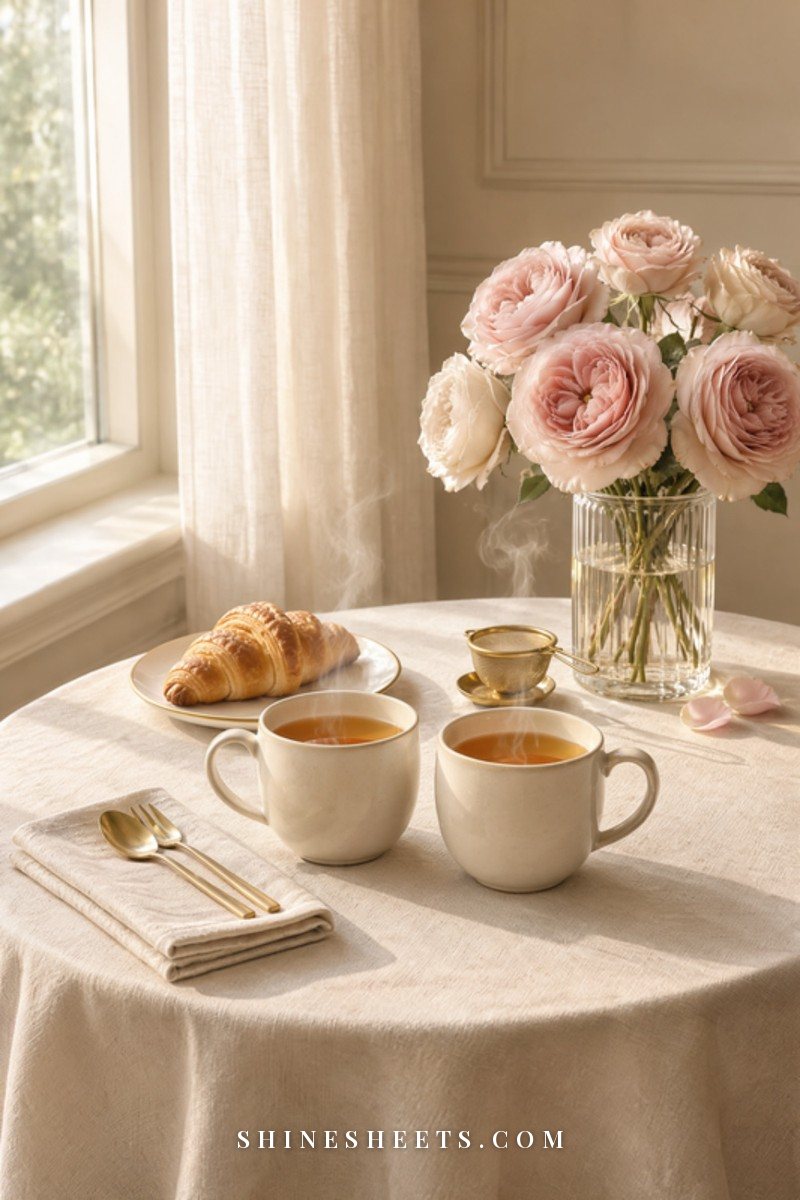
The best antidote to comparison is a relationship that feels like yours. Small rituals do this beautifully, because they're specific to the two of you and nobody else has them in quite the same way. They don't need to be impressive. They just need to repeat.
A few ideas to start with:
- A Sunday tea where you both share one high and one low from the week.
- A "no phones" first ten minutes when you both get home.
- A shared blanket on the sofa for movie nights. A soft cream knit throw blanket that lives on the couch quietly says "this is our spot."
- Two mugs that are just yours. A pair of matching ceramic tea mugs sounds tiny, but it turns an ordinary cup into a small moment together.
- A monthly walk somewhere new, even if it's just a different street or park.
- A candlelit dinner at home once a month. A warm white candle on the table changes the whole mood of a regular meal (I'm a big fan of glass candles for this, and a flameless one works too if you prefer).
Choose one or two, try them for a month, and keep the ones that feel natural. Over time these little traditions become the things you'd never swap for anyone else's highlights.
When Comparison Points to a Real Issue
Sometimes comparison is just noise. And sometimes it's a messenger. If you keep coming back to the same thing (you never feel heard, you don't feel cared for, you want very different futures), it's worth taking seriously rather than talking yourself out of it.
The kindest step is an open, calm conversation using the wish formula above. If you've tried that a few times and you keep getting stuck, a couples therapist can help you both feel heard without anyone being the bad guy. It isn't a sign that the relationship is failing; many couples go to sort out communication patterns while things are still good.
If comparison or worry feels constant and is affecting your sleep, mood or daily life, talking to a therapist on your own can help too. You deserve support with that, whatever is going on in your relationship.
And one very important note: if you feel unsafe in your relationship, whether that's being scared of your partner, feeling controlled, or being hurt in any way, please reach out for support. Talk to someone you trust, a doctor, or a local support service or helpline. That isn't a comparison problem, and you don't have to handle it alone.
Final Thoughts
Comparing your relationship to others is so human, and it doesn't mean you're ungrateful or that your love is lacking. It usually means something in you is asking for attention: more time, more warmth, more of a shared dream.
When you listen to that need and bring it home as a gentle wish, comparison turns into a doorway instead of a wound. Your relationship was never meant to look like anyone else's. It only has to feel like home to the two of you.