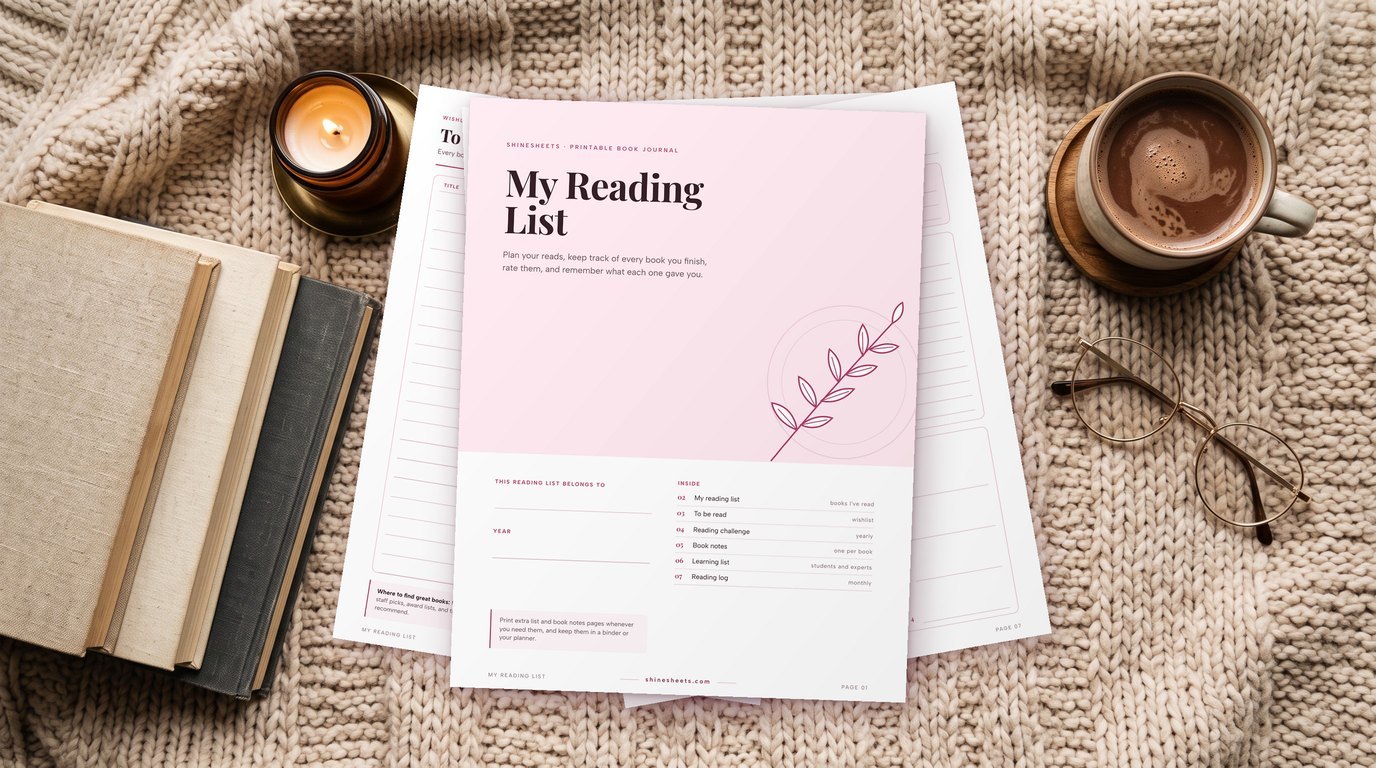
A reading slump is rarely about time. Most of us could find twenty minutes for a book; we just do not feel the pull anymore. The pages look flat, every first chapter feels like work and the stack on the nightstand starts to feel more like a to-do list than a treat. That is not a character flaw. It is a sign that something about how, what or why you are reading has stopped fitting.
The good news is that desire comes back, and it usually comes back faster when you stop forcing it. Reading is supposed to be a pleasure, and pleasure responds to gentleness far better than to discipline.
This guide is all about the reading slump: what it is, why it happens, ten soft ways to break it, a table that matches your kind of slump to what might help, how to choose your next book so it actually sticks and what to do when the slump is really a sign you need rest. If you want something to wrap up in while you read, a chunky cream knit blanket is never a bad start.
What Is a Reading Slump?

A reading slump is a stretch of time when you want to want to read, but you do not. You might start books and abandon them after ten pages, reread the same paragraph four times or reach for your phone the moment you open a novel. Some slumps last a week. Some last a whole season. Both are completely normal.
It helps to separate a slump from simply being busy. If you have no time, a reading slump guide will not fix that, and my guide on how to read more books is the better place to start. A slump is different. You have the time and even the books, but the spark is missing. That is the part we are working on here: lost desire, not lost minutes.
A slump also tends to feed itself. The longer you go without enjoying a book, the more pressure the next one carries, and the more pressure it carries, the harder it is to enjoy. That is why the ideas in this guide are deliberately small. They are meant to take pressure off rather than add a new plan.
I find it comforting that almost every lifelong reader goes through slumps. It does not mean you have stopped being "a reader". It just means your reading life is having a quiet chapter.
Why Reading Slumps Happen
Understanding the cause makes the fix much easier, because each kind of slump needs something a little different. Here are the most common reasons:
- Stress. When your mind is full, it has less room for a story. Concentration is one of the first things to go when life feels heavy, and dense books suddenly feel impossible.
- A disappointing book. You were excited, everyone loved it, and it fell flat for you. That small letdown can make the next book feel risky too.
- Phone fatigue. Endless short feeds train the brain to expect a new hit every few seconds. A page of quiet prose can feel strangely slow afterward.
- Reading out of duty. You are working through a book because you "should", because it is a classic, because you promised a friend, because you started it. Duty is a poor fuel for pleasure.
- Too much of one thing. Five thrillers in a row, or months of only self-help, can leave you craving something without knowing what.
- Tiredness. Sometimes the real issue is not reading at all. You are simply worn out, and your brain wants rest more than another story.
Most slumps are a mix of two or three of these. As you read the ideas below, notice which ones make you feel a little relieved. That relief is usually a clue.
10 Ways To Break a Reading Slump

You do not need to try all ten. Pick one or two that feel easy, try them for a week and see what shifts. Easy is the point.
1. Give Yourself Permission To Quit a Book
This is the single most freeing step for most people. If a book has felt like a chore for more than fifty pages (or ten, if you know), put it down. You can come back later, or never. A simple rule I like: if you dread picking it up two evenings in a row, it goes back on the shelf. Finishing a book you dislike does not earn you anything except a longer slump.
2. Reread an Old Favourite
Rereading is a warm, low-risk way to remember why you love books. You already know you like the story, so there is no pressure and no fear of disappointment. Choose something you read years ago and loved; you may notice details you missed the first time. Think of it as visiting an old friend.
3. Try Short Stories or Essays
When a four-hundred-page novel feels like a mountain, a fifteen-page story feels like a walk around the block. Short stories and essays give you the satisfaction of finishing something in one sitting, which quietly rebuilds the habit. Keep a collection by the bed and read one piece whenever you feel like it, in any order.
4. Switch Formats
Sometimes the slump is about the format, not the books. If paperbacks feel heavy, try an e-reader with a soft warm light. If screens tire your eyes, go back to paper. Audiobooks are wonderful while folding laundry, walking or getting ready in the morning, and yes, they absolutely count as reading. Try a different format for just one book and notice how it feels.
5. Pick a Lighter Genre
If you have been reading heavy or serious books, your mind may simply want a break. A warm romance, a gentle mystery, a funny memoir or a comforting small-town story can feel like a deep breath. Lighter does not mean lesser. It means your brain gets to enjoy itself again, which is the whole goal.
6. Read a Page Before Bed Only

One page. That is the whole commitment. Set a book on your pillow so you see it when you get into bed, and read just one page. Most nights you will read more, and on the nights you do not, you still kept the thread. A small sage clip-on reading light makes this easy without waking anyone or reaching for a lamp.
7. Change Your Reading Spot
Our brains link places with habits. If your usual chair is also where you answer emails or watch shows, it may not feel like a reading place anymore. Try a different corner: a window seat, the bath, a café table, a bench in the park. Even turning an armchair to face the window can help. If you would like to make a little reading corner at home, I have plenty of soft ideas in my reading nook ideas.
8. Read With a Friend or a Small Club
A little gentle company can bring back the joy of talking about books. Read the same book as a friend and swap texts about your favourite chapters, or start a tiny club of two or three people that meets once a month over tea. Keep it relaxed: no homework vibe, no guilt if someone did not finish. My book club ideas have plenty of low-pressure formats if you want inspiration.
9. Browse a Library Shelf Without a List
Lists and recommendations are useful, but they can also make reading feel like an assignment. Go to a library or bookshop with no plan at all. Wander a section you never visit, pull out anything with a cover or title that makes you curious and read the first page standing up. Take home two or three that made you want to keep going. Surprise is a powerful cure.
10. Keep a Tiny Reading Log of Lines You Love
Instead of tracking how many books you read, track what moved you. A small notebook where you copy one line, one image or one idea you loved from each reading session shifts your attention from quantity to delight. Tuck a set of gold-accent bookmarks into whatever you are reading so you can mark the lines as you go. Over time, this little log becomes a sweet record of what you loved, and if you want to hold on to more of it, my guide on how to remember what you read goes deeper.
The Reading Slump Table
Find the row that sounds most like you right now. You can screenshot it and come back to it whenever a new slump starts creeping in.
| Slump cause | How it feels | What to try | Book type that helps |
|---|---|---|---|
| Stress | You read the same paragraph over and over | One page before bed, audiobooks on walks | Gentle, familiar, low-stakes stories |
| A disappointing book | Every new book feels like a gamble | Reread an old favourite | A book you already know you love |
| Phone fatigue | Pages feel slow and your hand reaches for your phone | Phone in another room for twenty minutes, short chapters | Fast-paced fiction or short stories |
| Reading out of duty | Reading feels like homework | Quit the book, browse with no list | Something chosen purely on a whim |
| Too much of one genre | Nothing on your shelf appeals | Pick a completely different genre | Memoir, essays, poetry or a lighter genre |
| Loneliness in reading | You miss talking about books | Read with a friend or tiny club | A popular book with lots to discuss |
| Tiredness | Even easy books feel like effort | Rest first, then one page only | Picture-rich books or a gentle audiobook |
If two rows fit equally well, start with the one that asks the least of you. Small wins rebuild the habit faster than big plans.
How To Choose Your Next Book So It Sticks
The book that ends a slump is rarely the one everyone is talking about. It is the one that matches your mood right now. I call this mood over hype, and it has a simple three-question test:
- How do I want to feel? Comforted, thrilled, inspired, distracted, understood? Pick one word.
- How much energy do I have? Low, medium or high. Low energy calls for short chapters and easy prose; high energy can handle something dense.
- Does the first page make me want the second? Read it before you commit. If the answer is no, choose another.
Beyond the test, a few small habits help:
- Keep a "maybe" pile of three. Three possible next reads, all very different, so you can choose by mood rather than by plan.
- Ignore lists you feel obliged to finish. Recommendations are suggestions, never assignments. If you enjoy a list for inspiration, my round-up of books every woman should read is meant to be browsed, not ticked off.
- Make the book easy to grab. Slip it into a soft blush book sleeve and keep it in your everyday bag, so it is there for waiting rooms and quiet train rides.
- Pair it with a ritual. Evening tea, a glass candle, the same blanket. Rituals tell your brain "this is the nice part of the day".
Make Reading Feel Like a Treat Again

One of the quickest ways back to books is to make reading feel like something you get to do, not something you have to do. Here is a tiny evening ritual that works well for me on the nights my anxiety is loud and my attention is scattered:
- Make a cup of tea in an ivory ceramic mug you love holding.
- Light a glass candle and put your phone on charge in another room.
- Read for one song's length, about four minutes. If you want to keep going, keep going.
- Copy one line you liked into your little reading log, then close the book while you still want more.
Stopping while you still want more is a small trick that makes tomorrow easier. It leaves a pleasant tug instead of a sense of having finished a task.
It also helps to drop anything that turns reading into a competition. Yearly reading goals, page counts and public challenges suit some people beautifully, but in a slump they usually add pressure. You can always bring them back later, when reading feels joyful again.
Small Mistakes That Keep a Slump Going
A lot of slumps hang around longer than they need to because of a few very understandable habits. None of these make you a bad reader. They are just worth noticing, because a tiny change here often does more than any new book.
- Choosing the "important" book first. Starting with the longest, densest, most praised book on your shelf sets the bar very high. Save it for when reading feels easy again.
- Reading only when you are already exhausted. If your only reading time is the last five minutes before sleep, your brain links books with tiredness. Try one short session earlier in the day, even ten minutes with your morning tea or coffee.
- Keeping your phone within reach. Even face down, a phone pulls at your attention. Leave it in another room for twenty minutes and see how different a chapter feels.
- Comparing your pace. Other people's reading numbers say nothing about your relationship with books. One slow, lovely book a month is a beautiful reading life.
- Waiting for motivation to arrive first. In a slump, the feeling usually follows the action. Read one page, then decide if you want another.
- Buying a stack of new books to fix it. A fresh pile can feel exciting for a day and then add pressure. Two or three options at a time are plenty.
If you recognize yourself in more than one of these, pick the easiest to change and leave the rest for later. Slumps lift faster when you only adjust one small thing at a time.
When the Slump Is Really About Rest
Sometimes a reading slump is not really about books at all. If you also feel flat about things you usually enjoy, are sleeping badly, feel exhausted most days or cannot concentrate on much of anything, the slump may be part of low mood, burnout or stress. In that case, gentle rest comes first, and the books will wait for you.
Rest might look like early nights, short walks, quiet time with a friend, a bath, or simply letting yourself do nothing without guilt. If low mood lingers for a few weeks or starts to feel overwhelming, please talk to a doctor or a therapist. Struggling to focus is a very common sign that your mind needs care, and getting support is a kind and sensible step, not a dramatic one.
When you start to feel more like yourself, try the softest options from this guide first: an audiobook, a reread or one page before bed. Let reading return as a comfort, not another thing to catch up on.
Final Thoughts
A reading slump is just a pause, not an ending. The books you love are still there, and so is the part of you that loves them. Be kind to her. Quit what bores you, reread what comforts you and let mood, not pressure, choose what comes next.
One page, one cup of tea, one line you love. That is more than enough to fall back in love with books, gently and in your own time.