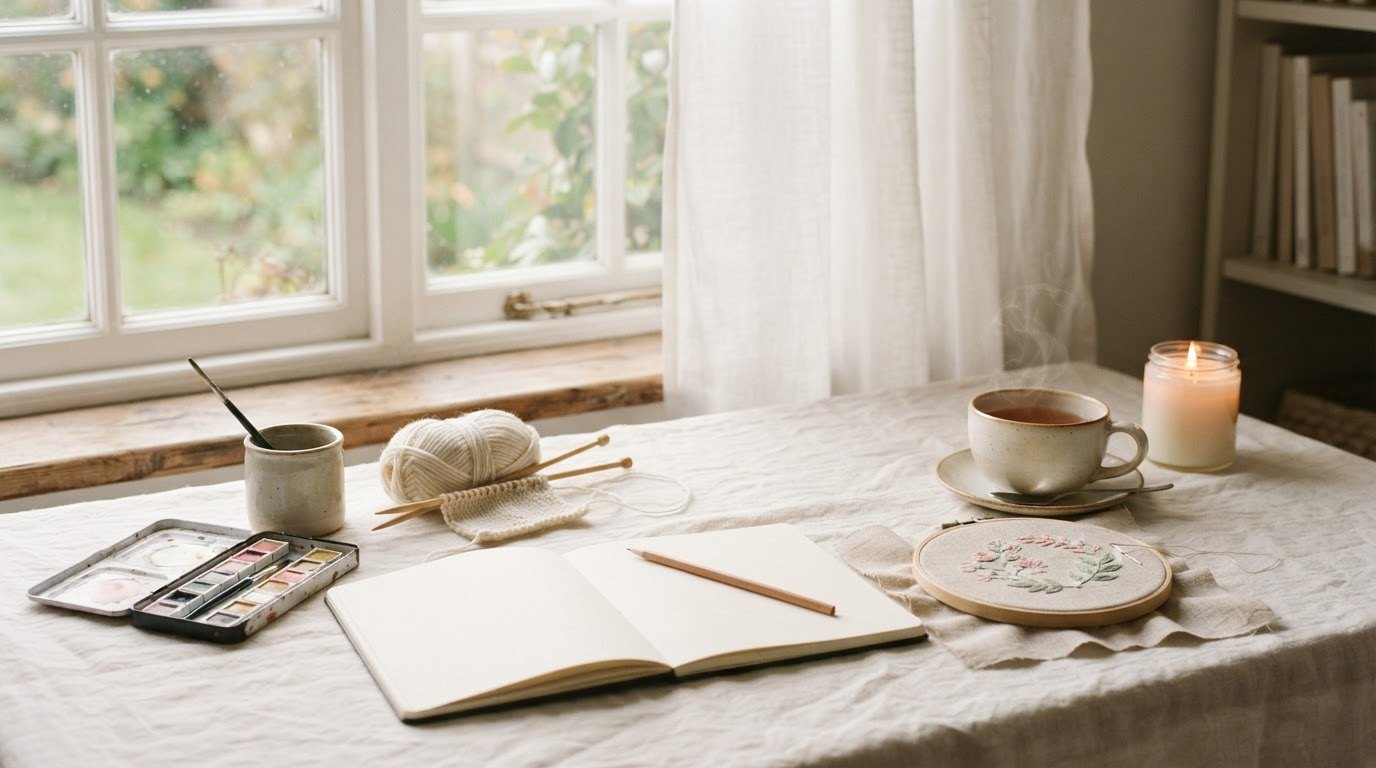
Making yourself a priority doesn't mean putting everyone else last. It means you stop being the only person in your own life who never gets a turn. Your time, rest, body and plans deserve a real place on the calendar – not as a reward for when everything else is done, because everything else is never done.
It also isn't about buying things to "treat yourself." The real shift is quieter and much less shiny: a protected hour, a no without a speech, a lunch you actually sit down for, a bedtime you keep. It took me a long time to accept that the people who love me don't need me to disappear in order to be good to them.
This guide on how to make yourself a priority has 25 ways grouped into five areas – your time, your energy, your body, your people, and your money and space – each with one concrete first step. You'll also find a permission list to come back to on guilty days and a one-week "me first" starter plan to make it all feel doable.
Why You Keep Coming Last (It's Not a Character Flaw)
Most women who put themselves last didn't choose it on purpose. It builds slowly: you were praised for being helpful and easy-going, you became the reliable one at work, the one friends call in a crisis, the one who remembers birthdays and notices when the milk runs out. Each yes made sense on its own. Added together, they left very little of you for you.
There's often guilt woven in, too – a quiet belief that resting, wanting things or saying no makes you selfish. If that sounds familiar, my guide on how to stop people pleasing goes deeper into where that habit comes from. For now, here's a simple way to tell the difference between selfish and self-respecting:
- Selfish is taking without caring how it affects others. Self-respecting is caring about others and including yourself in that care.
- Selfish is "my needs only." Self-respecting is "my needs too."
- Selfish ignores other people's feelings. Self-respecting notices them and still makes an honest choice.
If you've been running on empty for years, you're very unlikely to swing all the way to selfish. You're much more likely to land somewhere gentle and fair, which is exactly the point.
25 Ways To Make Yourself a Priority
You don't need all 25. Read through, notice which ones make you think "oh, I need that," and start with two or three. Each one has a first step small enough to do this week.
Your Time: Ways 1–5
1. Book a Weekly Meeting With Yourself
If it isn't on the calendar, it tends to get eaten by everyone else's plans. Treat time for yourself like an appointment you'd never casually cancel: it has a day, a start time and a name.
First step: Open your calendar now and block one hour this week. Give it a real title ("Sunday reading hour" works better than "free time"). If you prefer paper, an undated weekly planner with a clean week-at-a-glance layout makes it easy to see your hour sitting there next to everything else.
2. Give Yourself the First 15 Minutes of the Day
When the first thing you do each morning is answer messages, the day belongs to other people before you've even had a sip of water. Fifteen minutes of your own sets a different tone.
First step: Tomorrow, leave your phone in another room for the first 15 minutes. Make tea, stretch, sit by the window – anything that's just for you.
3. Add Buffer Time Between Commitments
Back-to-back days leave no room to breathe, eat or think. Buffers are tiny pockets of time that keep you from arriving everywhere frazzled and late.
First step: Look at tomorrow's plans and add a 15-minute gap between any two commitments that currently touch.
4. Stop Saying Yes on the Spot
Instant yeses are how calendars fill up with things you never really wanted. A short pause gives you time to check in with yourself before you commit.
First step: Memorize one sentence: "Let me check my week and get back to you." Use it at least once before Friday.
5. Leave Room for Nothing
An evening with no plans isn't wasted. It's where rest, spontaneity and recovery happen. If every hour is assigned, there's no space left for you to simply be.
First step: Choose one evening this week and protect it from plans – including chores. If someone asks, "I already have plans" is completely true.
Your Energy: Ways 6–10
6. Notice What Drains You
You can't protect your energy if you don't know where it goes. Some things drain you far more than they should (certain group chats, certain people, certain tasks), and seeing it written down makes it much easier to adjust.
First step: For one week, keep two short columns in your notes app: "drained me" and "filled me up." Add one line to each every evening.
7. Rest Before You're Exhausted
Waiting until you crash to rest is like waiting until your phone dies to charge it. Rest works best as maintenance, not emergency repair. And if resting makes you feel guilty, you're not alone – my guide on how to stop feeling guilty for resting is all about that feeling.
First step: Schedule 20 minutes of real rest (no tidying, no errands) on a day that isn't already a disaster.
8. Do One Thing Less Perfectly
High standards everywhere cost a lot of energy. Choosing one area of life where "good enough" is genuinely good enough frees up hours.
First step: Pick one task – folding laundry, replying to emails, decorating for a get-together – and decide in advance what the 80% version looks like.
9. Protect Your Best Hours
Most of us have a few hours when we think most clearly. If those hours always go to other people's urgent requests, your own plans get your most tired self.
First step: Notice when you feel sharpest this week. Next week, block one of those hours for something that matters to you.
10. Create an Evening Off-Switch
Without a clear end to the day, work and worry seep into the whole evening. A small ritual tells your brain the day is done.
First step: Choose one signal that means "I'm off now" – closing the laptop and lighting a candle in a glass jar, changing into soft clothes, or making evening tea. Repeat it every night this week.
Your Body: Ways 11–15
11. Eat Sitting Down
Lunch over the sink or breakfast in the car might feel efficient, but it tells you, a few times a day, that your needs can wait. Sitting down for a meal is one of the simplest ways to show up for yourself.
First step: Have at least one meal a day this week sitting down, without a screen. Keep a glass water bottle nearby while you're at it, because thirst is another need many of us quietly ignore.
12. Go to Bed When You're Tired
Late-night hours can feel like the only time that's truly yours, so we stay up to claim them – and pay for it the next day. A bedtime you keep is a promise to tomorrow's you.
First step: Pick a realistic bedtime and set a gentle reminder 30 minutes before. A soft silk sleep mask helps if your room gets early light.
13. Move in a Way You Actually Like
Exercise you dread rarely lasts. Movement that feels kind – a walk, a stretch, a dance in the kitchen – is easier to keep, and it's still you showing up for your body. If you want ideas that don't feel like punishment, try these lazy girl workouts.
First step: Do ten minutes of movement you enjoy three times this week. Ten minutes counts.
14. Book the Appointments You Keep Postponing
Many women manage everyone's appointments except their own. The checkup, the dentist, the eye exam – they slide month after month because they're for you.
First step: Write down three appointments you've been putting off and book just one of them this week.
15. Make Your Wind-Down Time Feel Special
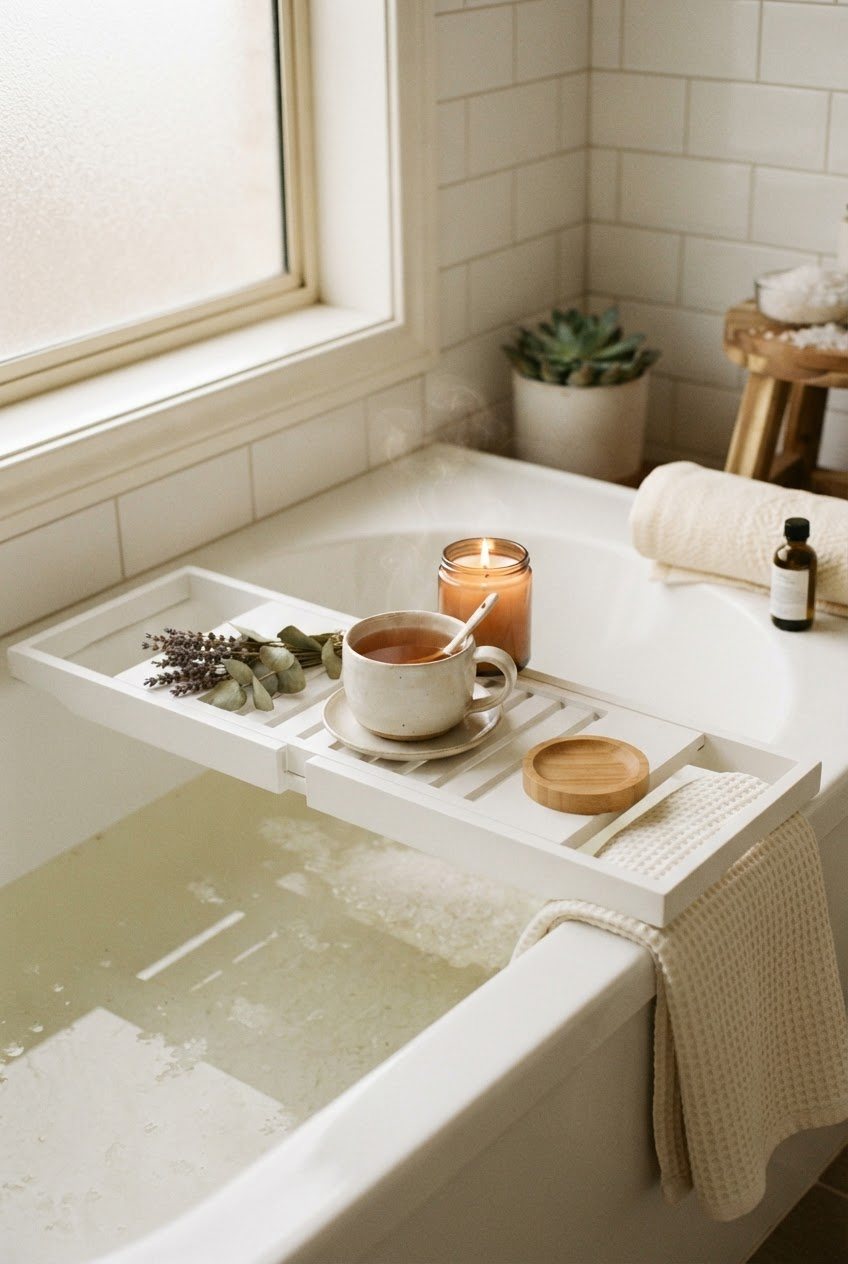
A bath or a slow shower can be pure function or a small daily luxury, and the difference is mostly attention. Taking an extra ten minutes and making it pleasant is a lovely low-cost way of putting yourself first.
First step: Plan one slow bath or long shower this week. A bathtub tray turns a bath into a proper pause, with room for tea and a book.
Your People: Ways 16–20
16. Let Your No Be Short
The longer the explanation, the more it sounds like you're asking for permission. A short, warm no is complete on its own.
First step: Try: "Thank you for asking, but I can't this time." Then stop talking. My guide on how to set boundaries has more scripts for trickier situations.
17. Ask for Help Out Loud
Hoping someone will notice you're overwhelmed rarely works. A clear, specific request gives people the chance to show up for you.
First step: Ask one person for one specific thing this week: "Could you handle dinner on Wednesday?" or "Could you pick up the parcel for me?"
18. Stop Over-Explaining Your Plans
Plans with yourself are real plans. You don't owe anyone a detailed account of why your Saturday afternoon isn't available.
First step: The next time you decline because you want time alone, say "I already have plans" and leave it there.
19. Spend Time With People Who Fill You Up
Some people leave you lighter, others leave you tired and a little smaller. Making yourself a priority includes choosing more time with the first group.
First step: Write down two people who make you feel like yourself and send one of them a message to plan something.
20. Let Someone Else Handle It
If you're always the one who organizes, remembers and fixes, others never get the chance to step up. Some things will be done differently. That's okay.
First step: Pick one recurring task – planning a birthday, booking the restaurant, sorting a shared bill – and hand it to someone else this month.
Your Money and Space: Ways 21–25
21. Budget for Your Needs First
When money is tight, your own needs are often the first thing cut: the haircut, new shoes, the course you wanted. Building them into the plan from the start is a quiet act of self-respect. If budgeting feels intimidating, start with budgeting for beginners.
First step: Add one line to your monthly budget that's just for your needs – even a small amount.
22. Claim One Corner That's Yours
Having a physical spot that belongs only to you – a chair, a shelf, a corner of the bedroom – is a daily reminder that you take up space in your own home.
First step: Choose a corner this week and add one thing that makes it feel like yours: a lamp, a plant, a stack of books.
23. Keep a Small "Just for Me" Fund
A little money set aside only for you, with no guilt attached, makes it much easier to say yes to a class, a solo coffee date or a new book without feeling like you're stealing from the household.
First step: Set up a tiny automatic transfer each payday into a separate account or envelope and name it something kind.
24. Write Your Own Priorities Down
If you don't know what matters to you, other people's priorities will fill the gap. Writing your own down makes them harder to forget.
First step: In a linen journal, write your top three priorities for this season of life. Keep them short – "sleep more," "see friends," "finish my course."
25. Check In With Yourself Every Week
Making yourself a priority isn't a one-time decision. It's a weekly habit of looking at your plans and asking, "Where am I in this?" On busy weeks, the small ideas in my guide to self-care for busy women help keep you on the list.
First step: Every Sunday, spend ten minutes looking at the week ahead and make sure at least one thing on it is just for you.
Your Permission List
Guilt has a way of creeping back in, especially at the start. Read this list on the days you need it, or screenshot it and keep it somewhere easy to find. Each line is true, even when it doesn't feel true yet.
- You're allowed to leave early.
- You're allowed to say no without a reason.
- You're allowed to rest before everything is done.
- You're allowed to change your mind.
- You're allowed to want things just for you.
- You're allowed to take up space in conversations.
- You're allowed to let a message wait until tomorrow.
- You're allowed to disappoint people sometimes.
- You're allowed to ask for help.
- You're allowed to put yourself on the list.
A One-Week "Me First" Starter Plan
If you'd like a gentle place to begin, try this one-week plan. Each action is small on purpose. The point isn't to overhaul your life in seven days – it's to prove to yourself that putting yourself first doesn't make the world fall apart.
| Day | Small action | Time needed |
|---|---|---|
| Monday | Book a one-hour meeting with yourself for later this week | 5 minutes |
| Tuesday | Take the first 15 minutes of the morning phone-free | 15 minutes |
| Wednesday | Say "let me check and get back to you" to one request | 1 minute |
| Thursday | Eat lunch sitting down, away from screens | 20 minutes |
| Friday | Keep your hour with yourself, no matter what | 60 minutes |
| Saturday | Ask one person for help with one specific thing | 5 minutes |
| Sunday | Write your top three priorities and look at next week | 10 minutes |
That's under two and a half hours across the whole week. If a day goes sideways, simply move the action to the next day – there's no falling behind here.
When the Guilt Shows Up
When you start putting yourself first, guilt often shows up loudly, and it can feel like proof you're doing something wrong. Usually, it's just proof you're doing something new. Your nervous system is used to one pattern, and change feels uncomfortable before it feels normal.
A few things that help:
- Name it. "This is guilt, not a sign I'm a bad person."
- Check the facts. Did anyone actually get hurt, or were they briefly inconvenienced?
- Wait it out. Guilt tends to fade within a day or two once you see that relationships survive your no.
- Notice the upside. Write down how you felt after keeping your hour or leaving early. That's the evidence you'll want next time.
Some people may push back when you change, especially if they benefited from you always saying yes. That's information, not a reason to go back. The people who truly care about you will adjust, and many of them will be quietly relieved to see you looking after yourself.
Final Thoughts
Learning how to make yourself a priority is less about one big decision and more about hundreds of small ones: a buffer between meetings, a bedtime you keep, a short no, an hour on the calendar with your name on it. Each one says the same thing – I matter here too.
Start with one idea from this list this week. You don't have to earn your place in your own life. You already have it.