Body acne is rarely about being "dirty" or not trying hard enough. Most of the time it's about timing: sweat that sits on your skin a little too long, conditioner that slides down your back after you've already washed, a tight sports bra worn for one more errand, a rich lotion that feels lovely but never quite sinks in. Change the timing and the texture of a few habits, and your back and chest usually start to calm down.
That's the good news. The slightly less exciting news is that body skin is slow. It has thicker skin, more friction and more clothing on top of it than your face, so it needs a steady routine rather than a dramatic one. I'd much rather you do five boring things every week than one intense scrub that leaves you red and sore.
This guide covers how to get rid of body acne on your back and chest step by step: why it happens, how to tell it apart from look-alike bumps, the ten habits that matter most, a simple weekly routine table you can screenshot, how to fade the marks left behind and when it's time to see a dermatologist.
A quick, kind note before we start: this is everyday skincare advice, not a diagnosis. If your breakouts are painful, deep or suddenly appeared out of nowhere, please skip straight to the dermatologist section at the end.
Why Body Acne Happens
Back and chest acne (often called "bacne") forms the same way facial acne does: oil, dead skin cells and bacteria get trapped in a pore and the area becomes inflamed. Your back and chest just happen to have plenty of oil glands, and they spend most of the day covered, warm and rubbed by fabric. Here are the most common triggers:
- Sweat that sits on your skin. Sweat itself isn't the villain. Sweat that dries under a damp top for two hours is.
- Friction and pressure. Backpack straps, bra bands, tight leggings waistbands and even leaning against a car seat can push oil and bacteria deeper into the pore. Dermatologists call this acne mechanica.
- Tight, non-breathable clothes. Synthetic fabrics that don't wick well trap heat and moisture right against the skin.
- Hair product residue. Conditioner, hair oils and leave-ins are rich by design. When they run down your back and chest in the shower (or brush against your shoulders all day), they can clog pores along the hairline, shoulders and upper back.
- Heavy body lotions and oils. Thick butters and some oils are wonderful for dry legs but can be too much for an oily upper back.
- Hormones. Many women notice body breakouts flare before their period or during times of hormonal change.
- Stress and poor sleep. They don't cause acne on their own, but they can make existing breakouts feel angrier and slower to heal.
Most people have two or three of these going on at once, which is why fixing just one thing sometimes doesn't seem to "work." The routine below tackles all of them together.
Is It Body Acne or Something Else?
Not every bump on your back or chest is acne, and treating the wrong thing can be frustrating. A few look-alikes are worth knowing:
- Keratosis pilaris. Tiny, rough, skin-colored or reddish bumps, usually on the backs of the arms and thighs. They feel like sandpaper rather than sore spots. My guide to keratosis pilaris walks through how to smooth them.
- Folliculitis. Small, often itchy bumps around hair follicles, sometimes after shaving, hot tubs or sweaty workouts. Very uniform, itchy "breakouts" on the chest and back can also be a yeast-related type that regular acne treatments don't help, so it's worth asking a dermatologist if your bumps all look the same size and itch.
- Ingrown hairs and dark pores. More common on legs and bikini line. If the dotted look is on your legs, my post on strawberry legs is the better place to start.
Classic body acne usually looks like a mix: some blackheads, some red bumps, a few whiteheads, maybe a deeper sore spot or two, mostly on the upper back, shoulders and center of the chest. If that sounds like you, keep reading.
How To Get Rid of Body Acne: 10 Habits That Actually Help
None of these is exciting on its own. Together, done consistently for a couple of months, they're what actually clears skin. Start with the first three, then add the rest as they feel easy.
1. Shower Soon After You Sweat
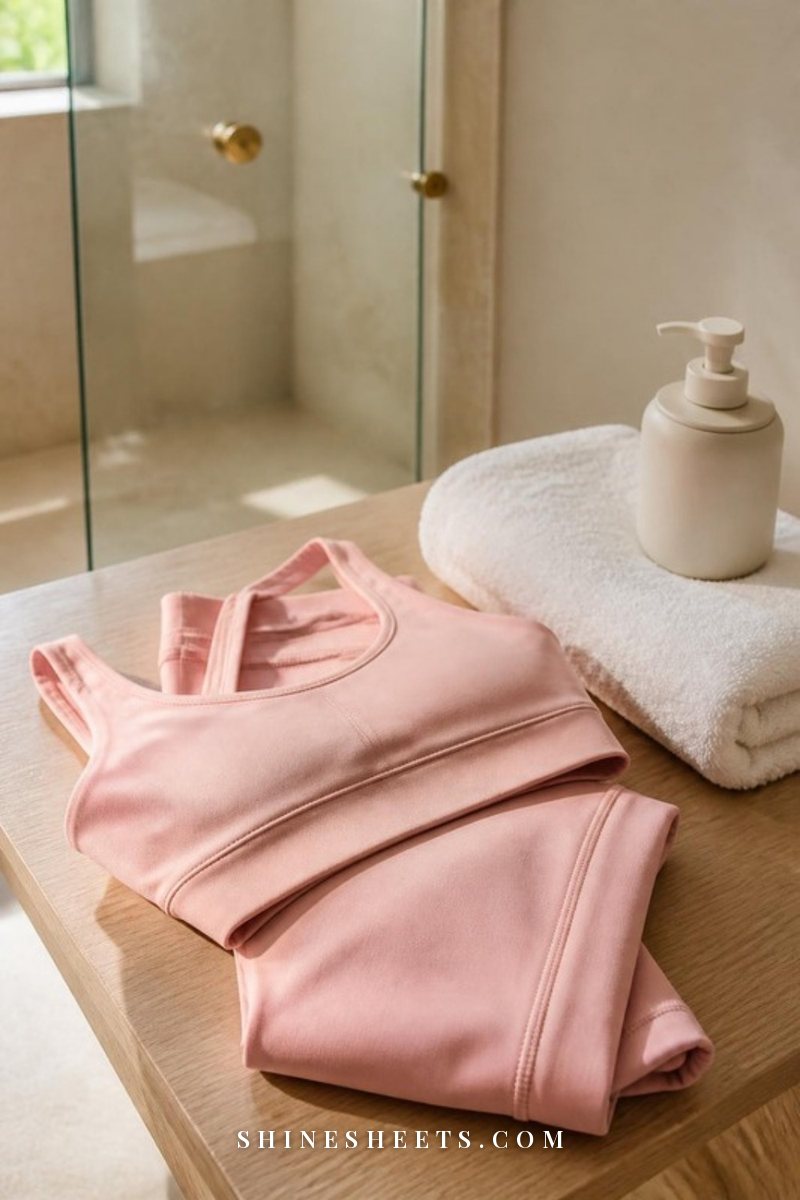
The single most helpful habit is simple: get out of sweaty clothes and into the shower within about 30 minutes of a workout, a hot commute or a long summer walk. The shorter the time sweat and oil sit trapped under fabric, the fewer clogged pores you'll get.
If a full shower truly isn't possible, at least change into a clean, dry top and wipe your back and chest with a gentle cleansing cloth. Then shower properly as soon as you can. And please don't sit around in a damp sports bra "just for a minute" (I know that minute always turns into an hour).
2. Wash Your Body Last
This one sounds too small to matter, but it makes a real difference for upper-back and shoulder breakouts. Change the order of your shower:
- Shampoo your hair.
- Apply conditioner, then clip your hair up off your back while it works.
- Rinse the conditioner out, leaning your head forward or to the side so it runs away from your back.
- Wash your face and body last.
That way any rich residue gets washed off instead of left sitting on your skin. If you love leave-in products or hair oil, keep them on the lengths of your hair and wear your hair up when you can on hot days. My everything shower routine covers the full order step by step if you want to fine-tune the whole thing.
3. Switch to a Salicylic Acid Body Wash
Salicylic acid (a BHA) is oil-soluble, which means it can get inside the pore and help loosen the oil and dead skin that clog it. For body acne, it's often the easiest first step because it fits into a shower you're already taking.
Look for a 2% salicylic acid body wash with a simple, fragrance-light formula. Here's the trick most people miss: lather it onto your back and chest first, then let it sit while you do something else (shave, rinse your hair, count slowly to 60). One to two minutes of contact helps far more than an instant rinse.
Use it once a day on breakout areas and a gentle, regular cleanser everywhere else. If your skin feels tight or itchy, drop to every other day. Curious how BHA compares with other acids? My AHA vs BHA guide explains the difference simply.
4. Add Benzoyl Peroxide for Red, Stubborn Spots
Benzoyl peroxide works differently from salicylic acid: it targets acne-causing bacteria and helps calm the red, inflamed bumps. It's a classic for body acne because it's available over the counter in wash form.
I'd choose a benzoyl peroxide acne wash in a lower strength to start (around 4–5% is plenty for most people). Apply it to your back and chest, leave it on for one to two minutes, then rinse well. A short contact time keeps irritation lower.
Two important practical notes:
- It bleaches fabric. Towels, sheets, pajamas and that favorite blush robe can all end up with pale orange spots. Rinse thoroughly and use white towels and white sheets while you're using it.
- Alternate if you're sensitive. Many people do well using salicylic acid one day and benzoyl peroxide the next, rather than both every day. My combination, sensitive skin would absolutely protest doing both daily, and there's no prize for overdoing it.
5. Reach Your Whole Back

It's hard to treat a spot you can't reach. The middle of the back is exactly where wash often misses, and where breakouts love to hang around.
A long-handled back scrubber with soft bristles makes it easy to spread your treatment wash evenly. Use light pressure, think "gently moving the lather around," not scrubbing a pan. Let the brush dry upright between showers and replace the head every couple of months so it stays clean.
6. Exfoliate Gently, Not Daily
When you're frustrated with breakouts, a gritty scrub feels satisfying. Unfortunately, harsh scrubbing can irritate inflamed spots and spread bacteria around. Gentle, regular exfoliation is better than aggressive, occasional exfoliation.
- Chemical exfoliation: your salicylic acid wash already counts. If you'd like a little extra, a body lotion or pad with lactic or glycolic acid two or three nights a week can smooth texture.
- Physical exfoliation: a soft washcloth or the back brush, once or twice a week, with light pressure. Skip rough scrubs entirely on active, red spots.
Pick one approach to start with. If your skin stings, looks shiny-tight or starts to flake, you've done too much. Take a few days off and come back gently.
7. Moisturize With Something Lightweight
Acne treatments can dry your skin, and dry, irritated skin heals more slowly. Skipping moisturizer entirely usually backfires. The fix is to switch textures, not skip the step.
Look for a non-comedogenic, fragrance-free body lotion with a light, gel-cream or milky texture. Ingredients like glycerin, ceramides and niacinamide are lovely here. Save rich butters and heavier oils for your legs, elbows and feet, where you're not breaking out. For the full picture of what goes where, my body care routine post breaks it down area by area.
8. Change Your Sheets and Towels More Often

Your back spends eight hours a night pressed against your sheets. Sweat, skin oils, hair products and body lotion all build up on the fabric and press right back onto your skin.
- Pillowcases: every two to three days (helpful for shoulder and upper-back spots too).
- Sheets: once a week.
- Body towel: use a fresh one every three uses, and hang it fully open to dry.
- Workout clothes: after every single wear, no exceptions.
A set of soft white cotton bath towels makes the rotation easier and hides nothing, which is exactly what you want if you're using benzoyl peroxide. Wash with a fragrance-free detergent and skip heavy fabric softener, which can leave a waxy film on fabric.
9. Wear Loose, Breathable Fabrics

Friction and trapped heat are two of the biggest body acne triggers, and both come down to what you wear.
- Choose loose cotton or linen tops for everyday wear, especially in warm weather.
- For workouts, pick moisture-wicking activewear and take it off right after.
- Check where your breakouts are. Spots exactly under a bra band, a backpack strap or a tight waistband are a strong hint about friction.
- Sleep in a loose cotton t-shirt or nothing at all, rather than snug synthetic pajamas.
You don't need a whole new wardrobe. Rotating the tight pieces with looser ones on breakout-heavy weeks is already a meaningful change.
10. Don't Pick (I Know)
Picking pushes inflammation deeper, spreads bacteria and dramatically raises the chances of a dark mark or scar that will stay around much longer than the spot itself would have. On your back, where you can't even see properly, it's even more likely to go wrong.
If you have a few active spots that are calling your name, a salicylic acid body acne spray is a smart pick for hard-to-reach areas: mist it onto clean, dry skin in the evening, let it dry before you get dressed, and then keep your hands busy. It's also useful on days you're not using a treatment wash. If your hands still wander, keep your nails short and remind yourself that leaving it alone is the fastest way to get it gone.
Your Weekly Body Acne Routine

Here's how all of this fits into an ordinary week. It alternates salicylic acid and benzoyl peroxide to keep irritation low, builds in gentle exfoliation and puts the laundry where it belongs. Screenshot it and adjust the days to your own workout schedule.
| Day | Shower step | Treatment | Laundry |
|---|---|---|---|
| Monday | Hair first, body last; back brush | Salicylic acid wash, 1–2 min contact | Fresh pillowcase |
| Tuesday | Shower within 30 min of workout | Benzoyl peroxide wash, 1–2 min, rinse well | Wash workout clothes |
| Wednesday | Gentle shower, lukewarm water | Salicylic acid wash; lightweight lotion after | Fresh towel |
| Thursday | Shower within 30 min of workout | Benzoyl peroxide wash; spot spray at night if needed | Fresh pillowcase; wash workout clothes |
| Friday | Soft washcloth or brush, light pressure | Salicylic acid wash (counts as exfoliation) | Hang towel fully open to dry |
| Saturday | Relaxed shower, hair clipped up | Benzoyl peroxide wash, or rest day if skin feels tight | Change sheets |
| Sunday | Gentle cleanser only | Rest day: lotion and SPF on marks | Fresh pillowcase and towel |
Every day: moisturize with a lightweight lotion after showering and wear breathable fabrics. If your skin feels irritated, swap any treatment day for a rest day. Consistency over many weeks matters far more than any single day.
How To Fade the Marks Left Behind
Once the breakouts calm down, many people are left with flat pink, red or brown marks. These aren't scars; they're the skin's leftover reaction to inflammation, and they do fade with time. It's often slower on the body than on the face, so patience really is part of the treatment.
- Protect from the sun. UV exposure makes marks darker and longer-lasting. When your back or chest will be in the sun (think open-back tops, swimsuits, summer dresses), apply a body sunscreen lotion with SPF 30 or higher and reapply when you've been sweating or swimming.
- Keep the gentle acids going. Your salicylic acid wash and a lactic or glycolic lotion a few nights a week help speed up cell turnover.
- Look for brightening ingredients. Niacinamide and azelaic acid are both gentle options many people use on post-breakout marks.
- Don't pick at new spots. Every spot you leave alone is one less mark to fade.
Raised, indented or very dark marks that don't improve over several months are worth showing to a dermatologist, who has in-office options that skincare at home can't match. The same sun and fading principles apply to your face too, and my guide on how to get clear skin goes deeper there.
How Long Until You See Results
This is the part nobody likes, but knowing it makes it easier to stick with things. Body skin renews itself slowly, and every treatment needs time to show up:
- Weeks 1–2: mostly habit-building. Skin may feel a little drier as it adjusts. Don't judge results yet.
- Weeks 3–6: fewer new spots, especially from the sweat and friction triggers.
- Weeks 8–12: this is when most people can fairly judge whether the routine is working.
- Months 3–6+: the leftover marks continue to fade, especially with daily sun protection.
If you've been consistent for about three months and see little change, that's not a personal failure. It's useful information that your skin may need a stronger, prescription-level approach.
Common Body Acne Mistakes To Avoid
A few well-meant habits quietly keep breakouts going. Check whether any of these sneak into your routine:
- Scrubbing harder when things get worse. Irritated skin breaks out more easily, not less.
- Rinsing treatment washes off instantly. No contact time, little benefit.
- Using every active at once. Salicylic acid, benzoyl peroxide, a glycolic lotion and a spot spray on the same day is a recipe for a stinging, peeling back.
- Skipping moisturizer because "it's oily." Lightweight hydration helps skin tolerate treatment.
- Very hot showers. Lovely in winter, but they can dry and irritate already-sensitive skin. Keep the water warm, not steaming.
- Giving up at week three. Most routines need two to three months.
When To See a Dermatologist
Everyday skincare helps a lot of body acne, but not all of it. Please book an appointment with a dermatologist or your doctor if you notice any of these:
- Deep, painful lumps or cysts under the skin.
- Scarring, indented marks or dark marks that keep multiplying.
- Breakouts that appear suddenly and widely, especially alongside other body changes or after starting a new medication.
- Very itchy, uniform bumps that don't respond to acne products.
- No real improvement after about three months of a consistent routine.
- Body acne that's affecting how you feel day to day, how you dress or whether you want to go out.
Dermatologists have many effective prescription options for body acne, and getting help early can prevent scarring. If you're pregnant, breastfeeding or using prescription skincare, check with your doctor before starting any new active ingredients. You don't have to "earn" an appointment by suffering for a certain amount of time first.
Final Thoughts
Getting rid of body acne isn't about one perfect product or a punishing scrub. It's a handful of small, kind habits: showering after you sweat, washing your body last, giving your treatment wash a minute to work, choosing lighter textures and fresher fabrics, and leaving your skin alone so it can heal.
Start with three changes this week and add the rest slowly. Your back and chest deserve the same patience you'd give your face, and with steady care, open-back dresses and swimsuit days can feel easy and fun again.