
Feeling disconnected from yourself rarely arrives with a big announcement. It usually shows up quietly: you get through the day fine, you answer messages, you do what needs doing, and yet somewhere along the way you stopped knowing what you actually want – for dinner, for the weekend, for your life. It can feel like watching yourself from a slight distance, running on autopilot while the real you waits somewhere in the background.
The good news is that this feeling is usually a signal, not a verdict. It often means you've been pouring your attention outward for a long time – toward work, people, screens and worries – and very little of it has been flowing back to you. Reconnecting isn't about a dramatic reinvention. It's about small, repeated moments of turning back toward yourself and listening.
In this guide to feeling disconnected from yourself, we'll look at what it can feel like, the most common reasons it happens, when it's worth asking for extra support, 10 gentle ways to reconnect, a reconnection table with one small question and one 10-minute practice for each area of your life, and 12 journal prompts to help you hear yourself again.
It took me a while to understand that feeling far away from myself wasn't a personal failing. It was a sign I needed more quiet, not more effort. Pour yourself a cup of tea, and let's start slowly.
What Feeling Disconnected From Yourself Can Feel Like

There's no single way this feels, and you don't need to relate to every point for it to be real. Many people describe some of these:
- Autopilot days. You move from task to task and, by evening, can barely remember any of it.
- Not knowing what you want anymore. Someone asks where you'd like to eat or what you want to do this weekend, and your honest answer is "I don't know" – almost every time.
- A flat or numb mood. Things that used to light you up feel neutral. Not terrible, just muted, like someone turned the volume down on your life.
- Borrowed opinions. You catch yourself saying what you think others want to hear, or you reach for your own opinion and can't quite find it.
- Feeling like a guest in your own routine. Your life looks fine on paper, but it doesn't feel like it belongs to you.
- Restlessness without direction. You want something to change, but you can't name what.
- Losing touch with your body. You forget to eat, drink water or stretch until a headache or a stiff neck reminds you.
If the flat, muted part feels like the loudest piece for you, my guide to feeling numb and gentle ways to feel again goes deeper into that specific heaviness.
None of these mean something is wrong with you as a person. They usually mean you've been running on reserve power for a while, and your inner world has been on mute so the outer world could keep going.
Why It Happens: Common Causes
Disconnection almost always has a reason, even if it isn't obvious at first. Often it's a mix of a few of these:
- Burnout. When you've been stretched thin for months, your mind conserves energy by switching off anything that isn't urgent – and your own feelings and wants are usually the first things to go quiet.
- People-pleasing. If you've spent years shaping yourself around what others need, your own preferences can get so soft you stop hearing them. If this one stings a little, my guide on how to stop people pleasing is a gentle place to begin.
- Big life changes. A move, a breakup, a new city, a new role, a home that suddenly feels too quiet. When the outside of your life changes quickly, the inside sometimes needs time to catch up.
- Caregiving. Looking after a parent, a partner, a friend or anyone else for a long stretch means your attention is constantly on someone else's needs. It's loving work, and it can leave very little room for you.
- Constant phone time. Endless feeds fill every small pause – the coffee line, the bus ride, the minute before sleep. Those pauses used to be where we heard our own thoughts.
- Grief. Losing a person, a relationship, a version of your life or a dream can make the world feel muffled for a while. Disconnection can be part of how the mind protects itself while it slowly processes.
Here's my small honest admission: I'm prone to anxiety, and when I'm anxious for a long stretch, I tend to live entirely in my head – planning, rehearsing, double-checking. I'm busy, but I'm not really there. Recognizing that pattern helped me stop blaming myself and start treating disconnection as a cue to slow down rather than push harder.
When To Reach Out for Extra Support
Most of the time, feeling a bit far from yourself softens with rest, small changes and kinder routines. Sometimes, though, it's more than that, and you deserve real support.
If things around you feel unreal or dreamlike, if you feel detached from your own body or thoughts in a way that frightens you, or if the feeling is persistent, heavy or getting in the way of sleep, eating, work or relationships, please talk to a doctor or a licensed therapist. The same is true if the disconnection started after something painful or frightening happened. These experiences are more common than people think, they have names, and they respond well to the right help.
Asking for help isn't a sign that you failed at self-care. It's one of the most self-connected things you can do: noticing you need more than you can give yourself right now, and letting someone help you carry it.
Everything below is meant as gentle, everyday support – a companion to professional care, never a replacement for it.
10 Gentle Ways To Reconnect With Yourself
You don't need to try all ten at once. Pick one or two that feel doable this week, and come back for more when you're ready. Small and repeated beats big and occasional, every single time.
1. Try a 5-Minute Body Check-In

Disconnection often starts with the body, because it's the first thing we ignore when life gets busy. A body check-in brings you back in just a few minutes, and it's simple enough to do even on a hard day.
Sit or lie down somewhere comfortable – the floor, your bed, or a soft sage yoga mat if you like having a dedicated spot. Set a gentle timer for five minutes. Then:
- Take three slow breaths, letting each exhale be a little longer than the inhale.
- Move your attention from your feet up to the top of your head, one area at a time.
- At each area, notice one thing: warm or cool, tight or loose, heavy or light.
- Ask your body one question: "What do you need right now?" Accept the first answer, even if it's "water," "a snack" or "to lie down."
- Do that one thing, if you can.
That last step matters most. A check-in builds self-trust only when you actually respond to what you notice. Once a day, at roughly the same time (after lunch or before bed both work well), is plenty.
2. Leave Your Phone Alone for the First 20 Minutes

The first thing many of us do in the morning is check messages, news and feeds. Within a minute, other people's voices are in our heads before our own has had a chance to speak.
Try keeping the first 20 minutes of your day phone-less. Charge your phone across the room or in the kitchen overnight, and use a simple alarm clock if you need one. In those 20 minutes, do something slow: make tea, open the curtains, stretch, sit by the window, write three lines in a notebook.
It will probably feel strange for the first few days (the urge to reach for the phone is very real). That's normal. By the end of the week, many people notice their mornings feel more like their own – and that small feeling of ownership tends to carry into the rest of the day.
If 20 minutes feels impossible right now, start with 10. The point isn't perfection. It's giving your own thoughts a head start.
3. Notice Your Small Preferences

When you've lost touch with what you want, big questions like "What do I want from my life?" can feel overwhelming. Small preferences are the way back in. They're low-stakes, and they rebuild the muscle of knowing your own mind.
For one week, notice tiny choices and make them on purpose:
- Which mug do you actually like holding in the morning?
- Which walk feels nicer – the one under the trees or the one past the shops?
- Do you prefer the window open or closed while you work?
- Which song do you want right now – not the one that happens to be playing, the one you'd choose?
- Do you want your tea now, or in ten minutes?
Each time, pause for one breath and pick. No justifying, no checking what anyone else would choose. A small "I like this one" in your head is a quiet act of self-trust. You might be surprised how quickly bigger preferences start to show up once the small ones feel familiar again.
4. Schedule Time Alone
Being alone and being lonely are different things. Time alone, chosen on purpose, is where you get to hear yourself without anyone else's needs, opinions or moods in the room.
Block one hour a week that belongs only to you. Write it in your planner like any other appointment, and protect it like one. You can spend it at home with a glass candle and a book, at a café by yourself, in a long bath, or on a walk with no destination. What matters is that you're not performing for anyone – not even for yourself.
If an hour sounds like too much right now, a 15-minute solo tea counts. Notice how you feel at the start and at the end. That difference is useful information about what refills you.
A quick safety note if candles are part of your alone time: keep them away from curtains, books and anything else that can catch fire, and never leave a flame burning when you leave the room or start to doze off.
5. Revisit an Old Interest
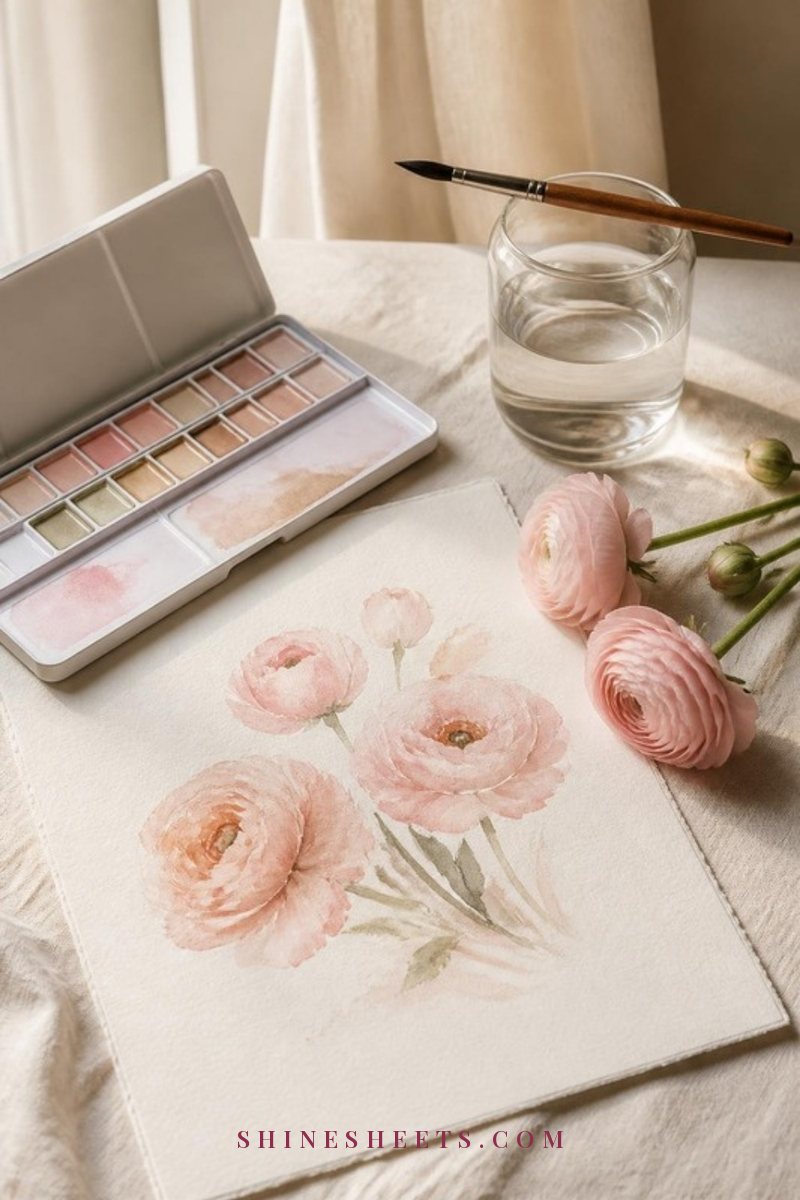
Think back to what you loved before life got so full. Maybe you drew, played the piano, made playlists, danced in your room, read mystery novels or pressed flowers between heavy books. Old interests are like a map back to a version of you who knew exactly what she enjoyed.
Pick one and give it a small, pressure-free comeback: 20 minutes this week. Not to get good, not to start a side business, not to post it anywhere. Just to see how it feels in your hands again.
Sometimes the old interest no longer fits, and that's useful too. Noticing "this doesn't feel like me anymore" is still reconnecting. It points you toward who you are now.
One small idea for evenings: keep a soft clip-on reading light near your favorite chair, so picking up an old novel or a sketchbook after dark feels inviting rather than like a project you have to set up.
6. Do a Quick Values Check
Values are the things that matter most to you – kindness, freedom, creativity, security, honesty, adventure, family, calm. When daily life drifts too far from your values, a quiet sense of "this isn't me" creeps in, even if nothing is obviously wrong.
Here's a 10-minute values check:
- Write down five values that feel important to you. If you get stuck, my core values list has a hundred to choose from.
- Next to each one, note how much space it had in your life last week, from 1 (barely any) to 5 (plenty).
- Circle the value that matters most to you but scored lowest.
- Choose one small action that would give it a little more room this week.
If creativity scored a 1, the action could be ten minutes of sketching. If calm scored a 1, it could be one evening with no plans at all. Small, specific and doable is the whole idea.
7. Say One Honest No
Every automatic yes you don't mean takes you one small step further from yourself. One honest no – kind, simple and true – brings you a step back.
This week, look for one low-stakes moment to say no to something you don't want: an extra task, a plan you'd only attend out of guilt, a favor you can't really fit in. You can keep it warm:
- "Thank you for thinking of me, but I can't this time."
- "I'd rather not, but I hope it goes really well."
- "I'm going to pass on this one. I need a quiet evening."
Notice how your body feels before and after. There may be a little guilt at first, and there's often relief underneath it. Both feelings can be there at the same time, and neither one means you did something wrong.
8. Spend Time Outdoors

Being outside has a way of making us more present without any effort at all. The air, the light, the temperature on your skin – it all pulls you gently out of your head and into the moment.
Aim for 20 minutes outdoors most days, ideally in daylight. It doesn't have to be a forest. A park bench, a balcony, a tree-lined street or your own front steps all count. In colder months, layer a soft knit cardigan under your coat so being outside feels comfortable instead of like something to endure.
While you're out, try noticing three things you can see, two things you can hear and one thing you can feel. It's a small grounding trick that works surprisingly well when your mind feels foggy.
9. Take a Mindful Walk
A mindful walk is different from a walk where you listen to a podcast and plan tomorrow. It's a walk where your only job is to notice.
Leave your headphones at home for 10 to 15 minutes. Walk a little slower than usual. Pay attention to your feet meeting the ground, the rhythm of your breath, the colors around you. When your mind wanders to your to-do list (it will), gently bring it back to the next step.
If you'd like a simple structure, try this: for the first five minutes, notice sounds. For the next five, notice colors. For the last five, notice how your body feels. By the end, you're usually a little more here than when you started.
If practices like this one help you, my guide on how to be more self-aware has more gentle ways to notice what's going on inside.
10. Play Creatively Without a Goal

Much of adult life is about outcomes – results, progress, productivity. Creative play without a goal is the opposite, and that's exactly why it helps. It lets you make choices based on nothing but what feels good, which is the very thing disconnection makes hard.
Grab a set of pastel gel pens, crayons, watercolors or a little air-dry clay, and give yourself 15 minutes. Doodle shapes. Mix colors. Make something wonky on purpose. Collage pictures from old magazines. The only rule is that nothing you make has to be good, finished or shown to anyone.
Pay attention to the little pulls – the color you reach for first, the shape you keep repeating, the moment you lose track of time. Those small instincts are you, showing up again.
The Reconnection Table: Five Areas To Check In With
Disconnection rarely touches every part of life equally. You might feel close to your friends but far from your body, or clear on your values but cut off from joy. This table helps you spot which area needs a little attention. Pick one row a day, or start with the one that feels most off right now. Screenshot it if you'd like to keep it handy.
| Area | One small question | A 10-minute practice |
|---|---|---|
| Body | What do I need physically right now? | A 5-minute body check-in, then a glass of water and five slow stretches. |
| Feelings | What am I feeling, in one word? | Write the word down, then three sentences about where you feel it and what might have stirred it up. |
| Values | Did today reflect what matters to me? | Pick your lowest-scoring value and do one small thing for it, like a kind message or ten minutes on a creative project. |
| Joy | What made me smile, even a little, this week? | Do a mini version of it today: one song, one chapter, one walk, one bath. |
| Relationships | Who do I feel most like myself around? | Send that person a short message or plan a call. No agenda, just connection. |
You don't need a good answer to every question. "I don't know" is a perfectly honest place to start. Ask again tomorrow, and the answer usually gets a little clearer.
12 Journal Prompts To Hear Yourself Again

Journaling is one of the gentlest ways to reconnect, because it gives your thoughts somewhere to land. My own rhythm is evening tea first, journal second – the tea slows me down enough that the writing feels honest instead of rushed. A herbal tea sampler is a lovely way to find the blend that makes your evenings feel like yours.
Choose one prompt per evening and write for 10 minutes without editing. A guided self-discovery journal can help if a blank page feels intimidating, but any notebook works beautifully.
- When did I last feel completely like myself? Where was I, and who was I with?
- What do I keep saying yes to that I don't really want?
- If no one would judge me, how would I spend an open Saturday?
- What small things have I stopped doing that used to make me happy?
- What am I tired of pretending about?
- Which part of my day feels most like mine, and which feels least?
- What does my body keep trying to tell me?
- Who do I feel most at ease around, and why?
- What did I love as a child that I still secretly love?
- What would "a little more me" look like this week?
- What am I grieving, even quietly?
- What would I tell a friend who felt exactly the way I feel right now?
For more prompts in this spirit, my list of self-reflection questions has sixty more to work through slowly.
Some prompts might bring up more than you expected. That's okay. Stop whenever you need to, and if something heavy keeps resurfacing, it may be worth exploring with a therapist who can hold it with you.
What To Do on the Days It Feels Harder
Reconnection isn't a straight line. Some days you'll feel close to yourself, and other days you'll feel far away again. That doesn't mean it isn't working.
- Lower the bar. On hard days, one slow breath and one glass of water count as a check-in.
- Choose comfort over progress. A warm shower, soft clothes and an early night are valid ways to come back to yourself.
- Spend time with someone safe. A friend who lets you be quiet or unsure can help you feel more like yourself without any pressure.
- Be kind to your inner voice. Talk to yourself the way you'd talk to someone you love who's having a rough week.
If the hard days start outnumbering the easier ones, take that as your cue to reach out to a doctor or therapist. You don't have to figure this out alone, and you were never meant to.
Final Thoughts
Feeling disconnected from yourself can be lonely and confusing, but it's also a gentle invitation – a nudge to slow down and turn some of your attention back home. You don't have to find all of yourself at once.
Start with one small thing: a five-minute check-in, a quiet morning, one honest no, one mug you truly love. Little by little, those moments add up, and one day you'll notice you're back in the room with yourself. Be patient with her. She's been waiting for you, and she's worth the wait.