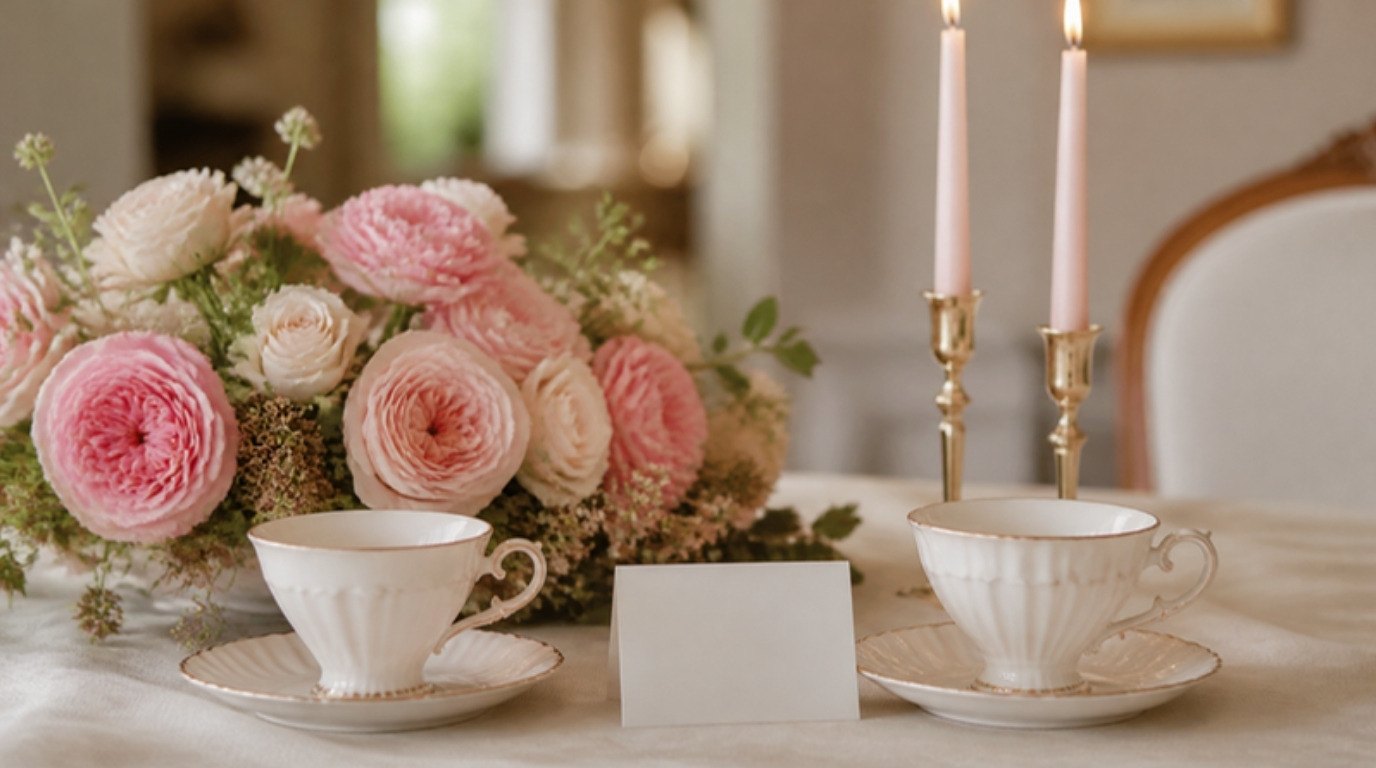
Valentine's Day rarely disappoints because of the day itself. It disappoints because of the gap between what we quietly hoped for and what actually happened, and most of that gap is made of things nobody said out loud.
The good news is that this gap is surprisingly easy to close with one calm conversation a week or two before. Not a negotiation, not a test, just two people sharing what the day means to them and agreeing on something that feels good for both.
This guide is all about Valentine's Day expectations: why they so often go unmet, how to bring them up without it feeling awkward, five topics worth talking through, six gentle conversation scripts, an expectations table you can fill in together, and what to do if the day still falls flat.
Wanting the day to feel special isn't silly or high-maintenance. Let's just make sure you both know what "special" means.
Why Valentine's Day So Often Disappoints

When the day goes sideways, it's rarely because one person doesn't care. It's usually one (or all) of these four things.
Unspoken Expectations
One of you pictured a dinner reservation, the other pictured takeout and a movie, and both thought it was obvious. Expectations we never say out loud feel like facts to us, which is exactly why it stings when they aren't met. Your partner didn't ignore your wish. They just never heard it.
Social Comparison
February is full of other people's highlights: flower deliveries at the office, surprise trips, perfectly styled tables. Comparison can make a lovely, ordinary evening feel like "not enough", even when you were genuinely happy until you saw someone else's version of the day. Remember that a photo shows the best ten seconds, not the whole evening.
Different Love Languages
If you feel most loved through words and your partner shows love through doing things, you can both try hard and still miss each other. A partner who spends the day sorting out the car and making dinner may be stunned that you were hoping for a handwritten card. Neither of you did it wrong; you were just speaking different languages. If you haven't explored this yet, my guide to love languages is a gentle place to start.
Money Stress
Valentine's Day comes with a price tag, and it lands only a few weeks after the holidays, when money is tight for a lot of couples. If one person is quietly worried about spending and the other expects a big gesture, the day carries tension before it even begins.
Wanting Something Is Fine. Expecting Mind-Reading Isn't.

Let me say this clearly, because so many of us feel guilty about it: it's okay to want flowers. It's okay to want a nice dinner, a sweet note, or simply an evening where your partner's phone stays in another room. Wanting something doesn't make you demanding or shallow.
Where it gets tricky is expecting your partner to guess. "If they really loved me, they'd just know" sounds romantic, but in practice it turns the day into a test nobody agreed to take. Even the most attentive partner can't read your mind, especially about a holiday that means wildly different things to different people.
Saying what you'd love doesn't make it less romantic. It makes it more likely to happen. And when your partner does it, it still counts, because they chose to listen and act on it. That's love, too.
I'll admit that asking directly used to feel far more vulnerable to me than hinting. Hinting felt safer, because if nothing happened, I could pretend I hadn't really wanted it. It took a while to see that hints protect us from disappointment only on paper. In real life, they make it more likely.
When and How To Have the Talk

Timing and tone do most of the work here.
- When: one to two weeks before. That's early enough to plan, book or budget, and close enough that it doesn't feel like a big formal meeting.
- Where: somewhere relaxed and private, like a walk, a quiet evening on the sofa or a slow weekend breakfast. Not in the middle of a busy day, and never right after an argument.
- How: in person or on a call, not by text. Tone gets lost in messages, and "What are we doing for Valentine's?" can read as pressure when you meant curiosity.
- Mood: curious, not demanding. You're not drawing up a contract. You're learning what the day means to the person you love.
Make it cozy if you like: tea in a pair of cream ceramic mugs, a soft knit throw over your knees, and a couples question card deck to break the ice if starting feels awkward. If talking about needs feels hard in general, my guide on how to communicate better in a relationship has tools that help all year long.
5 Things To Talk About Before Valentine's Day
You don't need to cover all five in one sitting. Start with the ones that feel most relevant to you two, and let the rest come up naturally.
1. How Each of You Grew Up With the Day
Some families made a big fuss: cards on the breakfast table, little treats, a special dinner. Others ignored the day completely or treated it as a commercial joke. Whatever you absorbed growing up quietly shapes what feels "normal" now. A sweet, low-pressure way in: "What was Valentine's Day like in your house when you were little?" The answers often explain a lot.
2. Does the Day Feel Special or Like Pressure?
For one person, February 14th is a lovely excuse to celebrate each other. For another, it feels like a performance with an audience. Neither feeling is wrong. Knowing which way your partner leans helps you plan something that feels like a gift rather than a chore, and it helps you take their lack of enthusiasm less personally.
3. Budget
Agree on a rough number, or agree that it's a no-spend year. Talking about money ahead of time protects both of you: nobody overspends to impress, and nobody feels embarrassed by a smaller gesture. "Let's keep it under $50 each" is a perfectly romantic sentence. So is "Let's not buy anything and just make the evening nice."
4. Plans: In, Out or Skip It
Dinner out, a quiet night in, a day trip, a celebration on a different day when restaurants aren't packed, or skipping it entirely and saving the fuss for your anniversary. All of these are valid choices. If you'd like inspiration for any budget, my list of Valentine's Day ideas has plenty of sweet, simple options to choose from together.
5. Gestures That Matter Most

This is the heart of the conversation. Often the thing that would mean the most costs almost nothing: a handwritten note, an evening with phones put away, hearing exactly what they appreciate about you, a slow breakfast together. Ask each other: "What's one small thing that would make you feel really loved that day?"
Then remember the answer. Writing it down on one of your cream notecards with envelopes and tucking it somewhere you'll see it is a lovely way to say "I heard you", both now and on the day itself.
6 Conversation Scripts To Start the Talk
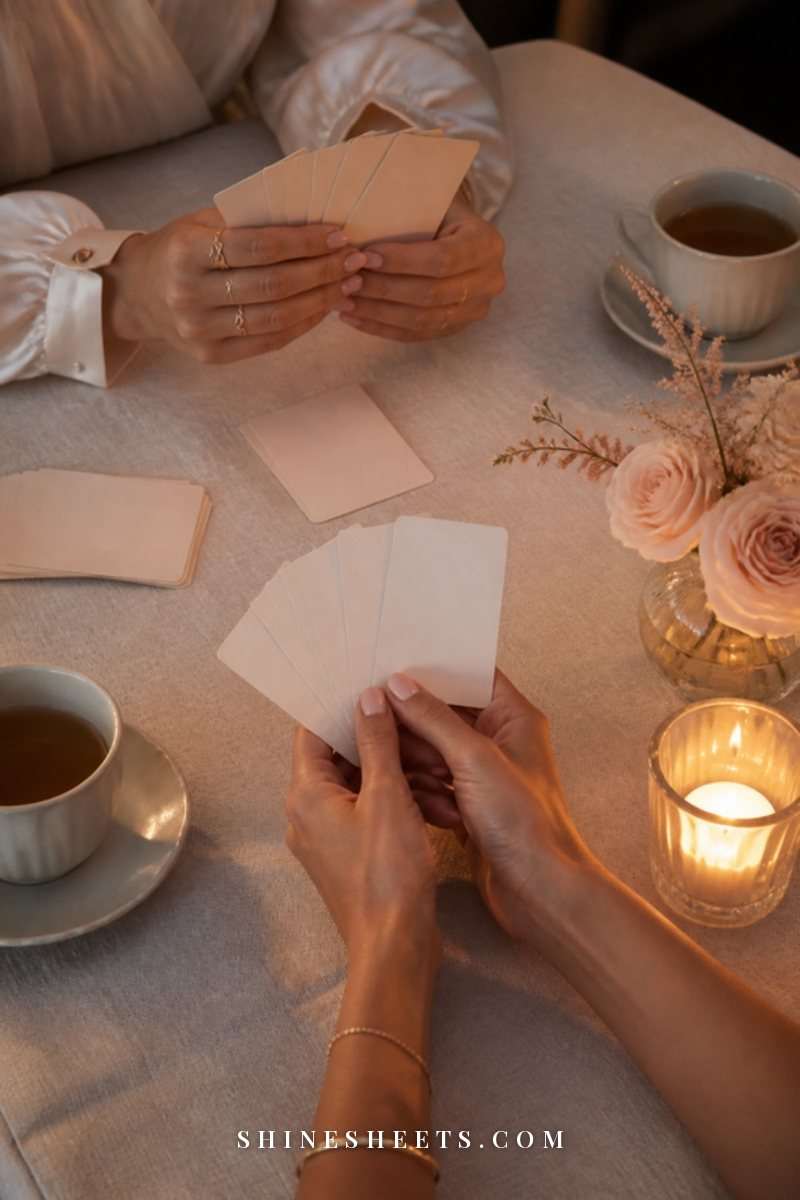
Use these as a starting point and change the words until they sound like you. Each one uses an "I" statement, which keeps the focus on sharing rather than blaming.
- The easy opener: "Valentine's Day is coming up, and I'd love to know how you feel about it. I don't have a big plan in mind, I'm just curious."
- Sharing a hope: "I realized I'd really love a handwritten note this year. It doesn't need to be long. It would just mean a lot to me."
- Taking the pressure off: "I feel a bit of pressure around Valentine's, and I don't want it to be stressful for either of us. Could we keep it simple and cozy this year?"
- Talking money: "I'm trying to be careful with spending after the holidays. I'd feel more relaxed if we set a small budget or did something at home."
- After a past disappointment: "Last year I felt a little let down, and I think it's partly because I never said what I was hoping for. I'd like to be clearer with you this time."
- When one of you doesn't care for the day: "I know Valentine's isn't really your thing, and that's okay. For me it's a nice reminder to slow down together. Could we find a version that feels good for both of us?"
Notice what's missing: no "you always", no "you never", no hints dropped in the hope they'll catch on. Clear and kind beats clever every time. And if your partner opens the conversation first, receive it the same way: listen fully before you share your side.
The Valentine's Expectations Table
This is my favorite part of the whole process, because it turns a vague feeling into a plan you both agreed on. Copy this layout into a notebook or a guided couples journal and fill it in together. Here's an example of how it might look once you're done:
| Topic | My hope | Your hope | What we agree |
|---|---|---|---|
| Plan for the day | A quiet dinner out | Staying in, no crowds | Dinner at home on the day, a dinner out the following weekend |
| Budget | Around $60 in total | As little as possible | $30 each, no surprises over that |
| Gifts | Something small and personal | No gifts at all | No bought gifts; we each write a note |
| Phones | Phones away during dinner | Fine with that | Phones in another room from 7 to 10 pm |
| Flowers | Would love flowers | Finds them a waste of money | One small bouquet or a single stem |
| Time together | The whole evening | Dinner, then some downtime | Dinner and a film together, then free time |
| Social media | Happy to post a photo | Prefers privacy | No posting, just photos for us |
| Next year | Try something new | Keep it the same | Take turns choosing the plan |
A few tips for filling it in:
- Write your own column separately first, then compare. It stops you from shaping your answers around theirs.
- Keep "What we agree" specific: a time, a number, a place.
- Leave one empty row for anything you didn't expect to come up.
- Keep it light. If a row turns tense, skip it and come back another day.
When Your Needs Are Different

Different expectations aren't a red flag. They're completely normal, and the way you handle them now is good practice for every bigger difference you'll ever navigate together.
Meet in the Middle
Look for the part of each wish that matters most. Maybe you want to dress up and go out, and your partner can't stand crowded restaurants. The middle might be dressing up for a candlelit dinner at home with blush taper candles on the table, or going out on the 15th when it's quieter. You both get the core of what you wanted. For more on finding middle ground without losing yourself, see my guide on how to compromise in a relationship.
Take Turns
Some differences don't really have a middle. In that case, take turns: this year one of you plans, next year the other. The planner chooses with the other person's needs in mind, and the other person receives it with good grace. Over time, this becomes a sweet tradition of its own.
Let Go of the Extras
Once you've talked, you may notice that some of your hopes were really about the picture in your head rather than the feeling you wanted. Maybe the restaurant mattered less than simply having a full evening of attention. Maybe the flowers mattered less than knowing your partner thought about you during the day. Keep the feeling, and let the specific props be flexible.
The same goes for your partner. If they care deeply about one thing that seems small to you, like a card on the table in the morning, it costs very little to give it wholeheartedly. Generosity with the small things makes the bigger compromises feel much easier.
New, Long-Term and Long-Distance Couples
The conversation looks a little different depending on where you are in your relationship.
If Your Relationship Is New
Early on, expectations are hardest to read because you don't have any shared history yet. Keep it light and ask early: "Are we doing anything for Valentine's, or is it too soon? I'm happy either way." Matching each other's energy matters more than a grand gesture. A small, thoughtful plan beats an over-the-top one that makes the other person feel they have to catch up.
If You've Been Together a Long Time
The risk here is autopilot: the same restaurant, the same flowers, or the day slipping by unnoticed. Check in rather than assuming, because what you both wanted a few years ago might not be what you want now. If you'd like a regular way to do this beyond February, these relationship check-in questions make it easy and gentle.
If You're Long-Distance
Distance makes expectations even more important, because you can't fall back on simply being in the same room. Talk about time zones, whether you'll have a video date, and whether you're sending something by mail (and agree on a budget so one person isn't caught off guard). A letter that arrives on the day can feel incredibly close. My long-distance relationship tips have more ideas for feeling connected across the miles.
What To Do If It Still Disappoints

Even after a great conversation, sometimes the day doesn't land. Someone's tired, plans fall through, a gesture misses. Here's how to handle it gently:
- Let the moment pass. Raising it in the middle of the evening, when you're both tired and emotional, rarely goes well. Give yourself the night.
- Get curious with yourself first. What exactly felt missing? Was it the gesture, or the feeling behind it? Journaling for ten minutes after my evening tea is how I sort out what I actually feel from what I think I should feel.
- Say it gently the next day. "I loved our dinner. I realized I was hoping for a little note too, and I don't think I said that clearly. Next time I'll be more specific." No blame, just information.
- Name what went right. Mention one thing you genuinely appreciated. It keeps the conversation balanced and reminds you both that the effort was real.
- Skip the scorekeeping. One disappointing Valentine's Day isn't proof that your partner doesn't love you, and it shouldn't be saved up for the next argument. Let it be a lesson, not a ledger.
If disappointment around special days keeps repeating, or every conversation about needs turns into a fight, that's worth looking at more closely, together or with a couples therapist. Asking for help isn't a sign of failure. It's a sign you care enough to make things better.
Final Thoughts
Valentine's Day doesn't need to be perfect, expensive or picture-ready to be lovely. It just needs two people who know what the other is hoping for and care enough to meet somewhere kind in the middle.
Have the talk, write down what you agree, and then let the day be what it is. The love you show each other on all the ordinary days matters far more, and the habit of asking instead of guessing is a gift that lasts long after the flowers fade.