
Wanting closeness is not a flaw. Wanting to hear from someone you love, to feel chosen, to know where you stand: that's simply what it feels like to care about a person. What people usually mean by "clingy" is something different. It's when anxiety takes the wheel, and the need for reassurance becomes so urgent that it starts running your day, your phone and your peace.
The good news is that you don't have to become cooler, more distant or less loving to feel calmer. You need a few ways to soothe the anxious part of you before it speaks for you, a life that feels full on its own, and clear, kind words for the closeness you do want.
This guide on how to stop being clingy covers the signs that anxiety (not love) is driving, where those feelings often come from, 12 gentle steps to feel more secure, an "urge, pause, choice" table for the hard moments, word-for-word scripts, a 10-minute plan for when you feel triggered, and how to tell when the real issue is a mismatch in needs.
Please read it with kindness toward yourself. Nothing here is about fixing a "too much" person. It's about helping a caring person feel safe.
Wanting Closeness Isn't the Problem
Humans are wired for connection. Wanting regular contact, affection and quality time is healthy, and different people simply need different amounts of it. Someone who loves a good-morning text every day isn't clingy. Someone who likes to talk through her day each evening isn't clingy either.
It starts to feel "clingy" (to you, to your partner, or both) when the closeness comes from fear rather than from desire. The difference is easy to feel once you know it:
- Desire sounds like: "I'd love to see you this weekend."
- Fear sounds like: "If we don't make plans right now, maybe they don't really want me."
Desire can wait a few hours for an answer. Fear can't. So the goal isn't to want less. It's to calm the fear so your real wants can come through clearly.
Signs Anxiety Is Driving, Not Love
You might be dealing with anxiety-driven closeness if several of these feel familiar:
- A slow reply sends your mind straight to "they're losing interest" or "I did something wrong."
- You feel a strong urge to text again (and again) before the first message is answered.
- You feel uneasy when your partner has plans without you, even though you trust them.
- You ask for reassurance, feel better for an hour, and then need it again.
- Your mood for the day depends on how a single conversation went.
- You've dropped hobbies or friends because you want to keep your schedule free for them.
- You rehearse messages for a long time, trying to sound casual.
- Space, even a normal evening apart, feels like a small rejection.
None of these make you a bad partner. They're signs that your nervous system feels unsafe, and that it's using the relationship as its only source of calm. That's a lot of weight for one person and one phone to carry.
Where Clinginess Often Comes From

Understanding the roots doesn't excuse every behavior, but it does make change feel less like fighting yourself. A few common sources:
Anxious attachment. Some of us learned early that love could be unpredictable, so we stay alert for signs it might disappear. My guide to anxious attachment explains this pattern in depth, and if you want a broader picture, the article on attachment styles shows how different styles interact in a couple. A well-loved book on anxious attachment can also be a comforting read, because seeing your patterns described on paper makes them feel less personal and more workable.
Past hurt. If you've been cheated on, ghosted or left without warning, your mind may be trying very hard to never be surprised again. That vigilance made sense once. It just isn't needed in every relationship.
Low self-trust. When you don't quite trust yourself to be okay if a relationship ends, the relationship starts to feel like the floor beneath your feet. Of course you hold on tightly.
A life that has quietly shrunk. Sometimes it's simpler: your partner has become the main source of fun, comfort and conversation, so every bit of their attention feels huge.
12 Gentle Steps To Stop Being Clingy
You don't need to do all of these at once. Pick two or three that feel doable this week, and come back for more when they feel natural.
1. Notice the Urge Without Obeying It
The first step is simply catching the moment. The urge to text, call or ask "are we okay?" usually comes with a body signal: a tight chest, a jittery stomach, restless hands. When you notice it, say to yourself, "There's the urge." You don't have to fight it or act on it yet. Just notice. That tiny gap between feeling and doing is where all the change happens.
2. Name What You're Actually Feeling
"I want to text him" is a plan, not a feeling. Underneath it there's usually something more specific: lonely, bored, scared, insecure, left out. Try finishing this sentence: "Right now I feel ___, and I'm hoping a message will make me feel ___." Once you know the real feeling, you can look for other ways to meet it too.
3. Self-Soothe Before You Text
Give your body 10 minutes of calm before you send anything. Slow breathing (in for 4, out for 6), a short walk, a warm shower or wrapping yourself in a weighted blanket can all bring the alarm down. After 10 minutes, ask: do I still want to send this? Often you will, and that's fine. It will just come from a calmer place, and it'll read that way too.
4. Build a Life That's Yours

The steadiest relationships are between two people who each have a full life to bring back to the table. Think about what fills your week outside of your partner: work you care about, rituals, places you go, things you're learning. If the honest answer is "not much right now", that's not a judgment. It's just the place to start. Add one small thing that belongs only to you this week, like a regular walk, a class or a Saturday morning coffee ritual.
5. Invest in Your Friendships
Friends are not a backup plan for when your partner is busy. They're part of a secure life. Schedule one friend date a week, even if it's a 20-minute phone call. When you have more people to share your day with, a single slow reply stops feeling like silence.
6. Pick Up a Hobby That Absorbs You
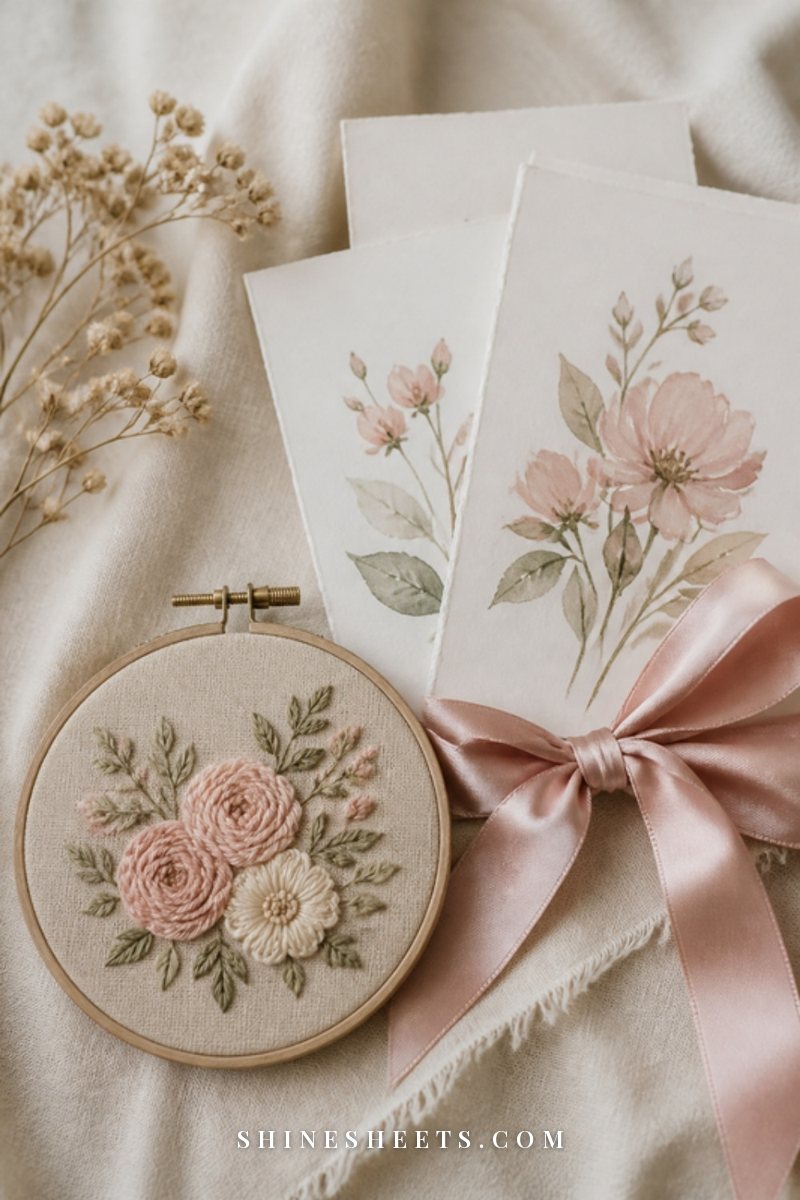
Anxious thoughts love an idle mind. Hobbies that use your hands and attention are especially helpful, because they leave less room for checking and replaying. A beginner floral embroidery kit, a puzzle, baking, a language course or a pottery class all work. The point isn't to be good at it. It's to spend an hour where your mind is busy with something gentle and yours.
7. Communicate Needs Clearly, Not Through Hints
Clinginess often grows when needs go unspoken. Instead of hinting ("You must be really busy, huh"), try saying what you'd love: "It helps me feel close when we talk for a few minutes before bed." Clear requests are easier to say yes to, and they feel much better to receive than guilt or sulking. If honest conversations feel hard in general, my guide on feeling insecure in a relationship has more gentle ways to bring it up.
8. Agree on a Contact Rhythm Together
Many couples never talk about how often they like to be in touch, and then each person guesses. Have one relaxed conversation about it: How much do you each like to text during the day? Is a call in the evening nice, or does it feel like pressure? What's normal when one of you travels or has a busy week? A shared rhythm means a quiet afternoon isn't a mystery. It's just the plan.
9. Ask for Reassurance in a Way That Works
Needing reassurance is human. The trouble is asking in a way that doesn't actually soothe you, like "Are you mad at me?" five times a day. Try asking specifically and less often: "I'm feeling a bit wobbly today. Could you tell me one thing you like about us?" Then let it land. Read it twice. Let yourself believe it for longer than five minutes.
10. Journal the Spiral Out
When your mind starts building stories ("they're pulling away, I just know it"), get them onto paper. Write the story, then underneath write only the facts ("He hasn't replied for three hours. He has a work dinner tonight."). Seeing the gap between story and fact is often calming on its own. A guided self-love journal with prompts can make this easier on the days your mind feels too foggy to start from a blank page.
11. Let Go of Monitoring
Checking when they were last online, rereading old messages for hidden meaning, or watching who they follow can feel like it lowers anxiety. It actually feeds it, because the mind always finds something new to worry about. If you notice yourself doing this, gently close the app and choose a different action from this list. Trust grows from how someone shows up over time, not from information you collect.
12. Rebuild Your Self-Worth Slowly
At the heart of most clinginess is a quiet question: "Am I enough to be loved?" A partner can help answer it, but they can't be the only answer. Keep a small list of the ways you show up well, for others and for yourself. Keep promises to yourself, even small ones. My guide on how to stop seeking validation goes deeper into building that inner sense of "I'm okay" that doesn't depend on a reply.
The Urge, Pause, Choice Table

This is the heart of the whole guide. When an anxious urge shows up, find it in the left column, take the pause in the middle, then choose from the right. Screenshot it and keep it somewhere easy to find.
| The urge | The pause | A kinder choice |
|---|---|---|
| Send another text before they've replied | Wait 10 minutes and breathe out slowly | Put the phone in another room and do one small task |
| Ask "are we okay?" again | Ask yourself what you're afraid of | Write the fear down, then ask for one specific reassurance later if you still need it |
| Cancel your own plans to stay available | Remember why you made the plans | Go, and enjoy it fully; share a highlight afterwards |
| Reread old messages for clues | Name the feeling (lonely, scared, bored) | Call a friend or step outside for a 10-minute walk |
| Feel hurt they want an evening alone | Remind yourself space isn't rejection | Plan a solo evening you'd look forward to |
| Hint that you feel neglected | Find the real need underneath | Say it clearly: "I'd love some time with just us this week" |
| Spiral after a short or flat reply | Separate facts from story on paper | Wait until you see them in person before deciding what it meant |
What To Say: Gentle Scripts
Words matter, especially when you're feeling raw. Here are a few to borrow and adjust:
- When you want to share the pattern: "I've noticed I get anxious when we don't talk for a while. It's something I'm working on, and I wanted you to know so it doesn't feel like pressure."
- When you need reassurance: "I'm having an insecure day. Nothing is wrong, I'd just love a hug or a kind word."
- When you're agreeing on contact: "What feels good for you during a busy week? I'd like us to find a rhythm that works for both of us."
- When you got a bit much: "I sent a lot of messages earlier. That was my anxiety, not anything you did. I'm okay now."
- When you want more closeness: "I've been missing our time together. Could we plan one evening this week that's just for us?"
And if your partner asks for some breathing room, my guide on how to give space in a relationship explains how to do it without feeling abandoned.
A 10-Minute Plan for When You Feel Triggered

For the moments when the urge is loud and you don't know where to start, follow this plan minute by minute:
- Minute 1: Put your phone face down, out of reach. Say, "I'm triggered, and that's okay."
- Minutes 2 to 3: Breathe slowly, in for 4 and out for 6. Feel your feet on the floor.
- Minutes 4 to 5: Put the kettle on for a cup of chamomile tea or splash cool water on your wrists. Give your body something soothing to do.
- Minutes 6 to 8: Write two lines: the story your mind is telling, and the facts you actually know.
- Minute 9: Ask, "What do I need right now?" (Comfort, distraction, connection with a friend, sleep.)
- Minute 10: Choose one action that meets that need without involving your partner, then decide calmly whether you still want to reach out.
Some days the urge will win, and that's okay too. Every time you try this plan, even partly, you're teaching your body that the feeling passes on its own.
How a Partner Can Help (Without Carrying It All)
Feeling more secure is mostly inside work, but it's lovely when a partner is part of it too. If you feel comfortable, you can share a few things that help you, without turning them into rules they have to follow perfectly:
- A quick heads-up. "Busy day, talk tonight" takes five seconds to send and can quiet a whole afternoon of worry.
- Follow-through. Small promises kept (calling when they said they would) build trust faster than big romantic gestures.
- Warm reconnection. A hug or a few minutes of real attention after time apart helps your body relax back into the relationship.
- Patience with the process. Knowing they understand you're working on it makes it easier to slip up and try again.
The balance matters, though. Your partner can support your sense of safety, but they can't be its only source. If you notice yourself asking them to change more and more to keep your anxiety quiet, that's a gentle signal to come back to the steps above, especially self-soothing, friendships and your own life. Security you build yourself is the kind that lasts.
It also helps to notice what your partner already does well. Anxiety tends to keep score of the gaps. Once a week, name to yourself (or to them) three small ways they showed up for you. It trains your attention toward evidence of love, which is exactly what an anxious mind tends to overlook.
When It's Actually a Mismatch
Not every "clingy" feeling is anxiety. Sometimes it's a real, reasonable need that isn't being met. If you've calmed your nervous system, built a full life and asked clearly, and you still feel lonely in the relationship most of the time, it might not be you being too much. It might be a mismatch in how much connection you each want.
Some signs it's a mismatch rather than anxiety:
- Your requests are small and specific, but they're regularly dismissed.
- You feel calm and secure with friends and family, just not here.
- Your partner seems uninterested in finding a middle ground.
- You've stopped asking for anything because asking never changes much.
This doesn't automatically mean the relationship is wrong. It means it's time for an honest conversation about needs, and possibly some outside support. You deserve a relationship where wanting closeness isn't treated as a burden.
When To Talk to a Therapist

If anxiety in relationships has followed you from one partner to the next, if it keeps you up at night, or if it makes it hard to enjoy your days, please consider talking to a therapist. Attachment patterns are very workable with support, and a good therapist can help you understand where yours came from and practice feeling safe in a new way. Asking for that help is a strong, loving thing to do for yourself and your future relationships.
Final Thoughts
Learning how to stop being clingy isn't about loving less. It's about giving the anxious part of you other places to feel safe, so your love can show up as warmth instead of worry.
Be patient with yourself. Every pause you take, every evening you enjoy on your own, and every need you say out loud is building a steadier you, and that steadiness is a beautiful thing to bring into any relationship.