
Wasted time is rarely the hour you spent resting on the sofa. It's the twelve minutes of checking your phone "for a second," the half hour of deciding what to do first, and the three tasks you started and abandoned before lunch. Those small leaks add up quietly, and they're also the ones that leave you feeling tired without feeling rested.
That's an important difference. A slow Sunday morning with tea and a book isn't wasted. Neither is a nap, a long walk or an evening of doing absolutely nothing on purpose. The goal here isn't to squeeze productivity out of every minute. It's to make more of your time feel chosen rather than drifted into, so the rest you take actually feels like rest.
This guide is all about how to stop wasting time in a kind, realistic way. You'll find where time really goes, a simple three-day time audit with a "where did my hour go" table, 25 small habits grouped by the parts of your day, what to do with the time you find, how to start with just three habits, and what to do when old patterns creep back (because they will, and that's fine).
Where Your Time Really Goes

Most of us assume our time disappears into big obvious things. In reality it slips away through a handful of small, very human patterns. See if any of these feel familiar:
- Phone checks. Not long social media sessions, just dozens of short ones. Each one costs a few minutes plus the time it takes your focus to come back.
- Decision loops. Going back and forth about what to cook, what to wear, which task to start or which reply to send. Undecided time feels busy but moves nothing forward.
- Half-starts. Opening a task, getting a little stuck, switching to another, then another. By the end of the day five things are 30% done and nothing is finished.
- Waiting time. Queues, appointments, kettles, loading screens, hold music. Small pockets that usually get filled with phone time by default.
- Perfection. Rewriting a simple email three times, adjusting a slide that was already fine, cleaning a room "properly" when a quick tidy would do.
None of these make you lazy or undisciplined. They're what happens when a day has no gentle structure. The good news is that structure can be small, and it can be kind.
What Isn't Wasted Time
Before we go hunting for lost minutes, let's protect the ones that only look unproductive. These are not leaks, and no habit in this guide is meant to take them away:
- Rest. Naps, lying on the sofa, sitting in the sun with your eyes closed. Your body and brain recover here, and everything else depends on it.
- Sleep. Cutting sleep to "get more done" usually means doing everything slower and with more mistakes the next day.
- Play and hobbies. A puzzle, a craft, a silly game, a show you love. Joy is a perfectly good use of an evening.
- Connection. Long talks, unplanned coffees, a friend who calls just to chat. These rarely fit into a productivity system, and they matter more than most tasks on your list.
- Thinking time. Staring out of a window, walking without headphones, daydreaming. Many good ideas and calm decisions come from these quiet gaps.
- Recovery days. When you're unwell, grieving or simply depleted, doing less is the wise choice, not a lazy one.
The test is simple: did you choose it, and did it give you something back, whether that's energy, joy, calm or closeness? If yes, it's time well spent, even if nothing got ticked off.
The 3-Day Time Audit
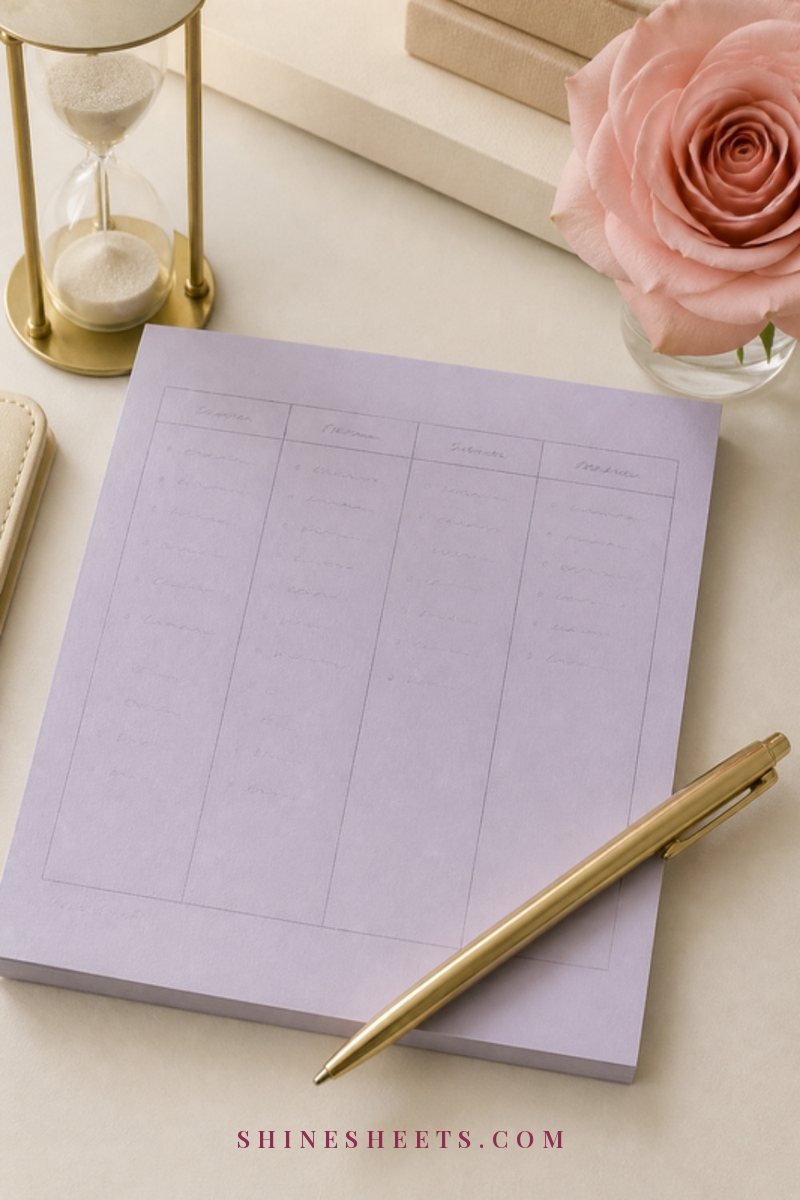
Before changing anything, it helps to see where your hours actually go. Not in a strict, minute-by-minute way, just honestly enough to spot a pattern. Here's the simple version I'd suggest:
- Pick three ordinary days. Two weekdays and one weekend day give the fullest picture. Avoid holidays or unusual days.
- Keep a note open. A small notebook or your notes app works. Every hour or two, jot down what you did in rough blocks: "9:00–9:40 emails," "9:40–10:00 phone," "10:00–10:30 report."
- Mark each block "chosen" or "default." Chosen means you decided to do it, whether it was work, rest or a walk. Default means you drifted into it.
- Don't judge, just notice. This isn't a report card. It's information.
- On the evening of day three, look for patterns. Where do the default blocks cluster? Mornings? After lunch? The hour after dinner?
Then fill in a small table like the one below for your biggest default blocks. The "swap" column is where the magic happens: not cutting something out, but replacing it with something you'd actually choose.
Where Did My Hour Go? Audit Table
Here's an example of what a filled-in table might look like. Screenshot it and make your own version in your notebook:
| Activity | Minutes | Chosen or default? | Swap |
|---|---|---|---|
| Checking phone in bed after alarm | 25 | Default | Phone charges outside the bedroom; 5 minutes of stretching instead |
| Deciding what to wear | 10 | Default | Pick tomorrow's outfit while the kettle boils the night before |
| Inbox, checked 14 times | 45 | Default | Two set email windows: 10:00 and 15:00 |
| Switching between three tasks | 40 | Default | One 45-minute block for the hardest task first |
| Phone time while waiting at appointments | 20 | Default | A paperback or a short list of small to-dos to tick off |
| Reading on the sofa | 30 | Chosen | Keep it exactly as it is |
| "Just one episode" that became three | 110 | Default | Decide the number of episodes before pressing play |
| Evening walk | 25 | Chosen | Keep, maybe add a podcast you love |
Notice that the chosen blocks stay. Reading, walks, rest and fun are not the problem. The swaps only target the time you didn't really pick.
25 Habits That Give Your Day Back
You don't need all 25. Read through, notice which ones match the default blocks in your audit, and start with just three (more on that later). They're grouped by the parts of the day so you can find the right ones quickly.
Morning Habits

1. Decide Tomorrow's First Task Tonight
The first 30 minutes of the morning are easily lost to "where do I start?" Before bed, write one line on a sticky note: the first thing you'll do tomorrow. In the morning there's nothing to decide, only something to begin.
2. Keep Your Phone Out of Your First 20 Minutes
Your morning sets the tone for your attention. Charge your phone outside the bedroom or across the room, and use a simple alarm clock instead. Spend those first 20 minutes on water, light, a stretch, tea, anything that's yours before the world's notifications arrive.
3. Lay Out the Small Decisions
Outfit, bag, keys, lunch, gym clothes. Put them in one place the night before. It takes five minutes in the evening and saves fifteen of rushed searching in the morning.
4. Use a Simple Morning Order
Not a perfect routine, just a fixed order: wake, water, wash, dress, tea, first task. When the order never changes, your brain stops spending energy on it. If your mornings feel chaotic, my time management tips for busy women include a few morning setups that work with a full schedule.
Phone and Screen Habits

5. Turn Off Every Non-Human Notification
Keep notifications only for messages from actual people you want to hear from. Shopping apps, news alerts, games and social likes can all wait until you choose to open them. This one habit alone often gives back 20 to 40 minutes a day.
6. Give Your Phone a Home
When your phone lives in your hand or your pocket, you'll check it constantly. Give it a home during focus time: a drawer, another room, or a timed phone lock box if your willpower needs a little help. Out of sight really is out of mind.
7. Move Tempting Apps Off Your Home Screen
Put social and video apps into a folder on the last page of your phone. The extra two swipes are just enough friction to make you ask, "Do I actually want to open this?"
8. Set a Time Limit Before You Start
Social media isn't a crime. Browsing with no end point is the leak. Before opening an app, decide how long: "ten minutes." Set a timer if you need to. When it rings, close the app, even mid-video.
9. Plan One Screen-Free Block a Day
Even one hour without screens changes how a day feels. For a gentler, longer reset, my digital detox guide walks through how to step back from your phone without feeling cut off.
Work Block Habits

10. Do the Hardest Thing First
Your focus is usually freshest early on. Put your most demanding task in your first work block, before email and before small admin. Everything after it will feel lighter.
11. Work in Timed Blocks
Choose a block length that suits your attention, often 25, 45 or 50 minutes, followed by a short break. A desk timer cube is lovely here because you just flip it to the time you want, with no phone in sight. If you want to plan your whole day this way, my guide to time blocking for beginners shows how to map it out.
12. Batch Your Email and Messages
Checking email every few minutes means you're never fully in anything. Pick two or three set times a day to process messages, then close the tab between them.
13. Use the Two-Minute Rule
Popularized by productivity author David Allen, this one is simple: if something takes less than two minutes, do it now instead of writing it down. A quick reply, filing a document, booking an appointment. It stops tiny tasks from piling into a mountain.
Home and Errand Habits
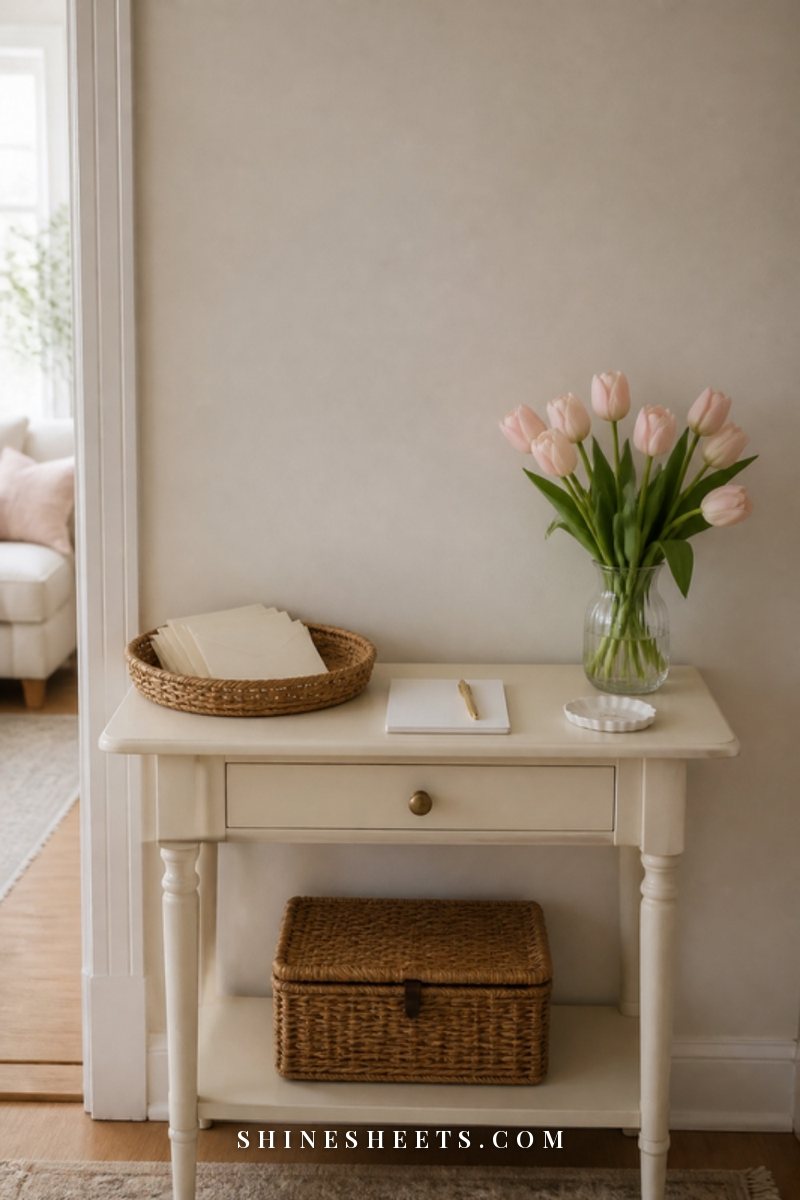
14. Give Everything a Landing Spot
Keys, bag, glasses, chargers, mail. When everything has a home, you stop losing ten minutes a day looking for things. A small tray by the door is often enough.
15. Batch Your Errands
Instead of popping out four times a week, keep a running errand list and do them all in one loop, ideally in a sensible route. The pharmacy, the post office and the grocery store can almost always share one trip.
16. Use the "One-Touch" Rule for Mail and Paper
When you pick up a letter, decide right away: recycle, act, or file. Putting it down "for later" means you'll handle it three more times.
17. Do a Ten-Minute Reset Instead of a Big Clean
Waiting for a free afternoon to clean often means a messy home and a lost weekend. Set a timer for ten minutes each evening and reset the most-used spaces. Short and regular beats long and rare.
Evening Habits

18. Decide Your Evening Before It Starts
Evenings disappear fastest when they're undecided. On your way home, choose one or two things you'd like the evening to hold: a bath, a call with a friend, a chapter of your book, an early night. Everything else is a bonus.
19. Choose Episodes, Not Autoplay
Decide how many episodes you'll watch before pressing play, then turn off autoplay in your settings. You'll still enjoy your show, just on your terms.
20. Do a Five-Minute Brain Dump
A busy mind wastes evenings by replaying the day and pre-worrying about tomorrow. Write everything on paper for five minutes: tasks, worries, ideas. My guide to the brain dump method explains how to sort that list afterward so it doesn't follow you to bed.
21. Set a Wind-Down Alarm
Most of us know when we should go to bed. Few of us get there on time. Set an alarm 45 minutes before bedtime as a signal to start winding down: lights low, screens off, tea and a book. Sleep is never wasted time, and a rested brain wastes far less of tomorrow.
Weekly Planning Habits

22. Plan Your Week in 20 Minutes
Once a week, sit down with your calendar and a notebook. Look at appointments, choose your three most important tasks and give each one a time slot. An undated linen planner works beautifully for this, because you can start any week without wasting pages.
23. Pick Three Priorities, Not Thirty
Long lists feel productive but make it hard to start anything. Choose three things that would make the week feel good if they got done. Everything else is optional.
24. Leave Buffer Time
Schedule only about 70% of your time. The rest absorbs the meetings that run over, the call you didn't expect and the afternoon you're simply tired. A plan with buffer survives real life; a plan without it collapses by Wednesday.
25. Do a Gentle Weekly Review
At the end of the week, look back for ten minutes: what worked, what slipped, what you'd change. It's the step that turns all the other habits into a system that improves over time. My weekly review guide has simple questions to make it quick.
What To Do With the Time You Find
This is the part people forget. If you claw back an hour a day and immediately fill it with more work, you'll feel just as rushed as before. Decide in advance what found time is for. A few ideas:
- Rest that you actually choose. A nap, a bath, a quiet cup of tea with nothing else happening.
- A hobby that's been waiting. Reading, sketching, sewing, baking, learning a language.
- People. A long call with a friend, an unhurried dinner, a walk with someone you love.
- Movement. A walk, a stretch, a gentle workout.
- The thing you keep saying you'll do "one day." Even 20 minutes a few times a week adds up to real progress.
Write your answer on a sticky note and put it somewhere you'll see it. Found time is much easier to protect when it already has a purpose. I'd choose something that makes you feel like yourself, not just more efficient.
Keeping a gold pen and a small notebook by your favorite chair makes it easier to jot down those "one day" ideas the moment they arrive.
Start With Just 3 Habits
Trying to change everything at once is its own kind of time sink. You spend a week planning the perfect new life and burn out by Thursday. Instead:
- Look at your audit table. Find your two or three biggest default blocks.
- Choose one habit for each. If your mornings vanish into your phone, choose habit 2. If your workday is all half-starts, choose habit 11.
- Practice only those three for two weeks. Write them on a card on your desk.
- Add one new habit every two weeks once the first ones feel automatic.
Small and steady wins here. Three habits you actually keep will give you more time than twenty-five you abandon. If what's really stopping you is getting started at all, my guide on how to stop procrastinating tackles that first step gently.
A cream desk organizer can help too: when your pen, planner, timer and sticky notes all live in one spot, starting a work block takes seconds instead of a search.
When You Slip Back Into Old Patterns
You will have days when you lose an afternoon to your phone or spend an hour deciding what to make for dinner. That's not failure. That's being a person.
Here's how to handle it kindly:
- Skip the guilt spiral. Feeling bad about lost time often wastes more time than the original slip.
- Restart at the next natural point. Not tomorrow, not Monday. The next hour, the next block, the next meal.
- Look for the trigger. Were you tired, anxious, hungry or bored? Slips usually have a reason, and that reason is useful information.
- Make the habit smaller. If a 45-minute focus block keeps failing, try 20 minutes. Success at a smaller size beats failure at a bigger one.
- Remember the point. You're not trying to become a machine. You're trying to have more days that feel like yours.
Final Thoughts
Learning how to stop wasting time isn't about filling every minute. It's about noticing the small leaks, swapping a few defaults for choices, and protecting the time you win back for things that make life feel full.
Start with your audit, pick three habits and be patient with yourself. A day that feels chosen, with real rest woven into it, is the best use of time there is.