
Feeling busy all day and feeling like you got somewhere are two very different things. You can answer forty messages, attend four meetings and tick off a dozen small tasks, and still end the week without moving the one thing that actually matters to you. That gap isn't a discipline problem. It's usually a scope problem: too many things in motion at once.
This guide is about slow productivity, a gentler way of working that focuses on doing fewer things, at a pace a human can sustain, with real care for the result. You'll find what it means, the three principles behind it, six practical ways to apply them, a table of busy habits and their slower swaps, the signs you're carrying too much, and small ways to slow down at work or at home without putting your job or income at risk.
No 5 a.m. alarms, no color-coded hustle. Just a calmer way to get meaningful things done.
What Is Slow Productivity?

Slow productivity is an approach to work, popularized by computer science professor and author Cal Newport, that measures success by meaningful results over time rather than by how busy you look today. It doesn't mean doing less forever or working sluggishly. It means choosing a smaller number of things, giving them your full attention and letting them take the time good work genuinely needs.
Think of it as the difference between juggling ten balls and carrying three baskets. Juggling looks impressive and is exhausting. Carrying is quieter, and you actually arrive somewhere with everything still intact.
It's a close cousin of other ideas you might know. Where energy management is about when you work best, slow productivity is about how much you take on and how fast you expect it to go. The two fit together beautifully.
Why Busyness Isn't the Same as Progress
Busyness is visible. Progress is often invisible until it's finished. That's why so many of us default to the visible version: quick replies, full calendars, the satisfying feeling of crossing off small tasks.
The trouble is that every open project carries hidden overhead. Each one brings emails, check-ins, small decisions and a little background worry. With three projects, that overhead is manageable. With twelve, the overhead becomes the job, and the real work gets squeezed into the leftover scraps of your day (usually late at night, usually tired).
A small honest admission: I'm prone to anxiety, and busyness used to feel like safety to me. If I was doing something every minute, nobody could say I wasn't trying. It took a while to see that constant motion was actually feeding the anxiety, not soothing it. Fewer things in motion meant fewer things to worry about at night.
What Slow Productivity Is Not
Because the word "slow" can sound a bit suspicious in a work context, it helps to be clear about what this approach doesn't mean:
- It's not laziness. You still work, often very hard, on the things you've chosen. You just stop spreading that effort across far too many things.
- It's not missing deadlines. It's setting more realistic ones from the start, so you meet them without panic.
- It's not only for people with flexible jobs. Even in a tightly scheduled role, you can protect a focus block, batch messages and be honest about time estimates.
- It's not a strict system. There's no app to buy and no perfect method. It's a set of gentle principles you adapt to your own life.
- It's not a reason to feel guilty about busy seasons. Some weeks are full, and that's fine. The point is that not every week has to be.
If you've ever felt that productivity advice was really about squeezing more out of yourself, this is the opposite. It's about choosing well and then giving yourself enough room to do it properly.
The 3 Principles of Slow Productivity
Slow productivity rests on three simple ideas. Each one is easy to understand and a little harder to practice, which is why the rest of this guide is all about small, practical steps.
1. Do Fewer Things

This is the heart of it. Reduce the number of projects and commitments you have in motion at the same time, so each one gets real attention and moves forward properly. You'll still do plenty over a year. You just won't try to do it all this week.
Doing fewer things also pairs naturally with single-tasking: one thing at a time, finished well, then the next. It sounds slower. In practice, it usually gets more done, because you lose so much less time switching gears.
2. Work at a Natural Pace
People have never worked at the same intensity every single day of the year. There are seasons for pushing and seasons for resting, and good work has always had a rhythm. Working at a natural pace means giving important projects more time than you think they need, accepting quieter periods and not treating every week like a deadline sprint.
This doesn't mean missing deadlines. It means setting more realistic ones in the first place, and spreading intense effort across the year instead of piling it into every week.
3. Obsess Over Quality
When you care deeply about doing something well, you naturally say no to the distractions that would water it down. Quality becomes a filter: if a new request would pull attention away from the work you're proud of, it gets a closer look before you say yes.
Obsessing over quality isn't perfectionism. Perfectionism is fear-driven and never finishes. Quality-focused work is care-driven, and it ships when it's genuinely good, not when it's flawless.
How To Practice Slow Productivity: 6 Gentle Steps
Principles are lovely, but they only help if they turn into Tuesday-morning habits. These six steps are where slow productivity becomes real.
Keep a Short Active List and a Holding List

Your active list holds a maximum of three projects you're working on right now. Everything else (good ideas, future plans, someday projects) goes onto a holding list. Nothing on the holding list is forgotten; it's simply not this month's job.
When one active project finishes, you pull the next one in from the holding list. That's it. The rule is simple: finish one, then start one.
An undated weekly planner in cream works well for this, because you can start on any week without wasted pages. Write your three active projects at the top of each week, and keep the holding list on the last pages. Some people prefer a separate linen-covered desk notebook for the holding list, so the planner stays clean and calm.
Say No or Not Yet
Most of us only have two answers: yes and an awkward, guilty yes. Slow productivity adds two more: no and not yet. "Not yet" is especially helpful at work, because it acknowledges the request without overloading you.
A few short scripts to try:
- "I'd love to help with that. I can start on it after the current project wraps up in two weeks. Would that work?"
- "I don't have room to do this well right now. Can we look at it again next month?"
- "If I take this on, something else on my list will slip. Which one should move?"
- "I can't commit to that one, but I can share my notes from last time."
That third script is especially useful with a manager: it hands the priority decision back to the person who sets priorities, without sounding difficult.
Estimate Time Honestly, Then Add a Buffer
Most of us estimate tasks based on the best-case scenario: no interruptions, no surprises, full energy. Real life rarely cooperates. Here's a simple formula:
Your honest estimate × 1.5 = the time you actually plan for.
If you think a report will take four hours, block six. If you think a home project will take a weekend, plan for a weekend and a half. When things go smoothly, you get time back (which feels wonderful). When they don't, you're still on track instead of panicking.
Plan Seasons of Intensity and Rest
Instead of expecting every week to be equally full, look at the next three months and mark where the natural busy periods are: a big launch, a family visit, the end of a semester, the holiday season. Then plan lighter weeks deliberately around them.
A busy season followed by a slower one is sustainable. Busy season after busy season after busy season is how people end up exhausted. If you're already there, my guide to gentle burnout recovery is a kinder place to start than any productivity system.
Protect One Focused Block a Day
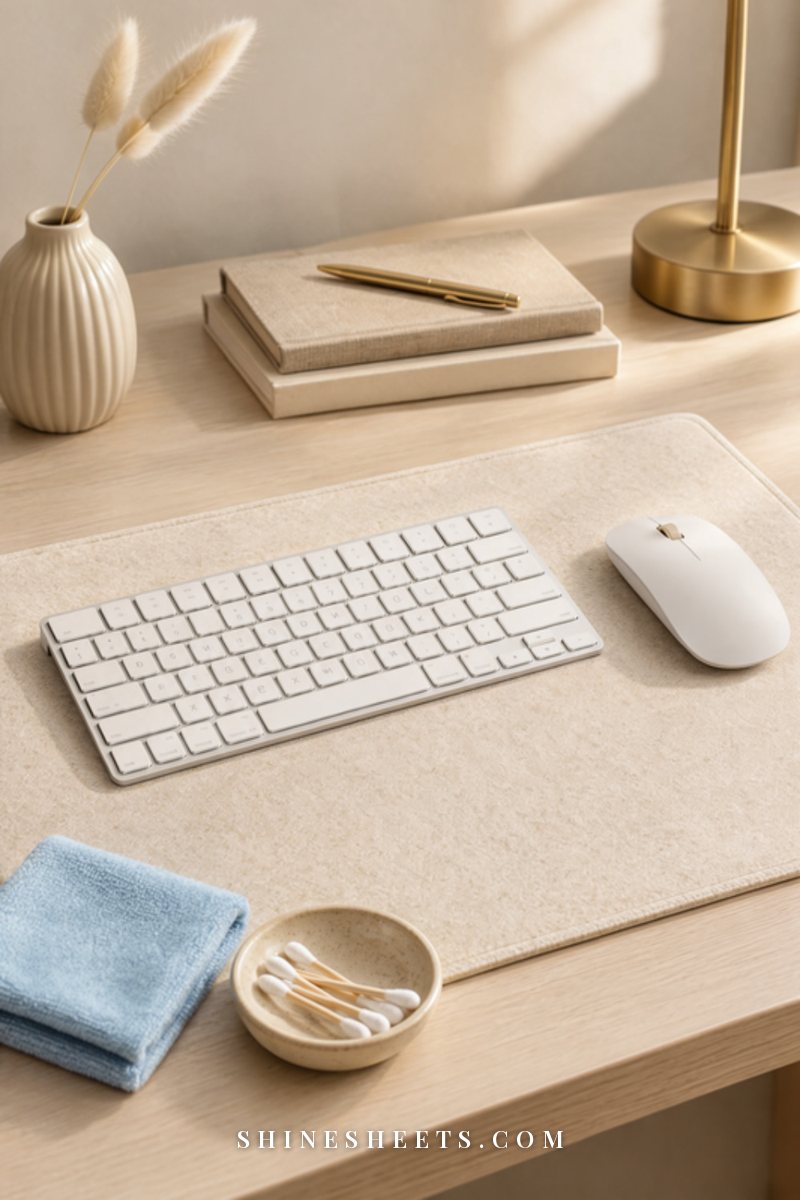
One protected block of 60 to 90 minutes a day for your most important project does more than a full day of scattered effort. Choose the same time each day if you can, close your inbox and messages, and work on just one active project.
Small cues help your brain recognize the block: the same sage ceramic mug of tea, a soft white desk lamp switched on, a notebook open to the right page. If an unrelated thought pops up, jot it on a pastel sticky note and return to the work. For a deeper look at building focus gradually, see my deep work for beginners guide.
Do a Weekly Check-In
Once a week, spend 20 minutes looking at the bigger picture. Ask yourself:
- Did my three active projects move forward this week?
- Did anything sneak onto my plate that should go to the holding list?
- Is next week realistic, with buffer, or am I overpacking it again?
- Is a busy season coming that I should plan a lighter week around?
A gentle check-in like this keeps the system honest. If you'd like a full structure, my weekly review routine walks through it step by step.
Busy Habits vs Slow Productivity Swaps
This table is the heart of the guide. Find the busy habits you recognize, then try the swap for just one week.
| Busy habit | Slow-productivity swap | Why it works | First step |
|---|---|---|---|
| Saying yes to every request | Answer with yes, no or not yet | Protects your active list from silent overload | Pause before replying and check your three projects |
| Ten projects in progress | Three active, the rest on a holding list | Less overhead, faster finishing | Move every non-urgent project to a holding page today |
| Best-case time estimates | Honest estimate × 1.5 | Absorbs surprises without panic | Re-time tomorrow's biggest task |
| Checking messages all day | Two or three set check times | Keeps focus blocks unbroken | Choose your check times and write them down |
| Every week at full speed | Seasons of intensity and rest | Effort becomes sustainable over a year | Mark the next busy period and plan a lighter week after it |
| Multitasking through meetings | One thing at a time | Fewer mistakes, less mental fatigue | Close other tabs for your next meeting |
| Measuring a day by tasks ticked | Measuring a month by meaningful progress | Rewards real results, not motion | Write one sentence about what moved forward this week |
Screenshot it if it helps. You don't need to change every row at once; even one swap can make a week feel noticeably lighter.
7 Signs You're Carrying Too Much
Overload creeps up quietly. Here are seven common signs that your plate is fuller than it should be:
- You can't name your top priorities quickly. If someone asks what matters most this month and you need five minutes to answer, there are too many things in motion.
- Small tasks crowd out important ones every day. The urgent always wins, and the meaningful keeps moving to tomorrow.
- You do your real work late at night or on weekends. Daytime is all coordination, so deep work gets pushed into your rest time.
- Projects stall in the middle. Lots of things started, very few finished.
- You feel guilty when resting. A free evening feels like something you have to earn.
- Your quality is slipping. Little mistakes, rushed replies, things you'd normally catch.
- You dread opening your inbox or messages. Every new notification feels like one more weight.
If several of these feel familiar and the exhaustion feels heavier than ordinary tiredness, it's worth talking to a doctor or therapist. You deserve support, not just a better system.
Small Ways To Slow Down at Work Without Risking Your Job

Not everyone can rearrange their whole job, and that's okay. Slow productivity works best in small, quiet changes that make you more reliable, not less:
- Batch your replies. Check email and messages at two or three set times instead of constantly. Most messages are fine with a reply in a few hours.
- Clarify priorities with your manager. Ask, "Of these projects, which matter most this month?" Most managers appreciate the question.
- Under-promise on timelines. Use the 1.5 buffer when you give estimates. Delivering on time, every time, builds more trust than speed ever does.
- Turn meetings into notes where you can. Offer a short written update instead of a 30-minute status meeting.
- Block your focus time in your calendar. Treat it like a meeting with your most important project.
- Finish before starting. Wrap up one task fully before opening the next one.
These changes usually make your work better and more dependable, which is the opposite of risky.
Slowing Down at Home
Slow productivity isn't only for work. The same principles help with home projects, personal goals and even hobbies:
- One home project at a time. Finish organizing the closet before you start repainting the bathroom.
- Three personal goals per season, not twenty per year. Smaller lists actually get finished.
- Leave white space on weekends. At least one unplanned half-day per weekend, with nothing scheduled.
- Let hobbies be slow. Not every hobby needs to become a side income or a measurable goal.
- End the day with a gentle close. Evening tea, a few lines in your journal about what moved forward, and permission to stop.
That last one is my favorite part of the day. Writing a sentence or two after tea about what genuinely mattered helps me see progress that busy days would otherwise hide.
A Gentle First Week of Slow Productivity
If you'd like a simple way to begin, try this seven-day plan. Each day takes 10 to 20 minutes, and nothing needs to be perfect.
- Day 1: Write down every project and commitment you currently have in motion, big and small.
- Day 2: Choose your three active projects. Move everything else to a holding list.
- Day 3: Pick your daily focus block time and put it in your calendar for the rest of the week.
- Day 4: Re-time your biggest upcoming task using the 1.5 buffer.
- Day 5: Practice one "not yet" with a request that can wait.
- Day 6: Look at the next three months and mark one busy season and one lighter week.
- Day 7: Do your first weekly check-in and notice what felt lighter.
By the end of the week, you'll have a short active list, a holding list, a protected block and a rhythm for checking in. That's the whole foundation, and everything else can grow from it at its own pace.
Final Thoughts
Slow productivity isn't about doing less forever. It's about doing fewer things at once, at a pace you can keep, and caring about how they turn out. The work still gets done, often better than before, and you get to be a person while it happens.
Start with one small change this week: three projects on your active list, one focused block a day, or a gentle "not yet" when you need it. Calm, steady progress adds up to more than you'd ever expect.