
The roommate phase rarely starts with a fight. It starts with a hundred perfectly reasonable evenings: one of you is answering emails, the other is folding laundry, you trade a quick "Did you pay the electric bill?" and fall asleep facing your own screens. Nothing is wrong, exactly. You just stopped feeling like a couple and started feeling like two very efficient housemates.
The good news is that this phase is incredibly common, and it usually doesn't need a grand gesture to fix. It needs small, repeated moments that remind you both that you chose each other, not just a shared lease and a grocery list.
This guide walks you through the roommate phase relationship pattern: what it feels like, why it happens to loving couples, a side-by-side table of roommate habits and partner habits, 8 gentle shifts you can start this week, and how to bring it up without making your partner feel blamed.
It took me a while to understand that closeness is less about big romantic plans and more about what happens on a random Tuesday. That's where we'll start.
What the Roommate Phase Actually Feels Like
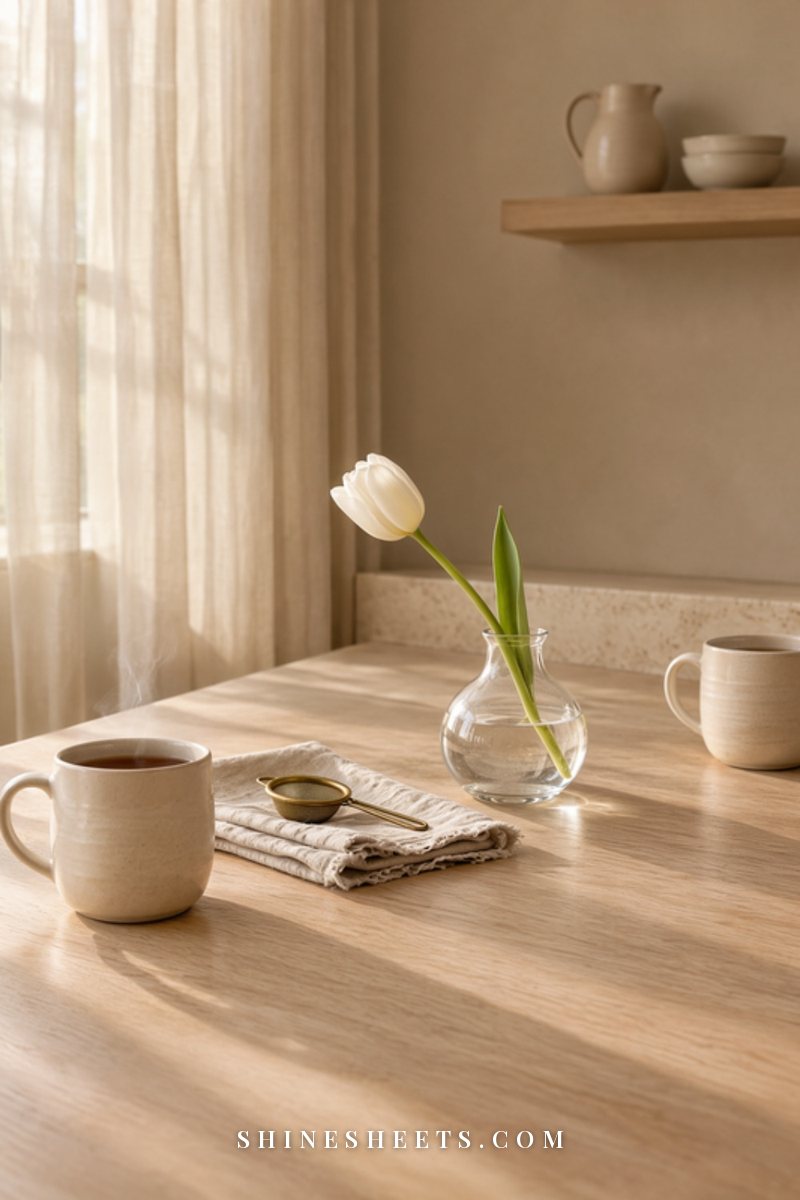
The roommate phase is less a single moment and more a texture. You might recognize a few of these:
- Most of your conversations are logistics. Pickups, bills, appointments, who's buying dish soap. Useful, but not exactly intimate.
- You're together but on separate screens. Same sofa, two phones, two different worlds.
- Touch has quietly faded. Not just intimacy, but the little things: a hand on the back, a hug in the kitchen, sitting close.
- You run on parallel schedules. One goes to bed early, one stays up late, and weekends are split into errands.
- You don't really know what's on each other's mind. You know their calendar, but not what they're worried about or excited by lately.
- It feels polite. There's no drama, and that's part of what makes it hard to name.
If you nodded along, please don't panic. Recognizing the pattern is genuinely the first step, and the fact that you noticed means you care.
Why the Roommate Phase Is So Common
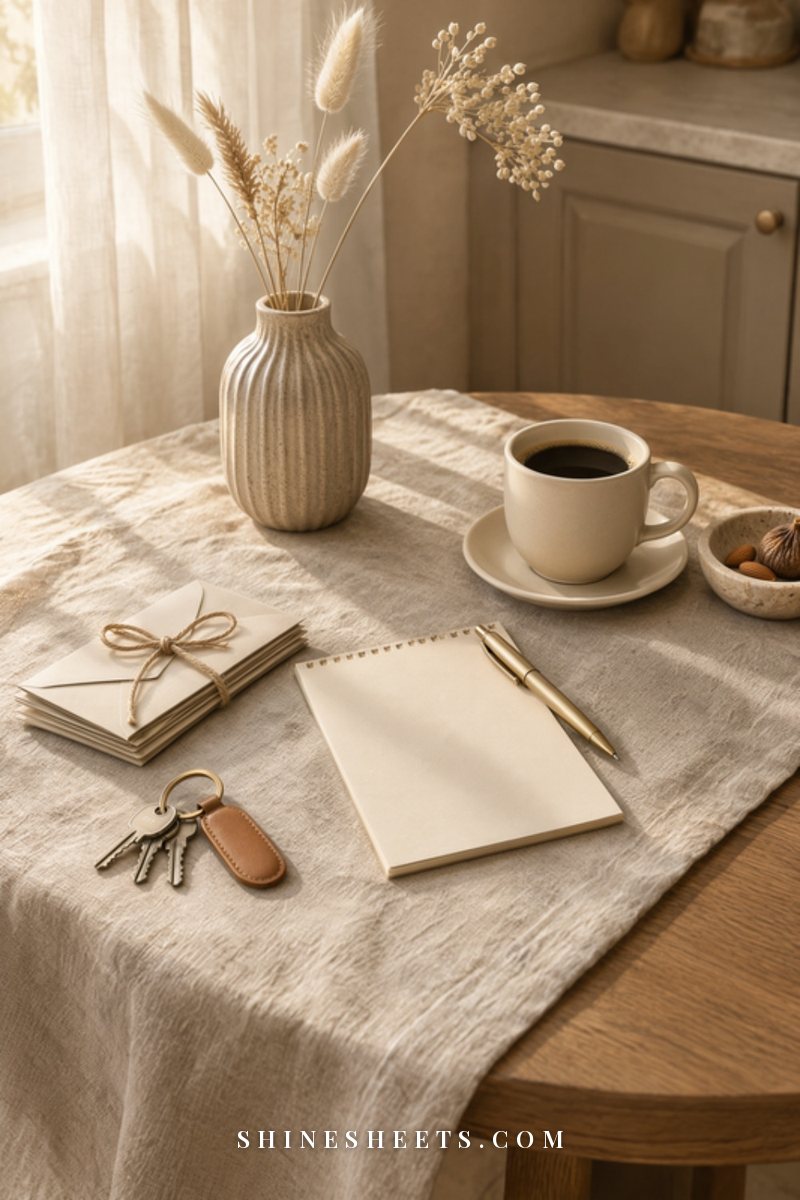
Almost every long-term couple drifts into this phase at some point. A few reasons it happens to even the most loving pairs:
- Work and stress eat your best energy. By the time you're home together, you have very little left to give, so you default to the easiest mode: efficient and quiet.
- Kids, pets, family or caregiving. When someone else needs you constantly, the relationship becomes the thing that "can wait."
- Routine is comfortable. Comfort is lovely. But without a little novelty, comfort slowly turns into autopilot.
- The mental load piles up. When one person is quietly tracking everything, they often feel more like a household manager than a partner.
- Screens fill the gaps. The few spare minutes that used to become conversations now disappear into our phones.
Notice that none of these mean someone is a bad partner. The roommate phase is usually what happens when two tired people do their best and forget to protect a little time for each other. That's fixable.
Roommate Phase vs. a Relationship in Real Trouble
It helps to know the difference. In the roommate phase, there's still warmth underneath the routine. You'd still choose each other, you're still kind, and you'd both like to feel closer. You've just lost the habits that create closeness.
It's different if there's constant contempt, fear, control or one person refusing to engage at all. If you've drifted apart in a deeper, more painful way, my guide on how to reconnect with your partner when you feel distant goes into those bigger conversations. This article is about the everyday patterns.
And one important note: if a relationship ever feels unsafe, emotionally or physically, please reach out to a domestic violence hotline (in the US, the National Domestic Violence Hotline) or local emergency services. Small rituals are for safe, loving relationships that have gone a little quiet, not for situations where you feel afraid.
Roommate Habits vs. Partner Habits: A Side-by-Side Table
This is the heart of it. Most roommate habits aren't bad habits. They just need a tiny partner version beside them. Screenshot this table and pick one row to try this week.
| Roommate habit | Partner habit | Time needed | How to start |
|---|---|---|---|
| Talking only about logistics | A daily check-in about feelings, not tasks | 10 minutes | "Before we talk schedules, how was today for you, really?" |
| Walking in and heading straight to your phone | A proper hello: eye contact, a hug, a real greeting | 30 seconds | Put your bag down and find each other first |
| Separate evenings on separate screens | One small shared ritual | 15–20 minutes | Evening tea together, a short walk or one show you only watch together |
| One person quietly running the household | Sharing the mental load openly | 30 minutes once a week | A Sunday "house meeting" with tea and one shared list |
| Eating in front of the TV or on the go | Phone-free dinners | 20–30 minutes, 3 nights a week | A basket by the door where both phones go |
| Touch only at bedtime, or not at all | Small, everyday affection | A few seconds, many times a day | A six-second hug in the kitchen each morning |
| Weekends filled with errands | A weekly date at home | 1–2 hours | Pick one evening, light a candle, no chores allowed |
| Assuming you already know them | Asking curious questions | 5 minutes | One new question at dinner or before bed |
You don't need to change every row. One partner habit, practiced for two or three weeks, often shifts the whole feeling of the house.
8 Gentle Shifts To Stop Living Like Roommates
These are small on purpose. Big plans tend to collapse under real life. Tiny rituals survive busy weeks, tired evenings and stressful months.
1. A 10-Minute Daily Check-In

Ten minutes a day, at roughly the same time, where you talk about how you're doing, not what needs doing. Right after work, after the kids are asleep, or with your evening tea all work beautifully.
A simple formula that keeps it from turning into a task meeting:
- One high: "The best part of today was…"
- One low: "The hardest part was…"
- One need: "Tomorrow, it would help me if…"
The listener's only job is to listen and say something like "That sounds really frustrating" or "I'm so glad that went well." No fixing unless asked. Pour your drinks into a matching pair of cream ceramic mugs so the check-in starts to feel like its own little ritual, separate from the rest of the day.
2. Greet Each Other Properly
This one sounds almost too simple, but the first 30 seconds after one of you comes home sets the tone for the whole evening. Roommates call out "Hey" from another room. Partners stop what they're doing and actually look at each other.
Try this for two weeks: whoever is home walks to the door (or at least looks up and turns toward them), you hug or kiss, and you say one warm sentence. "I'm so glad you're home." "I missed you today." It feels a little awkward at first. Then it starts to feel like coming home to someone, not just to a house.
Do the same with goodbyes. A real goodbye in the morning, even just a hug at the door, is a small daily reminder that you're on the same team.
3. Create One Shared Ritual

A ritual is just a habit with a little meaning attached. You only need one to start, and it should be easy enough to do on your most tired day.
- Evening tea: 15 minutes on the sofa with a warm drink and no screens. (This is my favorite kind of ritual, for what it's worth.)
- A short walk: 20 minutes around the block after dinner, phones in pockets.
- Saturday breakfast: the same slow breakfast every weekend, even if it's just toast and coffee.
- One "our show": a series you only watch together, never alone.
- A bedtime chat: five minutes of talking in the dark before you sleep.
Light a soft blush glass candle to mark the start of your ritual (and blow it out before you leave the room, always). A small sensory cue tells your brain, "This is us time now."
4. Share the Mental Load Fairly
Nothing turns a partner into a roommate faster than feeling like the house manager. When one person remembers every appointment, notices every empty shampoo bottle and plans every birthday, resentment builds quietly, and resentment is the opposite of romance.
The fix isn't keeping score. It's making the invisible work visible:
- Once a week, sit down together for 30 minutes (tea helps).
- Write down everything that needs doing this week, including the thinking parts: planning, reminding, noticing.
- Each person takes full ownership of some tasks, from noticing to finishing, not just "helping."
- Check in next week about what felt fair and what didn't.
If chores are a sore spot, my guide on sharing chores fairly as a couple has a simple system you can set up together. Keeping your shared list in a linen journal for two on the kitchen counter makes it feel more like teamwork and less like a nagging note on the fridge.
5. Phone-Free Dinners
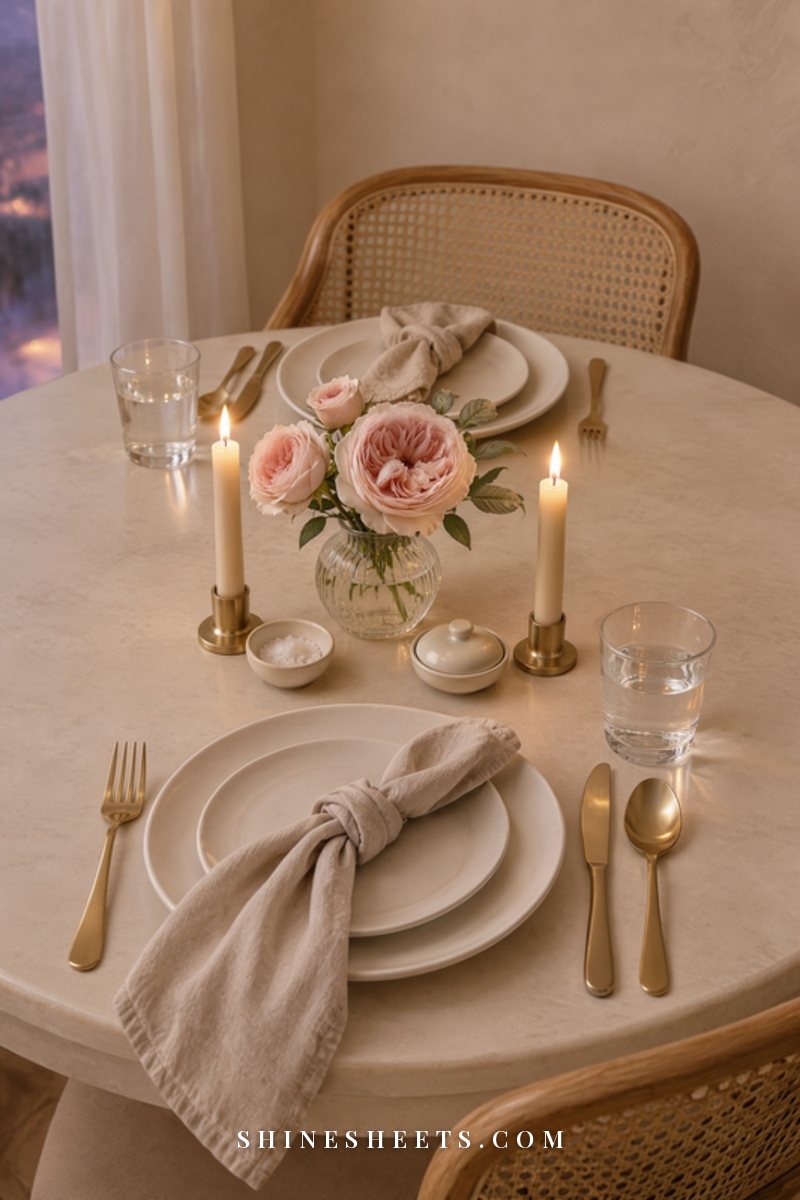
Phones are the most common wall between roommate couples. Not because anyone is doing anything wrong, but because a screen is always more instantly interesting than a tired partner across the table.
Start with three dinners a week, not seven. Both phones go in a basket or another room, face down and on silent. If you're nervous about awkward silence, that's completely normal. Keep one conversation starter in mind, or use the curiosity questions in shift number 8.
It doesn't need to be fancy food. Leftovers at the kitchen table count. But a little effort, like a couple of soft beige linen napkins and a small jar of flowers, turns "eating" into "having dinner together." That shift matters more than you'd think.
6. Small, Everyday Touch
When couples fall into the roommate phase, touch often becomes all or nothing: either nothing at all, or only at bedtime. Small, no-pressure affection through the day rebuilds closeness without any expectation attached.
- A six-second hug in the morning (long enough to actually relax into it).
- A hand on the shoulder when you walk past.
- Holding hands on your walk.
- Sitting close enough on the sofa that your legs touch.
- Feet tangled together under a blanket while you watch your show.
Keep it light and kind. The goal is warmth, not a hint. If touch has been missing for a while, say so gently: "I miss being close to you. Can we hug more?" A soft cream throw blanket on the sofa is a lovely, easy invitation to sit together instead of at opposite ends.
7. A Weekly Date at Home

Going out is wonderful, but it can be expensive and hard to arrange. A weekly date at home is easier to protect and, done well, just as connecting.
The only rules: it happens on the same evening each week, it lasts one to two hours, there are no chores or logistics talk, and both phones are put away. Ideas:
- A board game or card game night with snacks.
- A living room "picnic" on floor cushions.
- Cooking something new together (with music on).
- Looking through old photos and telling the stories behind them.
- Planning a dream trip, just for fun.
Take turns planning, so it never becomes one person's job. For more spark-building ideas, my list of little habits that keep the spark alive is full of small, sweet ones.
8. Ask Curiosity Questions
After years together, it's easy to assume you know everything about your partner. But people change all the time: their worries, their dreams, the things that make them laugh. Roommates stop asking. Partners stay curious.
Try one question a day, at dinner or during your check-in:
- "What's something you've been thinking about a lot lately?"
- "Is there anything you'd like to try this year that we've never done?"
- "What's a small thing I do that makes you feel loved?"
- "What's been weighing on you that I might not know about?"
- "If we had a whole weekend with no plans, what would you want it to look like?"
A deck of couples question cards on the coffee table takes the pressure off coming up with questions yourself. You can also borrow from my collection of date night questions for couples. Questions like these are one of the simplest ways to build emotional intimacy again, because they say, "I still want to know you."
How To Raise It Kindly Without Accusing

Bringing up the roommate phase can feel scary. You don't want your partner to hear "You're failing me." Here's a gentle way to do it.
Pick a calm moment. Not right after an argument, not when one of you is rushing out the door, not at midnight. A slow weekend morning or a quiet evening is ideal.
Use "we" and "I," not "you." The roommate phase is something that happens to a couple, not something one person does.
Lead with what you miss, not what's wrong. Missing someone is an invitation. Complaining is an accusation.
A simple script you can adapt:
- "I've been thinking about us. Life has been so busy that I feel like we've turned into really good roommates, and I miss feeling like a couple. I don't think anyone did anything wrong. I'd just love for us to find a few small ways to feel closer. Would you be up for trying something with me?"
Then suggest one thing from the table, not all eight. "Could we try a 10-minute check-in after dinner this week?" is much easier to say yes to than a complete relationship overhaul.
If your partner seems defensive at first, that's okay. Give it a day. Defensiveness often comes from feeling guilty, not from not caring. You can calmly return to it: "I'm not upset with you. I just really miss you."
Small Mistakes That Keep Couples Stuck
A few common traps, so you can sidestep them:
- Waiting for the other person to start. One person going first isn't unfair. It's generous, and it usually invites the other to follow.
- Trying to change everything at once. Eight new habits in one week is a recipe for giving up by Friday. Pick one.
- Turning rituals into tests. If your partner forgets the check-in one night, gently remind them instead of keeping a tally.
- Saving closeness for "when things calm down." Things rarely calm down on their own. Small moments now matter more than a perfect vacation someday.
- Comparing yourselves to other couples. What looks effortless from the outside usually has its own quiet struggles.
When To Get Extra Support

Sometimes the roommate phase has deeper roots: old hurts that never got talked through, resentment that's been building for years, or very different ideas about what you each need. If you've tried small shifts for a couple of months and nothing seems to change, or every attempt to talk turns into a fight, a couples therapist can help.
Going to therapy doesn't mean your relationship is failing. It means you care enough to get help translating for each other. Many couples go in feeling like strangers and come out with a whole new way of talking.
And again, if anything in your relationship makes you feel afraid or controlled, please reach out to a domestic violence hotline or local emergency services. You deserve to feel safe at home.
Final Thoughts
Living like roommates doesn't mean the love is gone. Usually it means the love has been quietly carrying everything else: the bills, the work, the busy seasons. It just needs a little room to breathe again.
Start with one shift. A proper hello at the door, ten minutes with tea, one curious question at dinner. Small moments, repeated, are how two housemates become partners again, and you're allowed to begin tonight.