The honeymoon phase ending is not a sign that love is leaving. It's usually a sign that love is settling in. The fizzy, can't-stop-thinking-about-you rush was never meant to last forever, and what comes after it is quieter, steadier and, for many couples, much deeper.
Still, the shift can feel unsettling. One week you're texting all day, the next you're happily reading on opposite ends of the sofa and wondering if that's okay. (It is.) Not knowing what's normal is what makes this stage feel scary, so let's clear that up.
This guide walks you through the honeymoon phase ending: what the honeymoon phase actually is, why the early rush naturally fades, six signs you're moving into the next stage, what that next stage looks like, the common traps to avoid, and simple ways to stay close. It took me a while to understand that calm isn't the opposite of romance, so consider this the reassuring big-sister talk I wish more people heard.
What Is the Honeymoon Phase?

The honeymoon phase is the early stretch of a relationship when everything feels new and exciting. You think about each other constantly, small flaws seem charming (or invisible), and even running errands together feels like a little adventure. It often comes with butterflies, long conversations, lots of texting and a strong pull to spend every possible moment together.
There's no fixed timeline. For some couples it lasts a few months; for others it stretches past a year or two. Living together, long distance, busy seasons and life stress can all speed it up or slow it down. There's no "right" length, and comparing yours to a friend's (or to a movie) won't tell you anything useful about your relationship.
Why the Early Rush Naturally Fades
Part of the early rush is simple novelty. When someone is new, your brain is busy learning them: their laugh, their stories, how they kiss, what they'll say next. Newness is naturally exciting, and that excitement has a strong chemical side, which is why early love can feel a bit like being pleasantly off balance.
As you get to know each other, the unknowns shrink. Your body doesn't need to stay on high alert around someone it now recognizes as safe and familiar. The adrenaline-style excitement softens, and something calmer takes its place: comfort, trust and attachment.
That's not a loss. It's your nervous system relaxing. Being able to sit in silence, be tired, be a little grumpy and still feel loved is what the honeymoon phase was quietly building toward all along.
6 Signs the Honeymoon Phase Is Ending
Every couple is different, but these are some of the most common signs that you're moving into the next stage. Seeing a few of them doesn't mean anything is wrong; it simply means your relationship is changing shape.
1. More Routine Creeps In

Date nights turn into "our Thursday thing," you have a usual takeout order and you know who makes the coffee on Sundays. Routine can feel less thrilling than spontaneity, but it's also a sign you've built a shared life with patterns of its own. The trick is to enjoy the routine while leaving a little room for surprise, which we'll get to below.
2. You Start Noticing Small Irritations
The way they leave cupboard doors open, or hum while they cook, or always run five minutes late. In the early weeks you barely noticed; now it might make you sigh. This doesn't mean you love them less. It means you're seeing the whole, real person, not just the highlight reel.
A helpful question when something bugs you: Is this a habit I can laugh about, or a need I should gently talk about? Most small irritations fall into the first group.
3. Less Constant Texting
Early on, you might have messaged all day long. Now the texts are more practical ("Want me to grab milk?") with a sweet one here and there. That drop can trigger worry, especially if you're prone to overthinking, but it usually reflects security, not distance. You no longer need constant contact to feel connected.
If you miss the sweeter messages, say so without blame: "I love our practical texts, and I also miss the silly ones sometimes. Send me one today?" Most partners are happy to oblige once they know it matters to you. And it's okay to agree on a small daily rhythm, like a good-morning message and a quick hello before dinner, so neither of you is left guessing.
4. Your First Real Disagreements
Maybe it's about plans, money, chores or how much time you spend with friends. First real disagreements can feel alarming after months of easy harmony, but disagreement is a normal part of any close relationship. What matters isn't whether you disagree, it's how you treat each other while you do.
A simple repair can make a first argument feel much less scary. Once things have cooled down, try: "I didn't like how that went. I care about you more than I care about being right. Can we try again?" Coming back to each other after a disagreement teaches you both that the relationship can handle real feelings, and that's a huge source of security.
5. Comfort Over Excitement

Sweatpants instead of a new outfit. A quiet night in instead of a big night out. Falling asleep during the movie. You might miss the nervous excitement of getting ready to see them, but feeling completely at ease around someone is a gift. Comfort is where real intimacy starts to grow.
6. More Time Apart
You're seeing your friends again, picking up your hobbies and spending evenings doing your own thing. This is healthy. Two people with full lives bring more energy, more stories and more of themselves back into the relationship. Missing each other a little is actually good for closeness.
If more time apart makes you uneasy, focus on reconnecting rather than holding on tighter. A short "tell me about your evening" when you see each other again, or a standing night that's just for the two of you, keeps the thread strong while you both enjoy your own lives.
Is the Honeymoon Phase Ending a Bad Sign?
In most cases, no. The honeymoon phase ending is a normal, expected part of almost every long-term relationship. It's not proof that you chose the wrong person or that the love is fading. It's the moment the relationship stops running on novelty and starts running on choice.
That said, the end of the rush can make existing issues more visible. If you notice ongoing disrespect, contempt, fear or a pattern of feeling unsafe or unheard, that's worth taking seriously on its own terms, and a counselor can help you sort through it. But ordinary changes like less texting, more routine or a few small irritations are not red flags. They're simply what real life together looks like.
One small honest admission: as someone who is prone to anxiety, I know how easily a quiet evening or a slower reply can turn into a story in your head. If that happens to you, pause and look at the bigger picture. Are they still kind? Still interested in your day? Still choosing to spend time with you? If the answer is mostly yes, the calm is probably just calm.
What Happens Next: The Stage After the Honeymoon Phase

The stage after the honeymoon phase is sometimes called the settling or attachment stage. It's less about fireworks and more about building something solid. Here's what it tends to look like.
From Infatuation to Deeper Attachment
Infatuation is focused on the idea of a person; attachment is focused on the actual person. In this stage, you start to know how your partner handles stress, what they need on bad days and how to make them laugh when they're tired. Love becomes less about how someone makes you feel and more about how you show up for each other.
This is also where emotional intimacy has room to grow, because you're sharing more than your best side. If you'd like ideas for deepening that, my guide on how to build emotional intimacy is a lovely next read.
Normal Doubts You Might Have
Many people quietly wonder things like "Am I still in love?", "Is this all there is?" or "Should I feel more excited?" Having those thoughts doesn't mean the answer is bad. Doubts often show up simply because the intense feelings have softened and your mind is looking for a new reference point.
A gentle way to check in with yourself: instead of asking "Do I feel butterflies?" ask "Do I feel safe, respected and glad to come home to this person?" Those answers tell you far more about your relationship than butterflies ever could.
Common Traps To Watch For
Here are three traps that catch a lot of couples during this transition:
- Comparing everything to the start. The early weeks are a beautiful memory, but they're not a fair benchmark. Measuring today against your most exciting moments will always make today look smaller.
- Avoiding conflict to keep the peace. It's tempting to swallow small frustrations so things stay smooth. Over time, though, unspoken issues build distance. Gentle, early honesty keeps you closer than silence does.
- Assuming love is gone. A quieter feeling isn't an absent one. Love in this stage often shows up in small actions (a cup of tea brought without asking, a warm text before a hard meeting) rather than big rushes of emotion.
Honeymoon Phase vs. the Next Stage at a Glance
This side-by-side view shows how common parts of a relationship tend to change, what the shift can feel like and one small way to stay close through it.
| Honeymoon phase | Next stage | What it can feel like | How to stay close |
|---|---|---|---|
| Texting all day | Fewer, more practical messages | "Did something change?" | Send one warm, non-practical text a day ("Thinking of you") |
| Every date feels special | Comfortable routines | Cozy, sometimes a little flat | Keep the routine, add one new experience a month |
| Flaws feel invisible | Small irritations show up | Surprise, mild annoyance | Laugh about the small stuff, talk kindly about real needs |
| No arguments | First real disagreements | Worry, discomfort | Use "I" language and take breaks when things heat up |
| Butterflies and nerves | Deep comfort and ease | Calm, safe, occasionally nostalgic | Notice and name what you appreciate about each other |
| Wanting every moment together | More time apart for friends and hobbies | Freedom mixed with a little doubt | Share stories from your time apart; plan one protected evening together |
| Talking about dreams | Talking about real-life plans | Less dreamy, more grounded | Hold a regular relationship check-in to stay on the same page |
Pick one row that feels most true for you right now and try the "how to stay close" idea this week. One small, consistent change beats a big romantic overhaul.
How To Stay Close After the Honeymoon Phase
Closeness in the next stage doesn't happen by accident, but it doesn't need grand gestures either. These six habits keep the connection warm without trying to recreate the early rush. (For a longer list of everyday ideas, my guide on how to keep the spark alive has plenty more.)
Stay Curious About Each Other

One of the sneakiest beliefs in long relationships is "I already know everything about them." You don't, and neither do they. People keep changing, and staying curious keeps you meeting each other again.
Try: once a week, swap the usual "How was your day?" for something fresher: "What made you laugh today?", "What's been on your mind lately that we haven't talked about?" or "What's something you'd love to try this year?"
Hold Regular Check-Ins
A relationship check-in is a short, calm conversation about how you're both doing as a couple, ideally before small issues turn into big ones. Twenty minutes every week or two is plenty.
A simple format: one thing that's going well, one thing you'd love more of, and one thing coming up that you want to plan for together. A couples journal with guided prompts makes this feel less like a meeting and more like a ritual, and you can find dozens of gentle prompts in my list of relationship check-in questions.
Keep it light. Sit somewhere comfortable, make a cup of tea, and agree that check-ins are for understanding, not for scoring points. If something heavier comes up, you can always set it aside for a longer talk on another day. Over time, these small conversations become a safe, familiar place to bring things up early, which is exactly what this stage needs.
Build Small Daily Rituals
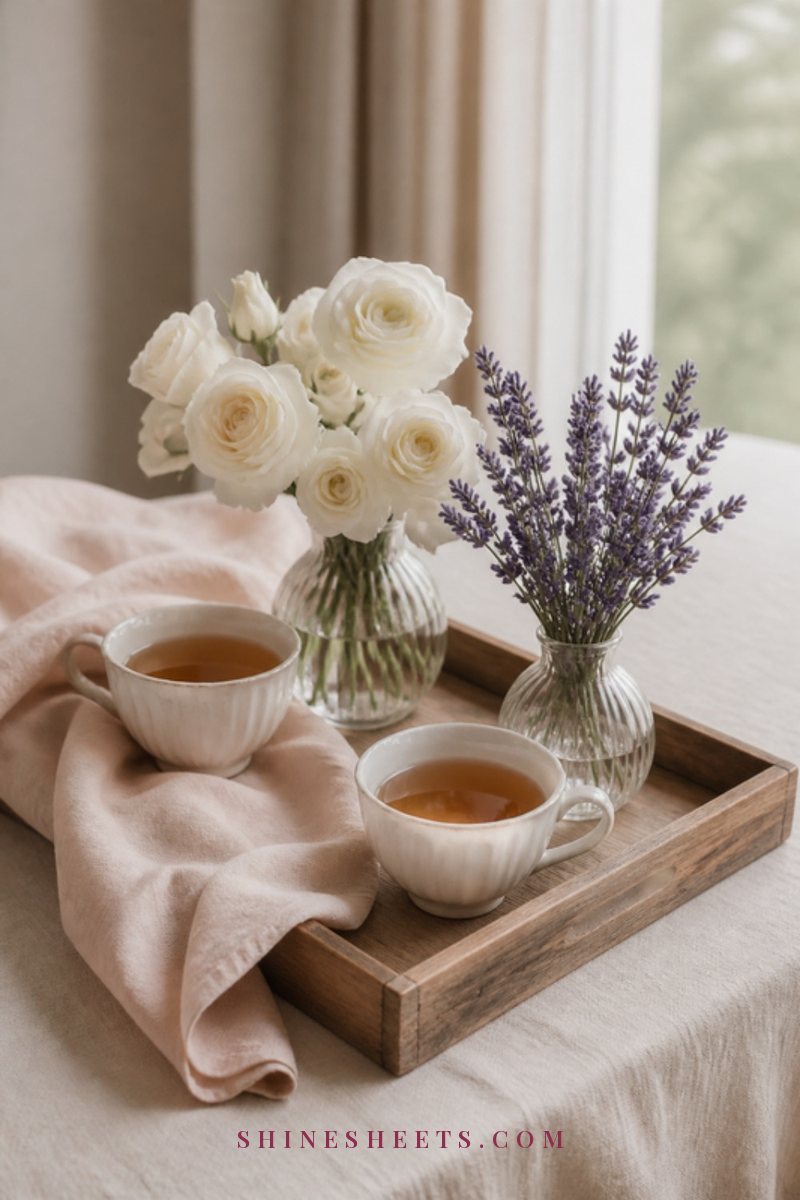
Rituals are tiny, repeated moments that say "we're a team." They don't have to be elaborate: a six-second hug when one of you gets home, morning coffee together before phones, a short evening walk or a goodnight phrase that's just yours.
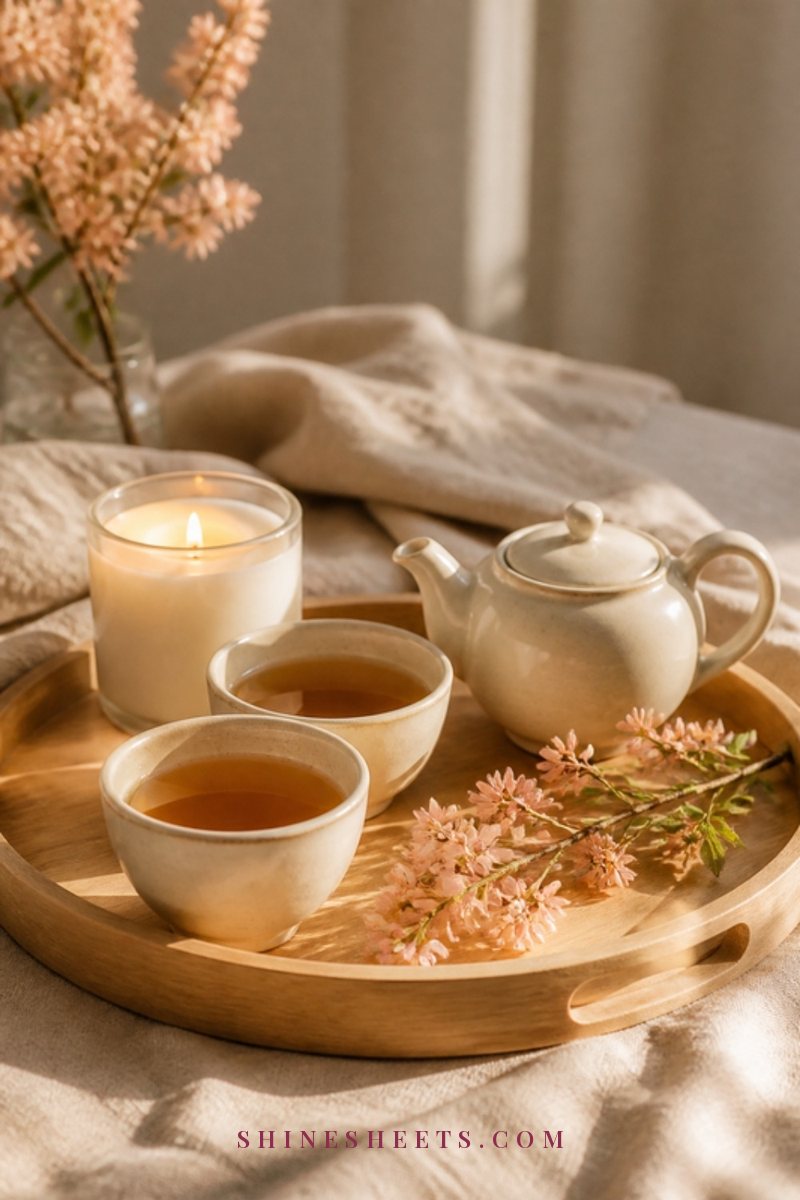
Making the moment feel a little special helps it stick. A matching blush ceramic mug set for your morning drink, or a string of warm white fairy lights along the headboard for evening talks, turns an ordinary routine into something you both look forward to. On colder nights, a cream knit throw blanket big enough for two makes sofa time feel like an invitation.
Learn Each Other's Love Languages
Once the honeymoon rush fades, it's common for both partners to feel a little unloved, even while each is trying hard. Often it's because you're showing love in the way you like to receive it, not the way your partner does.
Maybe you plan thoughtful surprises, while they mostly want an evening of undivided attention. Learning about love languages together gives you a simple, blame-free way to talk about what makes each of you feel cared for, and then do a little more of it.
Disagree Kindly
Disagreements are a sign that two real people are sharing a life. The goal isn't to avoid them; it's to come out of them still feeling like a team.
A few ground rules that help: start with "I feel… when… because…" instead of "You always…", talk about one issue at a time, take a twenty-minute break if things get heated (and say when you'll come back), and end with one thing you appreciate about each other. For more on this, my guide on how to communicate better in a relationship goes deeper.
Try New Shared Experiences

Novelty is what fueled the honeymoon phase, and you can borrow a little of it on purpose. Doing something new together, even something small, gives you fresh memories and that familiar spark of discovering something side by side.
Ideas: a pottery or dance class, a day trip to a town you've never visited, a new hiking trail, a museum you keep meaning to go to, or a sunset picnic with a beige picnic blanket in a park you've never explored. Aim for one new shared experience a month. It doesn't have to be expensive; it just has to be new to both of you.
Final Thoughts
The honeymoon phase ending isn't the end of the good part. It's the beginning of the part where you really get to know each other, choose each other and build something that can carry you through ordinary days and hard ones.
Let the butterflies settle. Stay curious, keep talking, protect your small rituals and keep adding a little newness along the way. A love that feels calm and safe is one of the most romantic things there is.